“Alberta, Let Your Hair Hang down…”

Day 28. 15 September. “Alberta, Let Your Hair Hang down…”

OLYMPUS DIGITAL CAMERA

Mt Robson, highest mountain in the Rockies…..just majestic.

3-img_5486

Four weeks in….my, how time flies. Heading for Jasper (Alberta) today. Along the way 2 short stops: one at Moose Lake boat ramp where a small boy was doing what small (and not so small) boys love to do with stones.


OLYMPUS DIGITAL CAMERA


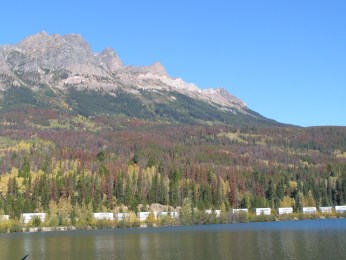
And then a walk in bear – forest at Whitney Lake, where the grandeur of a freight train (D estimates at least 1 km long) rolling beside the water’s edge was captivating.


We reflected on the juxtaposition of this mechanical behemoth with a solo cyclist from Delhi who was 5,000kms into his 18 month journey from the top of Alaska (Prudhoe Bay) down to Argentina! Plan? Make it up as I go…My bike and I flew into PB….only one road from Prudhoe Bay to Fairbanks…The timeframe? End-time, December 2017. He was up for a chat; he’d decided to do this bike ride in slow time, as the backpacking he’d done before (just from A to B) was not delivering enough of a cultural experience. He admitted to carrying lots of food, including original cornflakes supply from home. We wondered how he chose his campsites, in a little tent, in bear country. T is reading the story of Chris McCandless, a young American guy who hit the road in the US in a Datsun, hitched up to Alaska and then walked into the Denali wilderness to find himself (he was found dead). We wondered at the motivation of this Indian cyclist….he said his blog is happening a bit sporadically at landscapeexplorer.com. We’ll check on it at next connectivity point.

img_4990

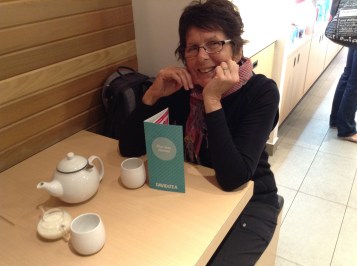
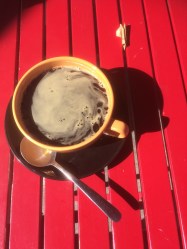
Then to Jasper in brilliant sunshine. The coffee confusion continues. The “Red Eye’ seemed to be an extra strong espresso. D ordered the double, from the menu and after checking with the server, so this was not of his imagination – this is what arrived, and by the way that is a soup spoon! T enjoyed her latte; he almost drowned.


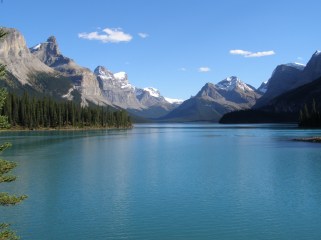
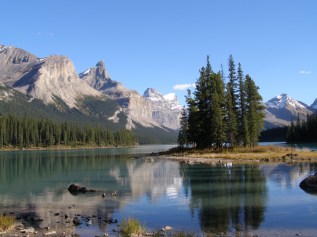
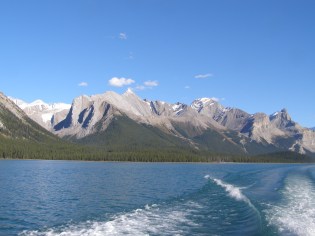
There have been 4 days straight of warm clear weather, after rain all of August and a blizzard only 5 days ago. So the cruise on Lake Lavigne was pretty special. We arrived at 1545 for the 1600 (last boat of the day) cruise – mostly complying in the 60 minutes we had to get there with the 60 kph speed limit over the 48 km leg -and T got the last 2 tickets. She likes to time things finely (T wrote that: D has another description).

The views speak for themselves.

img_5506

OLYMPUS DIGITAL CAMERA

OLYMPUS DIGITAL CAMERA

OLYMPUS DIGITAL CAMERA


The bonus is the story of tourism/fishing at this lake. A bit like “Salmon Fishing in the Yemen”….the industry came about because an early adventurer/businessman recognized potential but there were no fish. It’s a lake fed entirely from snowmelt off the surrounding mountains and had no marine life till this guy brought in brook trout fingerlings, pack horsed in via whisky barrels. These fish were not enough sport, so the government introduced rainbow trout and ….freshwater brine shrimp (to feed the fish). …… they thought the rainbows would eat the brook and take over, but the rainbows inhabit the north end and the brook the south – living, spawning in comfortable proximity.

Dunster Detour

Day 27. Wednesday 14 September.

img_5466   img_5470

OLYMPUS DIGITAL CAMERA


We took the long route to Beaver Falls – go past by 10 km and then backtrack. We have found that reading signs here is a bit of an art that we are yet to master. But it was worth it – a short forest trail to the rapids, but quite beautiful.


P9150190.jpgT then decided that we’d do a loop through Dunster, a small hamlet, crossing the Fraser River ( the best salmon river in the world) and rejoining the highway about 30 km later. The first part was bitumen, then a long section of well- graded dirt along a farming corridor. Dunster was a delight – the two buildings providing interest. We toured the little museum, located in the old railway office which had been bought and relocated by locals.

It was very well presented with lots of photos of valley life in the first half of 20th century, and maintained beautifully. T was particularly taken by a photo of a young woman feeding(what appeared to be ) a bear cub…sure enough that was so, and the young woman was the mother-in-law of the museum minder today. The General Store was a delight – a throw back to when a general store was a general store. The lady in charge (store keeper, postmistress, wood chopper, potato grower, etc) was happy to talk at length. It was a hard life, she said, but very satisfying.

On the road from Dunster two bird sightings: firstly, a pair of Rock Ptarmigan (remember Chicken?) then a Bald Eagle feasting on a very dead salmon in the middle of the road. It seemed a bit more sensible than our wedgies, and flew off when we appeared.

OLYMPUS DIGITAL CAMERA


The Rearguard Falls were spectacular. Brilliant jade in colour and nature had created a glass/water display. We were too late for salmon viewing. This is the end-point for the Chinook salmon returning the 1200 +km journey from the Pacific to their ancestral home to spawn and die (late August). Only the big strong ones make it up these falls.


Terry Fox Mountain is dedicated to a young man who lost a leg to cancer and started a marathon-a-day run across Canada, only to have to stop running when the cancer reappeared in his lungs 3 months afterward – he died aged 22, but has left a legacy behind: a Canadian hero and huge sums have been raised internationally.

img_5477

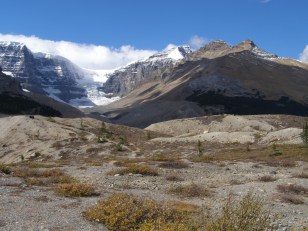
Then Mount Robson appears immediately ahead. What a sight!

Mount Robson Park and an afternoon walk through cedar forest along the Fraser River. The squirrels continue to delight.

All the Lovely People

Day 26. Tuesday 13 September.

img_5454
                                                                                  Lake Tudyah

img_5462

A few observations, based on an admittedly limited experience/exposure:

  • People in Northern America have been unfailingly polite; they’re not always effusive, but we have not really encountered anything but civility (we have observed some vey few aggro instances, but relatively minor in nature);
  • Drivers have been tolerant, patient and safe. One exception was a driver travelling behind one of our group on a dusty road for a long time, unable to pass (our driver couldn’t see him in the rear vision mirrors because he was too close). The driver gave the ‘bird’ as he passed, but that was all (and D reckons he would have done at least as much).
  • The reliance on boom industries – gas in particular – has had the same consequences as in Australia as the bottom has dropped out of the prices;
  • The cities (or the parts we’ve visited anyway) seem to be architecturally dead. A few new buildings (pretty much all government of some sort) are interesting, but most others are functional or utilitarian. There don’t seem to be any of the fine colonial or period structures found elsewhere.
  • Prices are comparable with Australian, although so far, fresh produce is cheaper.

As we travel along, complaints about the motorhomes are surfacing, perhaps inevitably. They include, just to mention a few, leaking seals, lumpy or collapsed mattresses, tired pillows, non-charging house batteries, wobbly steering, defective oven switches, ineffective water heaters, collapsing camp chairs, acrylic blankets not up to the task and self locking doors (three occupants have been inadvertently locked out, requiring break in!) Notwithstanding, everyone has retained a sense of humour with only occasional and very, very brief lapses. Our tour leaders are doing a good job of keeping us informed with just the right amount of information and suggestion.

We made it out second last this morning, something of an achievement. En route to Prince George we stopped at a service centre to top up on propane. As a certified attendant wasn’t available there was a short wait for the only available one to drive in: he gaily informed us that ten minutes later he wouldn’t be available as he was taking his daughter to the midwife to prepare for the home birth of her second child. The front of the bowser wasn’t registering the amount or cost of the gas going in, so he said he’d estimate it. D noticed that the back of the machine was working and advised him of this, plus the final amount. He preferred to use his estimate, which was several dollars less than the bowser amount. We left him under the counter starting and restarting the computer, as the screen had gone blank.

Prince George at least had a good coffee shop – Zoe’s was buzzing, and although a double shot espresso order came as two espressos, it was very drinkable. T wandered off to a quilt shop and D just wandered. As in many places the Visitors Centre, (like Libraries) provided excellent, fast, free wifi. The town, a business hub for Northern BC had no aesthetic appeal…wide streets, tired mall constructions intermixed with industrial facilities and lots of social service shopfronts.

img_5464

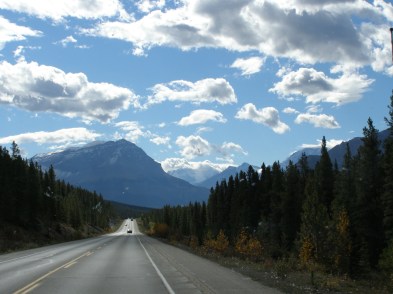
The drive down to McBride was adorned with signs warning of wildlife: moose, deer and bear. Not one of any of those sighted. The road, forested on both sides stretched toward mountains. Lakes, rivers and trails made up the drive, but the horizon was generally out of sight. If there were any residences, they were not visible from the road.

The very hospitable hosts at the RV Camp provided a free sausage BBQ, as they do twice a year for these tours. T was initially reluctant but the sausages were quite tasty with a nice smoky flavor. The hosts are Brits – been here for about 9 years. He was a British Army pilot until 1982, and has flown extensively here.

img_4983


Is this Paddington in disguise?

This One was a Windy Road

Day 25. Monday 12 September.

img_5450

OLYMPUS DIGITAL CAMERA

A reasonable drive ahead, so a detour to visit Bennetts Dam on the Lynx River – the largest body of freshwater in BC, held back by a packed earth dam wall. A (drip) coffee in the small café, that seemed to cater for the workers, who self served huge servings of Shepherds Pie.

What’s for dinner, T?


Then on to Hudsons Hope, a centre for the workforce supporting BC Hydro, as well as coal mining. Hydro is proposing to flood the adjacent valley – the one we drive through yesterday, to produce more power. The locals, unsurprising, are opposed, not least because they believe that the extra power is not required, as Hydro sell 25% of the power they currently generate to California. It has caused some friction: the woman who looked after the museum we visited is opposed: her partner works for Hydro and supports the protest! The museum itself is obviously a work of love and although small and simple, tells a good story of the area and how it was developed.

OLYMPUS DIGITAL CAMERA


Next door was a church shared by a number of denominations: common sense demonstrated. Perhaps a thought for SWUC?


Having seen signs pointing to the Saltau First Nation Reserve, we dropped by, to find that there was nothing there for curious tourists: just a community getting on with its life. Although basic buildings (apart from the Community Centre), the reserve was neat and tidy. A lady enjoying her break outside the Centre was happy to explain the situation to us.

OLYMPUS DIGITAL CAMERA


On to Chetwynd, a larger town/city. This provided T with the opportunity to browse an Op Shop – just like home! The upside was that we were able to pick up a second hand, washed quilt, that was perfect that night – warm and cosy. In 2015 the town  had a chain saw sculpture carving competition – an example shown.

This one is called ‘The space between heaven and hell.


The drive to our free campsite on Tudjah Lake was slow due to the high cross/head wind. These motorhomes are not aerodynamic and get buffeted each and every way in even slight winds. We were warned not to wander at night – the bears are about!


A Good Omen

9.30 AM – most travellers have gone leaving the usual stragglers. They’ll see a misty road – we see a misty, beautiful river. The road can wait – it’s a short day today.

img_5448

The Sad Road

Day 24. Sunday 11 September.

Find an espresso in remote Canada? Not a chance! Once again, confusion over the order, so we got what the server wanted to give us. Ah well, but they are so polite.

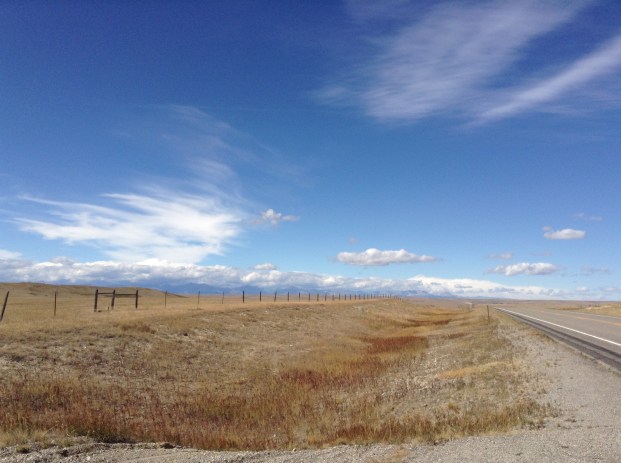
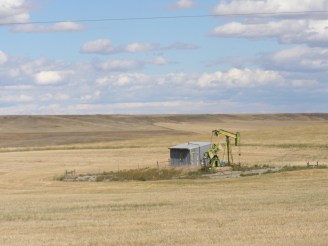
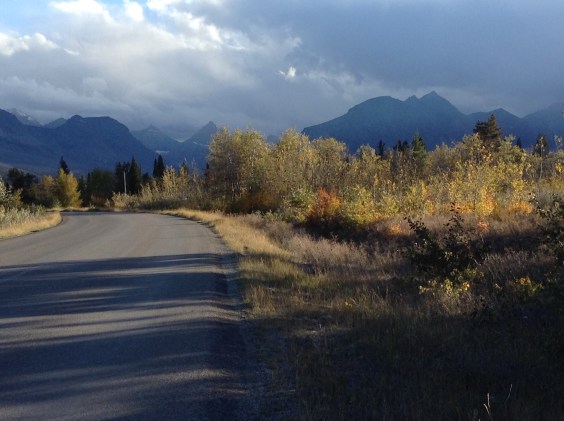
The ‘Sad Road’ on a perfect autumn day. Early on, views of the Rockies. It reminds us of the boom and bust stories….massive investment in oil and gas infrastructure over a decade. Townships expand AND THEN? The resource prices drop, the drilling stops, there are few jobs, the big mining “donga camps” are empty. The only employment is road maintenance/upgrade (and there has been lots of that), the diners, international tourists flying in for the hunting season. Lots of real estate for sale and the car at the drive-thru Tim Horton’s coffee…”For sale or take over loan” sign says it all. There are big tanker trucks in both directions constantly. What are they carrying?

A few stops, one memorable. D was becoming increasing agitated about fuel – not so much to get to our next stop, but more about availability, once there, to get to the one following. A convenience store, restaurant and fuel point appeared as if by magic about 5 km before we pulled off the Alaska Highway onto a minor ring route. The restaurant was called ‘The Shepherd’s Inn’.

img_4981T went in to activate the plastic card and the guy on duty was so pleased that we’d stopped for a chat. He said he could have listened to our accent all day. He & T talked about the “sad road”….he’d been in this business for 11 years and it had gone sad in the past 15 months. However, he mentioned that the business was owned/managed by a church group….a Christian Fellowship of no particular denomination (they didn’t owe allegiance to and didn’t pay dues to any other body).

He’d been in church this morning and was now in the servo, doing his bit. We talked about church communities, having just got a new Minister etc…. He sent us off with a “God Bless” and some cake samples. We stood in the yard eating our icecreams and realized he’d not charged us. So, D went back in….the proprietor admitted that he had been so engaged in the conversation that he’d overlooked the icecream charge and didn’t really want it…but in such a context…

img_5433

A bit later we said goodbye to the ‘Alcan’, the road through to the northwest that links the lower 48 through Canada to Alaska. It’s an historic/iconic route, built largely using Army Engineers in World War II (in only 8 months), and is maintained in very good condition. From now we’ll be on “lesser” roads.

OLYMPUS DIGITAL CAMERA


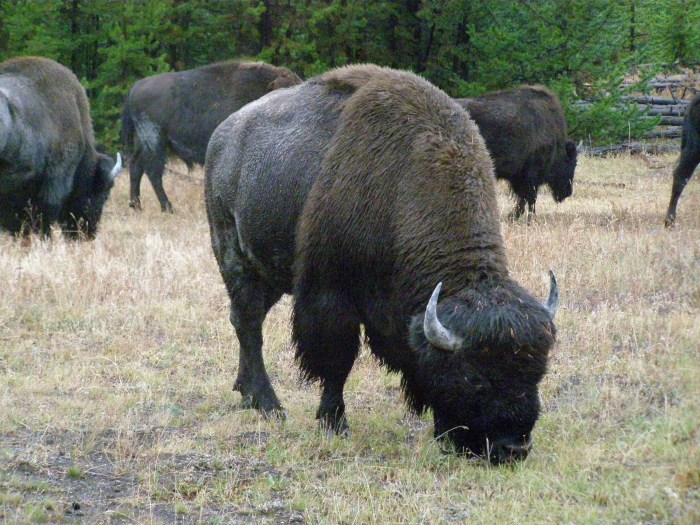
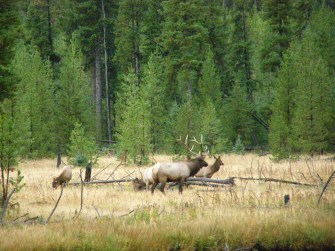
Wildlife today? Deer…others sighted a few bears.


Now on Lynx Creek, part of the Peace River Valley, that supports hydro power and farming pastures (which deer love).

img_5444

Vale Whitehorse

Day 22. Friday 9 September What’s on in Watson Lake?

A long day ahead, and steady, sometimes heavy rain. First stop after 160 km was Teslin, a dot on the highway. We’d been advised by our tour leader to visit a stuffed animal display – despite our scepticism it was very good, with the whole range of animals beautifully stuffed and placed in realistic scenes. Apparently it was a fantasy of an accomplished taxidermist, complemented by a German diorama maker. Anyway, we can now tick off that we’ve seen all the Canadian wild animals, albeit none of them alive.

img_4875


Happy Hour tonight celebrated one birthday, held over from yesterday, and one 50 years of marriage anniversary.


Watson Lake is known for a few things, one being its Forest of Signs. Started by a US Army engineer working on the Alaska Highway in 1942, it has grown to include more than 75,000 signs from around the word, although most that we saw, before being driven away by more rain, seem to be from the US & Canada.

img_4978   img_4878

Stable in Whitehorse

Day 21. Thursday 8 September.

Well, maybe not so stable. T’s ‘bug bites’ are still not responding to the over the counter drugs, and other possibilities have been suggested by the more medically trained members of the group. So, the Crans were the first out this morning – that is a first – and off to the Emergency Department of the local hospital after a breakfast of American baked beans, which is a last.

The hospital was pretty efficient, even though the admissions clerk was learning on the job. Not much of a queue, but still a wait – it is part of the experience. But the upside is that it has provided free the best, quickest internet service since leaving home, so lots of updating achieved while poxy T spent a few hours with the medical staff.

The diagnosis? Yep…Shingles left side of face/head. Drugs might help if caught in the first 72 hours, but since T is at 96 hrs, so who knows? Scripts in hand (and advice that it’s ok to continue hanging out with old fogeys, but steer clear of under 7s who are not immunised).

img_4854


Then off to Brett the optometrist to check on that thing on the left eye. He did all sorts of tests on both eyes – finding that the vision in the affected left eye was better than the unaffected right. Anyway, T got a good report from all that and hopefully things will improve in a few days, aided by more drugs – and a hefty contribution to Canada’s health system (thank goodness for travel insurance).


The visit gave us an opportunity to stock up at the Canadian equivalent of Walmart – Superstore – it was where the optometrist was based. Prices very similar to Oz, although fresh produce seemed much cheaper: the most important item, potatoes, were $1.27/kg. BTW, Canada has gone metric, which has been a bit confusing on the road as the metric speeds signs have to be converted into miles/hour to read the speedo. It’s not a hard conversion but does take a little bit of time at our age.

A great coffee at Midnight Sun Café, recommended by optometrist Brett – and it was good, although two extra shot espressos with a bit of hot water on the side (Two hot waters? No, we’ll share one. You sure?) caused some confusion. In the end we got short but strong Americanos – what we were aiming for. Coffee orders continue to confound.

img_4858

A visit to a First Nation Cultural Centre – an interesting video highlighted both the similarities and the differences to the experience of our own indigenous people. There seemed here to be a better sense of First Nationhood, and for it to be an integrated (in the best sense) and accepted part of Canadian life. That impression is, of course, based on just the limited exposure we’ve had – there are sadder stories in the broader context.

IMG_4859.jpg


Our tourist guide mentioned a rail trolley ride that took about an hour along the waterfront. That sounded like a good way to finish off the day, so we duly went to sit at the rail stop. No trolley, well after the appointed time. We felt a bit like the travellers waiting at bus stops in certain homes. The booklet said the trolley operated until mid-September, but when we later passed the depot it was obvious that mid-September falls earlier up here.


On our way back to the RV Park we dropped into Miles Canyon. The canyon was named by an Army officer after his commanding officer – perhaps as a career enhancement attempt? We thought the Yukon River was fast in town: here it raced through. Signs advised against jumping in due to the fast current and undertows: we wondered how many local lads (it would only be the lads) went in as a rite of passage? The deep aqua green of the clear water, and the white of the breaking waves (giving the city its name), contrasted with the brown of the river bank cliffs, and the red of the lichens covering the rock.

img_4863

Poor internet last night and again tonight, so photos will have to wait.(Updated 11 Sep)

A Long and Windy Road

Day 20. Wednesday 7 September.

Last night the group visited Diamond Tooth Gertie’s establishment for a meal and a show. Some of the members got into the spirit of things. T still wants to know what D said to the showgirl: he can’t (or won’t) remember.

img_4832   img_4845

The title is not a reference to finally using up the boiled eggs (well, D did anyway). It was a long (527 km) trip today over a road that wound both up and down and around and around. It was in mostly pretty good condition – in parts excellent – although T did remark on its patchwork state, much like Australia, compared to the very good roads in Alaska. Again, the colours were magnificent….gold upon gold.

IMG_5355.jpg   img_5374

img_5359The occasional glimpse of the grand Yukon, rushing to the Bering Sea. Lakes came and went and patches of burnt forest from past bushfires. It seems that fire performs as in OZ, re-generating the ecosystem. Still no wildlife to write home about…a few squirrels, but no elk, nor bears, although a ‘black bear’ had been seen around a trailer park at Pelly Crossing (where we stopped for a caffeine fix).

img_5370

And an hour stop to take in a walk down steps/trail to view the Five Fingers spot on the Yukon…a place where ingenuity had overcome the narrow river passage between rocky outcrops. Until they dynamited the rocks out of the way, steamers winched themselves through the rapids to deliver essential cargo.


img_4848

Arrived at Whitehorse (capital of Yukon) for happy hour, celebrating a significant birthday of one of our fellow travellers, and then retreated to the warmth of the van, wondering when the first snow might fall.