More from Alice……

Day 17. Monday 14 August.

First stop this morning was Kathleen Springs, for a short 2.5 k walk to the waterhole at the head of the gorge. By the time we started it had reached about 30 degrees, but parts were in shade. Very frustrated by the bird life, which invariably flew away just as the binos were focused. But we did see, and hear, the tiny zebra finches in their dozens, as well as white plumed honey eaters, and black faced wood swallows, to add to the Butcherbird, Port Lincoln ring necked parrots and the ubiquitous yellow fronted miners and top knot pigeons seen earlier at the campsite.

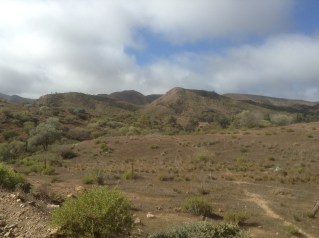
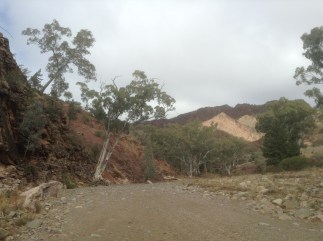
Kings Canyon was next but the long walk around the rim was not on – we were able to justify that by having done it in 2007. Instead we took the short walk up Kings Creek, enjoying the flora and fauna.

1

2  3  4

The walk was shorter than in 2007, as the viewing platform at the end of the track had been destroyed in 2016 by huge rocks falling from the base walls after heavy rain. It was apparently reassuring (for the Rangers) that they hadn’t come down from the top, and the walk will be reopened after repairs.

Kings Canyon resort replicates Yulara, so we weren’t going to stay there. The road on from the resort requires a permit, but none were available, so we were advised to just drive through like everyone else. Instead we paid the very modest fee ($5.50) and held on to the receipt to show we were honest citizens (the money goes to the traditional owners of the land through which the road goes.)

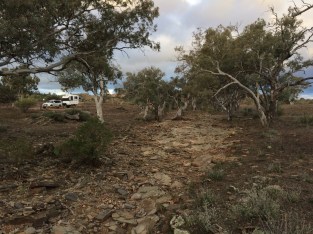
We were told of a free campsite about 30 km up the road on a jump up, so that’s where we are spending the night, perched on a bluff overlooking the plains all the way back to Kings Canyon. And we’ve just been joined by a dingo for sunset drinks.

5

D has walked to the end of the campsite to let the French girls (who’ve gone into the scrub to find firewood) know of the yellow visitor. And now he (and some other new arrivals) are advising the girls about the fuel tanks on their roof. A third piece of advice (no, they don’t mind) is about firewood and he’s loaned them the bow saw. Wonder if he would have been so helpful if they were a couple of French blokes? They’re probably thinking that the flies aren’t so bad in comparison!

6

The girls are doing the backpacker thing and having finished the requisite period in ‘farm, construction or mining work’, have bought a 4wd Mitsubishi van and are celebrating the free roaming scene. And we’ve been given the French seal of approval for tonight’s vino…we don’t believe that we are into the emergency supply – a Yalumba cask red!!!! D hasn’t yet lived down the 2007 fiasco of running out of red in Alice and it is very close to history repeating. To add tragedy to pathos, the cask sprung a leak, so D has decanted most of it into two bottles that hadn’t yet made it to the rubbish. We may quite involuntarily find out what an AFD is.

Day 18. Tuesday 15 August.

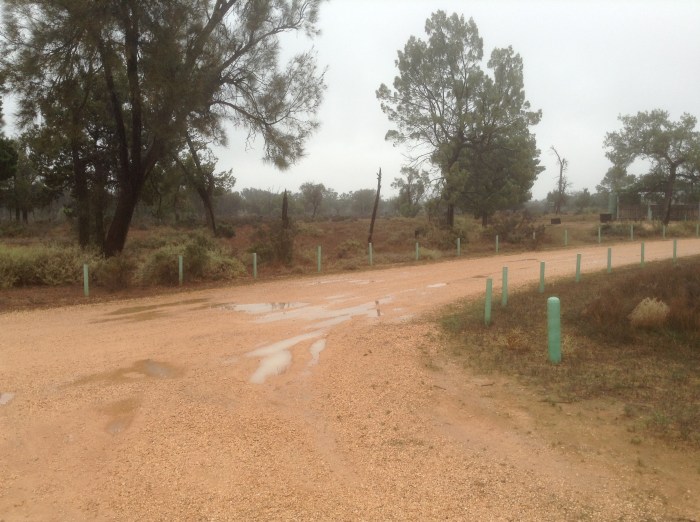
Not a lot to report on this day, which started with 120 km of rough, corrugated, sandy gravel road until we hit the bitumen on the inner loop road. The drive took about 4 hours, which gives some indication of the conditions. We did a quick recce of a camp spot at Ipelora indicated in one of our guide books but apart from some yards (possibly for horses – there was a lot of evidence that they’ve been around recently all the way in on the 13 km track) there was nothing much to offer, so we headed to Redbank Gorge, a well set up bush camp site in woodland. We were the only visitors when we arrived, but shortly after at least four others drove in.

The day was hot, plenty of flies and native bees which swarm around the water outlets of the van. Birds twittered: finches, honey eaters, wood swallows. T ambled up to the Ridgetop at sunset (without a camera!) The sun was a red ball, dropping behind the gorge. A magic moment without a photographic record.

IMG_6310

Van and vehicle holding up well after some pretty horrendous roads – one broken drawer catch, but we were carrying a spare, so easily fixed. Other than that, one van tyre has a slow leak, and some rivets have popped their heads, but nothing structural.

Day 19. Wednesday 16 August.

Before leaving camp we had the delight of seeing fairy wrens and the brilliantly red mistletoe bird darting around our site.

The morning promised another warm/hot day and because we are slow risers, our walk into Redbank Gorge was done at midday. Signage misled us and we did the return route, clambering over slippery boulders in around 2 hours, not the 40 mins indicated on the noticeboard, and we had not carried water. The gorge has a permanent waterhole, is swimmable but very cold apparently but the last of the quartz rocks defied T with her gammy feet (and the young lass heading toward the pool, in crocs and with swimmers would have been seriously/dangerously challenged).

IMG_0906

IMG_0910.jpg

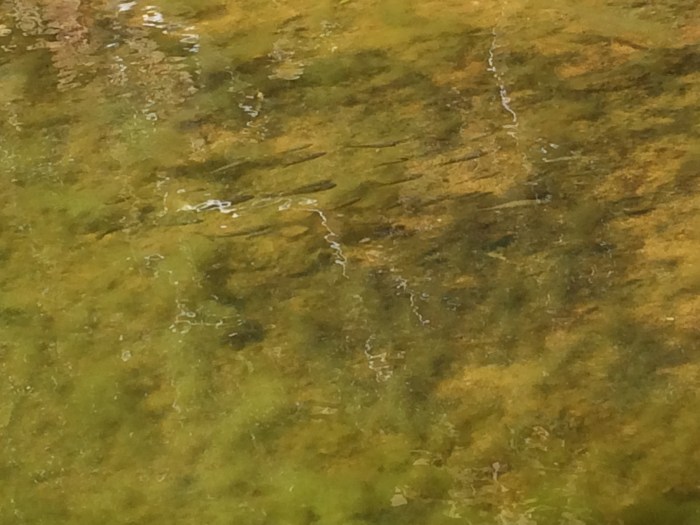
Nonetheless, spectacular colours once again and even some little native fish, no doubt the dinner the Grey Faced Heron was patiently looking for.
IMG_0903

Small birds sang for us as we travelled: Zebra Finches, parrots and a couple of varieties of Honeyeater and they didn’t seem overly fussed by our passing.

Namatjira Drive took us east toward Alice; we called in at Glen Helen resort for water and hoped to buy a beer for this evening, but of course we were denied, as alcohol can only be sold if you are staying at the resort. Frozen yogurts were the consolation purchase.

Tonight we’ve set up camp on the dry Hugh River, about 60 kms from Alice and will decide on the next move, taking into account the Todd River Races event coming up on Saturday.

Postscript.  We decided to go into Alice to spend a day or so looking at the sites, and to restock (yes, red win, but also other stuff) and to clear some laundry.
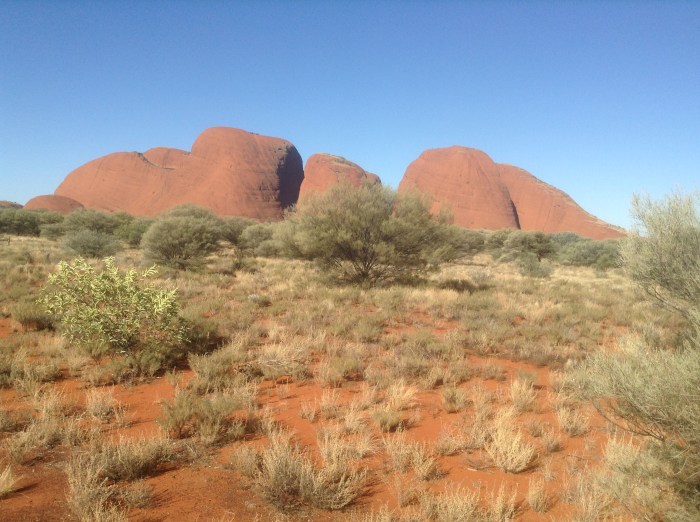
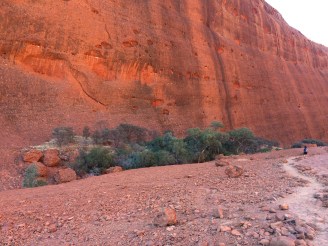


After a few days without Internet…..

Day 15. Saturday 12 August.

Surprise of the day was prices at the Yulara IGA: 65 cents a kg for spuds (D saw no reason not to stock up), $1.69 kg for a good size head of broccoli, and other items were comparative with Canberra or better. Perhaps it’s us at home who are being ripped off? The carrots will have some serious companions and it definitely means we can delay going into the Alice (although we are planning to be there next Saturday for the Henley on the Todd Regatta.

To Uluru, and the same spiritual feeling as a decade ago. What is a decade when time is measured out here in millions of years? It’s not difficult to appreciate and share the connection to this land and to the symbols it provides.

A 50 km drive took us to Kata Tjuta, which in some ways rivals ‘The Rock’.

3

As well as viewing from a distance, we walked up the Walpa Gorge track, again awed by the majesty.

2 1

At the risk of being narky, just a comment about some of the tourists (from overseas). There are signs requesting that visitors remain on the pathway: these were frequently ignored. A billboard explained the significance of the place to the indigenous people, and how it is considered sacred, and that they approach it in silence and with respect. We visitors are asked to do the same: apparently some had not read that request, as their chatter and carry on was anything but respectful of the place. Rant over.

Back on the Lasseter Hwy to Curtin Springs (150 kms to reflect on the beauty of the day) with D on a promise. Once there, a quick set up and he received his reward: a cold Coopers Ale – and T had a Coopers Light. We took the opportunity to introduce ourselves as friends of Sylvia, a member of SWUC, whose daughter is married to the original owner’s son, and manages this place, which is just a small part of the 1 million+ acres of cattle station. At the bar we met ‘Irish’ (Sylvia’s grandson-in-law, Dave Allen) and chatted to the cheeky patriarch Peter Severin who immediately pulled out several non-pc jokes upon seeing D and drawing an immediate likeness to another famous (infamous) Aussie, Rolf Harris!

We didn’t need much convincing to stay for dinner, outside, under the thatch roof courtyard, and shared home -made chilli and ‘plain’ sausages. The history boards in the courtyard tell the story of the transformation of the station: from sheep to cattle and the arrival of Peter and Dawn Severin in 1956, through drought and flood, the arrival of helicopter mustering and satellites, then the addition of accommodation for tourists to Uluru. Tourism complements the cattle business. The kitchen had Chinese chefs busy; we were served by a young girl from Nanking doing work experience. It is a wonderful set up, with free camping out the back, relaxed and welcoming and we shared the balmy evening with a motorcycling couple who were riding their bikes from the West (Shark Bay) to the East (Byron Bay) coasts, an expedition in the dust and sand over about 6 weeks. They were relishing a steak meal after 2 weeks of dehydrated food and before the next session of the same. With their kitchen limitations they had no use really for some extra carrots.

 Day 16. Sunday 13 August.

Started the day with a visit to the office to catch up with Lindy, Sylvia’s daughter. T duly made contact and fetched D from refueling duties to join the gang in the kitchen for a cuppa and freshly baked muffins. Peter was peeling spuds (his everyday chore), T was chatting with Emma (Lindy’s granddaughter, age about 11), the usual stuff: school, home, friends etc. What a confident, engaging girl she is, describing her classroom with School of the Air, household chores, her best friend who lives 100kms down the road….Lindy was preoccupied with some friends who had dropped in, explaining the plans for renovation and extension of the proposed bathroom facilities, but checked in with Sylvia to let her know we’d arrived: Sylvia instructed her to show us the paper making operation.

After the friends had departed we were taken on the tour – which lasted for a couple of hours. We felt truly grateful that this time had been made available in an obviously full-on schedule. In addition to an explanation of the paper-making process, we were also treated to a discussion about life on the station and the attached businesses (campground and paper making) which are all part of a ‘system’ that provides a leveling or some surety of income when conditions are bad. Lindy noted that the combination of the GFC, the dollar exchange rate, a drought and the ban on live meat exports to Indonesia had combined to create a dire economic situation some years ago. Many of the cattle destined for export became too big during that period – over 350 kg – so were redirected to the domestic market, creating an over -supply. Ashley (Peter Severin’s son & Lindy’s husband) had been offered the same price for his cattle as he’d received in the 1970s – he queried this, with the agent stating that he already had more than he needed – ‘take it or leave it’. Ashley left it. Interestingly, each head of cattle requires 250 acres, so the million+ acres supports about 4,000. Lindy said that at times they could carry much more, but had to husband the land so that it could survive the bad times.As Dianna, one of the staff, with a degree in Environmental Science remarked, they are true ‘greenies’ because of their care and maintenance of the land.

A couple of years ago Lindy and Ashley had ‘run away’ to Tasmania for a holiday and had visited the fantastic paper making operation in Burnie. A germ of an idea was planted! Ashley came on board, and the disused abattoir at Curtin Springs gained a new lease on life. As an aside, the abattoir was built many years ago to approved standards and certified for use, but ‘due to local politics’ the abattoir closed in the 1980s, so that now beef is sent to Adelaide for slaughter and then sent back to Curtin Springs for consumption. Anyway, that meant that this new paper-making business had somewhere to start, which was almost a perfect fit. Most of the equipment was built by the lads, apart from a Hollander beater and some deckle boards obtained from Burnie.

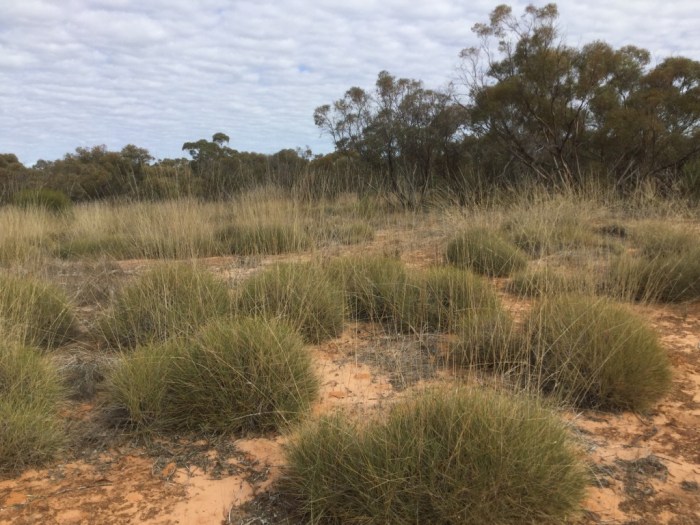
Having started this business, the question was: where to from here? Enter Lindy’s daughter Amy, who has a creative streak that bemuses her mother: ‘I gave birth to her, but I have no idea where she came from!’ Amy has developed a line of jewelry made from the paper, but more intriguingly has also created ‘wearable art’, last year gaining second place in a competition. This year she is exhibiting in an international expo in Perth later this year. In addition to these products, paper made from local ingredients is sold. The primary ingredient is Spinifex Grass, but other grasses are also used such as Woolly Butt Grass, as well as colouring and texture agents such as the red soil, bark, clay, flowers (eg. bottlebrush), bangtails, and cow poo. The result is fantastic, and is a visual and tactile reminder of this country. Lindy explained that they are not into the commercial paper field, it’s about providing an activity that keeps the tourists in the area for another day…business is really about beds and meals, so an activity that leads to this end is what the paper is about.

Have a look at www.curtinsprings.com

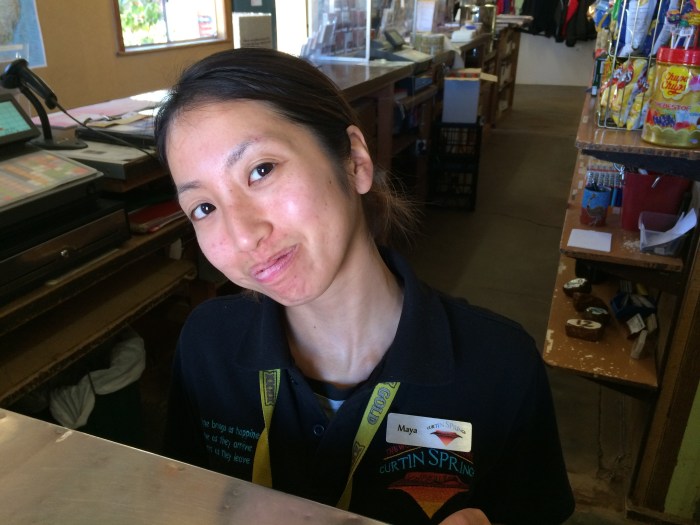
And it seems that there’s a lovely Maya everywhere we go!

2

(PS. A bangtail is the tail of a cow that is cut off close to the rump during counting (about every three years). Those that have been counted will have had their tail cut off, so only the ones still with a tail are added to the tally – and that tail is then cut off).

We departed in the early afternoon, heading for King’s Creek and the canyon, with a quick stop to take a look at Mt Conner. 1

T reflected on this family business community, the 4 generations living and working together 24/7, the challenges involved in diversification, the time/labour/creative output equation, how to meet the needs& wants of tourists while keeping the staffing levels appropriate…

Something we did notice was the absence of Indigenous workers and the presence of overseas staff, some working toward permanent residence and others here for the short term work experience.

Kings Creek is a different version of Curtin Springs: far more organized and controlled, and expensive! We are wondering why we stopped here tonight: we have a rig with power and water that can easily free camp for at least a week and we have reprovisioned. D recalls that we dropped in here in Gloria at night in 2007 to refuel and possibly to stay the night. Two things put us off back then: the price and the attitude of the Irishman serving us. He almost refused to provide fuel once we told him we were going to keep driving, because he said that meant we would almost certainly die by hitting wandering cattle. Anyway, we drove on to a rest area about 40 km up the road crawling along at 60 kph – and yes, there were lots of dark wandering cattle on the road, hard to pick up against the bitumen. We’re wised up now and will be on the lookout for those free bush sites from here on in.


Day 14. Friday 11 August…..and into Day 15. Saturday 12 August

Friday morning.

A quiet night, despite the proximity to the Stuart Highway – and our only near neighbours were a couple of ladies, who parked a respectable distance away. What’s not to like about a campfire in the Outback at dusk?

IMG_6257

A long drive – straight and straightforward. At the border T chatted to a traveller who was returning south after a month doing a volunteer stint with a school at Warmun in the Kimberley. She has been going there every year for the past 9 to provide music education. She drives 7 days straight from Victoria, sleeping in her station wagon vehicle. The community now has a variety of instruments, thanks to an insurance grant after the 2011 floods swept all away. She said she plays everything, being self-taught on trumpet and drums. As a school music teacher in her career life she had strings and keyboard licked. Reminds us of someone else back home who has such skills. To cap it all off she gave T some fresh carrots, declaring she was now a ‘bit over carrots’. T thought this is the start of our next dinner (one onion, 2 potatoes and some bacon still in fridge).

When we got to Erldunda Roadhouse and had connectivity, T booked into visit Bruce Munro’s light installation Field of Light – not without some difficulties. We’d been warned by a fellow traveller in Mungo that no, you can’t just rock up to this gig. He had waited a week to get a booking! T was pretty excited that tickets were available for tonight. That then dictated that we do the next 250kms to Uluru for the night.

The campground and hotels are full, but we squeezed a last minute site when T declined the offer of a cheaper spot at the ‘overflow’ parking where the visiting Circus is staying!

7.45pm bus pick up and arrived at the installation location, and after a short ‘safety’ brief we were on our own. The ‘oohs’ and ‘ahs’ as we stepped off the bus from overseas visitors marveling at the night sky – not the installation! Some things we just take for granted. Then we were let loose to wander the sandy pathways through the vast field. The terrain seemed to dip and rise gently (maybe it did) and with lights of varying heights, the effect was that it seemed to extend for many kms. It was a bit of magic (the long drive was definitely worthwhile). Earth and sky were one: 50,000 light bulbs and how many stars? Took lots of photos, but they simply couldn’t capture the scale nor the colours, which changed every 5 seconds.

Screen Shot 2017-08-12 at 08.26.08

Photo courtesy of the Field of Light website

Now it’s Saturday morning and T figures that we can actually stay in the West Macdonnell region for another several days….those carrots will keep us going, if we can get milk and bread ( and a few more potatoes) at the Ayers Rock supermarket. The resort here is NT’s 4th largest town and of course there’s an IGA.

IMG_6259

We’ll head for the bush, so no connection for another 4 days or so.


Day 13. Thursday 10 August.


The Painted Desert delivered a painted sunrise, then it was on the track again.

IMG_0143  IMG_0147

Coming through the Painted Desert was a fabulous drive, mesa after mesa, variegated colours of red, pink, ochre and the grey/green saltbush. Simply beautiful. It was an 80 km drive on a remarkably good dirt road to the Stuart Highway – something of a relief after four days of rattling along hoping everything was going to hang together.

Once on the bitumen it was smooth but pretty boring sailing with no natural features to marvel at. Pushed on to the Marryat Rest Area where we’d stayed the night in 2007, in Gloria. Two other vans, one of which was only stopping for a quick bite. T’s heart sank: the main area was filthy with rubbish, bins overflowing, baby nappies… so we opted to move about 200 metres along a dirt track to a clean spot just out of the creek bed, obviously much used judging by the number of camp fires, but no rubbish. 2.30 PM is the earliest we’ve stopped on our travels and we are just not used to the heat of the day, sweltering in high-20s temperatures and invaded by flies. We understand it’s freezing in Canberra.

By late afternoon we are surrounded by like-minded travellers. This takes us back to 2007 when we rarely had a quiet solo space.


Day 12. Wednesday August 9. Visual Feast Day.

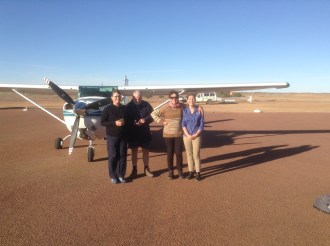
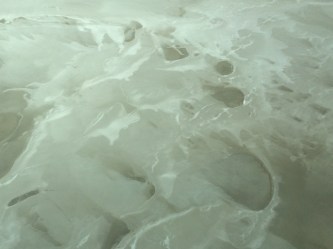
Main course: Lake Eyre flyover with the delightful Gabriella, the youngest bush pilot in William Creek (22 years old d), a Kiwi lass doing the desert season. A ‘toy’ plane, (Cessna 182, second most popular small plane in the world), 3 passengers (D was not one of them) and the only little bump was on landing.

1  2

3   5

6-1  6

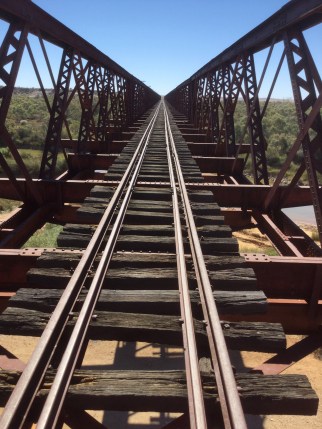
Entrée: the drive to Oodnadatta, a feast of pink, mesas, dry watercourses, the occasional groups of grazing cattle and the Algebuckina bridge.

9

7  8

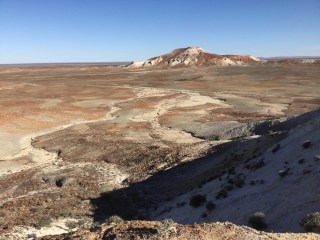
Dessert: the Painted Desert, halfway between Oodnadatta and the Stuart Highway.

10  1211

After dinner treat NOT: Set ourselves up at Arckaringa Station with lots of space all round and within 5 minutes a pair of campertrailers park themselves right alongside and unload their firewood!!!! We did think of politely suggesting quite a few other suitable sites, but desisted. Presume that they will light the fire and have us smoked by 9pm. Anyway, they will share the pleasure of the vacuum toilet repressurising at whim during the night, as well as the water pump, both of which seem to be protesting about the cold nights.


Day 11. Tuesday August 8.


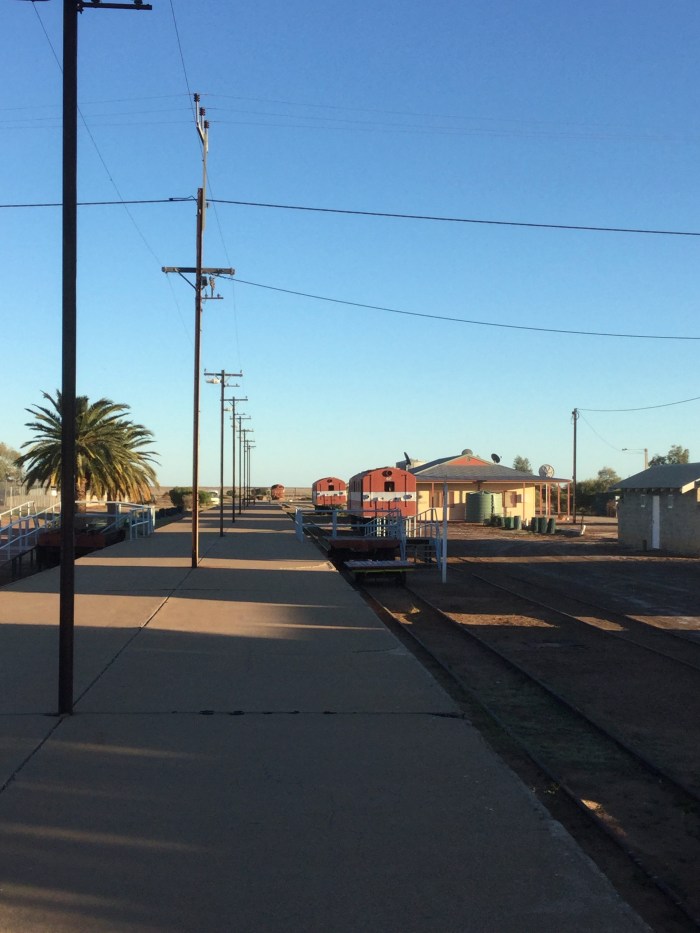
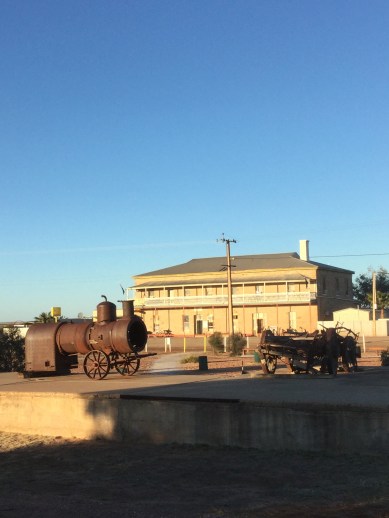
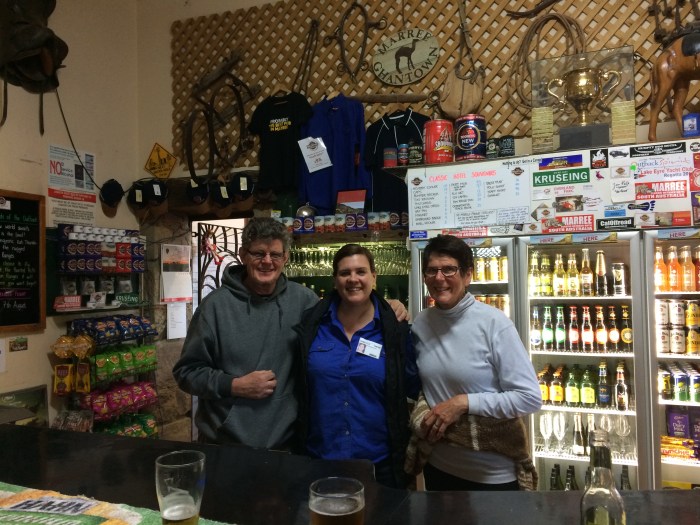
Overnight in Marree was very cold but the morning sky and sun were spectacular. Before departing we visited the Tom Kruse museum display within the pub and what a little gem. Tom had been a mail contractor and lash-up mechanic, driving in all weathers between Marree and Birdsville. A film called Back of Beyond had been made about his feats. The museum also had a collection of prints by the botanist Hergott who had accompanied McDouall-Stuart on his epic treks. The pub is a lovely building, in need of serious repair, but is the busy hub of Marree. The Ghan engines rusting at the station are a proud reminder of the original Great Northern rail story.

9

The Oodnadatta Track is a reasonable stretch of gravel with corrugated and smooth sections. After some of those rough sections D looked in the rear vision mirror to check that the KK was still attached – a useless exercise as the mirrors were vibrating so much, you could see nothing clearly – but the van remained connected anyway. It is an arid travelling route of salt lakes, mesas, railway sleeper relics, artesian springs, very little visible fauna and plenty of 4WD outfits.

5

Highlights were the springs which have guaranteed travellers a freshwater supply from the depths of the Great Artesian Basin for thousands of years and at one spot flocks of red-beak avocets were sweeping for lunch.

6

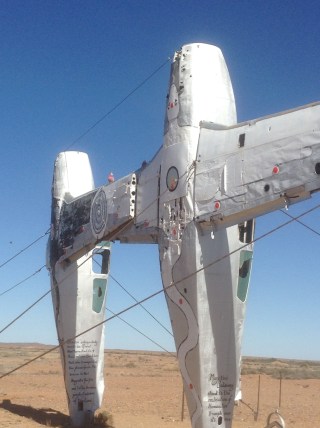
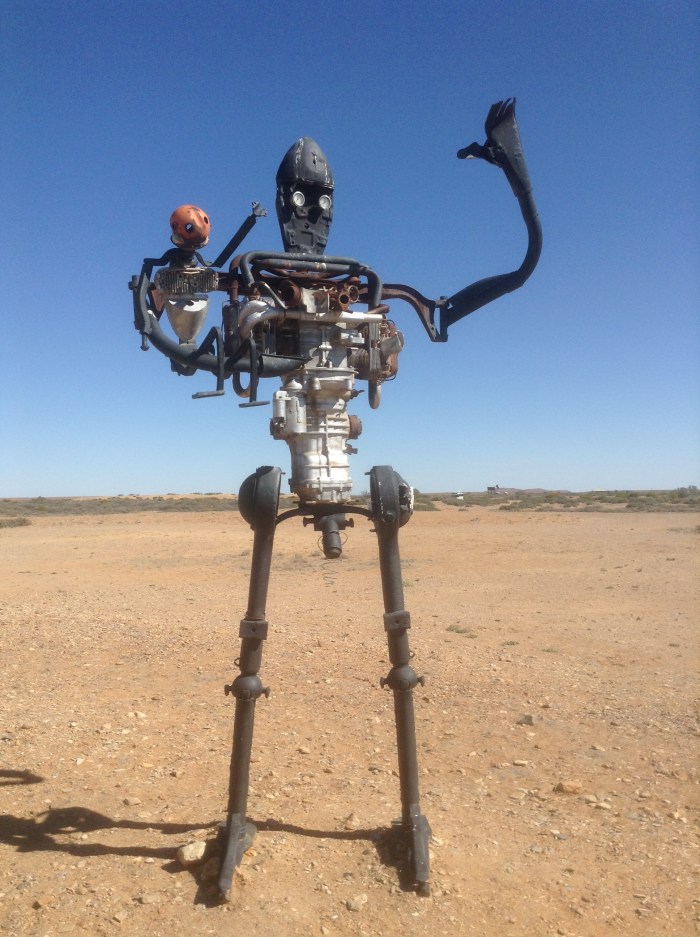
And a large field of sculptures that seemed to be a protest against unranium mining and Roxby Downs in particular: it had a very Mad Max feel about it!

1   2

And for Theo…..

3

Another highlight was accessing the shoreline of Lake Eyre South on foot where we marveled at the visual trick whereby a sea of salt actually looks like a body of water, reflecting the blue of the sky. And there were strips of white which could have been waves breaking on the shoreline. No wonder early explorers went crazy in this environment.

4

About 10kms out of William Creek we passed a cyclist (no, not Japanese) weaving his path – on the right side of the road. Forty minutes later T chatted to him as he arrived at the campground. He’d set out from Sydney 2 months ago and was heading for Alice. He confessed to being at an uncertain stage…whether to look for a lift for the last 600kms. He didn’t seem mad at all (but surely must be?) and explained his ‘weaving’ as picking his way around sand drifts. He has been surprised at how people and camels ‘have appeared out of nowhere’ in his desert ride and no, it’s too early for the Japanese cyclists; they tend to appear when the weather gets hot.

William Creek is a pub, a campground and an airstrip. T has booked a Lake Eyre flight for tomorrow morning. D will pack up and meet her off the tiny plane for Day 2 on the track. D has been informed over dinner of T’s cunning plan for Day 3 – more to follow on this one.


Day 10. Monday August 7.


The drive through Parachilna Gorge is exactly as the Heysen paintings show, but the dull light doesn’t do it justice. We set out in misty rain but by midday the sun was where it should be. Coming out of the gorge and onto bitumen it was all blue sky.

IMG_6221  IMG_6225

IMG_6222

Leigh Creek was the re-provision stop but T had not realized that the closure of Port Augusta’s power station also meant the closure of Leigh Creek’s brown coal. It is now a flash ghost town.

On from Leigh Creek, road straight and long. Passed through Lyndhurst, where last time we were here we scrabbled beer cartons from the pub to cover the window in the van broken by a passing mine truck.1

We stopped off at a ruin of a railway fettler’s building at Farina – hard to imagine just how hard that life was, and for many it was their career.

5

The dirt road is giving us a foretaste of the track, but is surprisingly good. A bit unusual is that there are two sections in the 50 km or so that are sealed (17 & 8 km) and are smoother than the Hume Highway! The occasional emu strolls out as though it owns the road, requiring some driver consideration. Judging by the roadkill there are a few drivers and a few emus who haven’t reached that accommodation.

Into Maree, a much bigger community than we’d anticipated, not sure why. Jen settled us in at the Oasis Caravan Park, a bit awkwardly jutting into the roadway, but didn’t seem to bother and in no time at all we were joined by others similarly parked.

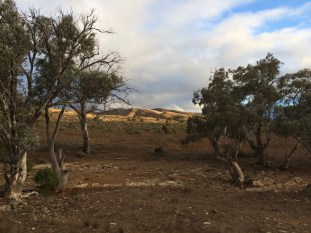
Off to the Marree pub, where the world got just a bit smaller, as the publican’s daughter, a former schoolteacher, had taught at Stromlo High School with our Jo! Bec has taken a break from teaching to discover another life. Needless to say, this was a photo opportunity.

6  7We booked into a braised beef and mash dinner at the caravan park, which was accompanied by Jen entertaining us with her renditions of old favourites.
8

And the second weird coincidence – joining us for dinner, also staying at the park, were Andrew and Irene from WCUC. He’s just taken over as Council Chair – D was delighted to be able to say he’s just handed over that role.

Just like the pub, the caravan park and connected roadhouse employ lots of backpackers. Two were at the dinner and after dinner fire – one from the UK (actually an Australian citizen as well, due to her Tassie Mum) and one from Germany. They were both loving the experience (and they talk to their mums each day). The outback is not so ‘out’ anymore, except perhaps for Aussie youngters who are probably doing something similar in the UK & Europe.


Rain, Rain…..

Day 9. Sunday 6 Aug.

At least four big freight trains plus numerous BIG trucks through the night. D counted the trains: T says her earplugs kept disruption to a minimum. So why does she complain about D’s snoring?

A long, windy (as in strong breeze – the road was pretty straight) drive to Peterborough (formerly Peterburg) for a coffee at a delightful retro café in the old Capitol picture theatre. Not only was the venue atmospheric but it was set up as a sort of museum, or perhaps more accurately a collection of diverse memorabilia, ranging from the movies to military hardware. D was taken by a Ford Prefect, which reminded him of the family car back in Blair Athol days (he later remembered that it had been a Ford Consul, not a Prefect – a slightly larger car for a family of five! It was the Consul that D helpfully refueled using the water hose; surprisingly this was something that Alec took well, and there was no punishment.

Another long stretch to Hawker, with even stronger head winds. As we travelled ABC news was advising of gale conditions in Adelaide and the southern parts of SA. It wasn’t that bad, but it was certainly unpleasant outside. Hawker is another ‘cute’ town, trying hard to attract tourists, although there weren’t many around. Visited the Jeff Morgan panorama gallery, which was excellent, reminiscent of the one in Broken Hill we’d visited several years ago. Jeff has achieved his dream purpose, painting God’s creation within a building which had also been built with the hands of God. T was taken by the reference to Psalm 65, with the desert hills clothed in green…

Dropped into the Wilpena Pound Visitors Centre, to confound the attendant behind the desk as we tried to pay for park and camping fees.

‘Where are you camping?’

‘Don’t know – somewhere north of here’

‘Dingly Dell?’

‘Where’s that?’

‘North of here’

Is there anything else?’

‘No’

‘What about these spots on the map?’

‘Yes, you can camp there’

‘Ah, good, we’ll choose one of those’

‘ok, that will be $25 total. Which one?’

‘We don’t know yet. We’re on our way to Blinman and we’ll just stop along the way’.

‘If you’re going through to Blinman, then you don’t need to pay, because you’re just passing through the park’

While this conversation was happening, T was filling out the registration form, and D handed over $25.

The conversation continued:

‘Well, we’re not sure because we thought we might go on a bit further’

‘Is this your first visit?’

‘No, we’ve been several times. Last time we camped at Parachilna Gorge’

A light bulb went off!

‘Parachilna Gorge. Yes. Stay there. Then you don’t have to pay anything.’

He then scrubbed out the registration form, handed back the $25, and smiled at a job well done, explaining that he was just acting as the agent for the National Parks service. In all that exchange he was unfailingly polite as he dealt with these obviously deranged visitors.

In the end we left without paying anything, in the understanding we’d stop at Parachilna, outside the park, as he’d recommended, so no user (as we were transiting) or camping fees.

As we passed Dingly Dell we thought we might as well check it out. A camper already there, who was travelling in from the north, informed us that he’d intended to camp at Parachilna but had changed his mind because of the trees and strong winds. Sounded sensible, so that’s where we parked too. Our fellow camper said he’d sort out the camping fee tomorrow. We’d love to be there to see that!

IMG_0772  IMG_0776

Day 10. Monday 7 August.

Our skill as drought breakers continues. A drip…drip…drip woke us both up during the night. A light but insistent derizzle had set in, and we (re)awoke in the morning to an overcast, heavy sky and the remnants of the drizzle. The decision was made to push on to Maree to start the Oodnadatta Track.

Coffee at Blinman, and the sun peeped through, but the wind was still pretty cool. As we passed through the Flinders, the conditions eased, and T took some shots of the gorge at Parachilna.

IMG_6221

IMG_6222  IMG_6225

Posting this at Leigh Creek, where its clear and sunny. It’s unlikely we’ll have internet connection for the next few days. This is a sad, sad town: everything so closed up that we thought today must be a public holiday. But no, the explanation is that the mine has closed, and industry in Port Augusta has also closed, so there’s nothing here to warrant the shops.


Days 7 (continued) & 8

Day 7. Continued.

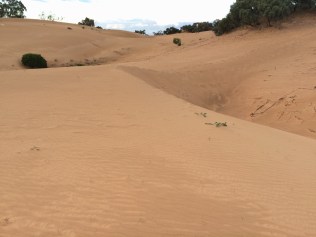
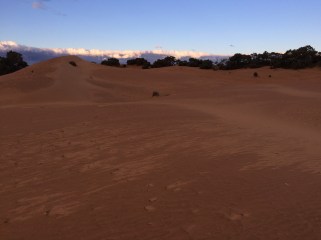
Having settled in, got ourselves up to date with admin and posted to the blog, we ventured out to Perry Sandhills. They were formed similarly to the lunettes at Mungo, and are a brilliant red due to the oxidation of the sand crystals: the deeper the red, the older the sand.

IMG_0499  IMG_0495

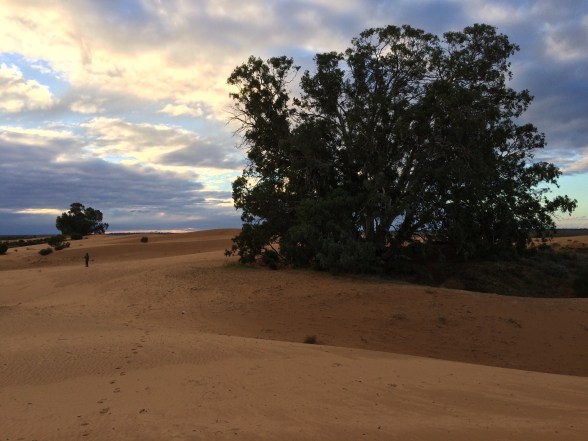
We came across the God Tree – a eucalypt whose trunk is buried in the sand dune – estimated to be 4-5 metres deep – so that you can stand in its canopy at ground level.

IMG_0494

Also visited the junction of the Darling and the Murray – a huge, tranquil body of water, with the 2 rivers meeting in a V formation.

IMG_0115

Tranquil does not describe the evening! D started to cook dinner outside and a gale blew in, so that he needed three hands to hold down the umbrella, stop utensils from blowing off the bench, and turn the steaks. He’s a dexterous kind of guy. The meal was worth it.

Day 8. Saturday 5 Aug.

The weather continued to disturb overnight, as did the party-goers who arrived very late, but presumably the conditions helped to keep their visit short but noisy.

Breakfast at a café next to the caravan park called Artback. Great food, but no smashed avo (and the servings were enormous) so civilization hasn’t spread this far yet: the outback is still unspoiled.

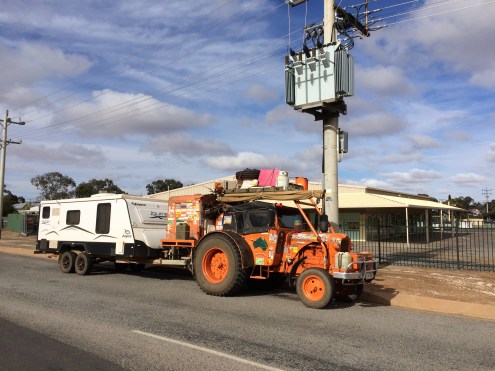
On the road to Broken Hill, just long kilometres of low saltbush and occasional bushes and feral goats. Stopped in BH for T to get that wool needle and there we caught sight of our next rig – just right to get anyone out of trouble!

IMG_0502

BH was as we remembered, but we passed through, wanting to get a bit further down the road.

IMG_0755

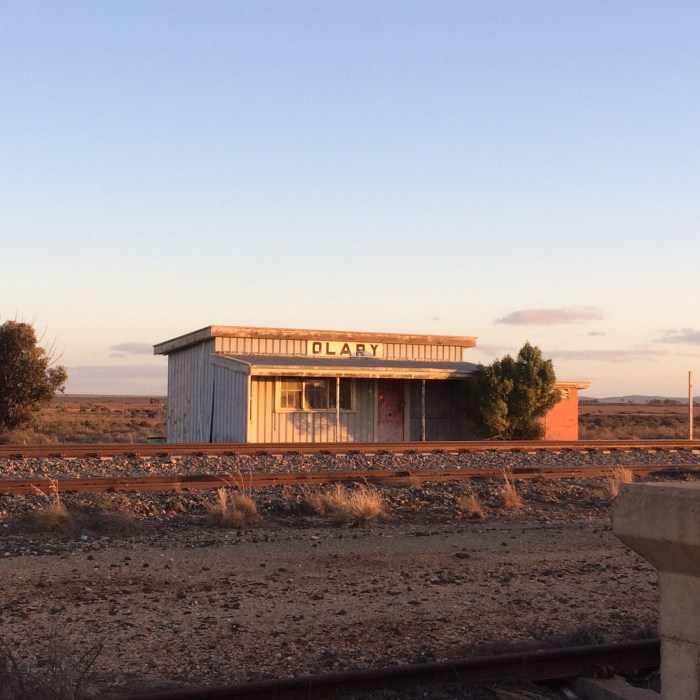
Pulled over about 65kms into SA, beside the railway line and outside a pub called the Olary. We’ll spend the night (T reminds us that the rest stops along the Stuart Hwy would never be repeated…and here we are!!!!!!) D had a beer at the pub – a can of West End. The publican advised that there would be no meals offered tonight because he’d spent all day collecting wood for the fire and hadn’t prepared anything.

IMG_0771

T is not going to offer him a serving of our chorizo/coriander stew. It’s now 1930 and we’ve lost count of the number of passing trucks, but there have been 3 trains. Both these big rigs remind us of the importance of the freight industry in a vast continent.

Mungo National Park – an enforced stay

Day 4. Tuesday 1 August (Horses’ Birthday)

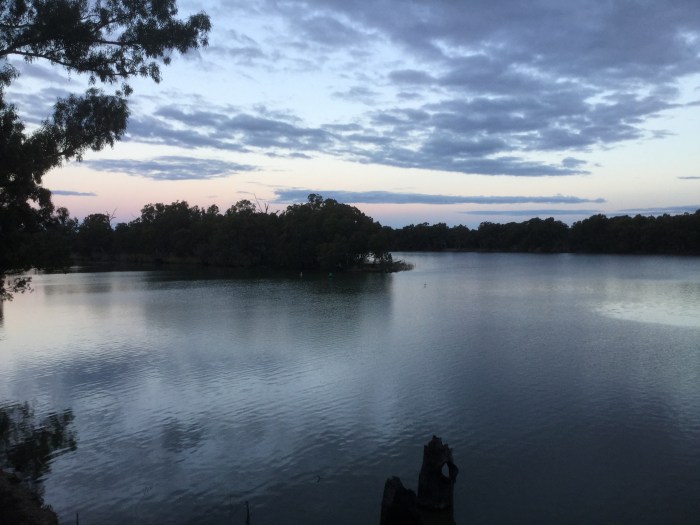
Perfect sunrise through the river mist.

IMG_6211

‘Let’s do coffee at Euston and then go north to Mungo,’ said T, so that’s what we did.

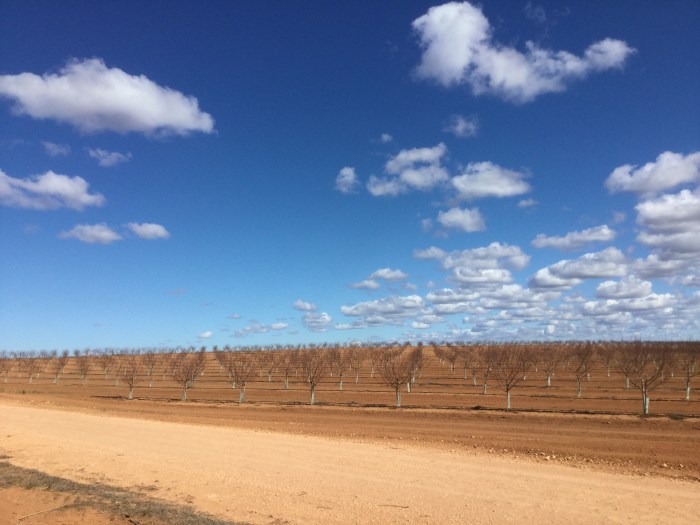
The lower Murrumbidgee becomes treed again and fields of olives, almonds and vines announce the arrival in Sunraysia. At Euston, (a whistle-stop) town with just a takeaway café, huge club/resort and new colourbond-roof housing estates (but RV friendly, with a parking area set aside that we didn’t check out), we took the coffee break, then headed up the dirt road toward Mungo. A newly- established almond plantation provided the morning colour scheme…pink soil against a blue sky with row upon row of trees.

IMG_0083

Soon it was corrugation and saltbush…the occasional sheep, a few emus and NOONE else on it! But this has to be the ideal season! – thinks T. Arrive at Mungo National Park expecting campsites to be already taken by those who get on the road super-early… NOONE!

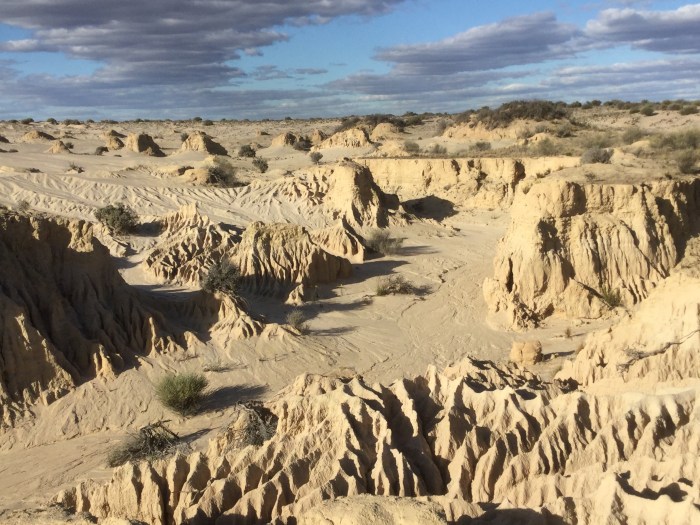
The Visitor Centre is open but deserted, so we register, pay and head for the remote campsite Belah. We had been at Mungo some 20+ years ago and had heard that the park was now fairly controlled in order to preserve the fragile environment. What a pleasant surprise! Yes, there are now boardwalks and you can’t tramp all over the Walls of China, but this is a plus and today we had it all to ourselves.

IMG_0084    IMG_0085IMG_0088

Set up at Belah (all alone) and dusk descends as the varied birdlife whistles, sings, carols and caws the end of the day.

Day 5. Wednesday 2 Aug

Birdsong wakes us and with a soft morning light it’s another fine day. The Mallee Ringneck parrot, emus, Red Wattlebirds keep us amused, darting in and out of the Rosewoods.

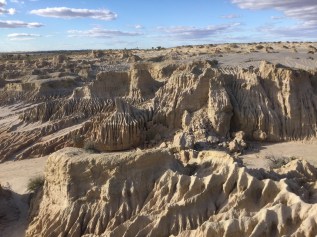
Continuing on the Mungo Lake circuit we take in the natural environment of Belah, Rosewood, Bluebush, porcupine grass, Wilga, Leafless Cherry (parasite), emus, kangaroos ( black, grey and red) and the man-made features of a feral goat trap and Vigars Well which was full of emus as we arrived, but was vacated promptly. The well is a permanent soak and was a horse and dray watering point, just ahead of the sand dunes (which could have been coastal) with their fine white grains. This is the back (eastern side) of the Mungo lunette.

UNADJUSTEDNONRAW_thumb_122f5

Next were the Zanci Homestead ruins, including a white cypress dugout to shelter from searing heat, Zanci Woolshed, then the Mungo Woolshed, beautifully preserved examples of drop log construction. Learning of the pastoral history of this area presents a very different perspective from our learning when we visited two decades ago. Back then, the focus was on the Indigenous features of this area, with Mungo Man and Mungo Woman, the Willandra Lakes system and the 3 Aboriginal groups who still meet here. Mungo became a sheep farm in the 1870s and wool was harvested in a harsh land which has no running water. Now under NPWS management and with World Heritage status, the story of Mungo is more comprehensive, presenting the bigger picture of the dramatic social, cultural and environmental change that came with pastoral pursuits on the back blocks acquired by European settlers between the Darling and Lachlan Rivers. The Willandra Lakes, full in the last Ice Age, human footprints from

20, 000 years ago fossilized in the claypan, Mungo Man and Mungo Woman from 40,000 plus years ago, 100 years of sheep and pastoralists, and now the National Park. The World Heritage status is now understandable.UNADJUSTEDNONRAW_thumb_122f8  UNADJUSTEDNONRAW_thumb_122faUNADJUSTEDNONRAW_thumb_122fb   UNADJUSTEDNONRAW_thumb_12300

Tonight we are in Main Camp and there are at least 6 other camping groups. Positively crowded! And rain threatens.

Day 6. Thursday 3 Aug.

The threat materialized – rain on and off all night. The one encouraging thing is that we have maintained our record as drought busters! At about 11 am, a ranger said that 10 mm had already fallen, and a drizzle continues. Roads are all closed so we’re here for at least another night.

A slow day – drizzle on and off. D walked to the Visitors Centre to check road conditions and weather. The park was closed, according to the lone Ranger, notwithstanding all the signs said ‘Open’. The roads in and out were closed, he was told, although there were no signs indicating that. Common sense said that they shouldn’t be used: dangerous and damaging. The penalty for being on/getting stuck/damaging a closed road is c.$1800 per wheel!!!!!!!

So T spent the day productively knitting her new sweater, while D spent most of the day checking his battery gauges, as the generator gurgled away outside in its little sun shelter.

IMG_6216

There was a group of nine campers close by, and twin sisters of about our age were avid (fanatical?) crocheters. T was able to borrow a precious sewing needle from one to complete the first stage of her project, and we were invited to share their fire that evening, rain permitting.

IMG_6214

And the rain did permit, so we spent a very enjoyable and humorous evening with this group of friends from Bendigo, who had travelled often together. One of the group was the brother of the twins, but he had left his wife in Bendigo, after an eight week holiday, to work while he joined this trek! They were headed to Tibooburra to visit an old nursing friend of the twins, who was now the bush nurse in charge there. They were expected for a birthday dinner on Monday night…so desperate to get out of Mungo on Friday. More rain forecast.

Day 7. Friday 4 Aug.

More light rain overnight, but in just a couple of patches – our fingers were crossed! Some sunlight broke through, and the clouds scudded across quickly yo provide at least some drying. D checked the road in front of the campsite and although still a bit wet seemed suitable. The Bendigo group were on their way, as was another couple further on, so the consensus seemed to be to go. On the way out we were told that a school group that had been staying in the old shearers’ huts was intending to head back to Mildura in their bus, so it seemed that all was a go. We were planning to take the shortest possible dirt road – about 50 km towards Pooncarie on the Top Hut Road, then turn left to Wentworth once we hit the bitumen.

Well, the road was suitable, but only just! Lots of boggy sections, but not deep, but enough to occasionally give the rig a bit of sideways slide, which is disconcerting. Parts were excellent, so we made fairly good time – the 50 km took just under two hours. When we reached the bitumen we looked back to see the sign: ‘Road Closed’!

So on to Wentworth, where we are staying the night. Pajero and Kimberley caked in red mud, despite a bit of a clearing by stick en route. Rain is forecast, so perhaps that will do the job on the way to Broken Hill tomorrow.