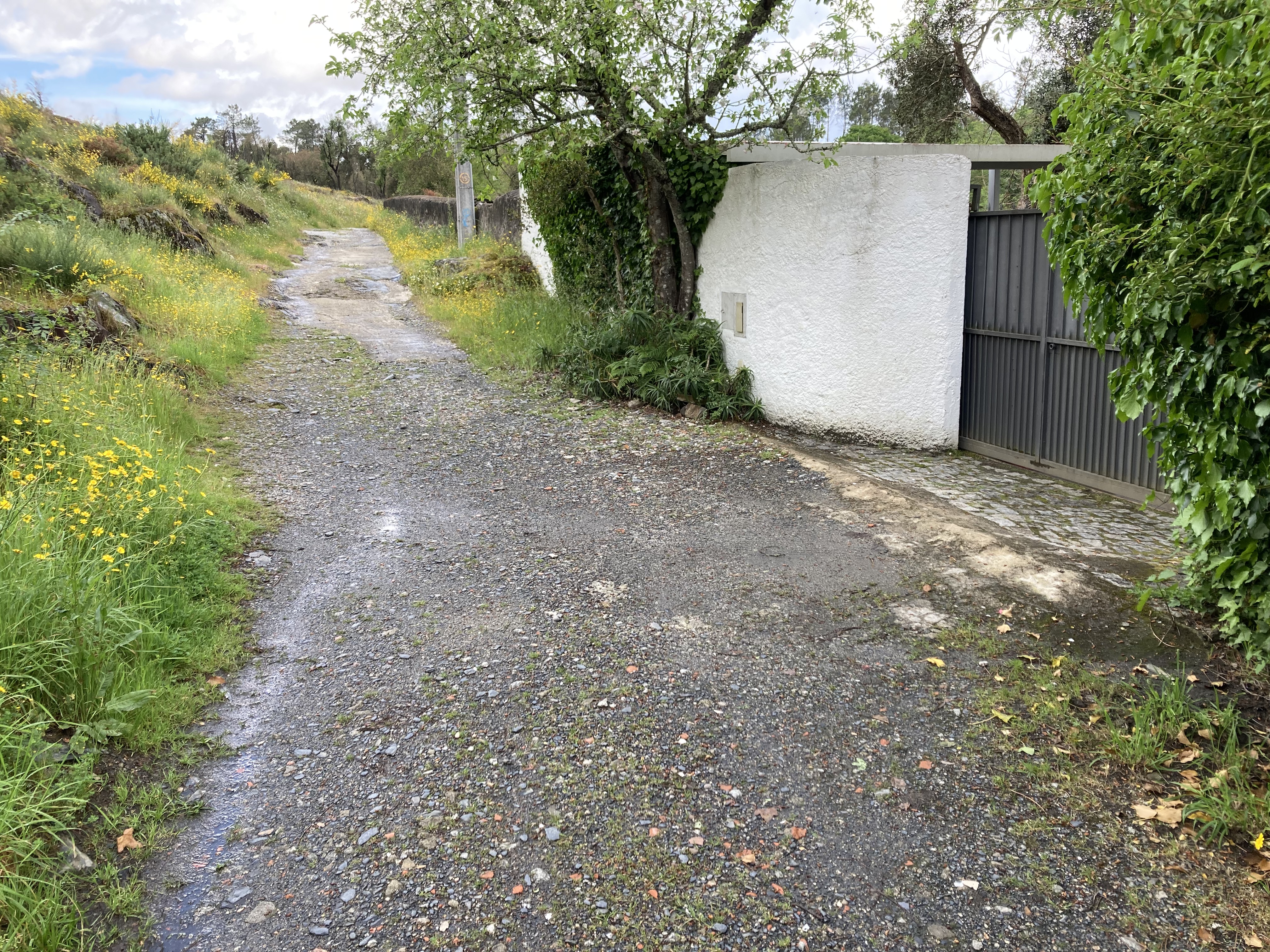
Some serious rain today and the river beneath us has risen. Aida had said that once in her ownership time it had come above the wall!!!! D’s roadworks would be of no use if that was the case; however, returning this afternoon from a visit to Braga, the little Peugeot found secure footing where D had placed slate, so we arrived safely; T will cook an omelette for dinner, but not the promised potato, as we had a very substantial lunch.
Heavy rain receded enough for a town amble with occasional light showers, and T hung out in a fabric shop for a good hour, sifting through the off cuts. D wandered….. he is chasing a very particular souvenir sardine (maybe it needs to be bespoke).
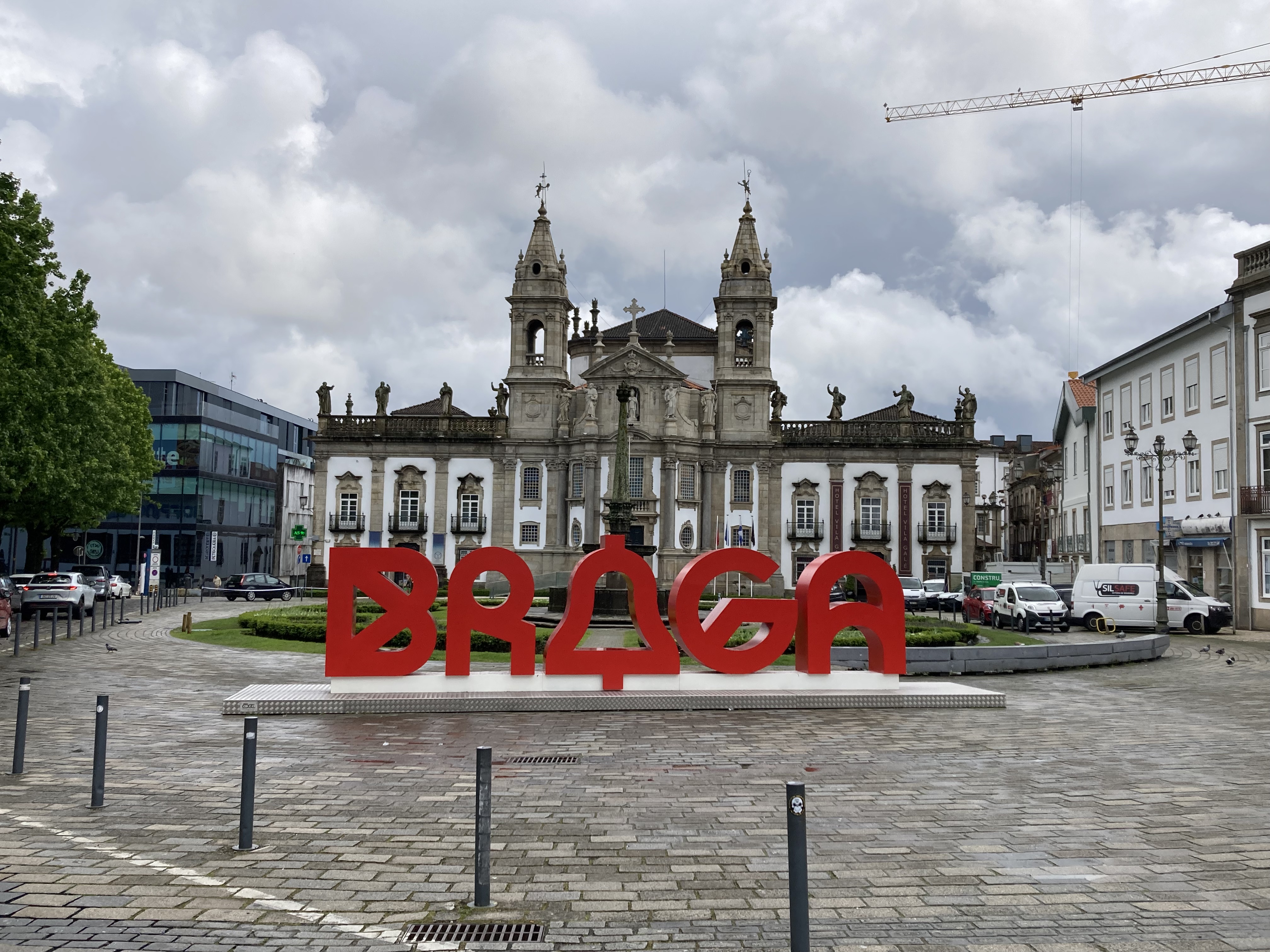
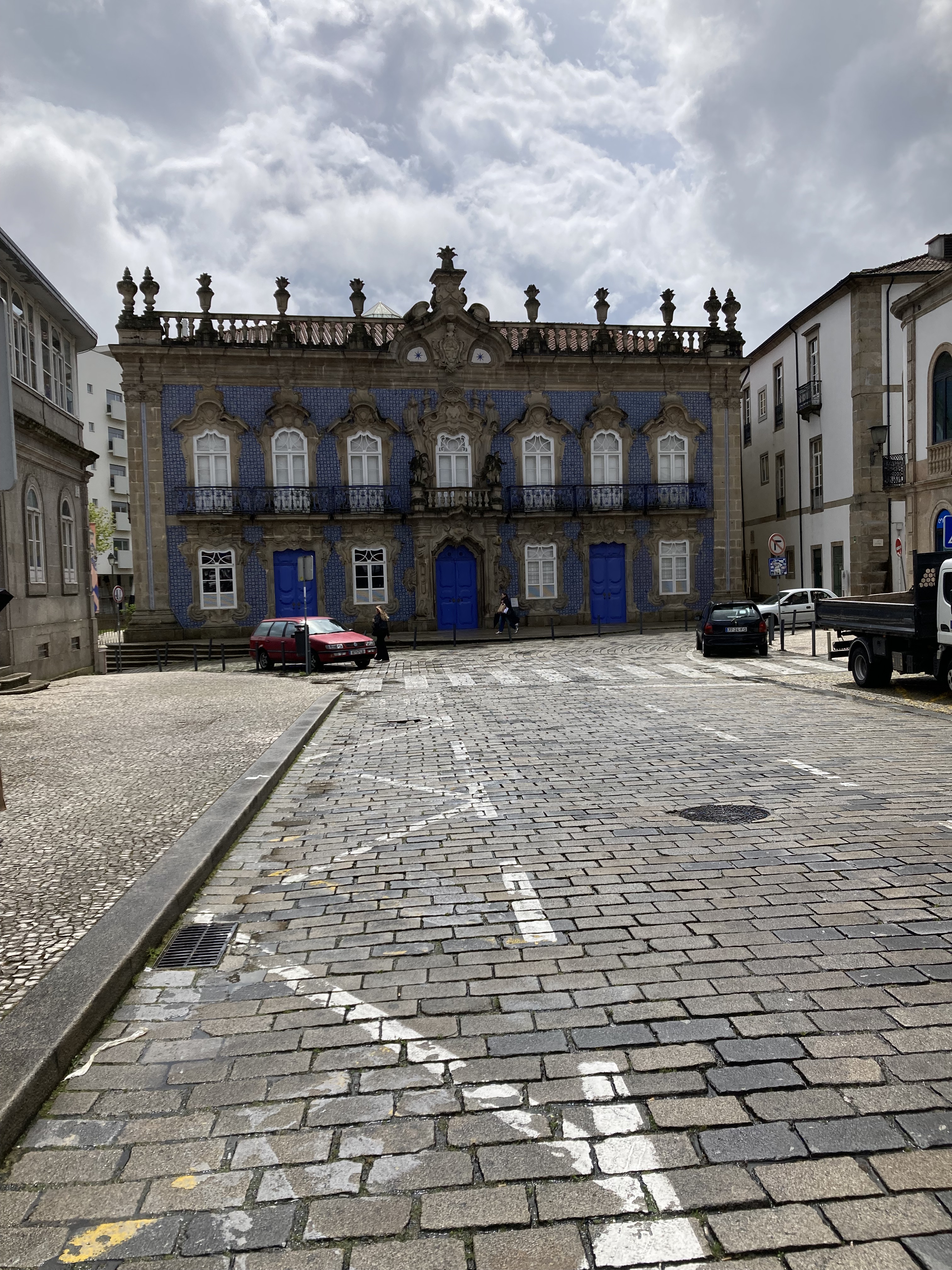
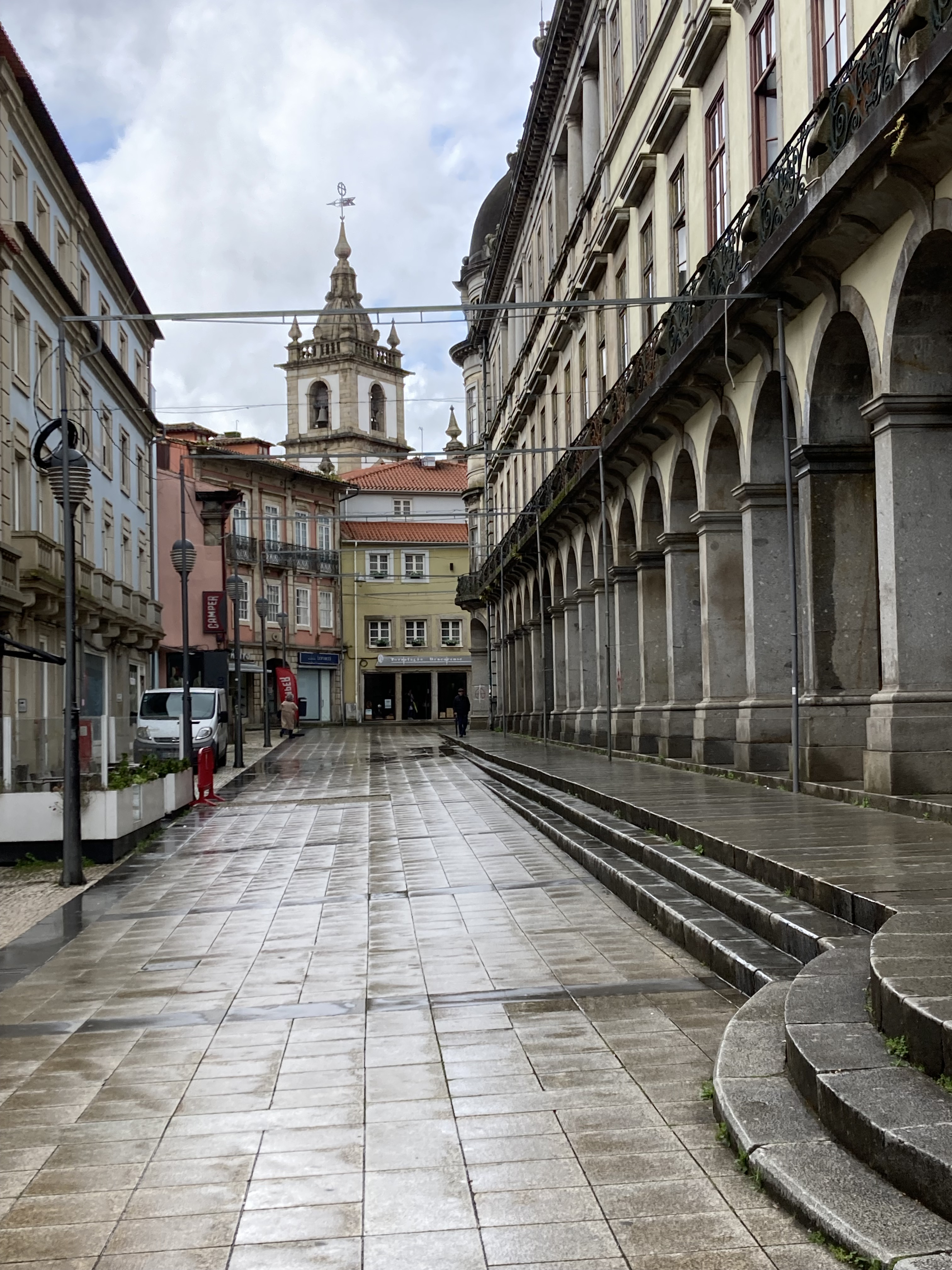
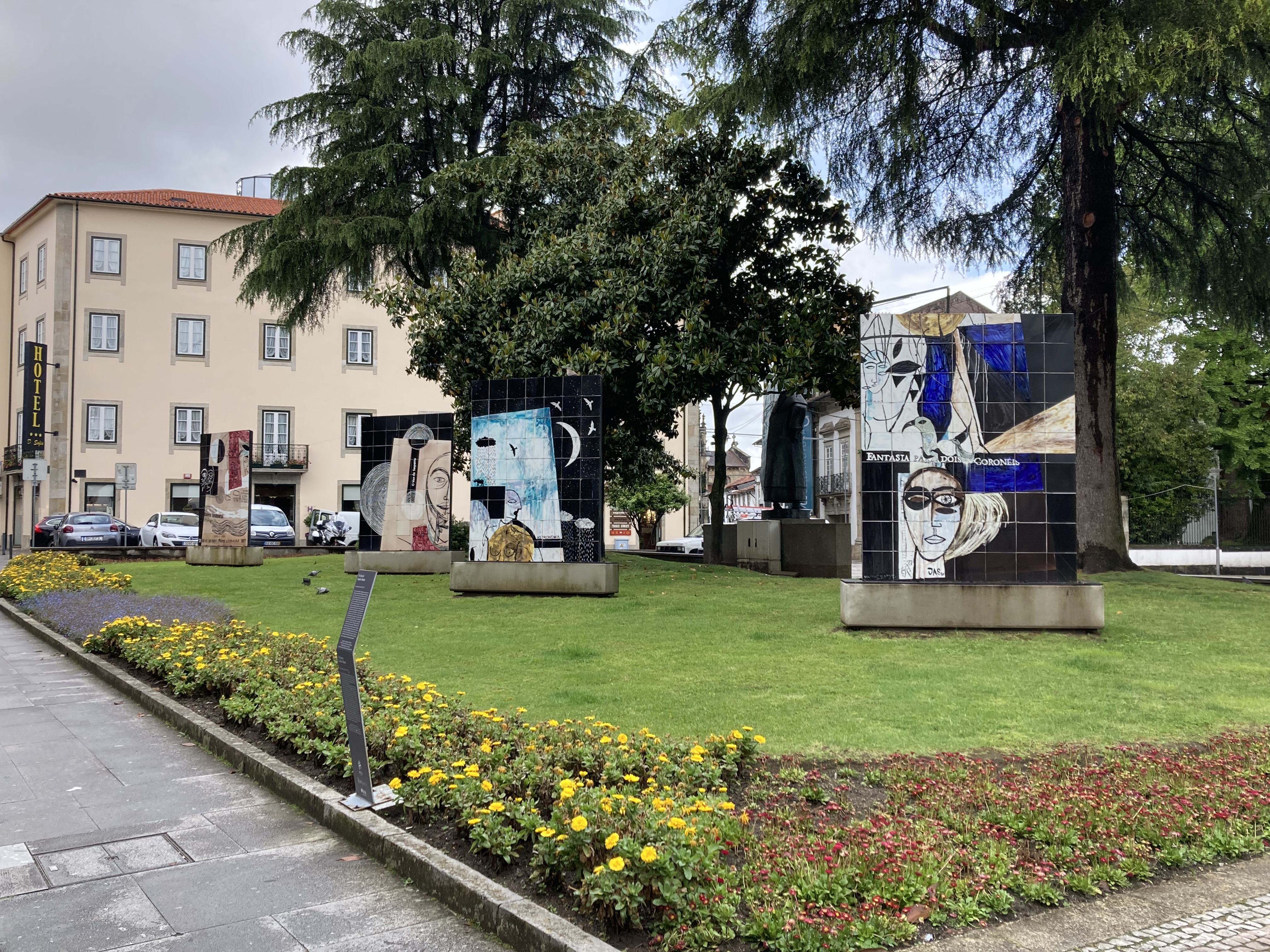
Braga is an elegant, beautiful Baroque town, with some very elegant, beautiful shops along wide pedestrian streets. A former palace is now the Hotel Vila Gale Collection Braga.
T fantasied about just sitting on one of the pedestrian streets or parks listening to the ABC Classic (FM 102.3) Weekend Baroque program.
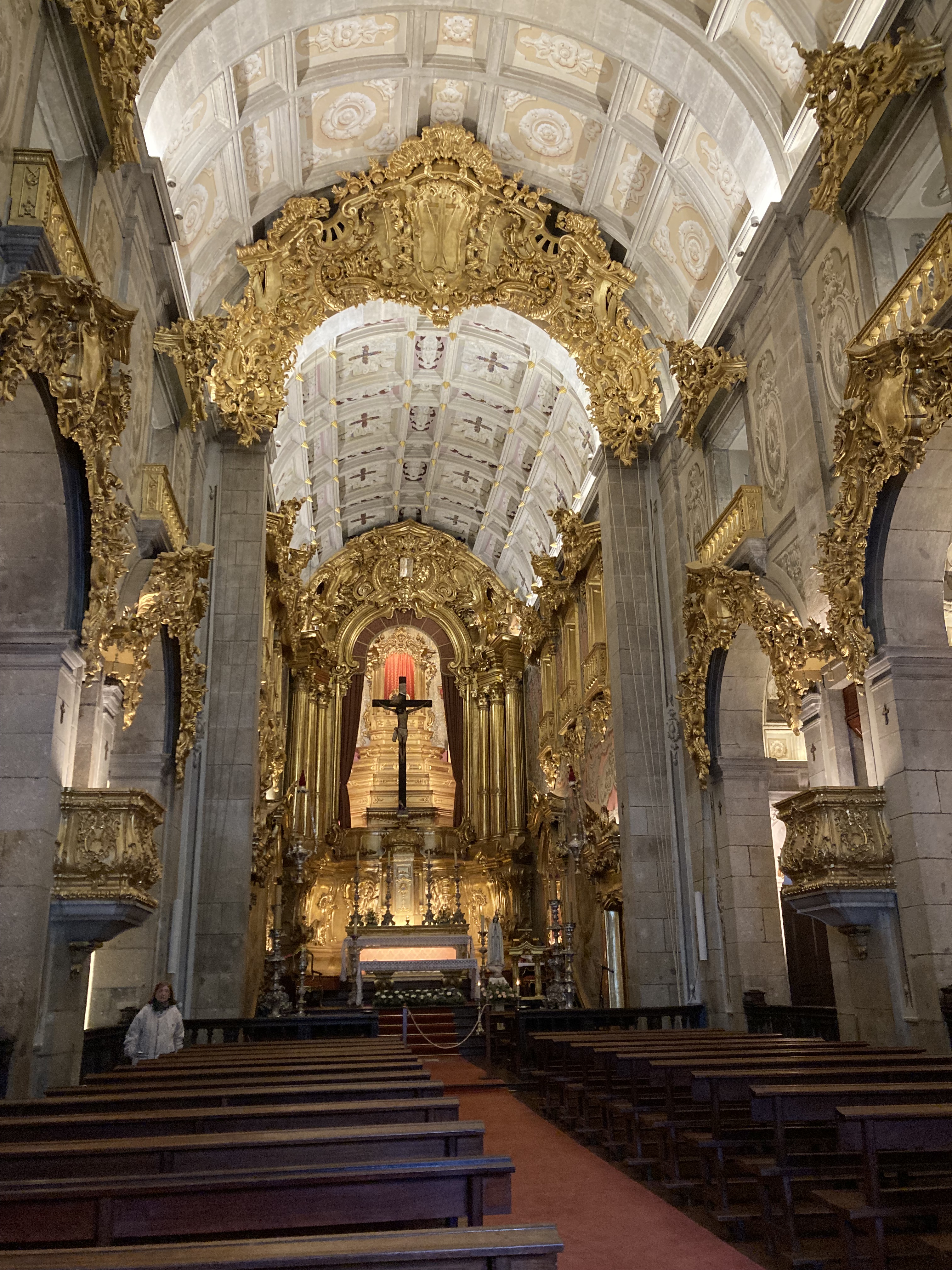
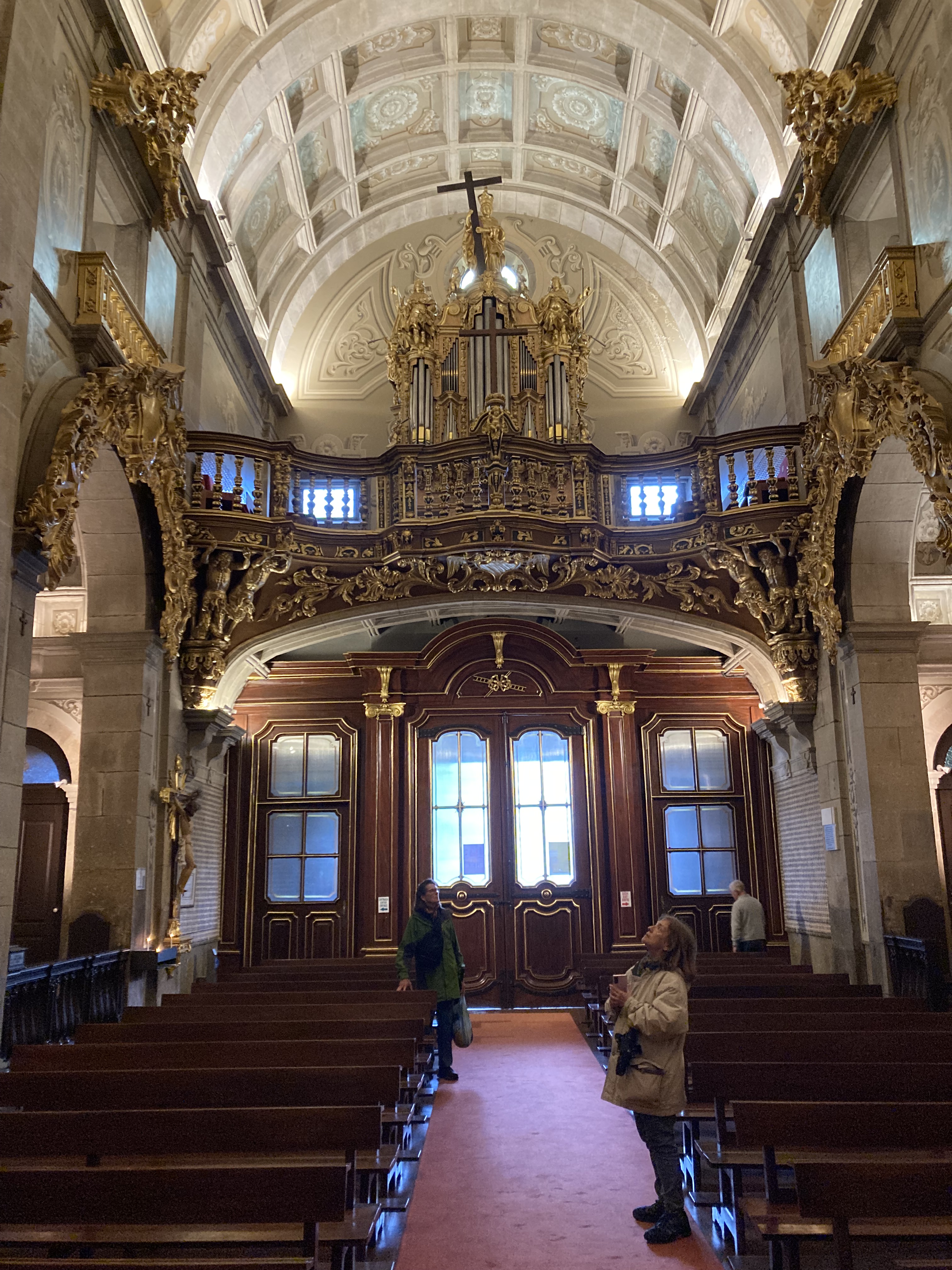
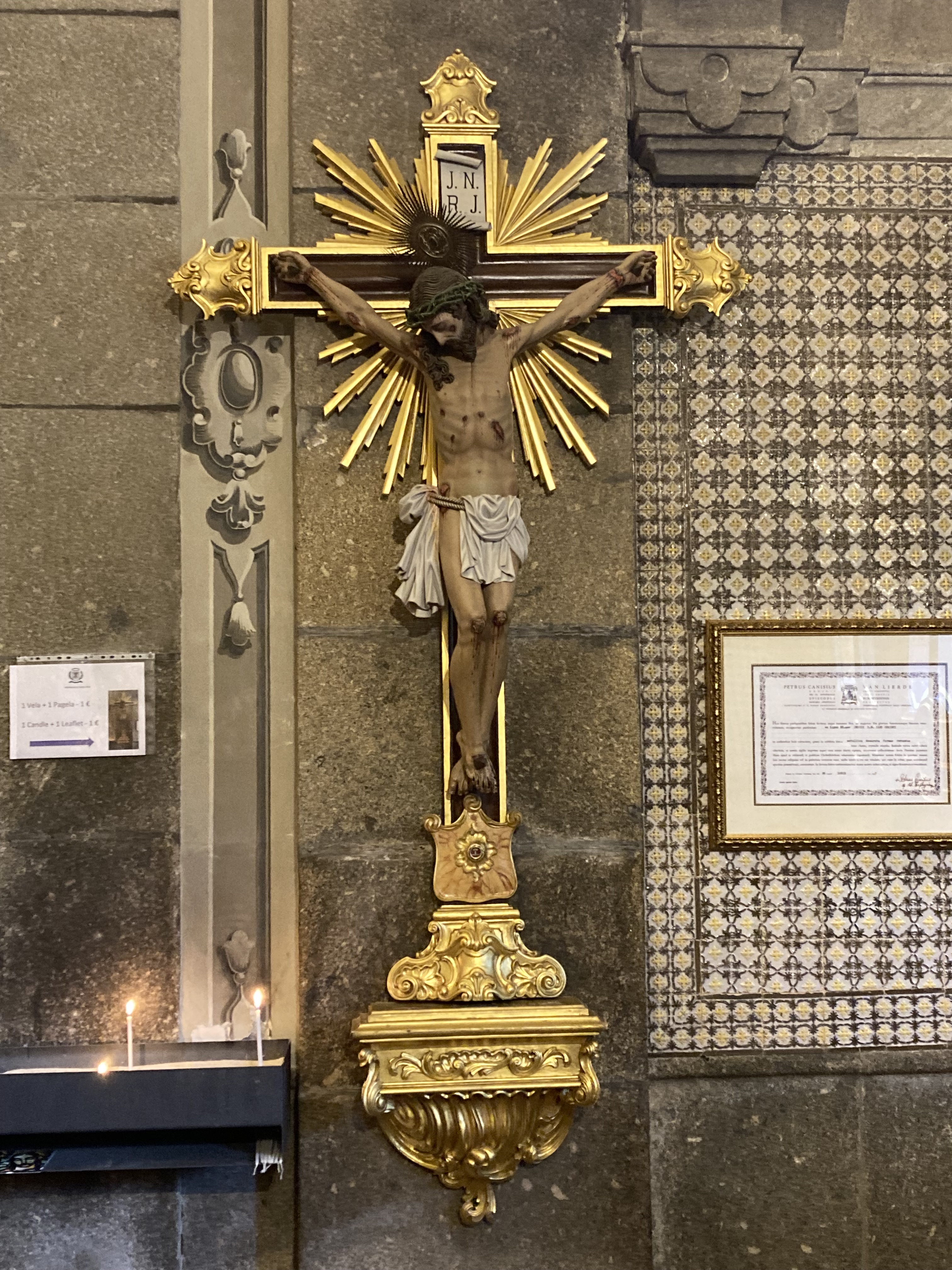
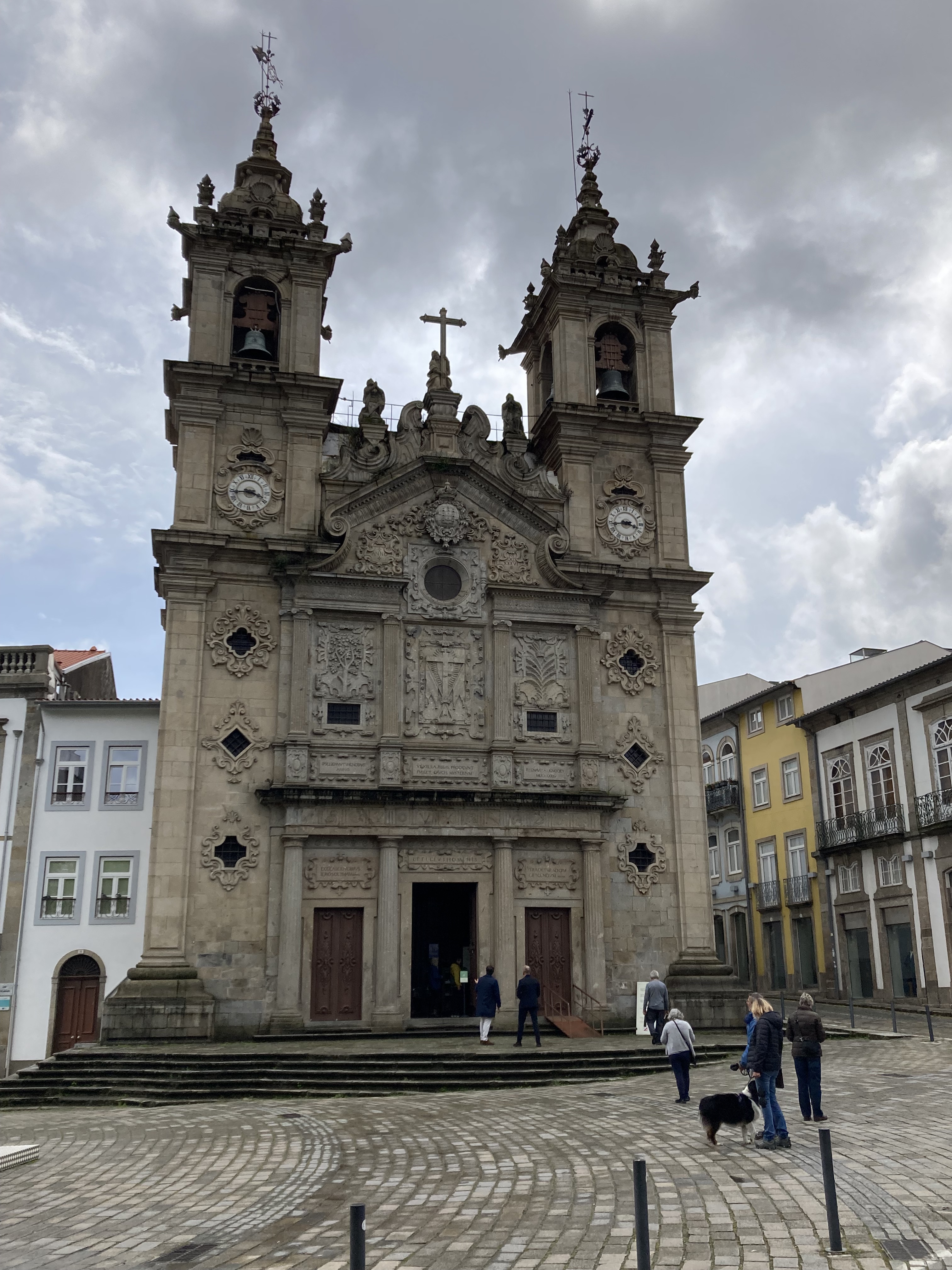
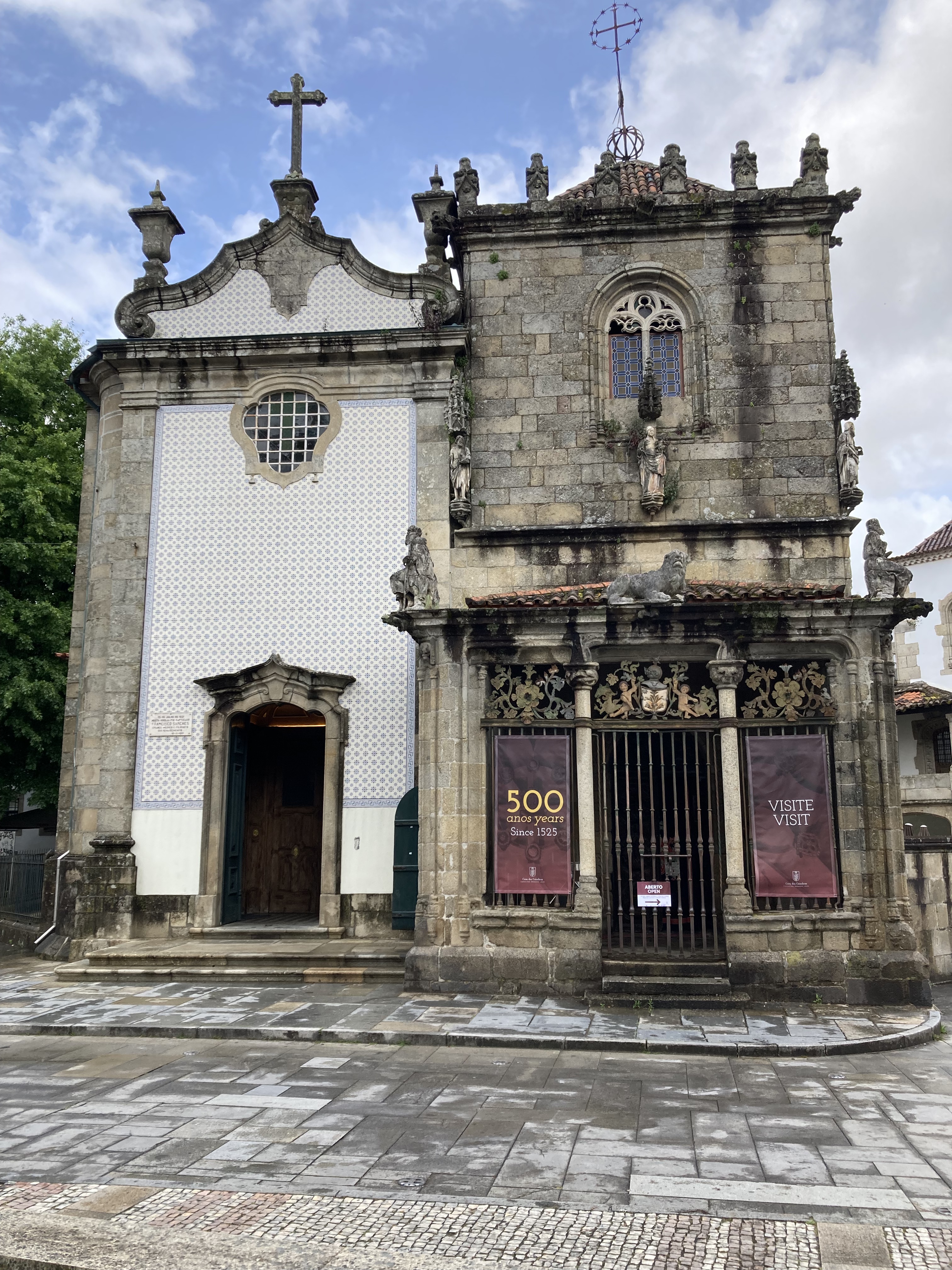
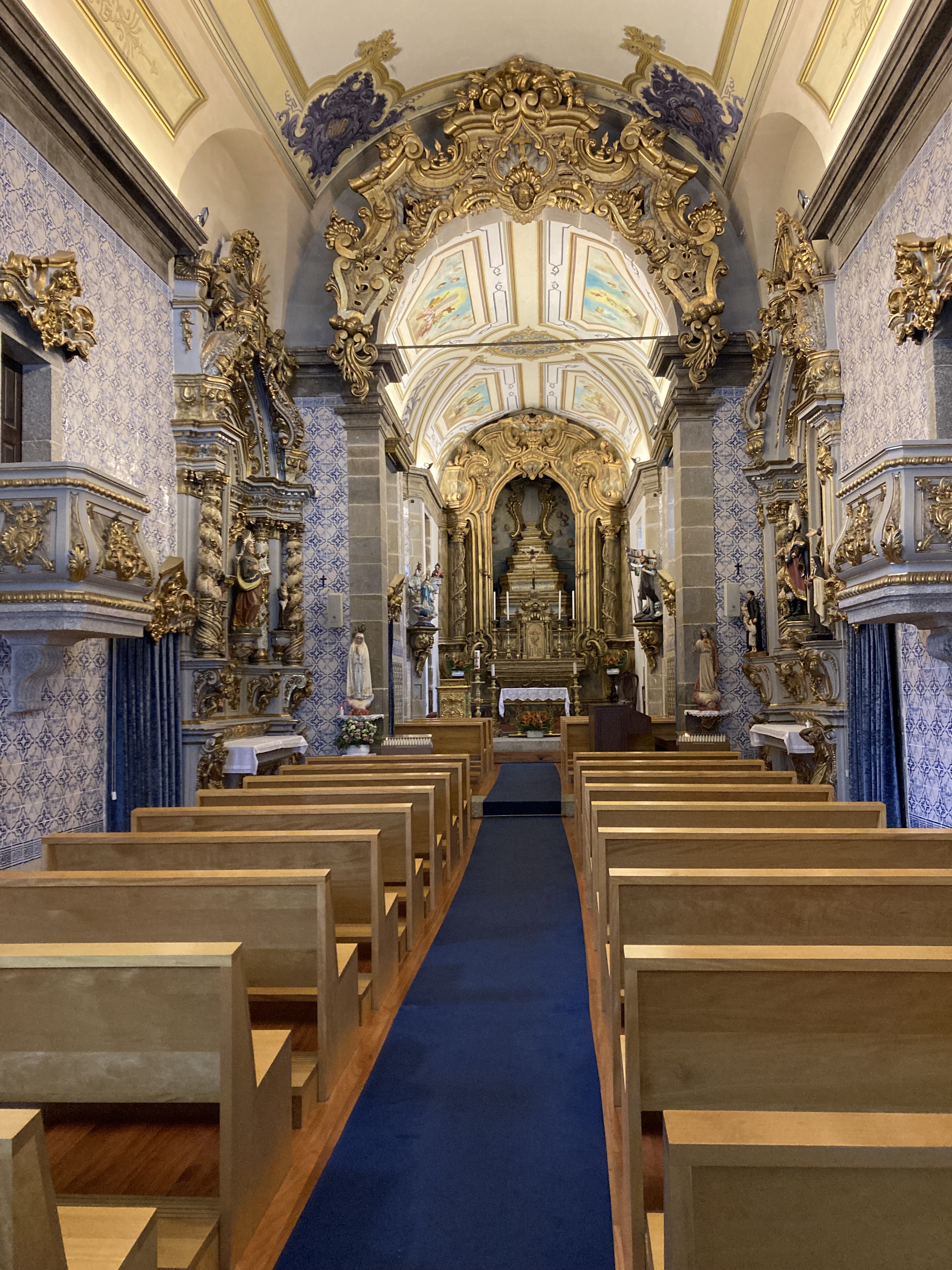
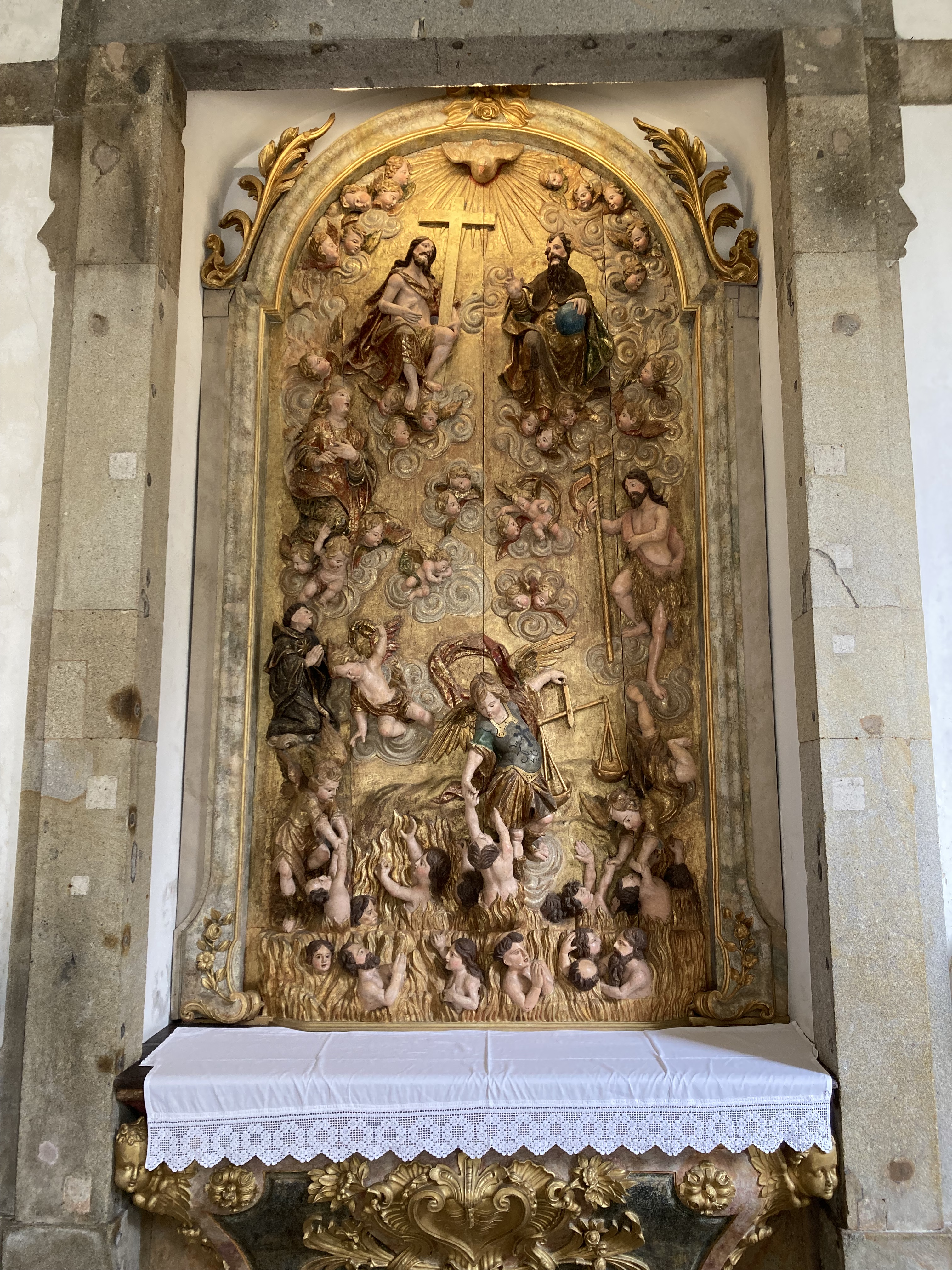
It is regarded as THE town to be in at Semana Santa in Portugal, as it has established a whole Passion Week story moving from church to church. We didn’t plan to visit any churches, but it is hard to avoid them: we ended up in three. The Igreja da Santa Cruz was absolutely luscious, dripping painted gold decoration.
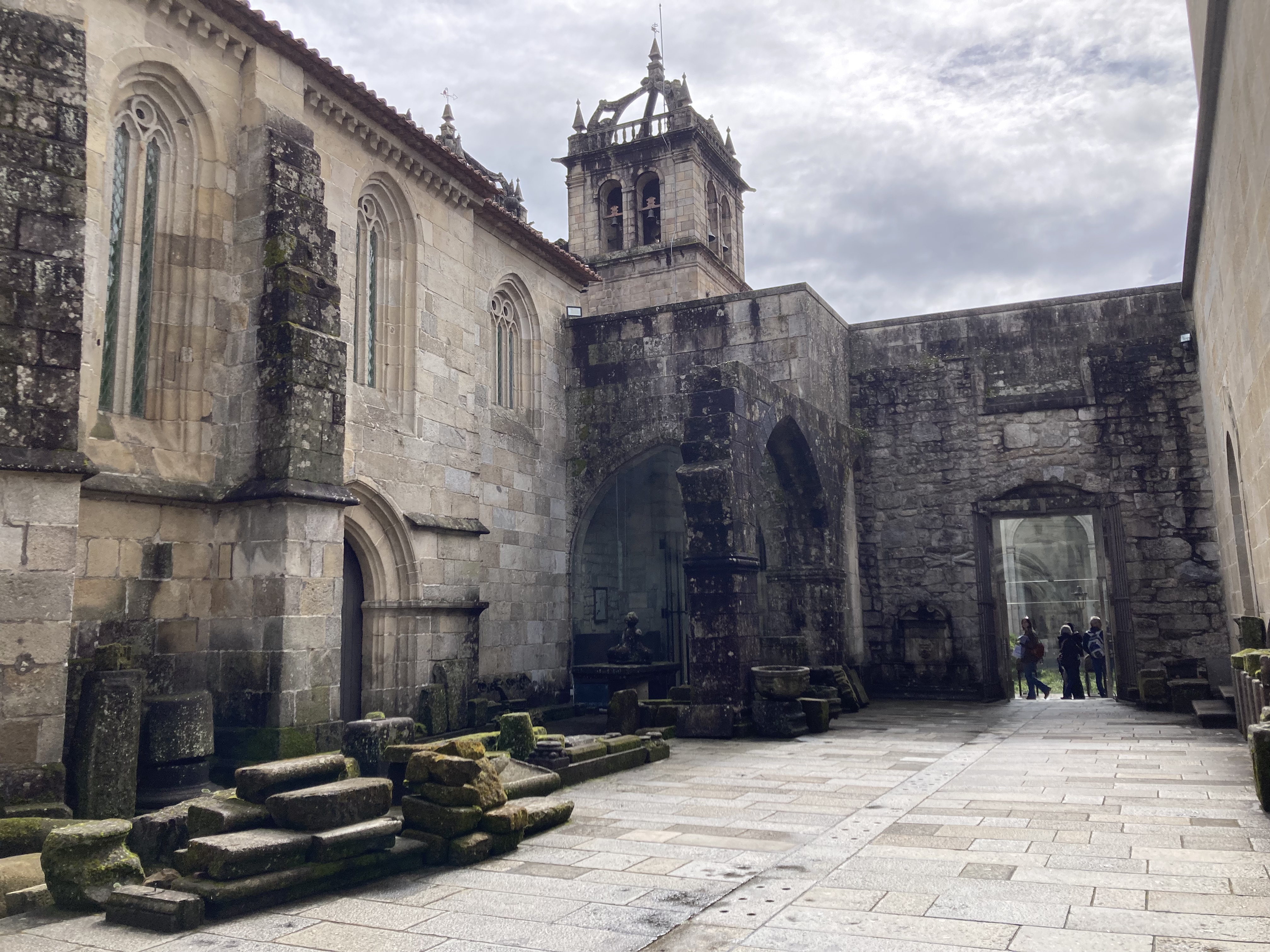
We also visited the less ornate, 500 year old Capela de Cambrais and the Igreja da Misercordia, although only walking through the quadrangle of the latter, as it seemed there was a Mass on.
Capela de Cambrais.Entry to the quadrangle of the Igreja da Misercordia.
The bells at the cathedral rang in a curious pattern between 1700 and 1800: 25 tolls, getting faster, then a pause followed by four.
Back at the car, we found we’d earned a parking ticket. We had checked: no signs and no obvious ticket machine, although we did pass one some 200 metres away on our return walk. The return road was busy and wet in early evening traffic, with T hanging onto her seat as cars, trucks, buses and motorbikes weaved across lanes (rarely indicating). D indicates 100% which probably confuses the Portuguese drivers.
Overnight rain, but by morning the sky was mostly blue. Excursion today, by car, was to the Fundacao de Serralves, that had been aborted a couple of days ago (remember Route 207). The drive, about 25 minutes, was remarkably smooth, and we grabbed an on- street parking spot about 400 metres from the entrance. What a change! there were free spots almost to the gate! This was a very different Porto setting, in a wide street flanked by big trees and big stand-alone houses.
The Fundacao includes the Museum of Contemporary Art, the Villa, the Park and the House of Cinema – Casa do cinema Manoel de Oliveira – we viewed just the museum and the park: enough for one day.
The Museum of Contemporary Art presents exhibitions by leading Portuguese and foreign artists, among many other activities. In 2024, the new wing of the Museum was inaugurated, named the Álvaro Siza Wing, in honor of its author. In this new building, exhibitions dedicated to the Serralves Collection and Architecture are presented.
The 18-hectare Serralves Park includes formal gardens, woodlands, a traditional farm, a herb garden (and a Treetop Walk, which was closed today).It’s an oasis, and a bit removed from Porto city.
We started with the internal exhibitions – plenty to choose from.
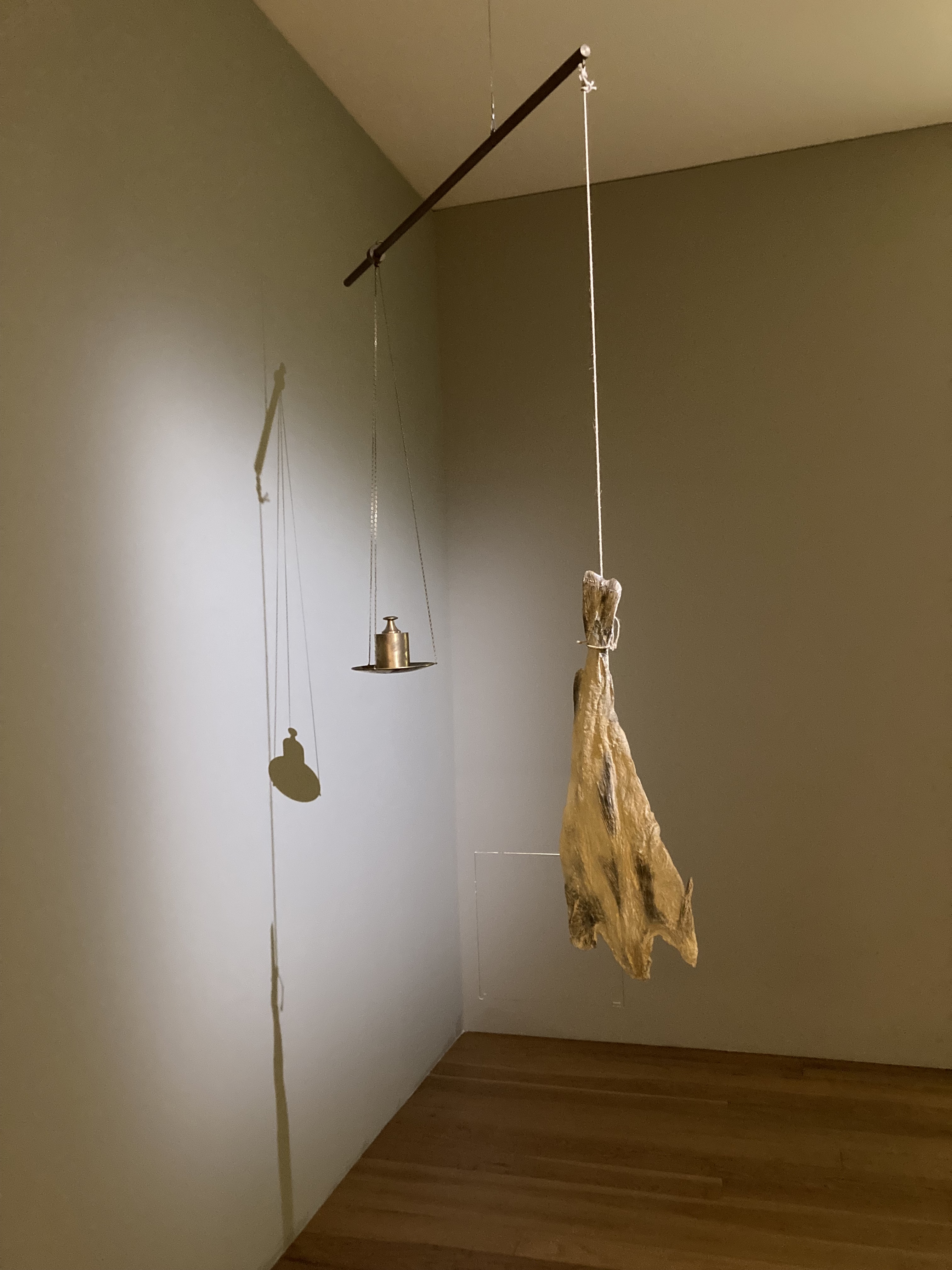
First up was a collection of multi-media pieces (mostly installations and photographs) by Francisco Tropa spanning decades. He had assembled items referring to ancient classic texts and stories (philosophy, science, literature).T was taken by a piece that balanced the bacalhau that she refuses to buy/eat. And when she chatted to a gallery staff member about the ‘very challenging’ descriptions of some particular pieces, the reply was ‘it’s also challenging in Portuguese and even worse when the artist is here adding his spiel to the work’!
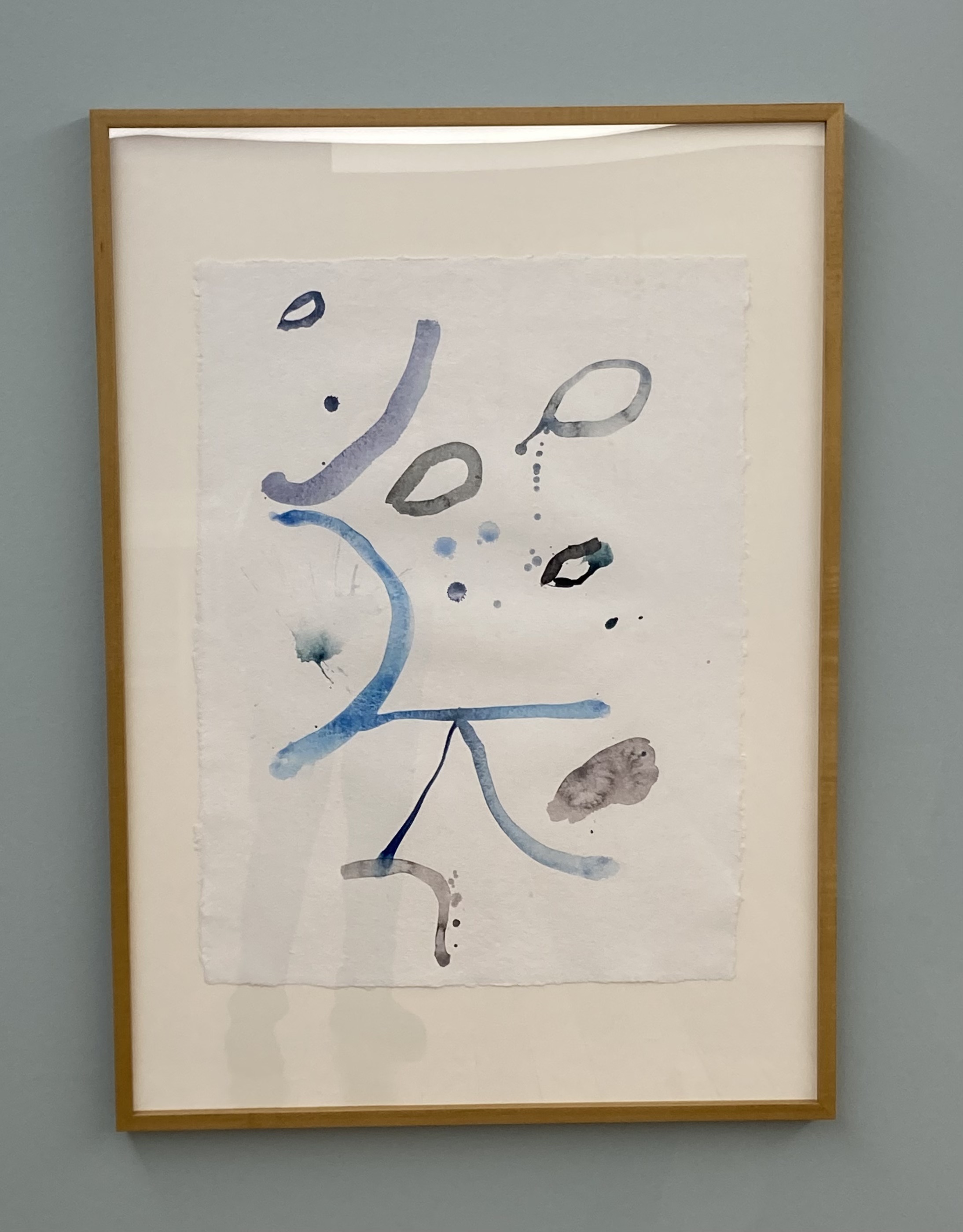
Other galleries offered different works by many artists.
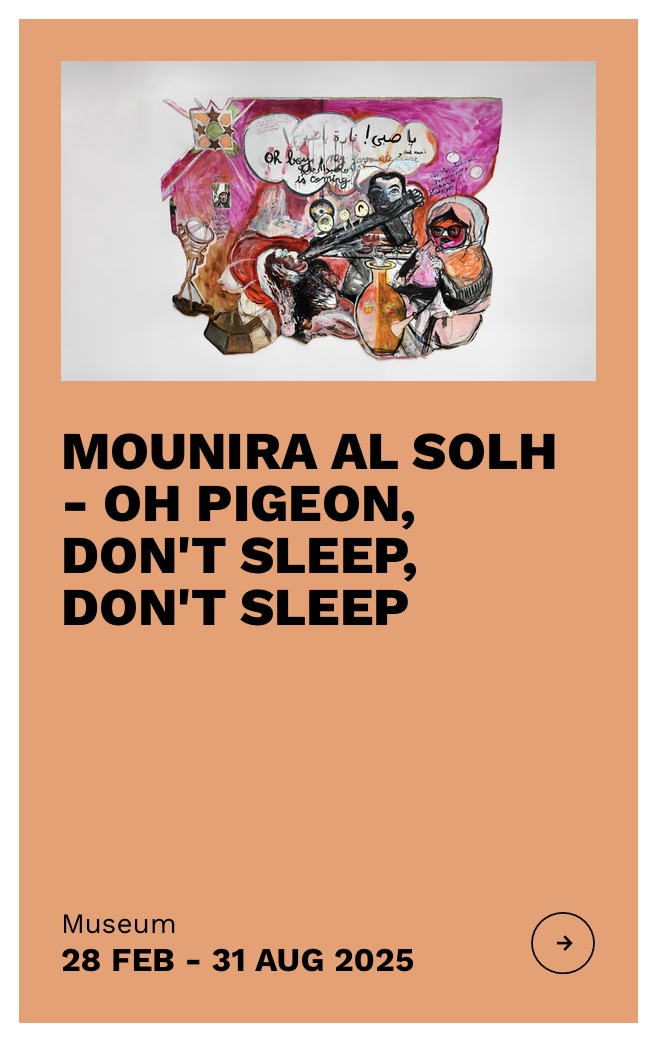
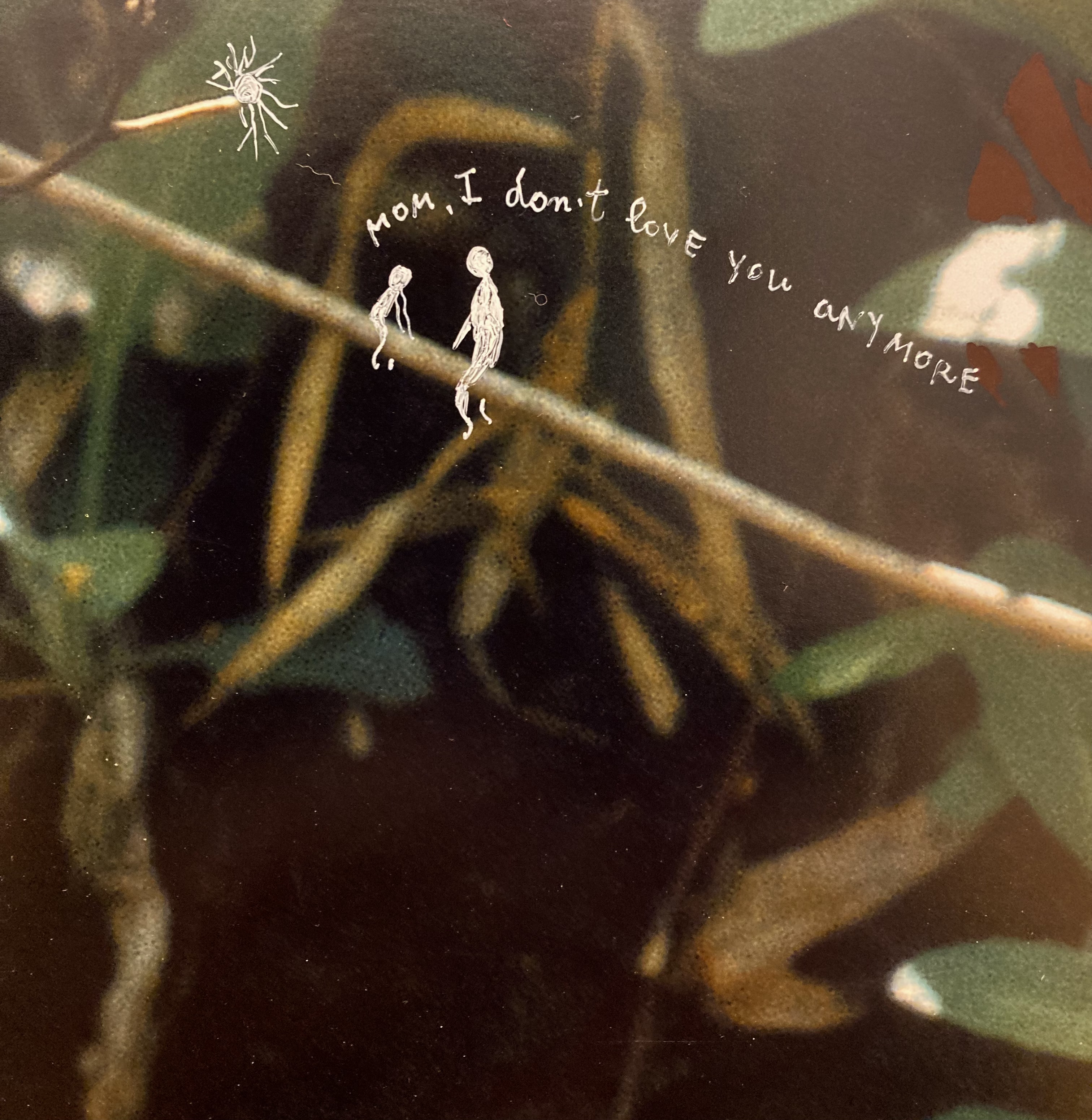
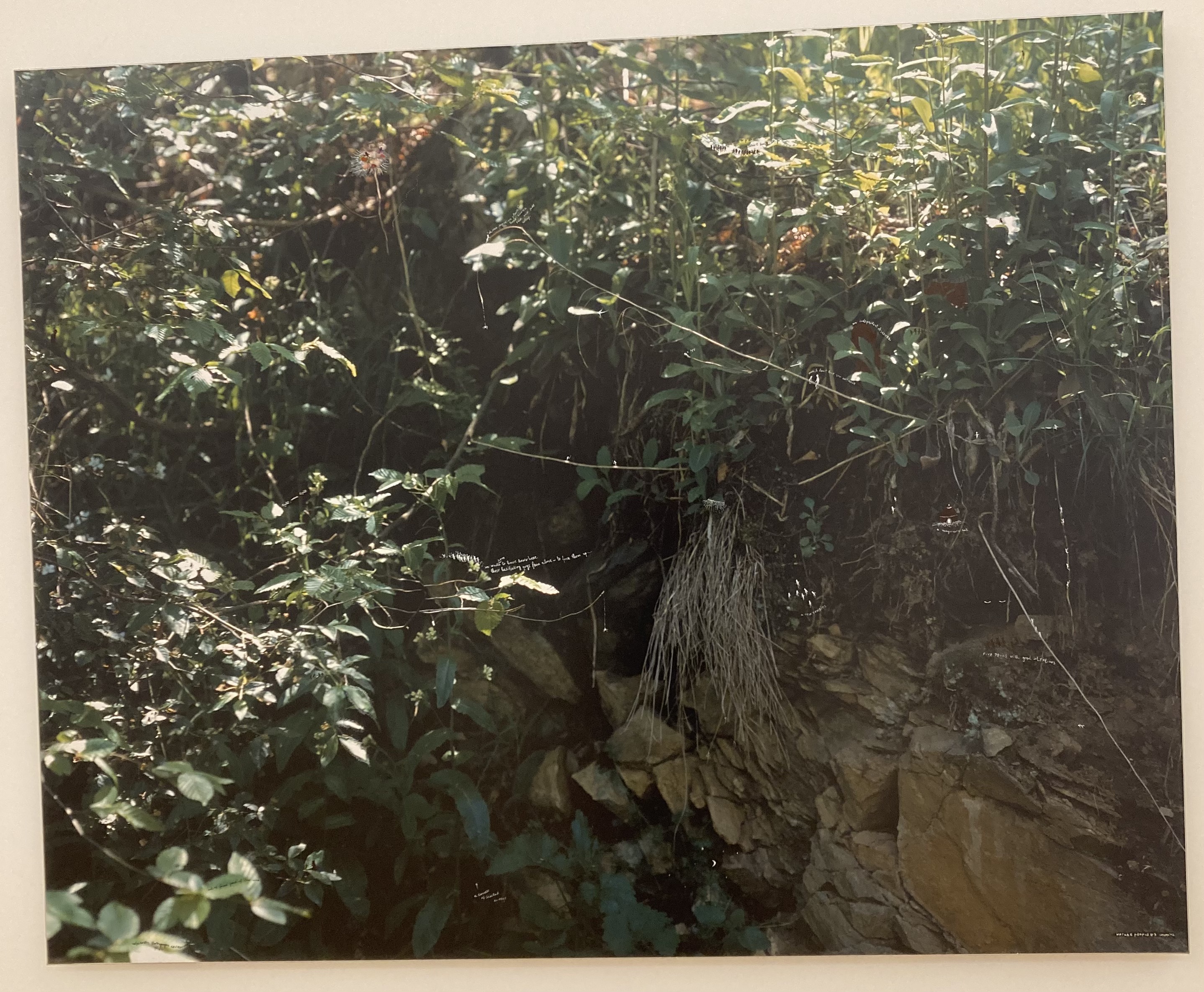
This big painting (the bottom image) had wry little sentences barely seen from a distance.
D whizzed through while T dawdled. After the main rooms came a fabulous compilation of black/white photographs by many international artists.
Then T caught up with D sitting in the vast space of the lobby.
It was past coffee o’clock.
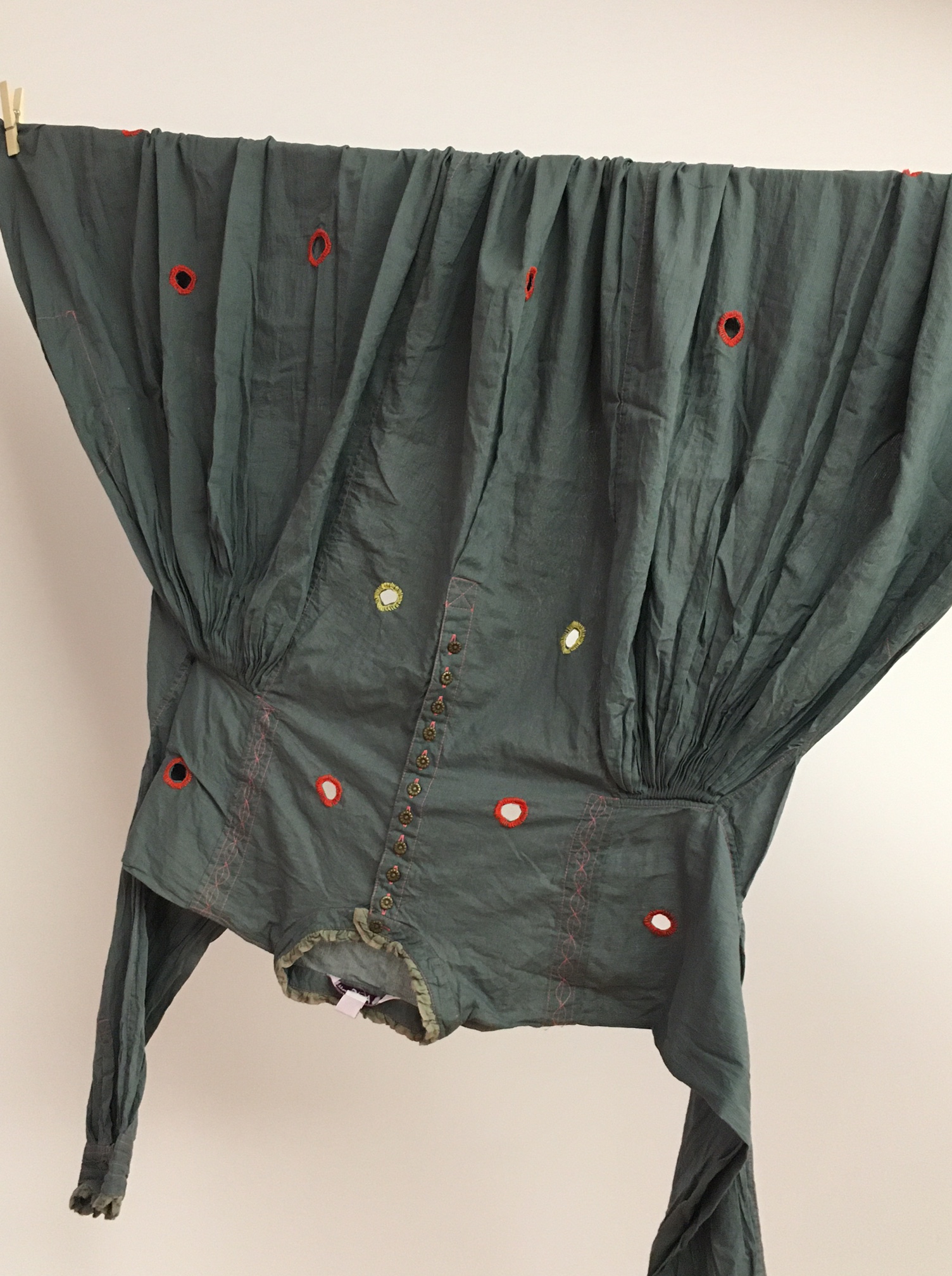
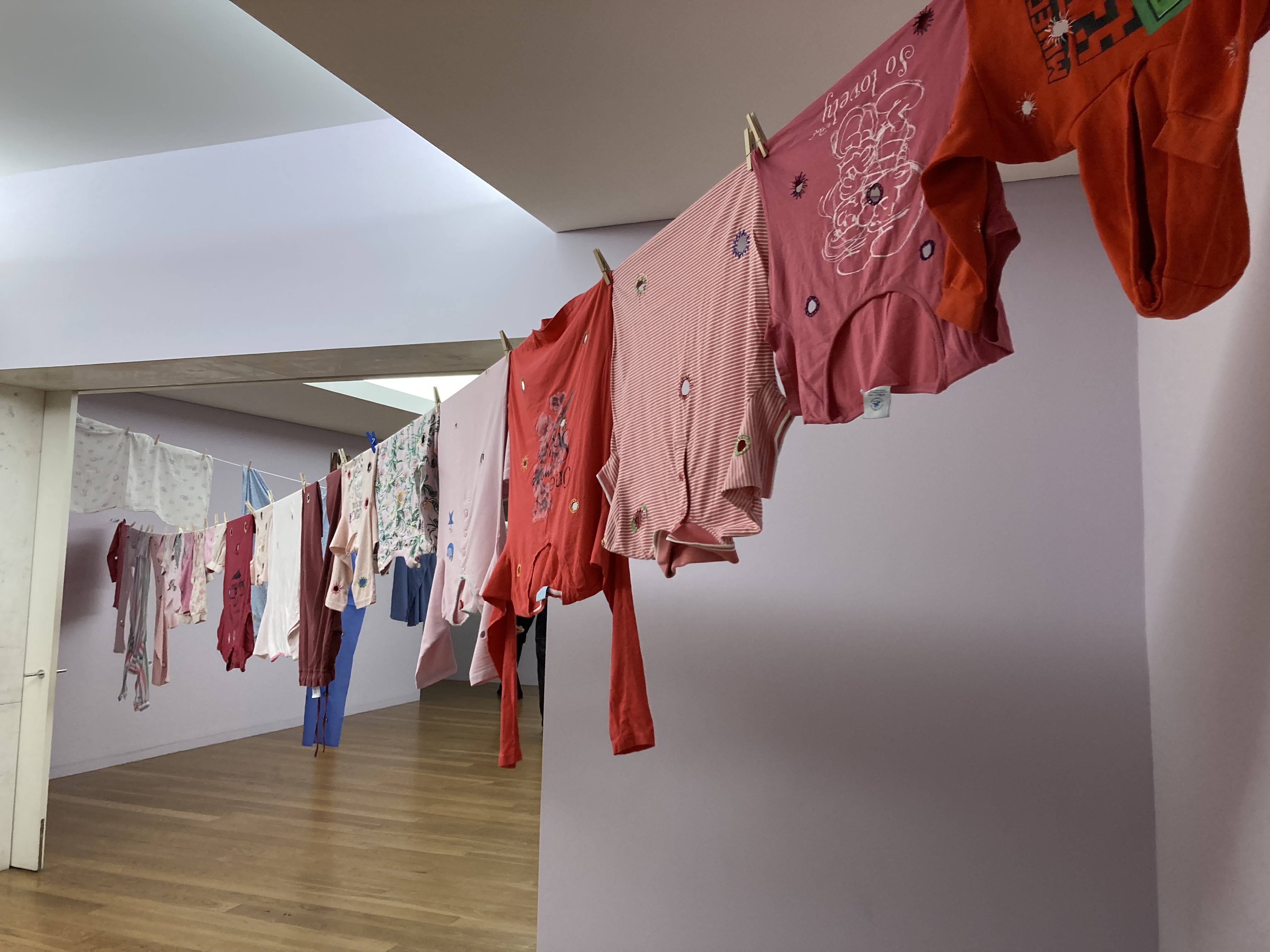
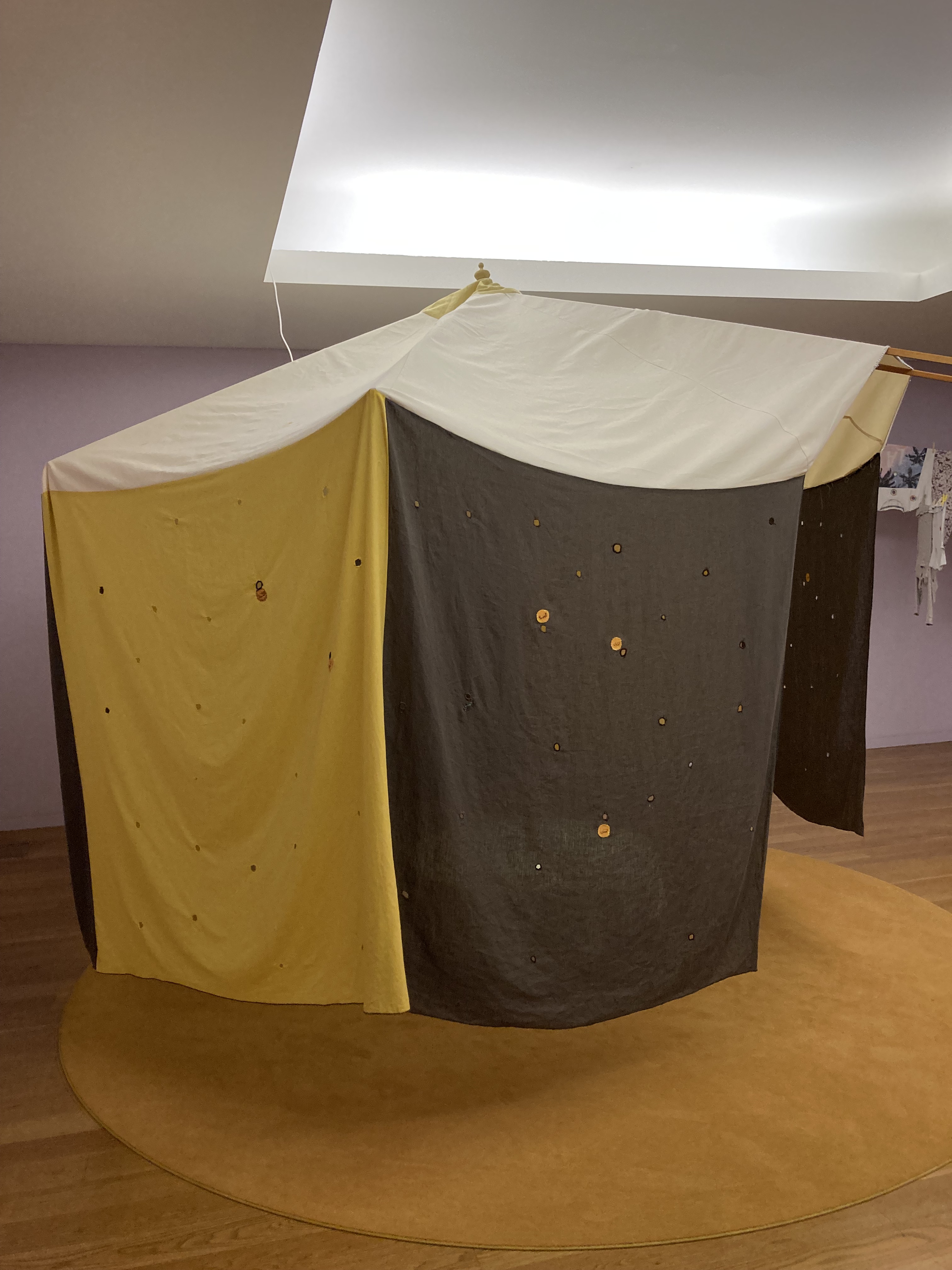
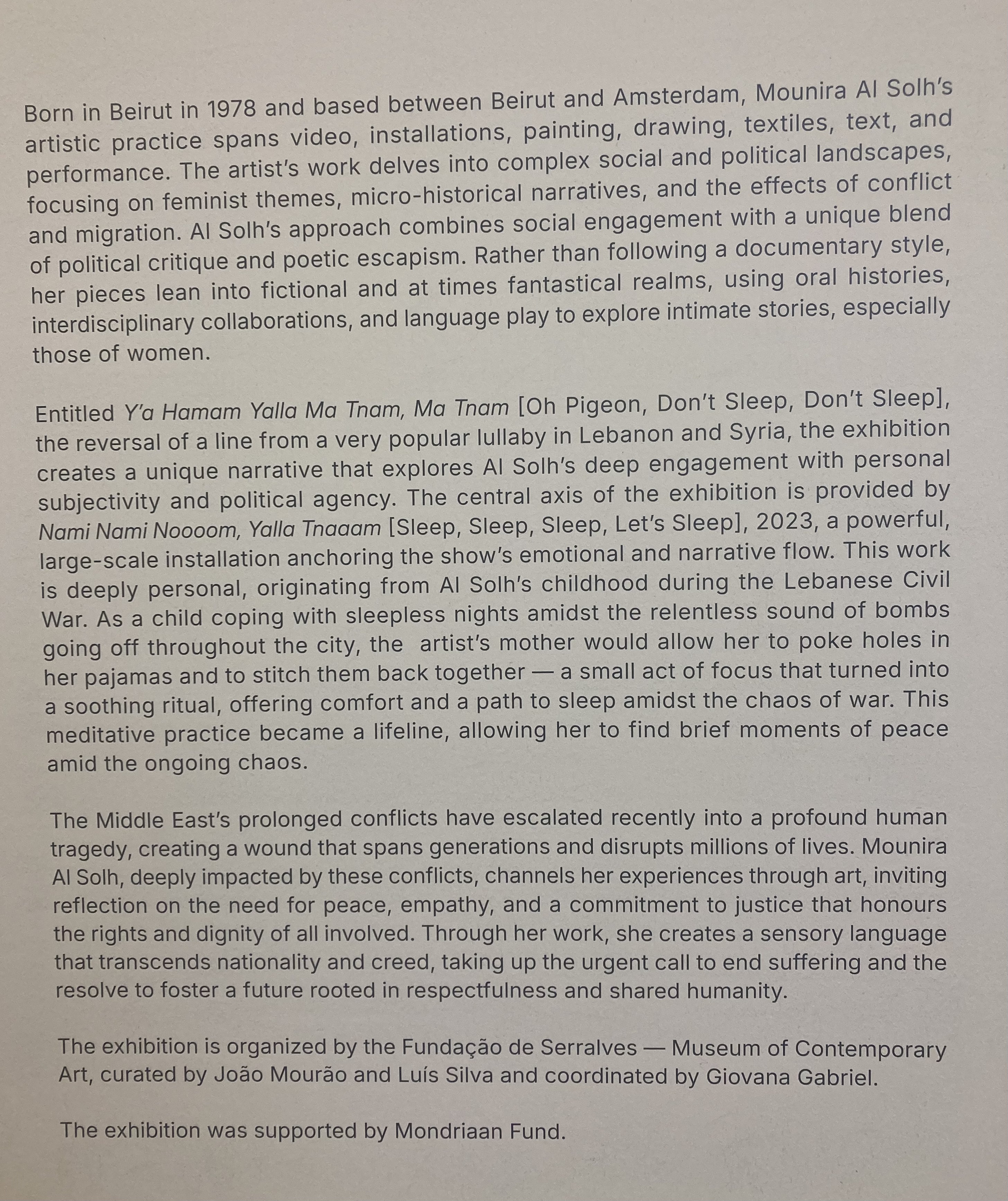
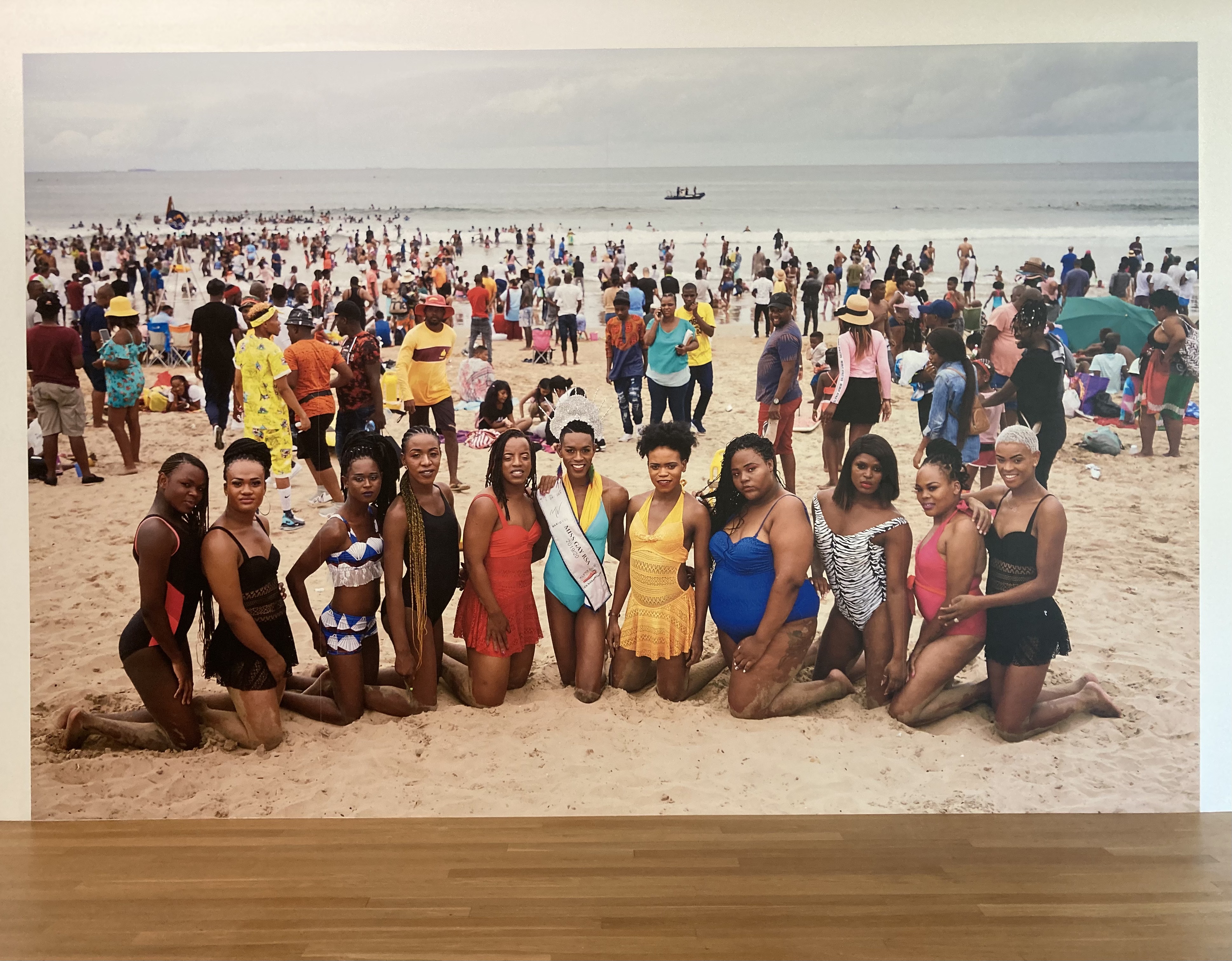
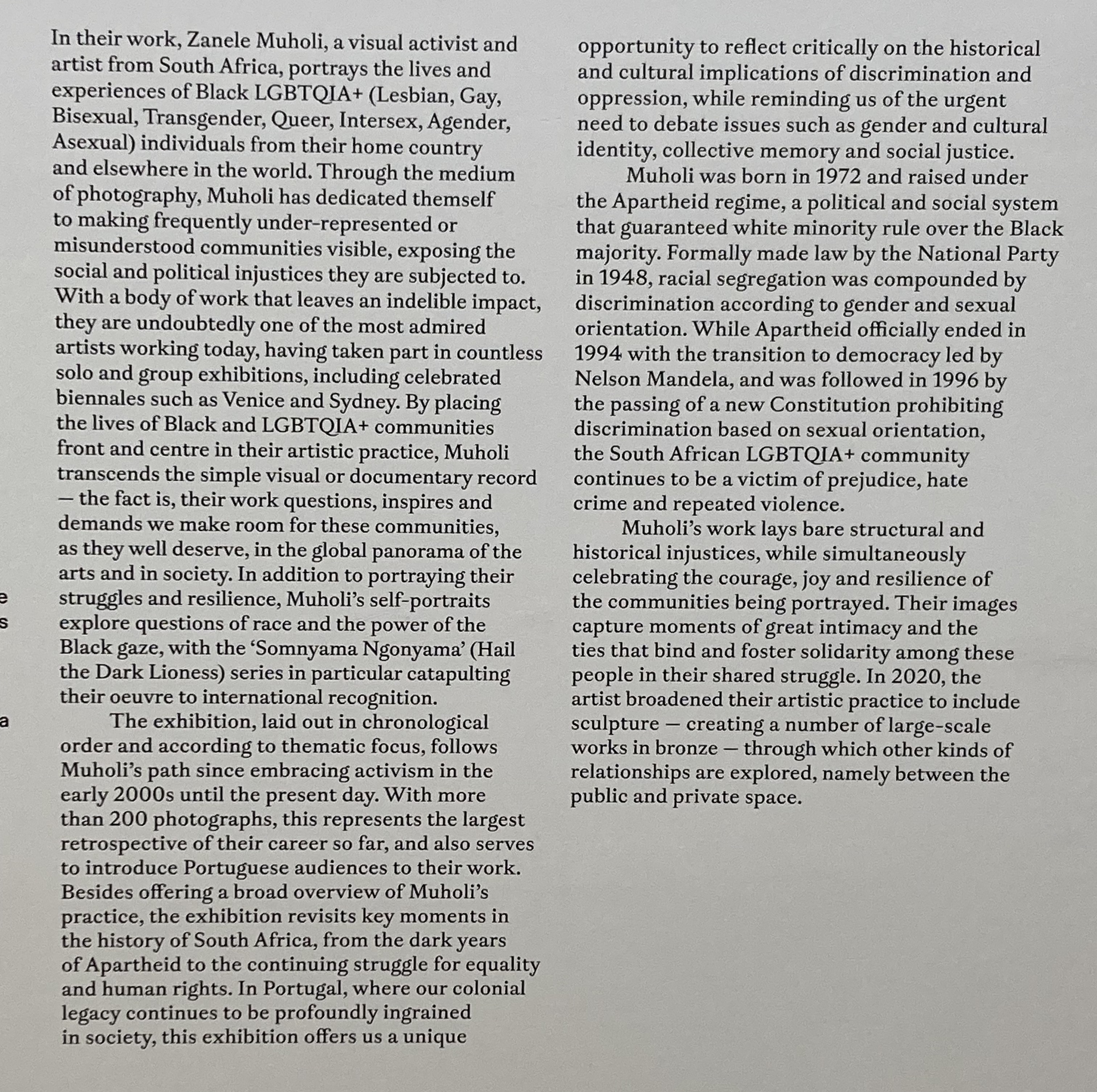
T then returned to two very powerful exhibitions: the response of an artist who recalled having been a child during conflict in ME and then a big, bold exhibit focusing on the LGBTI+ context in Africa. Phew!
They are bullet holes sewn into the fabric
And…
D had, while wizzing through, viewed a couple of other exhibitions, neither of which really captured his interest. Except one, that appealed to his lash up instincts and the uses of a piece of string.T loved the little installation of ‘a pack of cigarettes’, with a single one standing outside the pack. This single one was in fact gold moulded into shape/size of the real ones and painted to look the same. The artist had used his exhibition funding (his entry to a significant European art festival) to buy a piece of gold, make the fake and, being a serious smoker, carried it constantly throughout the exhibition within his routine packet.And the condition of his entry was that his exhibit remain anonymous.Thus, his piece of art was always on display, ‘invisible in plain sight’…(a bit of Banksy spirit?)
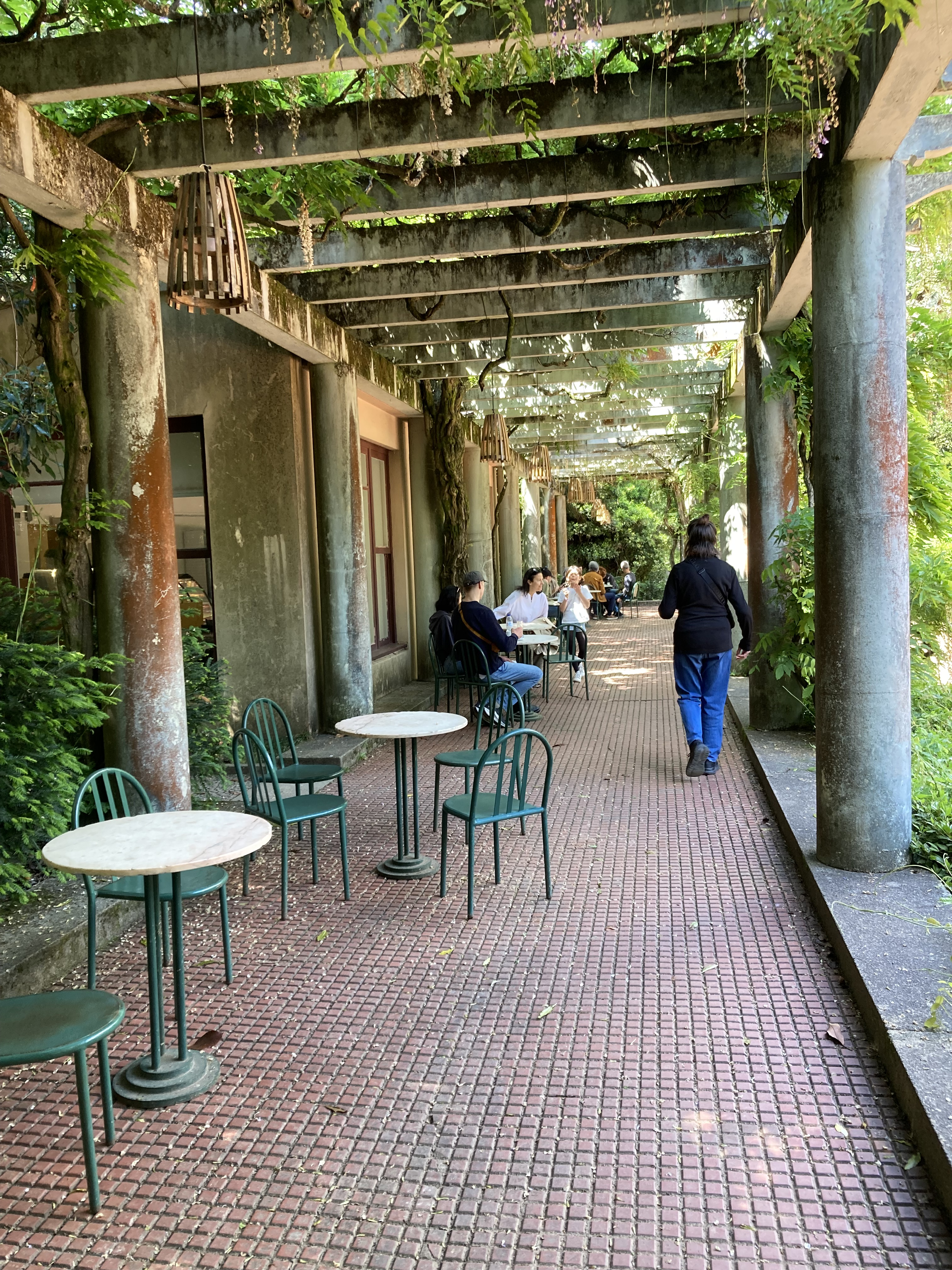
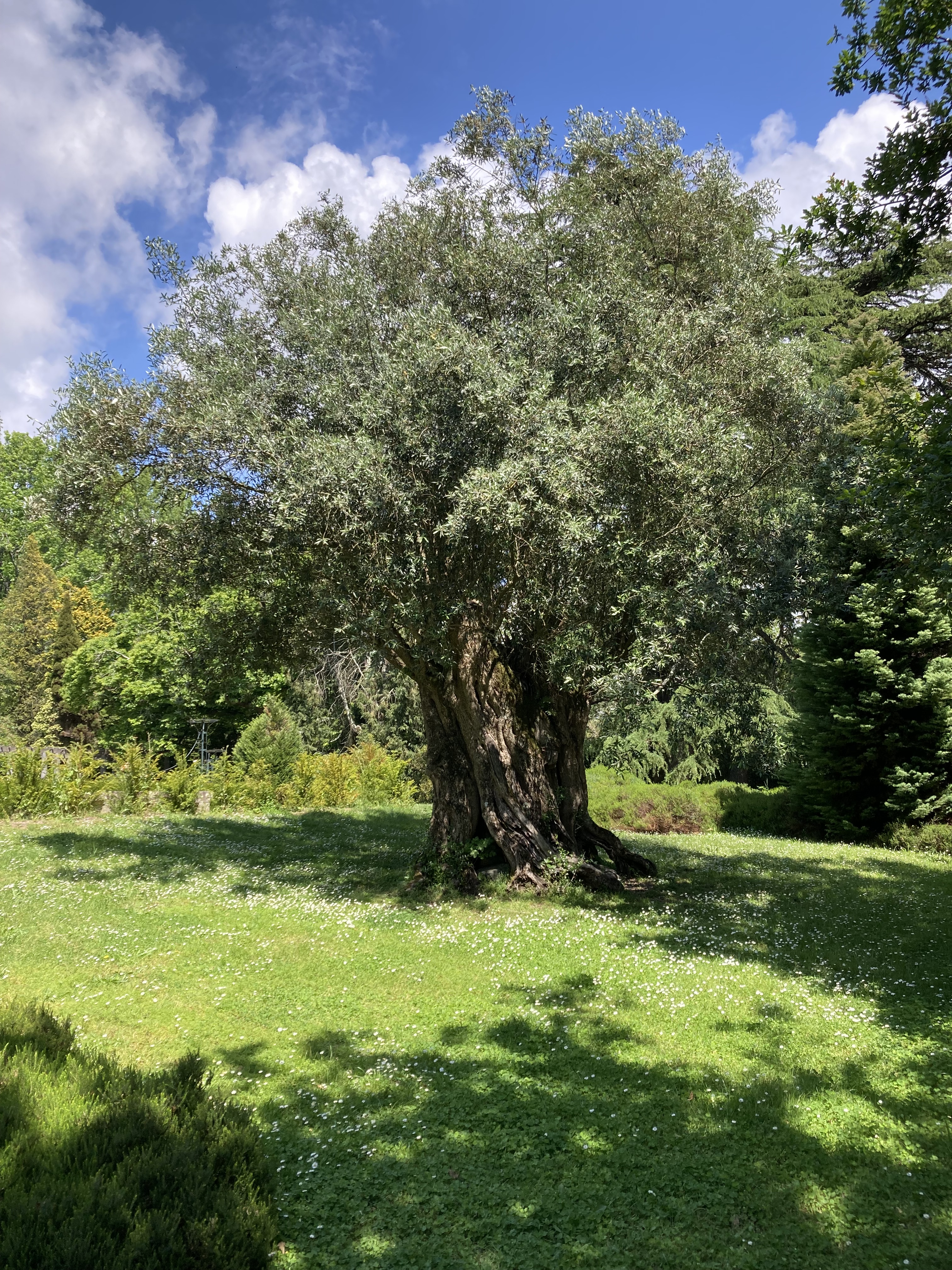
Then it was time for some fresh air: into the extensive gardens and grounds. The gardens were a perfect balance to the mental intensity of the gallery. The gallery is a vast, light- filled space with several huge ‘garden view’ windows. The modernity and spaciousness were such a contrast to the ‘tight, narrow spaces’ that characterise the old cities and the dense apartment living.T felt that she was at home (and possibly at the NGA). And at the Herb Garden we contemplated a cunning cat carefully climbing a conifer to catch a calling canary – canny canary cleared out. Cat crestfallen. Crans clapped and cheered.
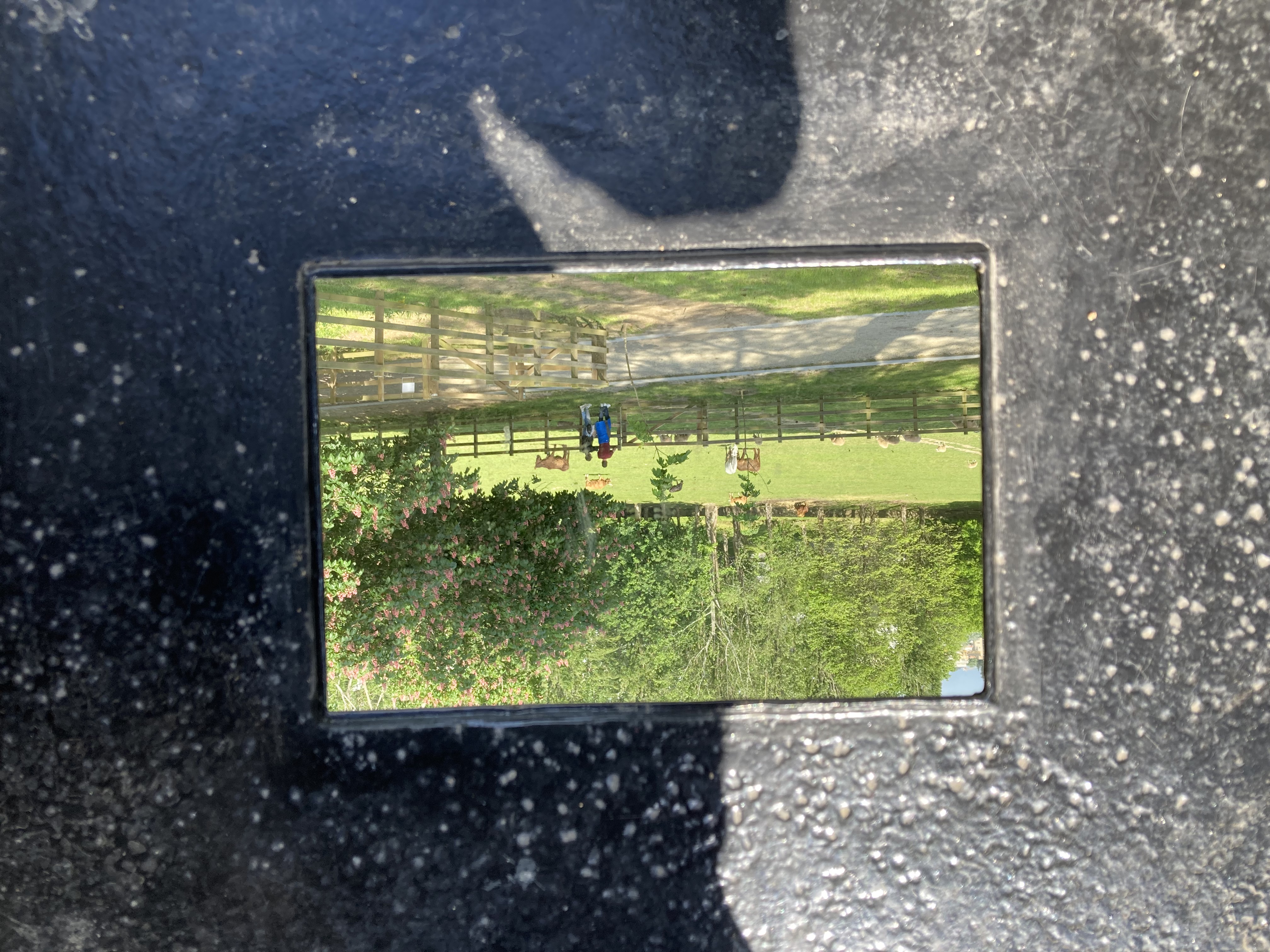
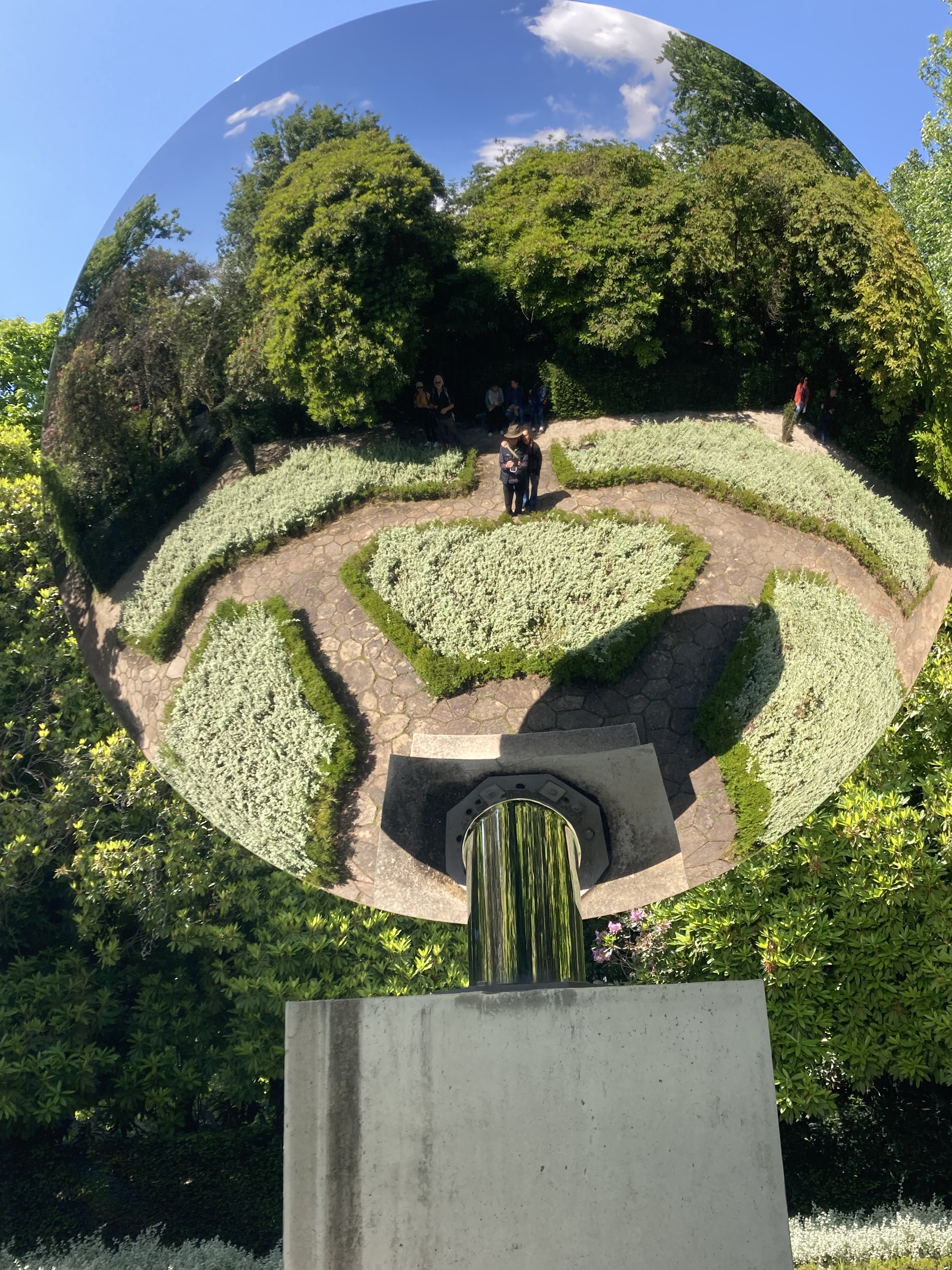
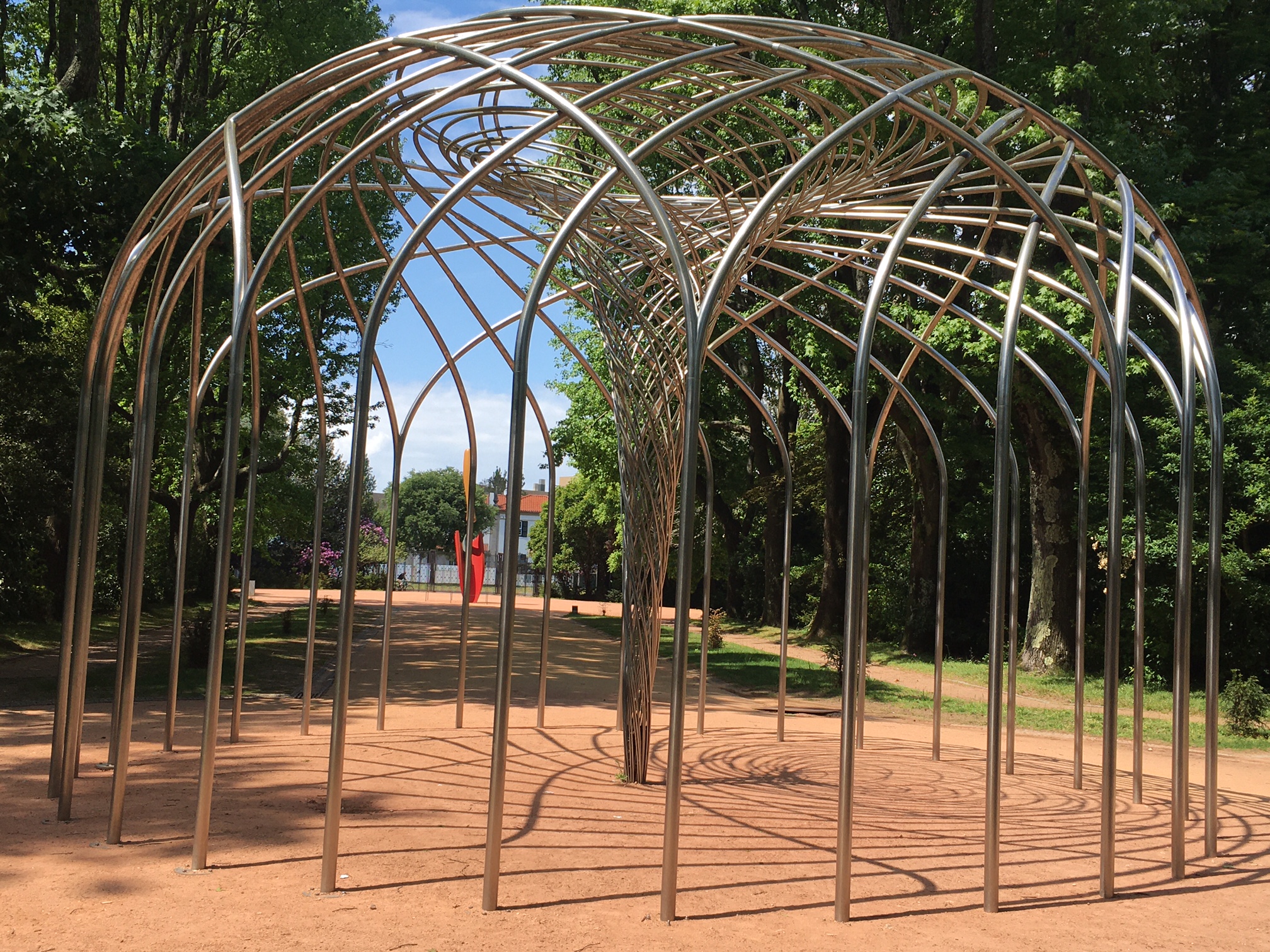
A sculpture…climb up and look down through the opening onto a mirror,n reversing the image.Some familiar friends..
Drive home was not quite as easy as getting there: Doris’ instructions at one particular exit, from five lanes, was a bit unclear, so we missed it. Sulking from D’s harsh rebuke, she redirected us from the short 25 minute drive to the 45 minute alternative. Fortunately, probably because it was late on a Sunday, the traffic was light. That was until we drove into the Lidl car park, which was full of beginning-of-week shoppers.
And a bit of time before dinner for a stitch.
Dinner. Mothers Day seafood surprise…finally using up the baby calamari, and adding prawns and clams, amongst various herbs/ spices, cherry tomatoes, flat beans on rice.
Saturday Surprises: Ahead of a little excursion to somewhere, plans were locked in for the next accommodation. There is a two hour return boat ride on the Douro, starting at Pinhao (about 90 mins from here), so bookings are made for next Thursday, with two nights in a new abode nearby. Not homeless yet and the train strike will not bother us.
Today’s excursion: T said, ‘let’s keep it short and close’; Amarante sounded about right.
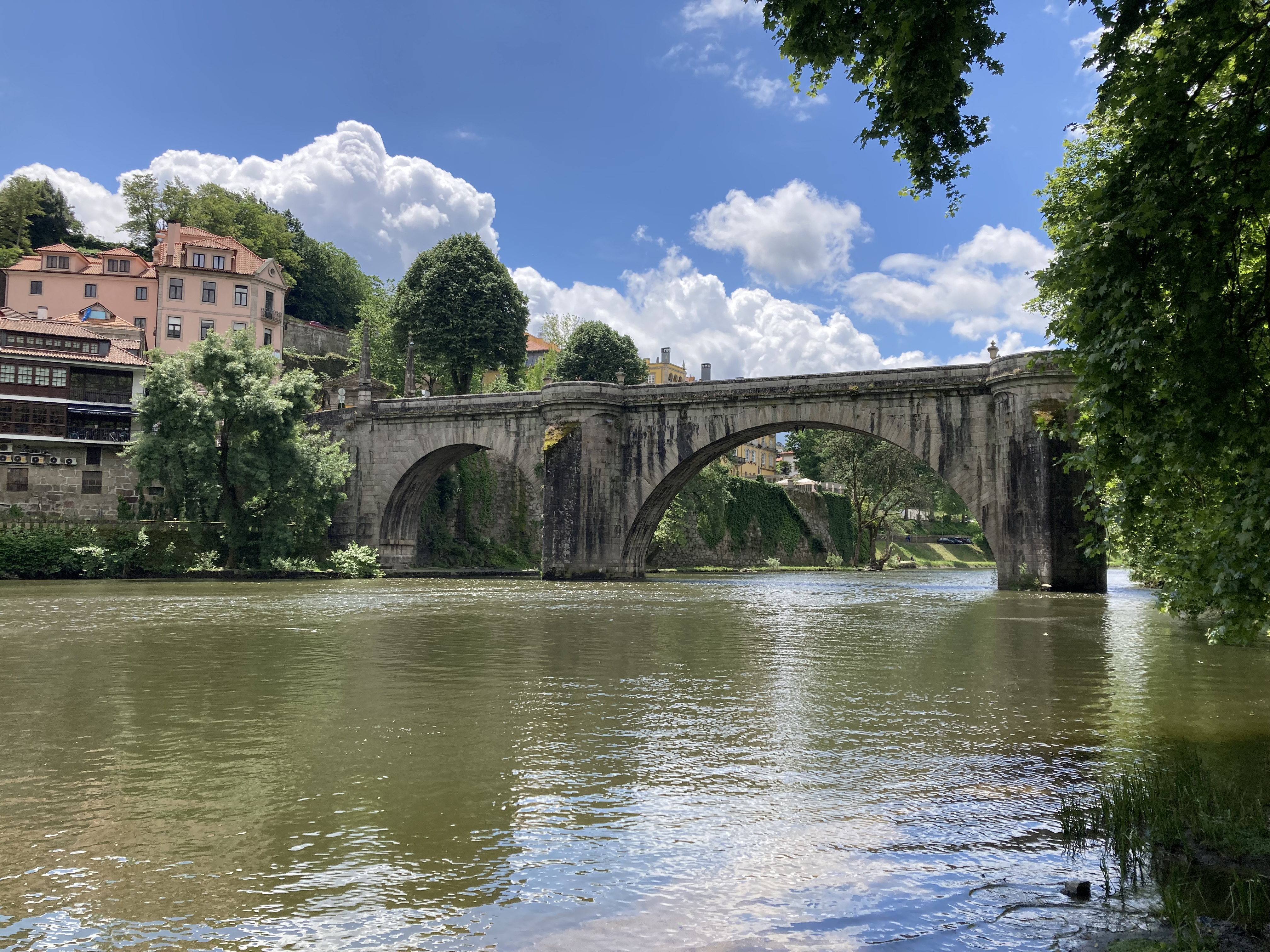
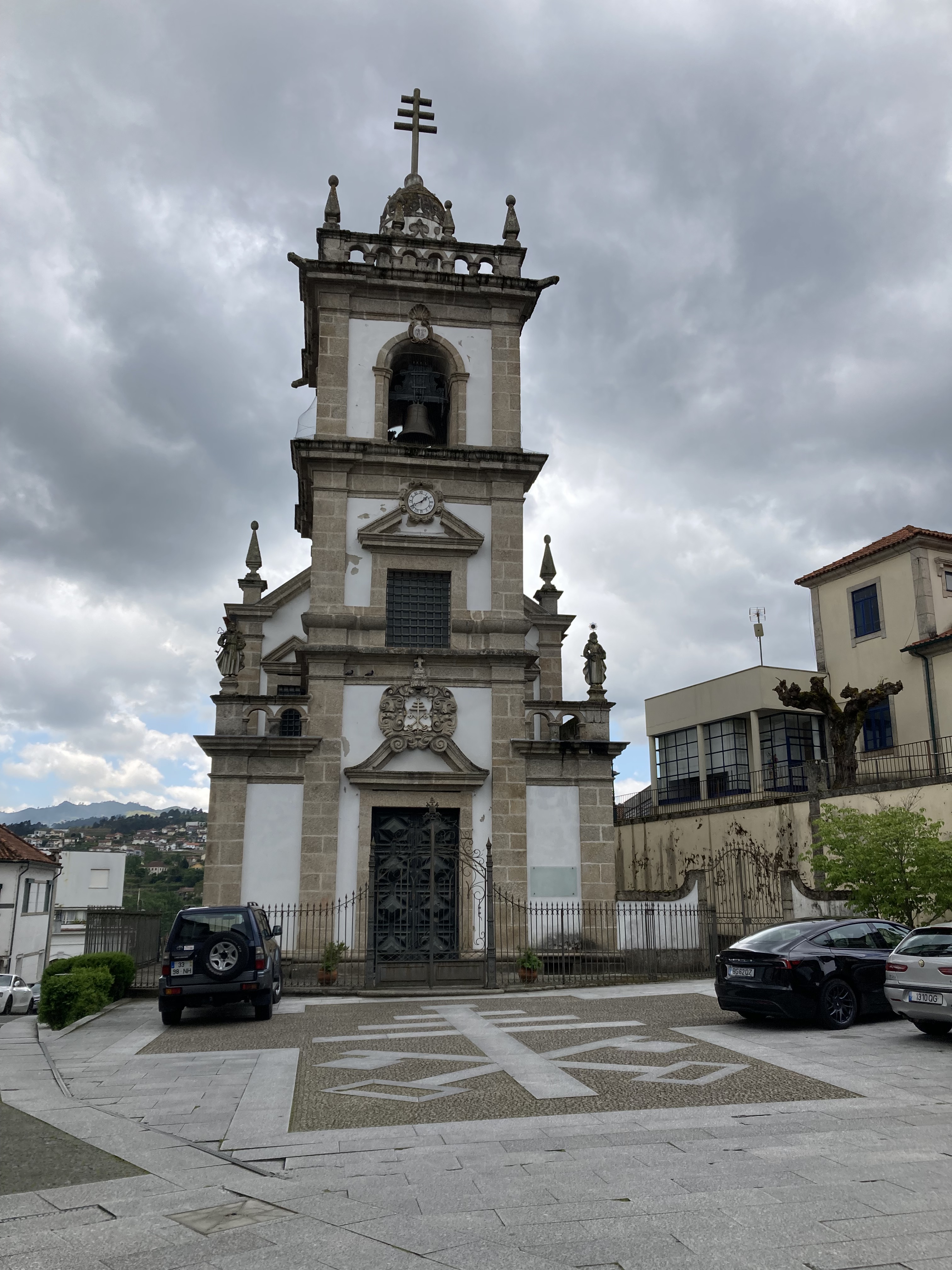
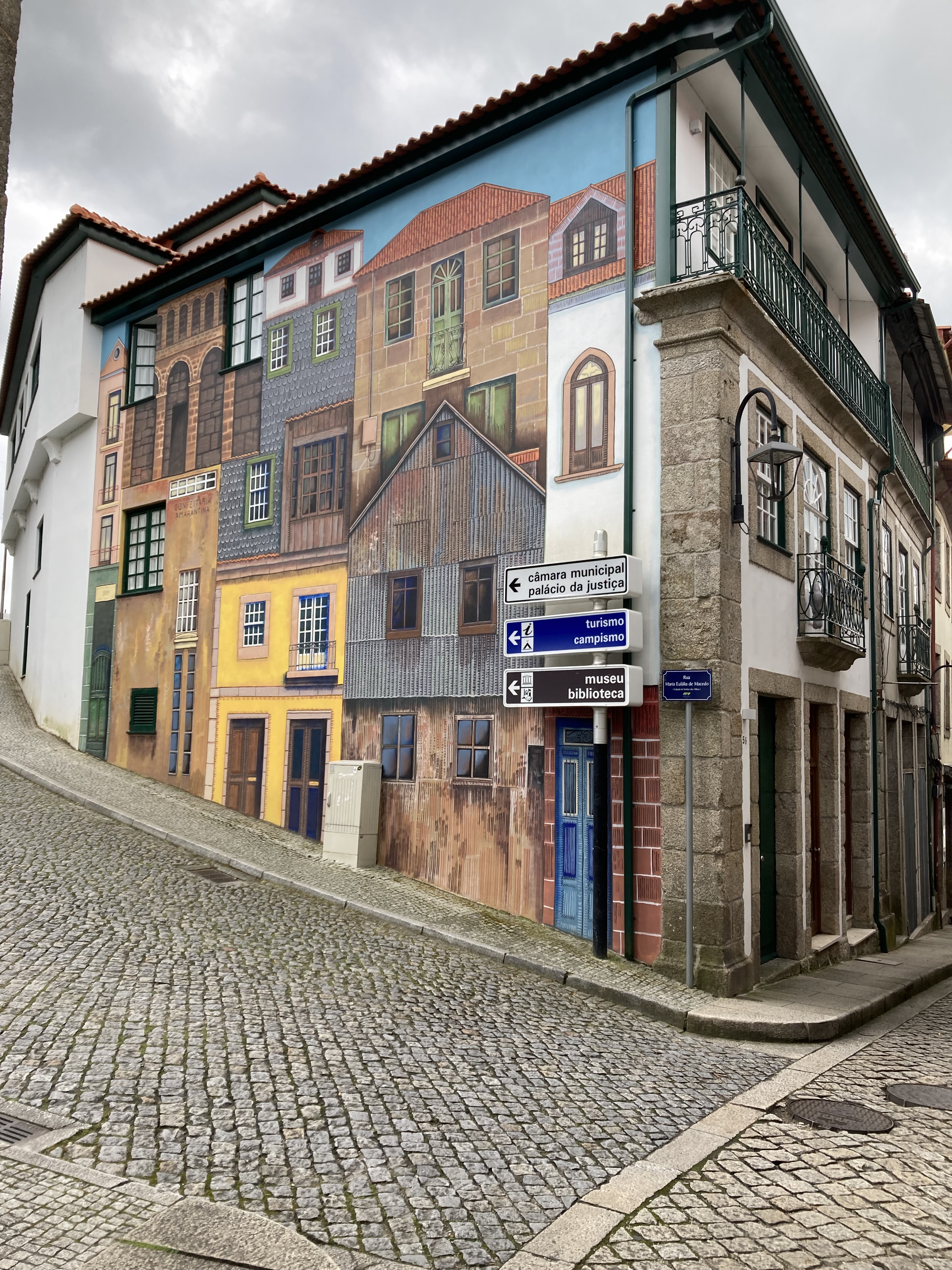
It was more than right: a beautiful town on a serious river, a Roman bridge, spectacular church, adjoining convent and lovely main street and central square
Igreja de Sao Pedro
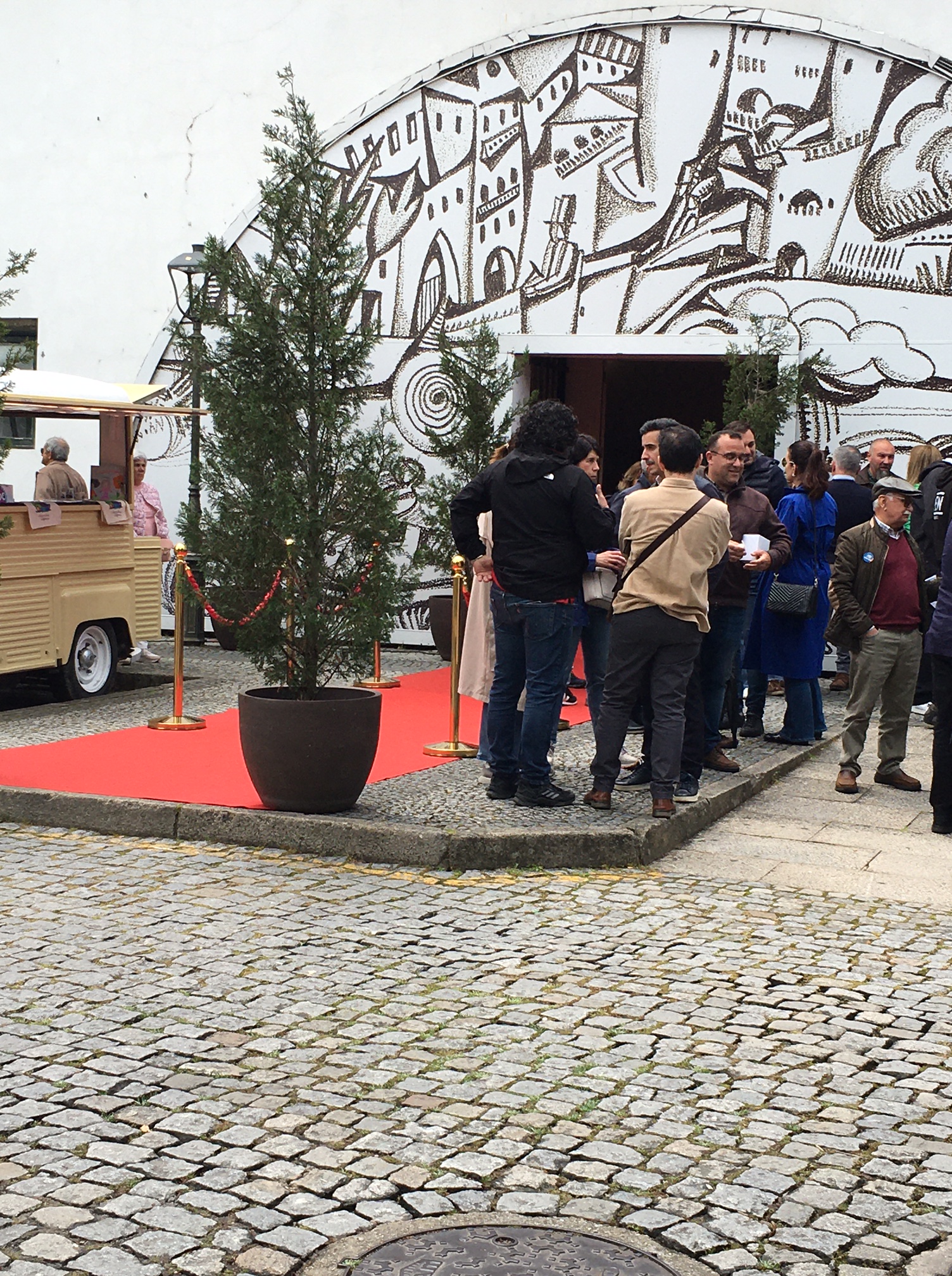
The red carpet led into the convent and signage indicated something serious was on.
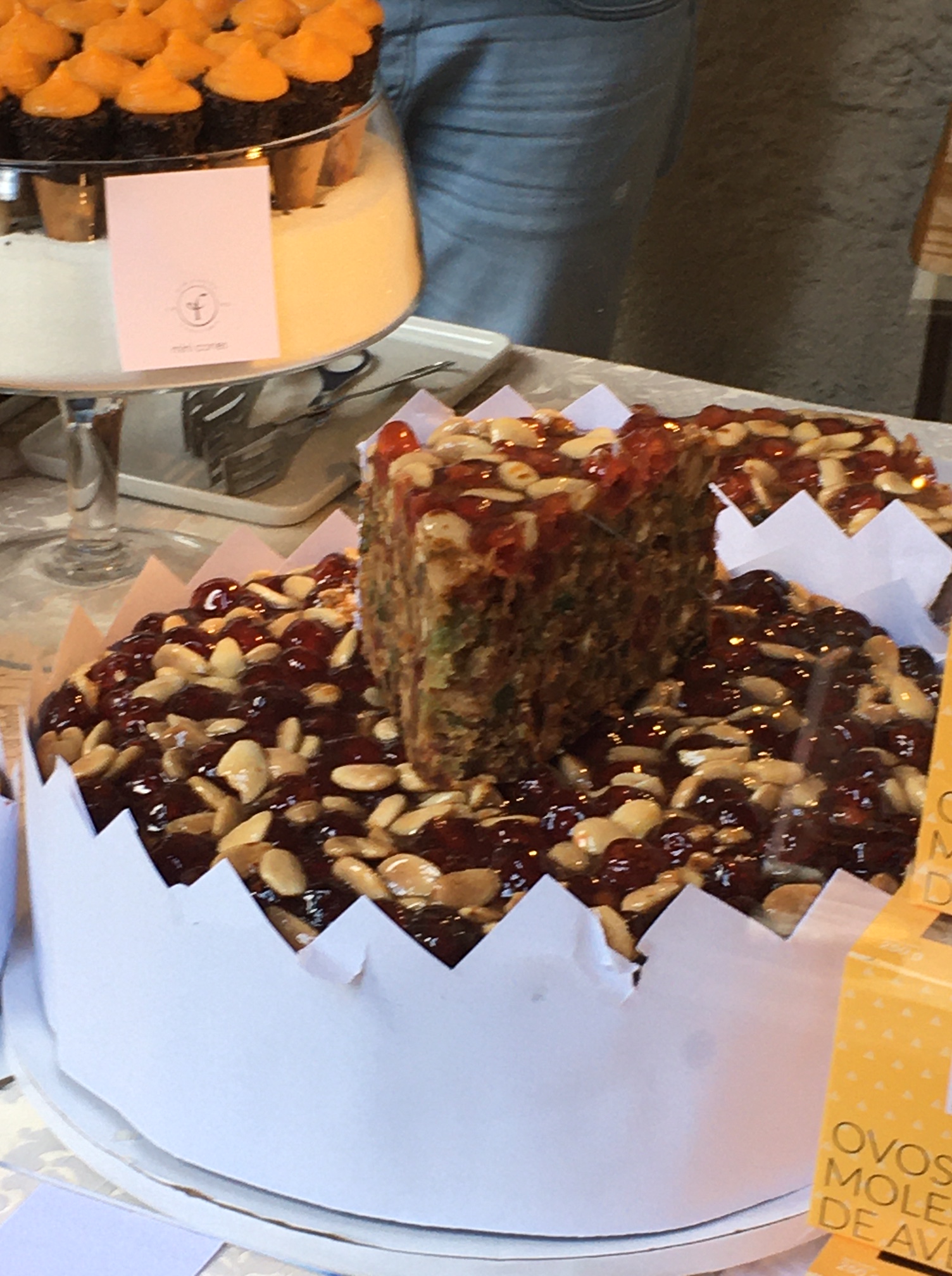
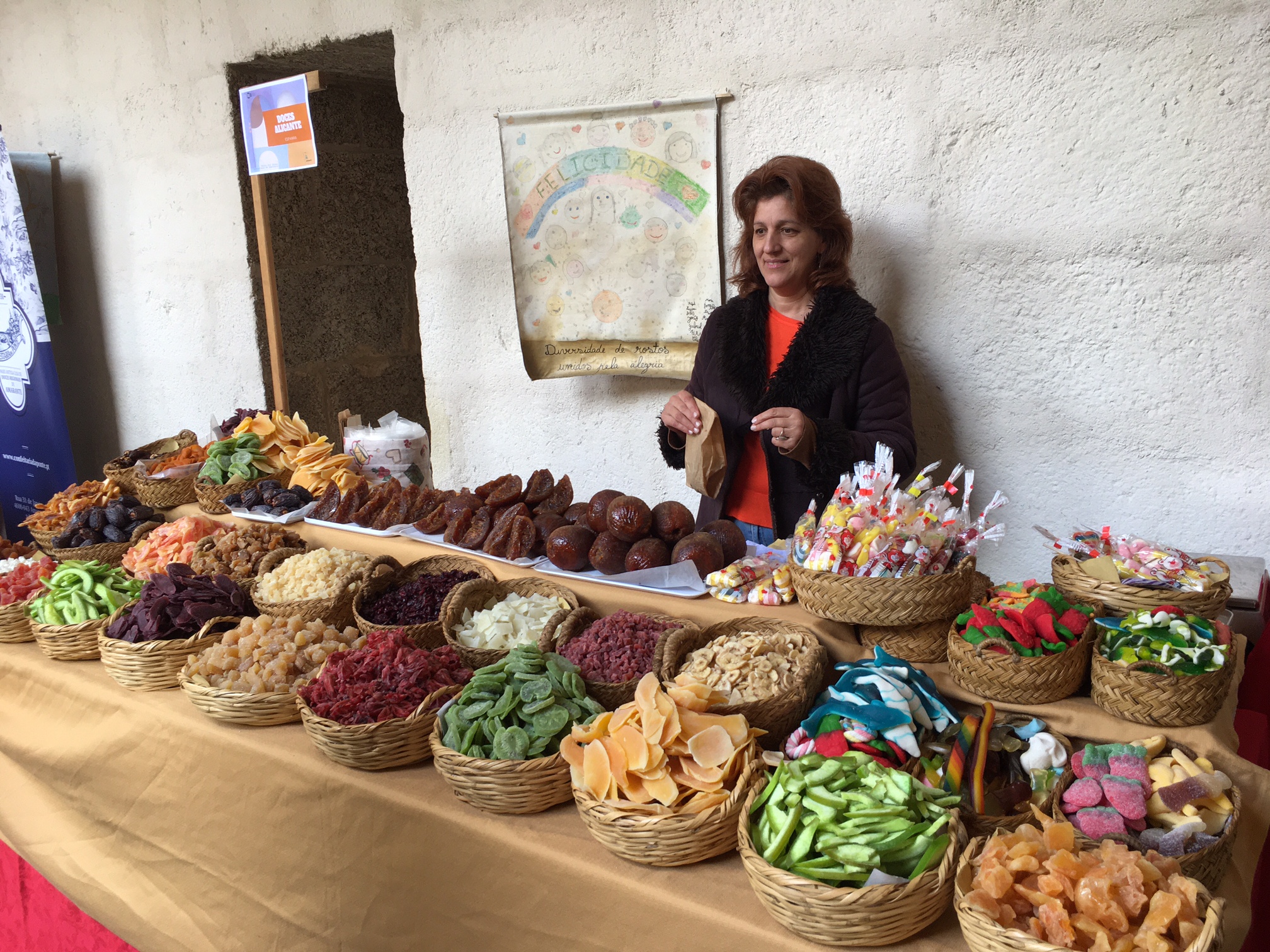
Well, it was actually the weekend celebrating Sao Goncalo (the annual event that delivers a rush to the dentist). From all over Portugal sweet treat bakers gather with their stalls in the convent, each region has a specialty, and all the vast offerings will be sold by Monday! Apparently thousands of folk will pass through the convent courtyard tomorrow and there’ll be fireworks tomorrow night. Lucky we were unaware and jagged the quiet today.
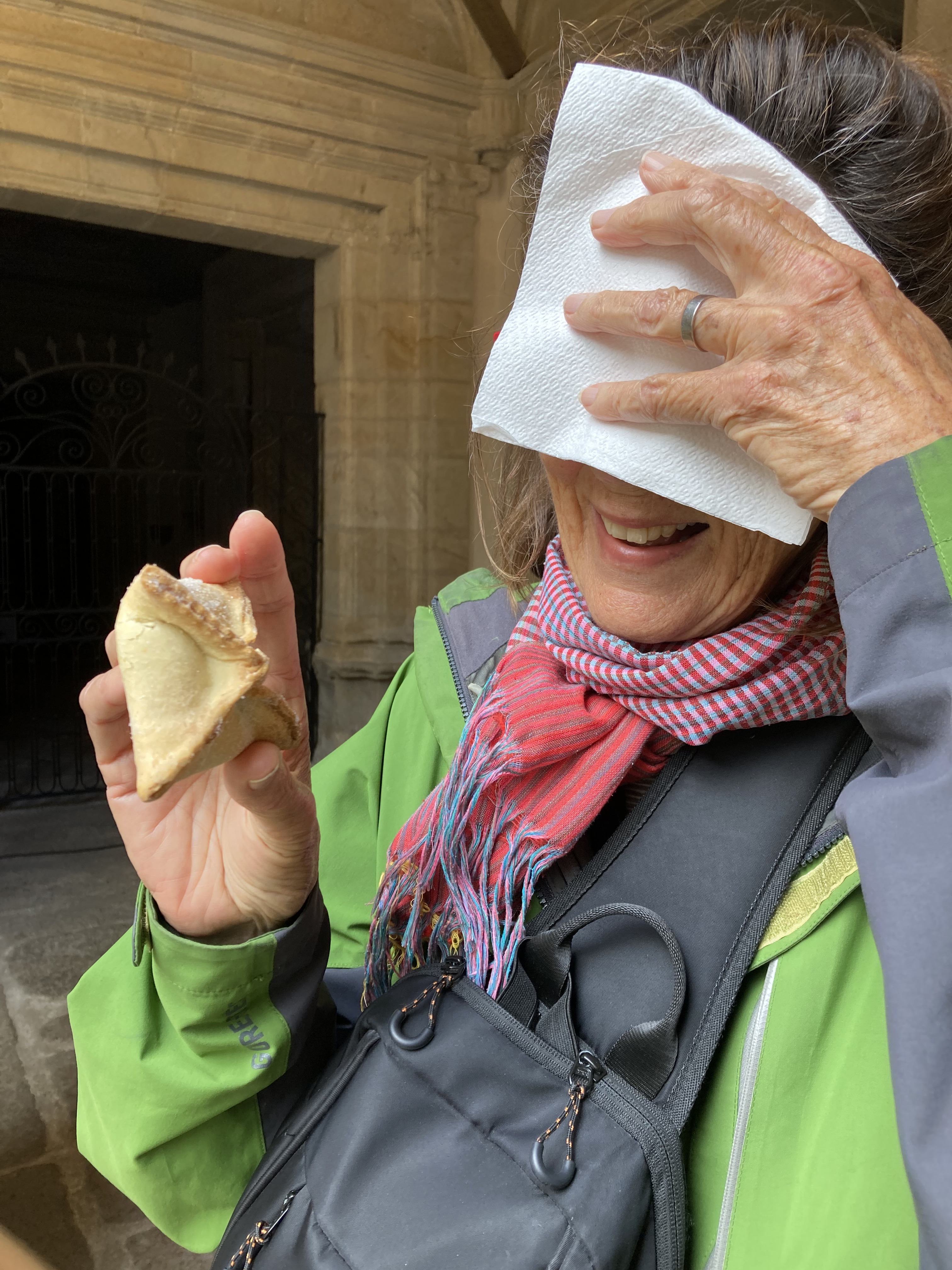
T noticed the ‘what is not seen is not sinful’ biscuit (pitos de Santa Luzia….) and the very pleasant young man at this stall, aided by D’s google translator app, answered our questions. When T asked if this was the reason Portugal has so many dentists, he said something about health insurance not covering dental, hence dentistry is a well paid job. No worries re our insurance, so we enjoyed the pitos (T had thought about making an adapted version, since we don’t have pumpkin for the filling but a sauna this evening seems a better option).
‘What is not seen is not sinful’ biscuit (pitos de Santa Luzia….). She peaked!
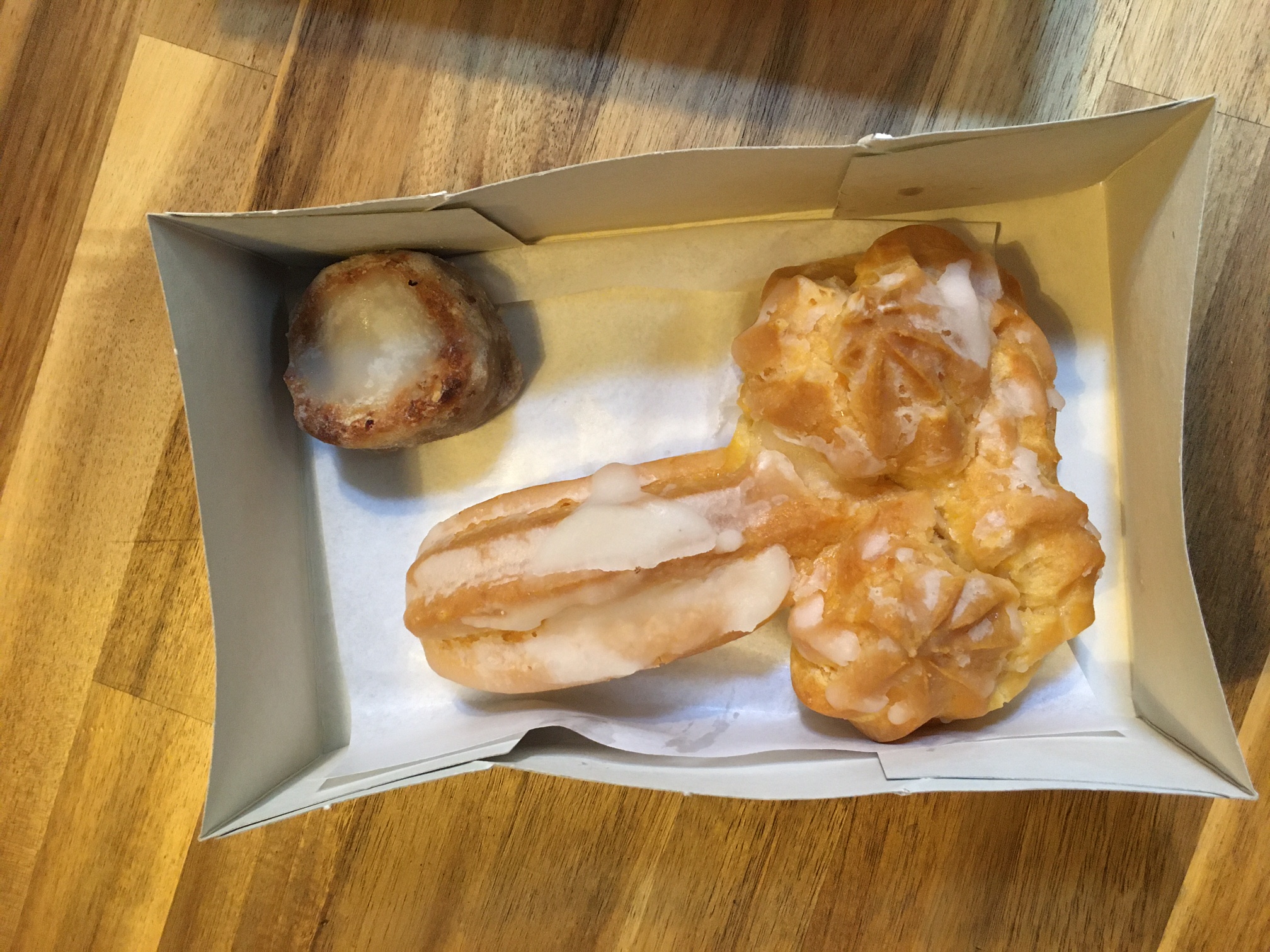
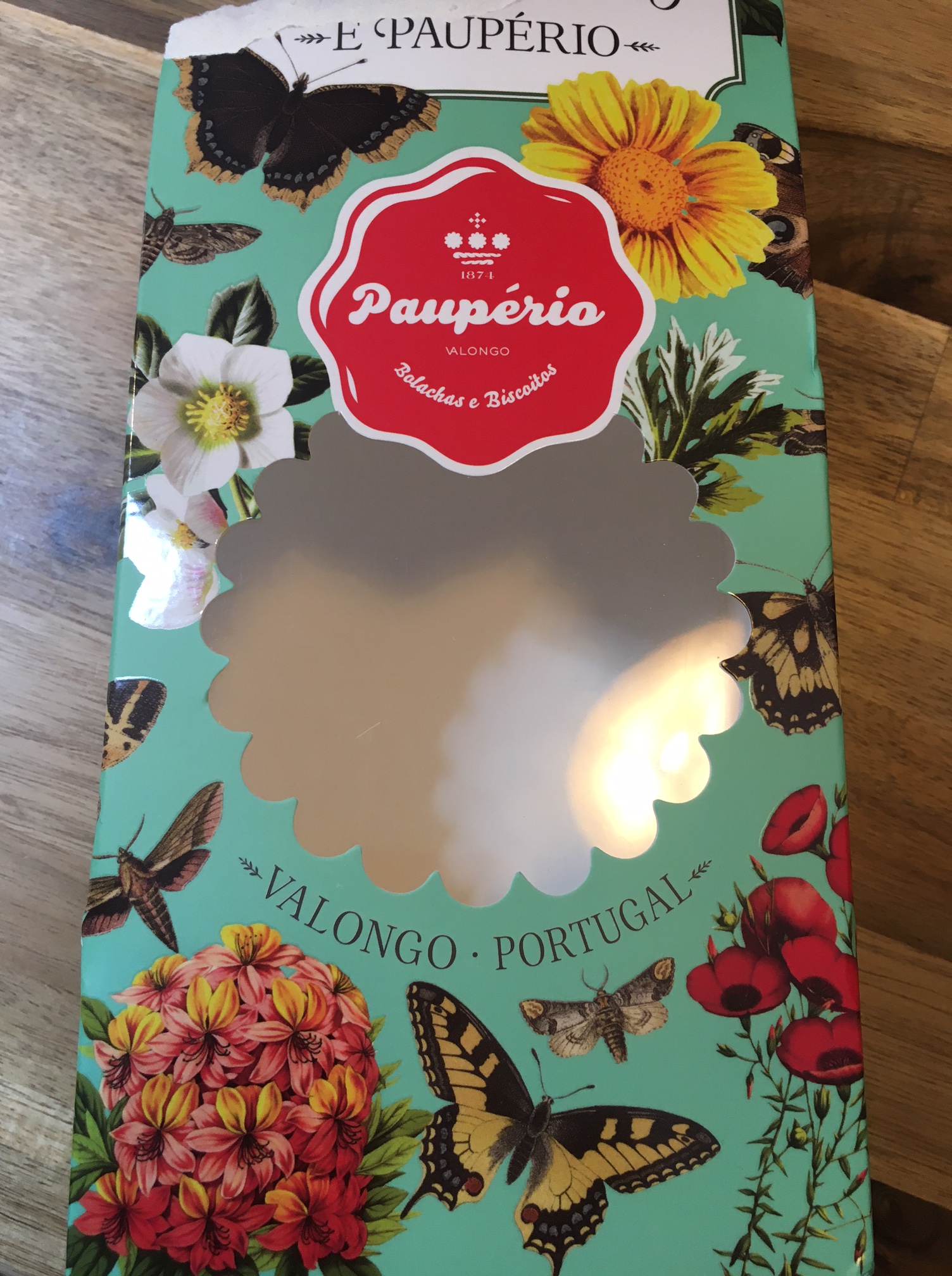
And at another stall, the contents of this box were bought.
Quite suitable to be sold in a convent, but perhaps not a street stall in Kambah?
Who’d believe that these naughty offerings are conventual???(and hopefully consensual). Yesterday, Aida had referred to Portugal’s very low birth rate…maybe these biscuits are not up to scratch any more, or maybe folk are more worried about their dental bills.
Having sweetened up, we drifted the old town shopping street (now mostly open, as it had passed the ‘closed for lunch’ time of 2pm (we hadn’t cottoned on earlier). T spotted a fabric shop! A real one and finally succumbed to a small purchase.
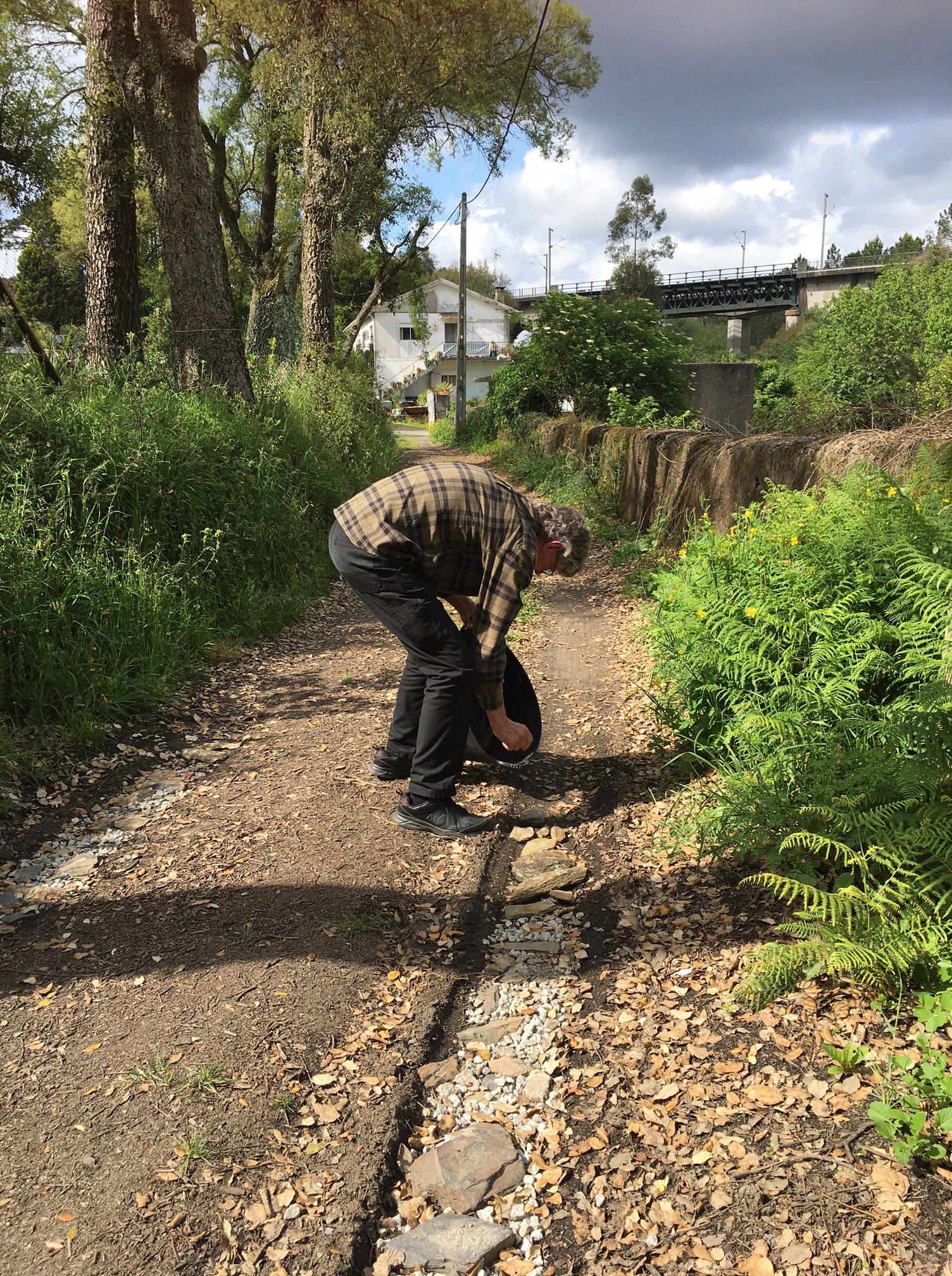
The threatening black skies did not eventuate, so all in all an excellent outing. But just in case the skies do not hold, a little more roadwork has been done. The slate is so lovely.
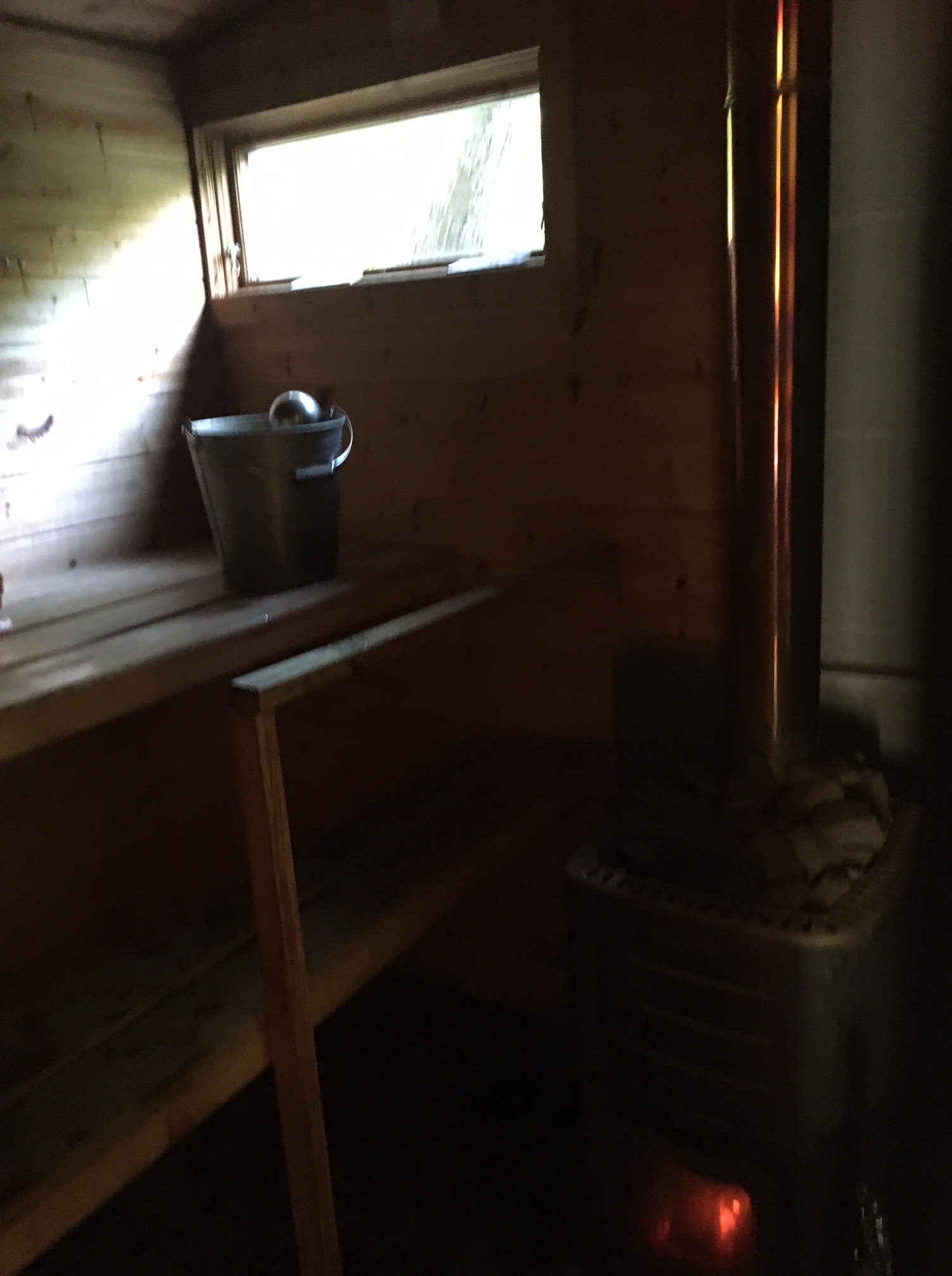
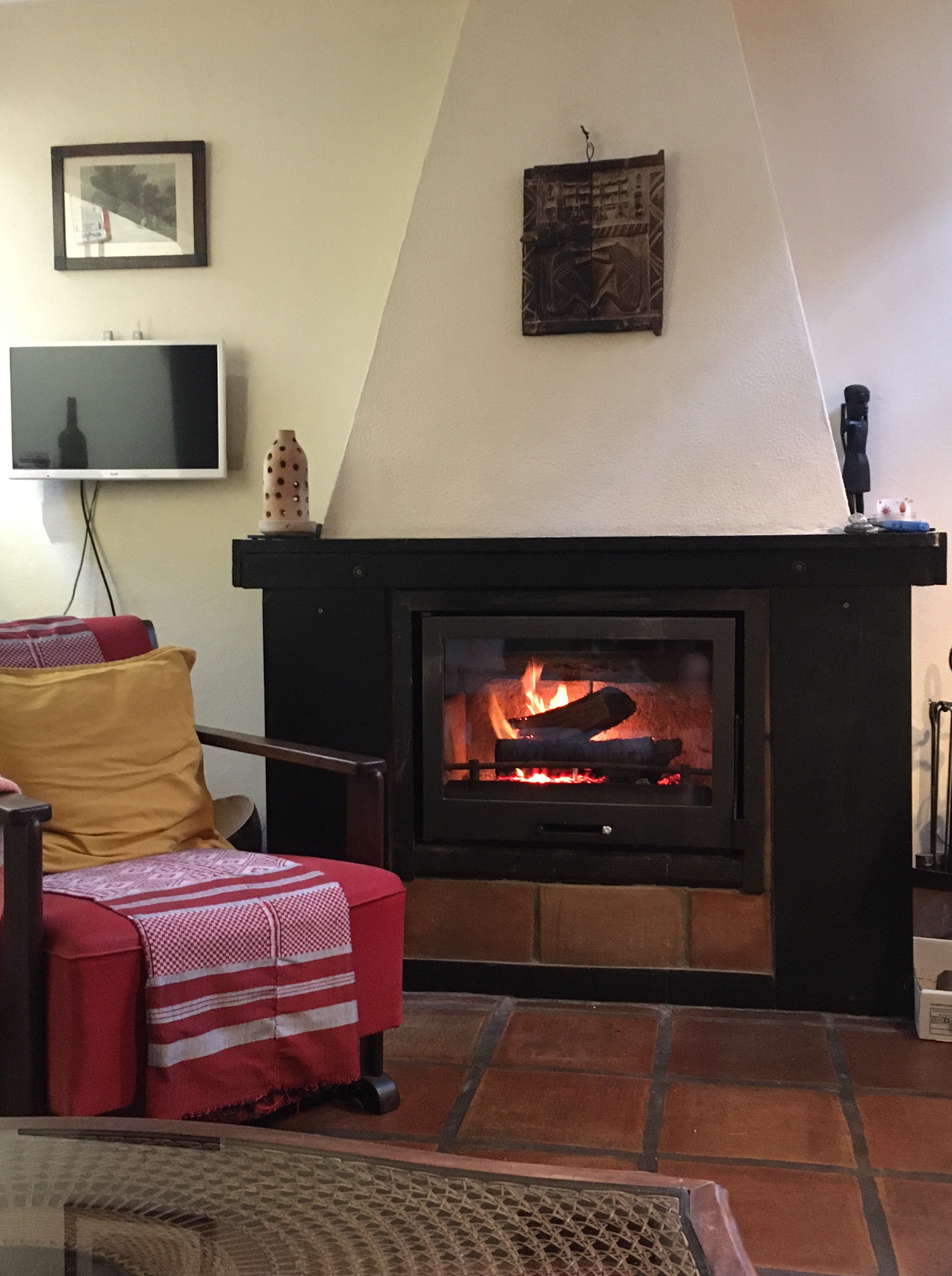
Arriving home it was time to fire up that sauna to finish a super Saturday. And it was a Super Saturday Sauna, finished off in front of a warming fire.
What is not seen is not sinful
Dinner: An old friend: Chorizo, tomatoes, carrots, potatoes, onion, garlic, herbs ‘stew’ plus some steamed broccoli.
We are knackered after several days of walking – with lots of stairs. Today will be a rest day but T is hatching the plan for next week.
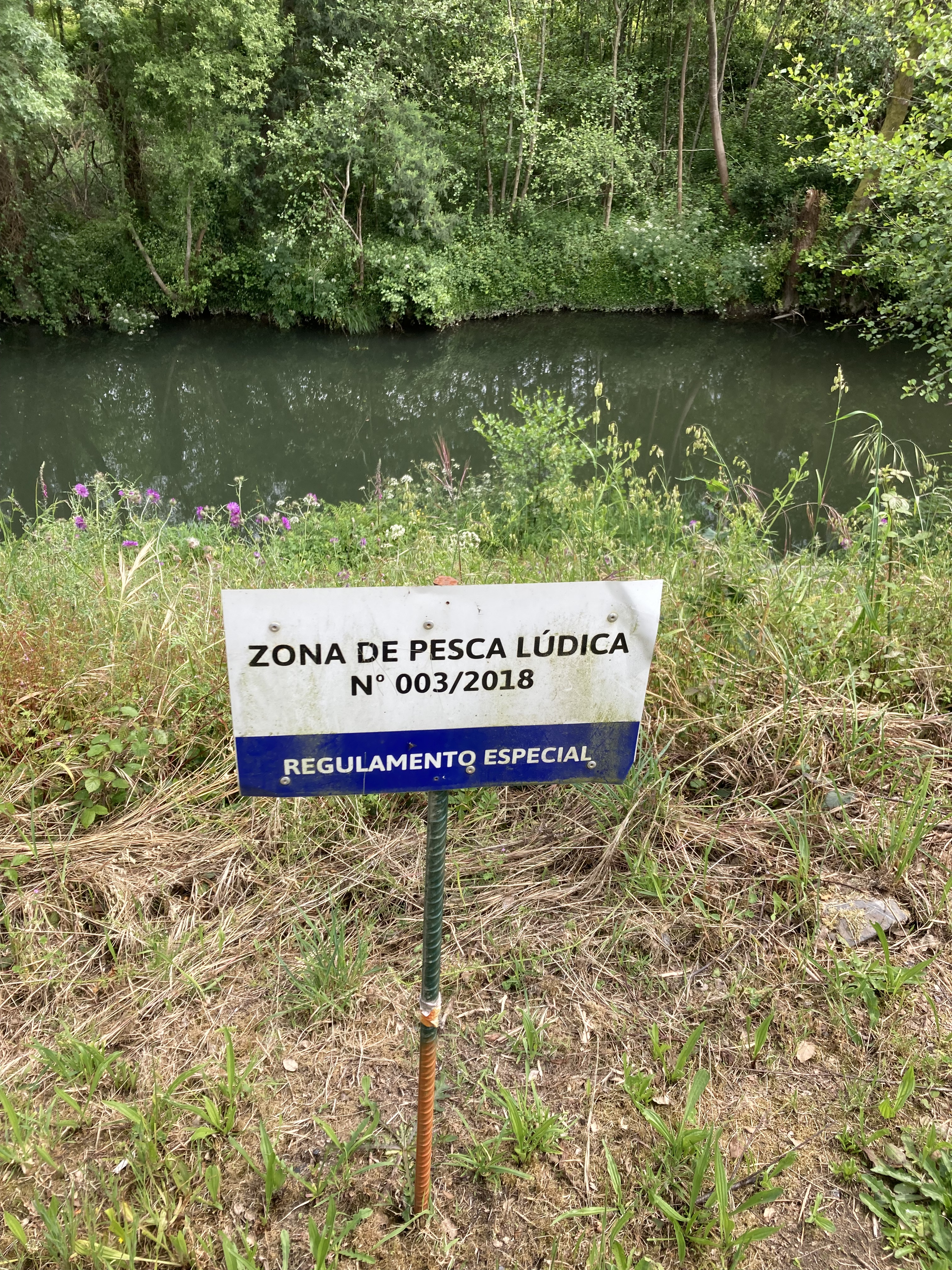
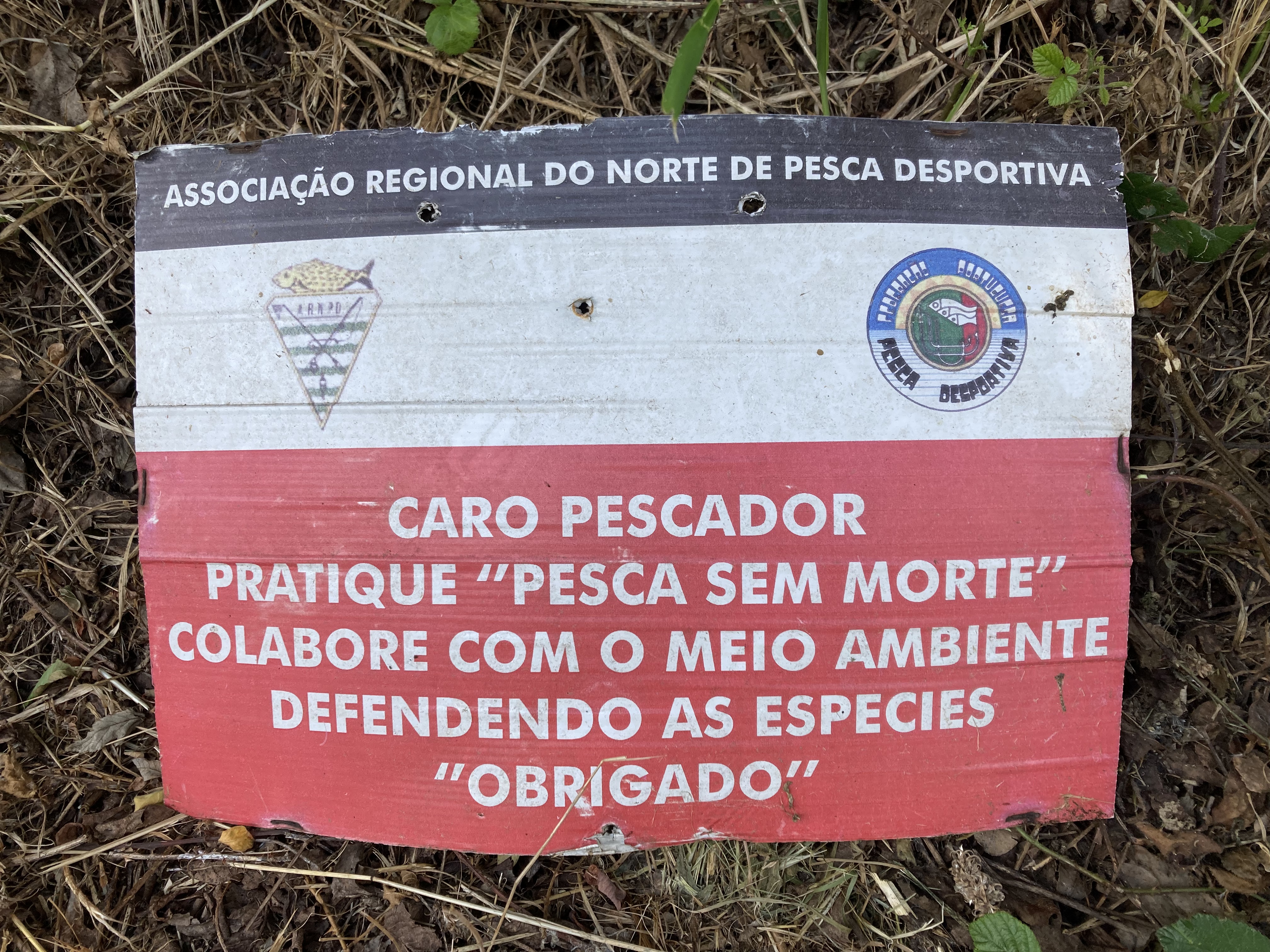
Early afternoon, we set out to explore some of the local area, starting with investigating some official signs seen about fishing. We thought this might be useful information for Phil, should he ever return.
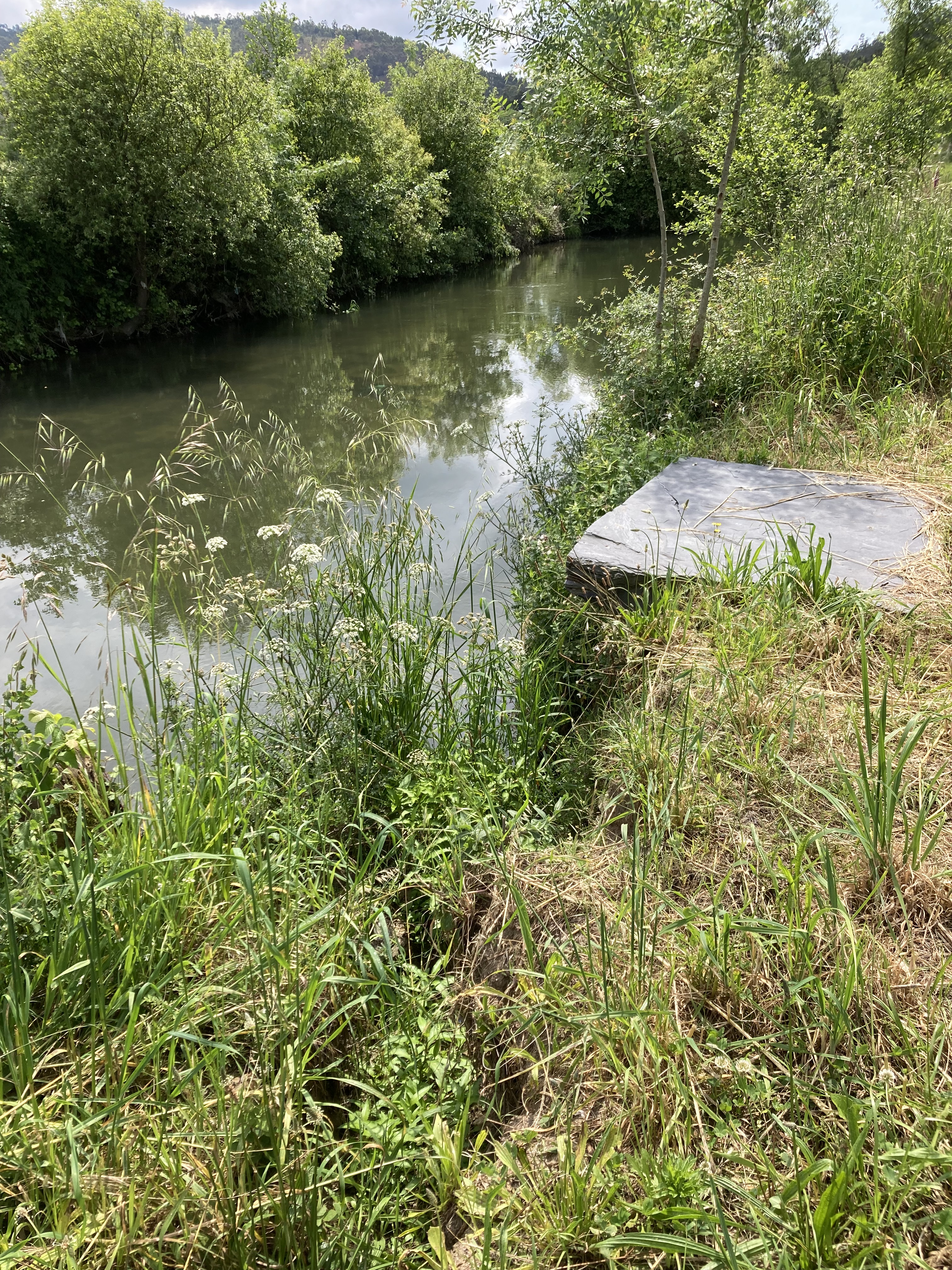
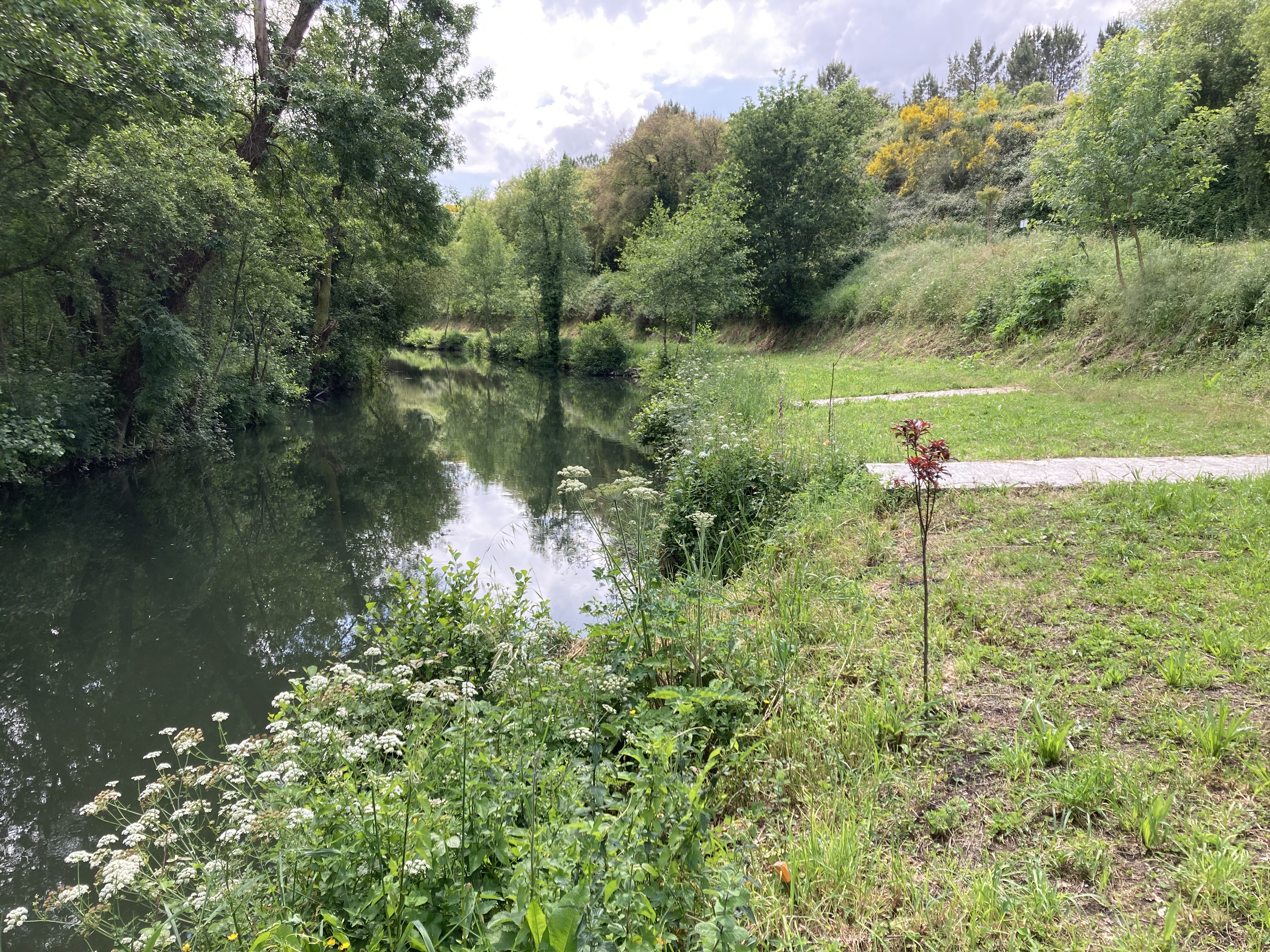
The signs directed towards a designated fishing site on the river. It is very formal: mostly concrete slabs for each of the 40 sites, although a couple were slabs of slate. The water was pretty murky: not sure we’d want to eat anything out of this stretch, as it’s below the sewerage treatment plant, that also provides a distinctive aroma, but this is actually a catch and release (obrigado) section.
A few spots seemed to be older: huge slabs of slate.
Drove to Campo to check that town out – turns out we have been in Campo all along. OK. The merging of Porto-outer-Porto-urban sprawl is a familiar thing but the townships seem to retain a named identity. Next destination was Alfena… marked on the map as another discrete urban area, but contiguous, that seemed to be an industrial spread. Our impression is that Portugal is a country of small-scale industry and business. D has wondered about the absence of Bunnings equivalents for hardware. There are at least six big supermarket chains that we see regularly, often right next to each other (Aldi, Lidl, Intermarche, Continente, Mercadona, Pingo Doce) as well as thousands (millions) of tiny ‘corner stores’. Perhaps this arrangement keeps more folk employed?
We swung back to Valongo for a stroll through our local municipality. Traffic was constant, so detoured into an Aldi to park (and to shop in due course), then walked uptown, just filling in time.
This was pretty much our first time just ‘being’ in the town rather than driving through (enough times now that D didn’t need to consult Doris to get home).
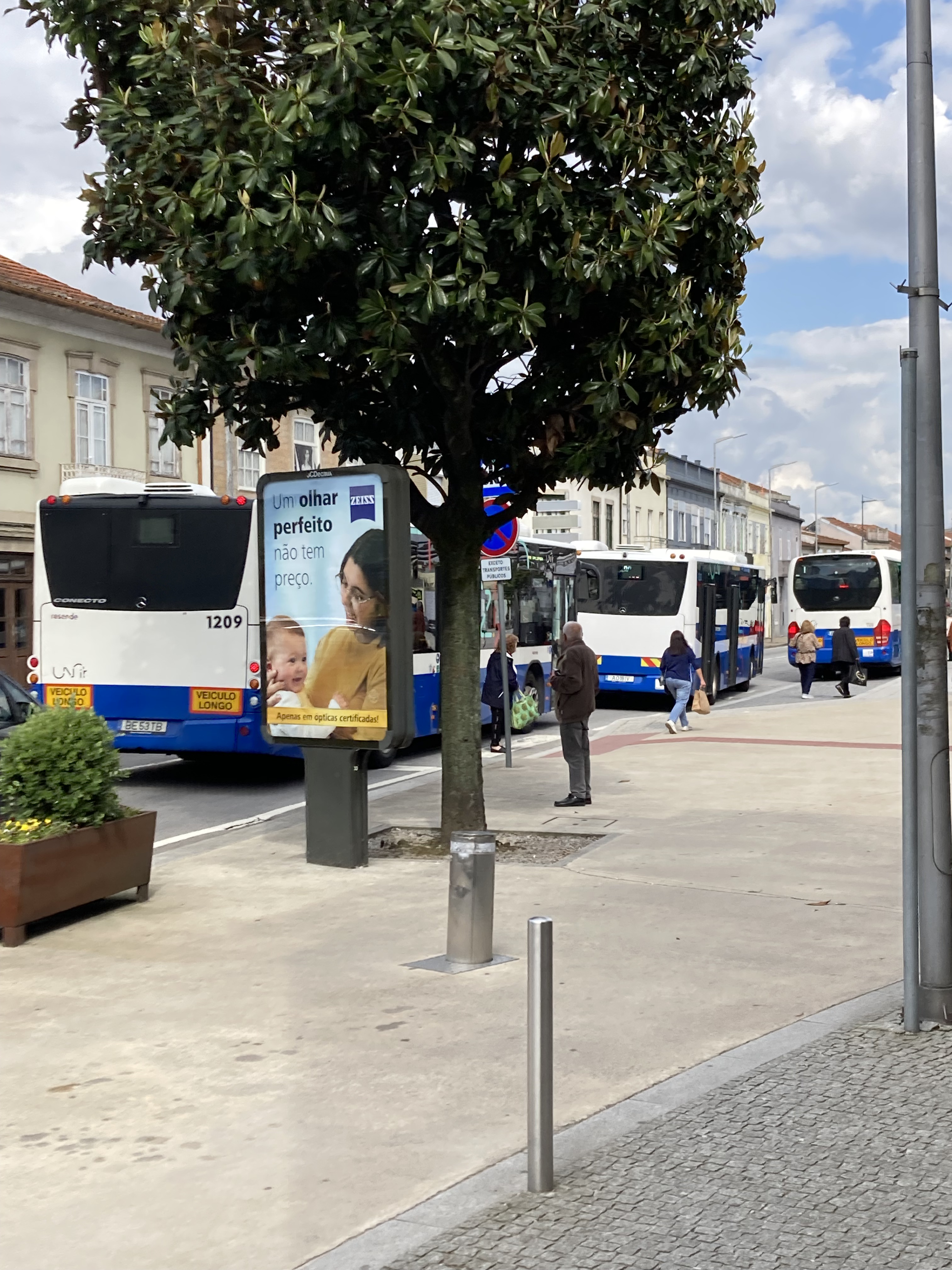
Valongo was busy. Parking is always a challenge and the routine is ‘if you need to have a chat, drop someone or something off, pick something or someone up, just double park, wack on the hazard lights and all will be well. It doesn’t matter that a bus needs to get around or that the road is completely blocked while ‘vital’ business is attended to.Buses were continuous, as were the cars, the latter obeying the Portuguese road rule that says anything goes, as long as you put on the hazard lights. There has been little road rage: drivers seem to accept the haphazard (pun intended) approach perhaps because they know, in these narrow streets, they’ll be next.
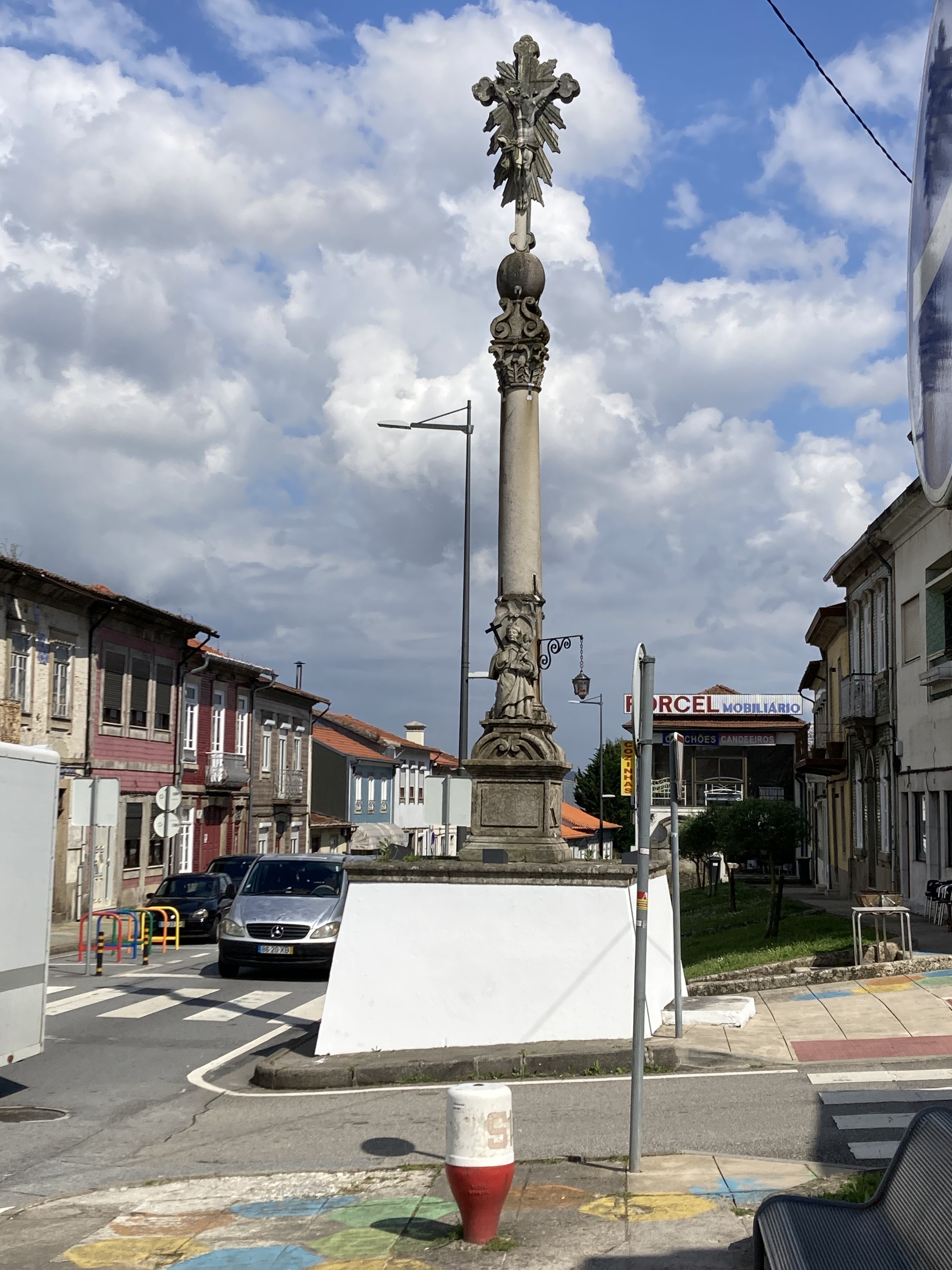
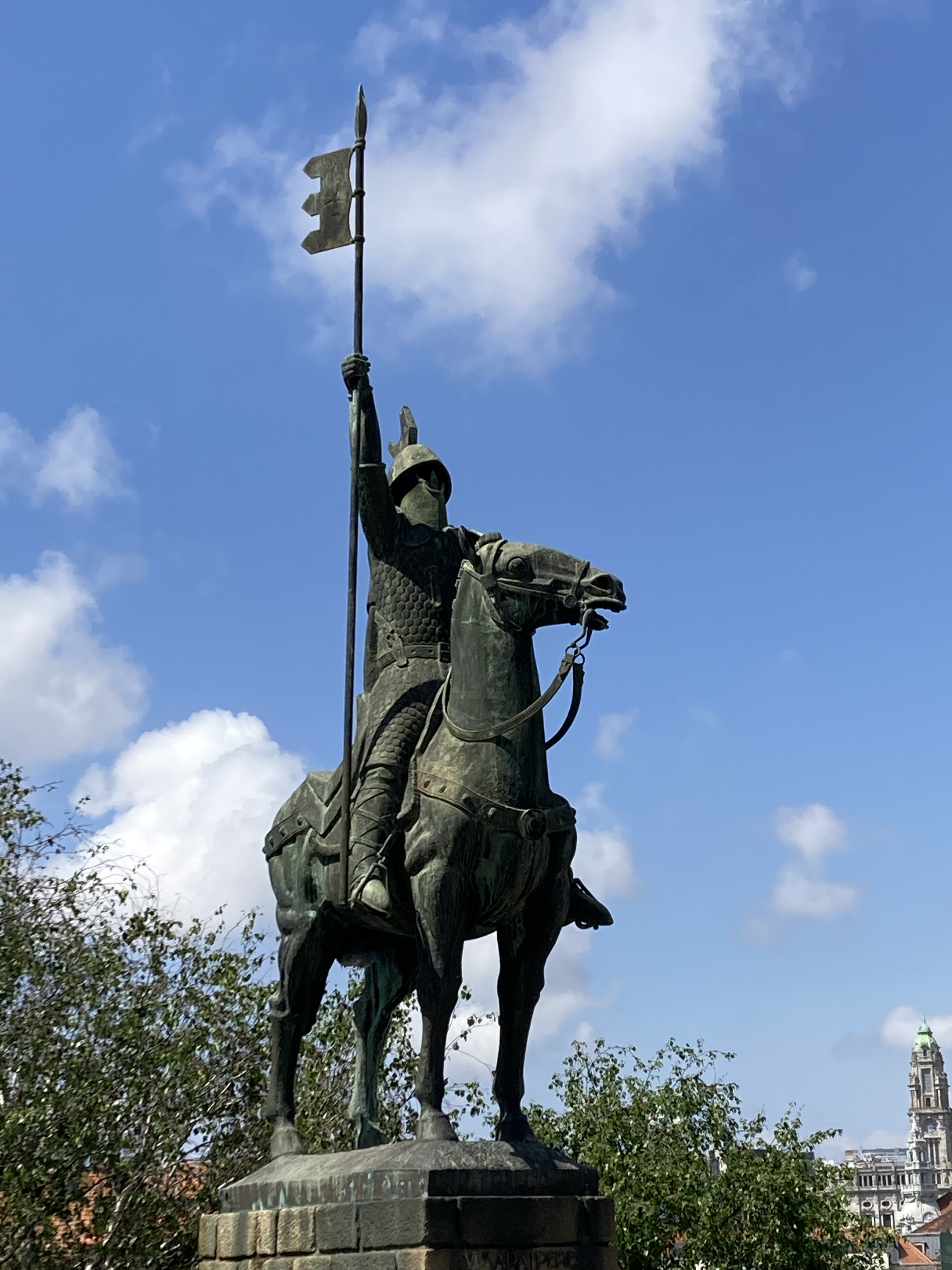
We were intrigued by a couple of signs/statues of significance to Valongo.
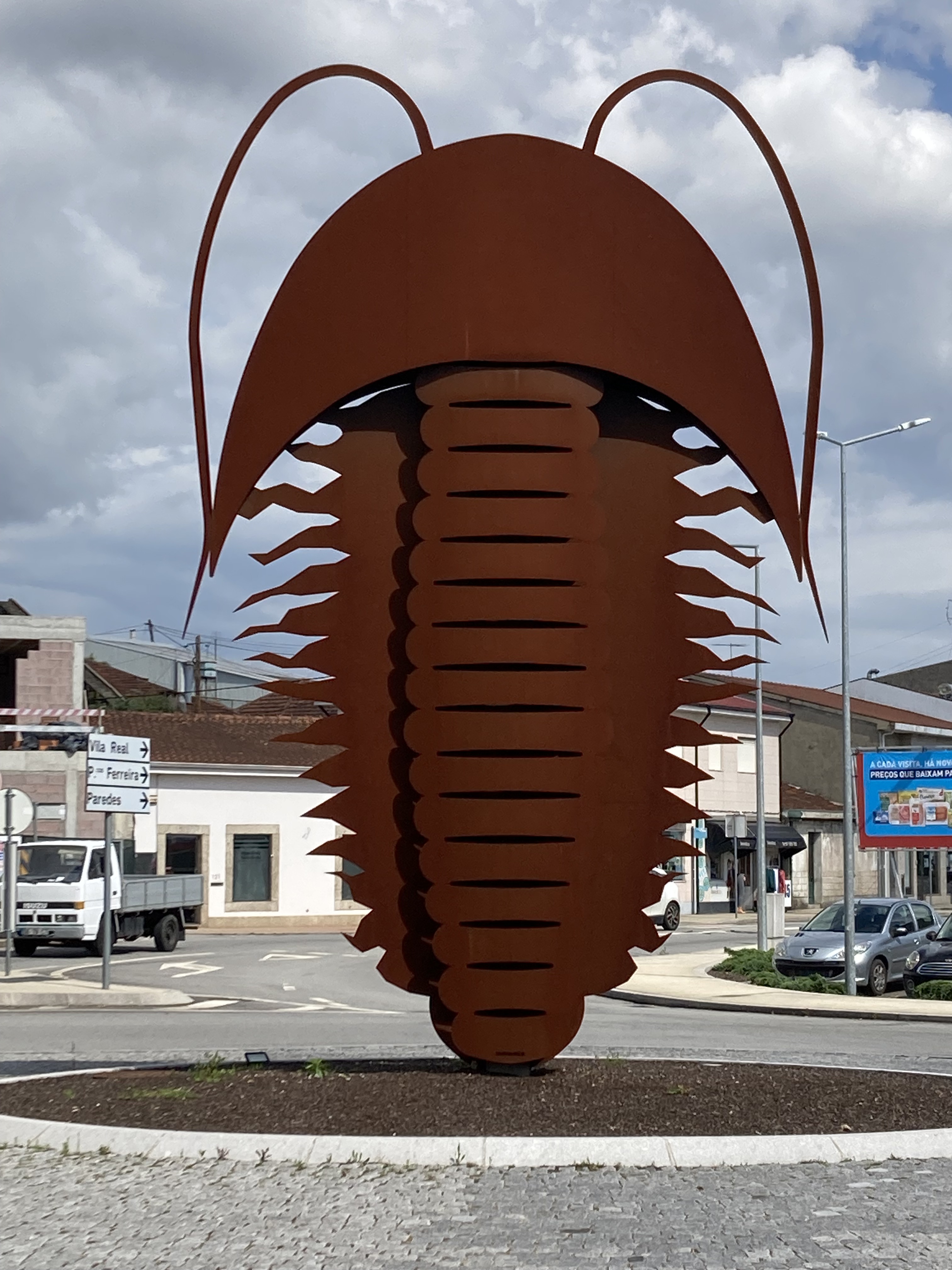
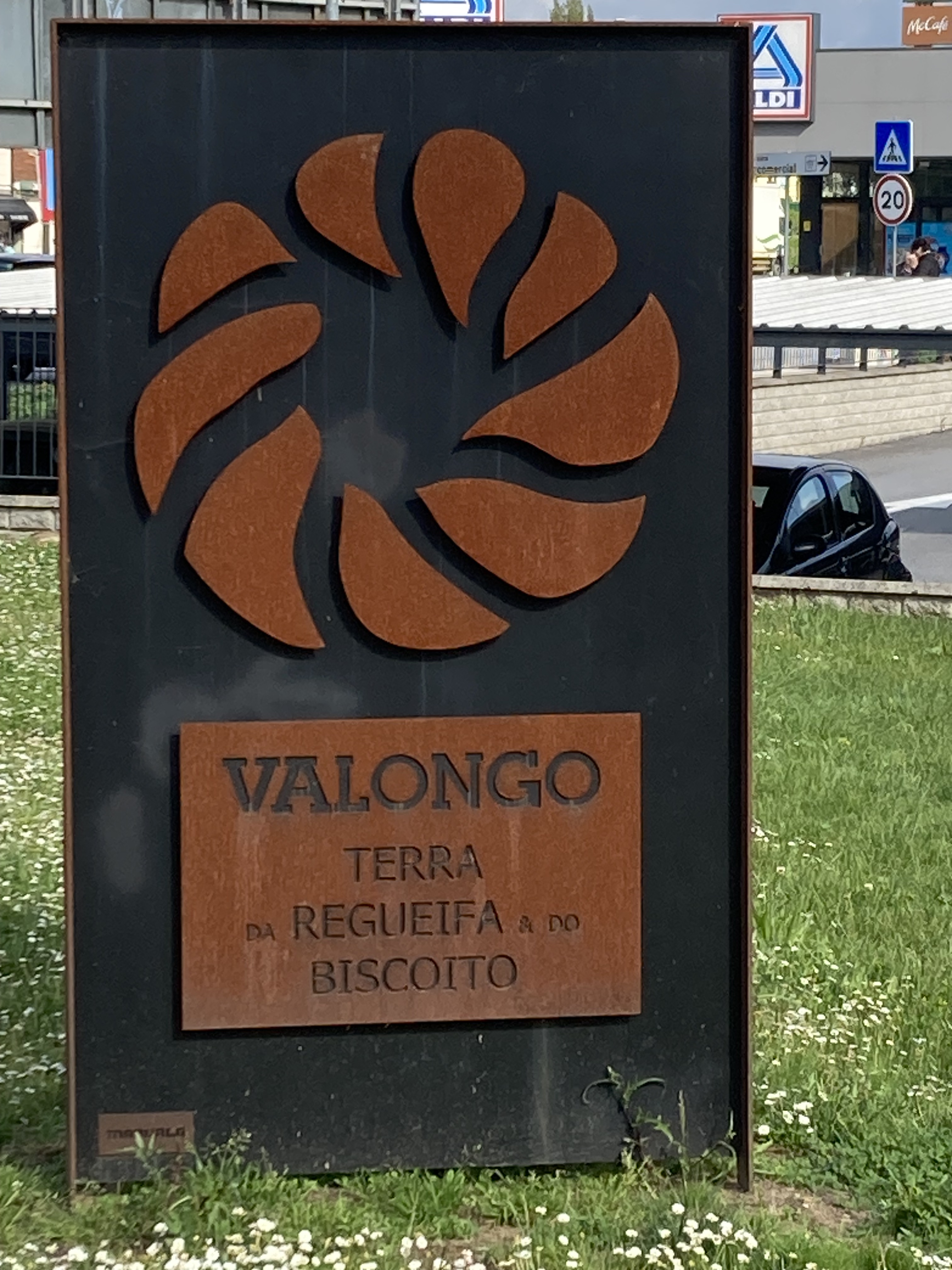
First was the city sign. We could understand what biscotti was, but what is regueifa? Google advises that is a ‘sweet bread’ for which, along with the biscuits, Valongo is famous. And a statue in the middle of a roundabout had us baffled. Was it a scampi? A cockroach? It was a trilobite, a marine arthropod that lived more than 500 million years ago and represents one of the most important groups of organisms in the fossil record of the Paleozoic Era. https://www.cm-valongo.pt/descobrir/marcas-de-valongo/trilobites
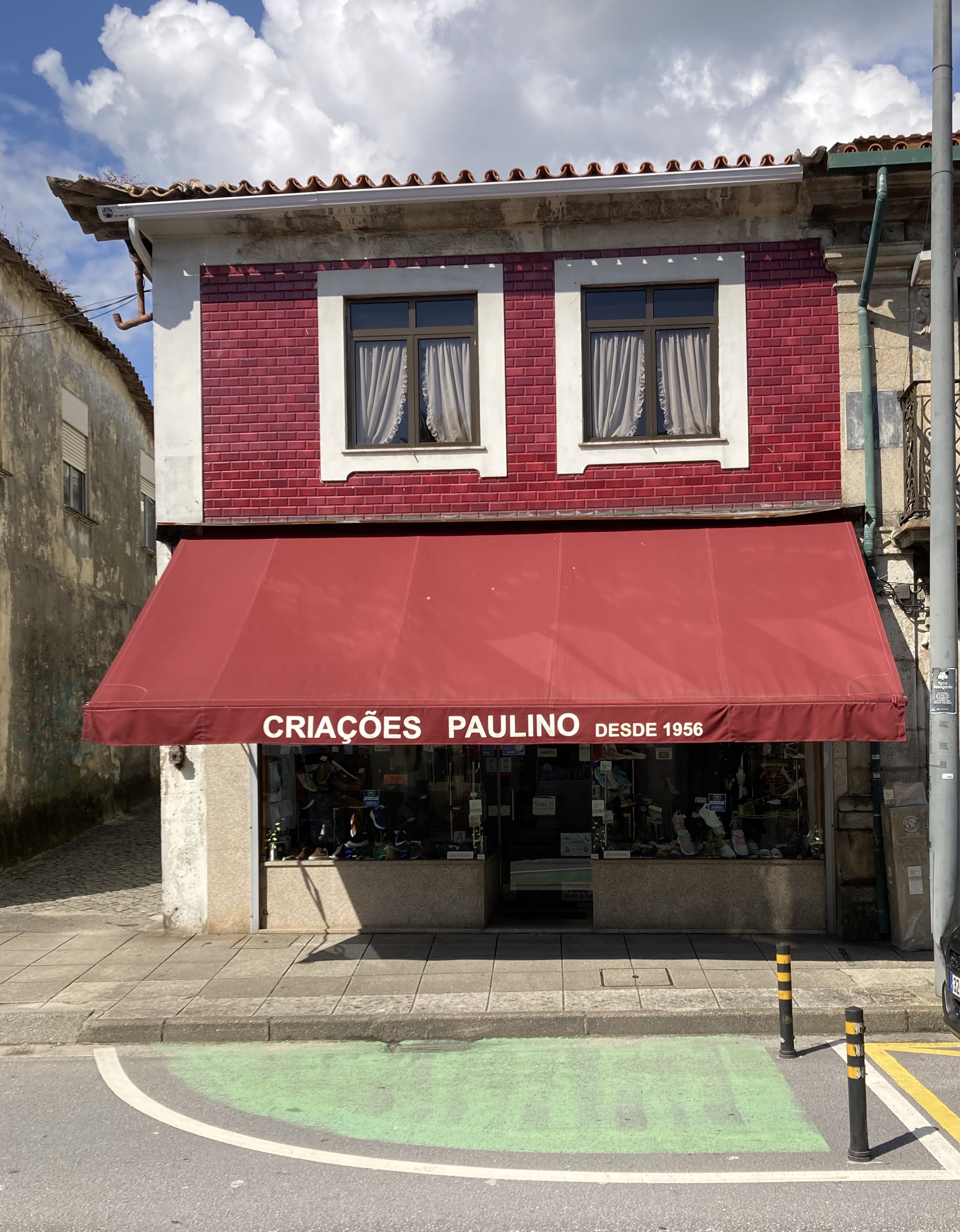
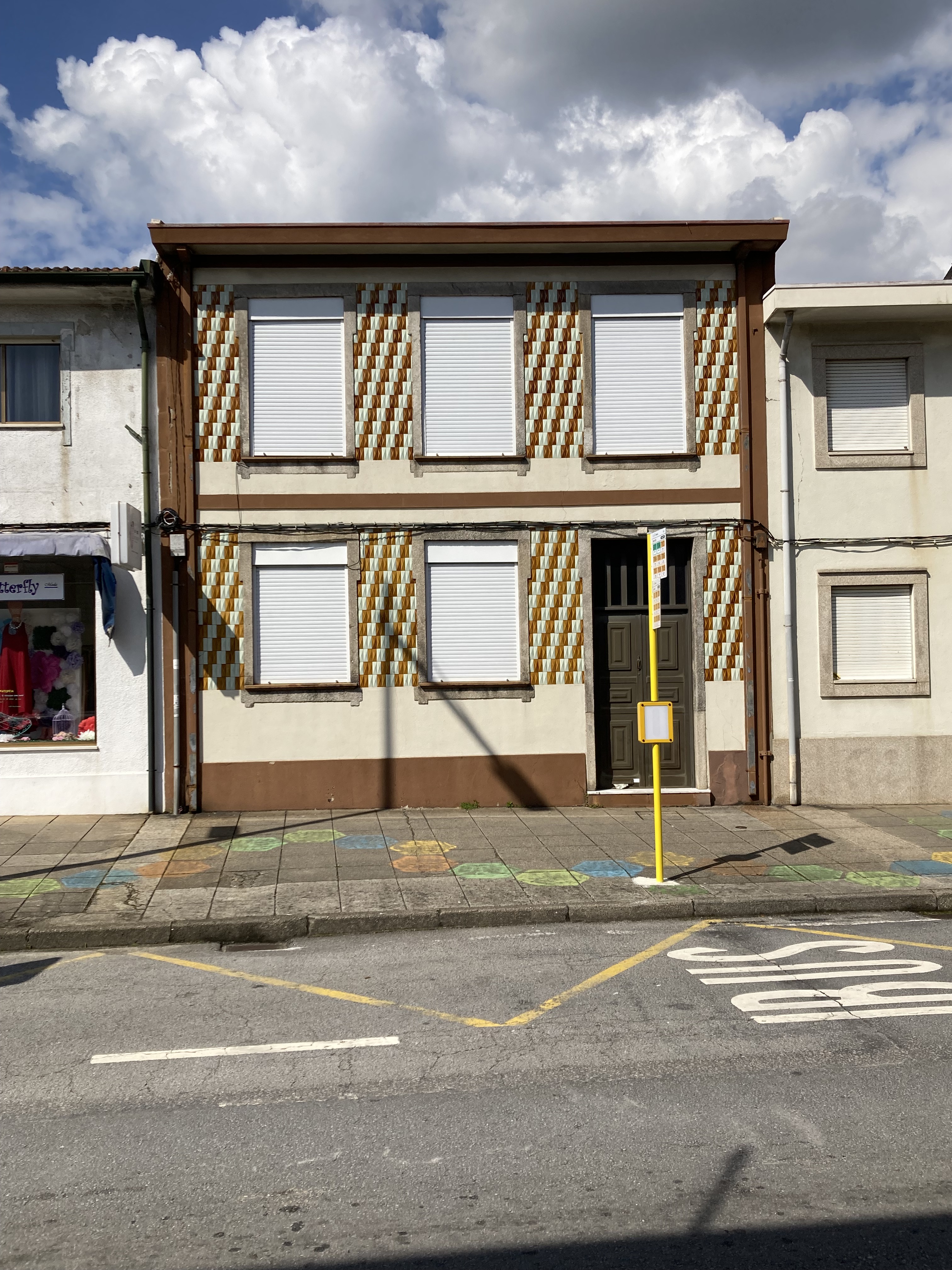
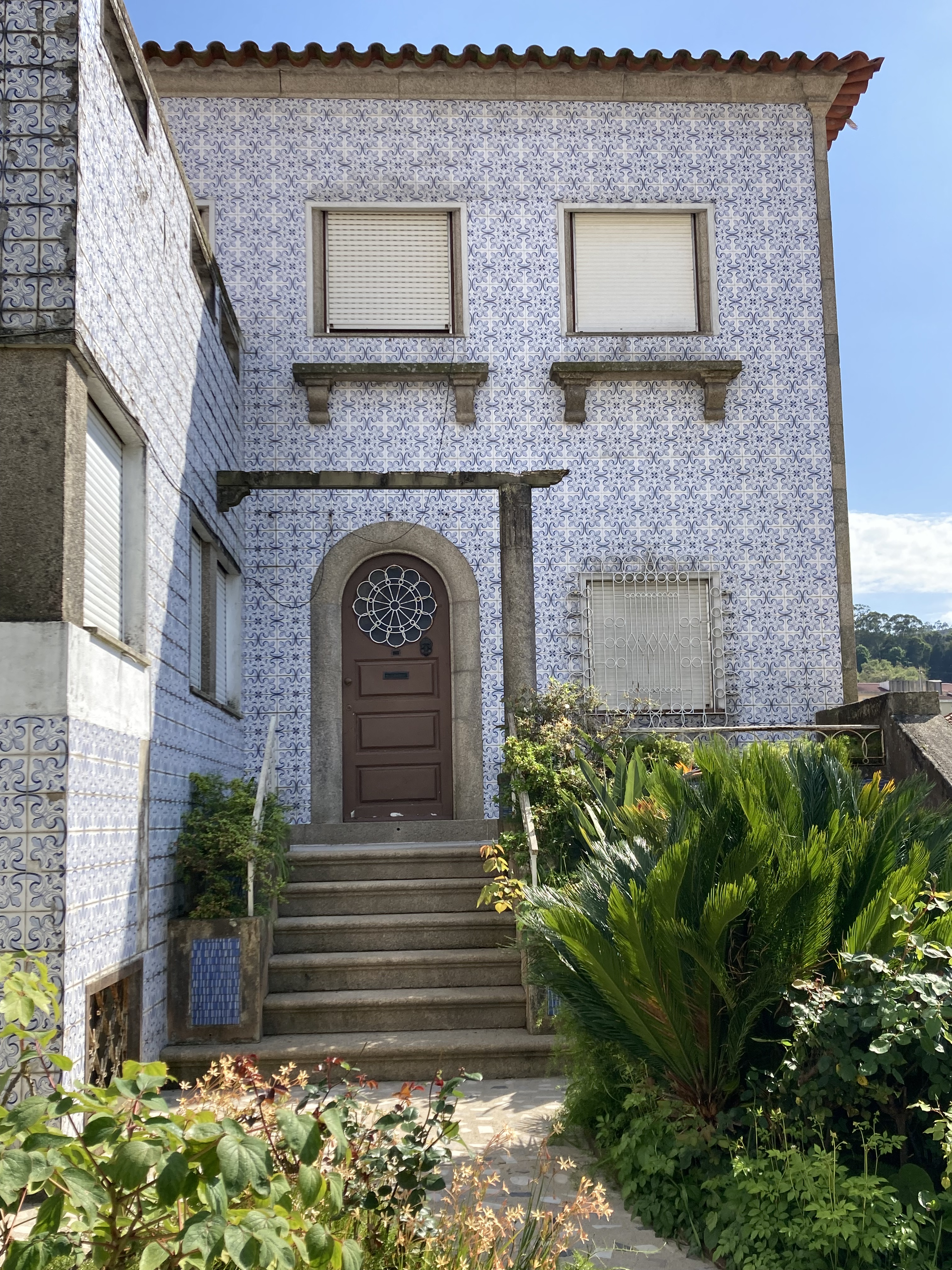
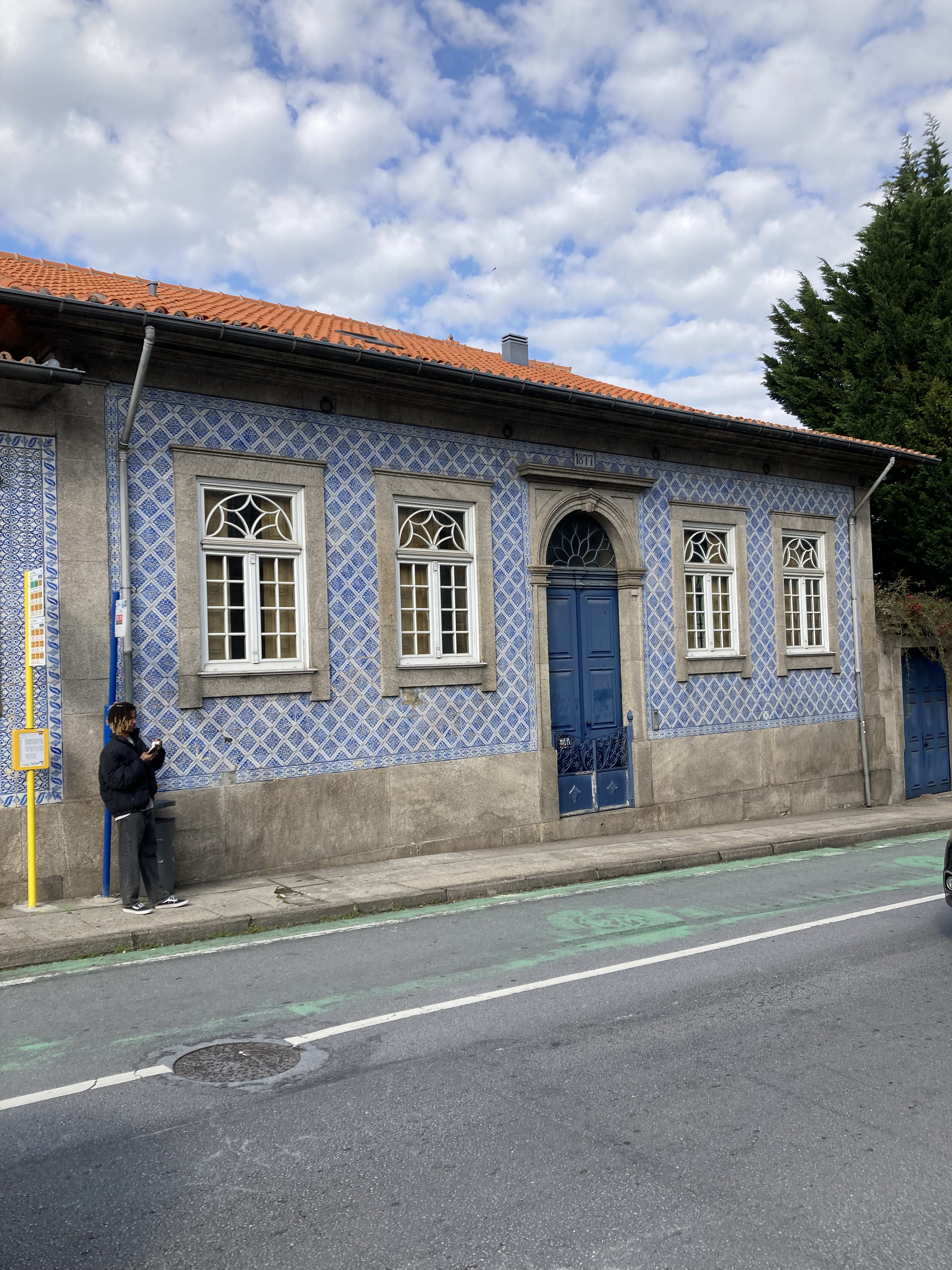
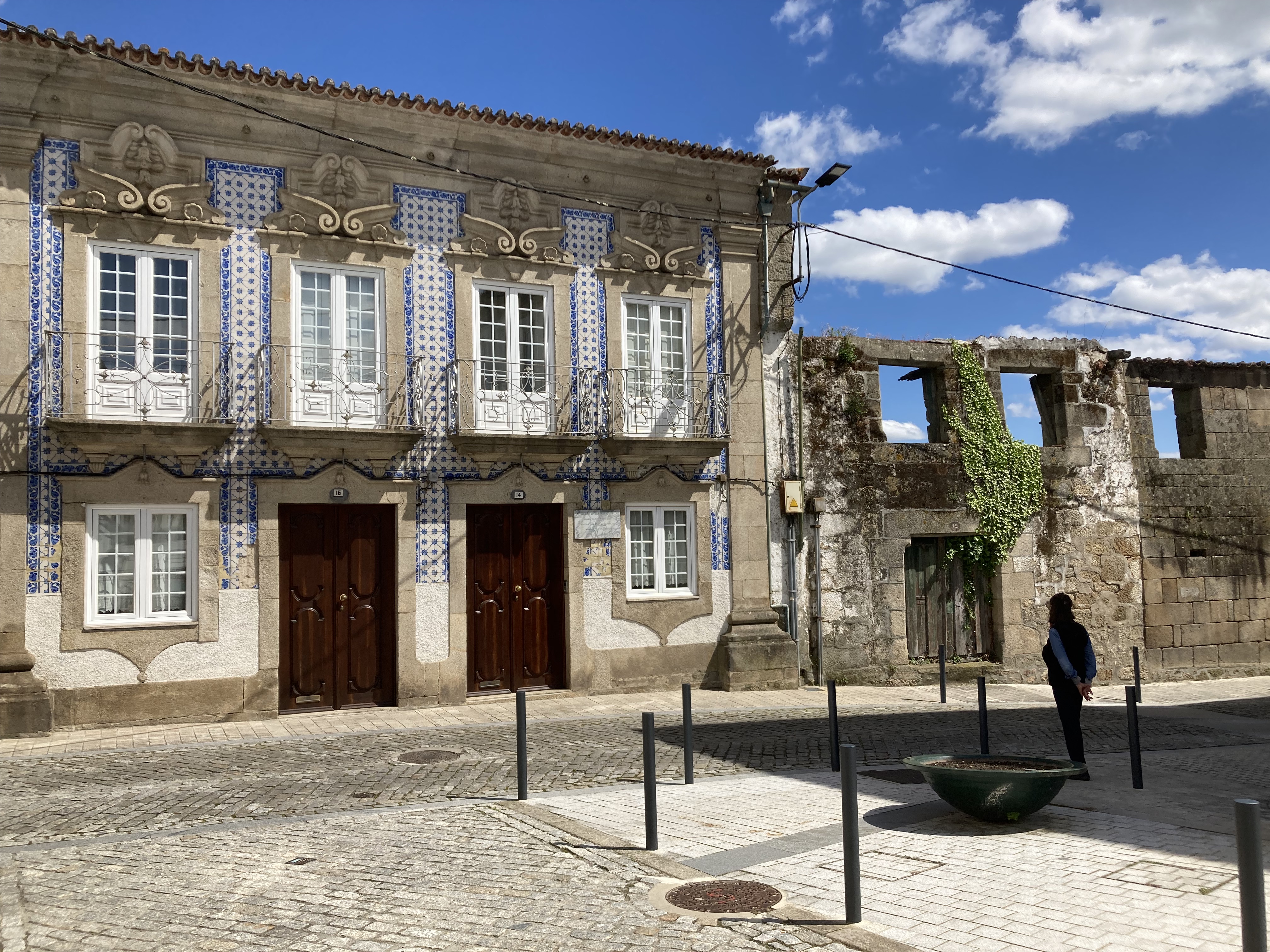
As we walked T commented on the tiled facades; D remarked that they were mostly blue, yellow or green, but no red. Almost immediately we saw a house covered in red tiles, and not much further, a shop! And as we continued, every shade and colour you could imagine, including more red. This stretch was of heritage value, since much seemed to be unoccupied and some a bit derelict.
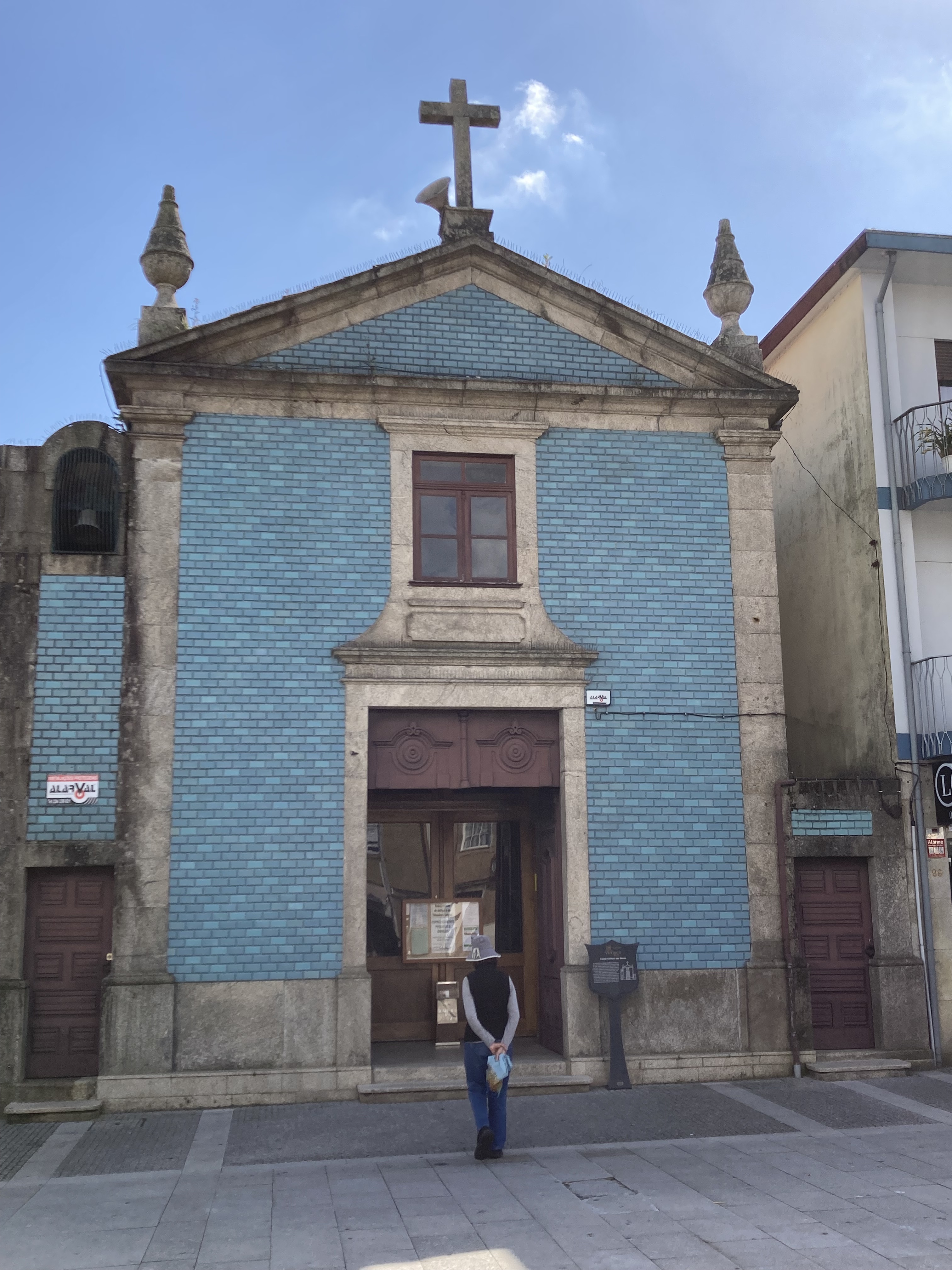
We idled for a couple of hours, as our rental was having a mid-term clean (mainly to make sure that when we left it wasn’t such a big job, given that there would be an immediate changeover of customers). T dropped into a few fashion stores to check out the ‘look’; sizing is interesting, being lots of ‘tiny’. In a liquidation business the rack of pants T browsed at were all for dolls…the manager directed T to the rack of ‘ big girls’ pants’! T exited, empty-handed. There was a quiet moment in the simple mid-town chapel.
Capacity about 40 seated.
Arrived home at around 1800, to find two workers still onsite. One of them was our host, Aida( gardening) and her fantastic cleaner Paola. Aida later mentioned that Paola was delighted, reporting to her that these people are so clean and she’d had so little to do (she had brought in and folded our dry washing, and moved the drying rack under cover).
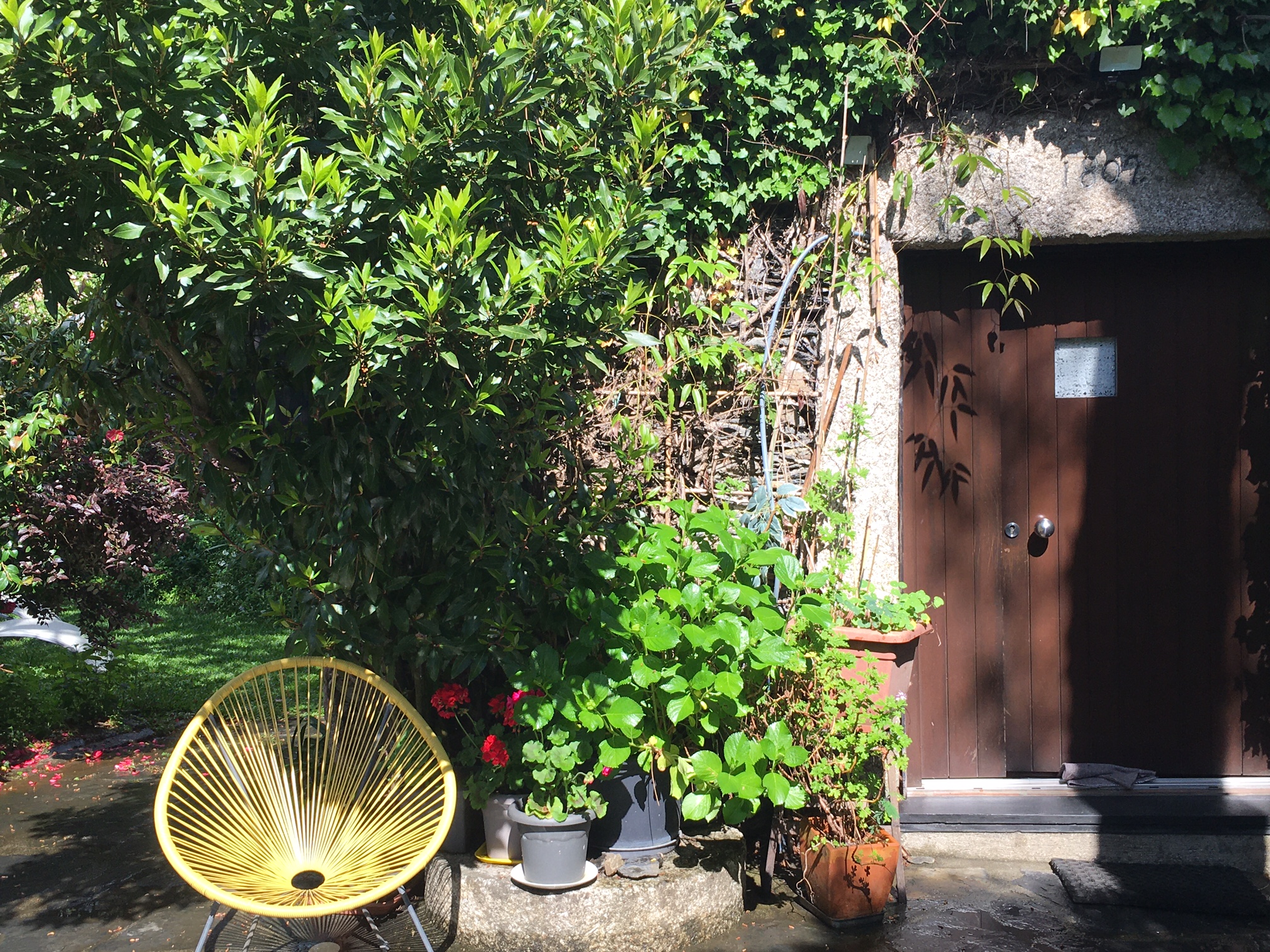
Aida spent a bit of time finishing her tasks in the garden, then accepted the offer of a cup of tea before the drive back to her home in Porto. Conversation resulted and continued and continued. Aida was born in Angola, her father was Portuguese, (mother Angolan?) had returned to Portugal in the 70s then, as an 18 year old, she had studied in Holland. She had worked for a very long time with the UN in Peacekeeping, in such places as Liberia, Sudan, Kosovo, and more (she rattled them off, but some just went by). She then decided it was all farcical, people didn’t want reconciliation or peace, so she resigned/retired (now does the occasional key-speaker stuff). She bought this property in 2008 as a ‘ruin’ and took 5 years to make it habitable. Now is fighting with bureaucracy, as there are a couple of additional and separate rooms (demountables) that the authorities say should be demolished, as the main house (mill house) is heritage listed, dated 1802 and is in a ‘nature reserve’ and the additional rooms are not compatible with its heritage/nature classification. She has a Finnish partner, and a daughter in Holland, and grandchildren….would have interrogated her more but we got on to the Israel/Palestine situation, birth rates in Portugal, race relations, shitty Aussie tenants (not us), colonisation/decolonisation, menopause, heritage listings, local bureaucracies, racism, her library, are we on the brink of WW3?…and this terrific book by Robert Hughes, ‘The Fatal Shore’ (not in English)….Aida hadn’t finished it yet, but loved what she had read so far and offered it to us…D declined the offer, as we already have it (in English). Aida departed for home (only a 20 minute drive!!!) and T got into the kitchen ( still avoiding bacalhau…)
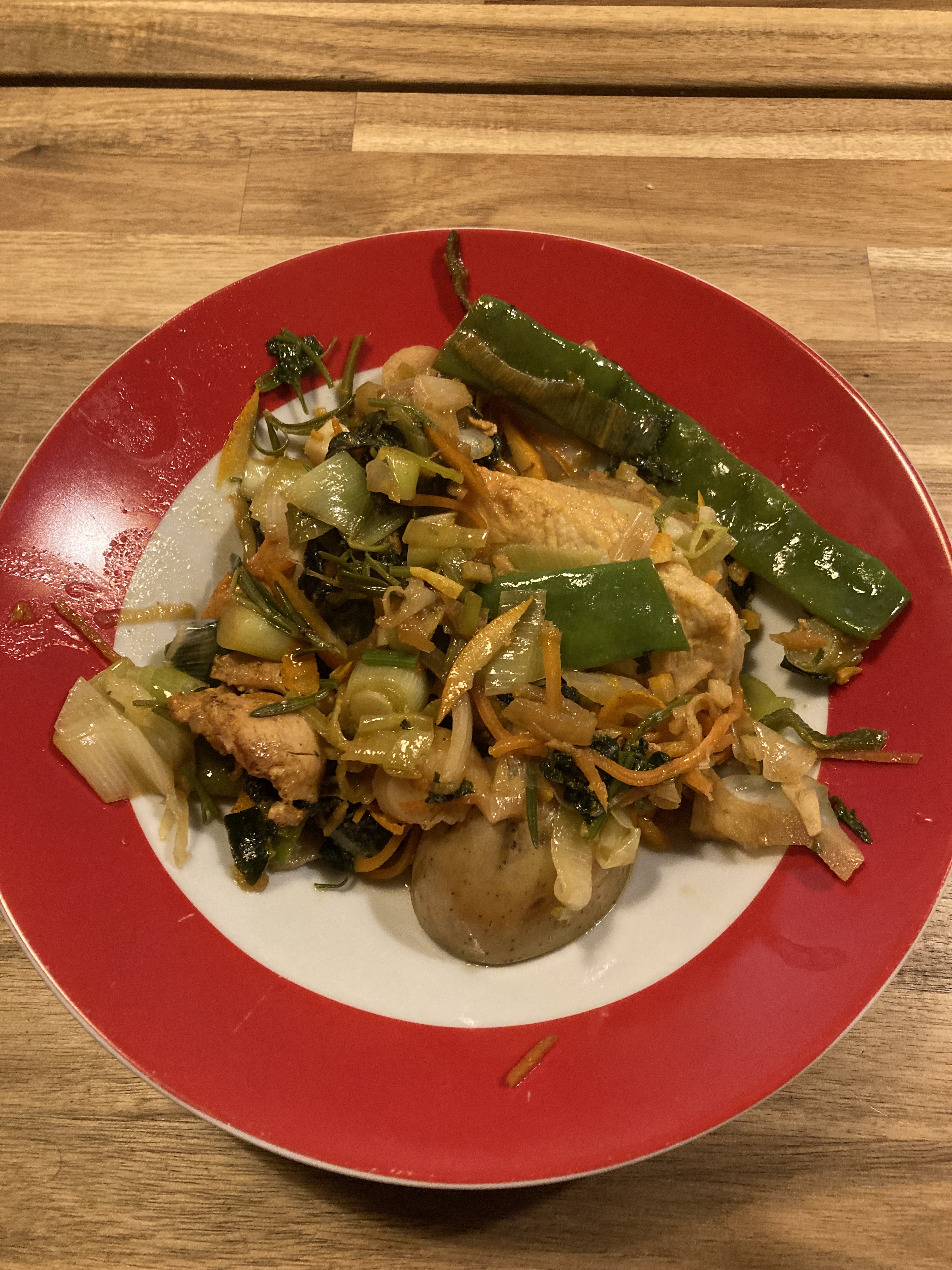
Dinner. Chicken Orange Rosemary (COR) Blimey – chicken slices marinated in orange peel and juice, leek, garlic and rosemary, with steamed potatoes in rosemary and oil, and big flat green beans. Not bad at all…but we still haven’t had that sauna!
Train strike continues, so best option to get into Porto is the 700 bus. After struggling for ages with timetables on a couple of sites, we thought we’d understood what to do, so headed to Valongo Estacao to board. Asked a young man with virtually no English, but good manners, for advice: he used Google Translate to help, including the cost of the trip (2.50 euro each). D had already downloaded the app, so its now in use! And it proved very useful at the end of the day.
Bus arrived and the one hour (45 bus stops) into Porto was a different perspective. Being mid-morning the bus filled with ‘oldies’ not a single child or pram. And then a very helpful bus driver was able to tell us that this same stop was the pick up for the return trip.
Coffee at Tiny Kitchen (yes, it was).
One of those is a 700, I’m sure.It was tiny…but the coffee was good.
T had noticed that we were theoretically near a charity shop, bookmarked a few days ago… plugged it into Apple Maps and walked in circles until finally arriving at the address: nothing there! Our form is holding.
Plan was to take a 207 bus to a contemporary art gallery (T thought it was a short ride toward the mouth of the Douro, but well away from tourists/souvenirs/ boutiques). Dithered about lunch, then T noticed people with bowls of soup…ramen? So it was time for a ‘non-bread’ lunch. At Ramen e Outros – our noodle choice didn’t quite work; plates arrived, no liquid in sight, followed by chopsticks: it was something with pork, seafood, cabbage, a sort of aoili, and a sweet fruity sauce. Whatever it was called it was tasty.
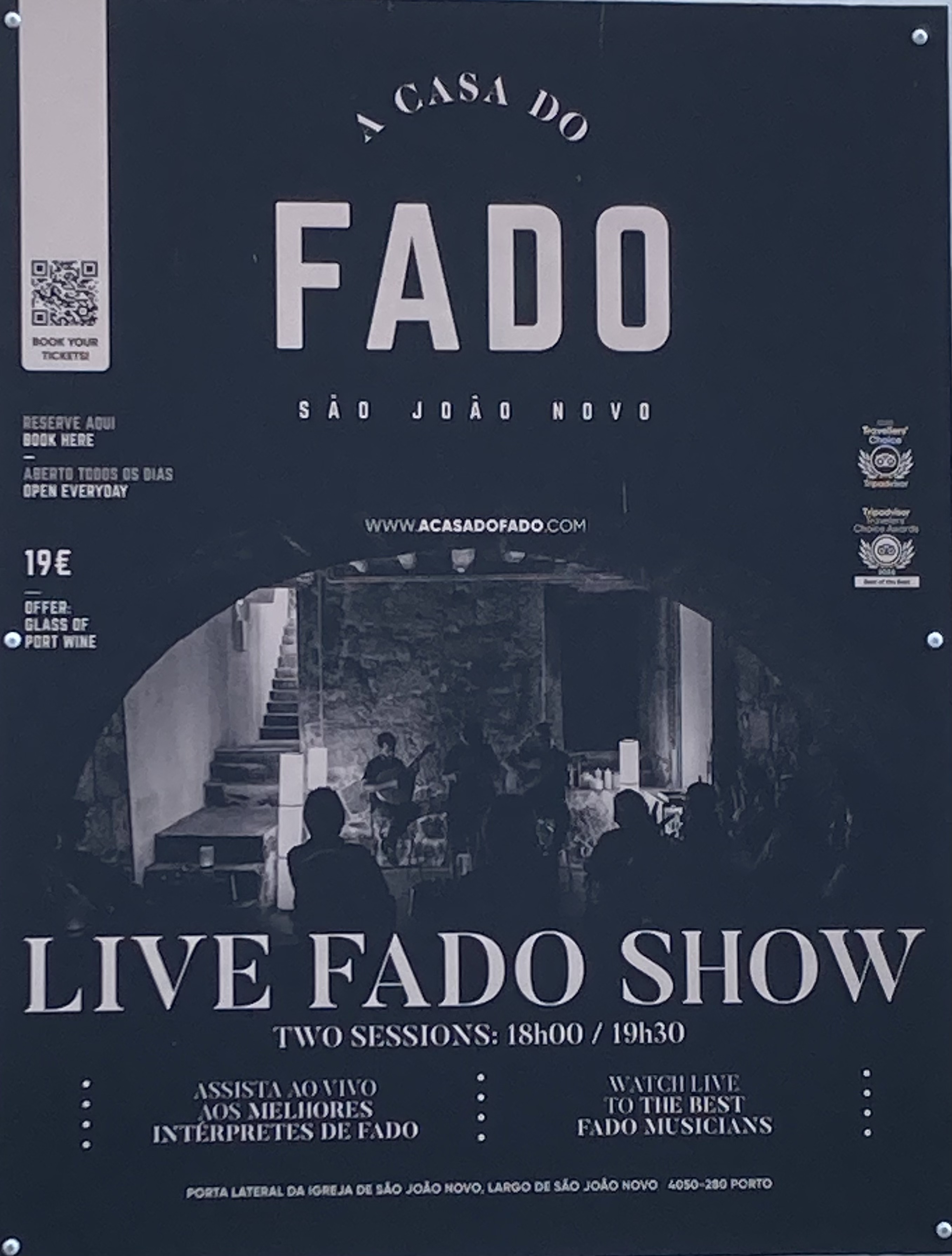
More wandering in circles with D’s phone map and finally found the 207 bus stop to take us to Fundacao de Sarralves, one of the most important cultural institutions in Portugal, which includes a Contemporary Art Museum, a Park and a Villa, each one an example of contemporary architecture, Modernism, and Art Deco architecture. But when we read that the ‘short ride’ was 35 stops, that plan was abandoned. Checked that the Museu de Vitral was open, yes, so walked there, up and down and in more circles. Passing a Tourist Information office, dropped in to get advice on an upper Rio Douro boat tour, and a Fado show. The boat trip still poses some issues to be resolved (due to ongoing train strike). T had (only) two questions. The guy on the counter started spruiking available tours, but T quickly said ‘Please, we don’t want an all-day river trip with lunch, winery visit, Porto to Porto (10 hours). We are staying an hour out of Porto, so that would add more bus time.’ The young man shook his head: there was no way to make a shorter river trip and we would be ‘missing the full experience’ if we didn’t do the whole day. Indeed: that is our aim! ‘Thanks, I’ll do some more thinking’, said T. Second question was about a Fado show today…’yes, 1800 at the best venue: a small church setting, max 30 people…close by…’ (but T had seen an online price of 19 euro rather than the 25 that Tourism was offering). So we politely exited. D’s phone map is one thing but fortunately online bookings seem to work without too many circles. Booked the Fado show on line (19 euro rather than then 25 the tourist office was charging).
Up the hill we trudged.
There were, of course, tourist groups.Wonder what he would have thought of all this?Or him?Eve is here somewhere…just need an Apple. There’s another one.
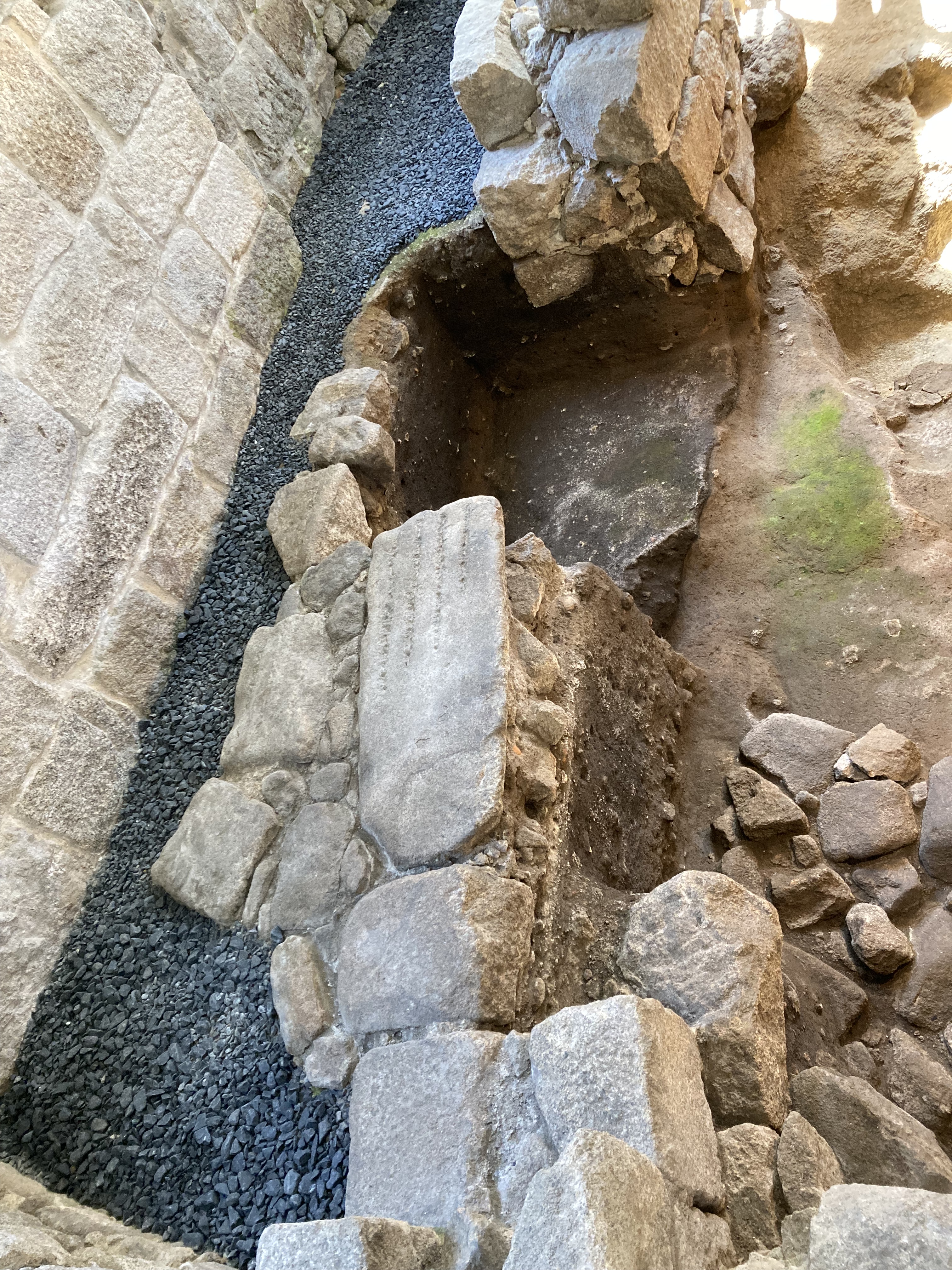
The Museu Vitral (stained glass museum) was in fact closed (permanently it seems), of course. There was, however, a very interesting (and free) archaeological museum/ongoing dig right next door, the Museu do Porto – Arqueossitio showcasing the origins of the medieval town of Porto. The lowest level is the remains of a house with a characteristic circular plan, dating from the 2nd-1st centuries BC, with a section of the Romanesque wall of Porto also visible. Archaeological excavations have shown that the wall still exists, albeit hidden, as a structural element. In the 14th century, the interior of the building was an alley connecting the old Rua do Redemoinho and the Romanesque enclosure. Part of the north wall was the façade of a house that extended onto the current square. On the opposite side, are the foundations of another house built in the 12th and 13th centuries. In later centuries, the old alley was converted into a coach house, with a stable area for the animals and another for storing vehicles. And later a tall chimney was added, (a sugar mill, perhaps?). Layer upon layer was visible beneath us (we stood on a glass balcony).
And there were tour groups galore…
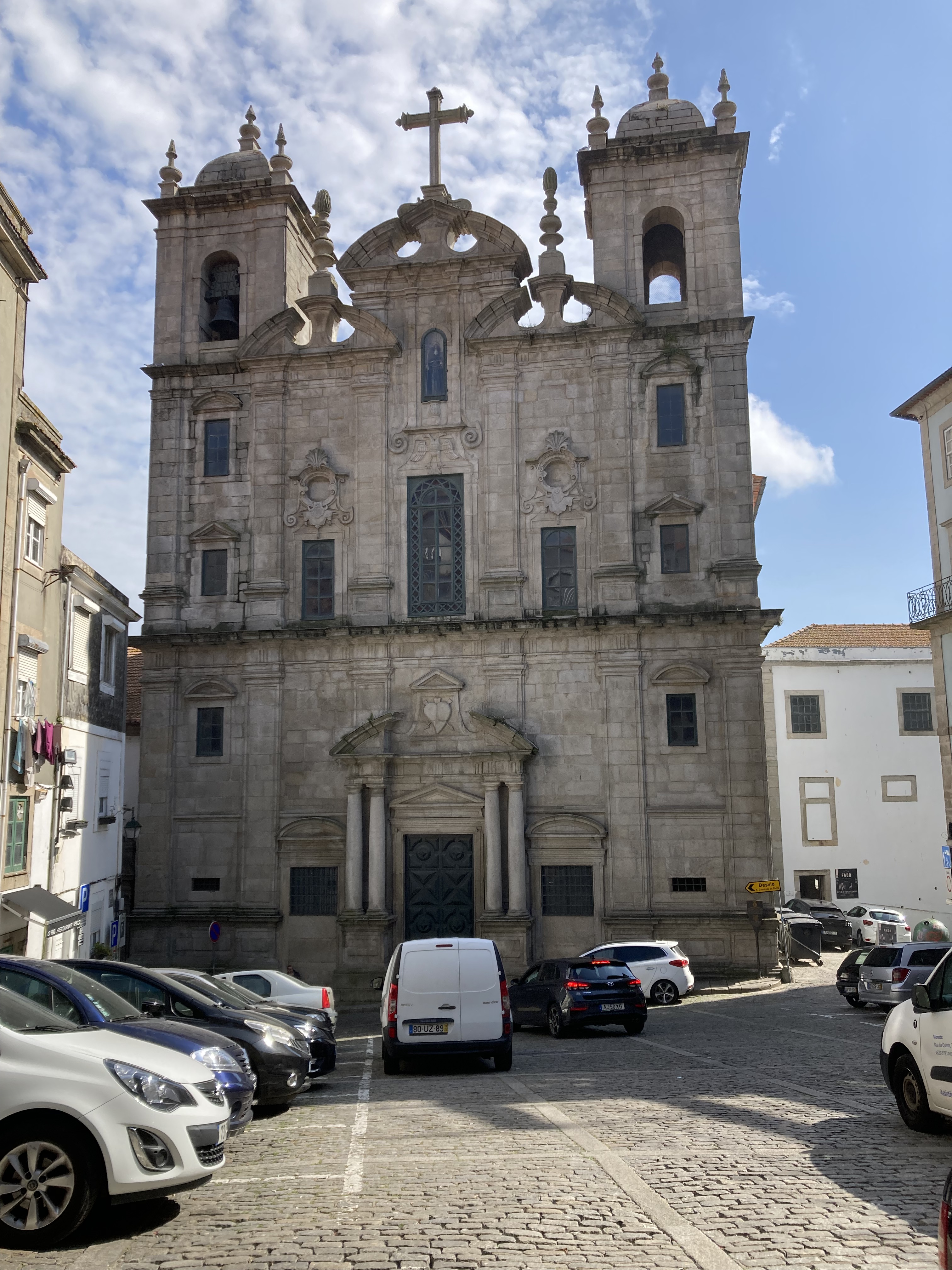
It was a long (short walk) to the Egreja de Sao João Novo where the Fado performance is to be held, heading there early to make sure we were on time. Again, Doris is blamed and D regularly exclaims that ‘she has no…(expletive) idea’ where we are since destinations are right/left/ forward/ back, all simultaneously.
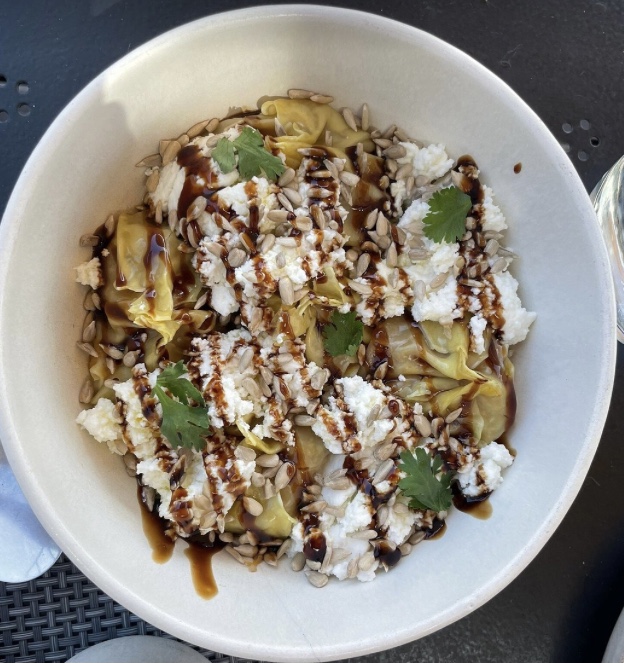
Near the church (and down several flights of stairs) we found Intrigo, a small balcony restaurant overlooking the river for some (0%) beers, rest and a ‘snack’. Steamed wantons with pumpkin, fig, nuts, and goats cheese looked just the ticket but when the waiter delivered a plate with four croquettes, T was confused. D then explained that he had ordered croquettes as well, in case the wantons weren’t sufficient! The béchamel croquettes with sausage in a mustard sauce were tasty, the wantons were very bland (T had thoughts about how to do a bigger flavour).
Screenshot
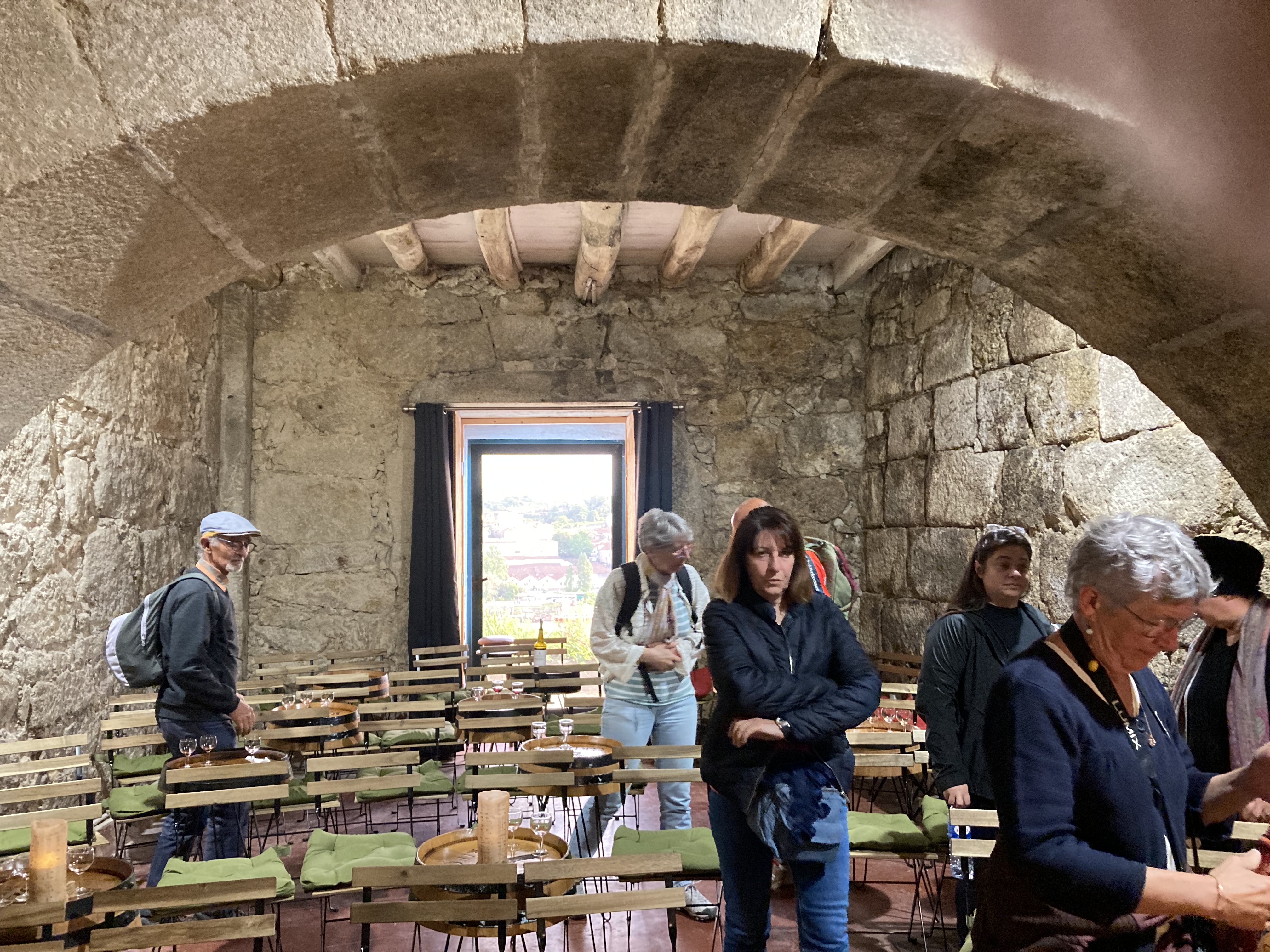
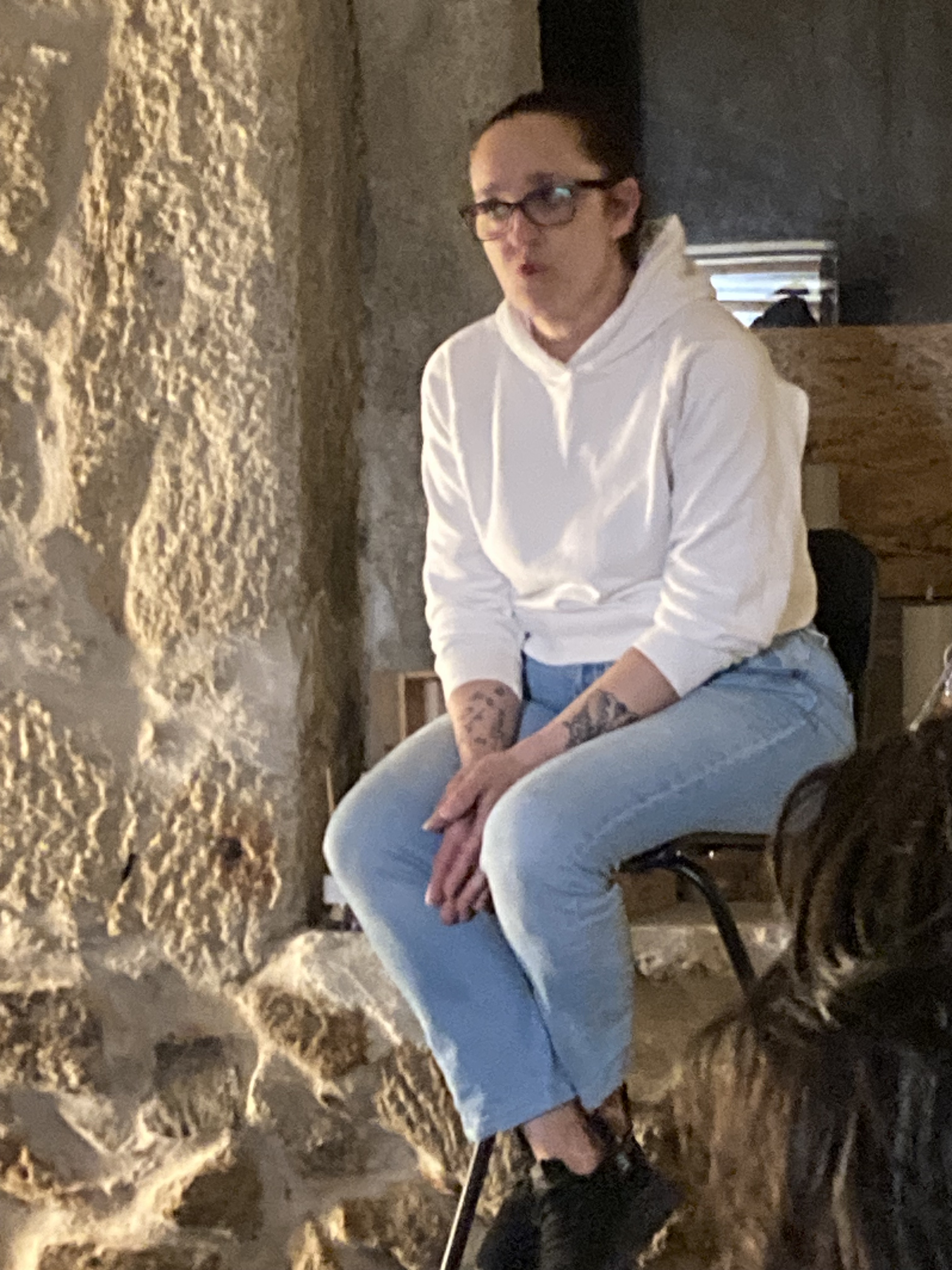
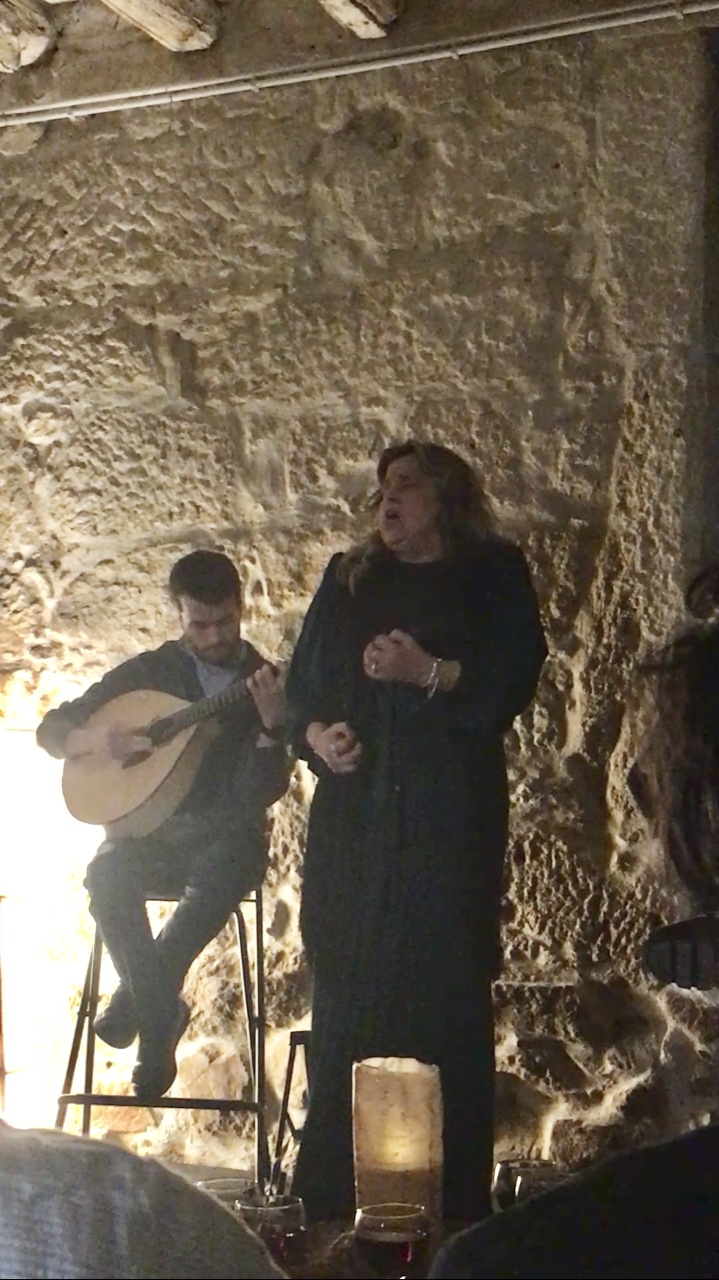
Fado time. An underground cave room, Anna welcoming and pouring port, (maybe the early arrivals were hoping for a second glass). At 1800 two guitarists took up their places: the classical and the Portuguese and then the singer (Sandra) joined and the soulful, passionate tunes were underway. There was a very short Q&A slot explaining the tradition and practice of Fado and then more music. Having visited the Fado Museum in Lisbon, we were somewhat familiar with the genre. It was great to be in a ‘live’ music setting, albeit a ‘tourist show’. And there was no second glass of port.
The Fado was in the white section on the right.AnnaSandra
Walked (dragged ourselves, really) the 1.2 kms to the 700 bus stop, arriving just as the bus pulled up – and joined a long queue. We didn’t think we’d get on, but they were packed in, pretty obviously exceeding the stated carrying capacity of 76 passengers. An observation: there was seemingly no requirement for seats to be offered up for older or infirm folk. One young girl sat her whole trip while there were those who should have been given the seat who stood. And there were other similar situations, including on our trip into Porto.
We were sardines: T managed to snag part of a seat beside a large man, then his wife, who was sitting on a whole seat opposite, indicated that she would sit beside her man (she could hold onto him) and offered the whole seat to T. Smiles and ‘obrigado’ all round. D was offered the seat beside T (no idea why he was deemed senior). The young woman did not move.
Several stops along the route, more people got on, including a trio of older women (how many more than the max of 76?) Then followed a loud exchange between one of the women and the bus driver. There was pushing and shoving and the verbals continued. Eventually the small woman muscled her way, muttering, toward us. D then offered her his seat, which she gratefully accepted. The very young girl remained seated.
We presume that the driver had asked the woman to ‘move down the back’ or some such. Folk seemed bemused. D then passed his phone to T: she could use the translate app. The woman was now calm. T typed in some text: ‘what was the problem?’ To which the reply was ‘Problem? No problem’. Clearly, there had been a problem, so T persisted with, ‘what did you say to the driver’? To which the woman said into T’s ear, ‘I told him Fuck off’. Her little English caused an appropriate reaction: she and T (and a few others) roared laughing. Then there were exchanges: South African, Australian, ‘si’, shared smiles and ‘ Adios’ and waves at the window as, a bit later, the little loud woman of limited English alighted (with no further words to the driver).
Arrived at the Valongo Estacao stop, which was not at the Railway Station as we had expected. As we passed Lidl, one of our landmarks, we realised we’d gone too far. A 500 metres trek back to the car: just what we needed! But home safely before dark.
It’s 1230 as we start to write. What have we achieved so far today? Well, T initially fought with a screen making a list of ‘to do’s’ involving train into Porto (several trips for fado, art gallery, walks and a boat ride further up the Douro…enough things to do for a good week).
The plan became to train to Porto today, to visit the Museu do Vitral, (Stained Glass Museum) and other attractions. Accordingly to plan, we arrived at the station, got easy parking, in good time, to discover this is Day One of a two day strike (hence easy parking! Duh). The new Government hasn’t even been sworn in and the chaos has spread overseas already! So what to do? Quick decision to check out charity shops locally (why not?): found just one, put it into Apple Maps and headed off. No such place existed, at least according to (the increasingly unreliable) Doris. Next decision was get coffee at the restaurant, Adega O Verde, recommended by our host. As we passed an Aldi, we stopped to buy milk: no fresh milk sold. Then arrived at the restaurant: it was not yet open for business and didn’t apparently do coffee anyway – D entered, waited, and was ignored. Coffee at home was now the best, or only, option, so we called into the local Lidl for fresh milk. D stood behind two older women, probably mother and daughter, who had an over full trolley. The daughter looked closely at D standing behind with his three items but chose not to invite him through. He waited patiently, if a bit irritated, while their load was put through…then karma struck: her payment failed! They were hustled over to one side to fix it, as D paid and left, with a very unchristian sense of shadenfruede. He has since berated himself for this lapse.
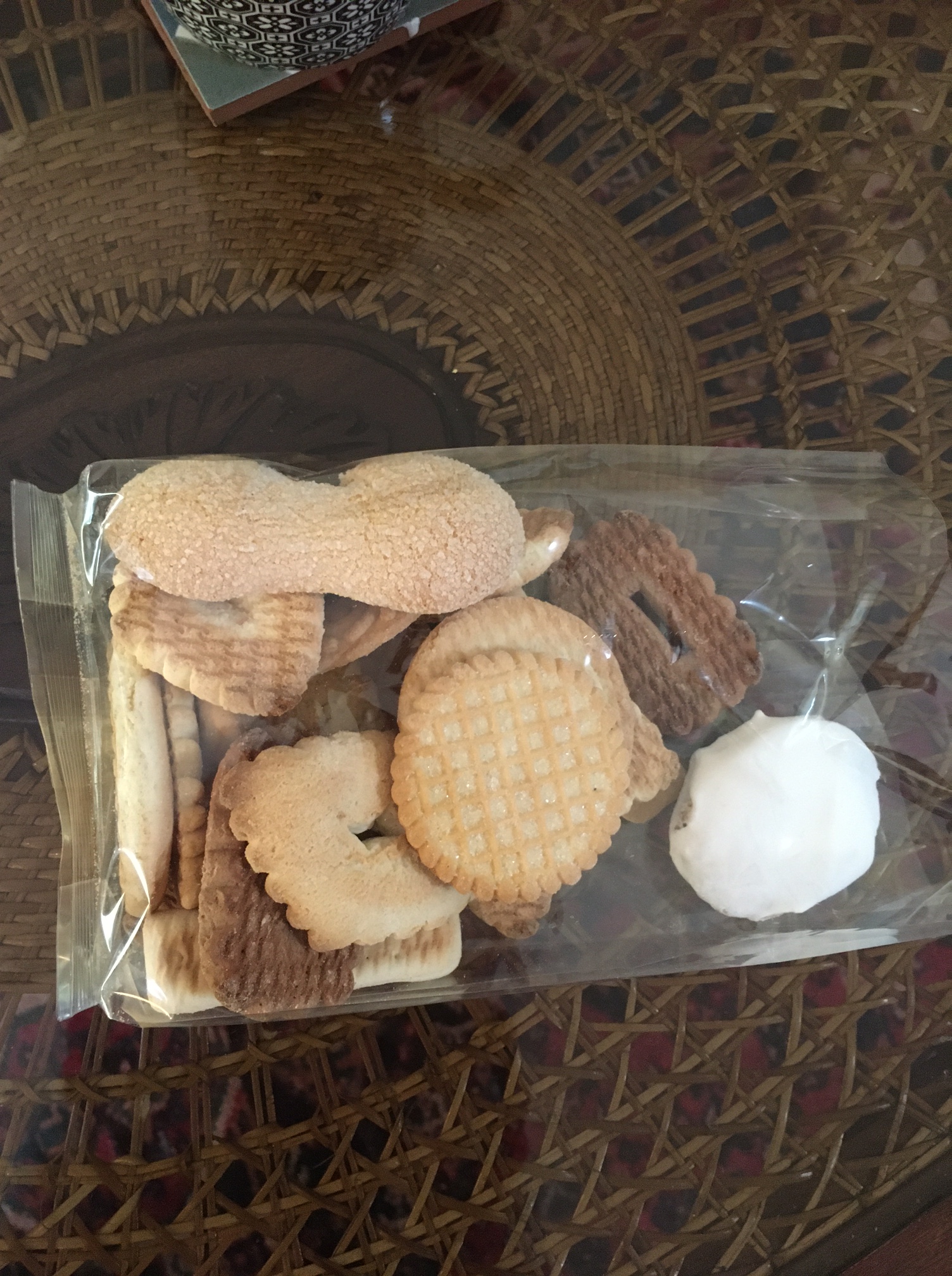
Great coffee at home, with Valongo biscuits left by our host. And T discovers that the train strike will go through till 14 May!!! All those bookmarked websites….
Valongo has a couple of biscuit factories; indeed, where are the huge range of various sweet treats made? T has plans for the predicted wet weekend, especially if trains aren’t running, to make an adapted version of pintos de Santa Luzia, a biscuit explained in the booklet from yesterday’s visit to Vila Real. Legend has it that this biscuit hails from the hands of a sweet tooth Sister Immaculate of Jesus who was cloistered by her parents because she had such a sweet tooth. One day this nun had a vision (?) and ran to the kitchen and made a dough, formed it into a pouch, added some pumpkin jam in the centre and baked it…blind Mother Superior smelled the sweet treat and enquired…Sister Immaculate replied that it was a specially prepared bandage of linseed that she was taking to patients to ease their ‘eye conditions’. At night, in her cell, Sister Immaculate put her soul to rest, for she had always heard ‘what is not seen is therefore not sinful’. Since we don’t have linseed, T will use some plum jam, donated by our host.
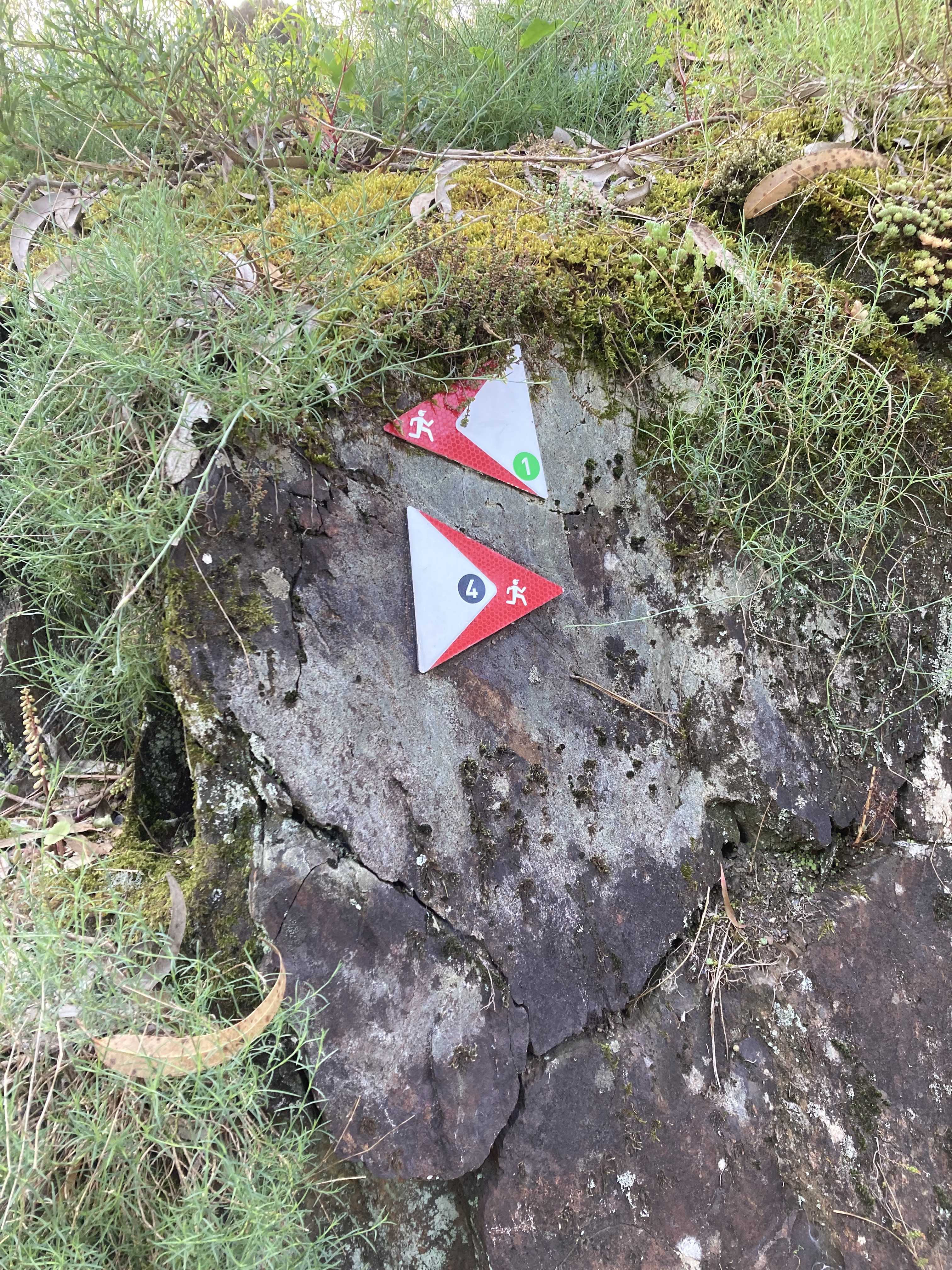
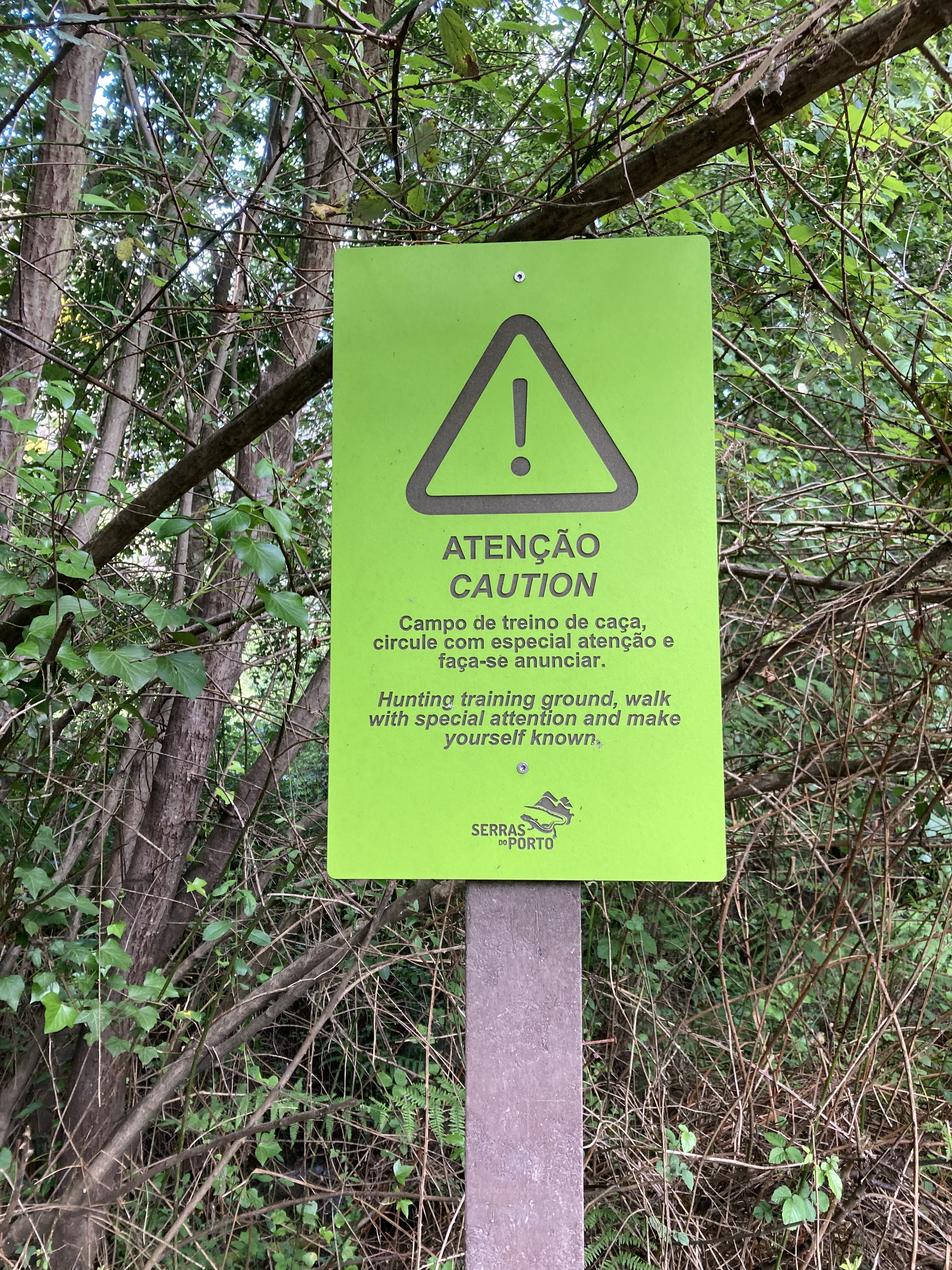
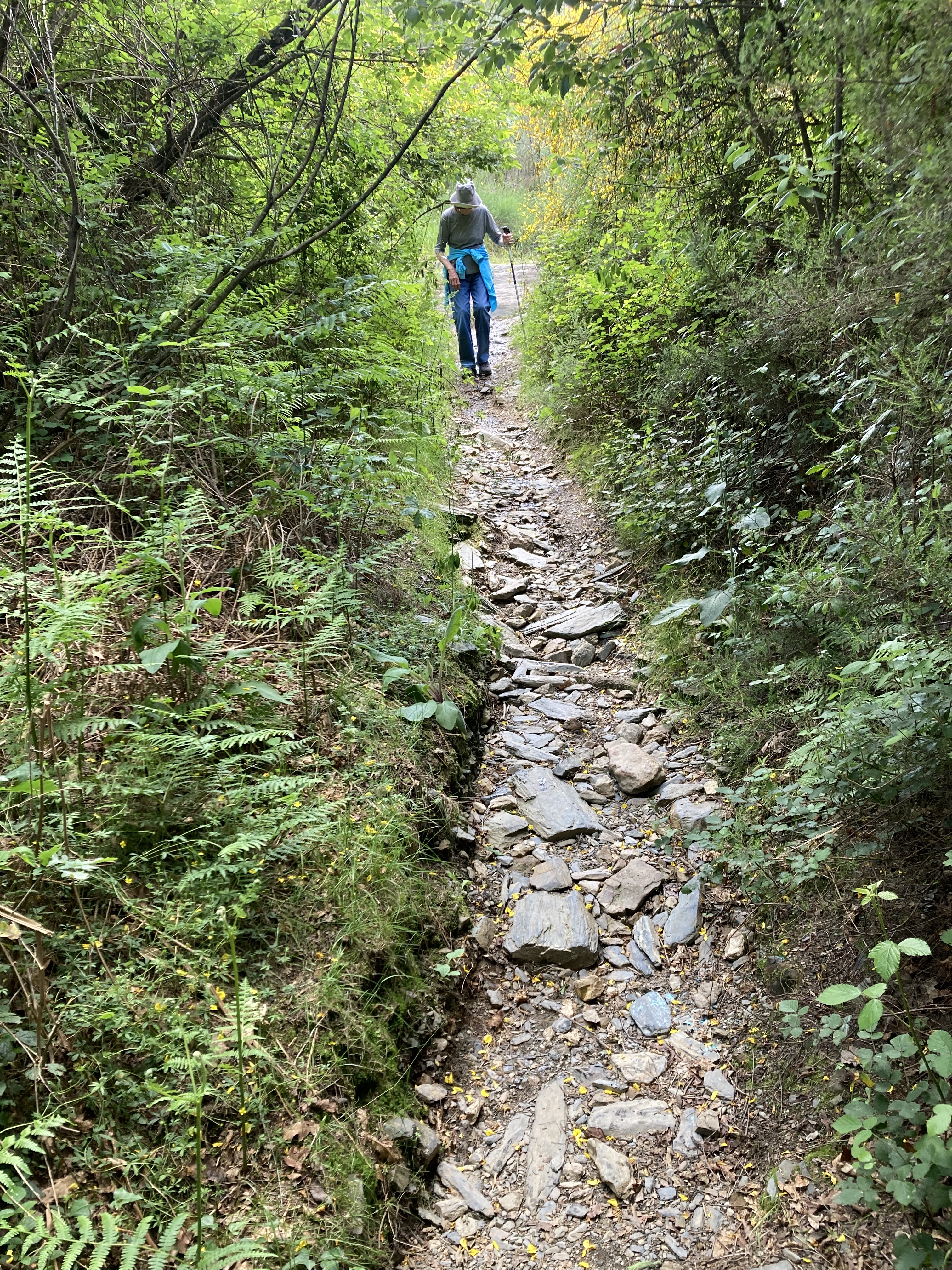
Mid-afternoon, after checking out some possible walking trails on the newly downloaded app Komoot (a guide to walks in Portugal) but getting totally confused and dispirited, decided to just take the popular track that passes our front door. We were a bit surprised, having been away during the days previously, just how many folk were out there in our space! We retraced an earlier short walk, and came to some fairly challenging, narrow paths upwards from an old gold mining site beside the river – the track was almost vertical, but marked as ‘running’. While D investigated, T started a lovely, interesting chat with two Vietnamese walkers (now living/studying in Porto), My (the girl) and Light (the boy) – (D couldn’t resist the obvious Dad joke – which they’d heard before of course.) They were using Komoot as their guide and were heading upwards.
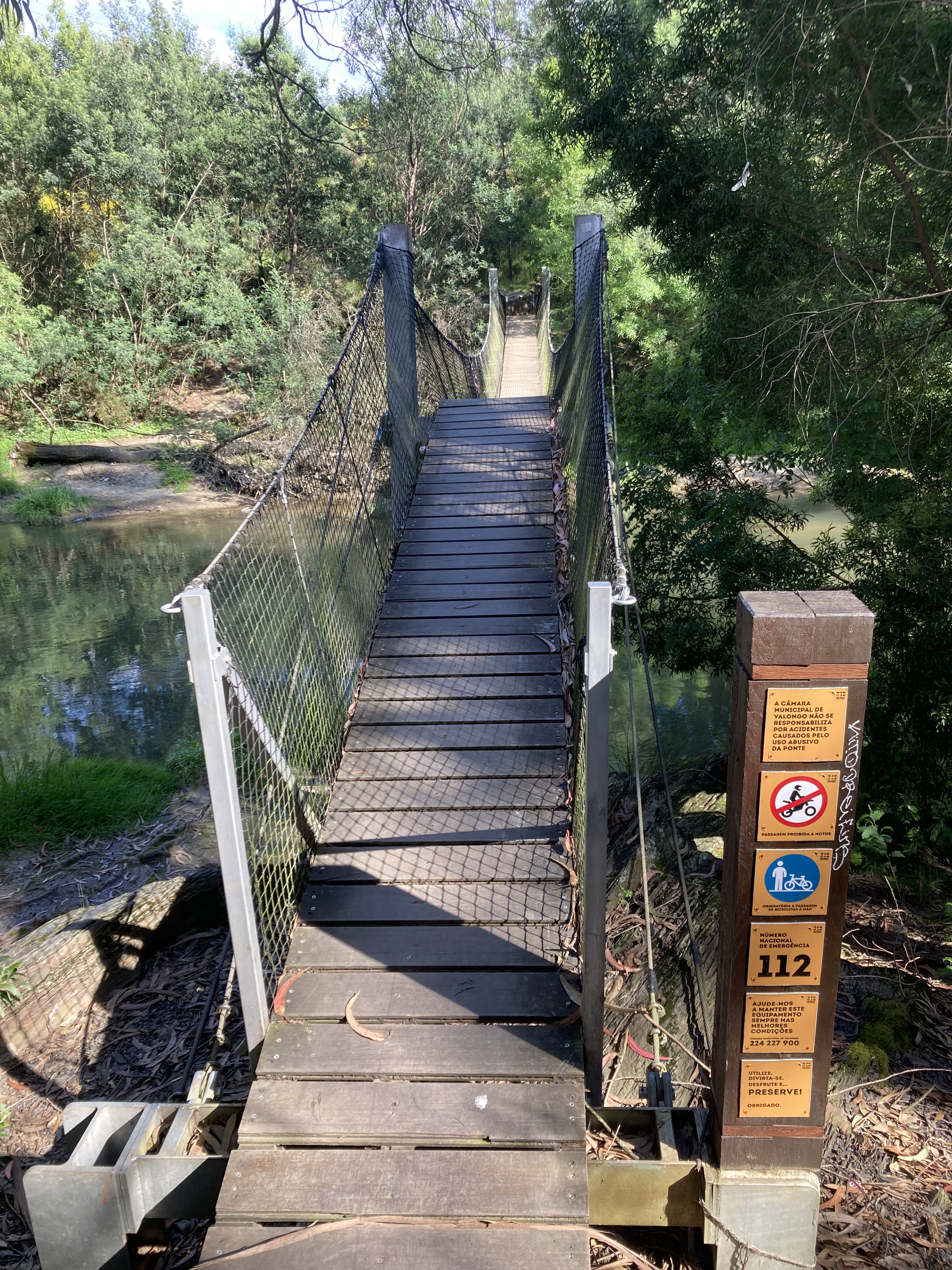
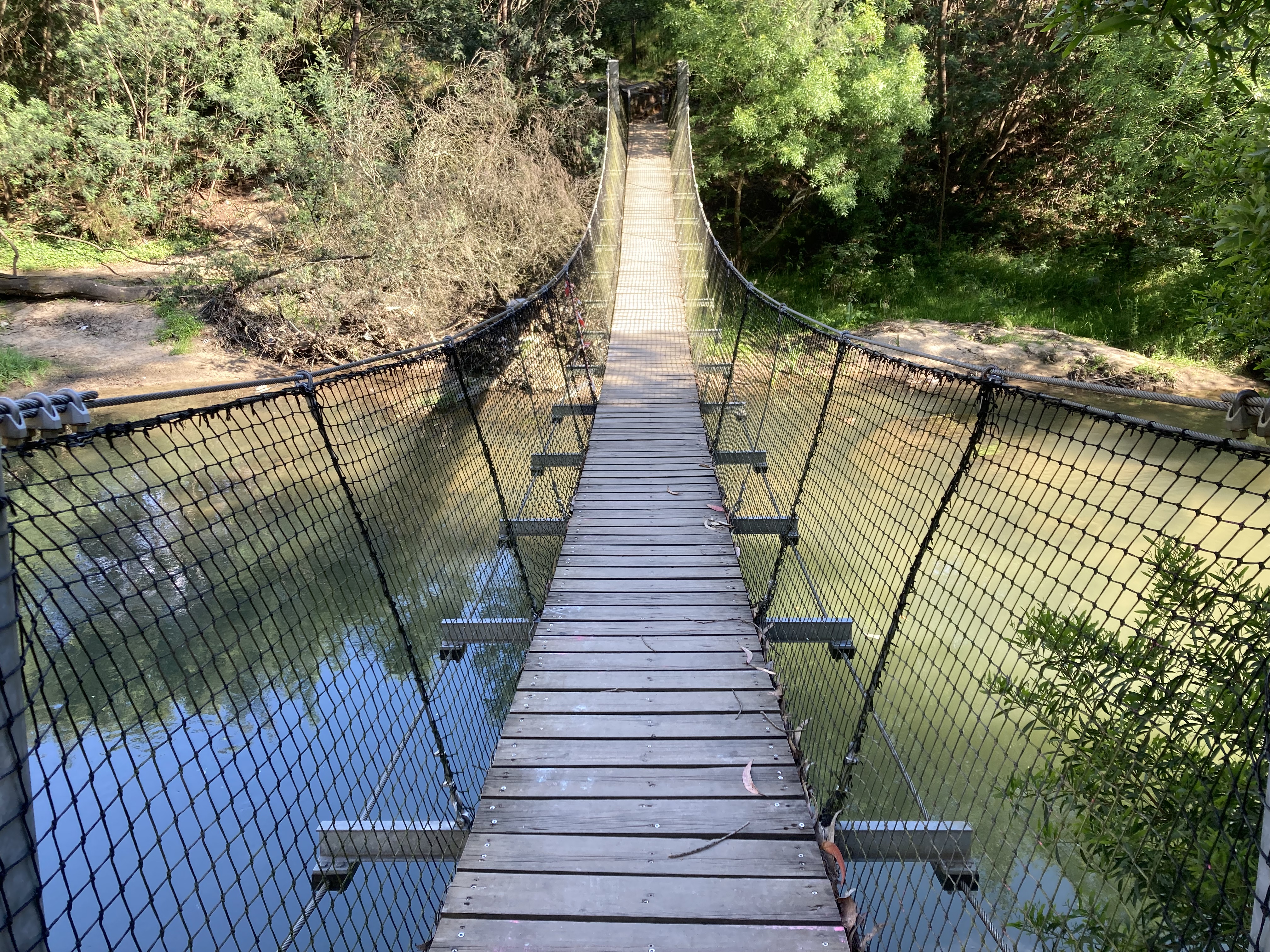
We turned back, crossing over the suspension bridge, climbed some pretty ordinary tracks, to eventually hit a road – flat and reasonably even.
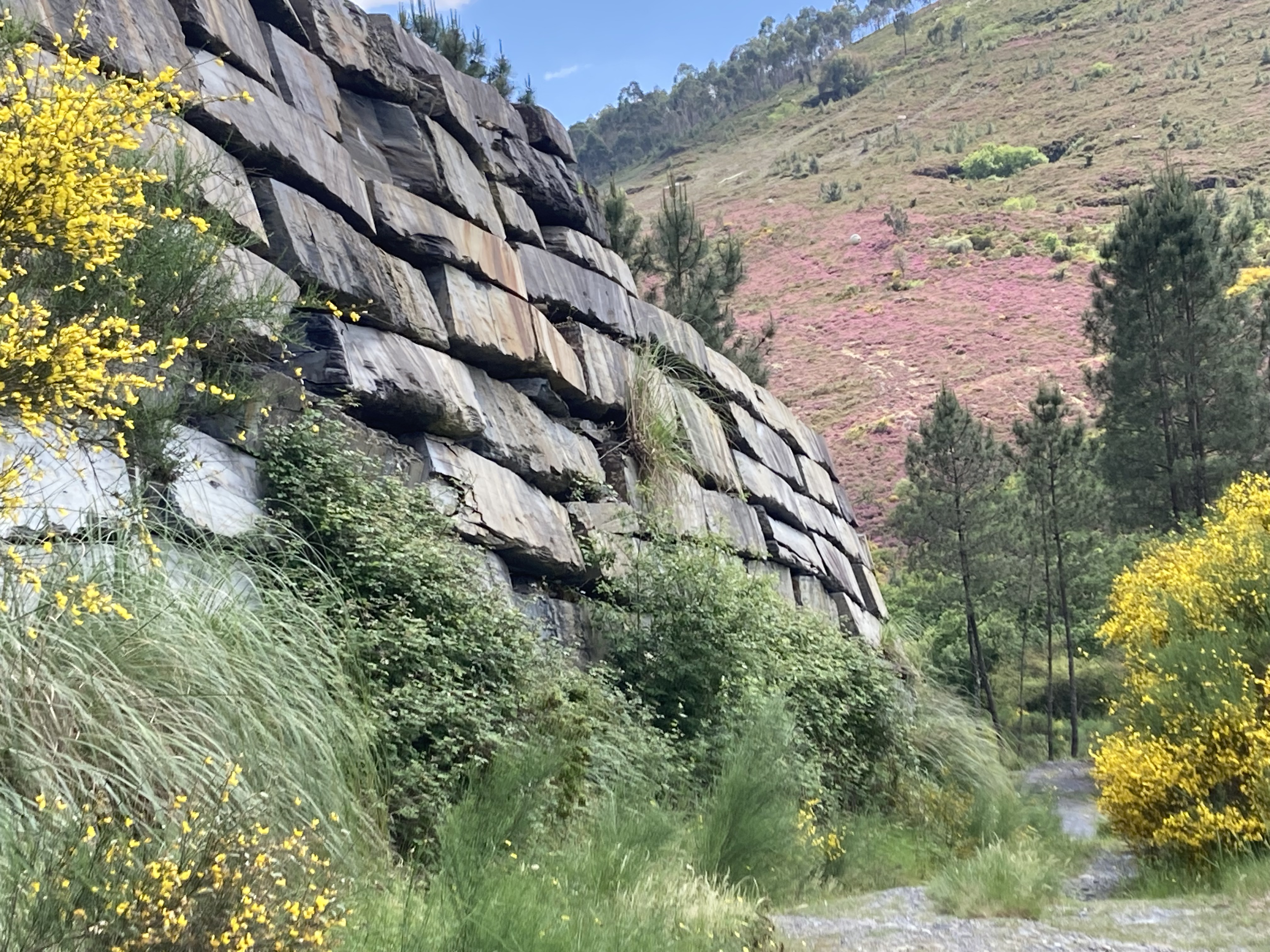
The stacks of blocks of slate were enormous. Although there is a slate industry in Valongo we weren’t sure if these were just retaining walls or some sort of stockpile. They were obviously both at certain points.
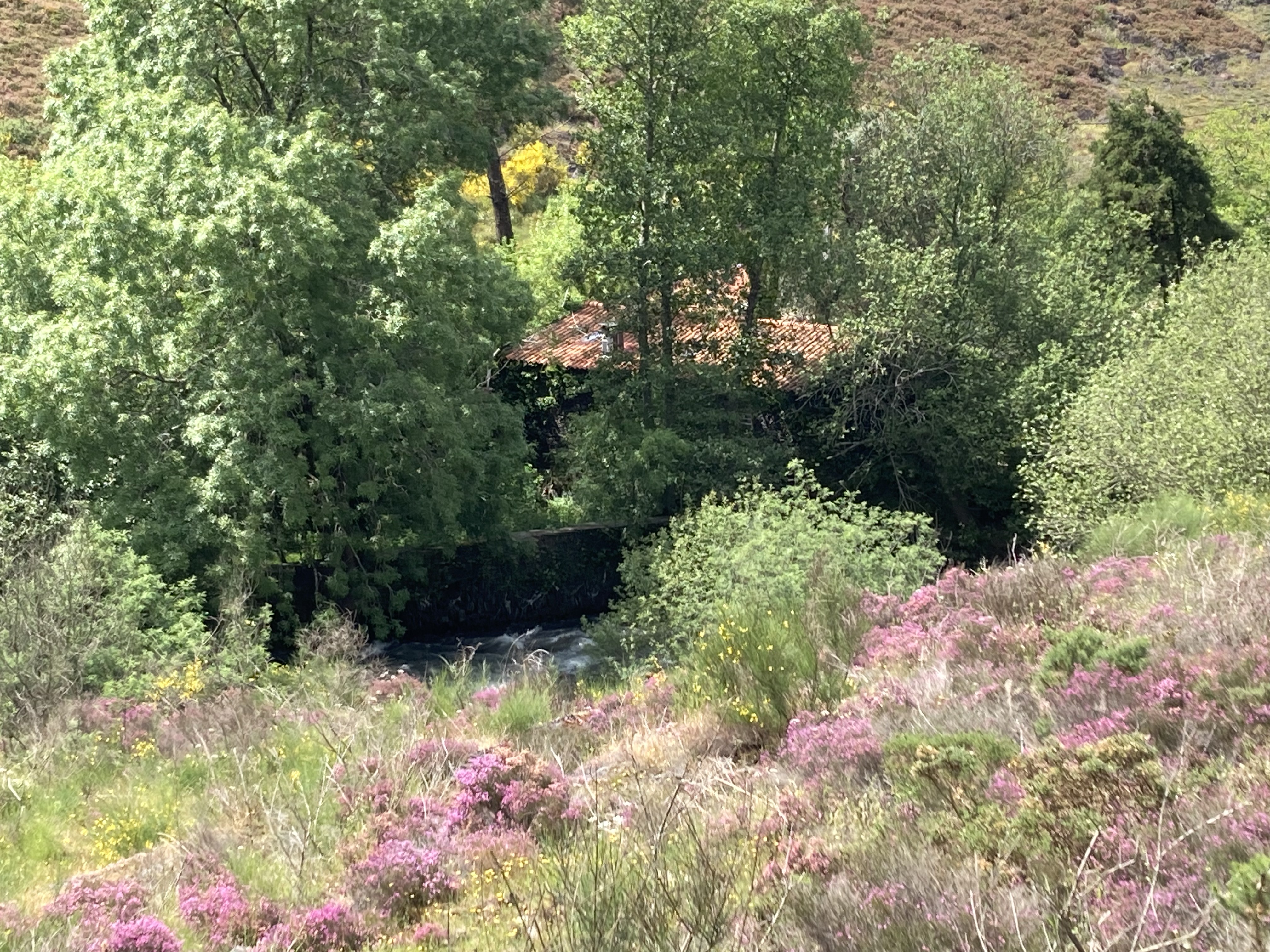
That’s our little cottage tucked in down there.
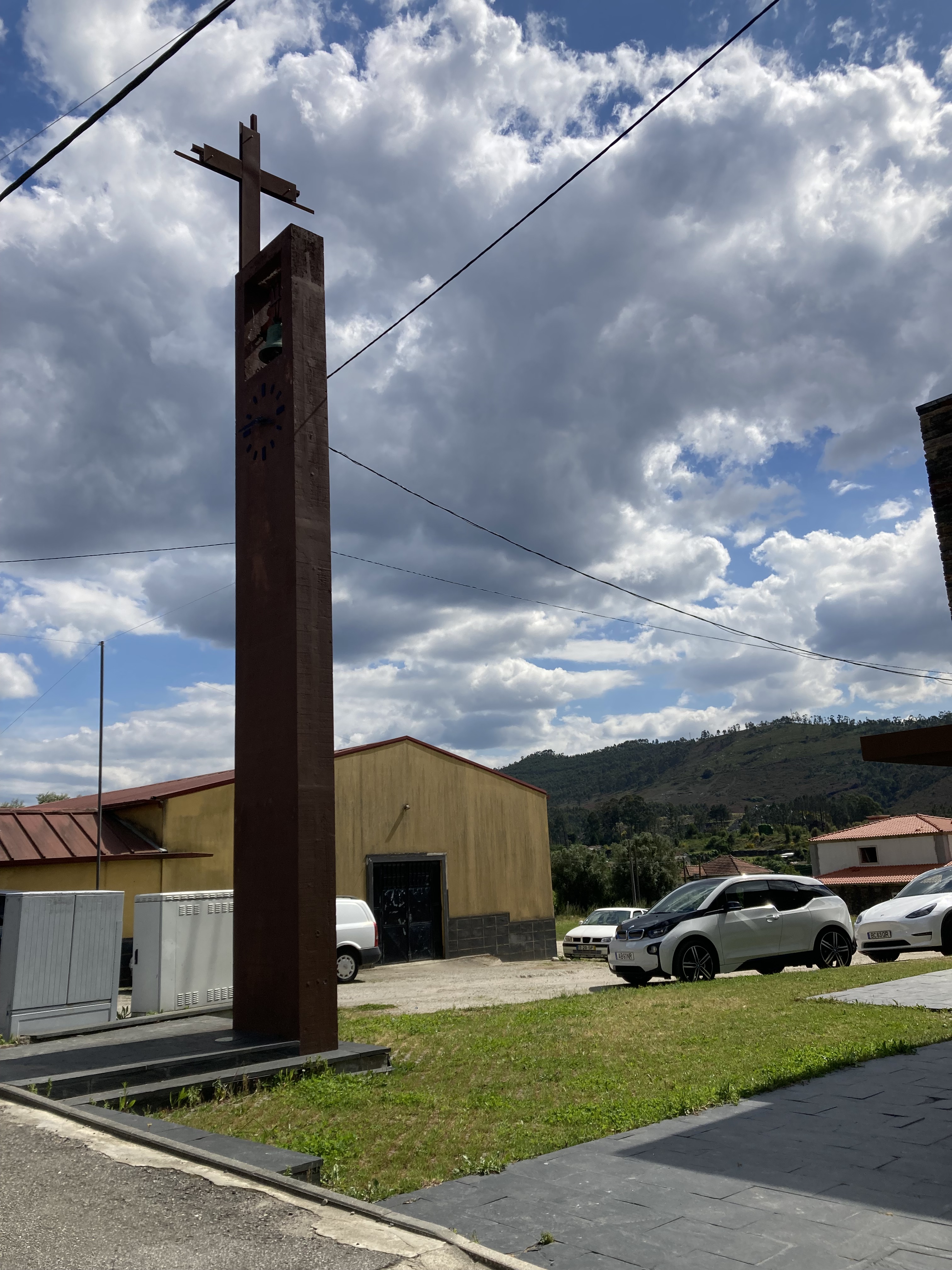
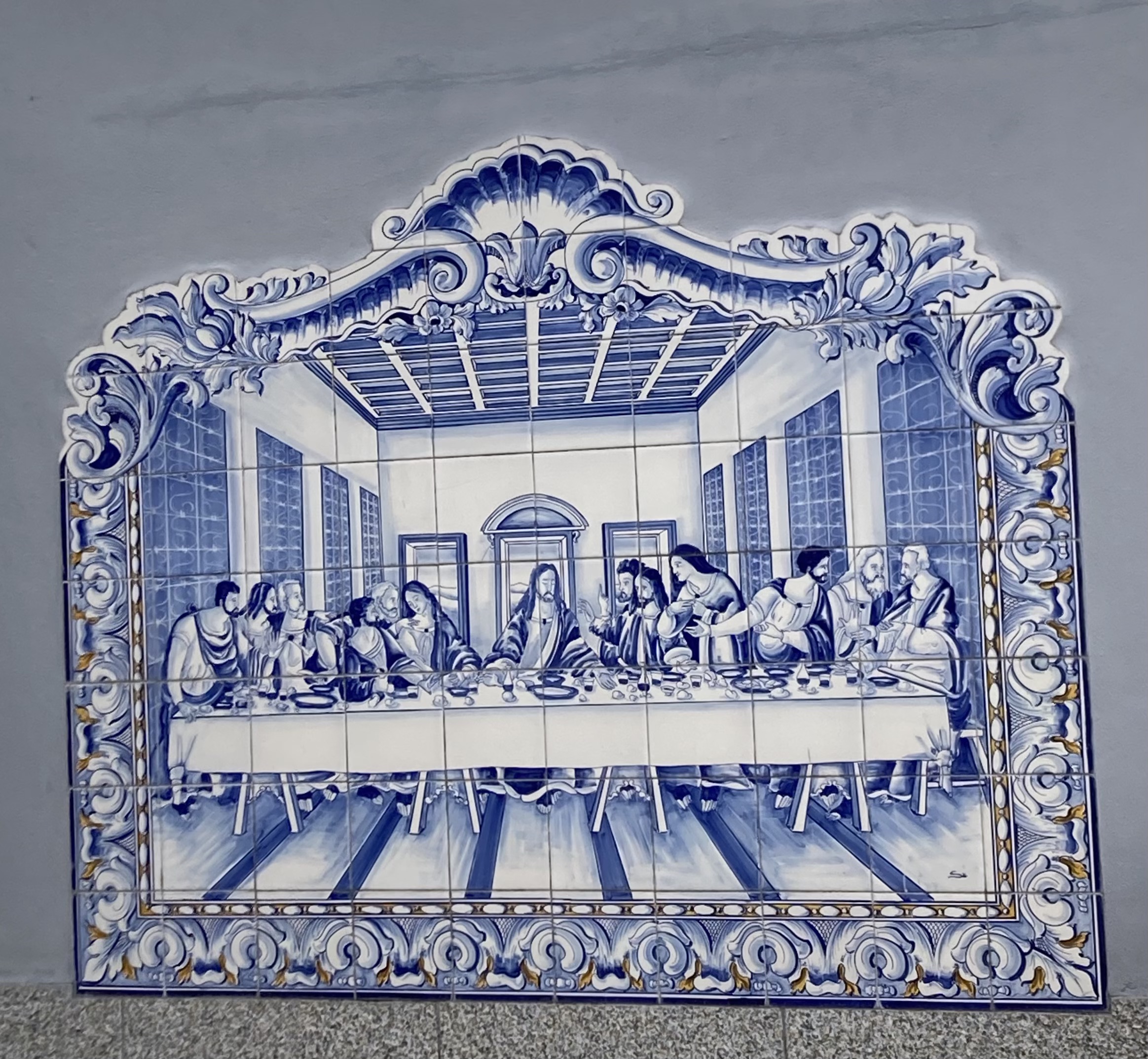
Checked Apple Maps: which told us that we are better off to keep going in a loop back home, all on roadways or footpaths, rather than retrace our steps. The route took us down backstreets, past some ancient and some very modern (up-market, expensive) residences and then we arrived at a grand slate church, a total contrast to the grandeur we’ve mostly seen: Capela Nossa da Senhora Encarnacao. And a private house we passed a bit later had an interesting tile collage of the Last Supper on a front wall.
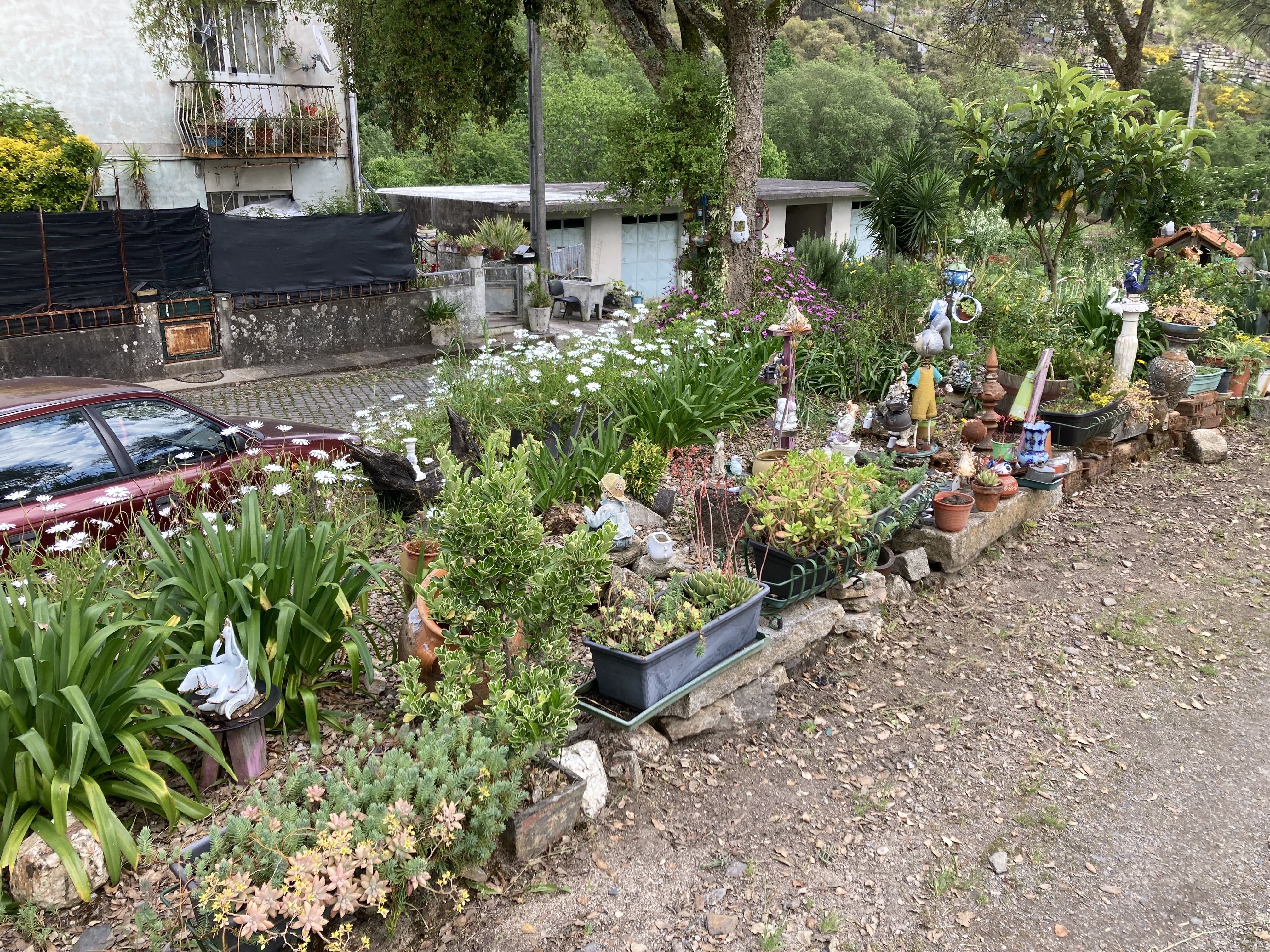
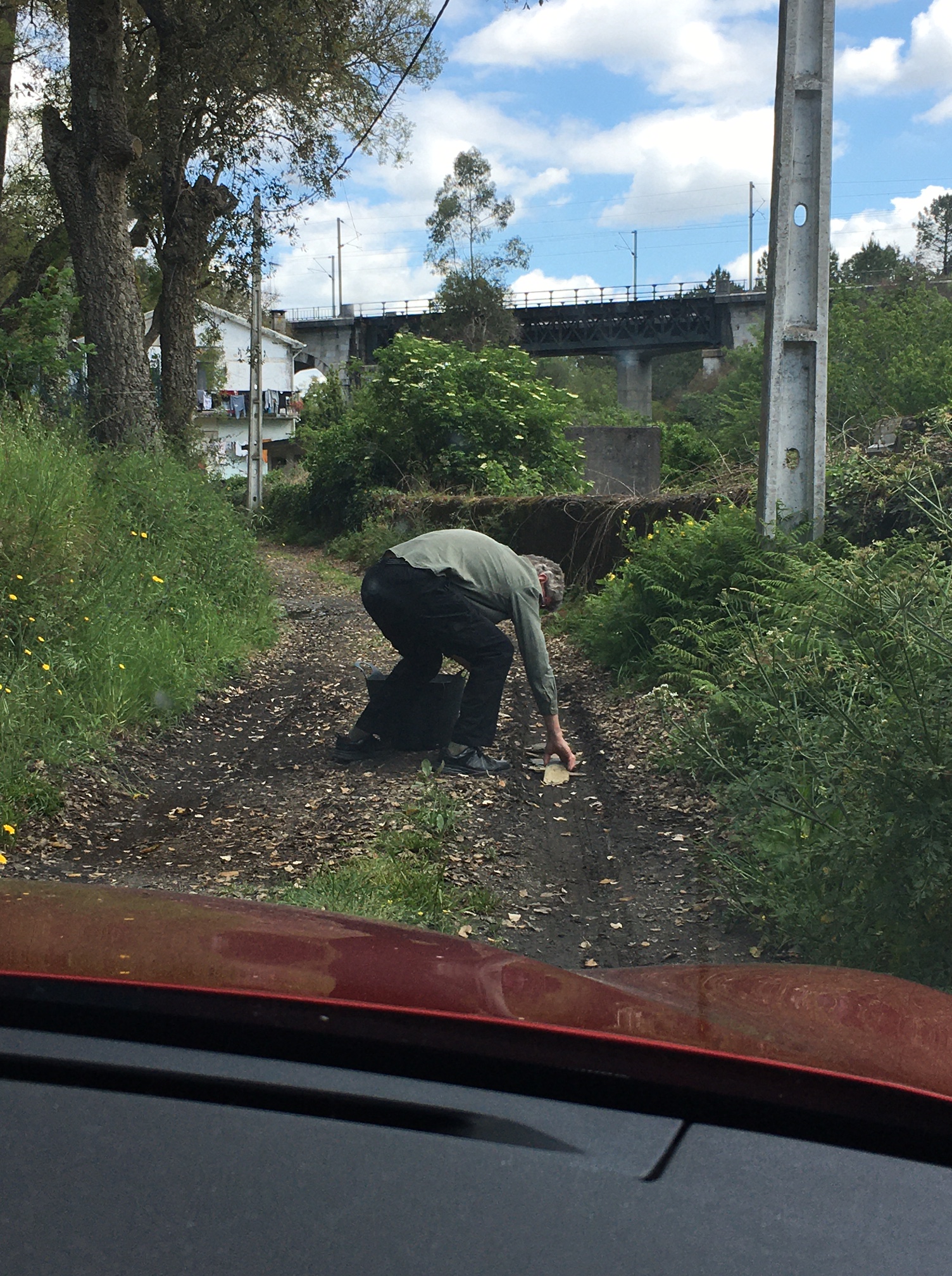
In beautiful sunshine we walked home to our reward. We pass a little enclave each time we drive into our place, noting an eccentric little garden, using little toy cars as flower beds. As we passed on foot today a woman was gardening, so we asked permission to take some photos: of course we could, and take some of the rest of the garden as well! D inspected his roadworks, noting that some concaves could do with topping up before the predicted rain later in the week.
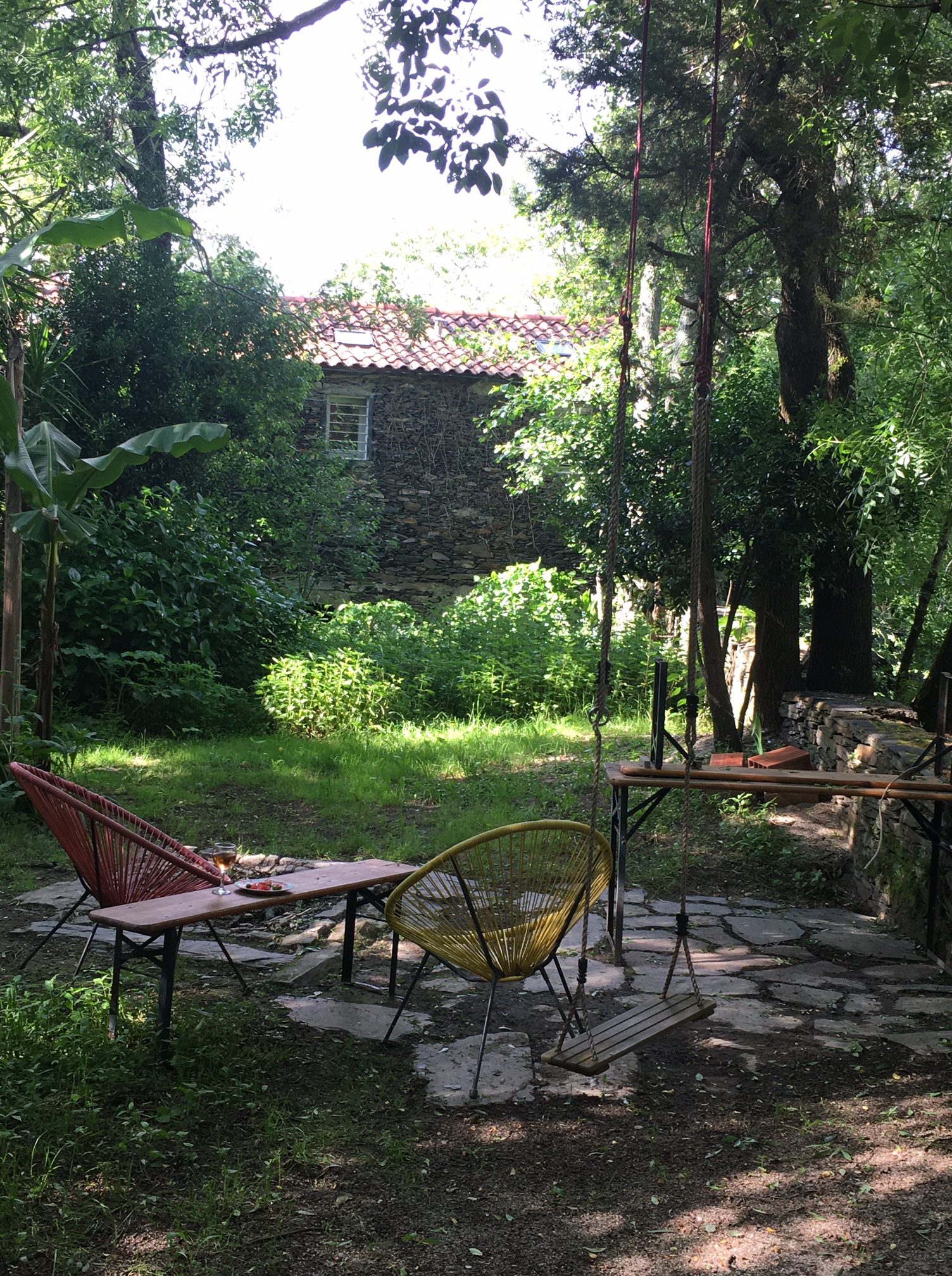
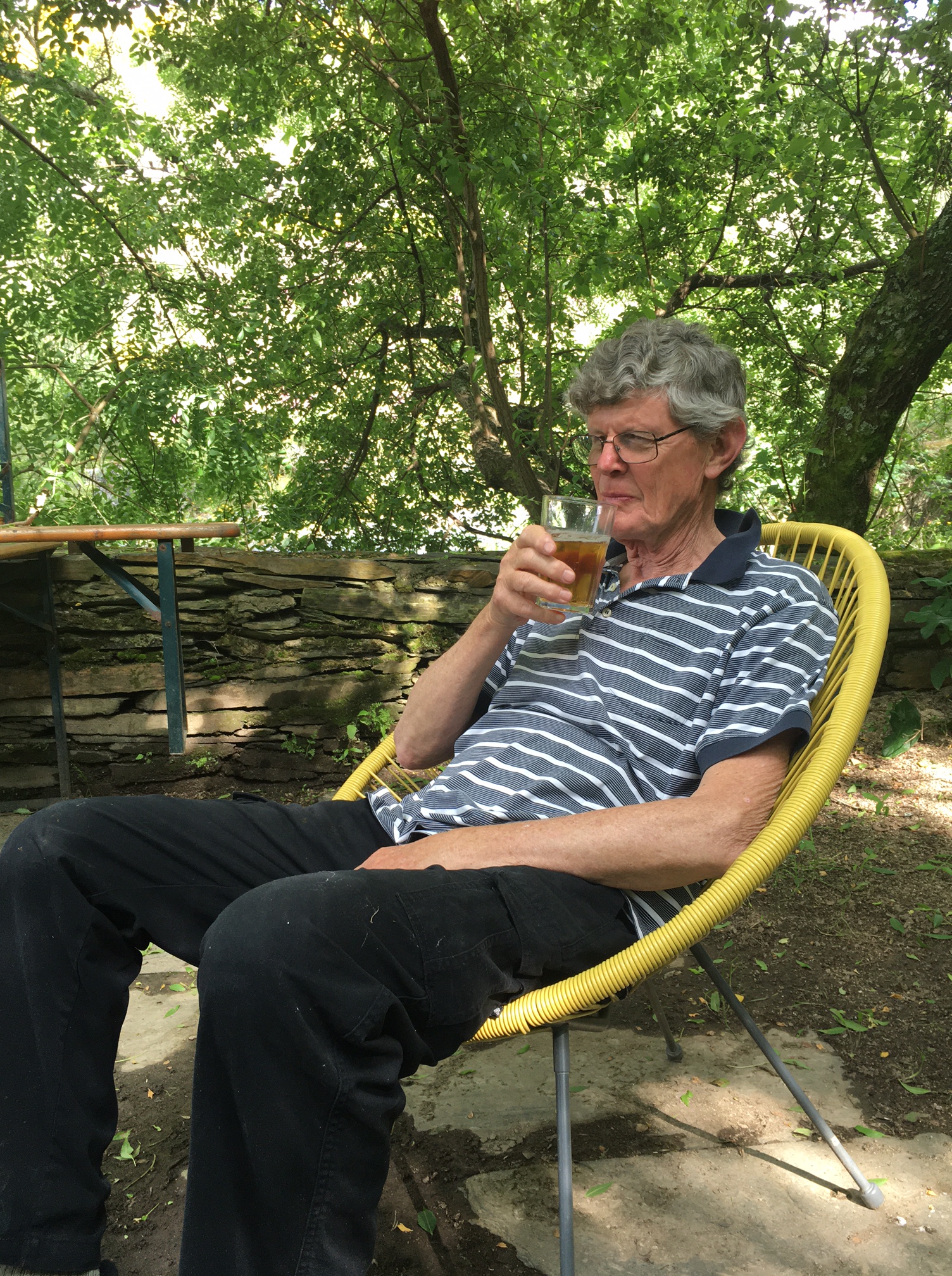
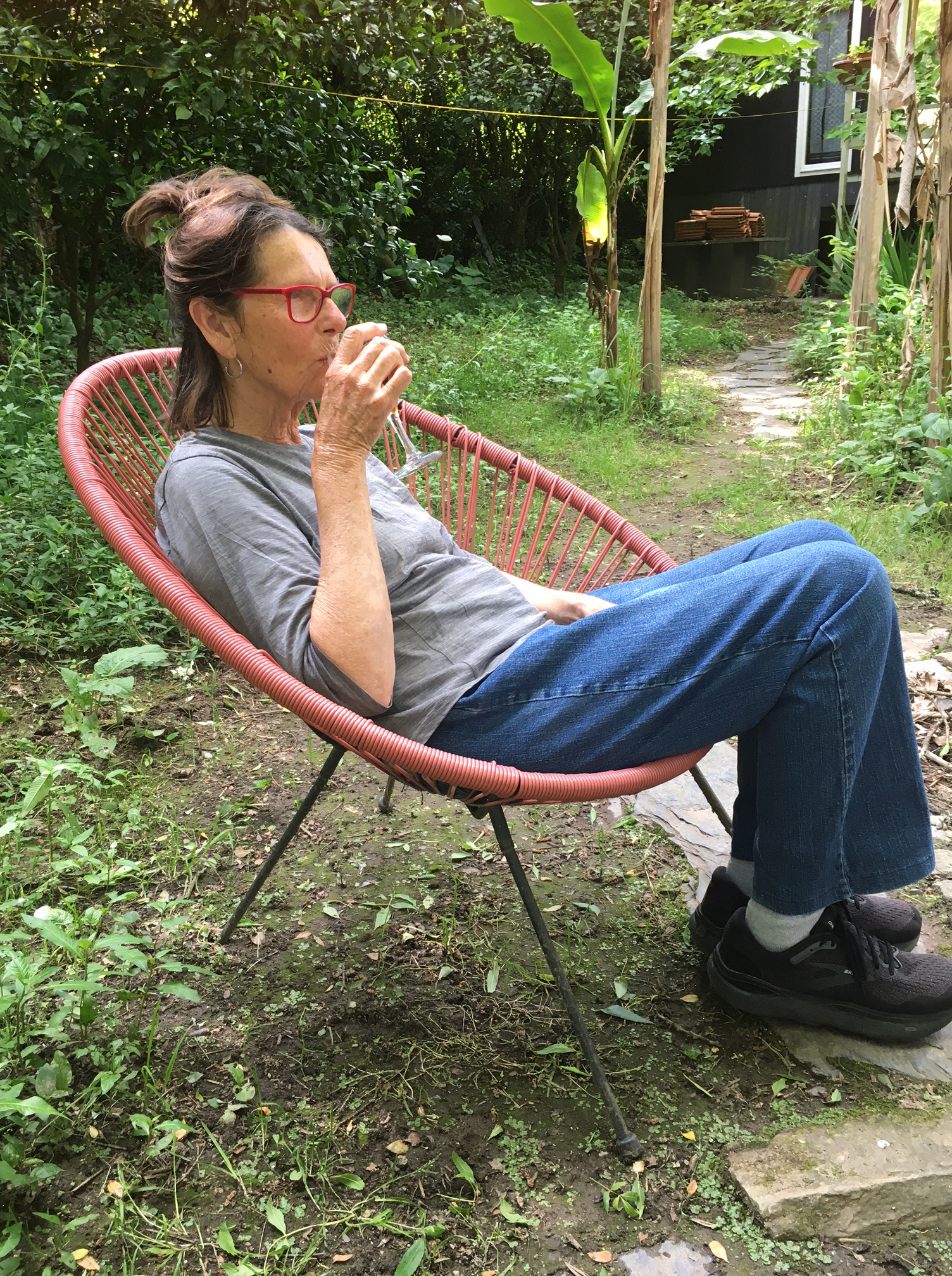
A beer and glass of wine in the late afternoon backyard was delightful. It was peace and quiet, if you extract the trilling of the finches and the rush of the river from the term ‘quiet’.
And a bit later a Google search told us the stained glass ‘exhibition’ had ended! It’s been one of those sorts of days, and we are so grateful.
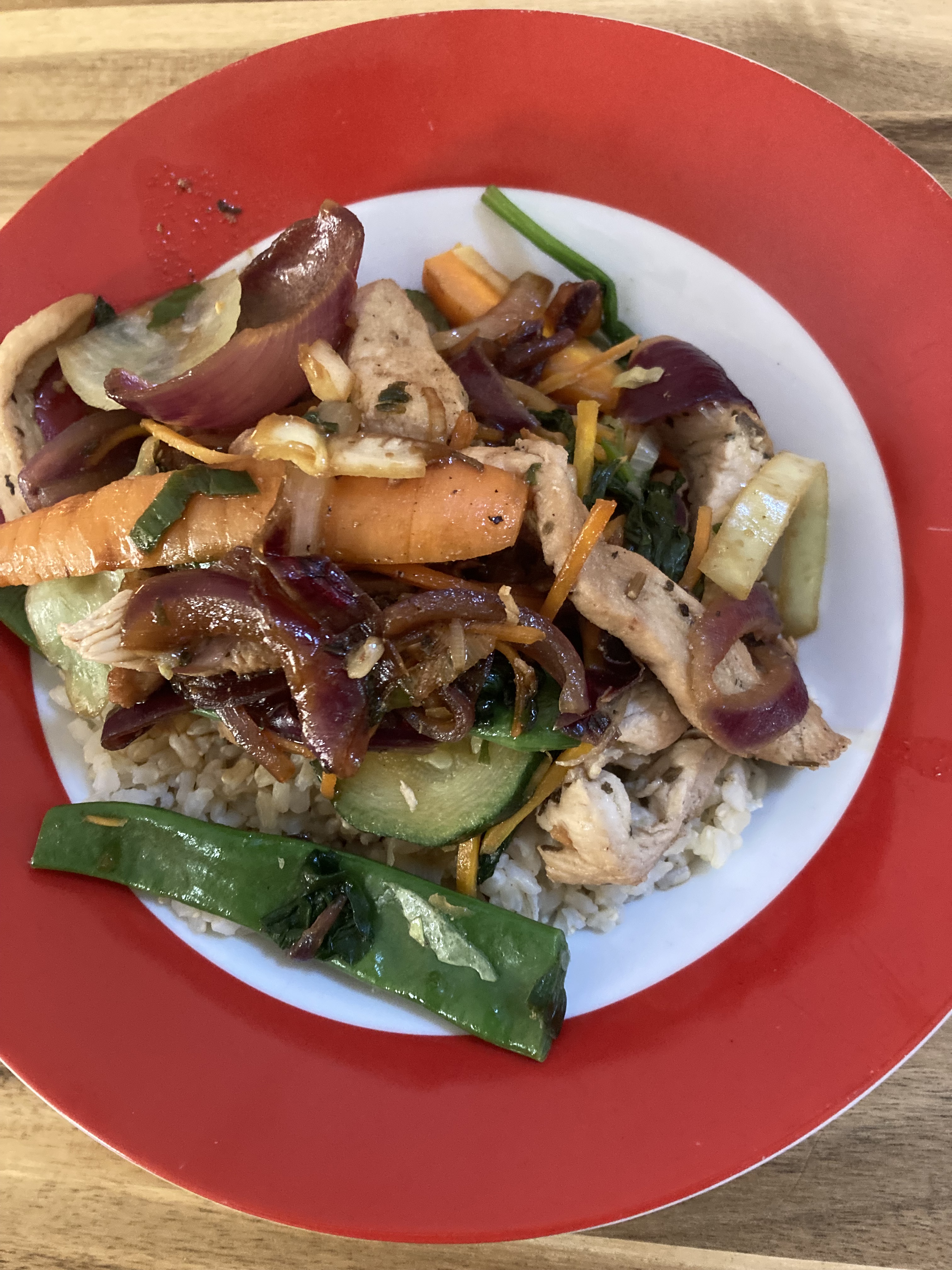
Dinner. Chicken stir fry (flat beans, broccoli, onion, garlic, chilli carrot) on rice. D got all the chili in one hit.
6 May is happy birthday to Maya Elva. Managed to slot in a quick WhatsApp chat.
Another misty start but looking very promising. A late departure – washing day – on our way to Vila Real, about 80 kms, but second job was D’s roadworks.
Rain is forecast before we leave – and it was boggy when we arrived.
Vila Real: T had seen descriptions of a beautiful, small, flat town centre with Gothic architecture and a palace. D had plugged in a ‘No Tolls’ route, so that 80 kms took us over two hours along a tortuous, winding, mostly urban route, while the direct route occasionally paralleled us, just to make the point.
Arrived at around 1400 and Doris took us to the Parque Corgo. Drove in through an open gate, to be turned around by a polite but irritated man: the park was closed, didn’t we read the sign? (he spoke in Portuguese, but his meaning was clear). Decided to go to Casa Mateus (not the one that makes the famous Rose) and drove in to be turned around by the attendant who told us parking was along the next street. He was kind enough to open the gates fully for us to reverse out. Having seen the entry prices, and D not drinking alcohol while driving, we gave a visit a miss.This was the ‘palace’ T had read about!
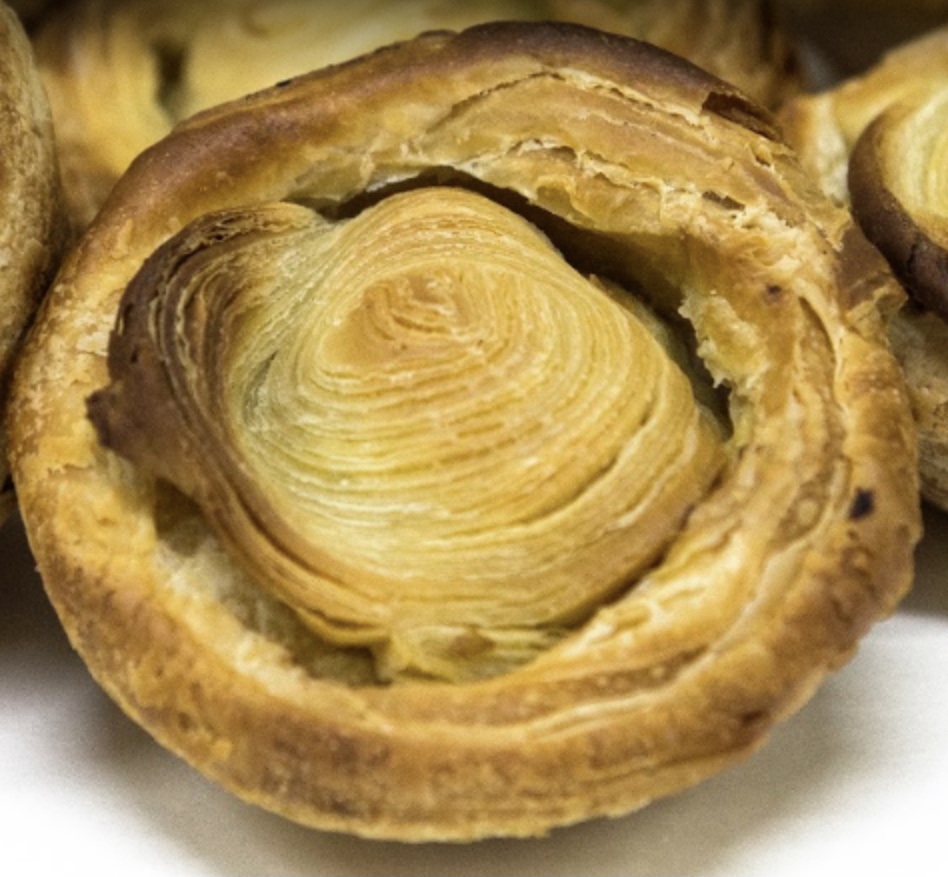
So into town, where we found a convenient parking spot – no doubt because it’s all paid, above the Rio Corgo. A friendly German stranger with little assisted D at the parking meter with (there would be no fines). As that finished her young daughter turned up, with fluent English! Wandered along, desperate for coffee and by chance found ourselves in the old part of the town, looking for the meat pie for which the town is famous. Previewed a couple of restaurants/cafes, then T dropped into a Tourist Information office for advice: Pastelaria Gomes. Sure enough a little meat pie – covilhetes (the filling is veal, prosciutto, parsley and onion, an empada really) – each with our espressos then a semi-sweet rice cake with our second espressos. T was not tempted by the tripas, slices of jamon, a sprig of parsley and other ingredients (onion, garlic, tomato paste, white wine) rolled in a tripe covering.
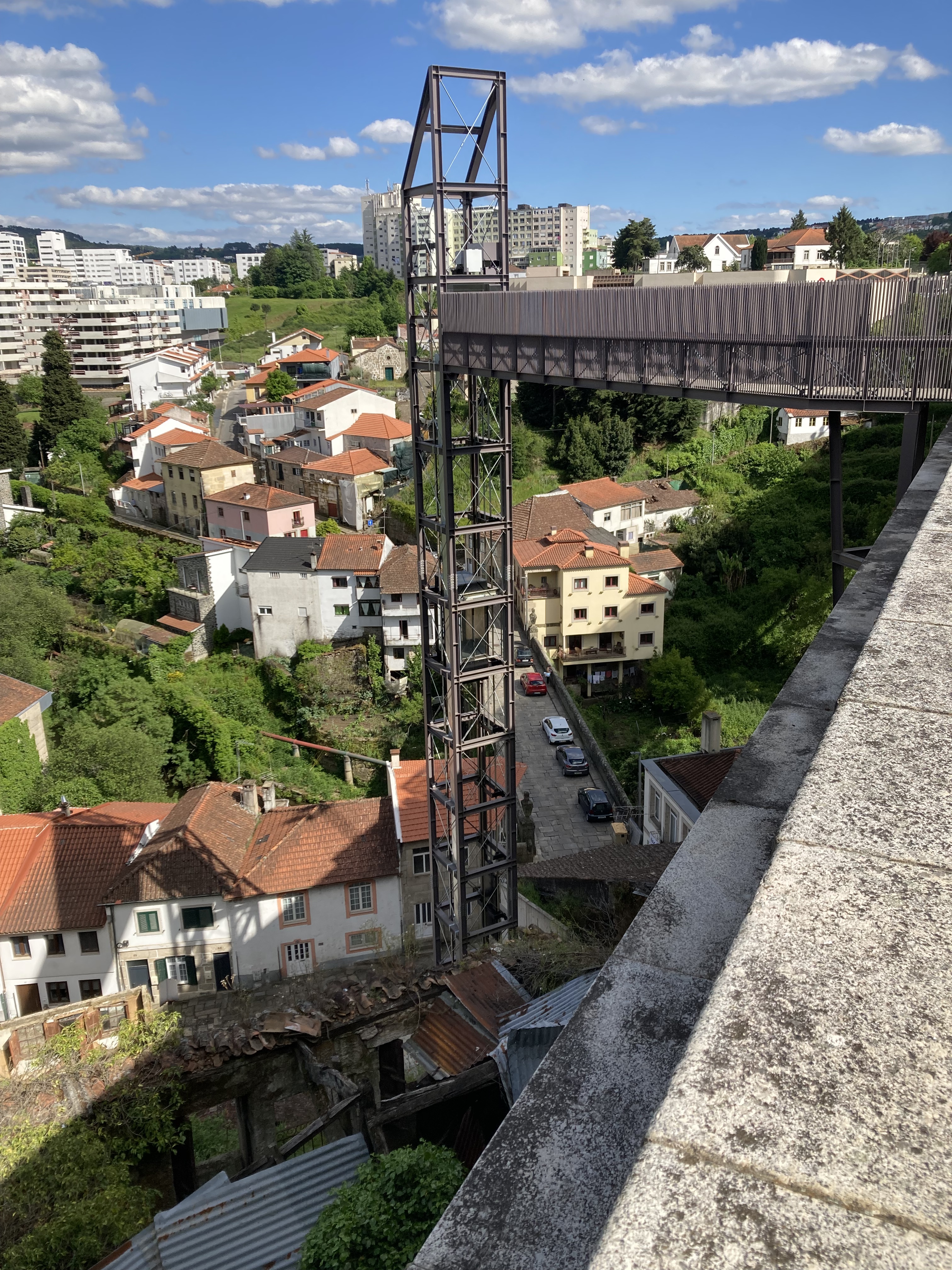
Refreshed, we followed cobblestones and came to a walled vista revealing the canyon below. The ‘old town on a cliff’ description became obvious; the canyon below, carved by water was partly terraced with very, very old dwellings, gardens and access tracks.
We could see immediately below us old houses and garden plots, many still inhabited. One was obviously occupied – about a dozen cats, and then an elderly lady appeared from what D said was a granny flat: T asked whether that was her future?
There were walkers far beneath and across the river. It was a fine afternoon: how about we find the track? So, after paying for more parking, crossing the nearest bridge, but finding no access on either side, we reversed our tracks and took the lift that we’d seen school students using (this was our funicular ride that we missed yesterday). It was very smooth and not a bit terrifying with eyes closed.
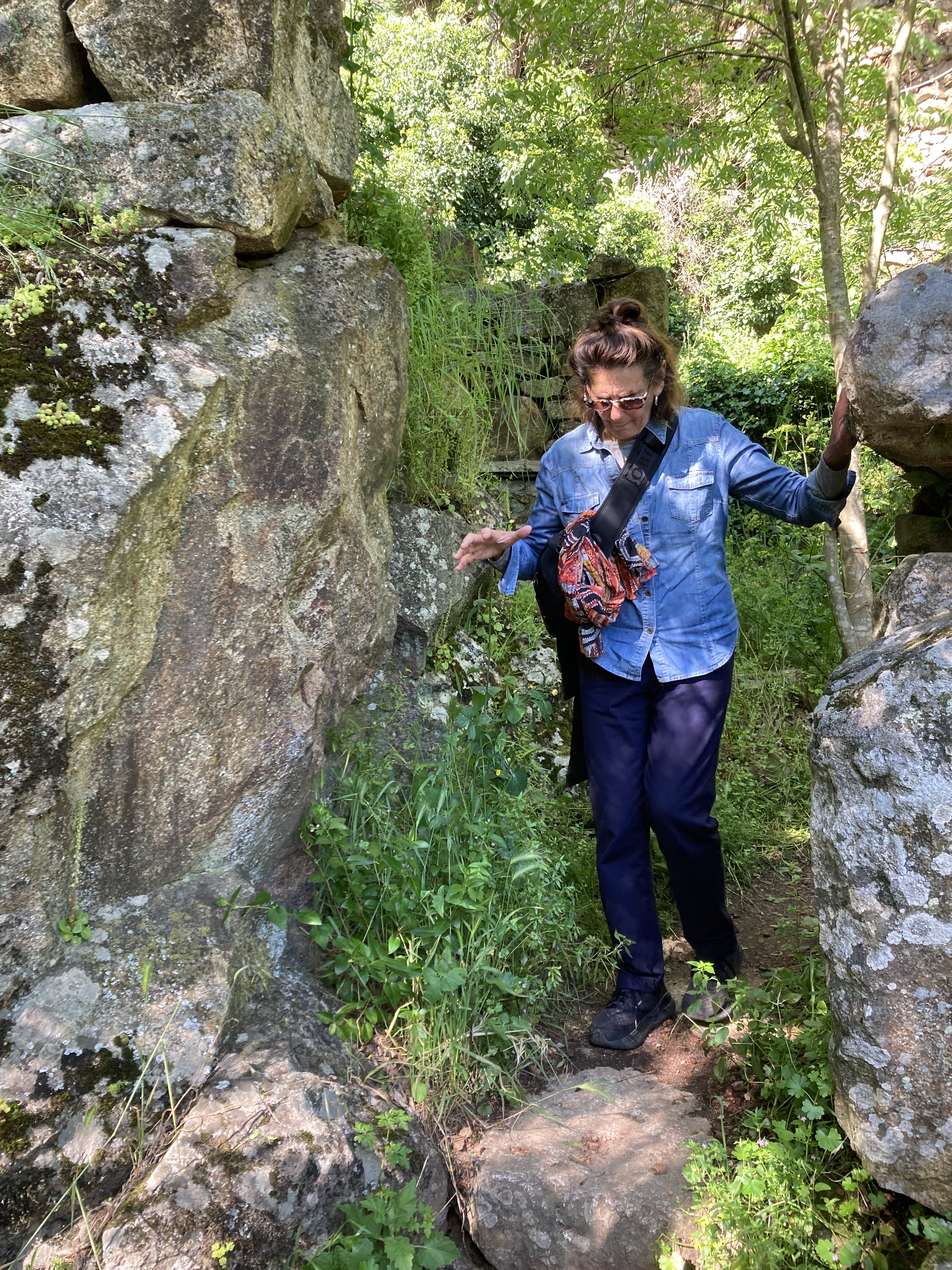
So we did find the track access, initially past some houses and up rough cobblestones/stones, then rough steps…..and more steps. A lady of about our age gave up, her man continued, as we did.
A better part of the stone track!
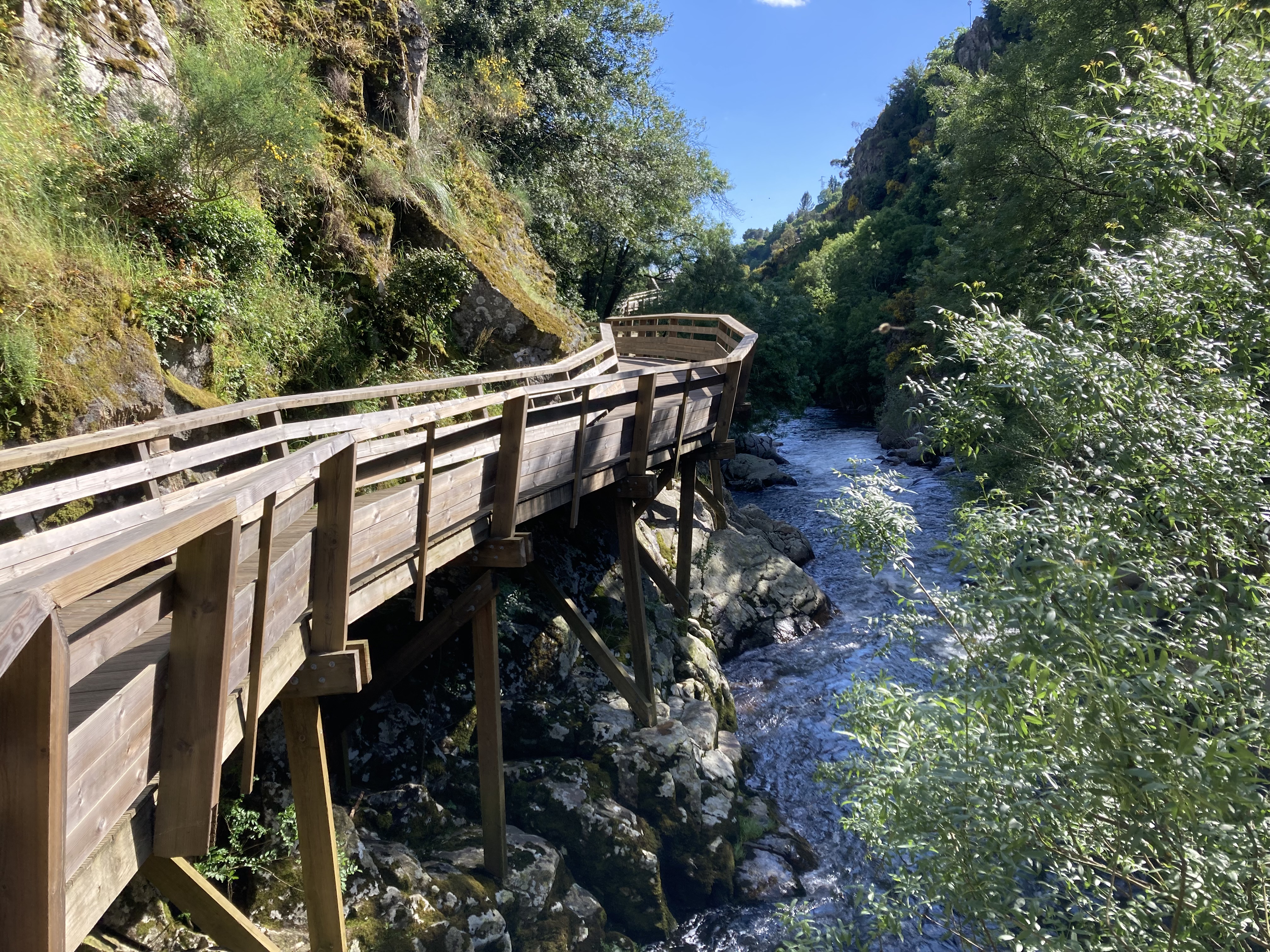
After a while, the route became a boardwalk – partly good news, but it involved steps – up, then down, then up, then…And it went on. The views and the scenery were terrific.
Eventually the boardwalk finished: we were again on a rocky path, then cobblestone roadways,and finally back at the Museu (archaeological) we’d passed earlier.
We could do better than 2 hours drive home, so chose toll roads. Road was fantastic: mountaintop, curved, great condition…but the speed and occasionally aggressive trucks left T in a state: regained sufficient composure to make dinner (creative projects are often calming).
Dinner. Quick pasta (chorizo, tomatoes, broccoli, red onion, balsamic, green olives, cheese).
Another family birthday, so an early morning call to brother John, to pass on an evening birthday wish. Sounded like he and the group in the mountains were celebrating 75 years appropriately.
The day started misty, but sun threatened so we decided to go to Porto, with no great plan in mind. Drove to Valongo railway station: no parking there, but jagged a spot at a small shopping complex (four shops) with a ten minute stroll to get to platform. The train ride to Sao Bento station was about 30 minutes and dropped us right into the ‘tourist’ area.
But the first priority was to replace the battery in D’s iPhone, which was not only running at only 88% capacity (Replace! shrieked Settings), but was also tending to get quite hot while charging. The Apple dealer was close to the station, but didn’t do tech stuff, so we were directed to a repairer just up the road. No problem: twenty minutes, which gave us time to find a coffee and some new sweet treats and practise new language: espressos with agua quente, por favor.
Mobile returned with new battery (and cleaned): we had our main communication tool restored (no new phone just yet). D can relax.
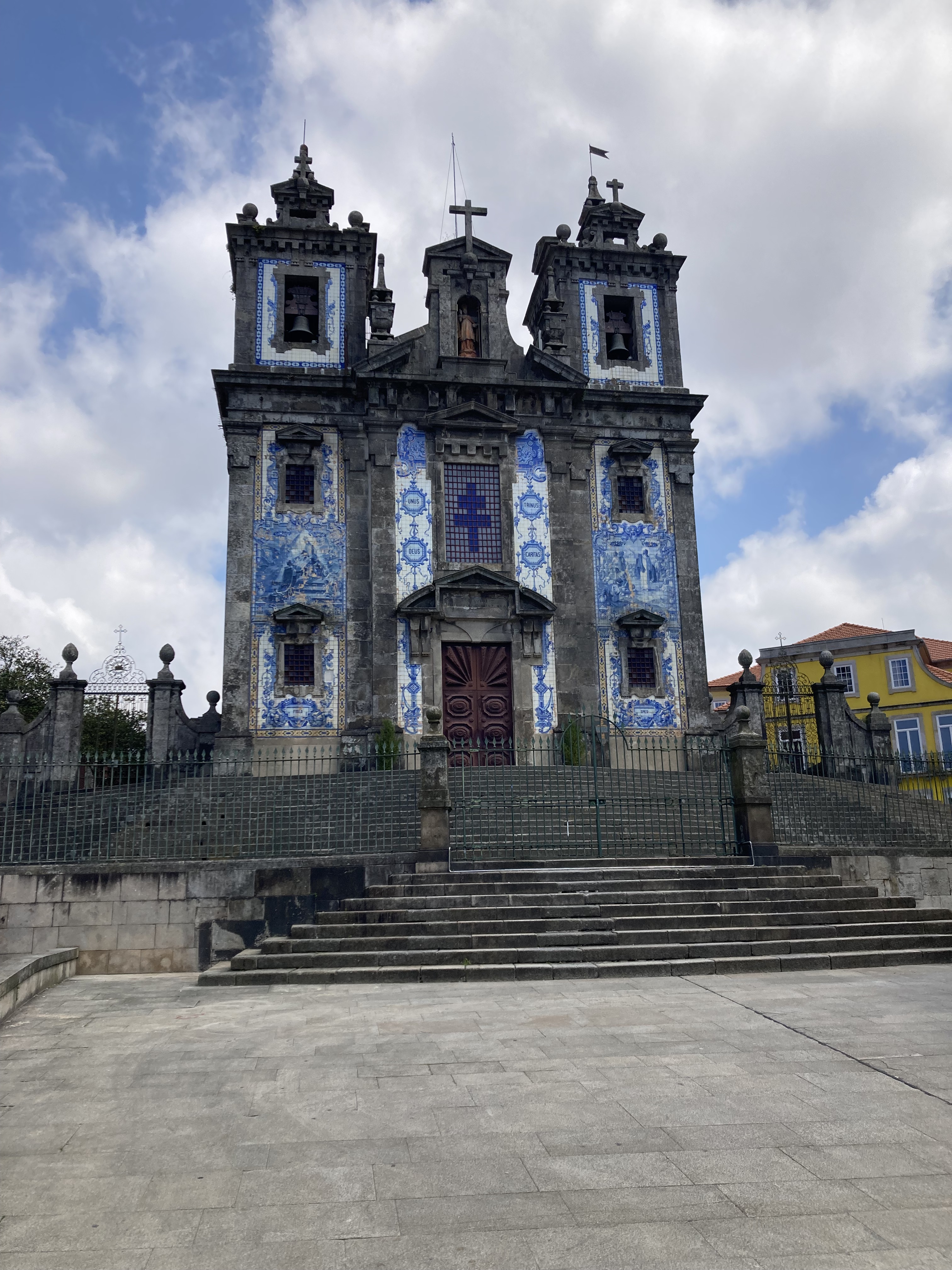
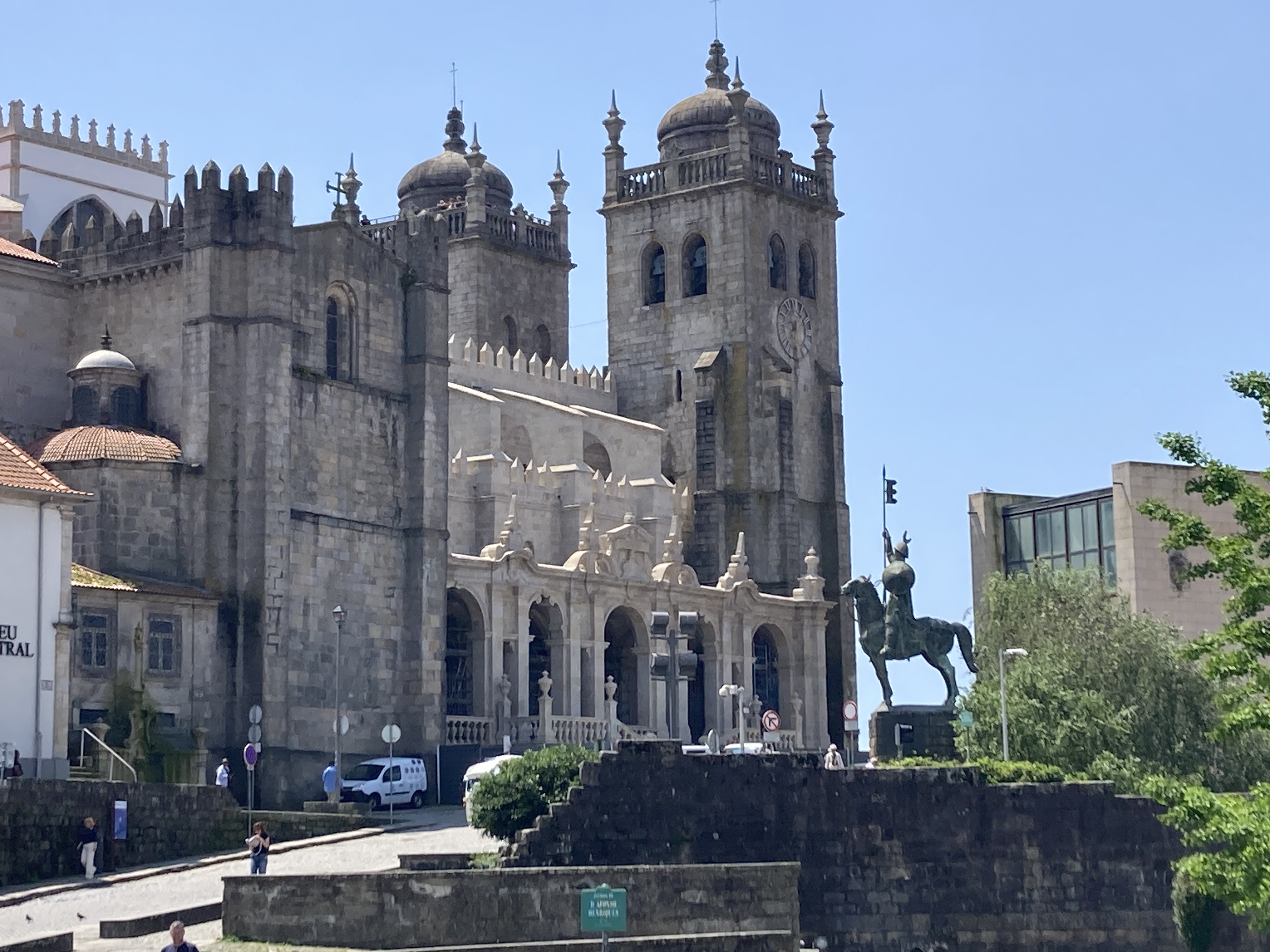
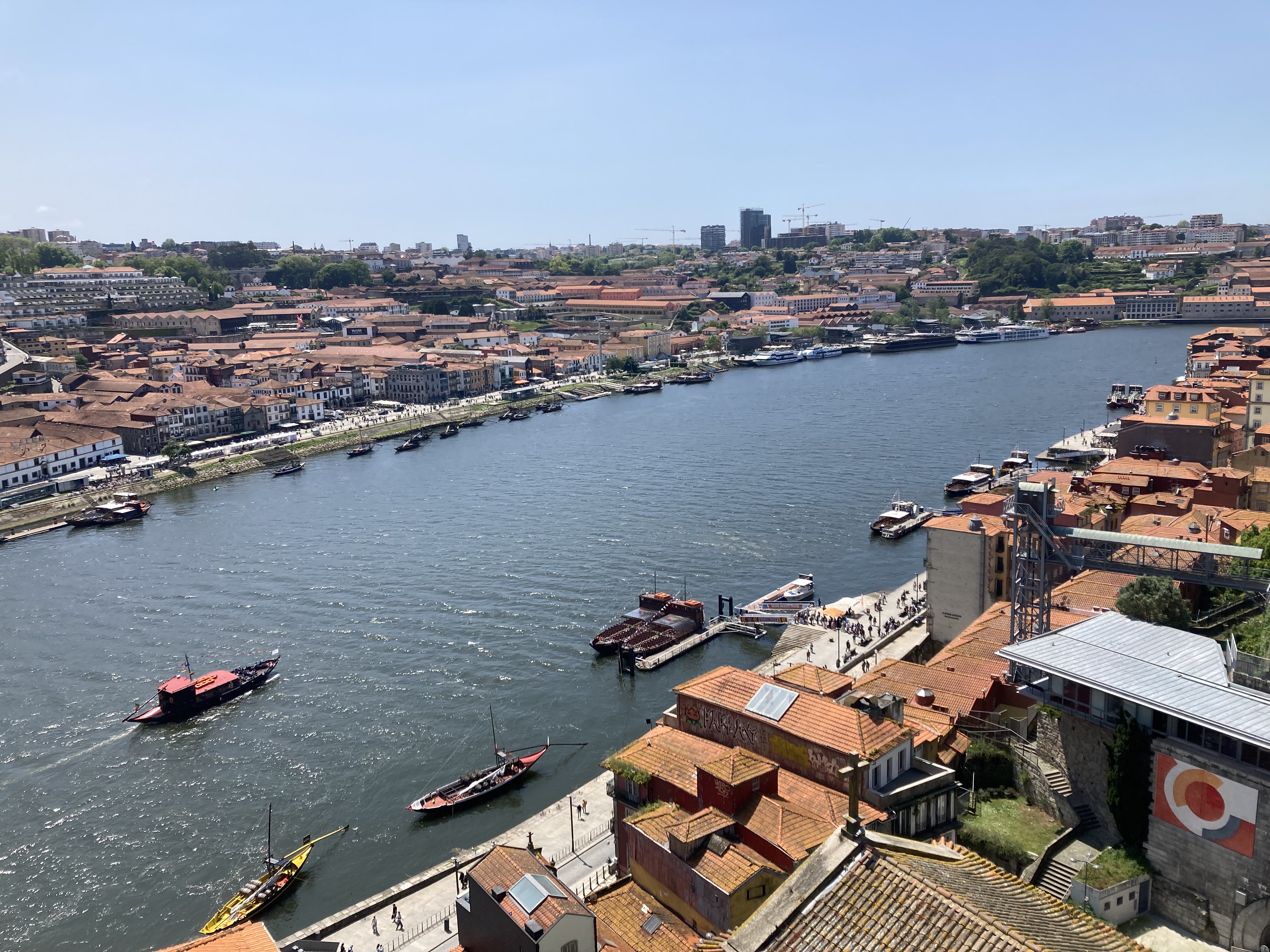
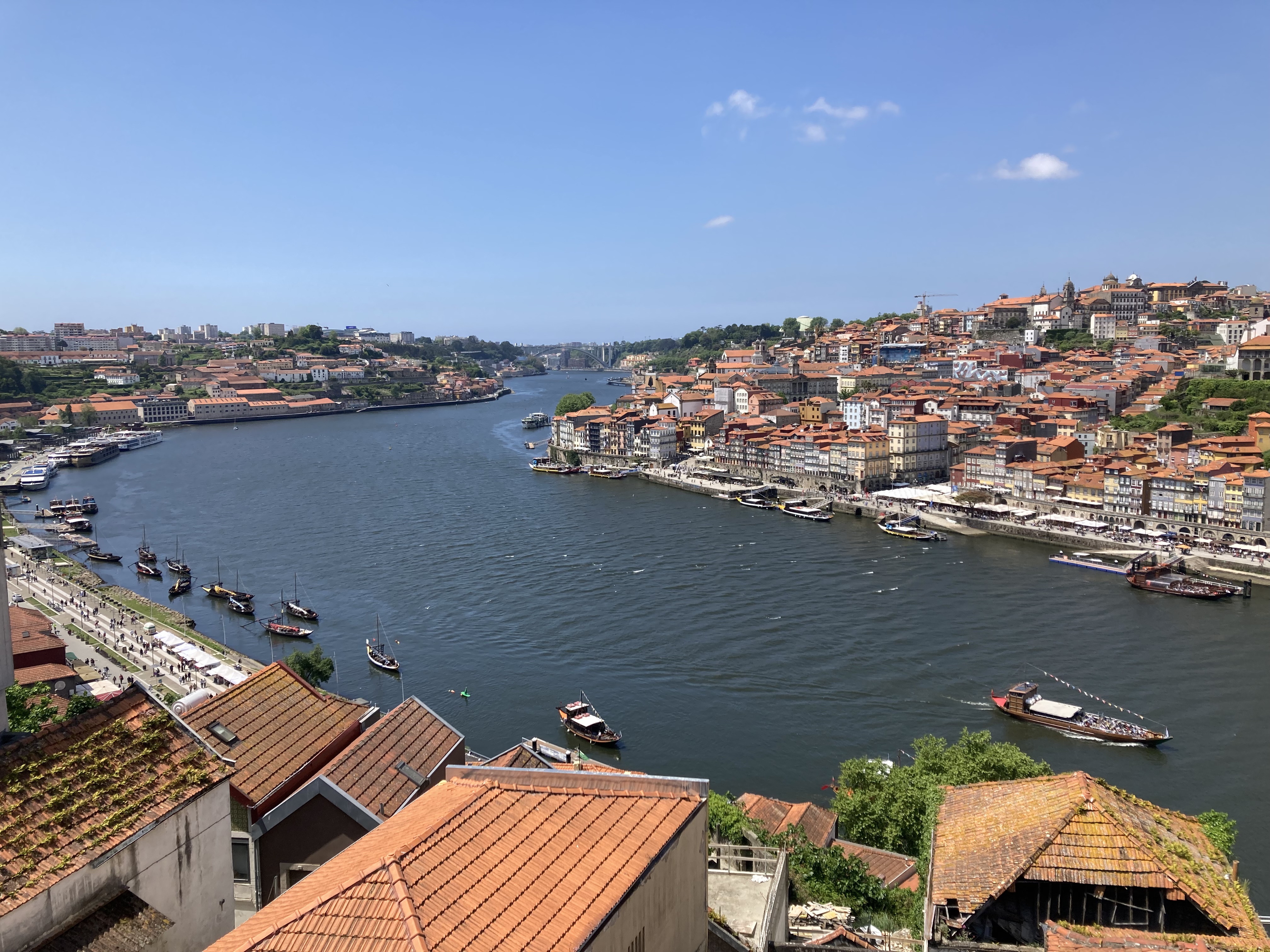
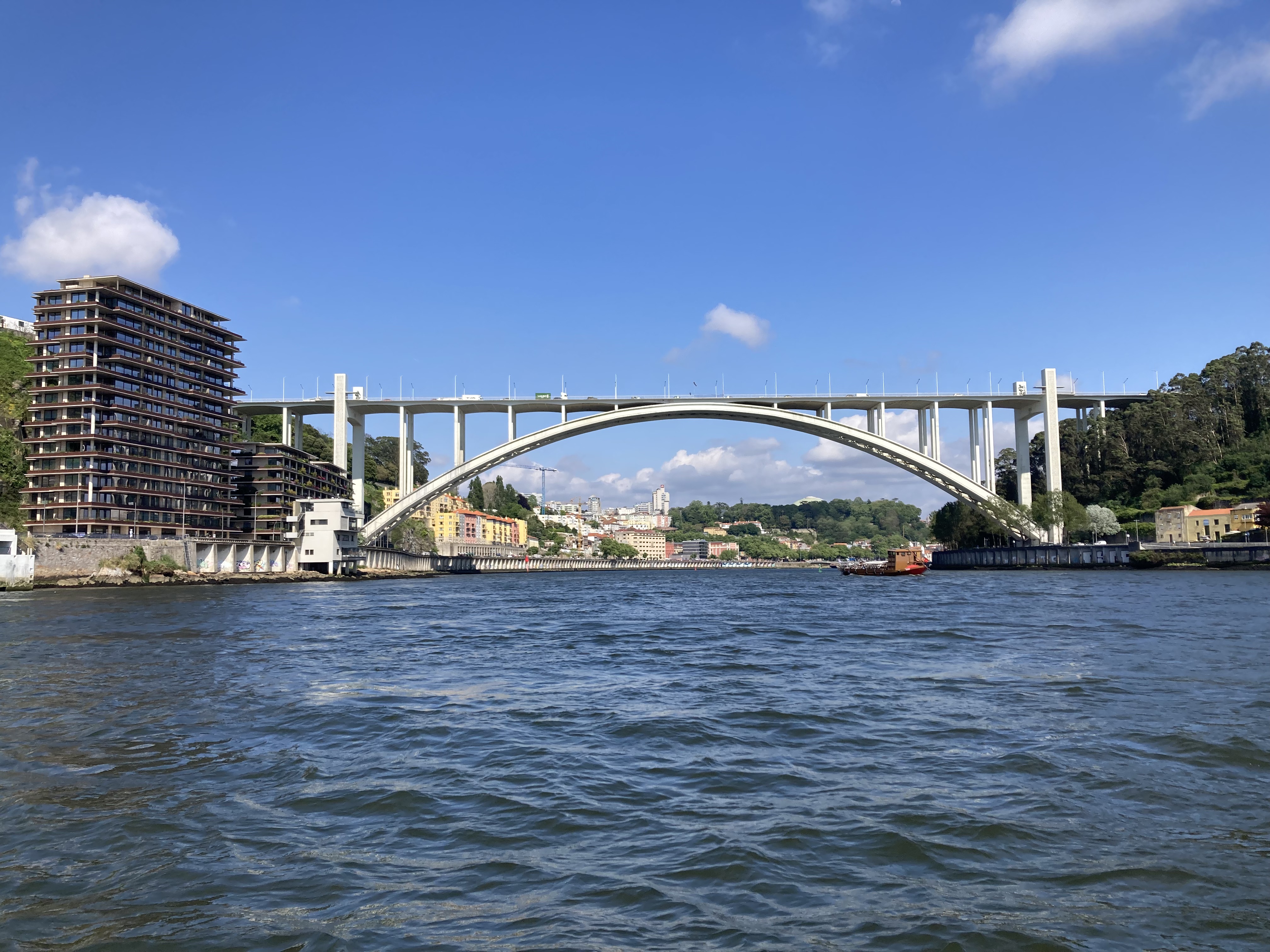
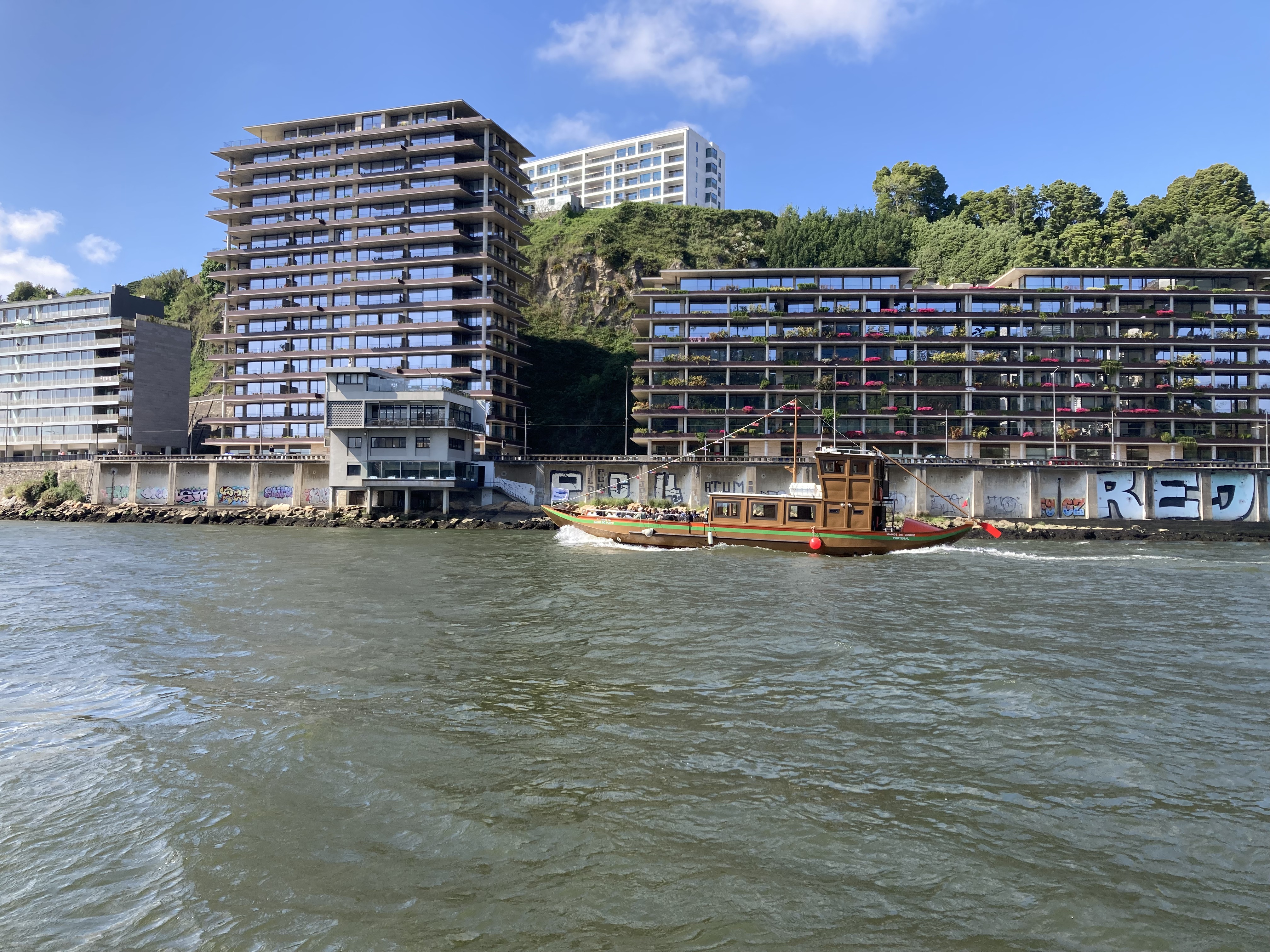
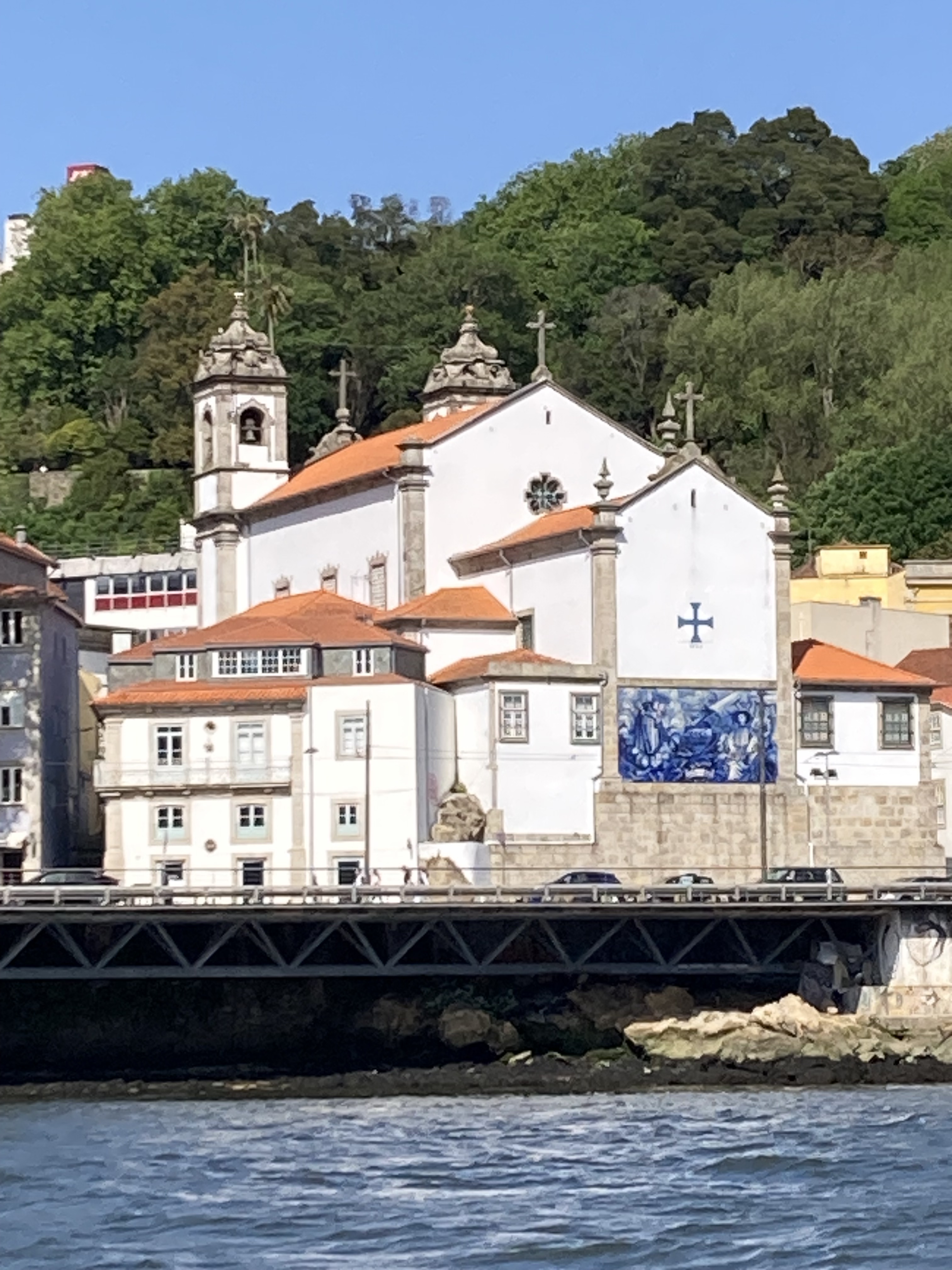
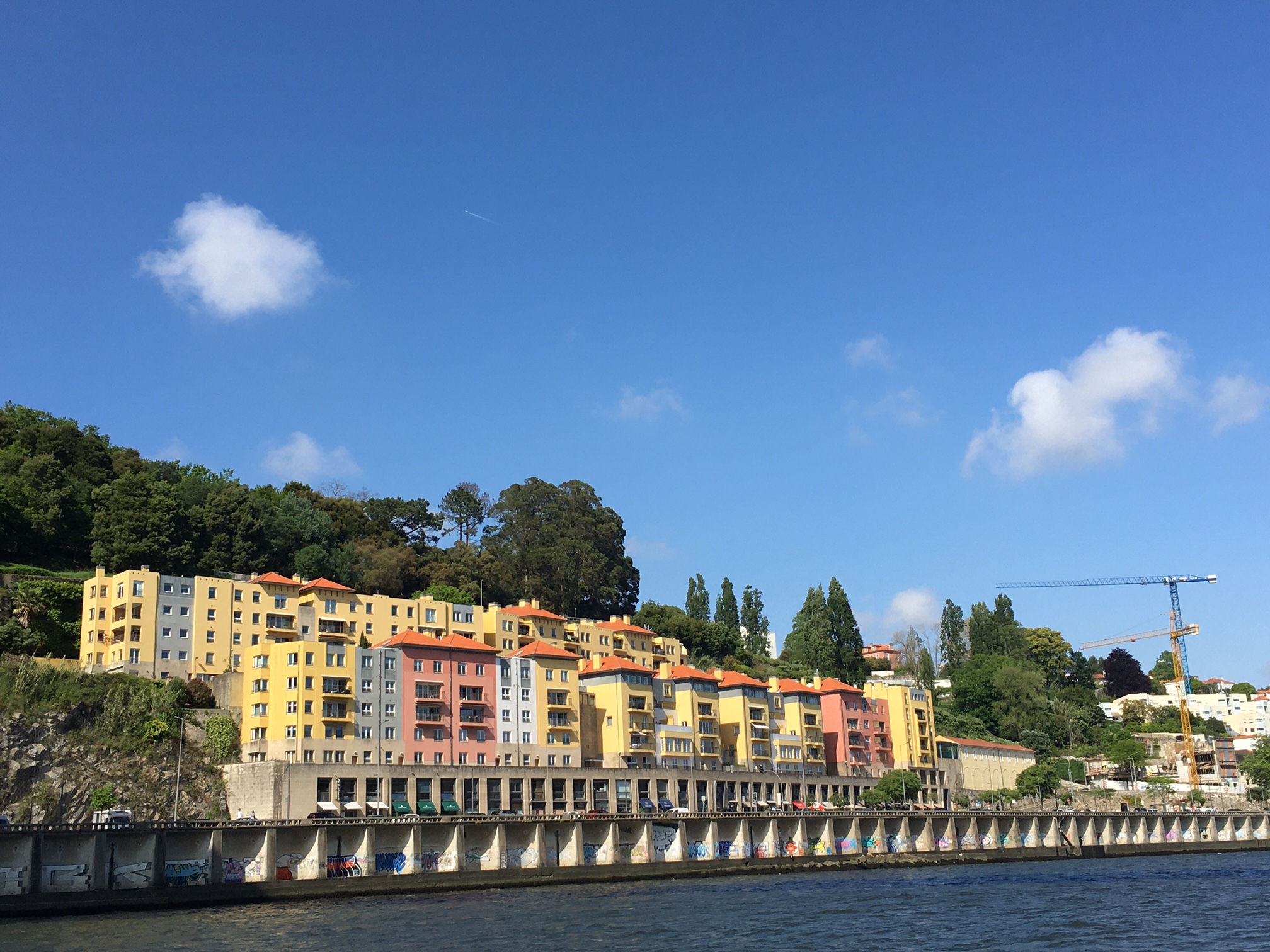
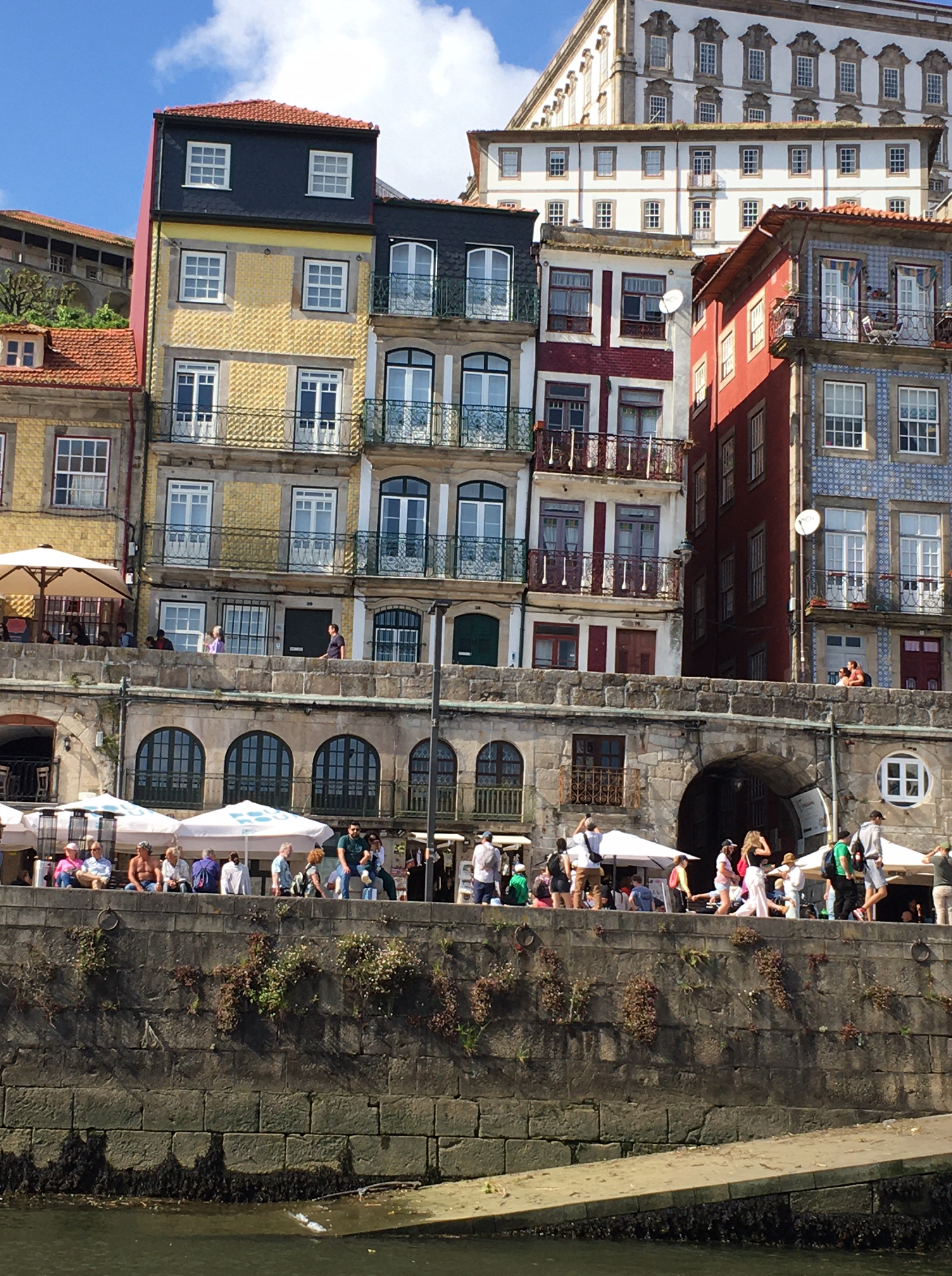
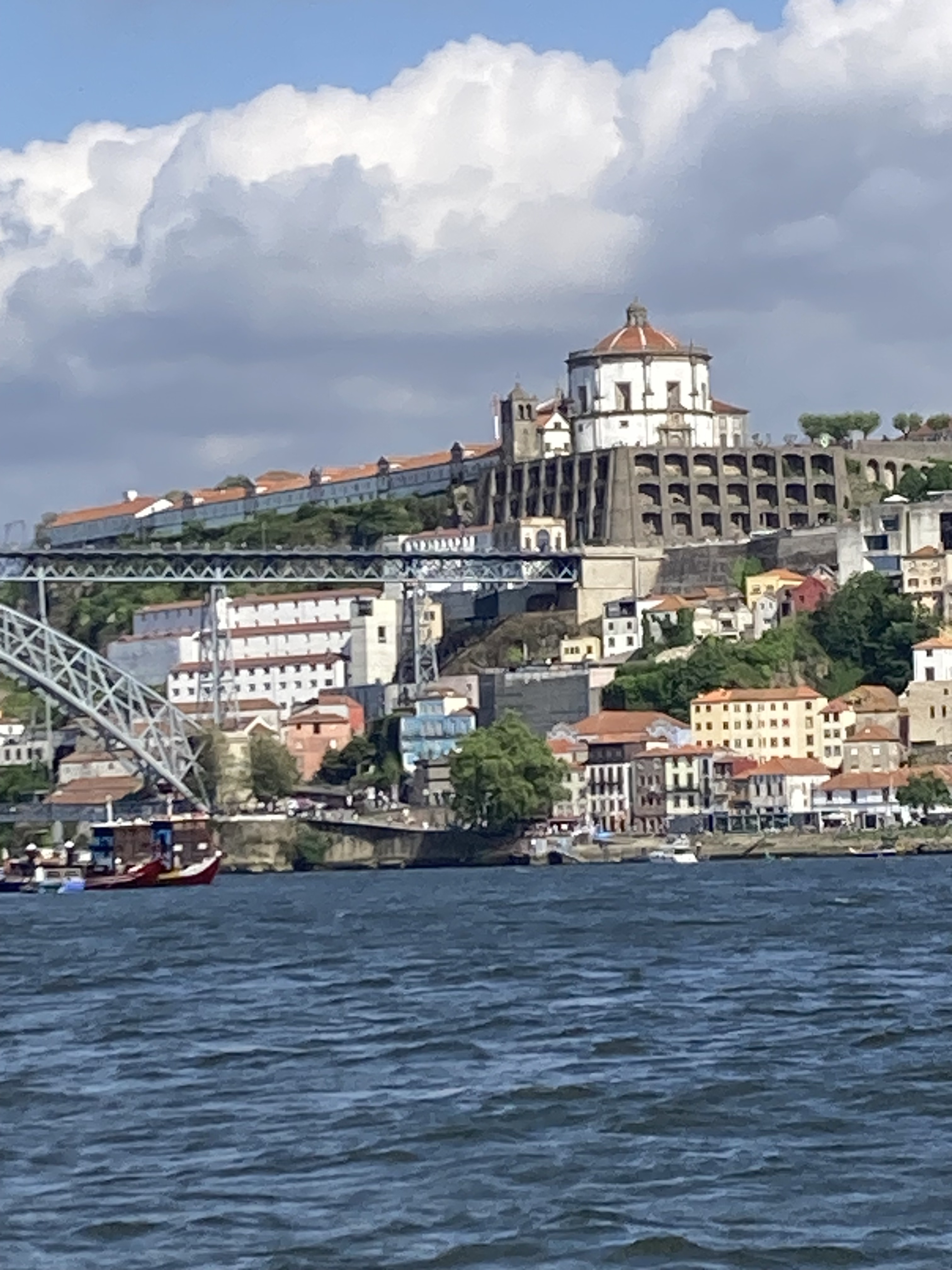
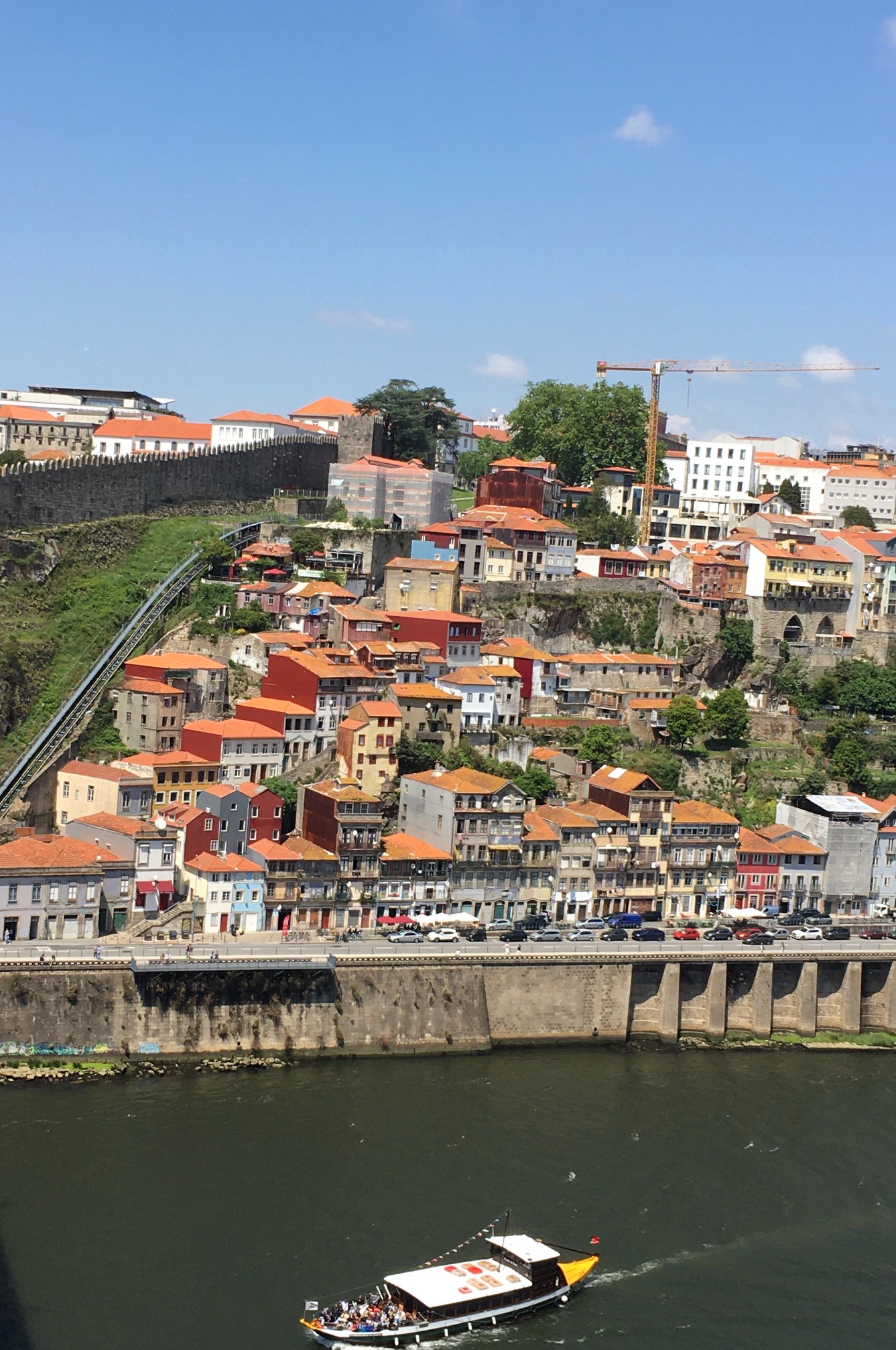
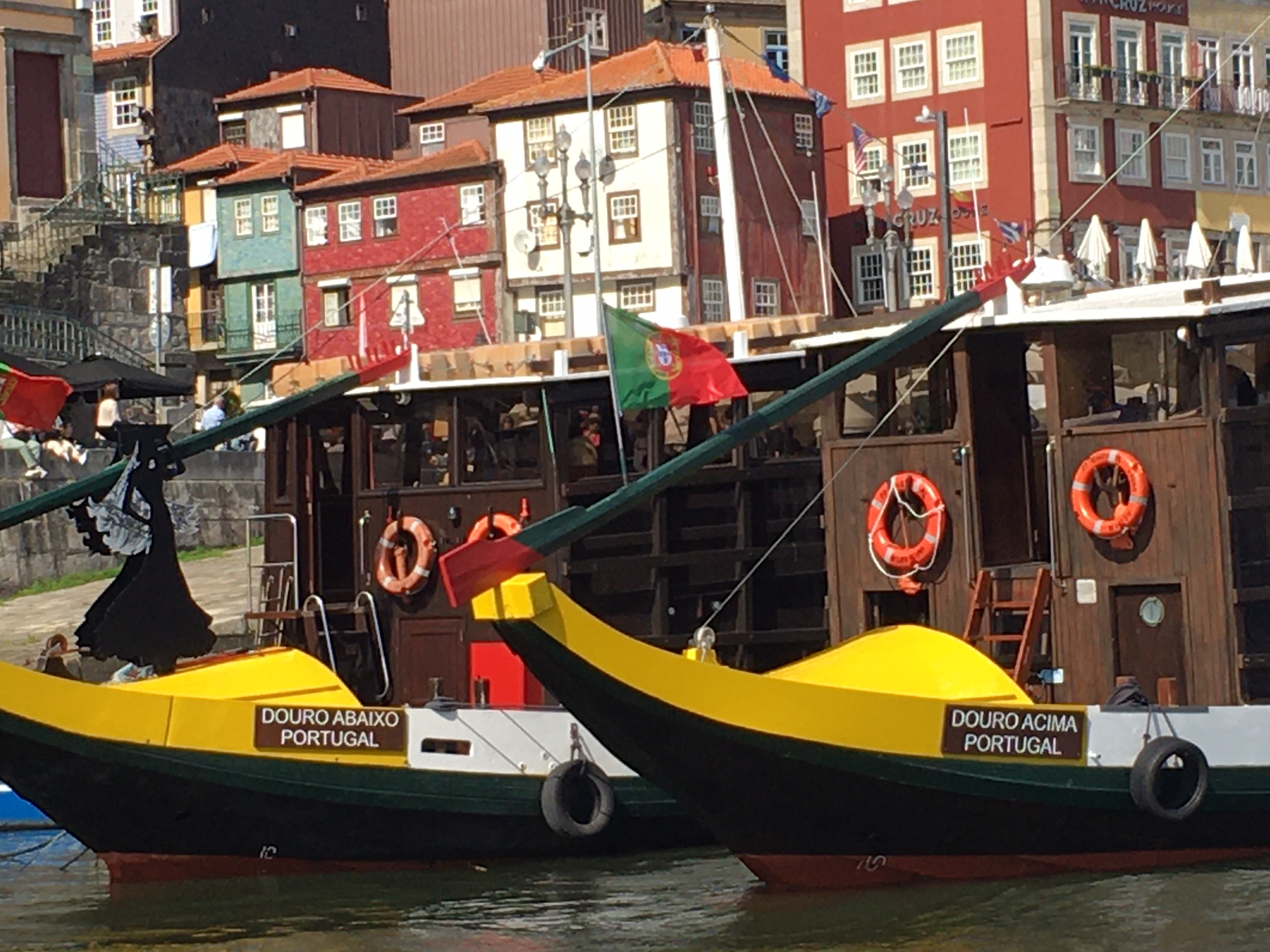
Did some wandering, just taking in views. Porto looks shabby-chic-charming in the sun. Smallish, very walkable, colourful…so many souvenir shops! So much seems derelict. Riverside walking trails, rabelo boats on the river, picture postcard terrace houses in pink, orange, yellow…lots of tourists. Sorry to say we’ve possibly become cathedral-phobic (or perhaps just over-exposed: they’re everywhere!) so mostly admire grandeur from street level and keep walking.
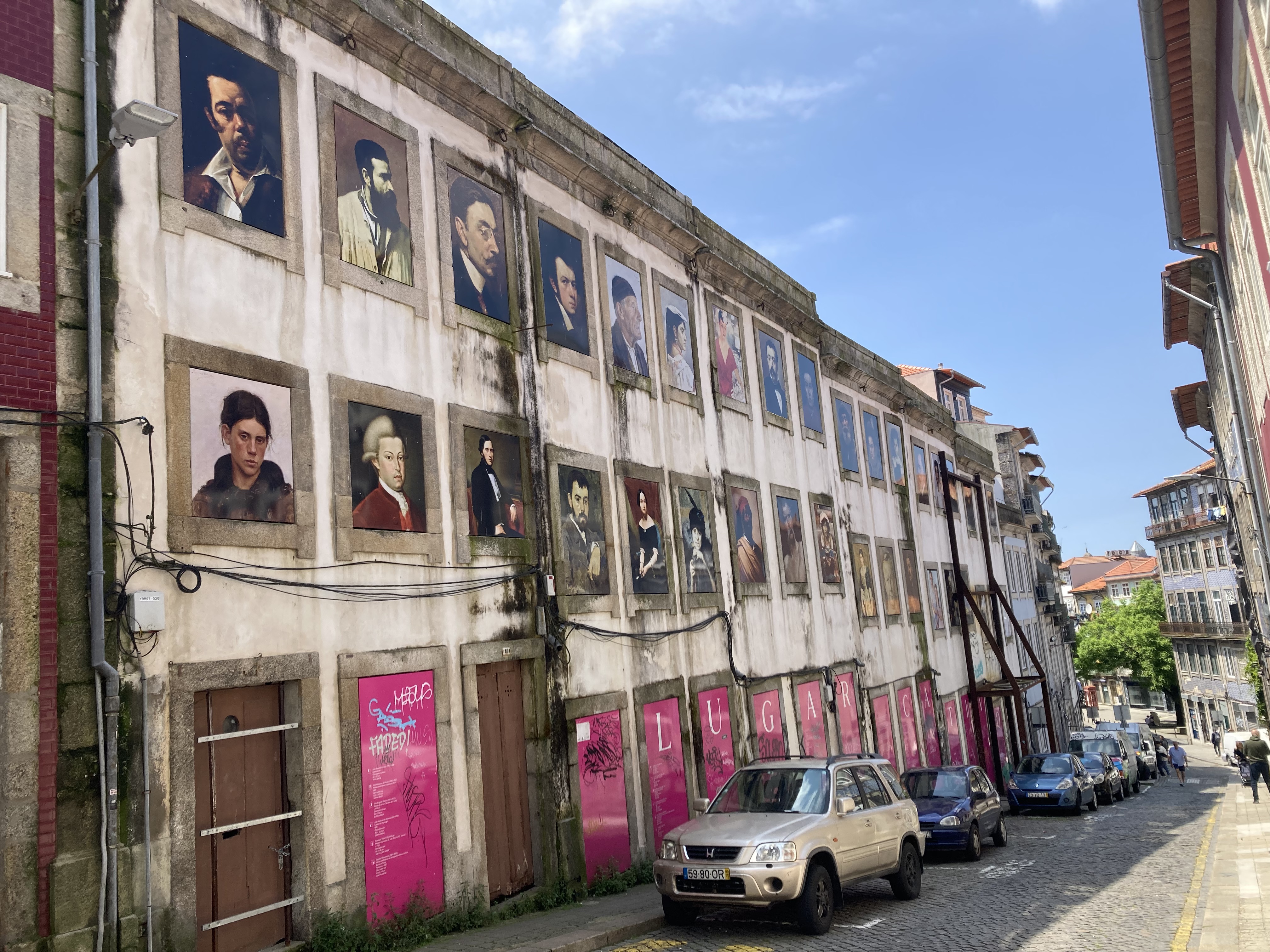
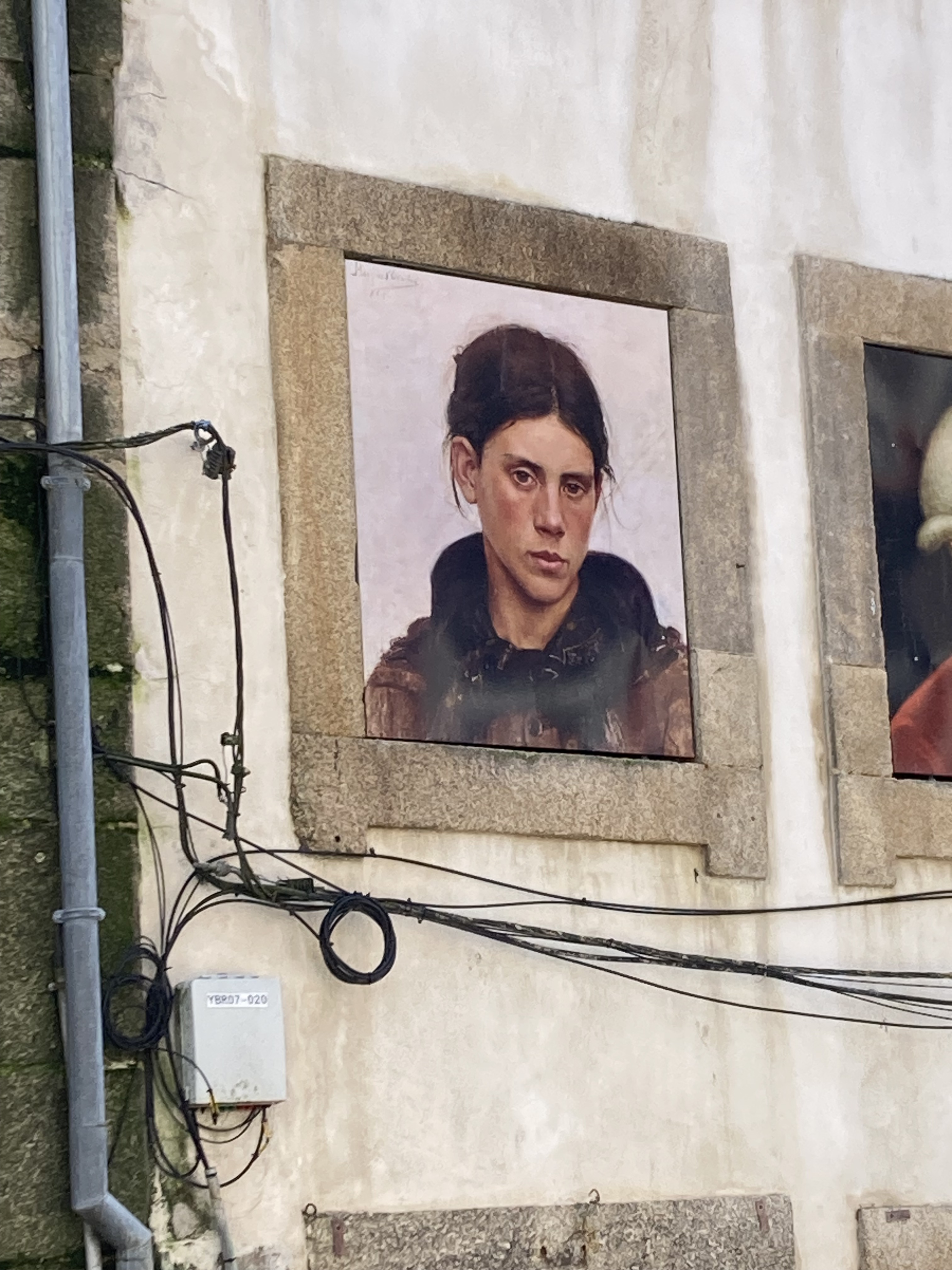
A facade, propped up with a significant steel structure, featuring prints from the Museum.T particularly taken with this one: original dated 1881.
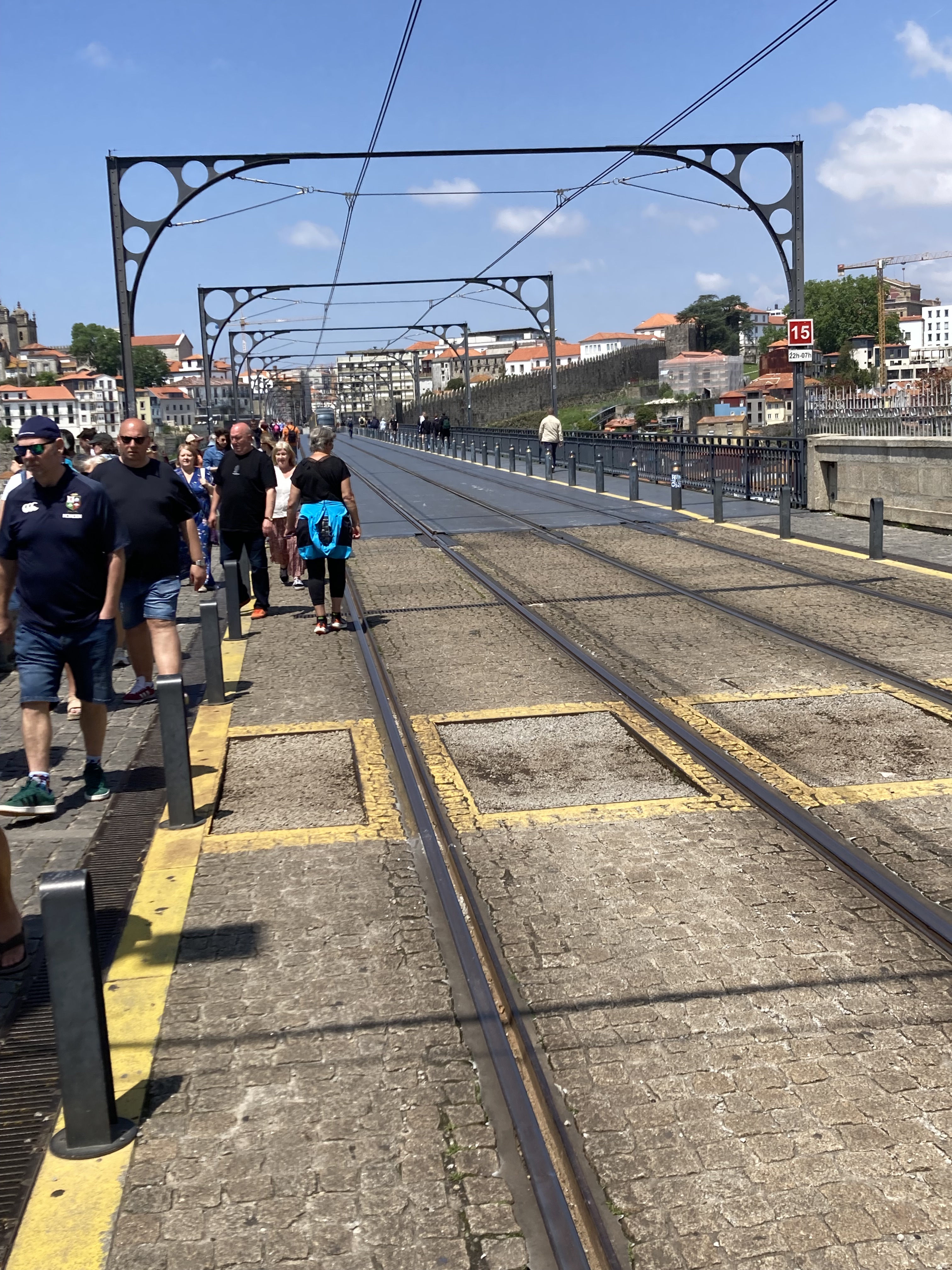
Crossed the Ponte Luiz1 to the other side of the Rio Douro, noting an interesting terrace restaurant – the Guindalense Futebal Clube – midway up the funicular route/a million steps… looked like a good lunch option away from the crowds.
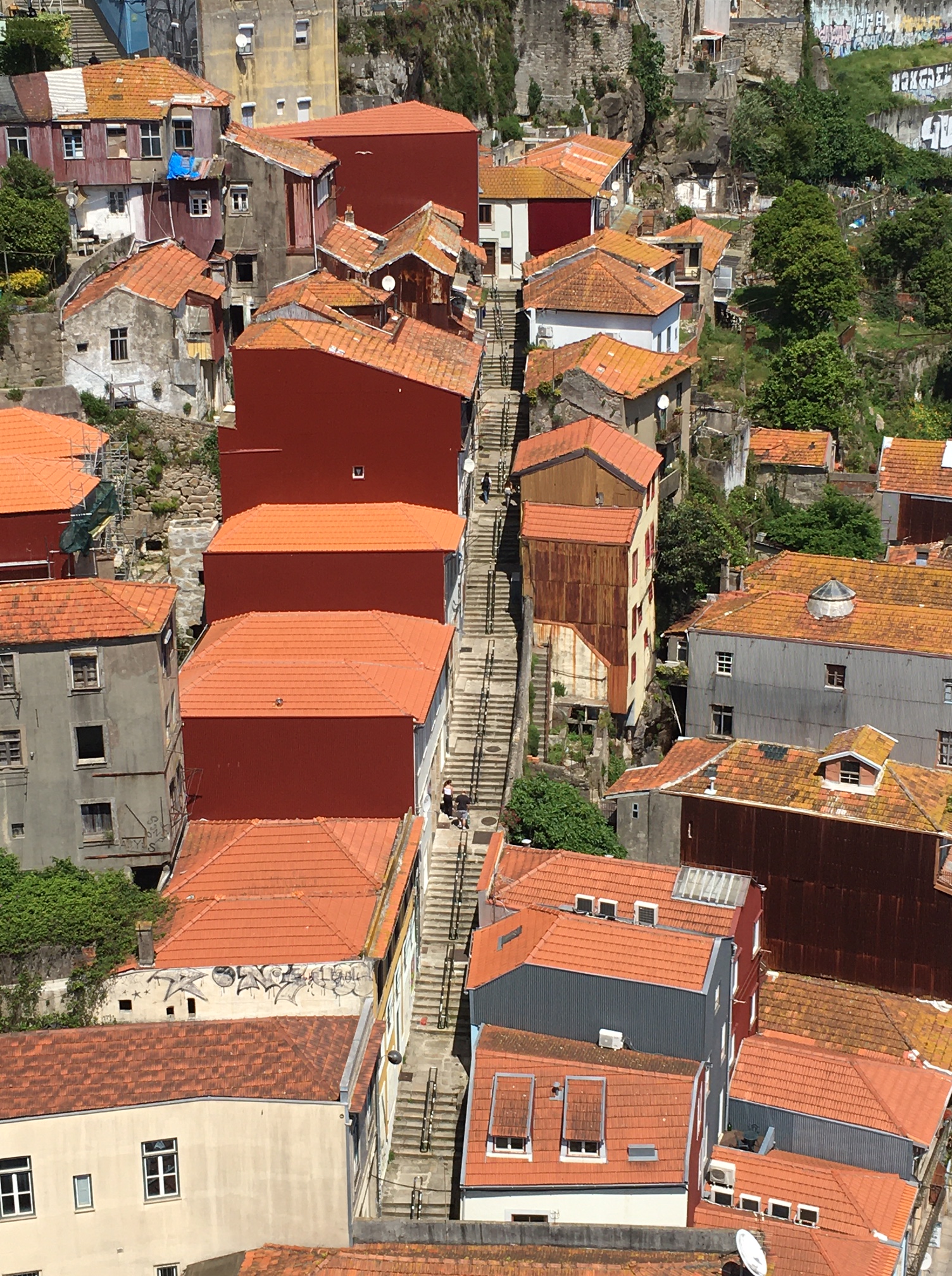
There are those steps! On the return trip we were going to take the fanicula: ‘it’s broken’, said the guard. Of course.
Arrived after 1 million down steps to learn that only one table was left, tucked inside, no view, so not keen and when D tried to access the QR code menu, which kept dropping out, we gave it a frustrated miss.
More steps down, but found a little cafe about our size on the riverfront. Shared a hamburger with a (0% alcohol) beer each with fries on the side. Hmm! T: why bother going past the beer? D: just beer and fries?
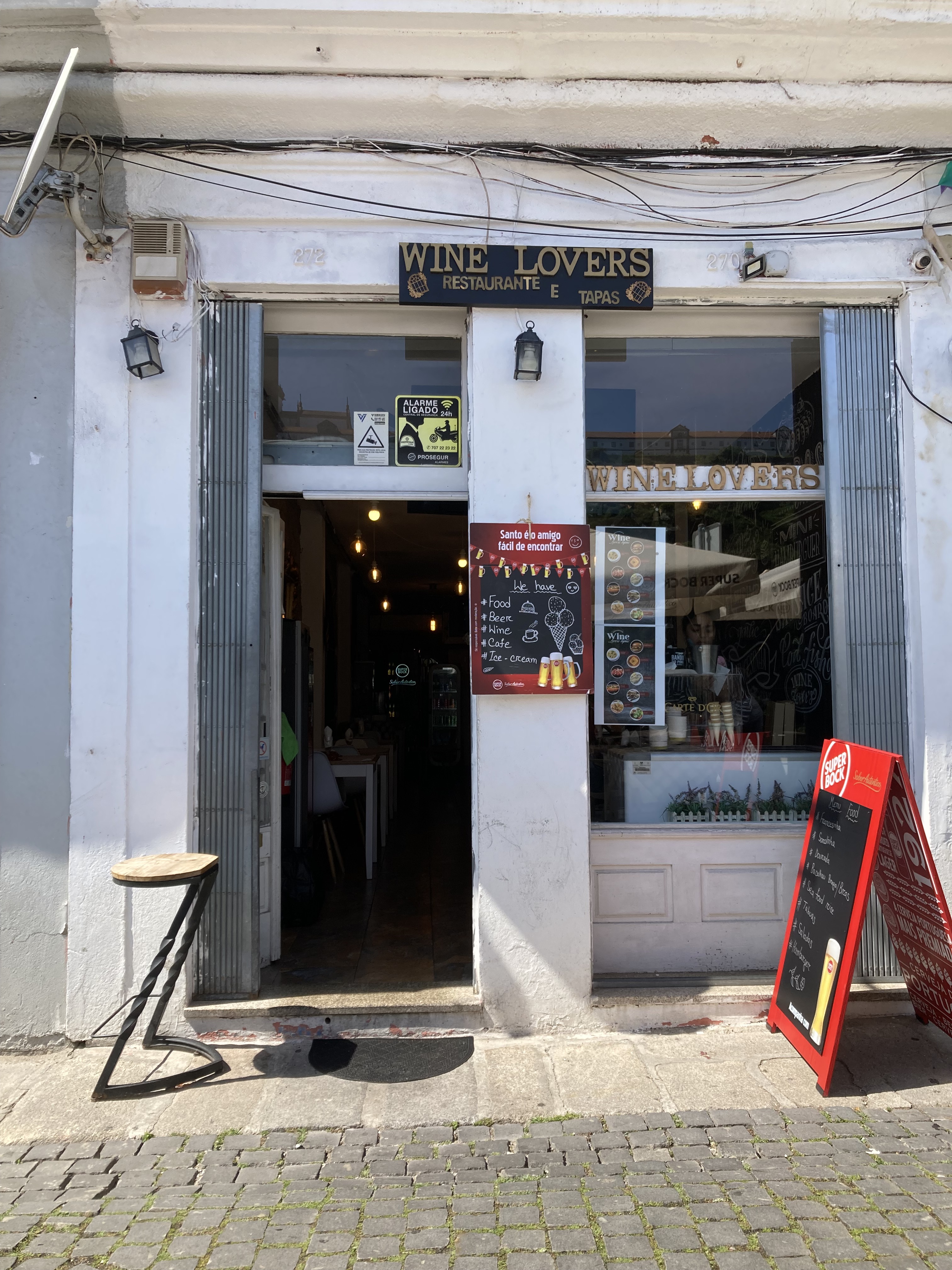
The name just demanded we come in – but we had beer.
T suggested a ‘6 Bridges’ boat tour, as the day was bright. And it was great.
That was enough for the day, so up more steps to return to the railway station. But which train? The station is famous for its tiled grandeur but some information boards are sorely needed. Tourists click their phones for the tiles: presumably they already know which line they are traveling (or maybe not traveling anywhere). D joined a long queue in the ticket office in order to get information about our train line to Valongo… ‘1800’ was the reply. There was a train due to depart at 1800 on Line 6, so off we went: still uncertain, D accosted a young woman, asking if this train went to Valongo- it did, she said with a lovely smile, phew!
This is where it gets weird. Nothing went wrong – the train left right on time at 1800, dropped us off where we expected 30 minutes later, we found the car where we left it, and we drove home.
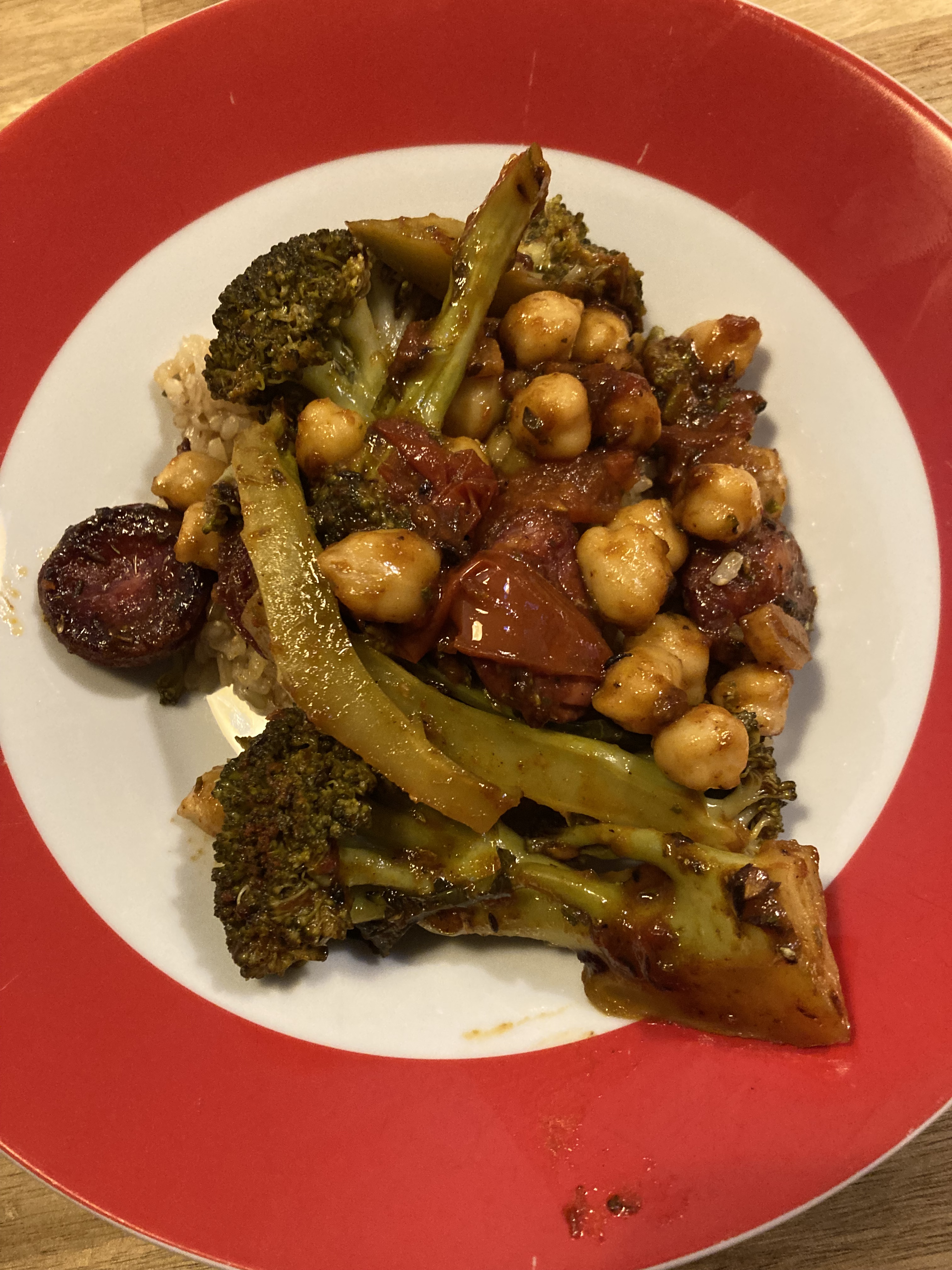
Dinner. Chorizo, broccoli, chick peas and tomatoes on rice.
Still awaiting the election result, with fingers and everything else crossed. Hope our two non-votes aren’t the difference!
With many days of rain forecast, D wondered if we might be stuck in this rather isolated cabin, as the hard surface track runs out about 300 metres further back. He said he’d go for a walk to check and came across some kind of ‘paintball event’…or lots of colored paint throwing, across all ages. Presume that’s the reason there’s plastic ties all along the route. Hiking routes are scattered around the nature reserve on which we border. We’ll give it (car going through water) a go…
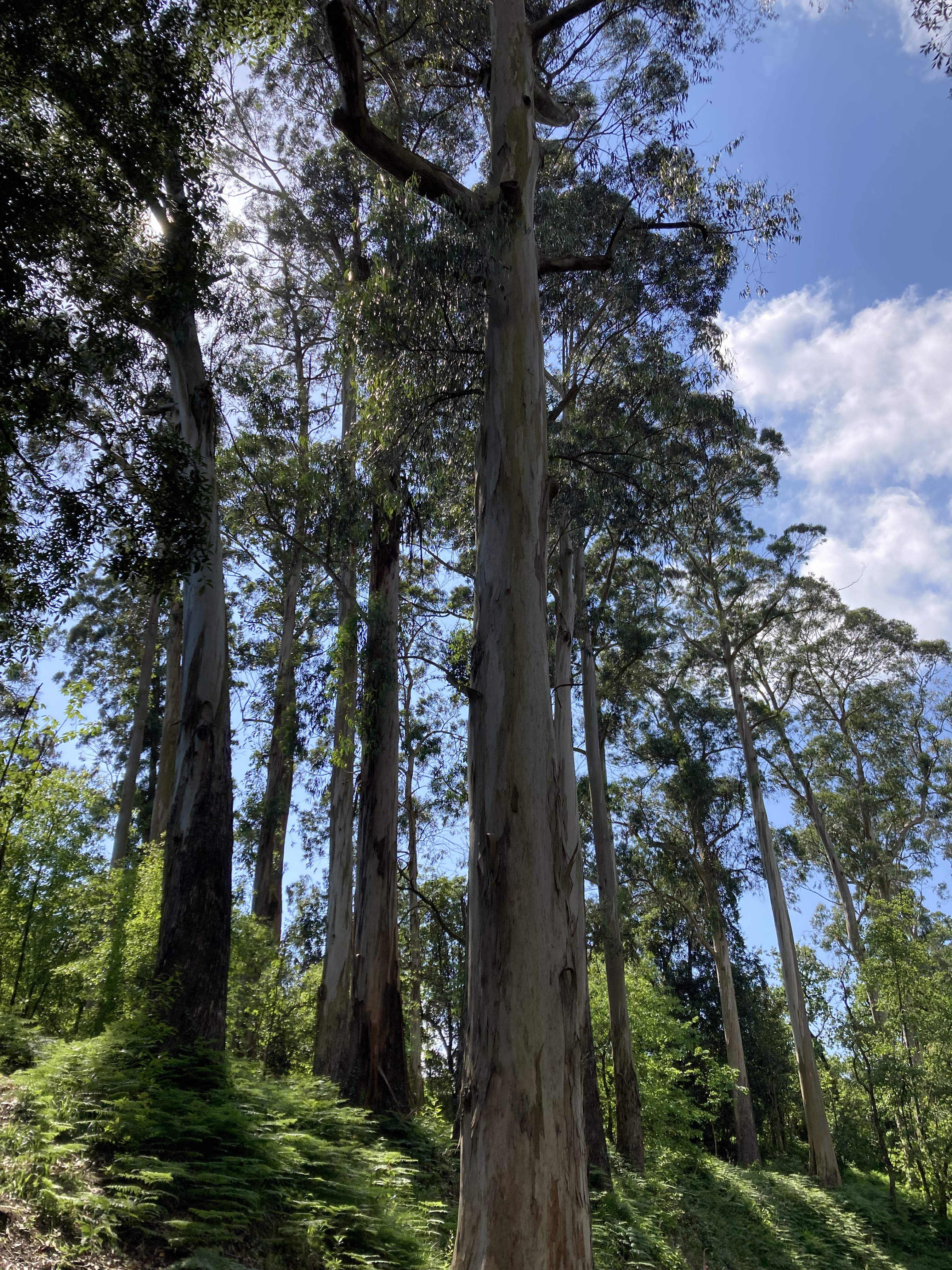
Made it to Valonglo railway station which is recommended as the way to get into Porto (rather than taking a car), then off to the Rio Douro, targeting Lever as our first destination.The roads wind high above the river and T is surprised that there’s little open ground at this point; it’s all or largely urbanized and with many manufacturing businesses. Blending with this there are forests of eucalypts and a bushfire had obviously been through in recent years. Small plots of vegies and grapes blend with housing.
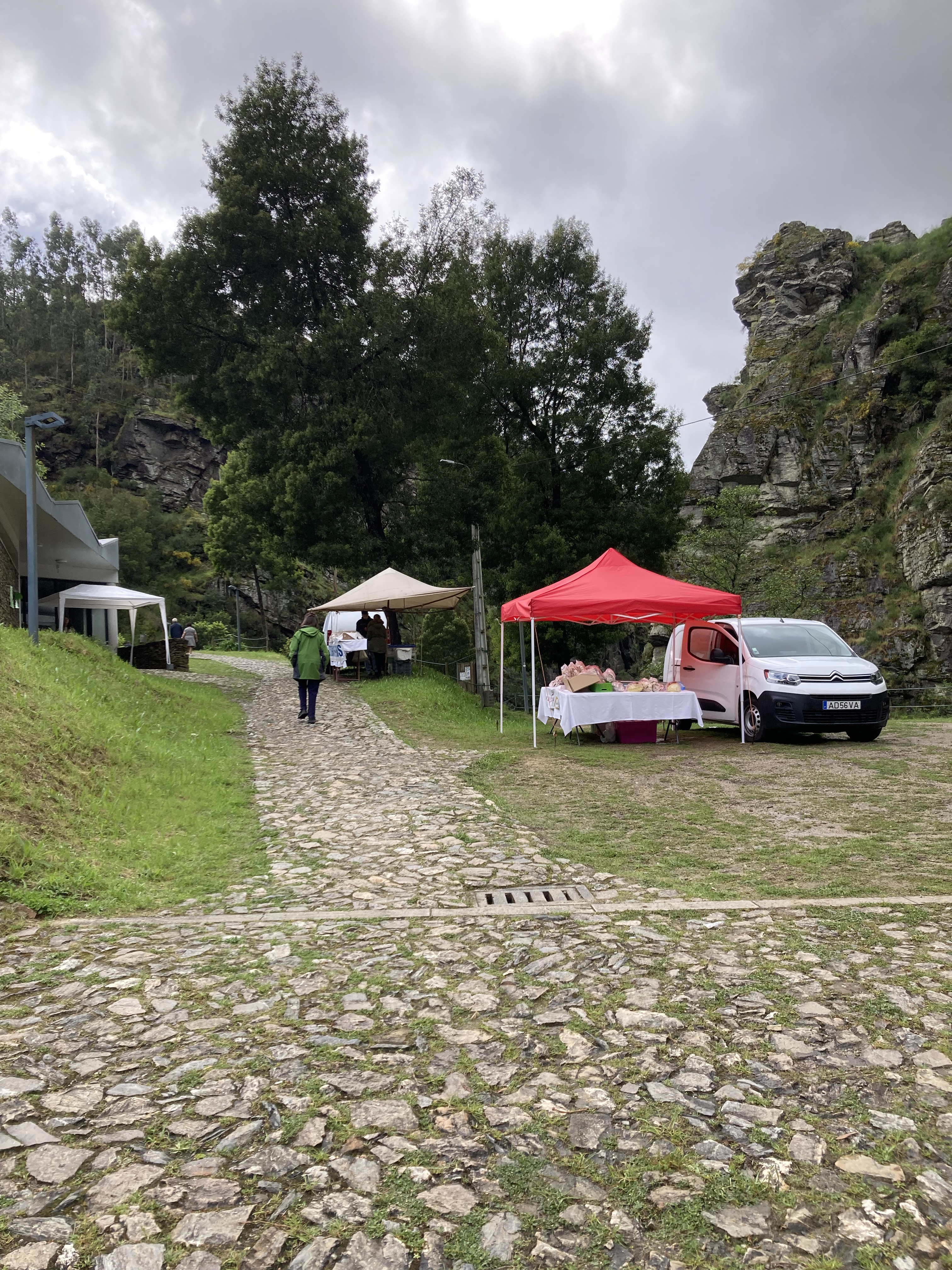
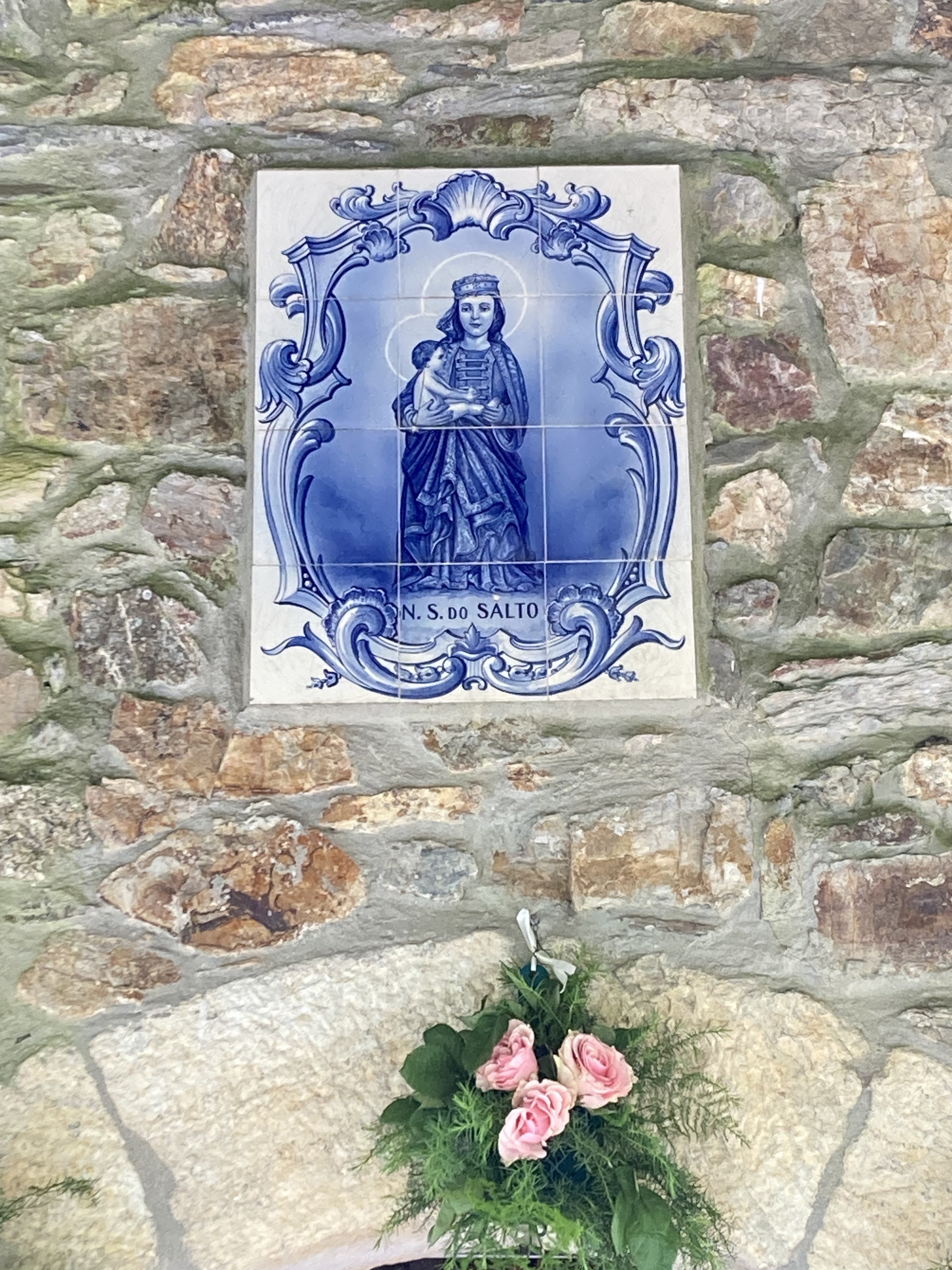
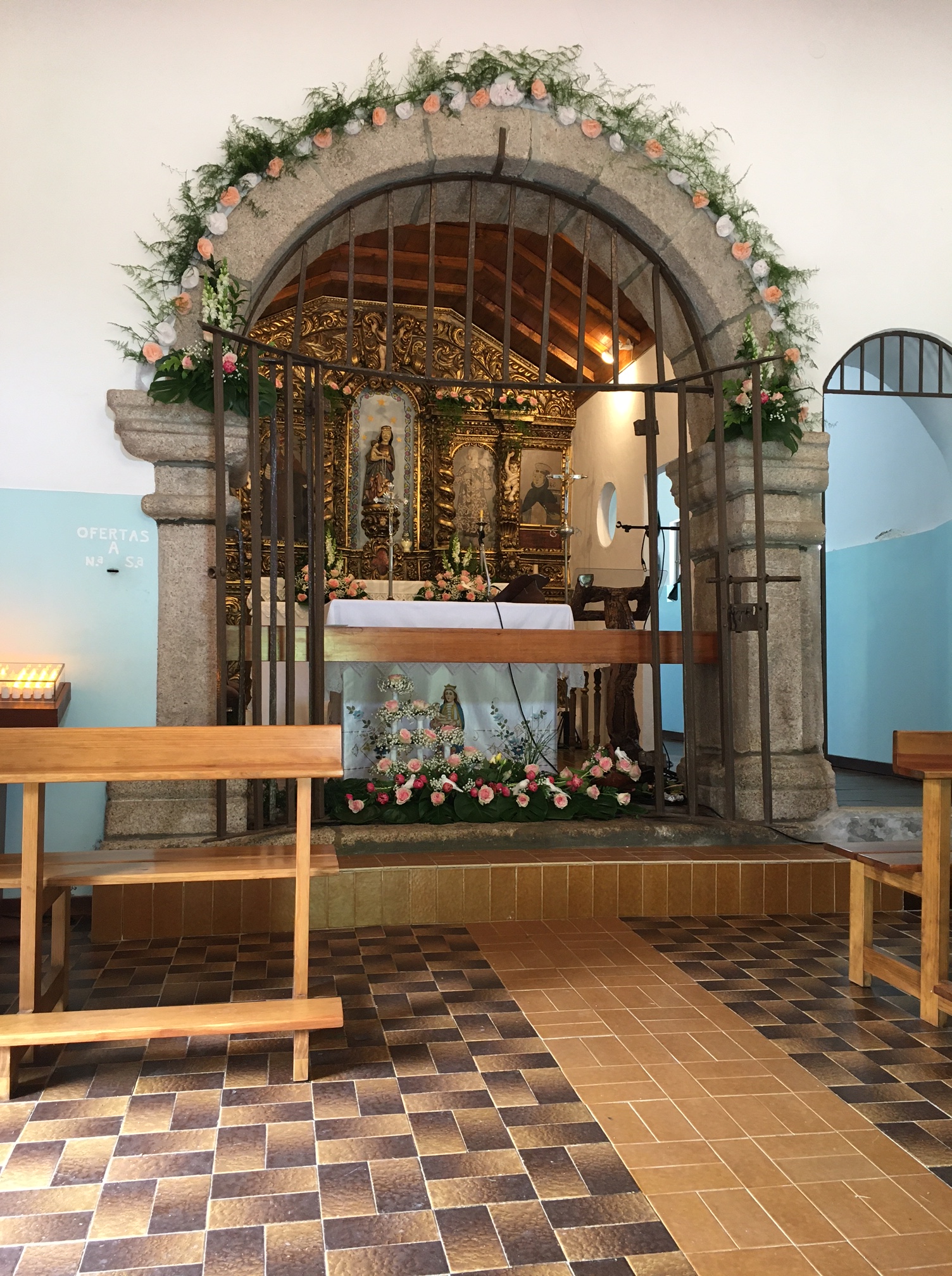
Then headed towards Penafiel, taking the Roman Route (Rota Romanico) (ancient gold mining) but detoured into a little spot well below the main road, where we could see some gazebos that looked like a market or fair. A steep cobbled walk down, to find that they were all selling biscuits/pastries/ bread and seemed to imagine a vast number of customers. T interrogated one of the stall holders to discover this was an annual event, where the Capel de Nossa Senhora do Salto is opened just once a year. It’s a celebration of a local saint and usually there’s a procession to the chapel but today, because of rain, there was no procession.
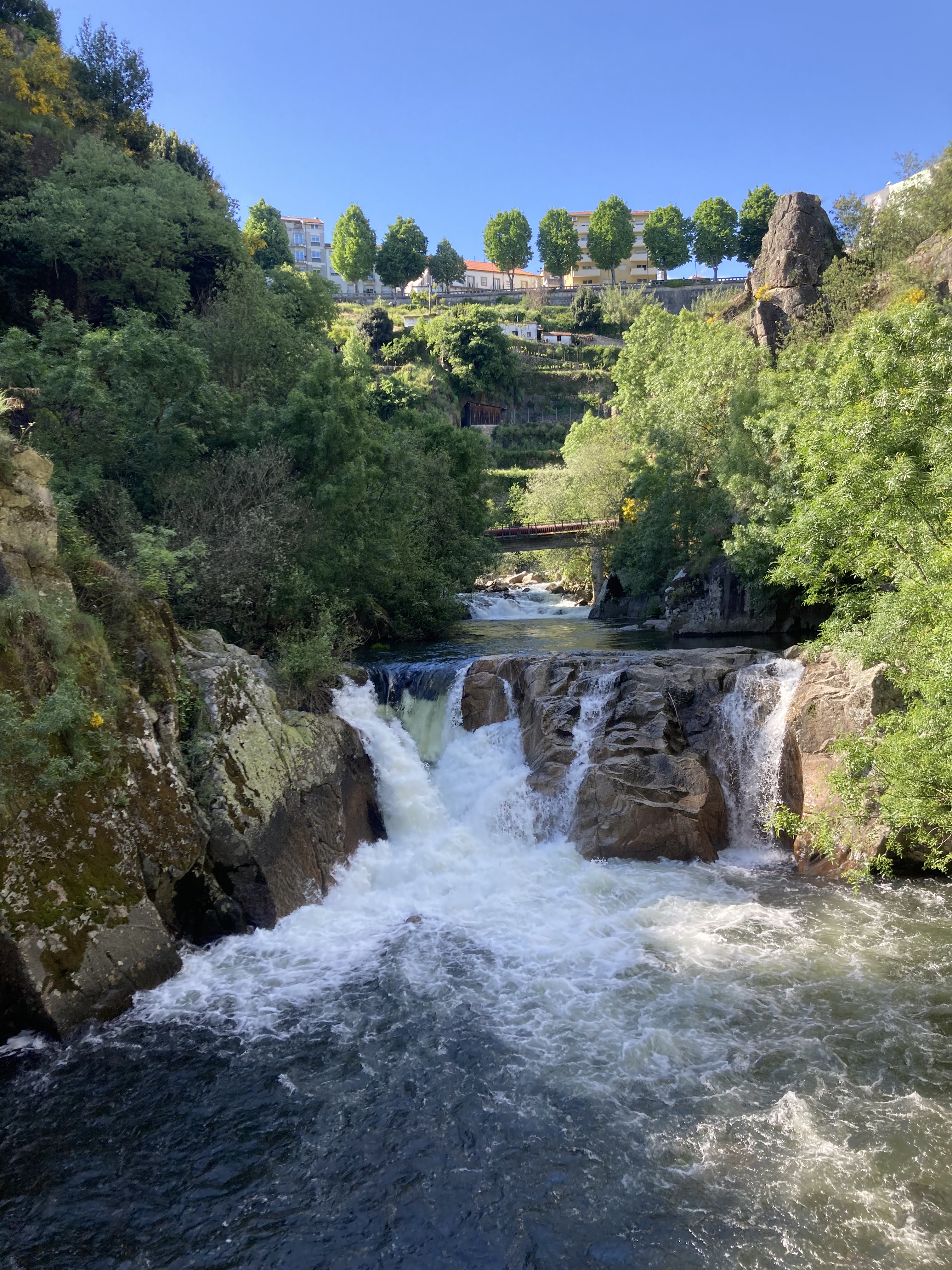
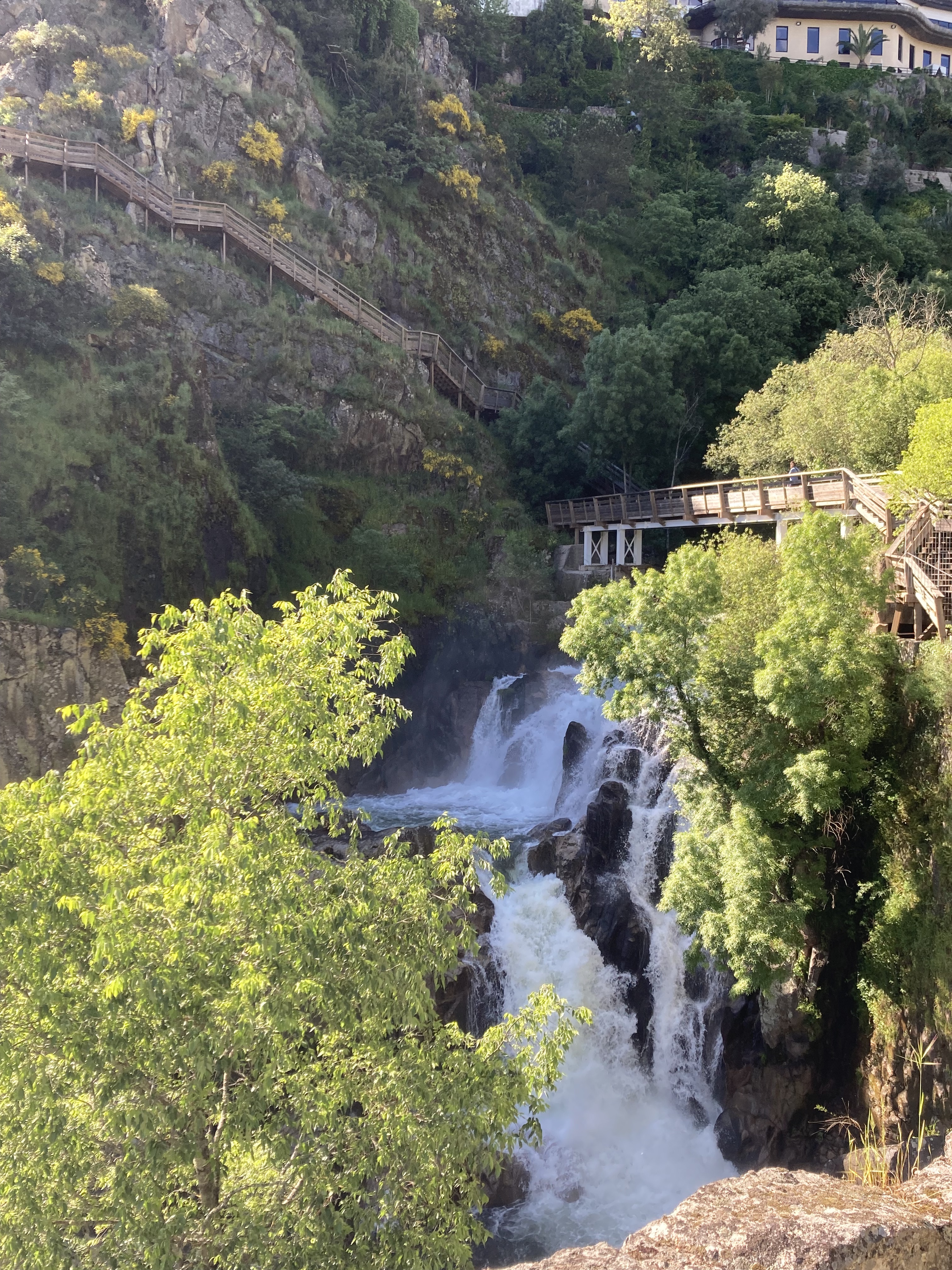
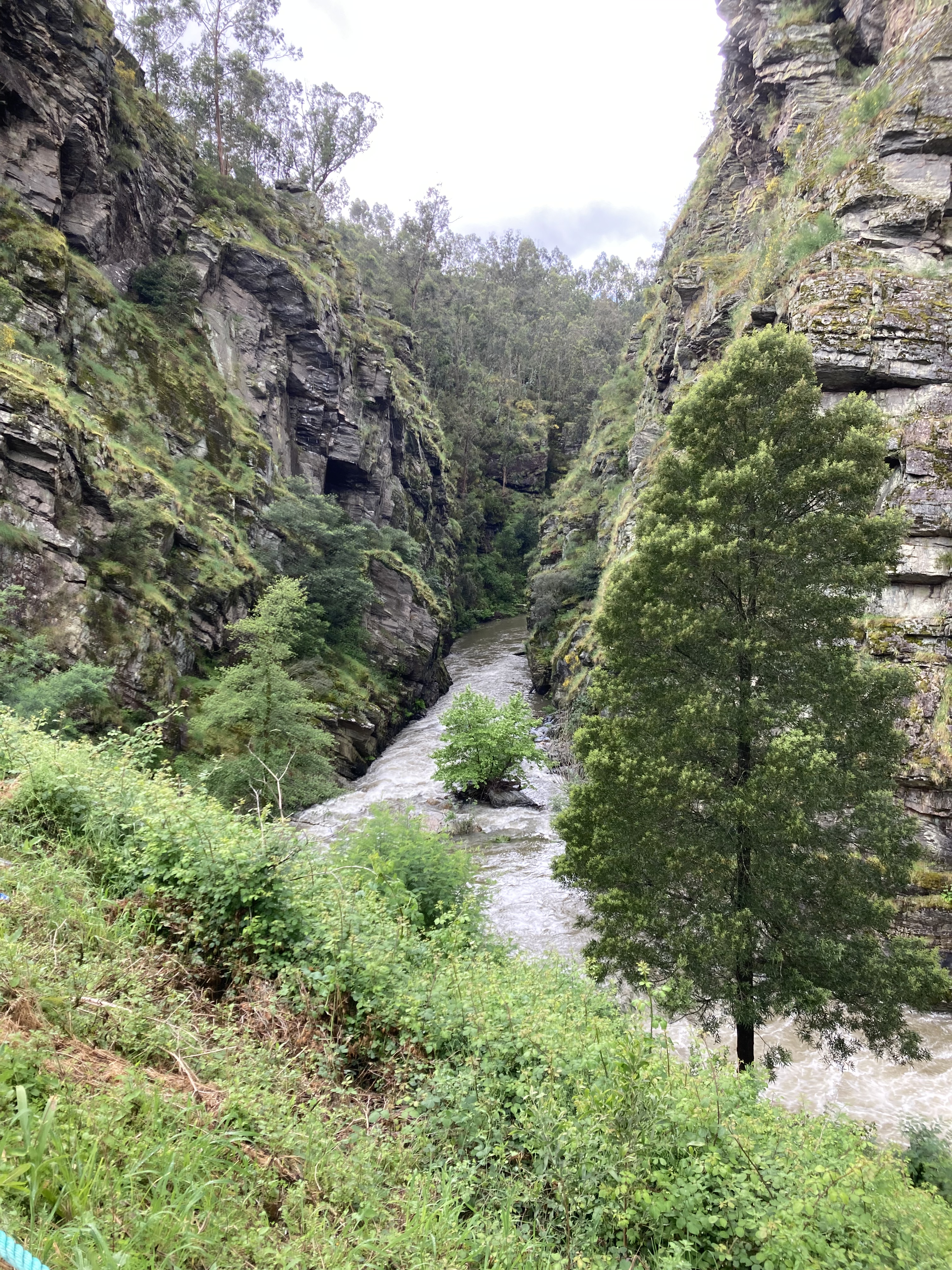
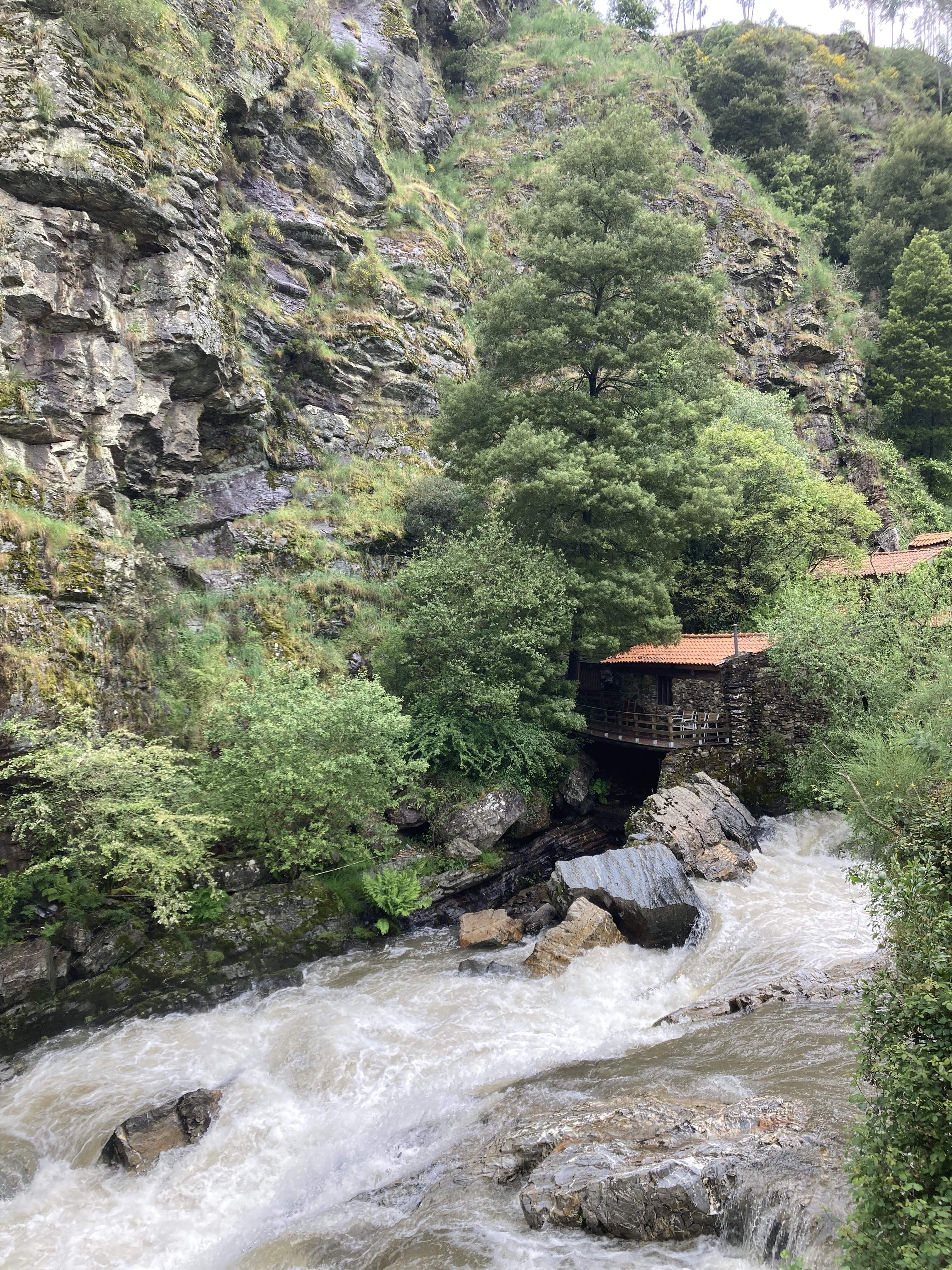
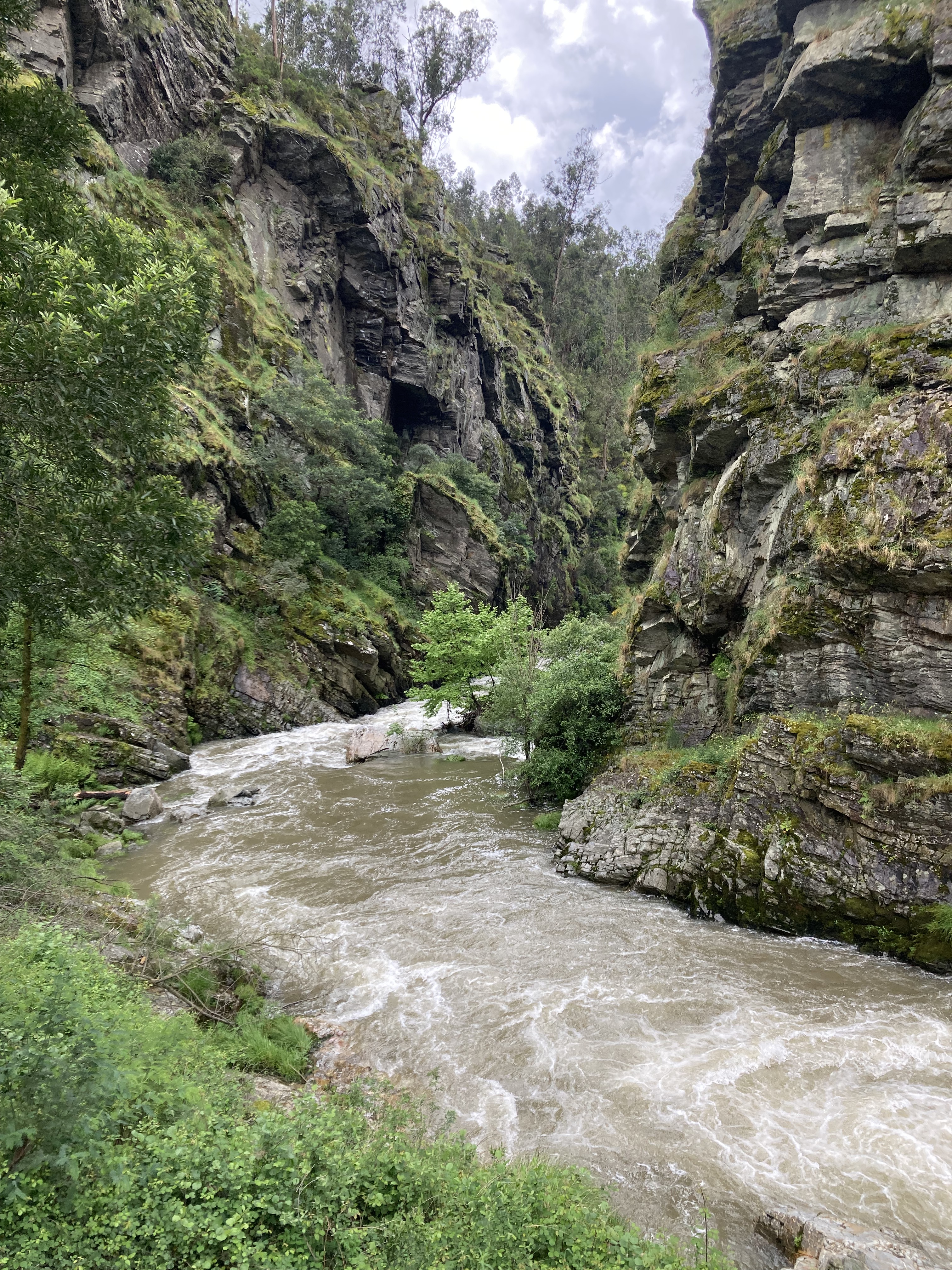
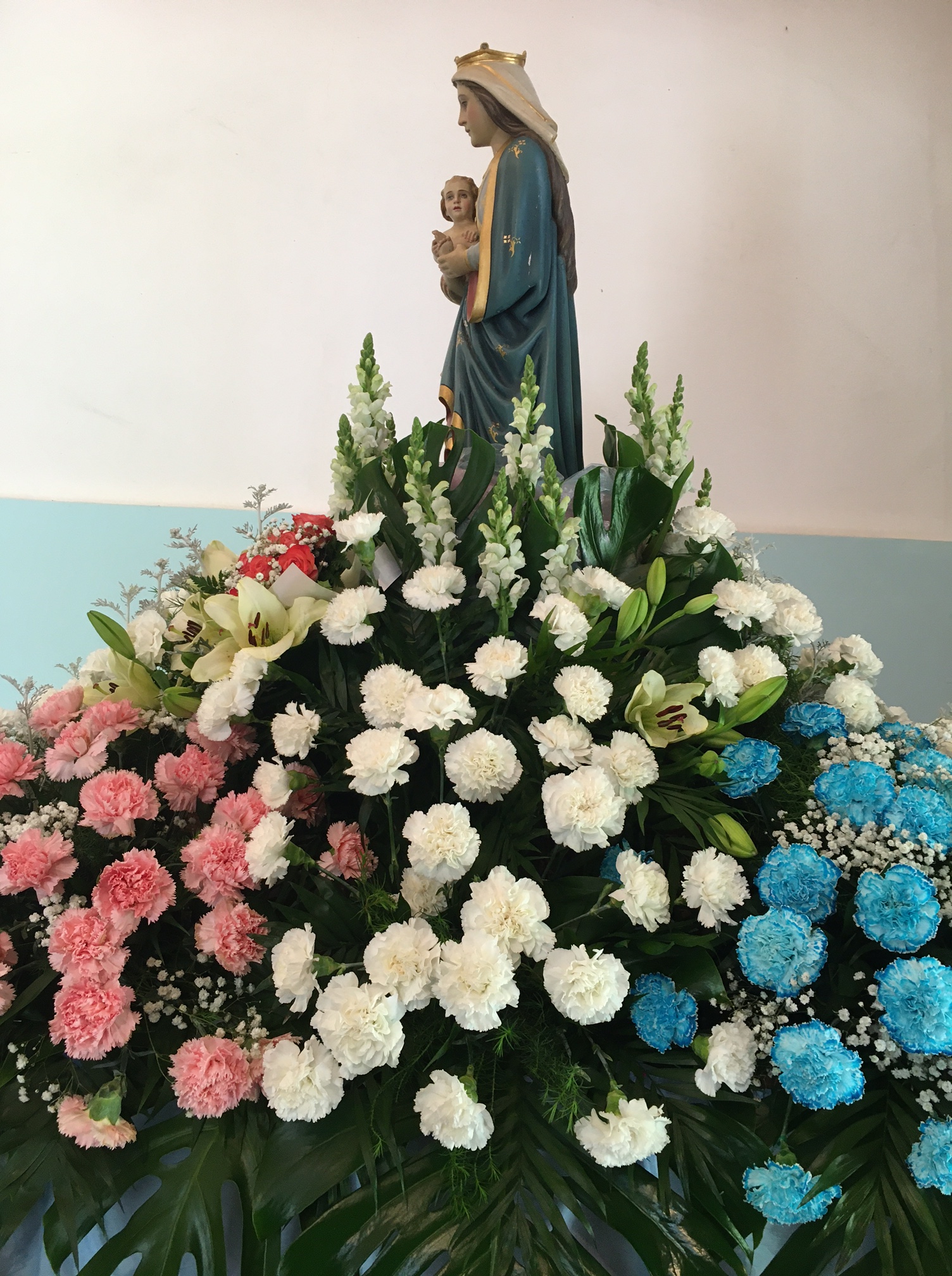
The chapel, in the Parque da Senhora do Salto, recognizes the legend of da Senhora do Salto which tells that a knight, chased by the devil, jumped off a cliff, but was saved by Our Lady, who appeared and rescued him. In gratitude, the knight ordered the construction of the chapel of Nossa Senhora do Salto on that site. The legend has two variants, a more dramatic one with the knight escaping and the other calmer, with the knight losing his balance and falling off the cliff. There was also mention on the fairly scant information boards of two lovers, so maybe the devil was an angry father?The chapel is tiny but was heavily decorated with carnations and roses and music was playing through a speaker setup. The music bounced off the canyon walls…pity it wasn’t a choir, T thought. The terrain was amazing, canyon and rushing water. Young and old folk arrived, climbing many steps to light a candle/offer a prayer.
Passed through Recarei and Crete, no particular destination in mind but, with constant rain, abandoned the winding road and headed for home, stopping at an Intermarche for tonight’s menu. D added a bag of briquettes to get a fire started. Heavy rain became heavier, then cleared to nothing – even the roads were dry the closer we got to home base.
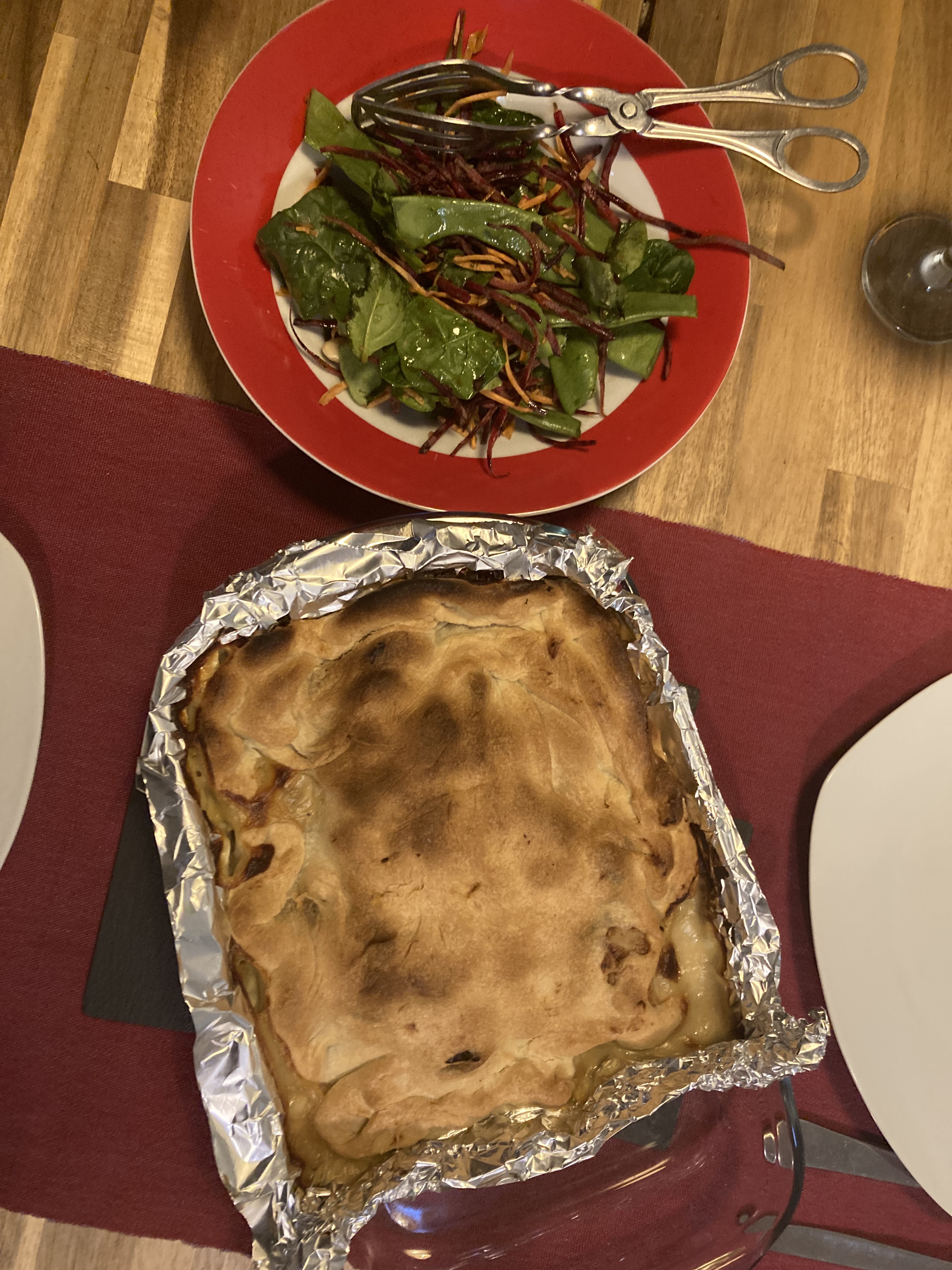
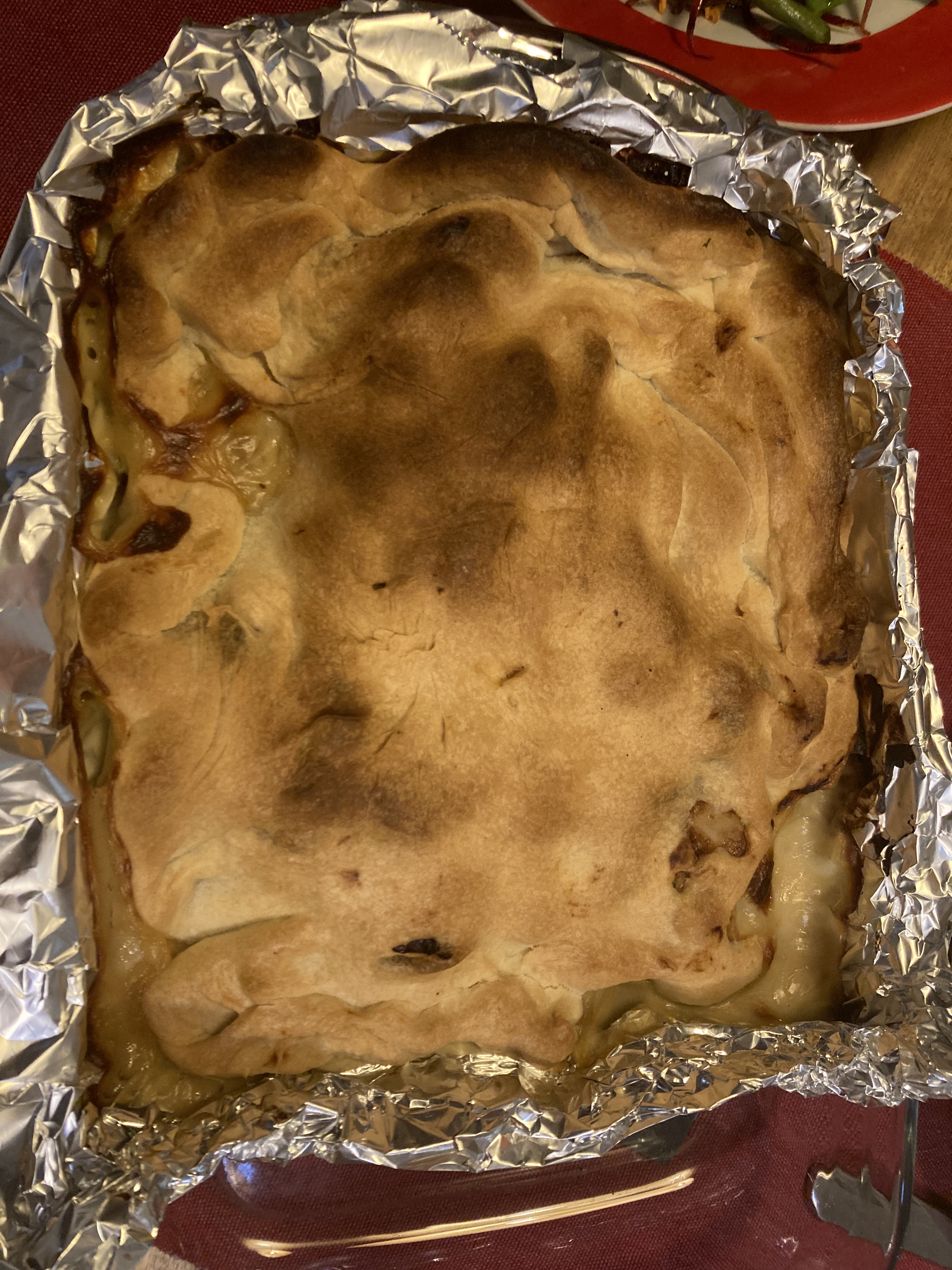
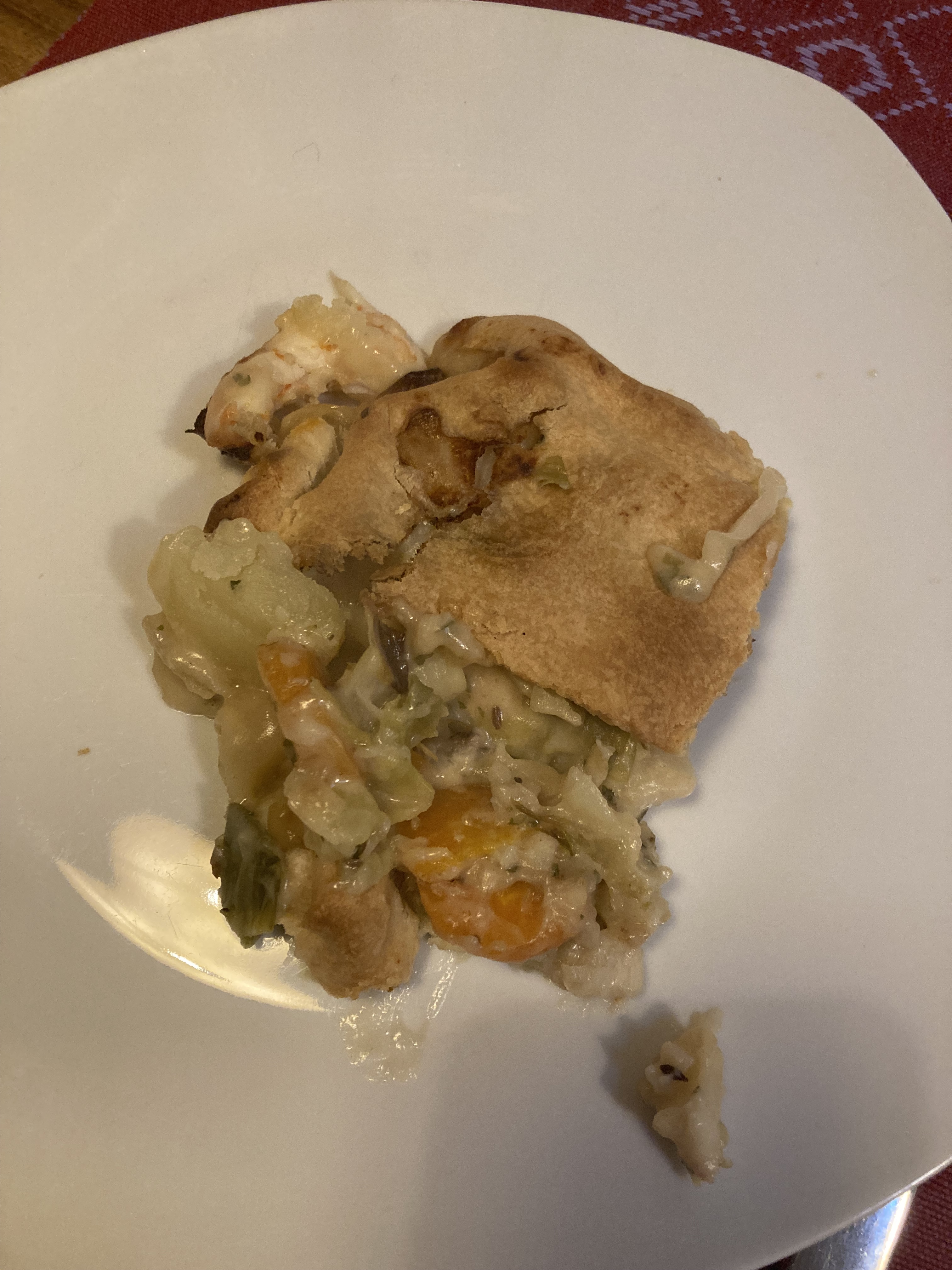
T had decided that a seafood pie would be nice: a piece of white fish and handful of prawns would go with some of that ‘never-ending bag of baby calamari’ and the challenge would be to make pastry. Which was done (a blender was in a corner cupboard). Fire was over-successful and front door had to open to let some fresh air!
Another damp morning but we departed Montedor at about 1030, as results were just coming in – but nothing to indicate the outcome. We arrived at our destination around 1530 to learn the likely result, but the most important news was that our dear (orange) Jessie was likely to win in the electorate of Bean. 👏
Since our new destination was only 90 km from Montedor – about a couple of hours – we could and did visit Ponte de Lima, a trip aborted yesterday. 40 km, so an easy drive, until you get into the traffic at Viana do Costello and then Ponte de Lima! But the parking area was huge – so we went straight into a spot beside the river.
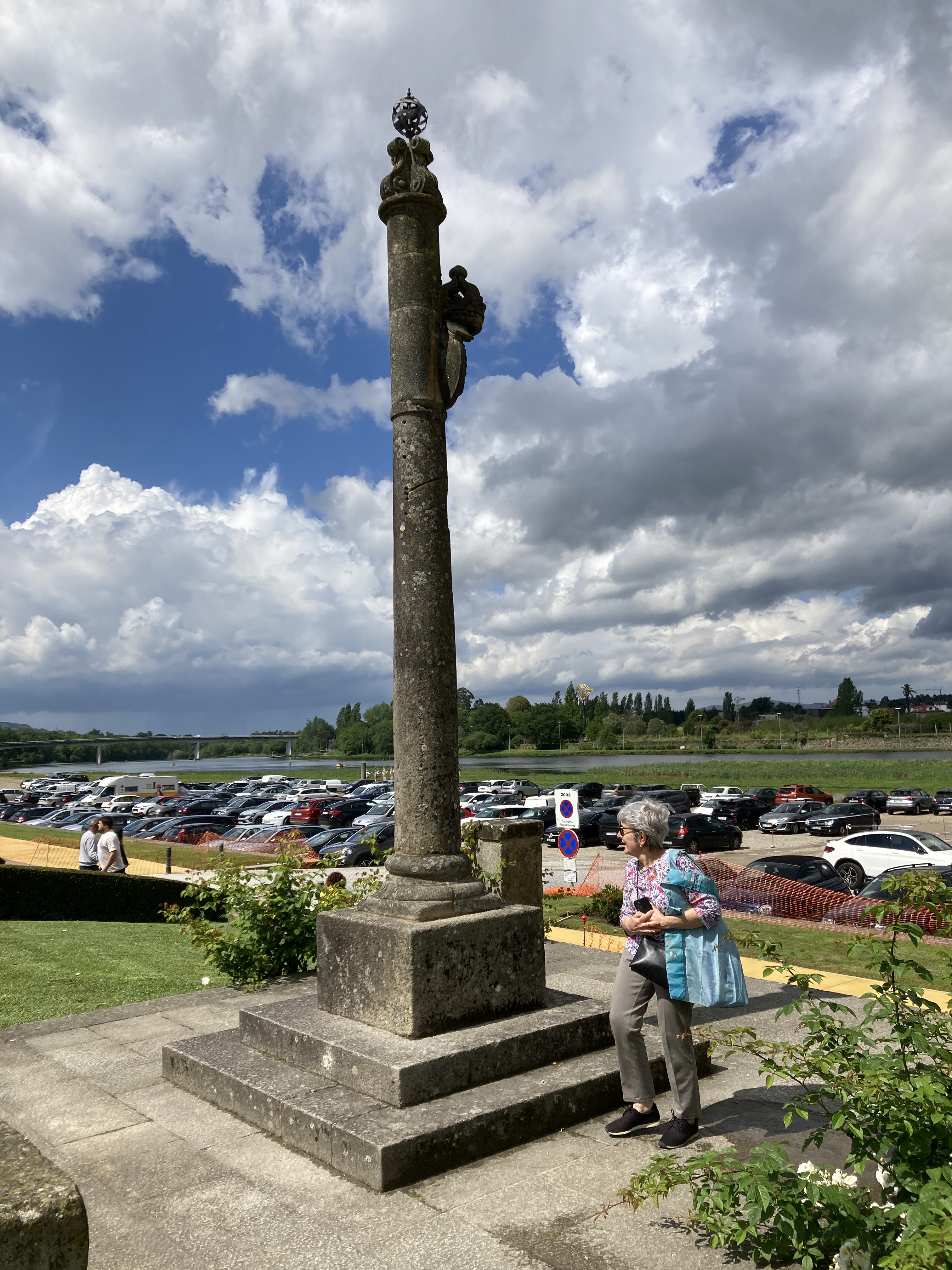
Stopped at an old pillory and got talking to a woman of about our age from Brazil. Had a lovely conversation covering language (she had some, but quite enough, English to communicate), colonizing, travel.
Walked across the lovely Roman bridge to the starting point, kayakers doing their training thing below on the Rio Lima. Another church of course, Igreja de Santo Antonio da Torre Velha and a statue of Santiago.
‘I have a question….’
One of the Caminos starts here – it’s 159 km to Santiago de Compostela. We have seen lots of pilgrims in the last couple of days, and lots more today, and surprisingly quite a few of mature age.
We came across an old guy at a Camino souvenir business, which might also have been the official start poin; he was putting on a performance, we think to send walkers on their way.
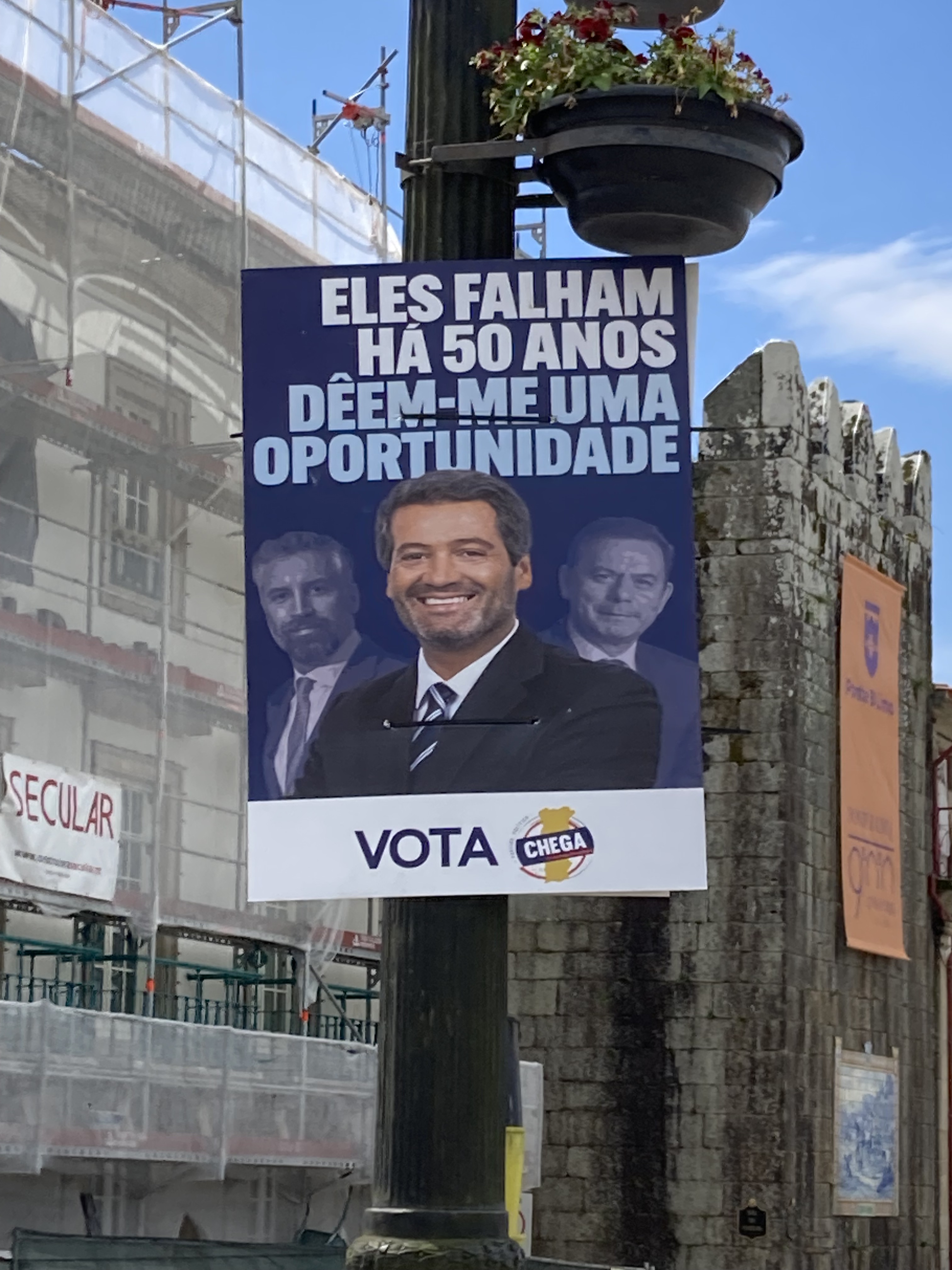
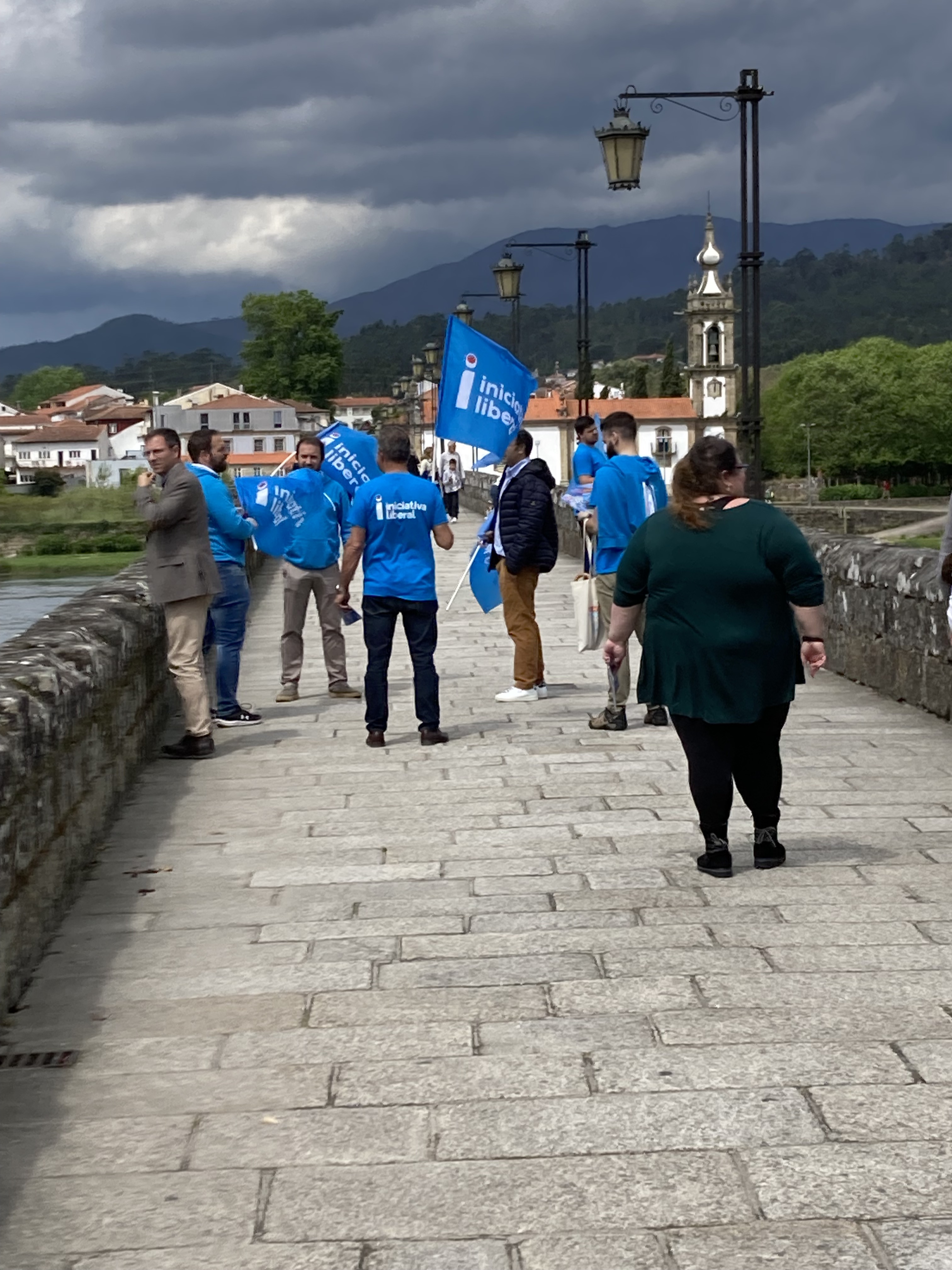
On our way back we were faced with a small election rally – Portuguese elections are on 18 May. Very low key, more fun than passion. Apparently the current Government is slightly right, and there have been signs suggesting corruption. Who would have thought? But we have no idea what the situation is, or the issues, although we suspect energy reliability may become a feature. Hold that thought.
The esplanade for coffee was buzzing with cafes and local food stalls (all shades of chorizo, black to pale) calling to us. T wanted to do a really authentic dish (adapted) tonight, using baby squid from previous purchase + local chorizo + potatoes and tomatoes. The town reminded us of some British/Tudor towns: the bright colours of southern Portugal not evident and architecture less ‘square’. And the day was damp grey.
The next stage to the Watermillhouse Cottage, Campo in a Nature Reserve east of Porto, was a couple of hours – a bit longer when Doris got lost after our stop for supplies. But we arrived; we had been advised that the last section was a bit rough, and it was, but Josie managed stoically, albeit with lots of alarms and annoyed sounds as the daisies touched her sides!
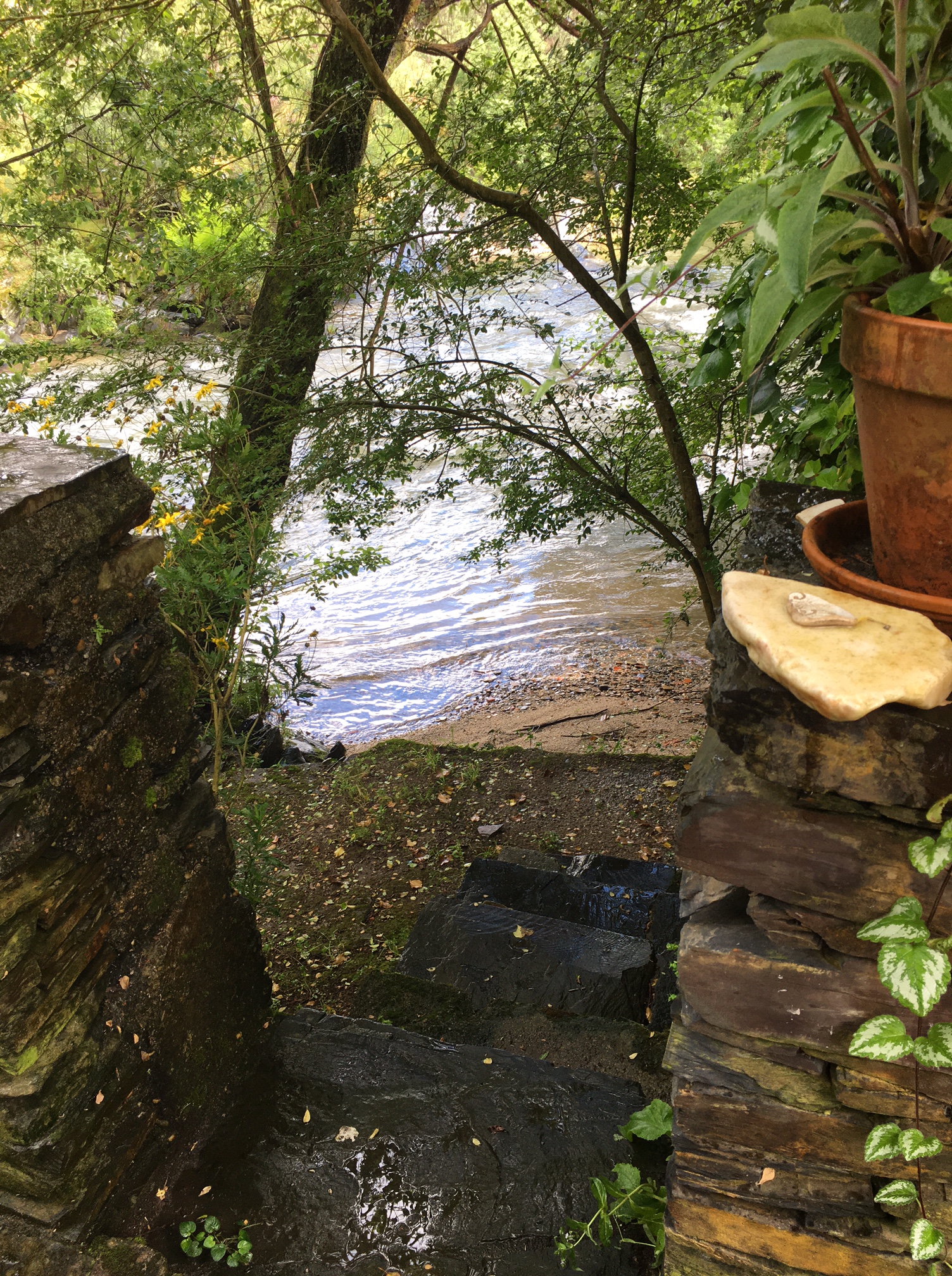
Another ‘fantasy’ accommodation with a rushing stream beneath (could be tricky at night), no neighbours, a woodland garden and soft rain. Still manifesting those lotto numbers!
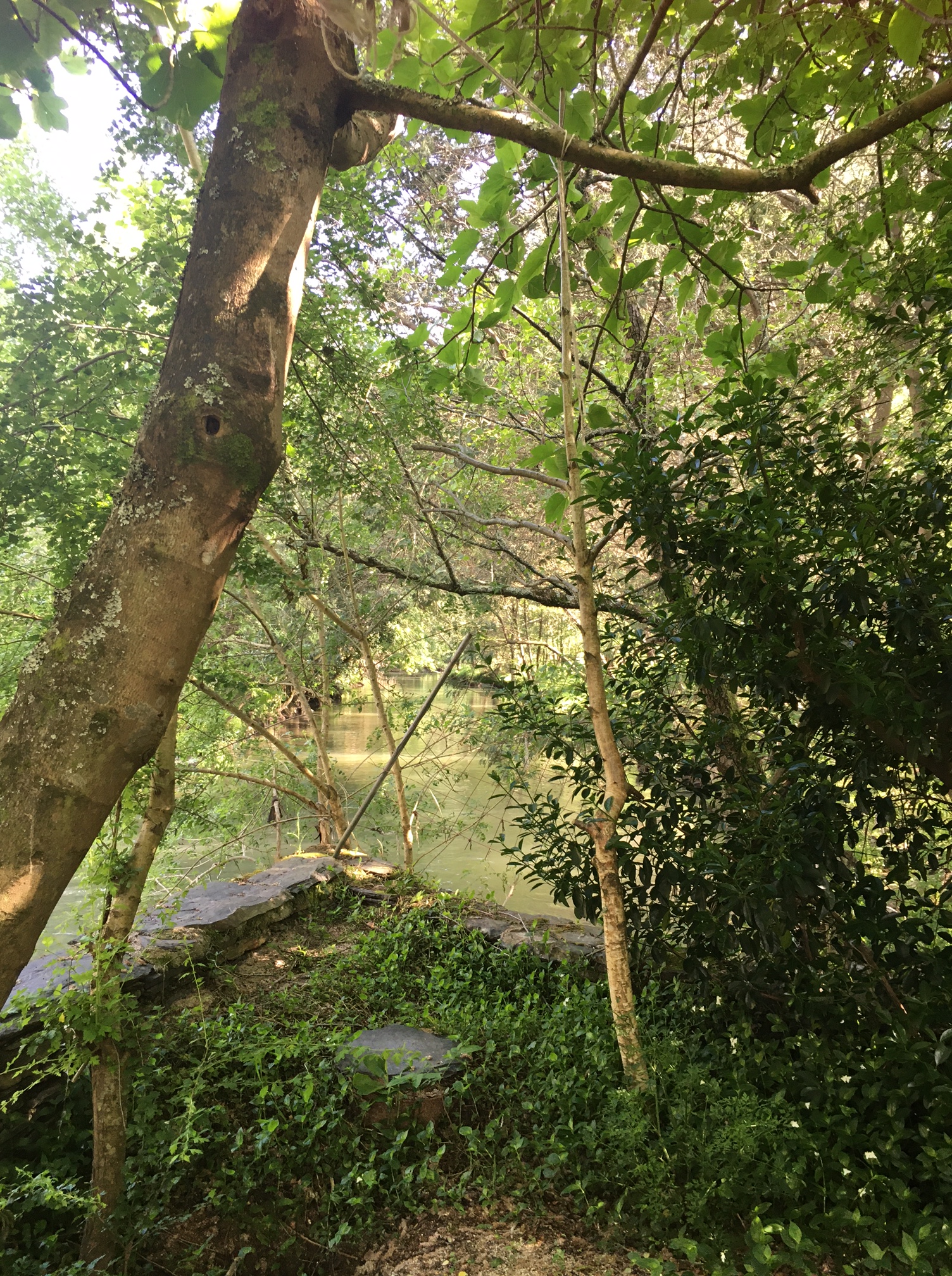
Perhaps not today.This lash up gets D’s seal of approval, but could have used more string.A bit rough….Probably won’t go swimming in there.
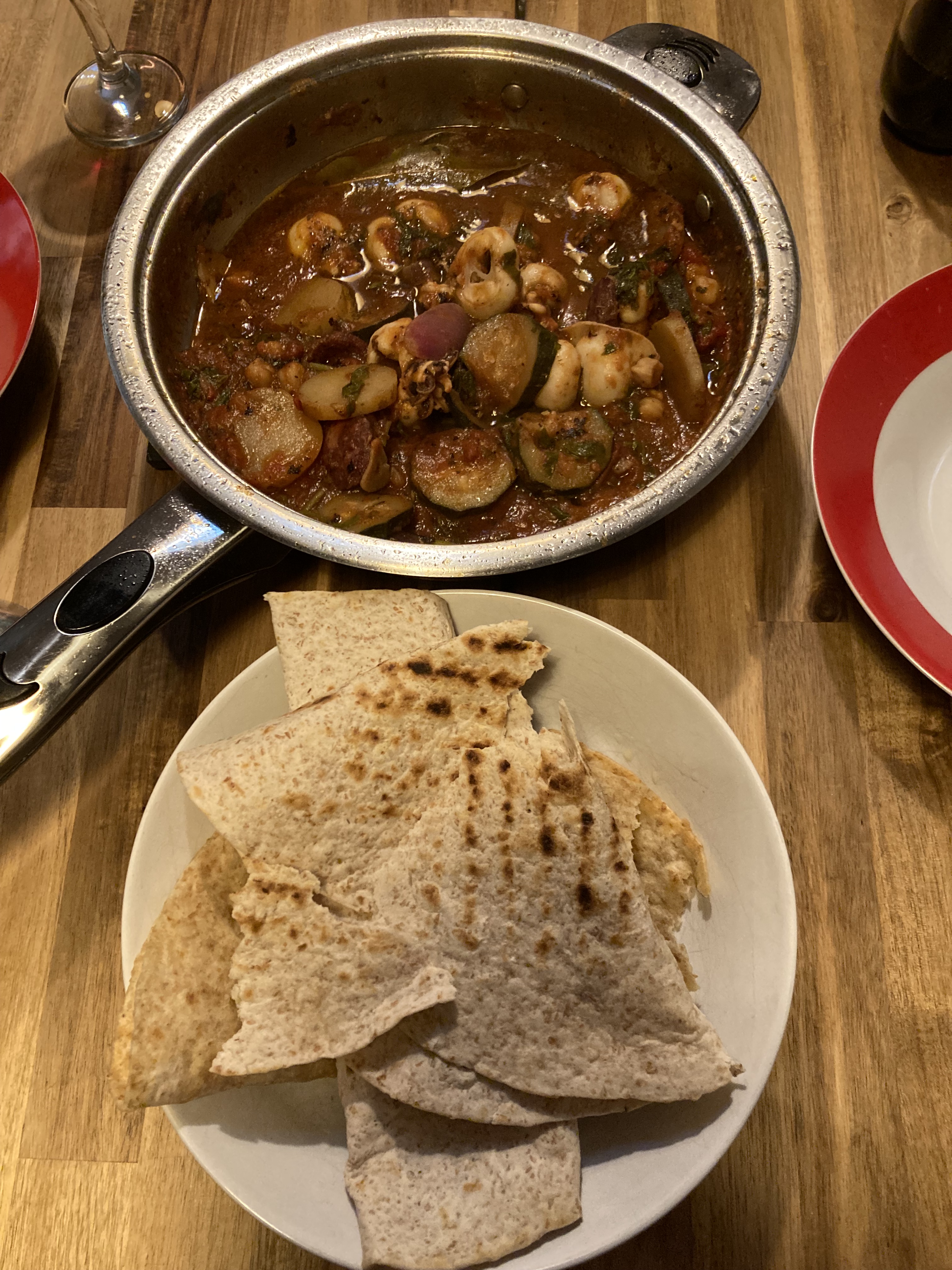
Dinner. Adapted, Authentic Portuguese calamari stew: calamari, chorizo corrente de vinho, onion, garlic, tomatoes, potatoes, red wine, herbs and spices.
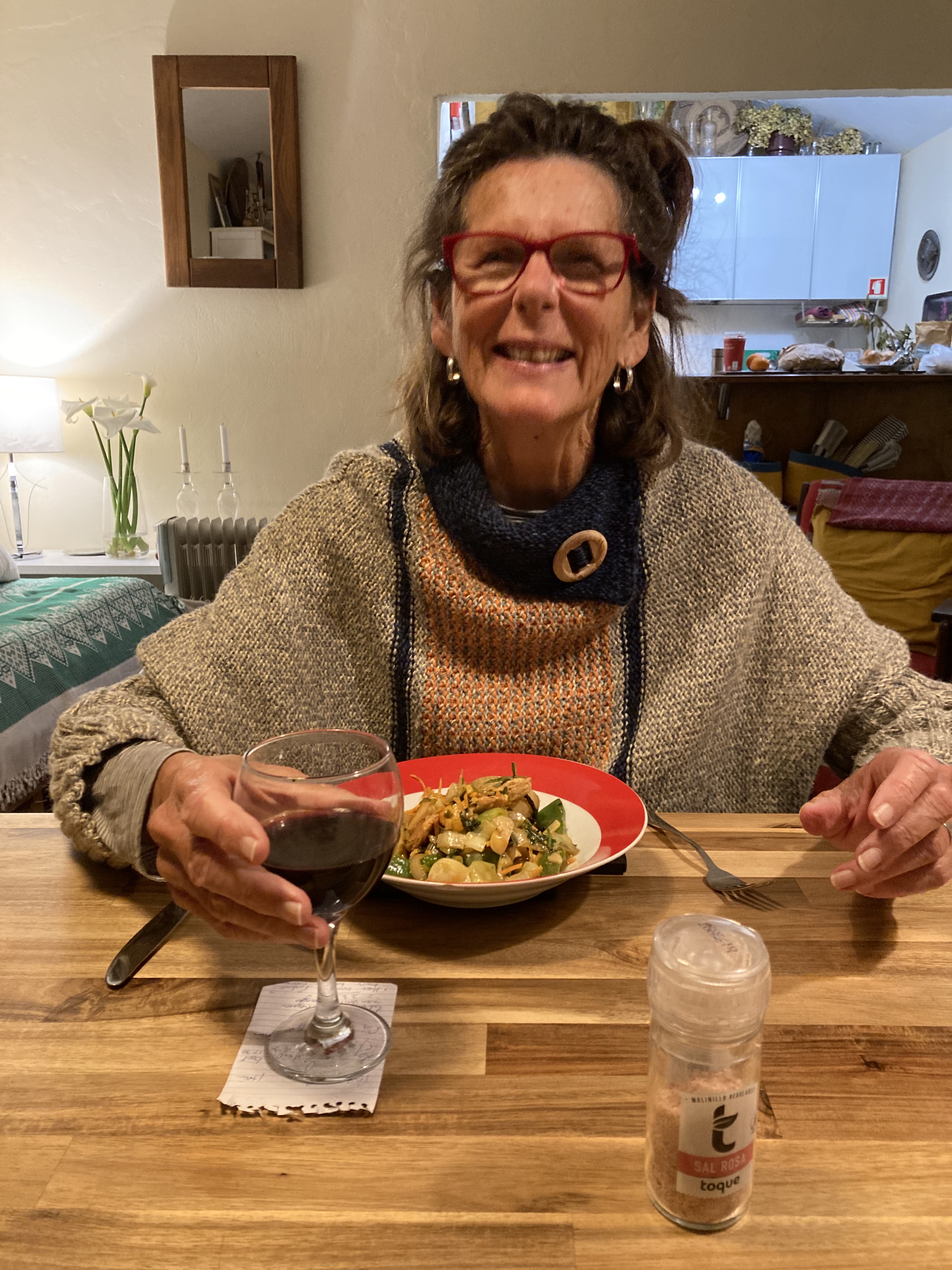
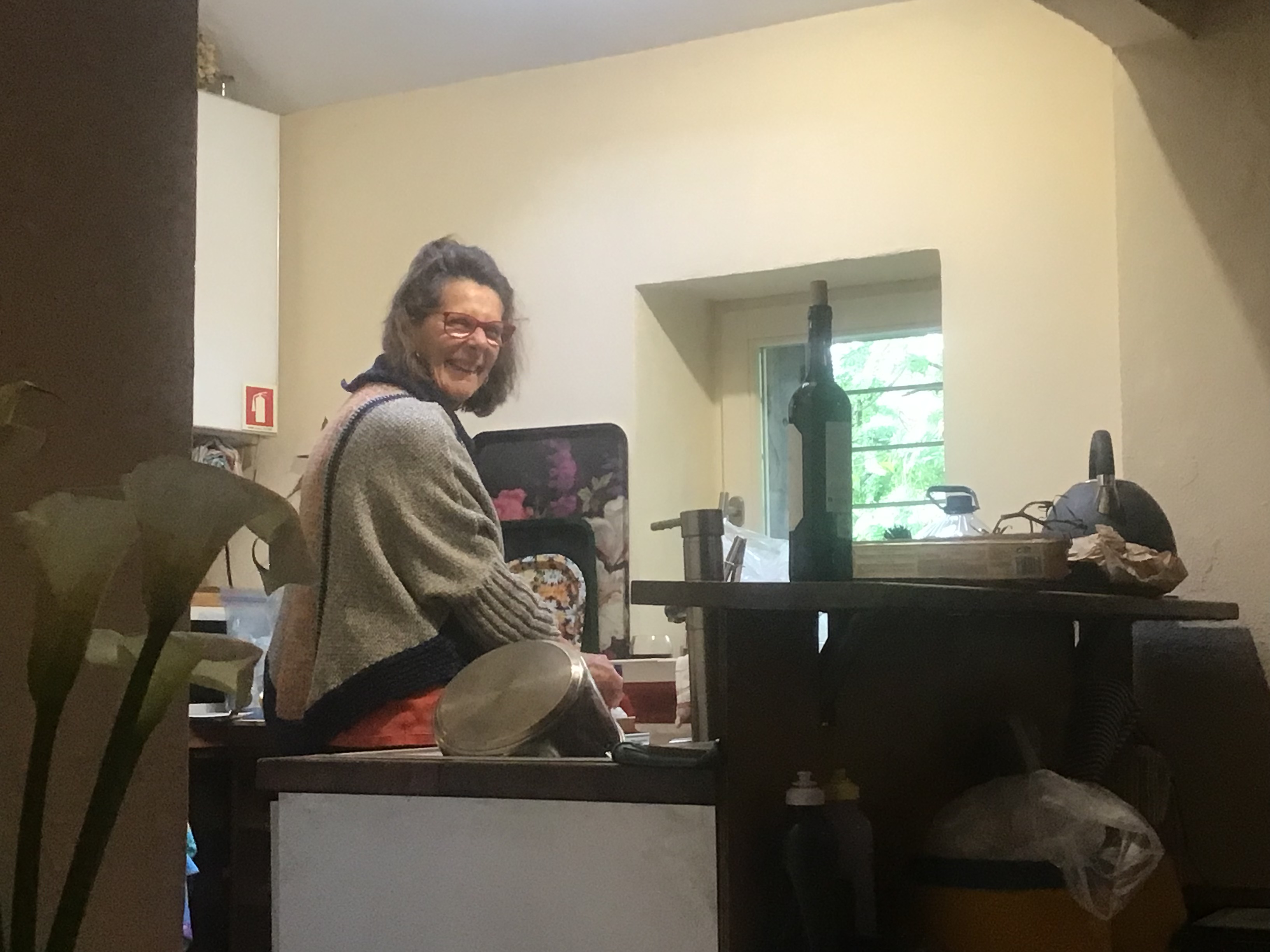
Starting to cook – in my nice new jumper.Cooking nicely.Ready to eat.


























































 Travels with and without Gloria