Azanza #2

Day 76. Thursday 22 May.

Day started with a car check…yes, she started first press! D told Doris that we want the route to the Peugeot shop in Pamplona provided by the Peugeot breakdown team. We’ll see what she delivers. It had turned cold & damp overnight in the Azanza hills, so coats on.

Joan phoned to say she’d be on a later train out of Barcelona (think she had a big sleep-in). Perfect really, as this would give us more time to sort car stuff.

Doris took several strange turns and we came to an industrial precinct with ‘nothing to do with cars’. So, new research and off we went in an opposite direction. At the correct location, D ‘spoke’ to service attendant, using the translated story he’d typed up. As sort of expected, there was no way the car could be fitted into the workshop schedule! (In a similar situation with the Ranger, the workshop foreman came out, had a look, hitched up the computer, identified the problem and sent D on his way in about 20 minutes). D sought advice, which was to just keep driving…I guess with fingers and toes crossed. Not, in D’s opinion, a good look for Peugeot, although we are reassured by the breakdown team’s excellent response.

Joan phoned again…she’d be on a later train…some mix-up with stations in Barcelona but a very kind young man on staff had sorted out the problem, settled her in the lounge and made sure she got on to the right train. 

This meant an afternoon to explore Pamplona or rather, get some maps and tourist information ahead of meeting Joan.

First parking spot seemed to be a paid affair and as we stood like dumb tourists at the vending machine, a gentleman approached and told us where we could have a free 24 hour park. Google maps to the rescue and after ‘Gracias’ (several), it was back to our parked vehicle. The gentleman kind of walked with us and as we opened the doors, so did he open the back door preparing to get in !!! A moment of confusion (panic)…was this some sort of hijack? No, he was simply a friendly chap who was offering to guide us to the free park. A perfect Ove type! We thanked him and said Doris would get us there, notwithstanding her patchy record.
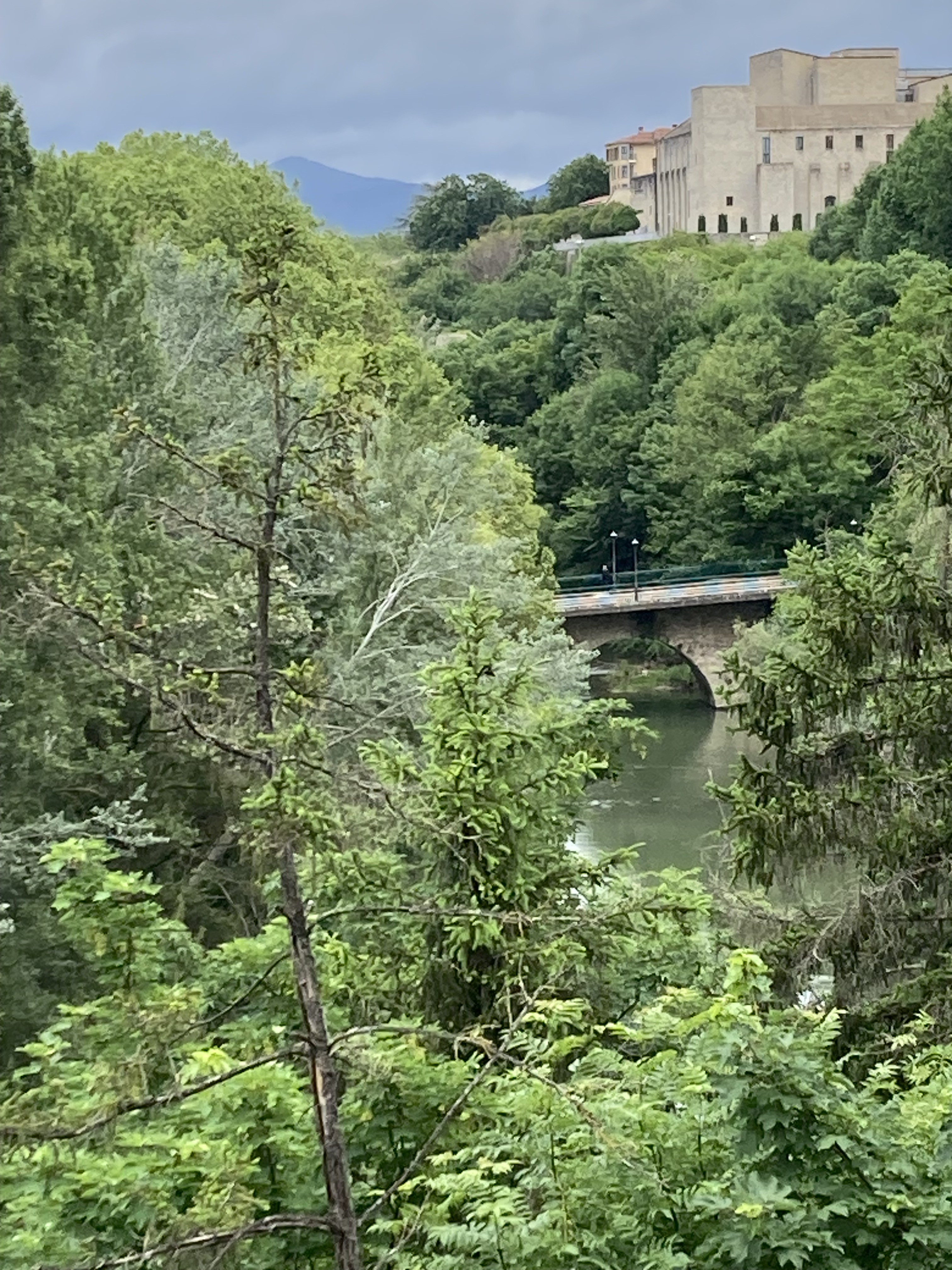
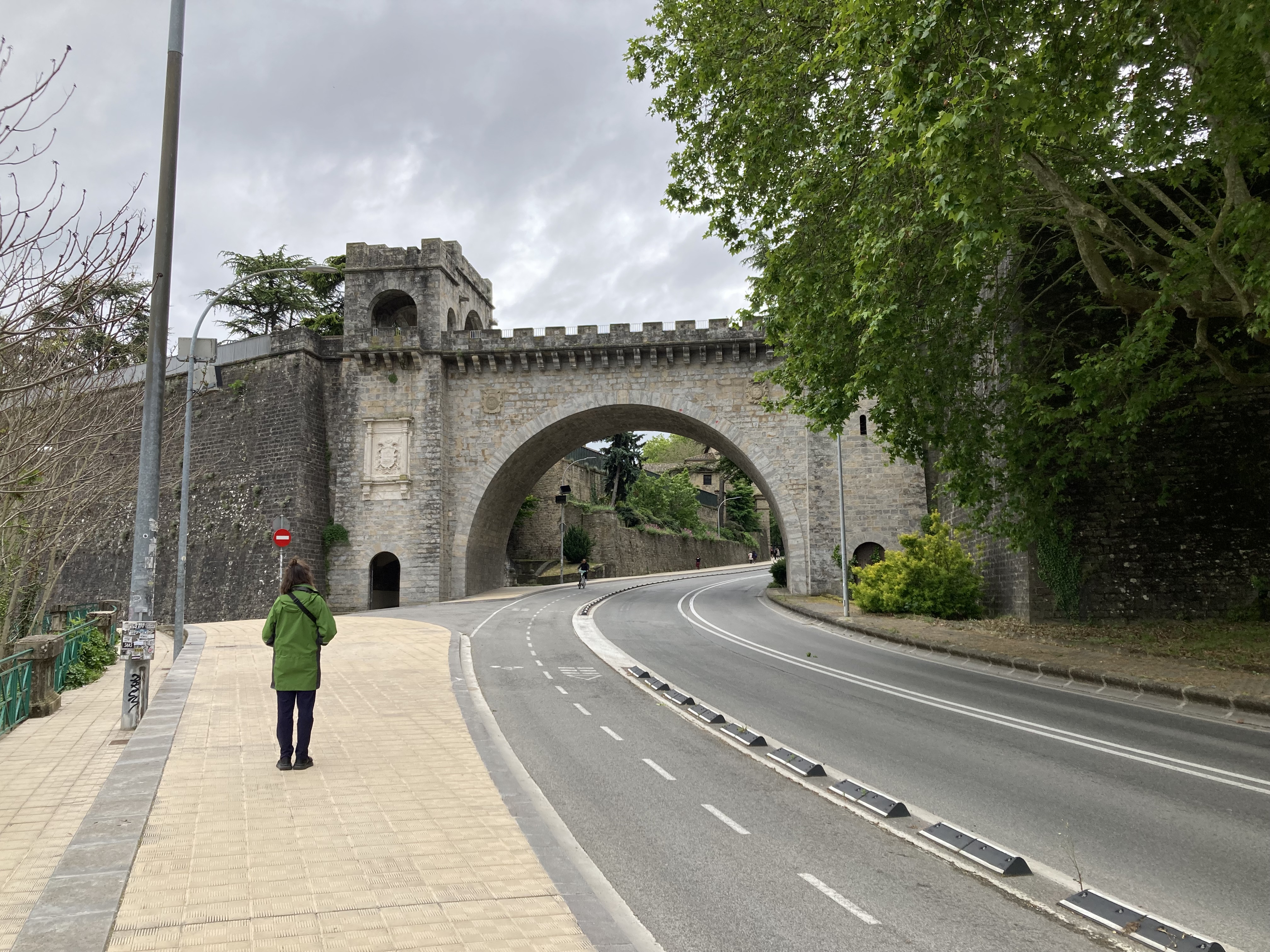
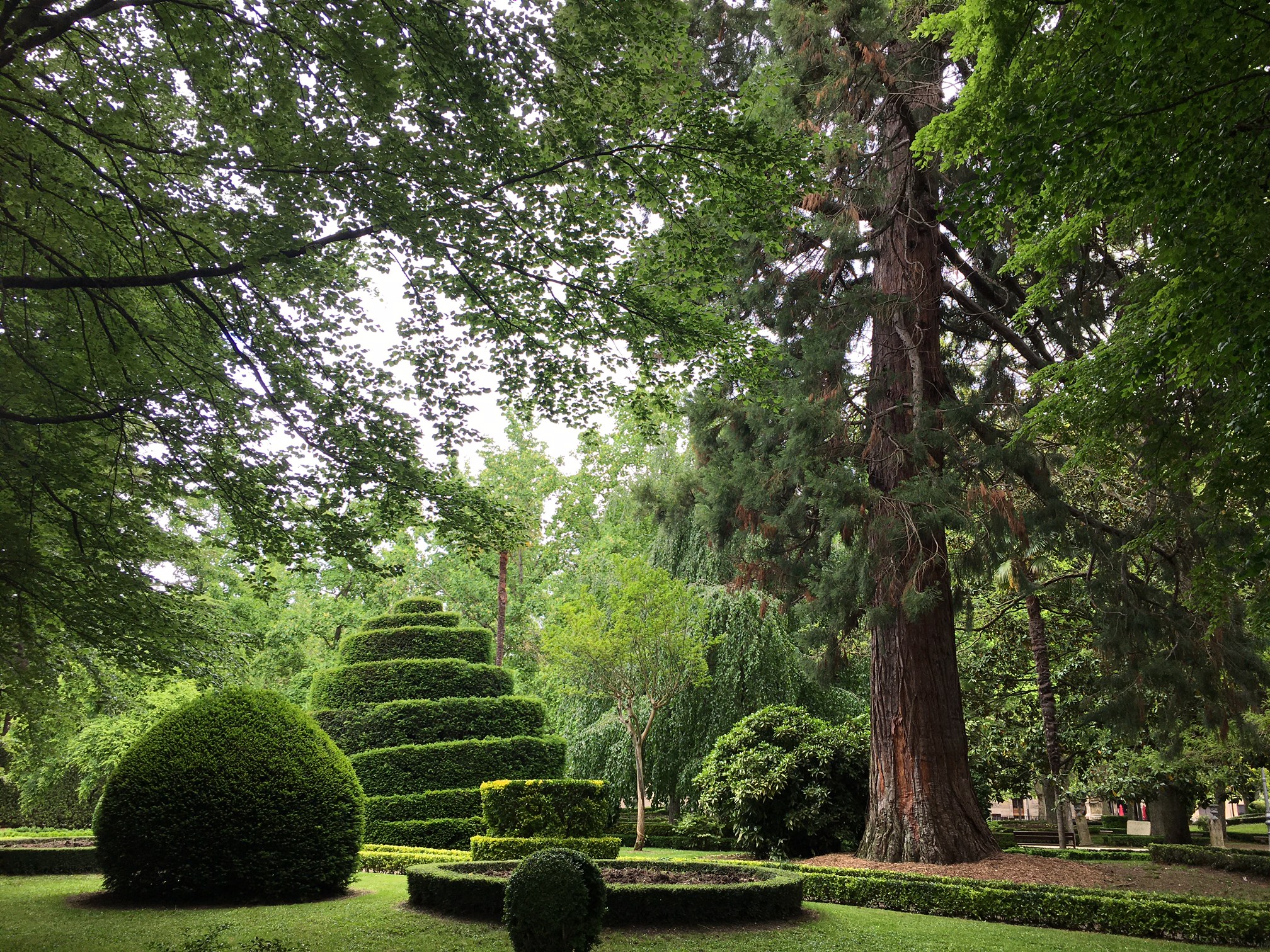
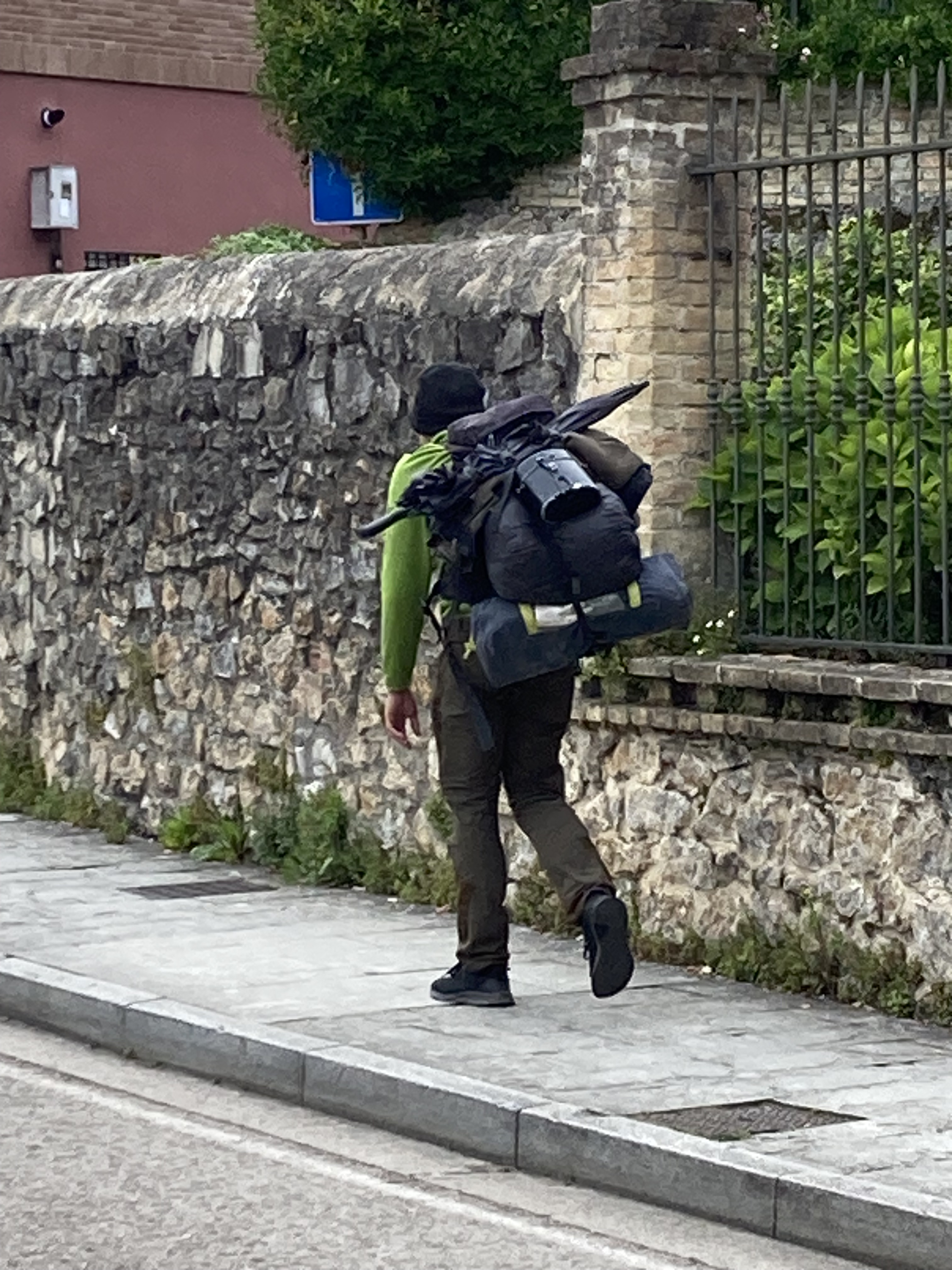
We got to the old town, re-fuelled ourselves with quiche, tortilla and coffees, found the tourist office closed (re-opened at 3 pm), got some advice, strolled for a while and returned to the car through a lovely park, serenaded by the harsh call of peacocks. Enough walking for the day even though we’re not on a Camino – and we took pity on some walkers who were, with 1800 km to go!

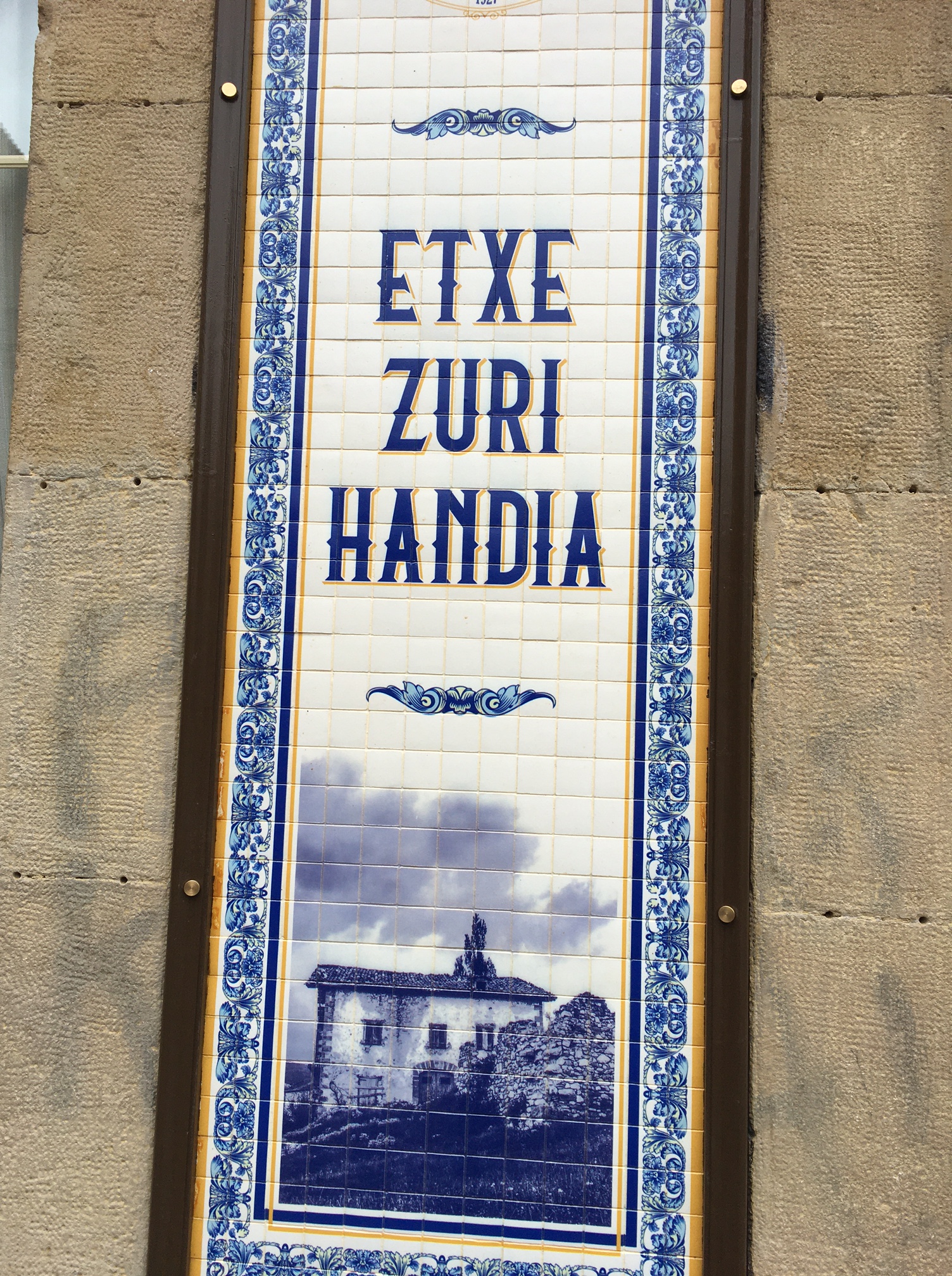
Spelling of names in this Basque region is intriguing: lots of Zs, some Xs and other combinations. No idea of some of the pronunciations. This tiled sign was on the pasteleria where we had lunch. Quite a few of the town signs are upside down, too often to be a coincidence we think. Perhaps some sort of statement? And many signs are in two languages: so it is Pamplona and Iruna.
Used the comfort of the warm car for T to get slightly ahead with today’s blog and then to Aldi (quite near the station) to gather food (aka restocking after running down at last stay) before Joan rolls in. D bought wine and deposited it in the car. On his return to the store he was obviously acting suspiciously because he was approached by the lady who’d been on the checkout. He typed into Google translate that he was looking for his wife, and she looked shocked. D checked: he’d misspelt wife (and doesn’t know what he had put in!) so corrected and  pointed to T who had appeared down the aisle and she was then satisfied he was not some kind of nutter. And she had the good grace not to direct him to the bins of ‘out of date stock’.

Got to the train station in good order …a train pulls in delivering heaps of people…but no, it’s not the 1841 from Barcelona…that one is running over an hour late! Presume Joan isn’t the cause.

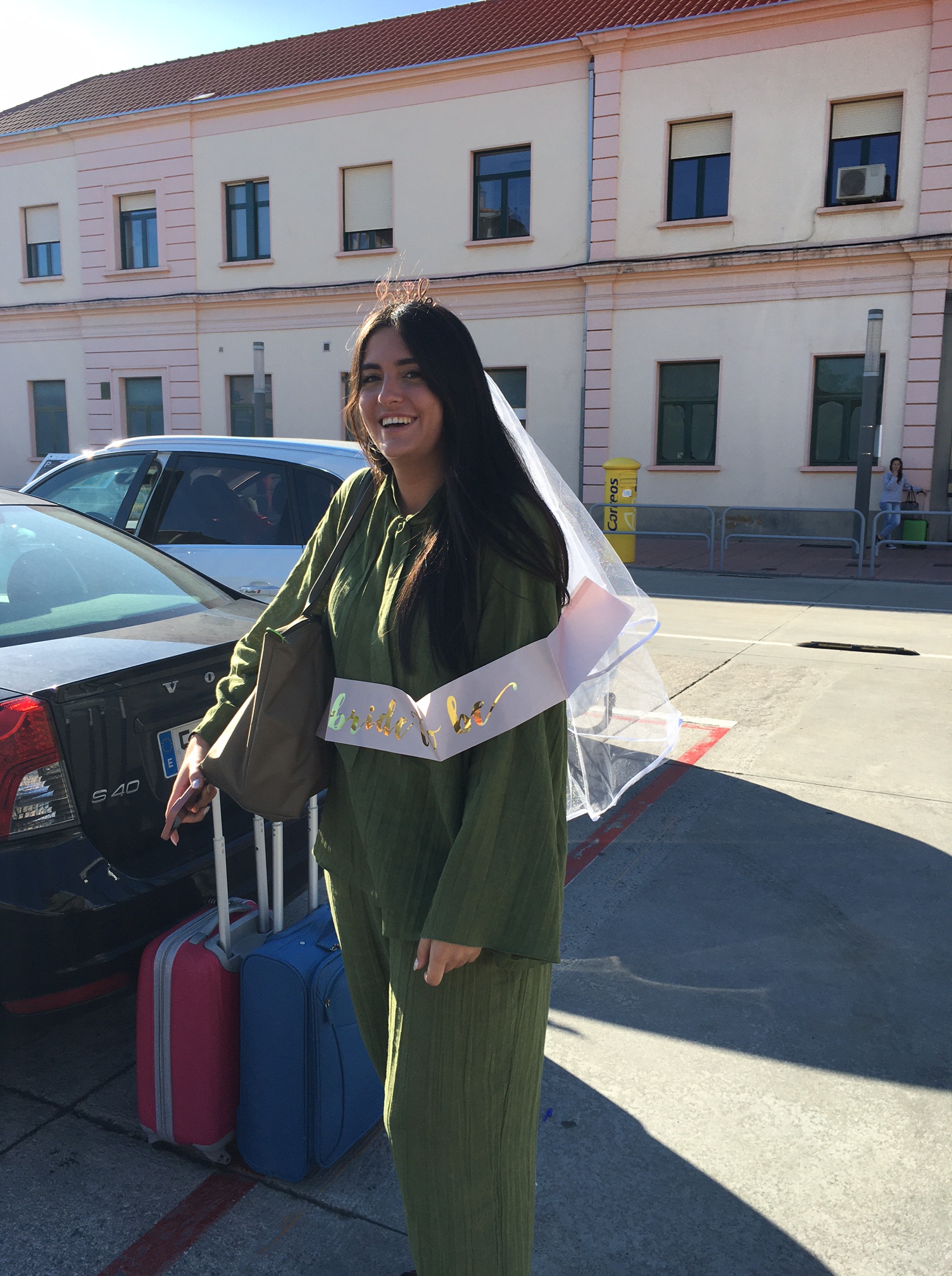
And much amusement as a bridal party (perhaps it was a hen’s party?) gathered to catch a train.
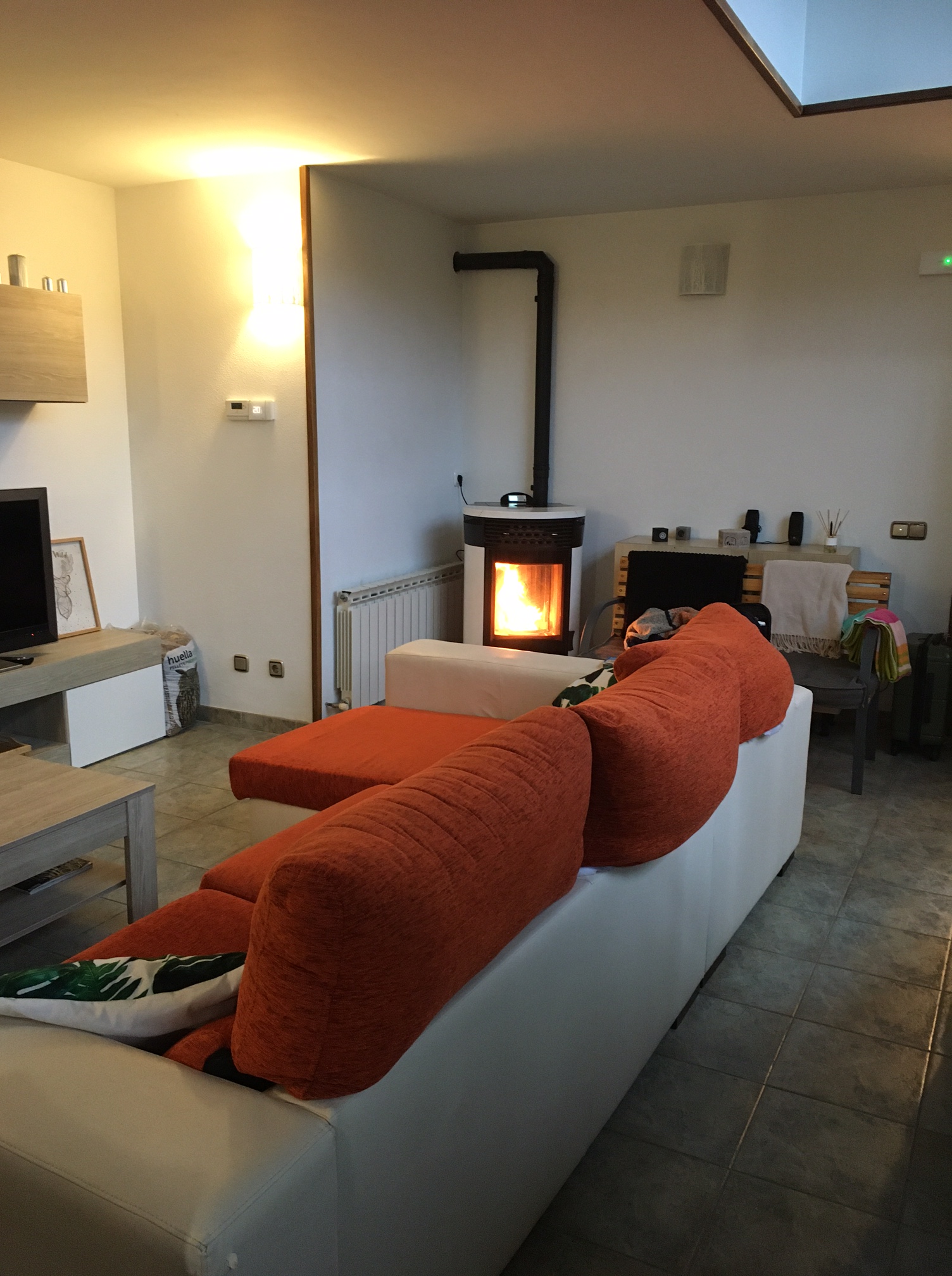
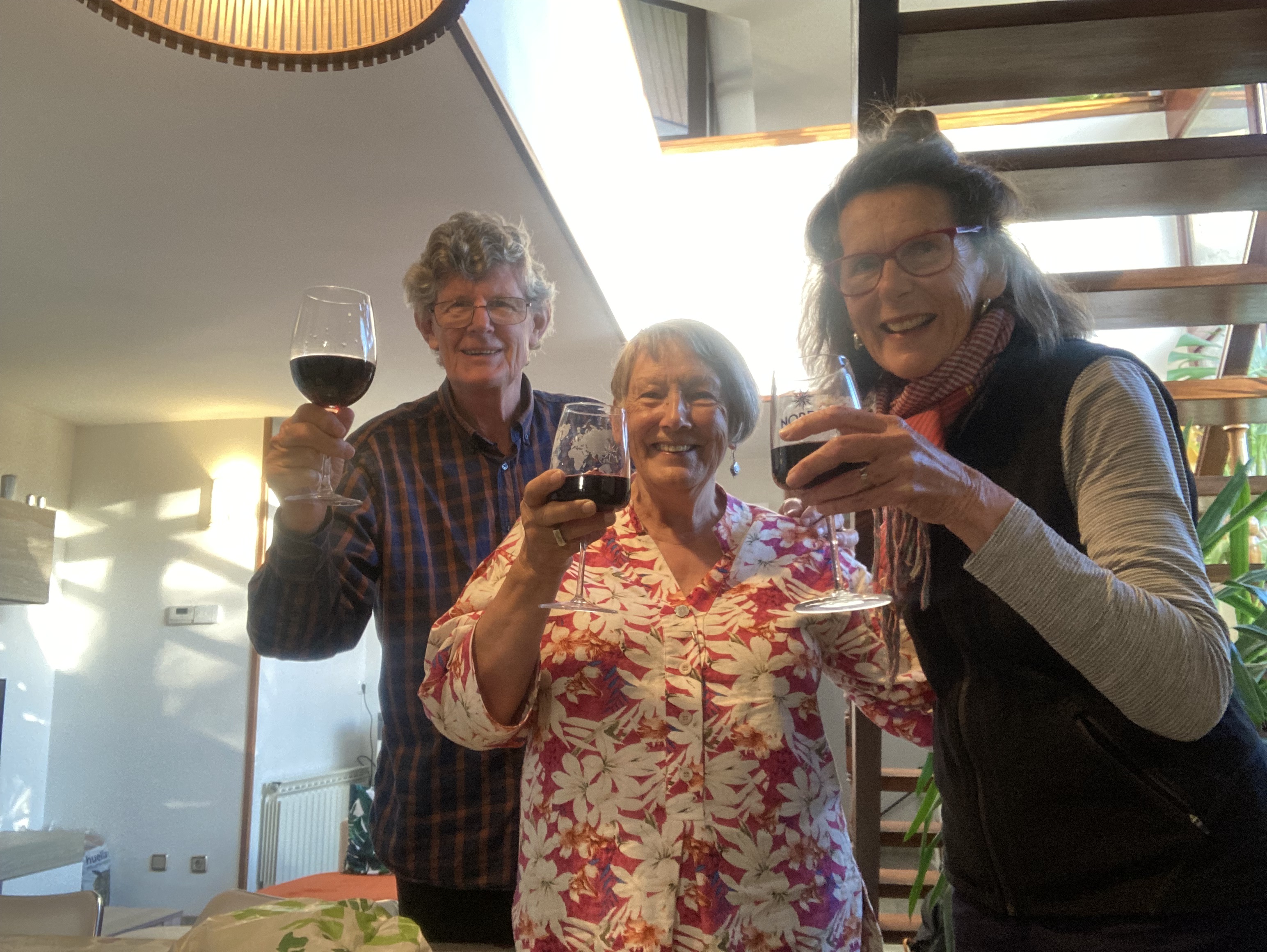
Joan arrived, we got to Azanza, we had a glass of wine. Life’s good.
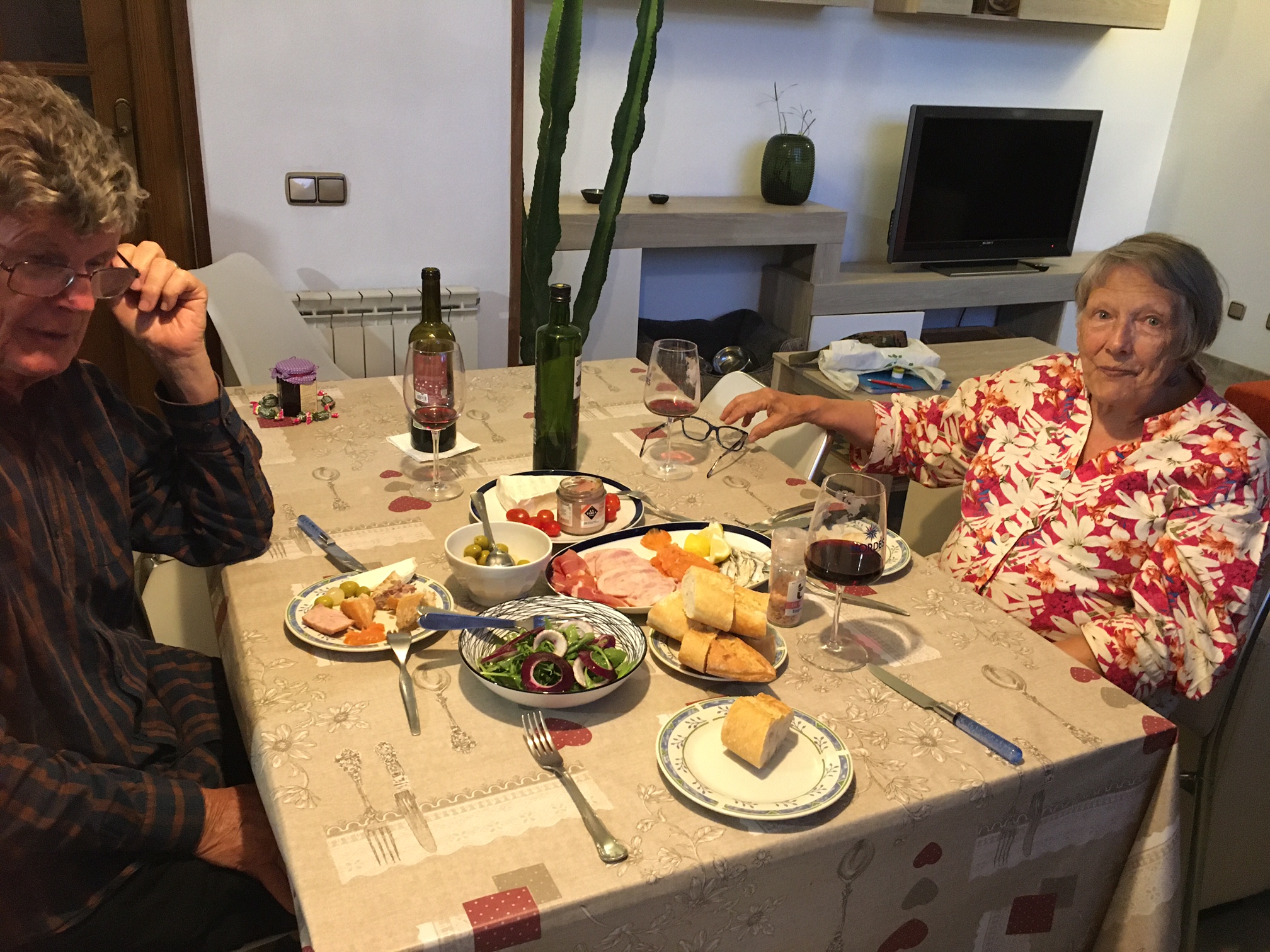
Dinner. Tapas: white anchovies, smoked chicken slices, pate, smoked salmon, jamon, olives, pickled onions, pickled cucumbers, cherry tomatoes, Brie, baguette, with a greens and red onion salad.
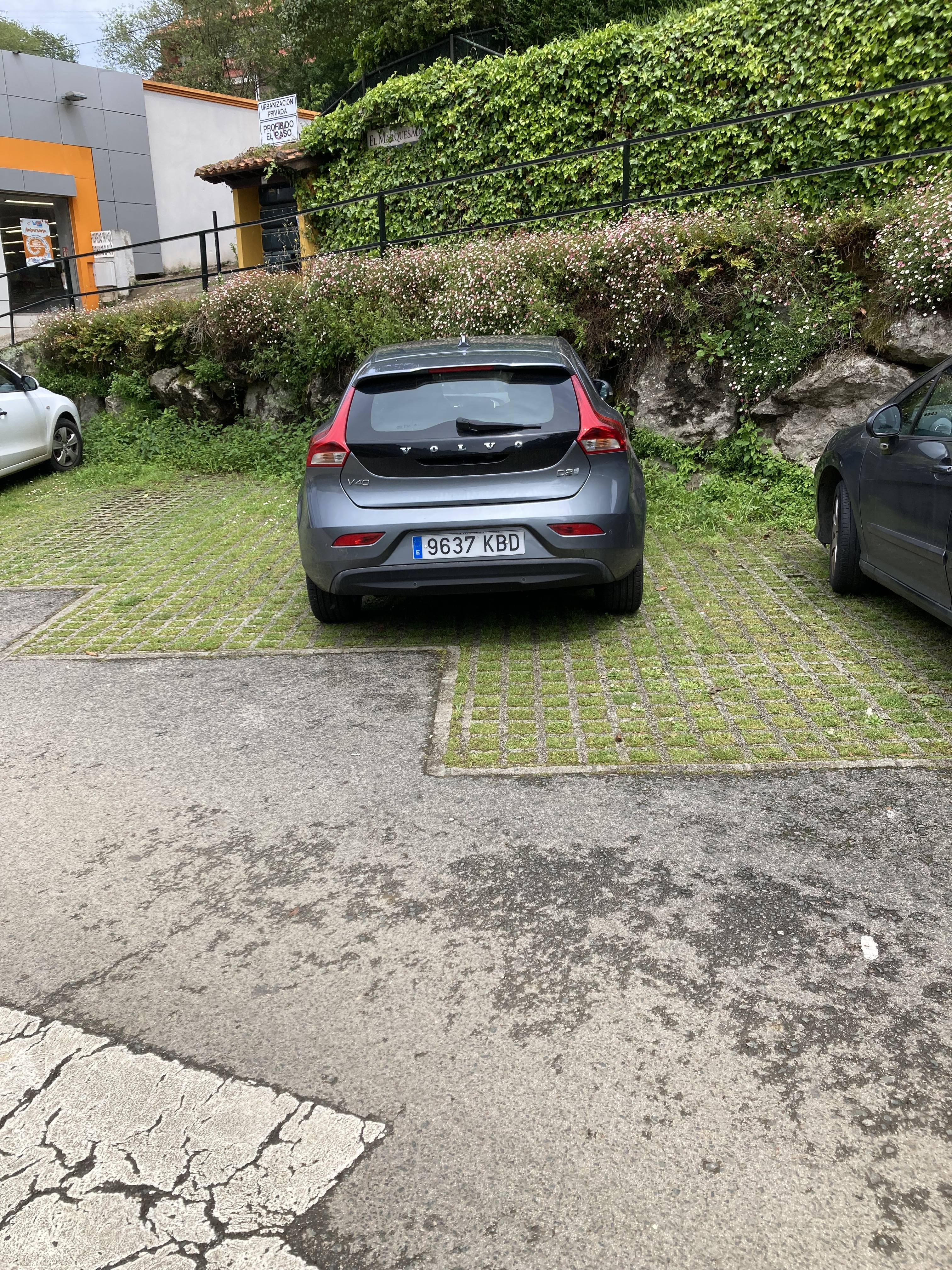
Este es un vehículo de alquiler.

Anoche, después de recorrer 360 kilómetros, no arrancó. El motor giraba dos o tres segundos y luego se paraba.

Las luces del panel de instrumentos permanecieron encendidas y el auto no se bloqueaba con la llave.

Contacté con el servicio de asistencia Peugeot, que empezó a organizar una grúa. Una hora después, lo intenté de nuevo y el coche arrancó.Grúa cancelada. Peugeot me dio su dirección y me recomendó que revisara el coche. 
Azanza #1

Day 75. Wednesday 21 May.

Exactly as predicted, our departure from Monica’s was ‘late’…around 11am (our packing up routine is usually an hour) and we try to leave our accommodations as we have found them.T wonders how they are all spotless (especially glass) and asked Monica about this…some supermarket spray (pity we can’t take some home). Isadora was back on the job (she can work through the night but Monica prefers not because of the night critters that would be disturbed).

Doris announces pretty promptly that we are to ‘go straight for about 190 kms so we won’t have her polite chatter interrupting our meditations. We don’t have music or even dialogue as we go along; D is in driver zone, T alternates between traffic panic and  scenery .The road along the Cantabrian coast is fairly quiet, with sea glimpses. Coffee with a view would be nice but alas, the choice was poor: the coastal town of Laredo has a surf school, lots of apartment towers with shutters down, a big hospital and virtually no cafes open. A quick stroll to check the waves…dead flat!

Typing this blog as we drive means T is temporarily distracted from traffic-watch and this should be a plus for D. 89kms to go! Time obviously flies with typing.

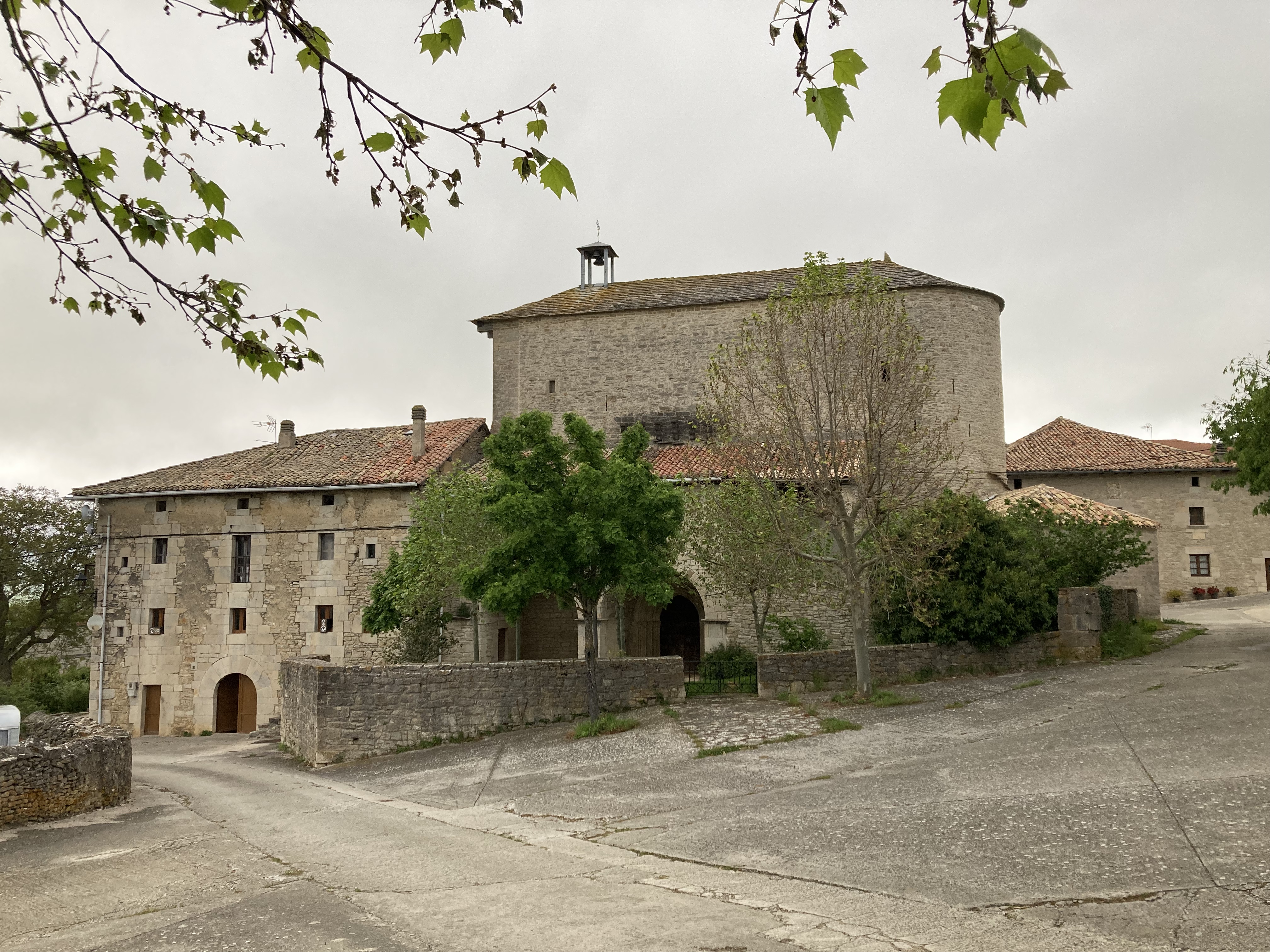
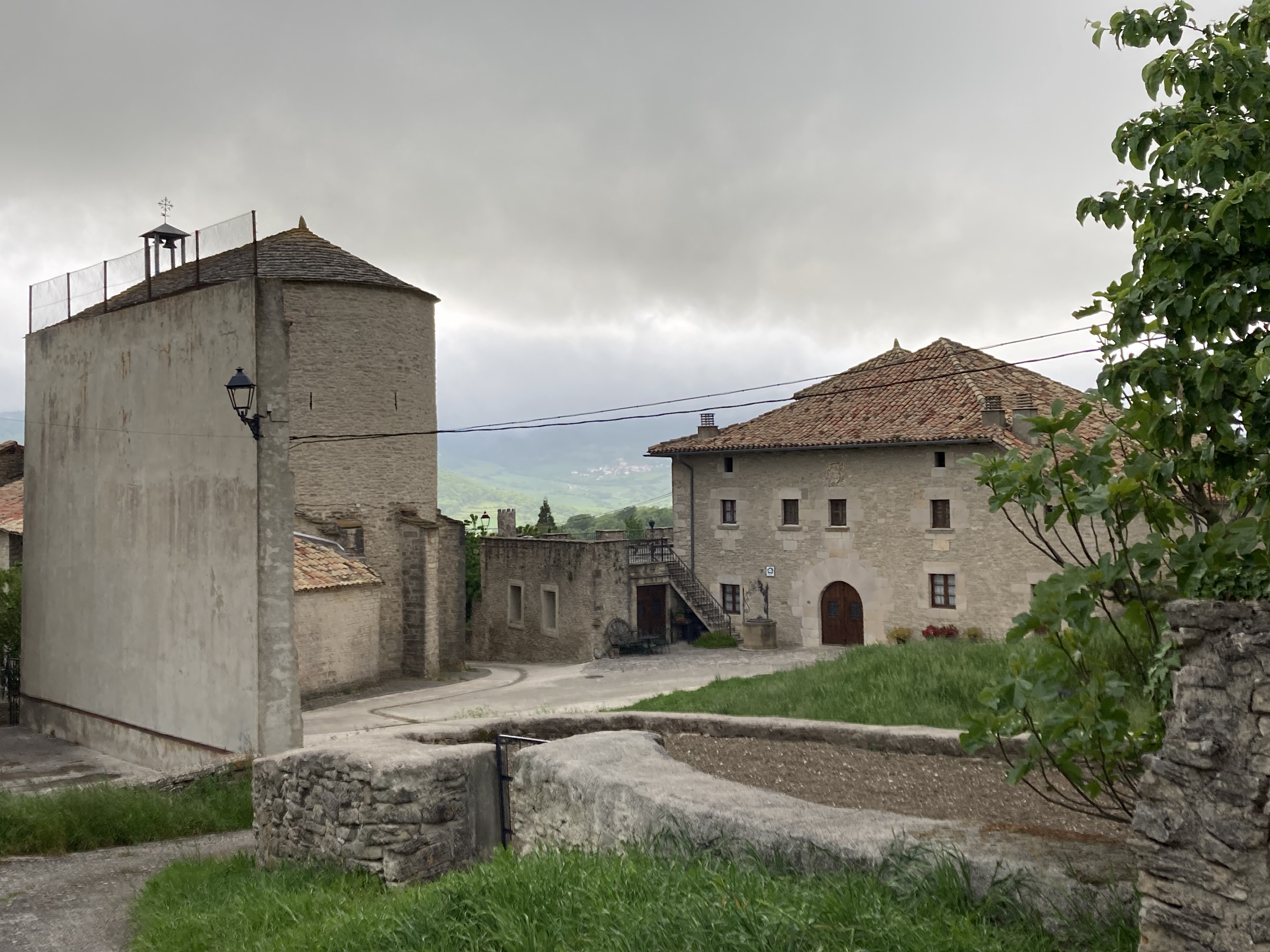
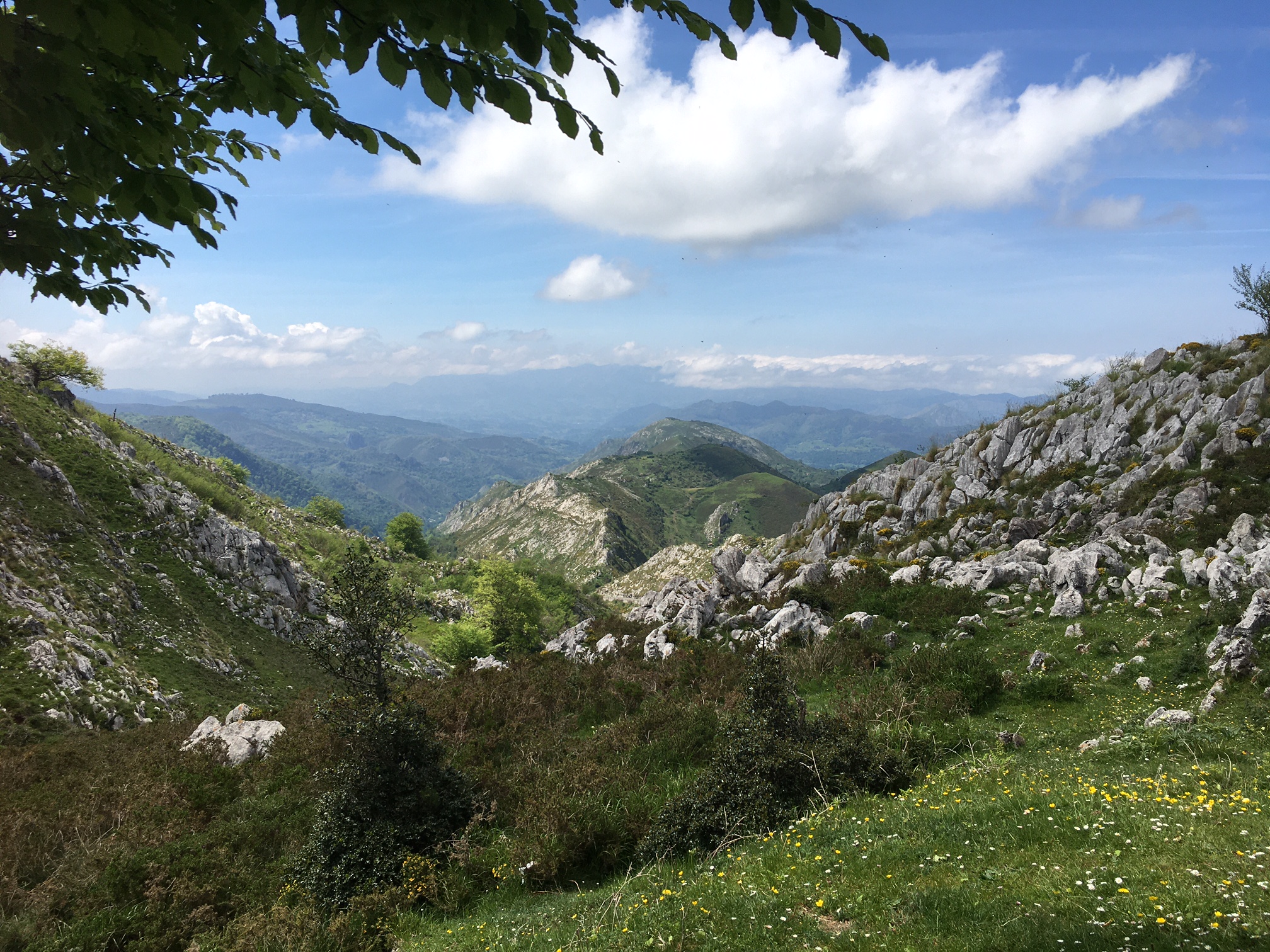
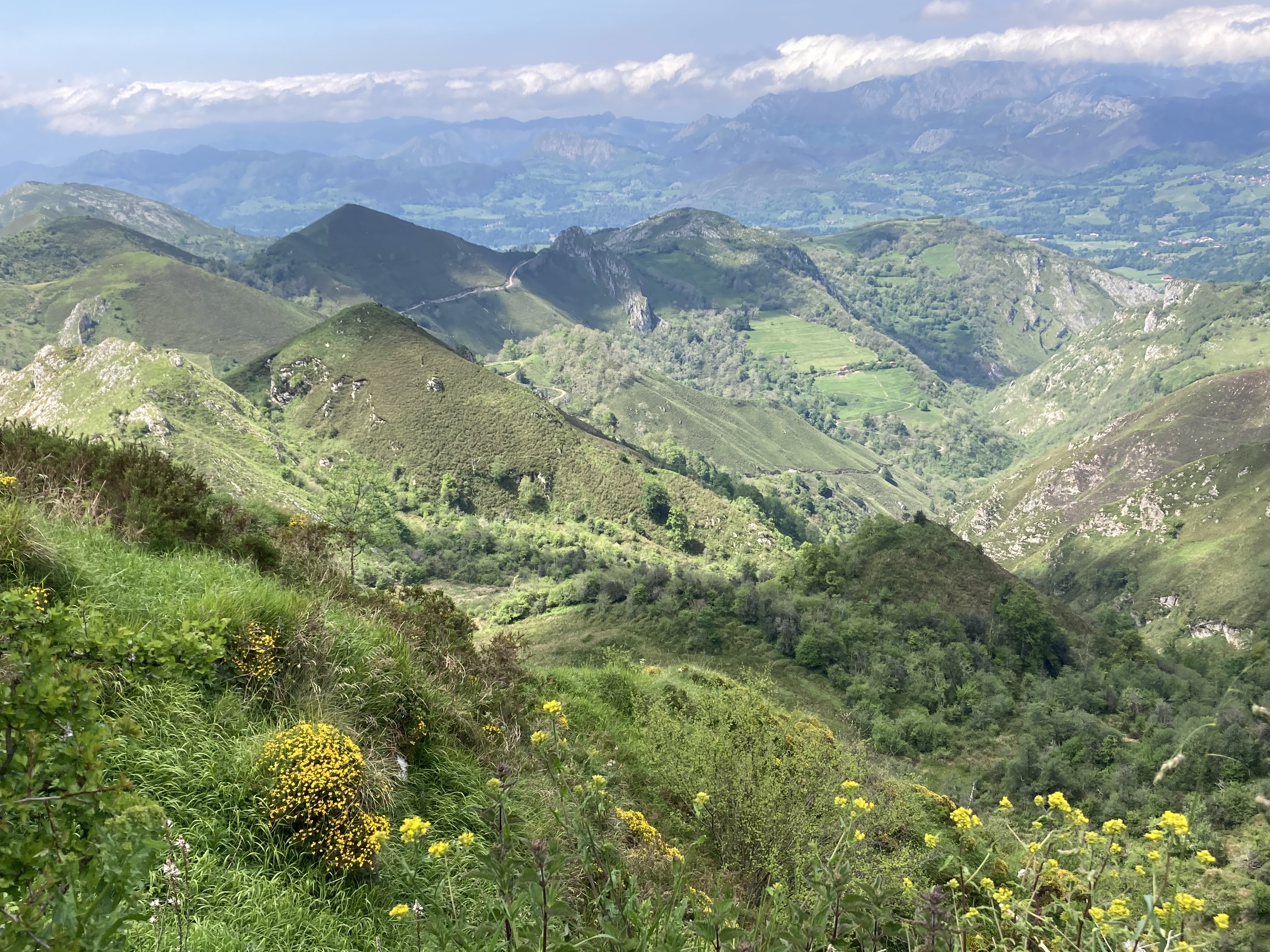
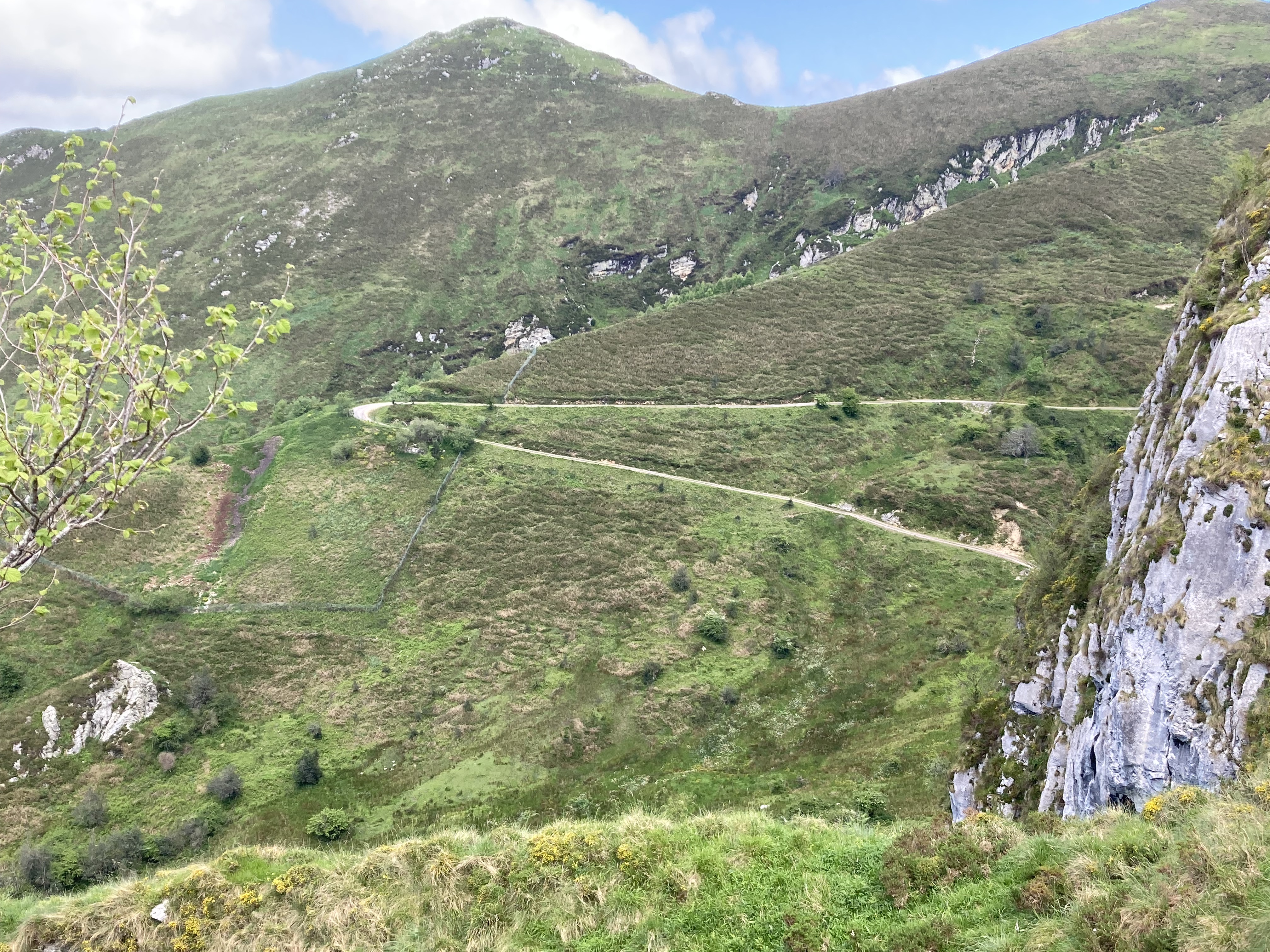
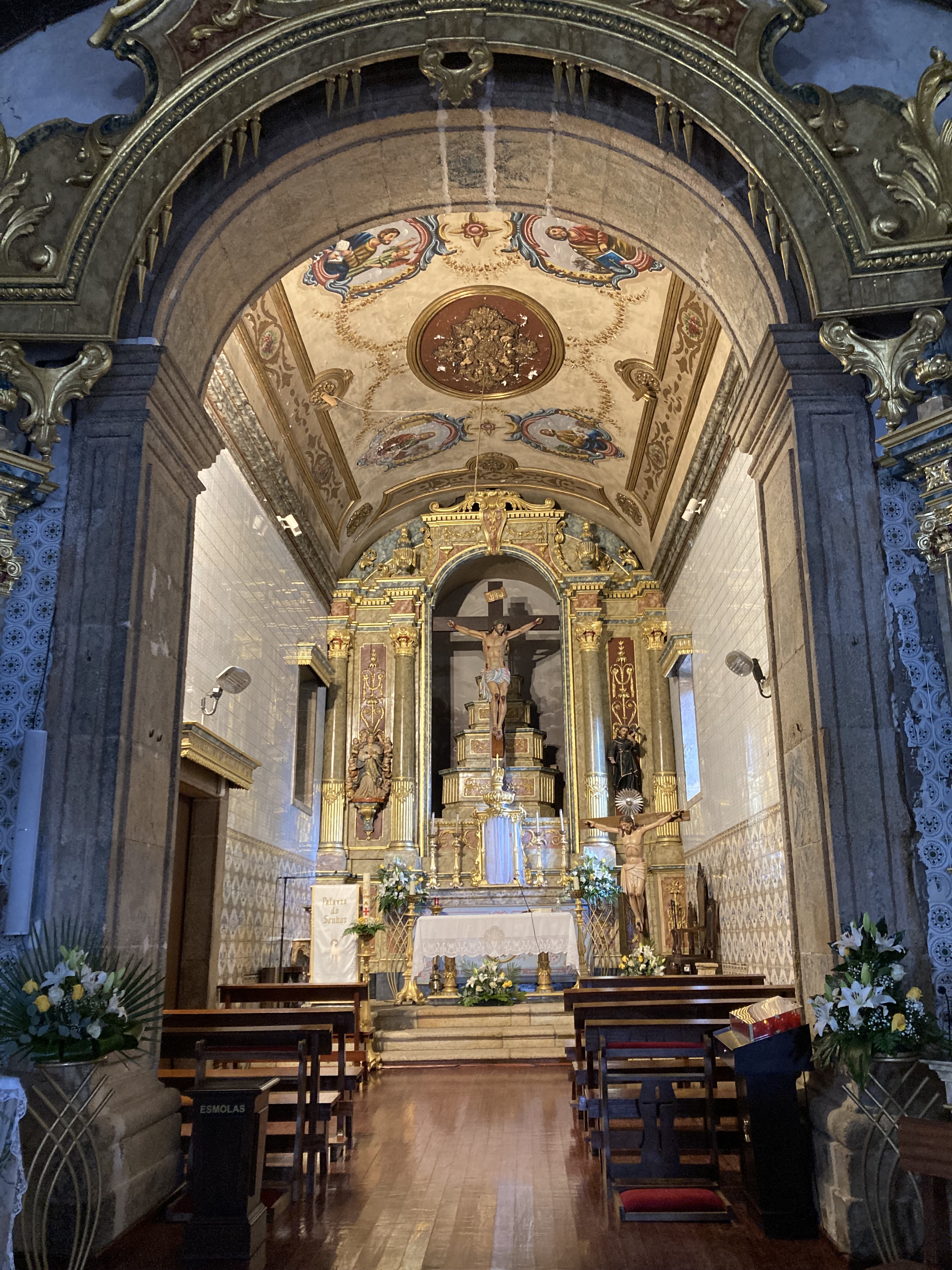
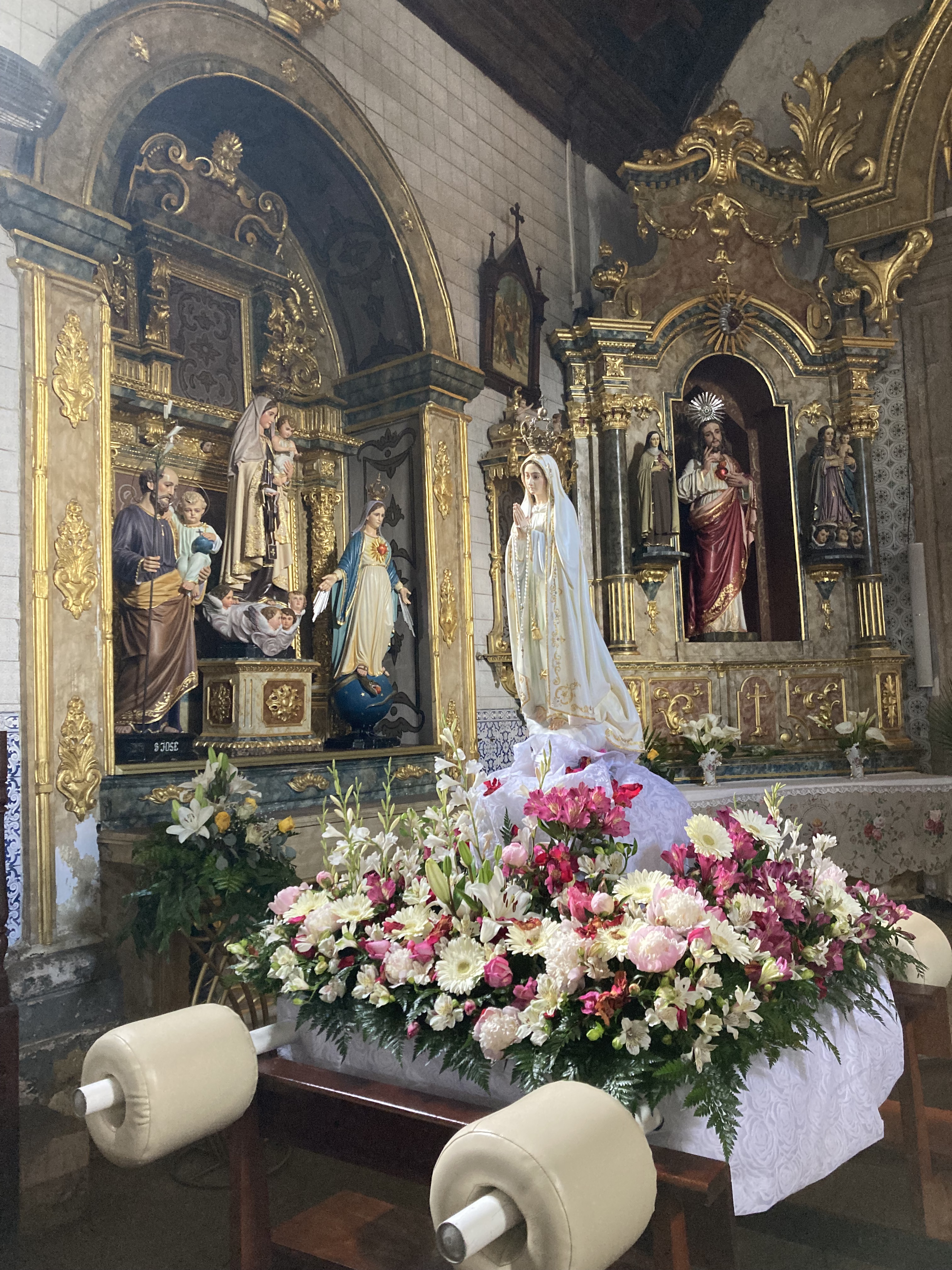
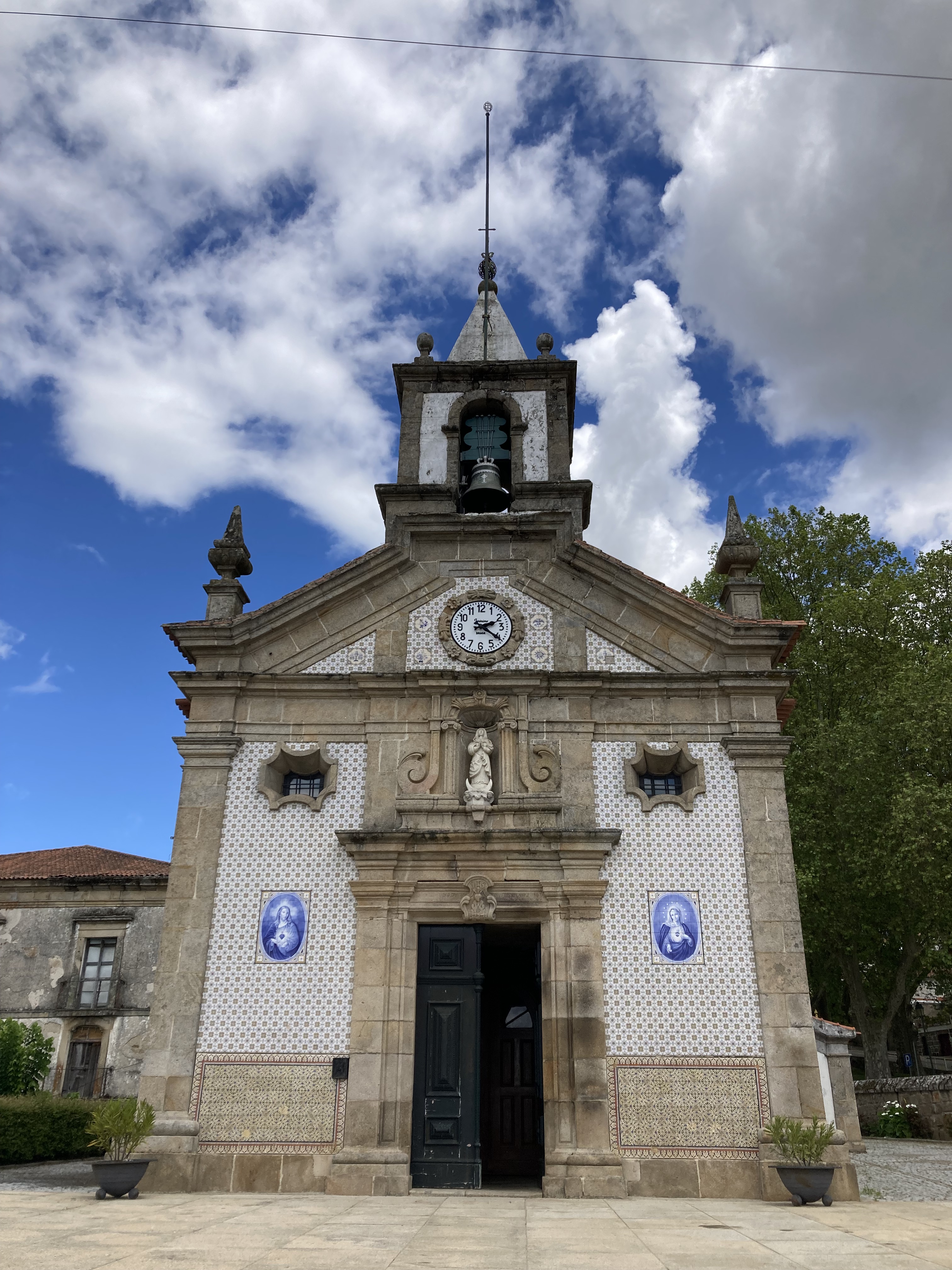
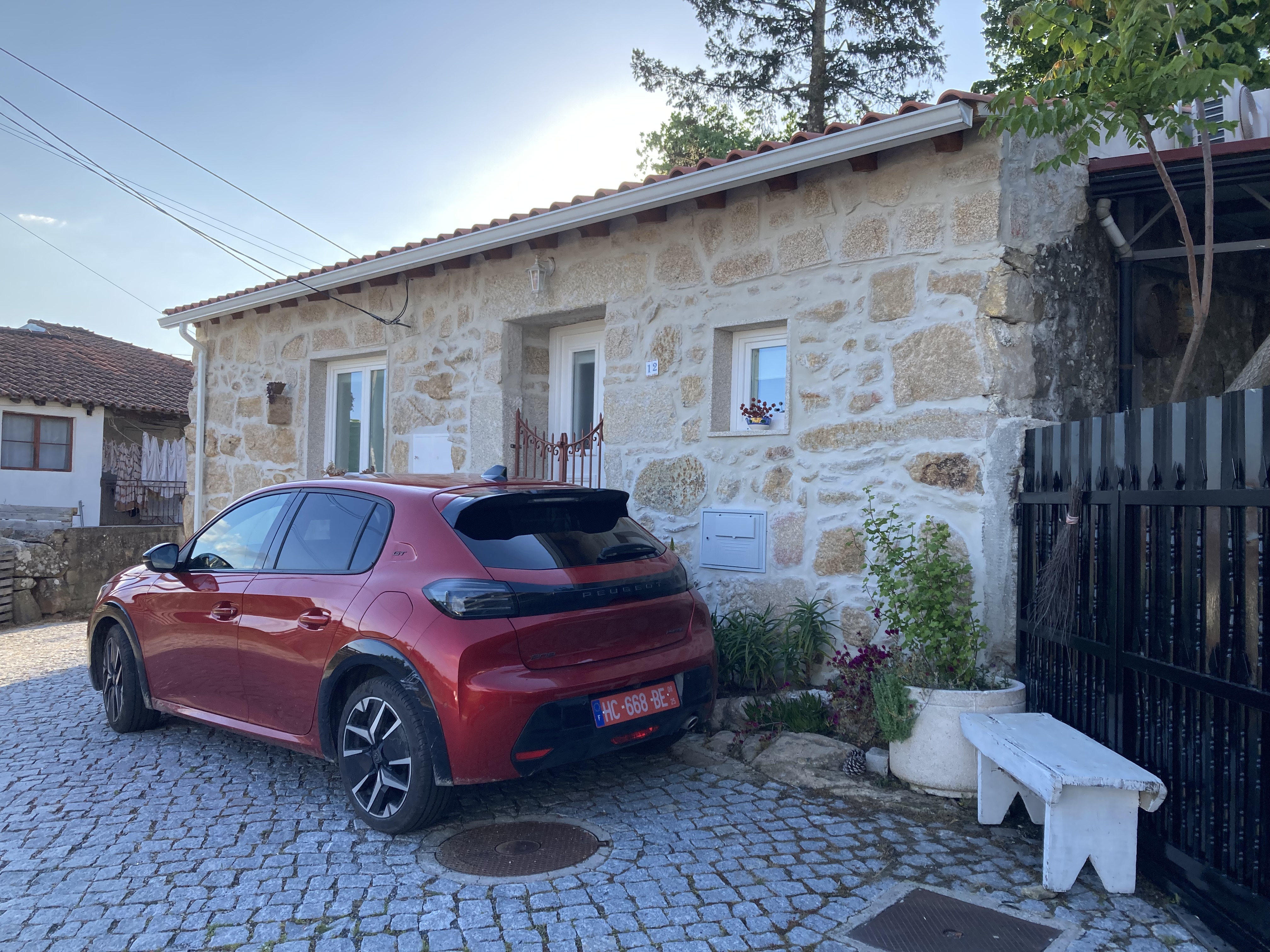
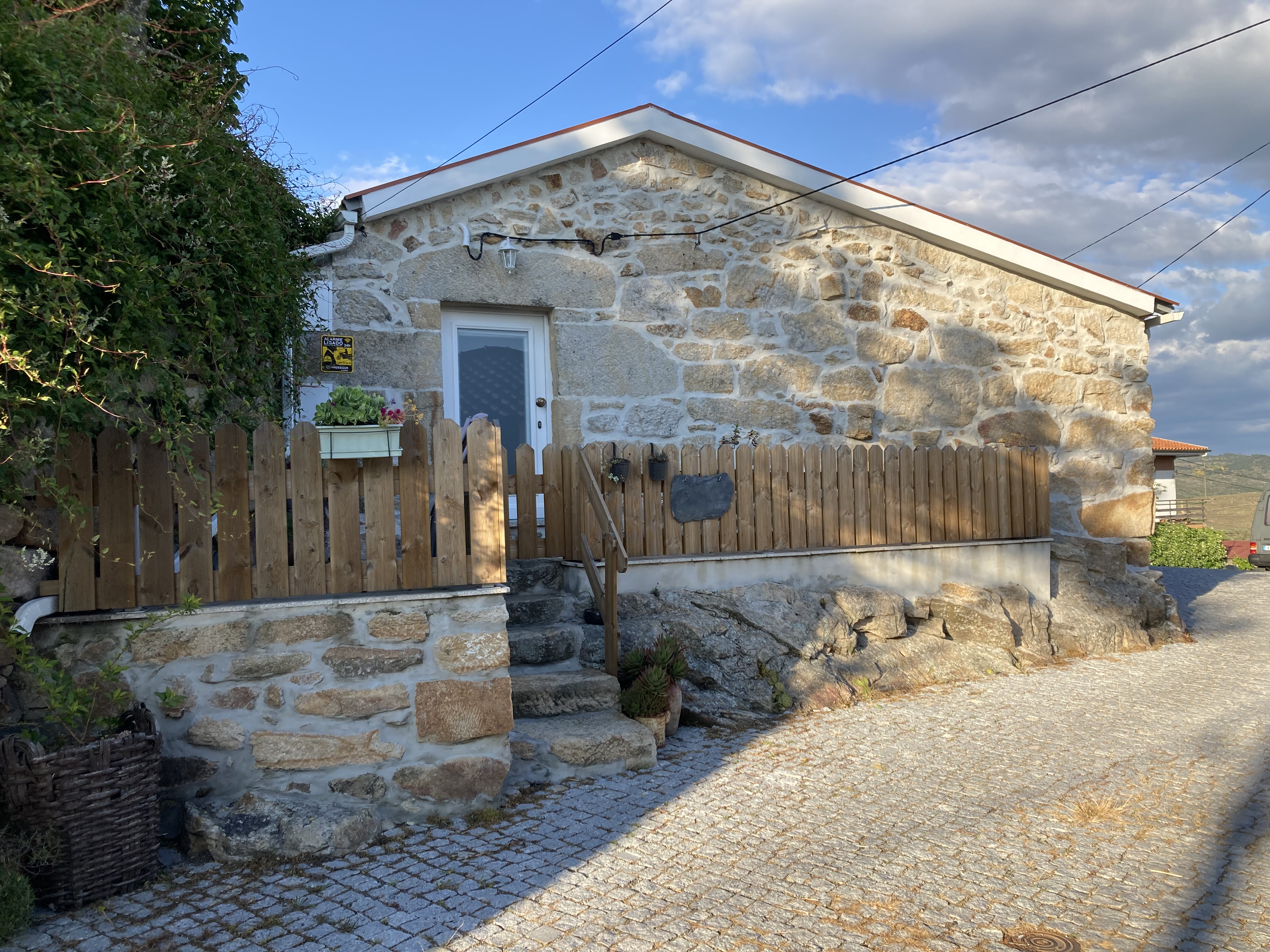
A text from next host pops up: ‘How is your trip going? ETA?’ T replies that another hour should be enough and so it was. After leaving the A1 we were on smaller roads and every town had at least one Z in its name, usually two, and occasionally the town name sign turned upside down. Why? No idea, but we’ll try to find out, suspecting it is some sort of protest from the Basques. It is a foreign land. A narrow winding mountain road brought us to Azanza (village of 17 residents, plus us for a few nights), mountainous, misty, a seemingly deserted cluster of houses and (perhaps former) church. We are at number 35, a big house with beautiful big windows overlooking green fields. Unpacked and wondering what to do about dinner when D announces, having tries to reposition it, that the car ‘won’t start’. Indeed, it seemed dead, unable to link to the controlling computer system…battery and engine lights showing a problem…. But not turning off: getting a command to ‘turn off engine before exiting car’ when clearly it was off. And it would not respond to the key(s) at all.

Consult manual, try again…nothing. Hmm! We are due to connect with Joan tomorrow at Pamplona, 30 kms away (no other details known at this stage) and we are in a remote area, with a dead car and nothing fresh for dinner but, as D boasts, we have a supply of red! 

While D talks to the French Peugeot Breakdown assistant, constantly checking on pronunciation of names, rego details etc with the International Phonetic Alphabet, and describing what the car is not doing, T makes a cup of tea. We’ll need to let Joan know of the situation, but she’s in the air between Morocco and Barcelona and we don’t have Wifi connection yet! Second cup of tea. 

Yuksel confirms that a tow truck will be sent to Azanza (it looks like a very small village he says, little does he know). T thinks…we have a bit of asparagus, some tomatoes, pasta, onion and garlic of course, so there will be something warm on the table tonight. The tow truck will come and we’ll speak to Joan at some point, and the insurance cover includes a hire car. T unpacks the remainder of car stuff, expecting that it will be taken away. It’s 1830 and then D gives it one last try and says ‘the car is working’! It corrected itself! D does some test driving manouevres and calls Peugeot with ‘cancel the tow’.

Wifi finally connected, car works, things are looking up. T sends texts to Joan, and opens a little bubbles, D has a beer, followed by a wine…or two.

Dinner. Curly Pasta with pantry remnants: white anchovies, olives, asparagus, tomatoes, onion, garlic, chilis (hot!), tomato purée, red wine.

Ribadesella #5

Day 74. Tuesday 20 May.
Destination today is Covadonga, to firstly visit the Asturias Sanctuary, and then the Lagos de Covadonga, both located in the Picos de Europa mountains.

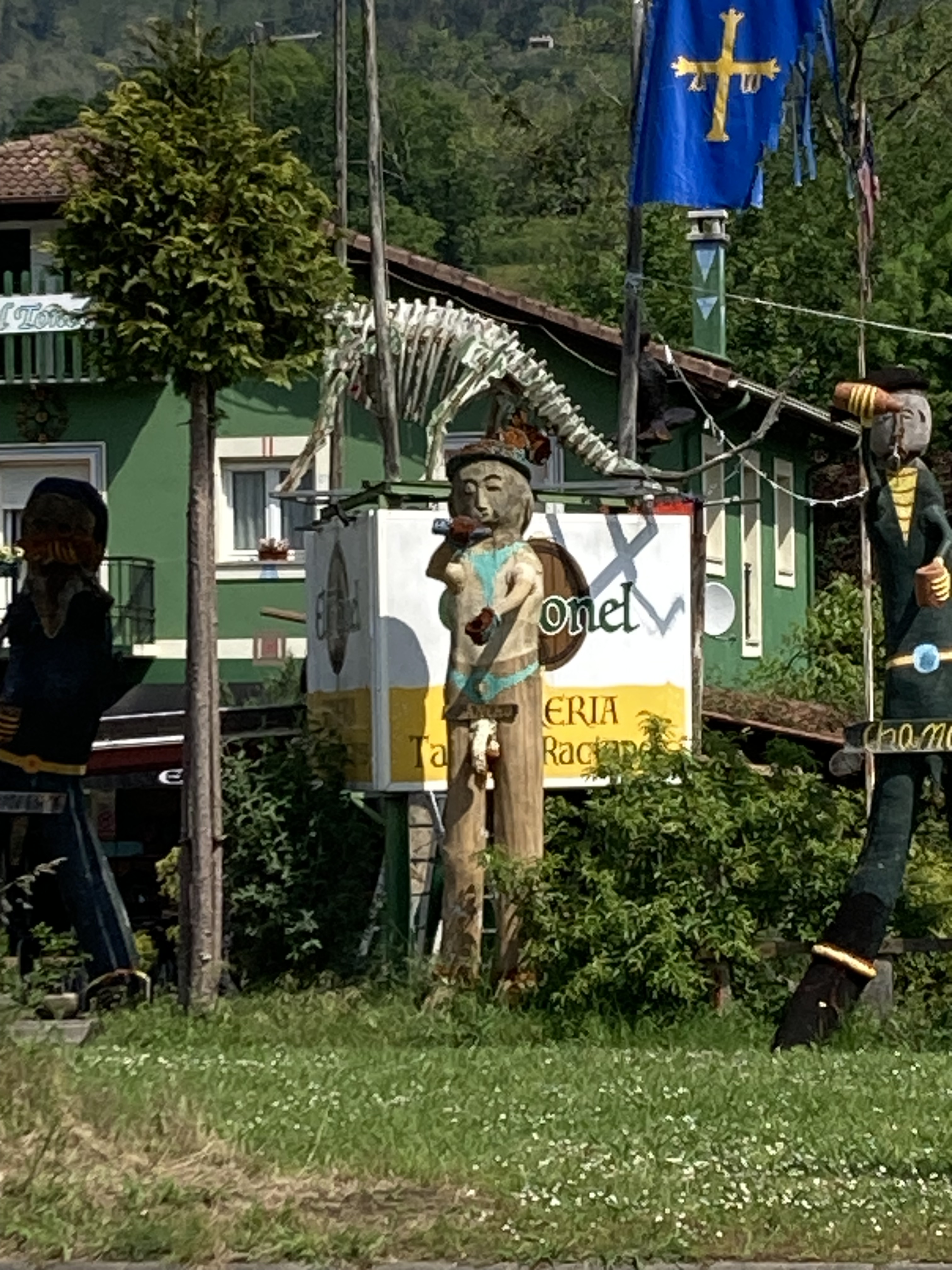
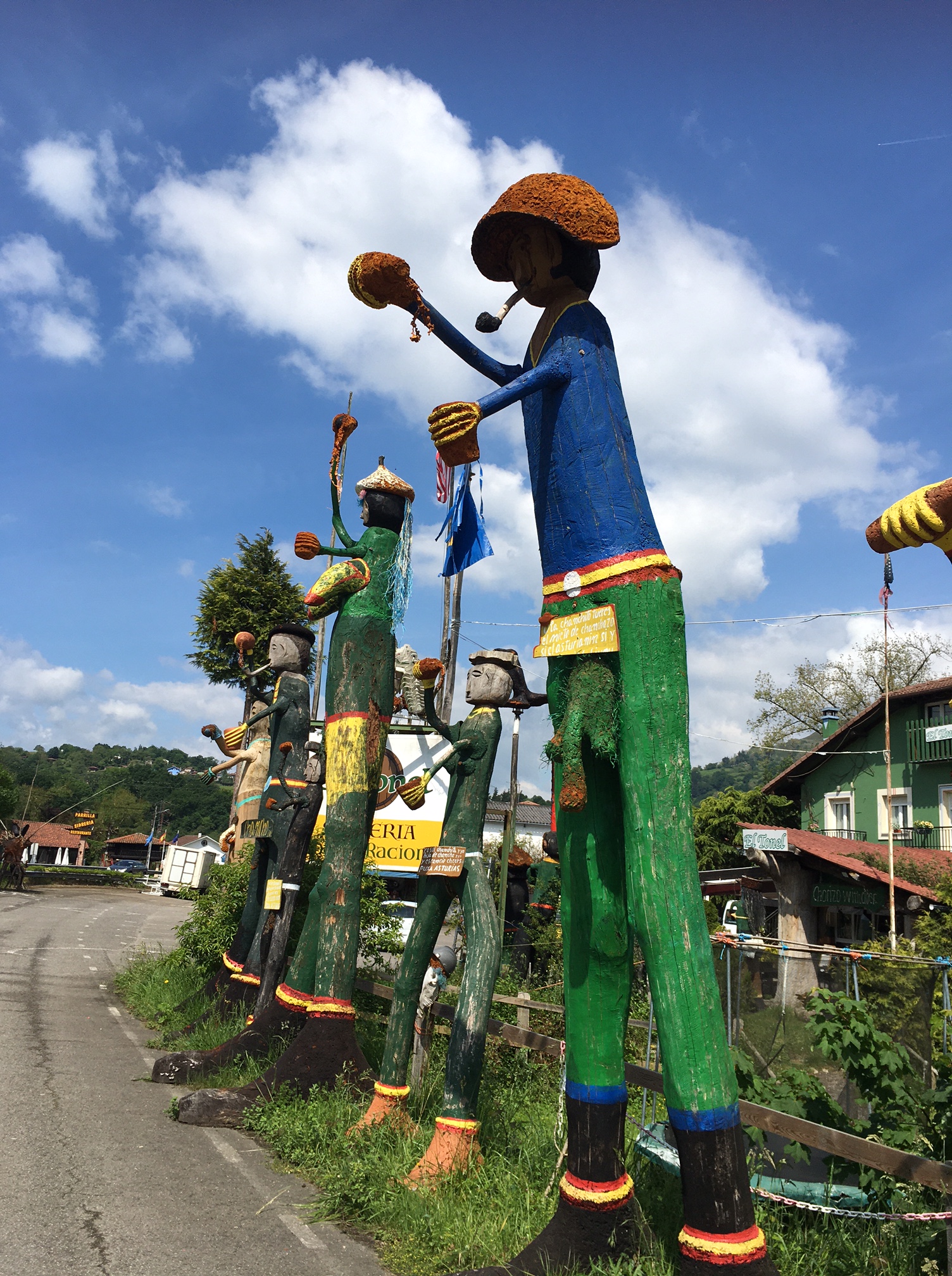
We stopped for a coffee, just short, intrigued by the statues/carvings…

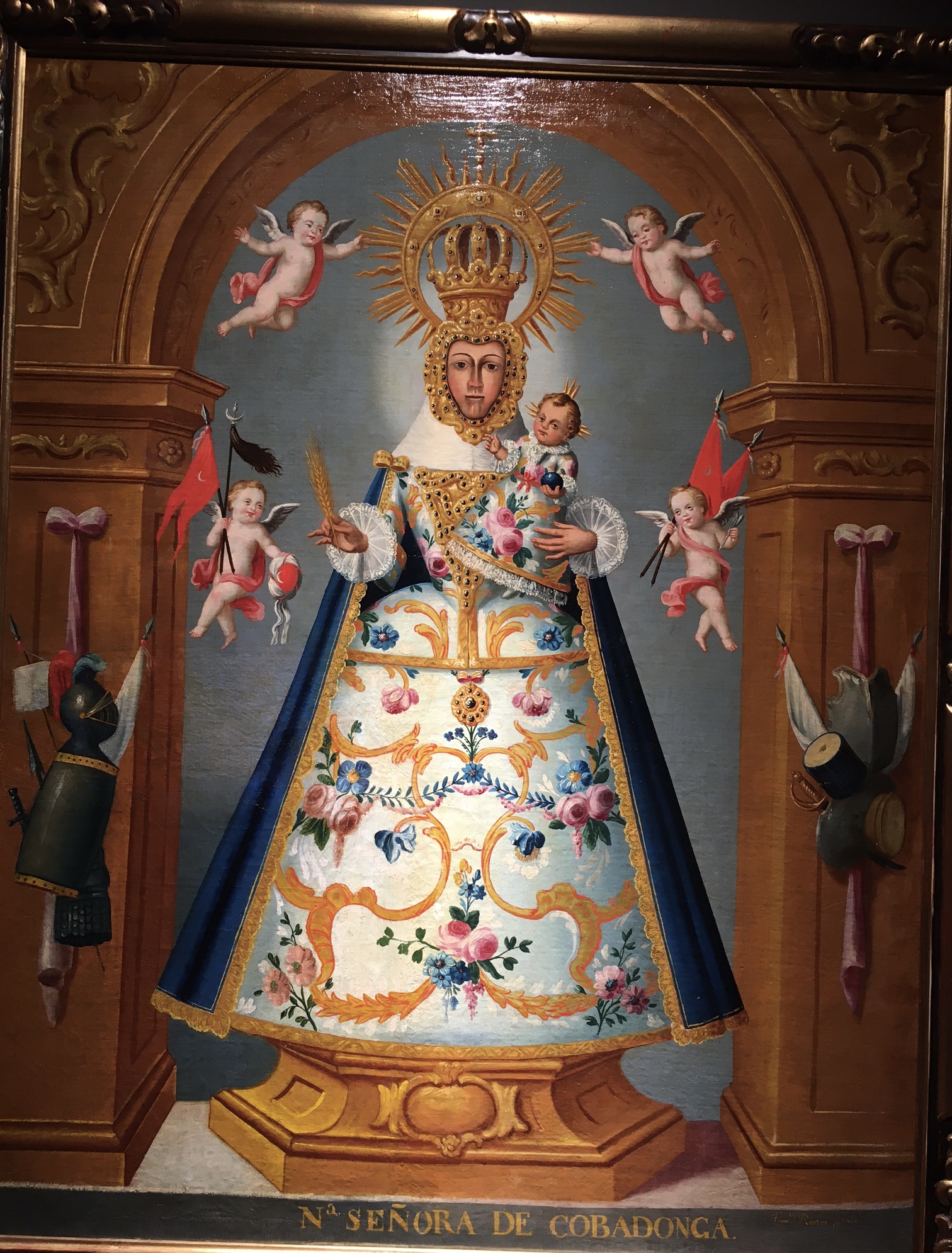
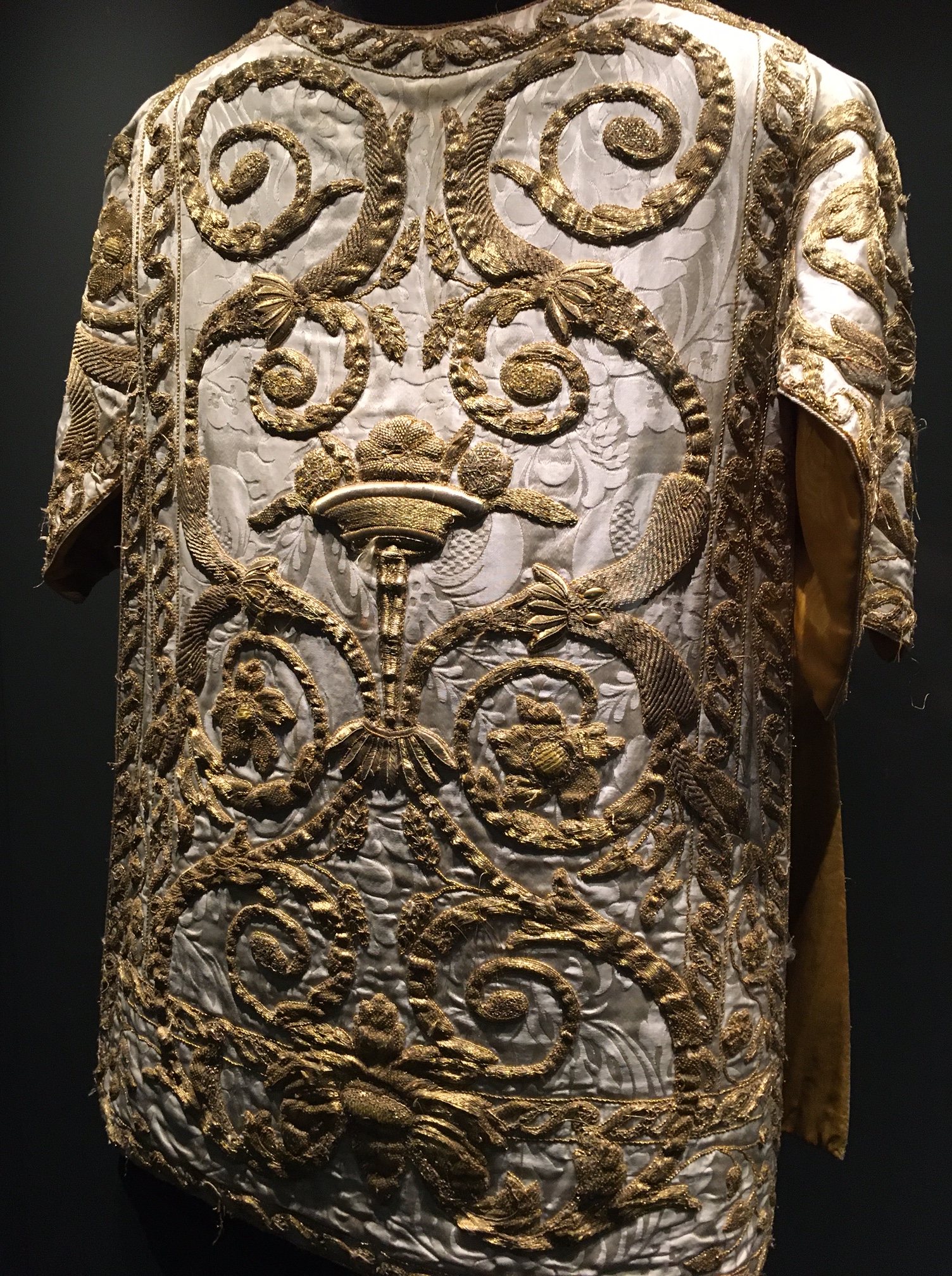
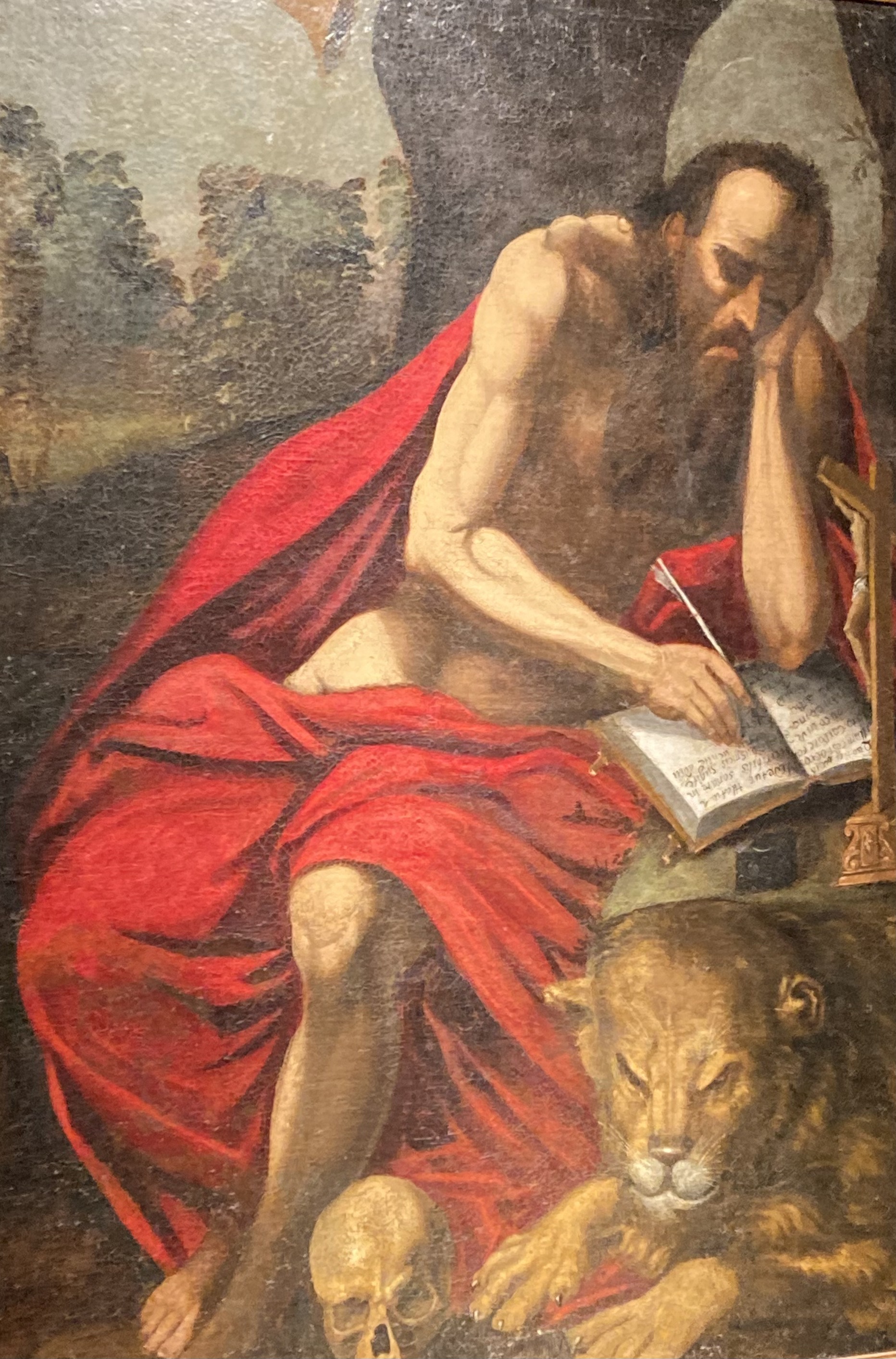
The sanctuary was busy with several tour buses in. We had no foreknowledge of this place apart from reference to a chapel in a cave in the mountains and it seemed an appropriate destination on a day in the Picos. Our first stop was the museum, a small but beautifully curated exhibition, focussed on big portraits and religious artifacts.T ogled the embroidered vestments; oh to have that skill. One set had come from Cardinal Angelo Giuseppe Roncalli, who became Pope John XXIII. Although there was no English translation available, some information could be gleaned.

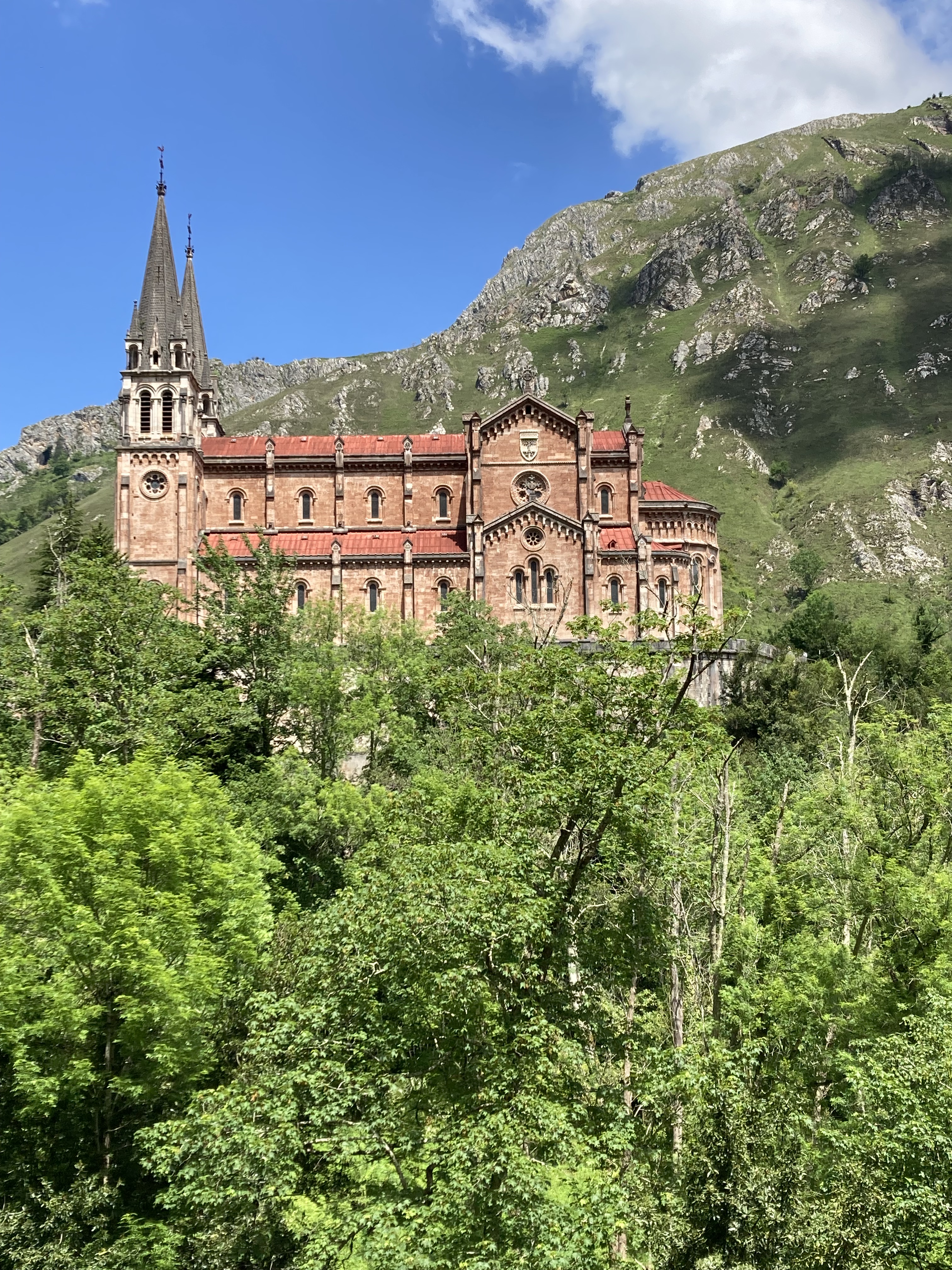
Next was the neo-Romanesque Basilica with two high towers flanking the main entrance. It is impressive from the outside, and although similarly impressive inside it’s decoration is understated, without the massive ornamentation and gilding of most cathedrals/churches we’ve visited. And no photos allowed inside (however some visitors missed or ignored the signage).
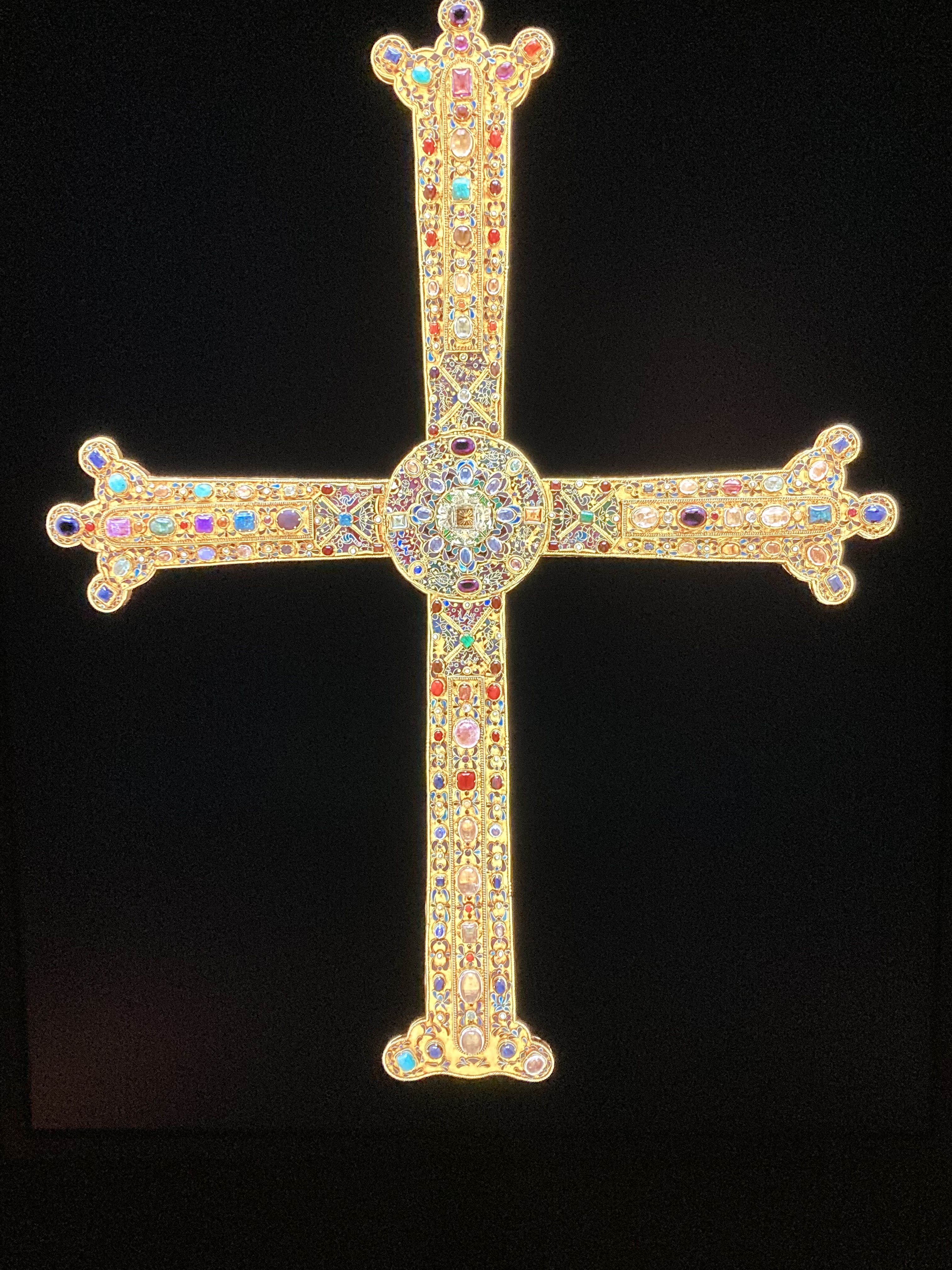
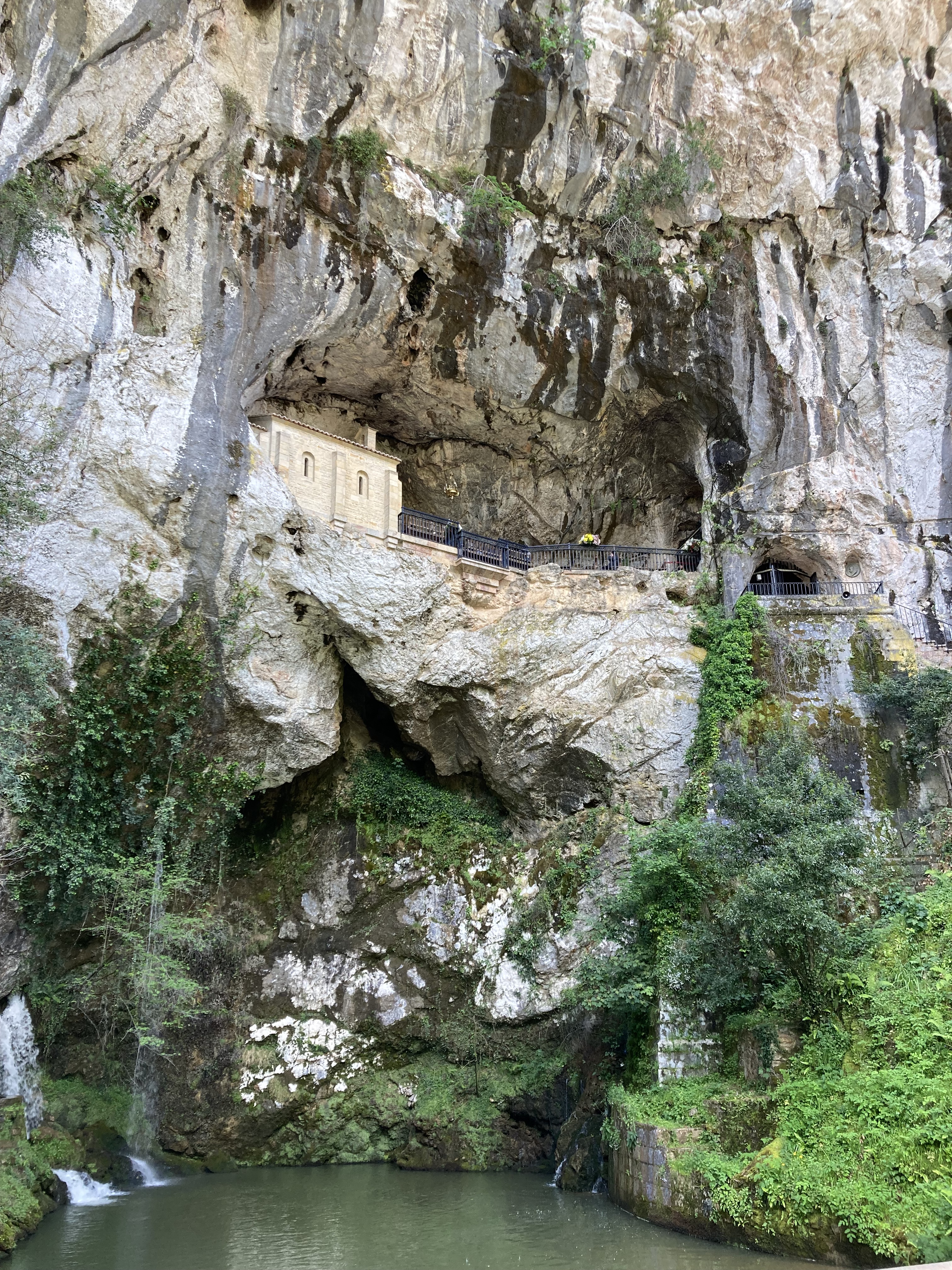
The Santa Cueva de Covadonga (Holy Cave of Covadonga) is now a Catholic sanctuary. A spring flows out of the cave and below this there is a fountain with seven spouts. On the altar, a gold panel represents the battle of Covadonga, that defeated the musselmen (Muslims) in 711. The Asturian hero Pelagius is buried in the cave.   He was a nobleman who founded the Kingdom of Asturias in 718 and is credited with initiating the Reconquista, the Christian reconquest of the Iberian Peninsula from the Moors, and establishing the Asturian monarchy, making him the forefather of all the future Iberian monarchies. Legend has it that a vision of the Virgin Mary gave the Asturians strength. It’s all part of the legend, whose origins are disputed. Before leaving the cave we paused to sit and contemplate; a big bunch of teenage school kids had preceded us (T wondered what it all meant to them). Then the scrutineer who had repeatedly announced on the PA system that there was to be no photography (but nodded to a couple of folk that it was OK – very Spanish) engaged us in conversation (we didn’t think we were so identifiable as tourists) and gave us a potted history lesson. We are not sure we have really got a handle on the history and the legends: there were a few blind corners and alternative versions/facts/interpretations. What a surprise! A few things stood out: Asturias IS Spain; it has never been conquered (pretty much due to its terrain and despite the fact that the original Asturians came from Northern Europe); the future monarch always comes to Covadonga to take on the  title of (we think) Prince or Princess of Asturias (like the Prince of Wales). This explains the grandeur of a rather isolated spot in the mountains and the size of the souvenir shop. Lunch was a forgettable sandwich in the cafetaria.

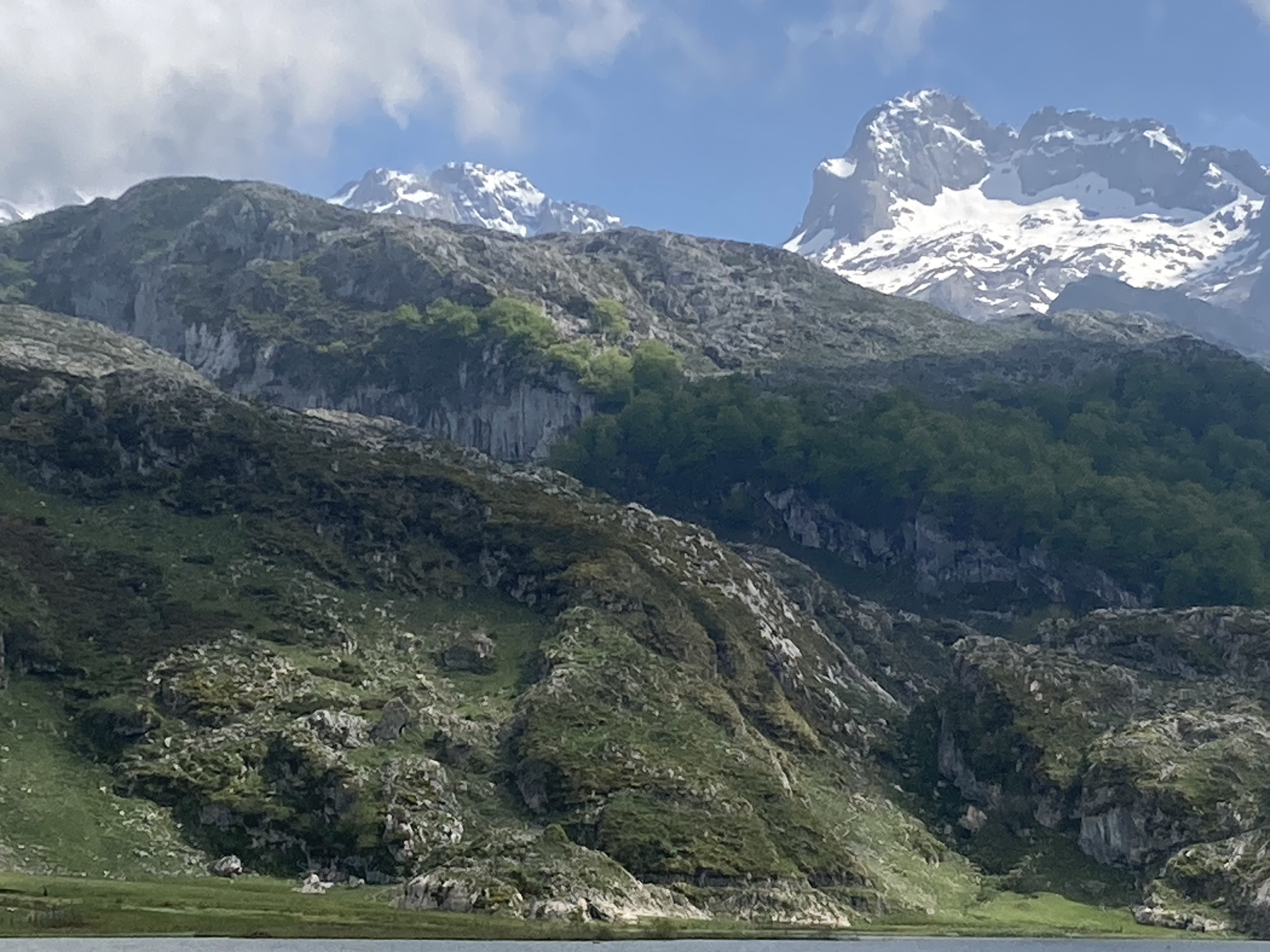
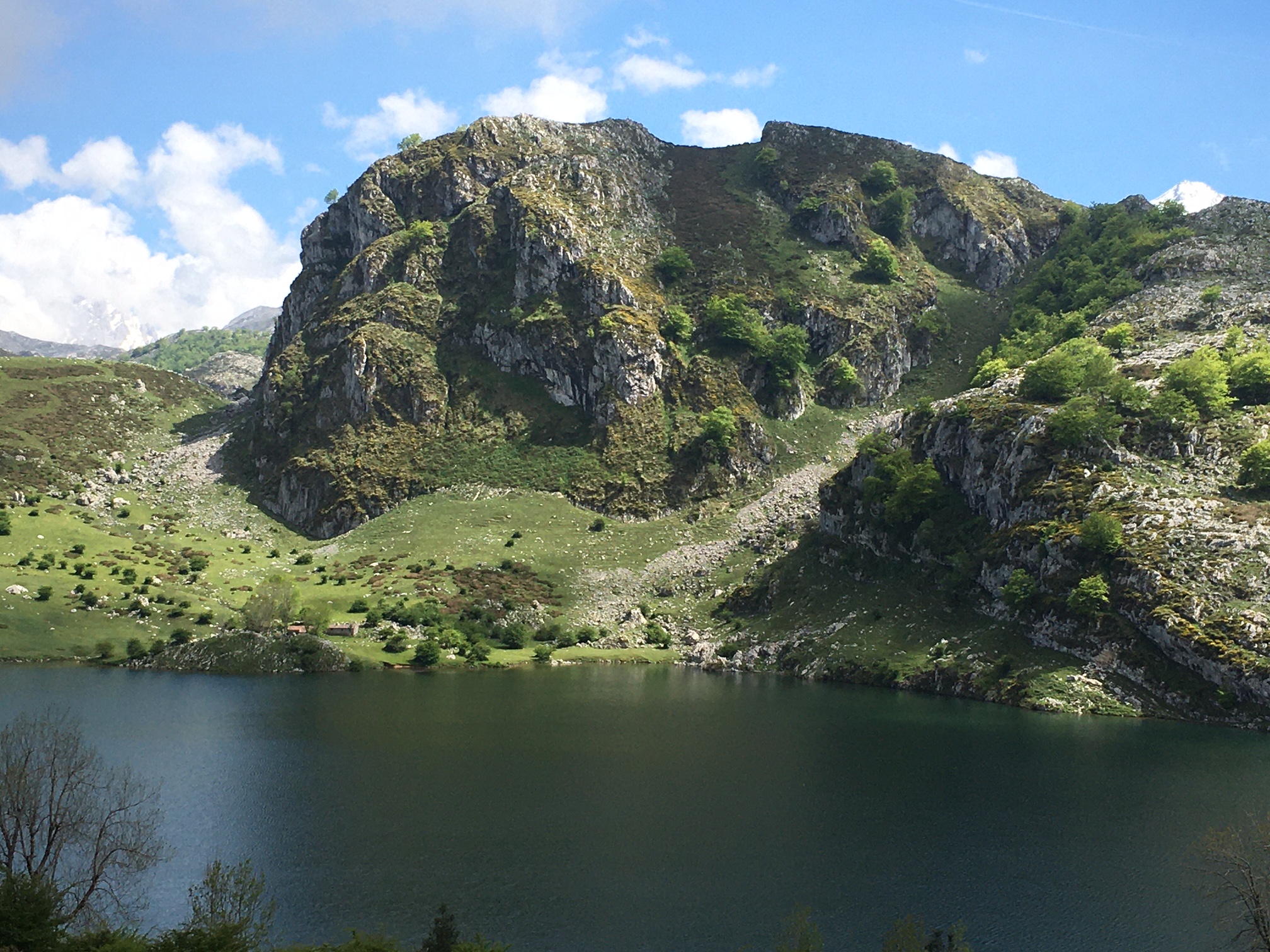
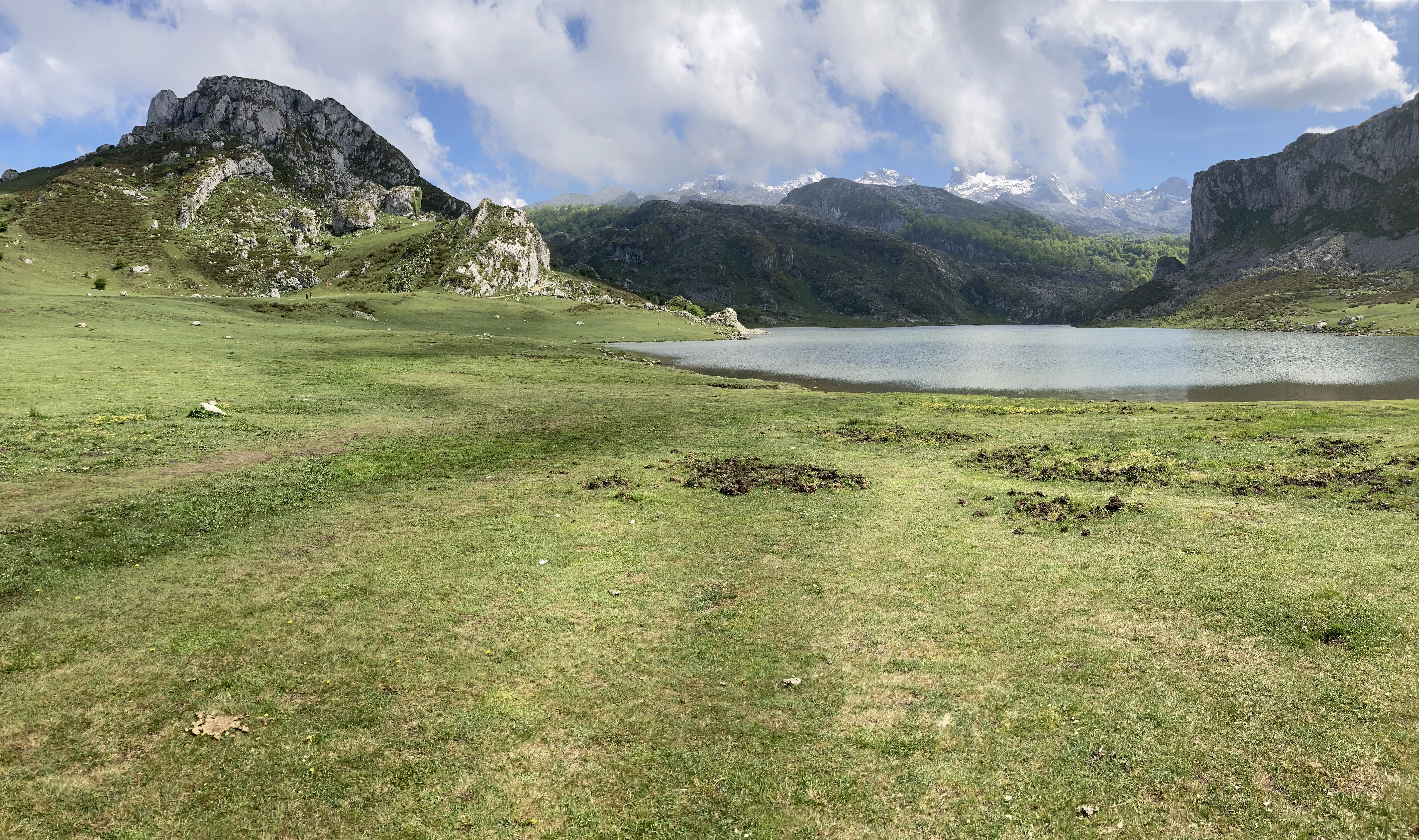
The Lagos de Covadonga (Lakes of Covadonga) are composed of two glacial lakes – Lake Enol and Lake Ercina. They are the original center of the Picos de Europa National Park, created in 1918. Eleven kms of super narrow bitumen (sheer on T’s side!) winds up to the parking lot beside lake…and a stunning backdrop of snowy peaks. We shared the road with a cycling group who had minivans to do the pickup. The ride was indeed very serious but we only saw one participant walking his wheels.

We weren’t up for a serious walk despite there being several trails around the lakes; it was late afternoon and our legs had done enough in the sanctuary. So, we just took in the view, enjoying the background melody of the cow bells.

Back at our cabin it was time for screen homework, a quiet glass of wine, thinking about packing up and moving on tomorrow. Then came a knock on the door and a visit by Monica, our host, to check up that we were happy with our stay and advising that we didn’t need to leave early tomorrow (we generally don’t).Two hours later the delightful Monica departed, after we’d shared (as well as a glass of wine) lots of stories, experiences and laughs. And we met Isadora, the robotic lawnmower (D would love one but we have no lawn) but that’s another whole story. Truly a highlight. When Monica heard about T’s fall and the bruising she hurried away to get the ‘magic salve’ that her mum makes; it’s guaranteed to ease the pain of the bruising from the fall on Sunday. It’s a herbal/ oil/ honey mix:legend has it that it heals everything from pimples to hemorrhoids! This is the place of myths, legends and visions after all!

And in the forefront…the salve to solve everything….

Dinner. Very late (Monica to blame): Potato (D to blame) omelette, with cheese, red onion, cumin (T to blame), garlic accompanied with Dia’s special (leftover) mixed salad. It uses up most of fridge items.

Ribadesella #4

Day 73. Monday 19 May. A Caprice Day.

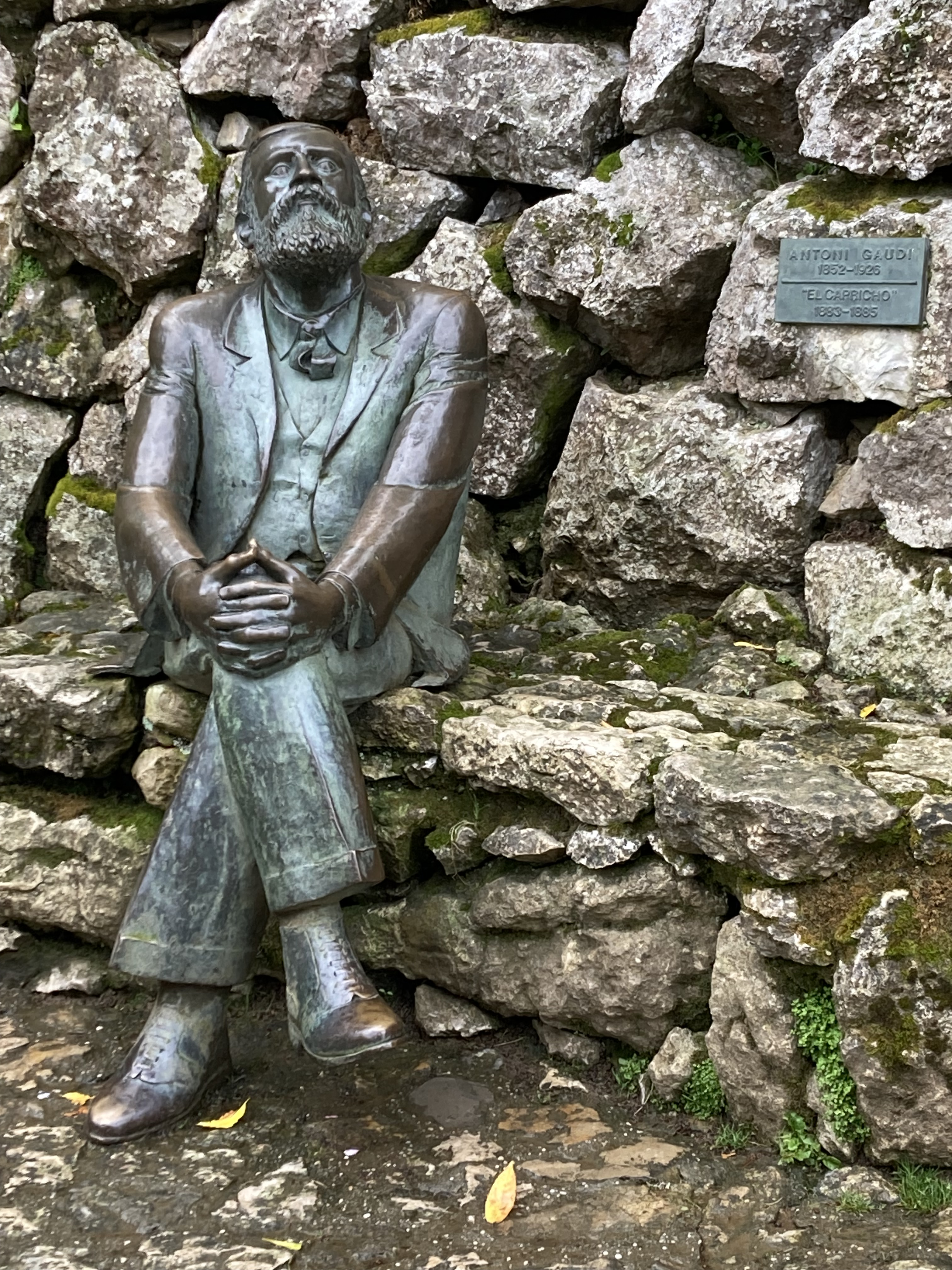
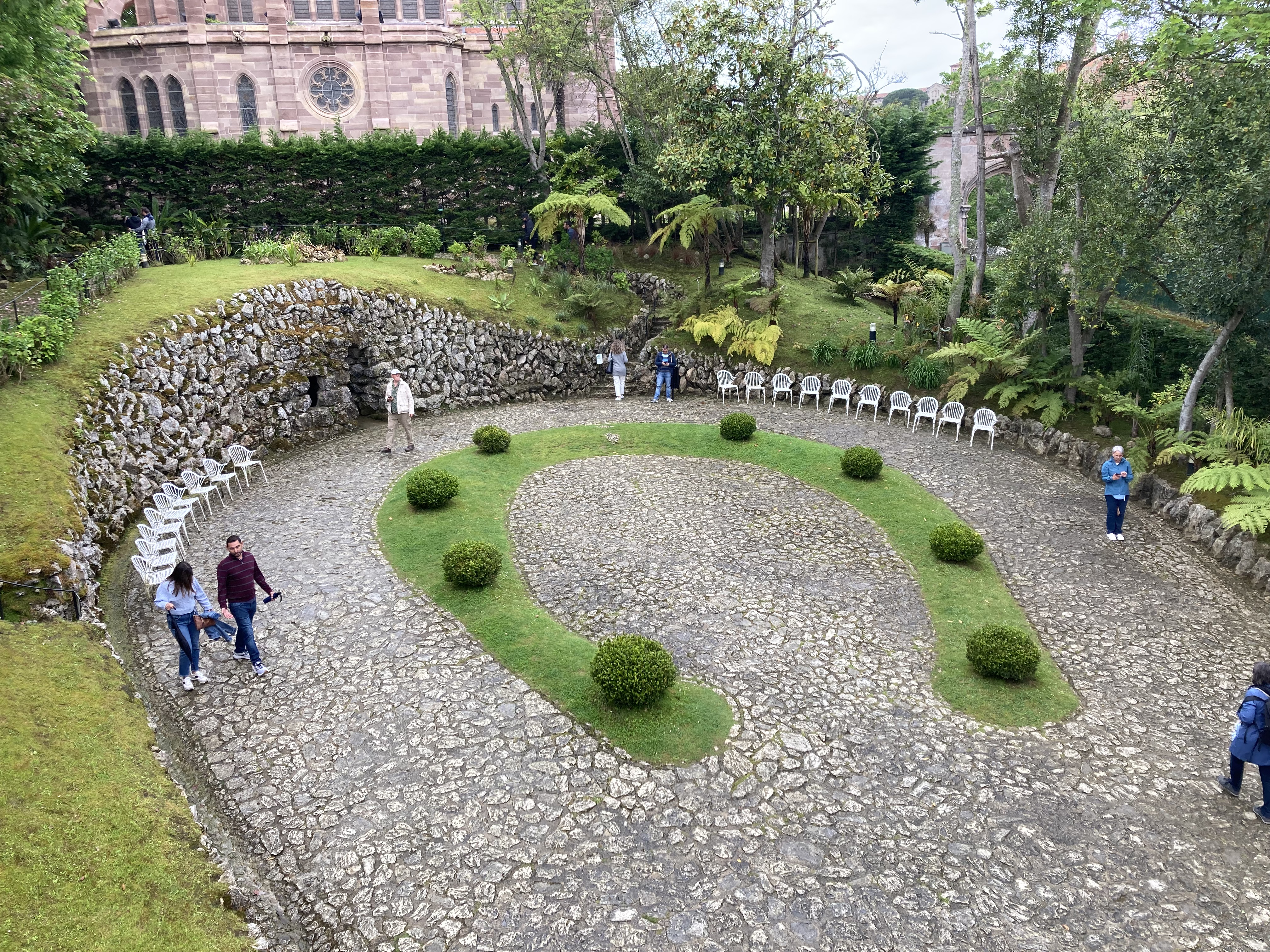
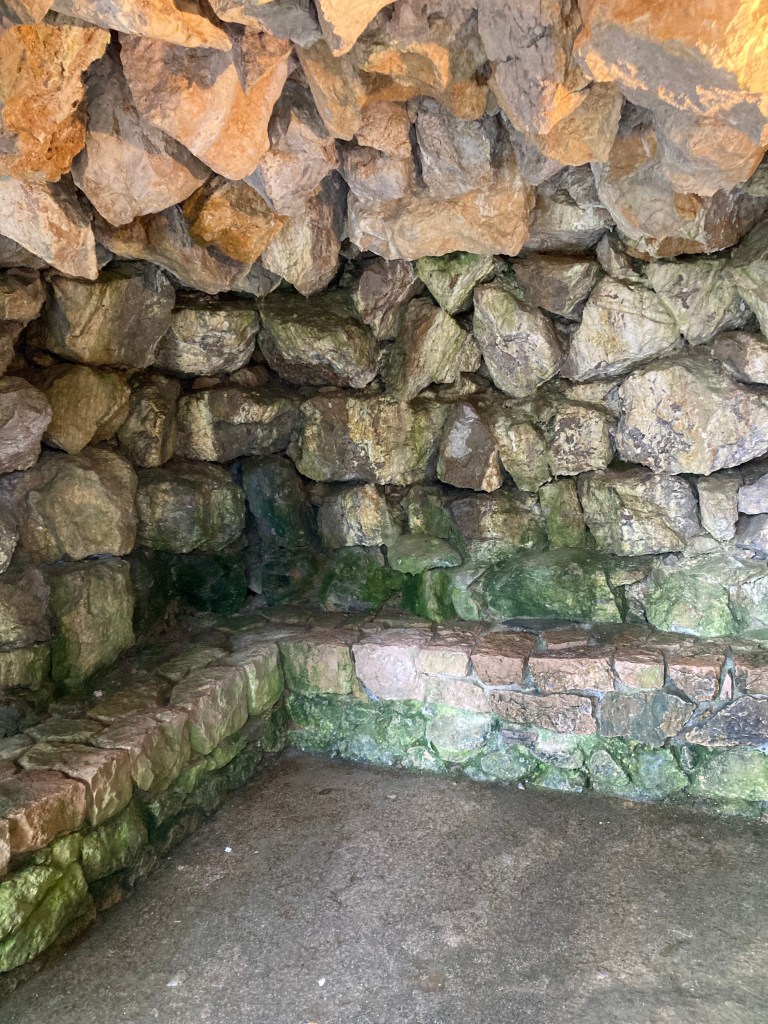
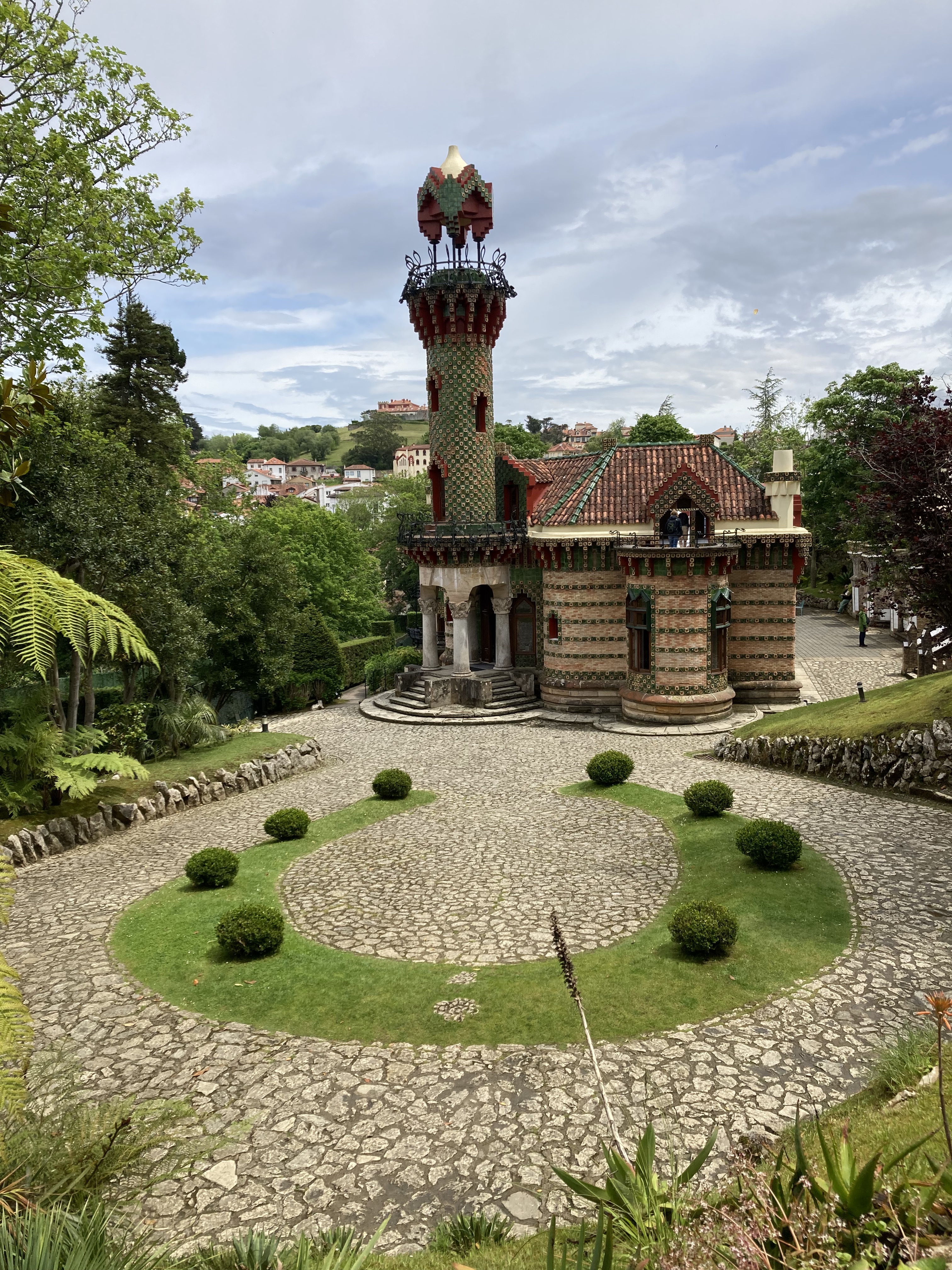
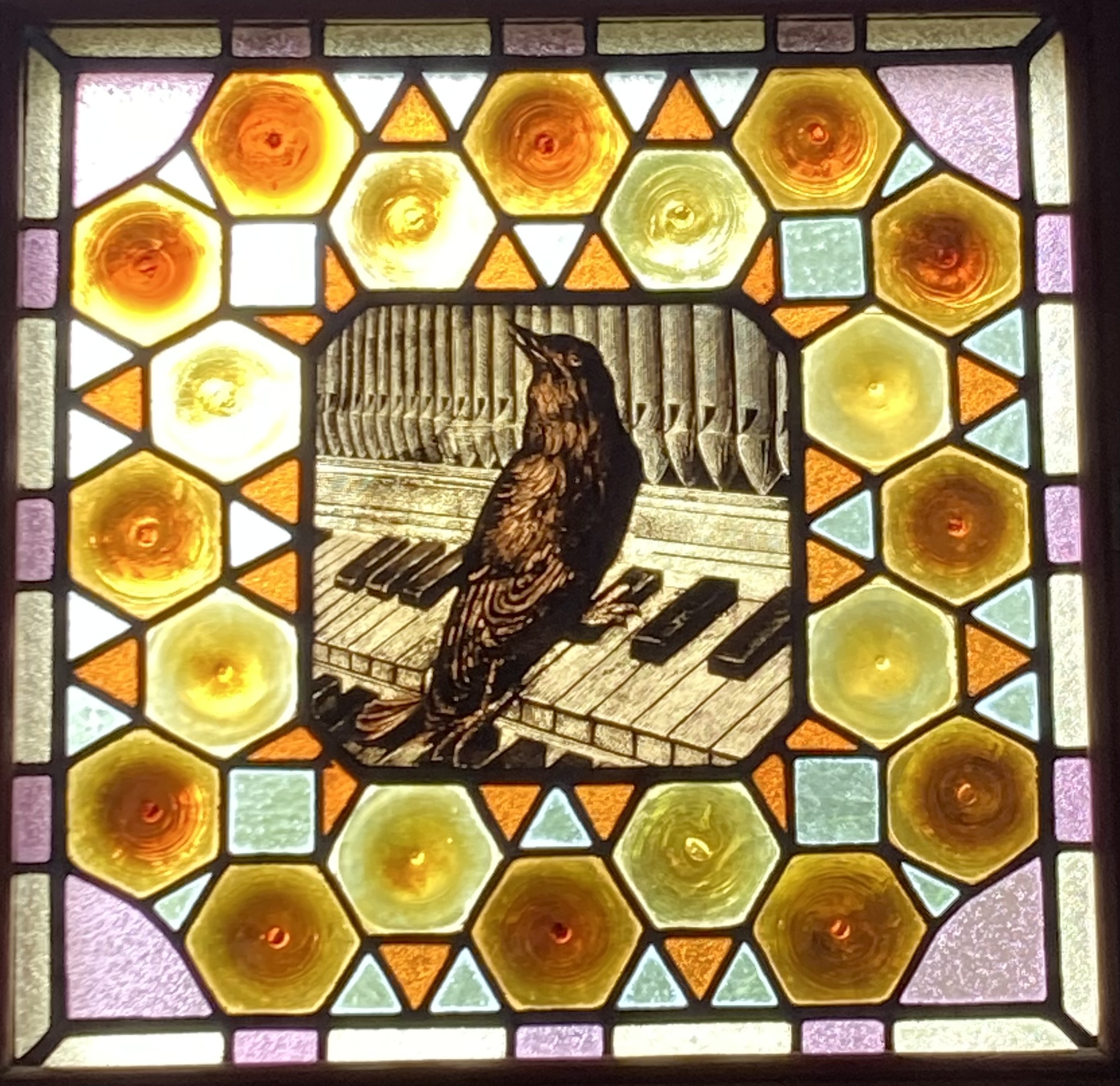
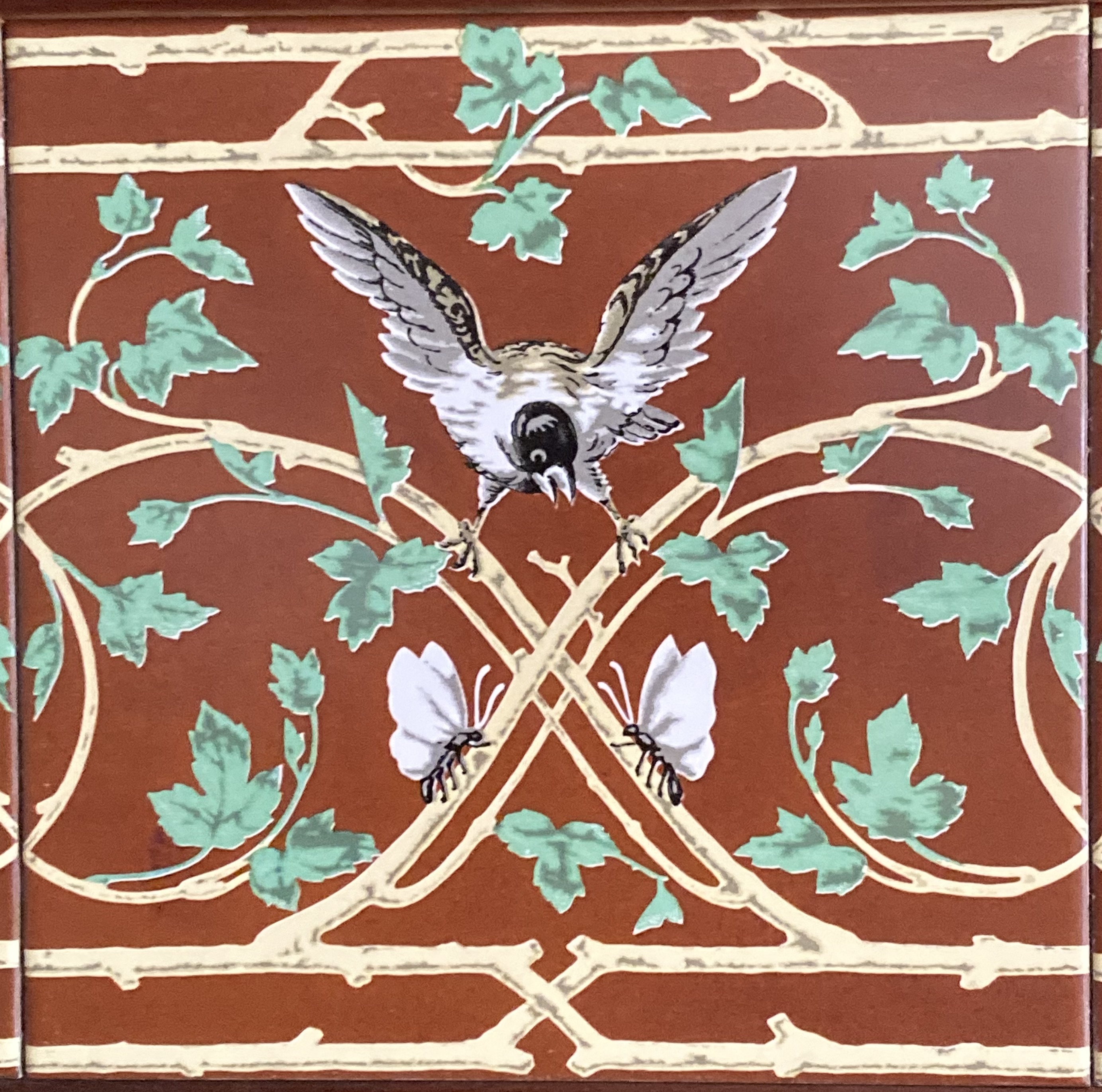
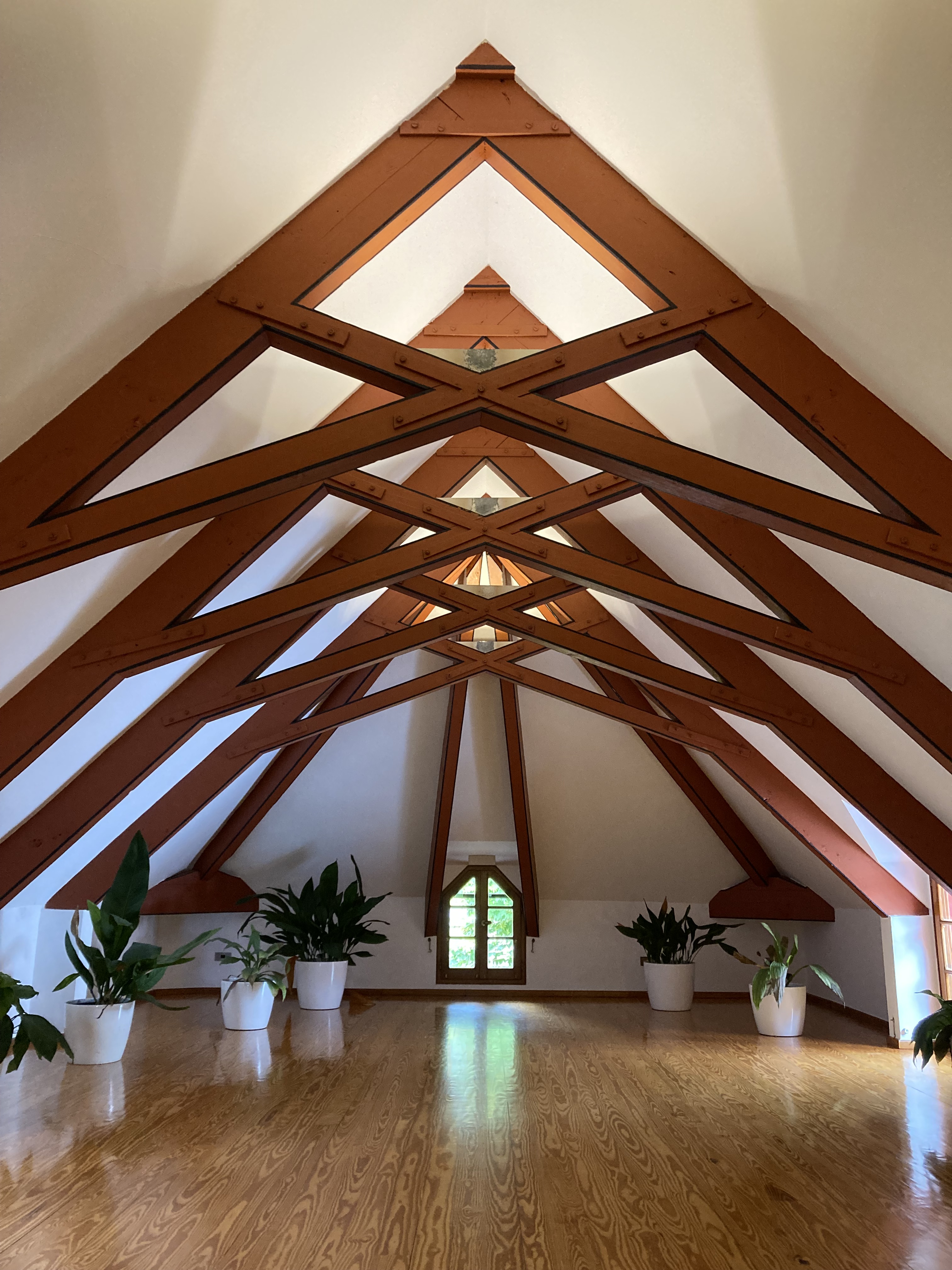
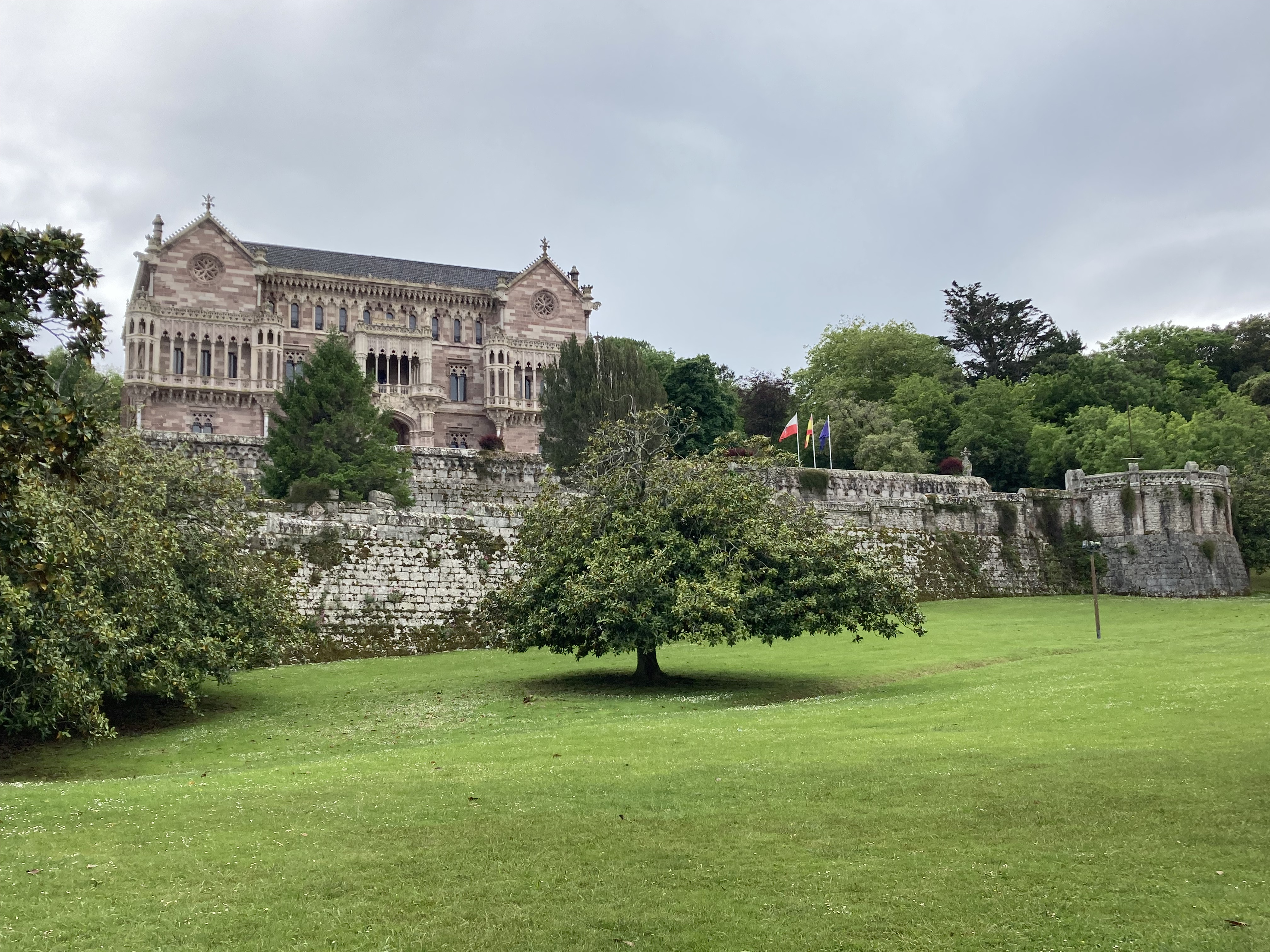
We’d heard about a Gaudi house (Gaudi’s Caprice) in the region yesterday from the German Camino walkers…in a sweet town, Comillas, just an hour up the road. Since the day was cool and damp, it was a perfect destination. This very early work of Gaudi, finished in just 2 years in 1885, ‘a house for a bachelor’, was a treat: a house of sun and music. Sadly, its owner died shortly after the project was finished.

Fortunately, after more than a century of changed ownership, disrepair and neglect, a change of focus has resulted in a beautiful restoration and it is now a museum. It was a quiet Monday so that made it extra special for us and T came away once again thinking about adding the Gaudi touches to Fisher.

After a sandwich and seated on the boot of the Peugeot, we wandered in Comillas; everything was still closed, including the supermarket!

The drive back to Ribadesella delivered light above the peaks of the Picos de Europa and the friendly butcher delivered a little piece of pork to bake.

Dinner. Baked pork, potatoes, aubergine, zucchini, red capsicum, with herbs, spices, onion and garlic.

Ribadesella #3

Day 72. Sunday 18 May.

Another slow day planned. After 10 weeks we are finding that changing beds regularly – mattresses, pillows, coverings – means that sleep is somewhat compromised. We’ve had soft beds, hard beds, small pillows, too few pillows, big pillows, heavy blankets, doonas, creaky beds, high beds, low beds…..aching backs, hips, legs…..

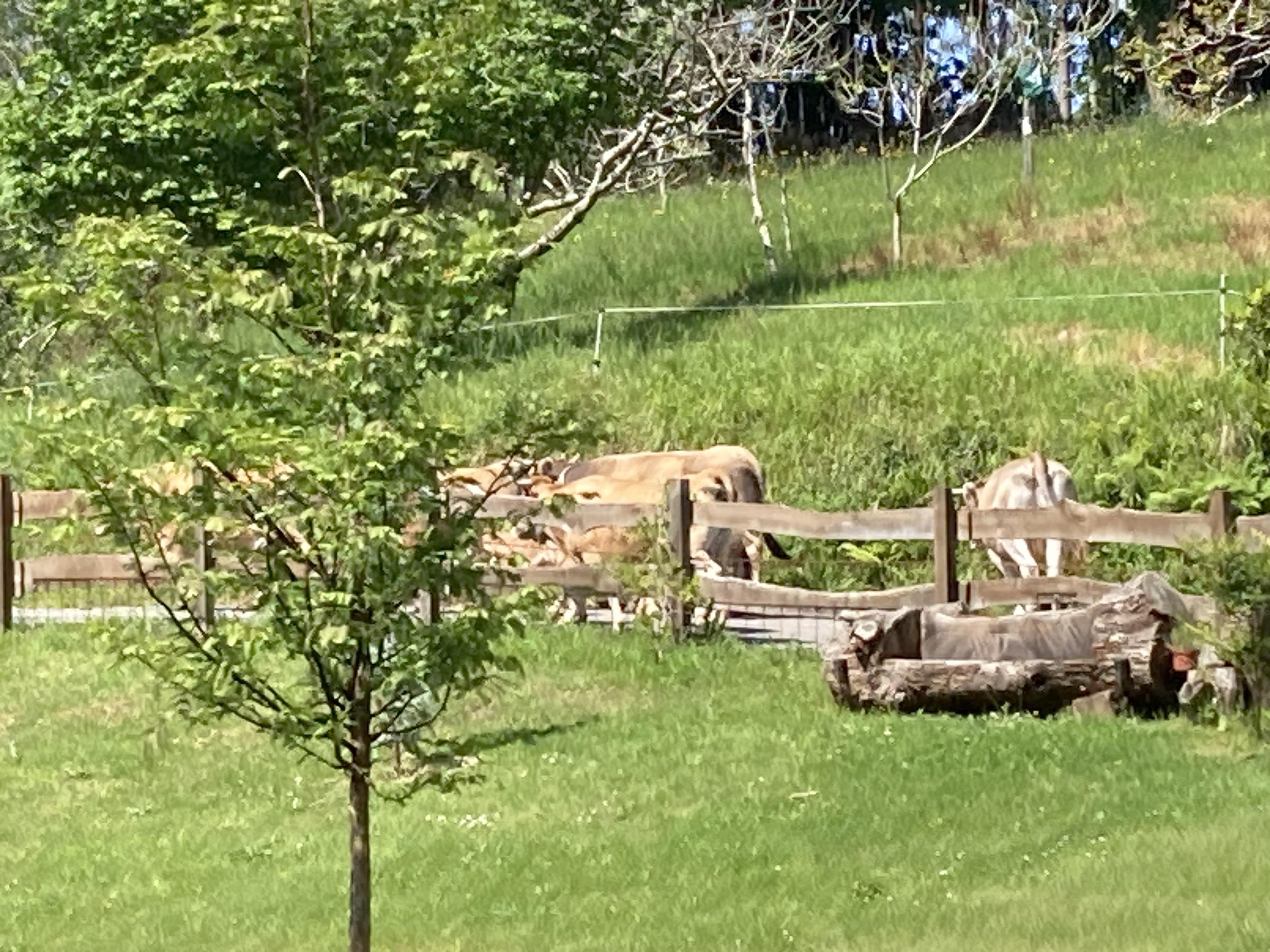
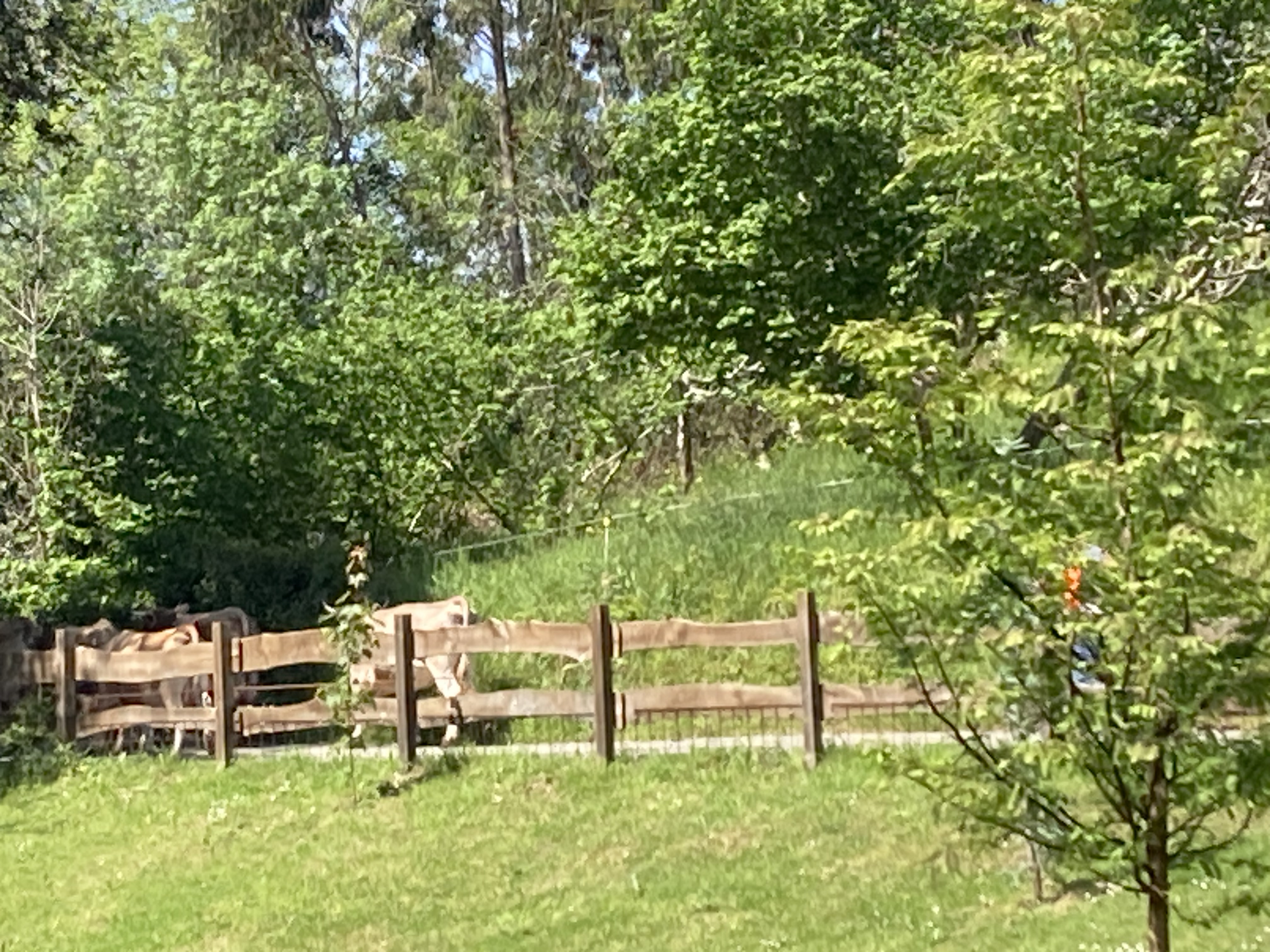
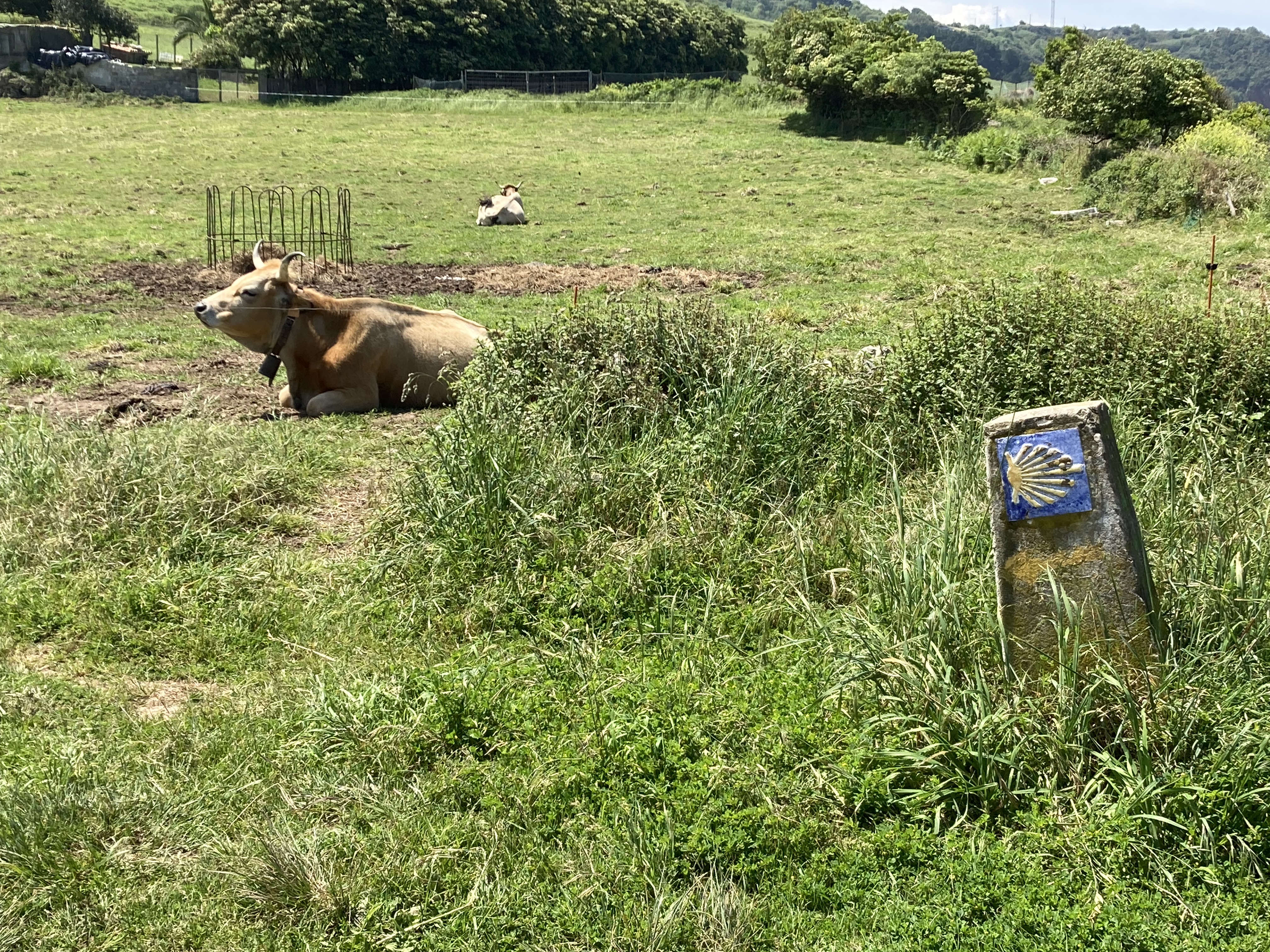
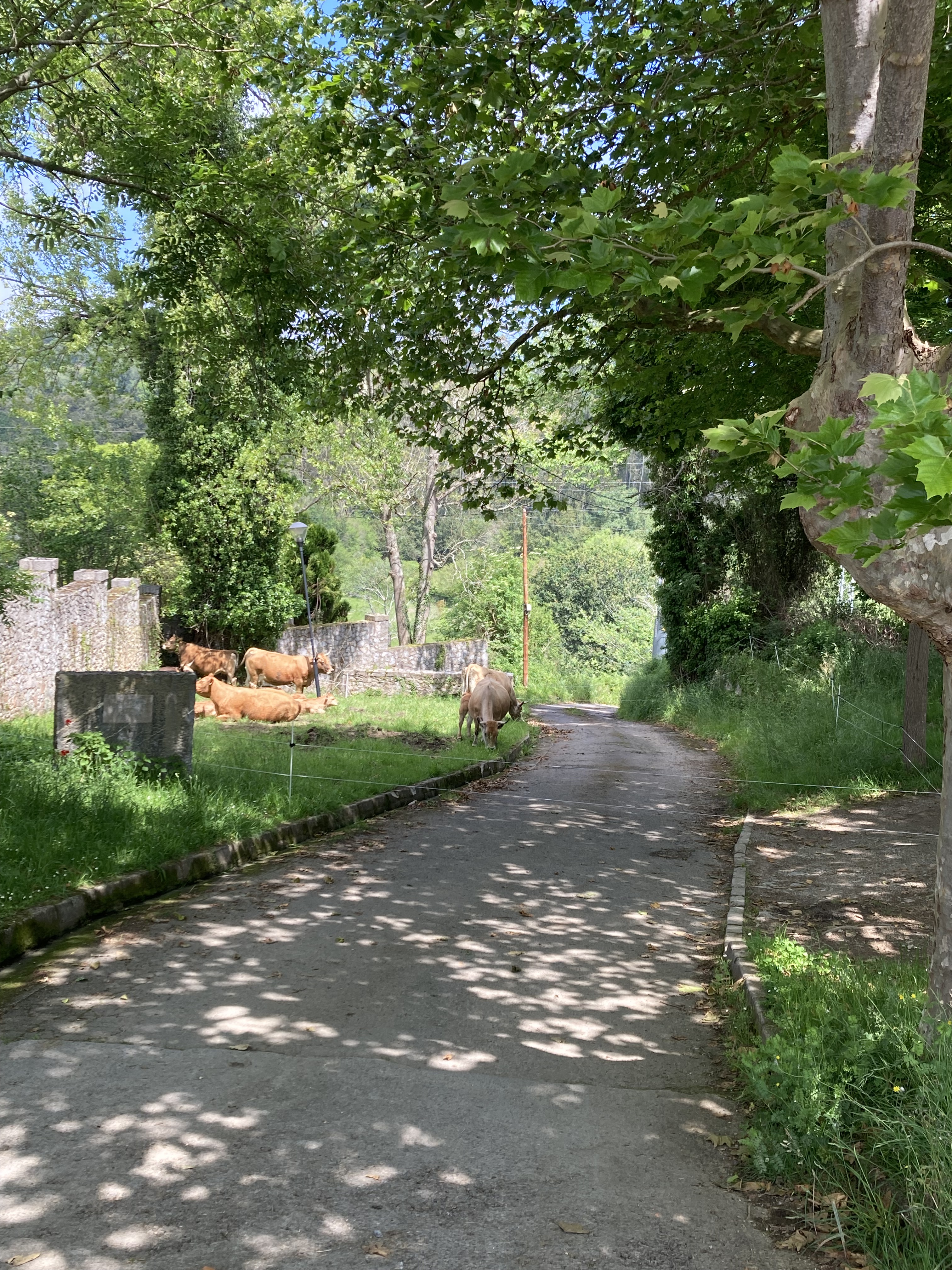
The local cows wear bells and the sound is gently melodic. There are no permanent fences: string or tape between sticks seems enough to mark their grazing patches. A brief special moment as two gents herded some cattle past our little place with the tinkling of cow bells. We were getting ready to leave and were  too slow to get a pic (not least because we’d both left our mobiles locked inside) but in departing 10 minutes later in the car we came into a bit of chaos. One cow and calf had sidetracked into a paddock on our left and were being redirected by the herder carrying a stick; two others had left the group and were racing down the road straight at us in a panic, stopping just in front of the car and, maybe after hearing the shouts of the herder, then turning back. The herder waved at us to go away, as though it was our fault! Or was he shouting at the cows? Did they listen? We did. We reversed, not wanting to have to explain to Peugeot about how cows had hit us.

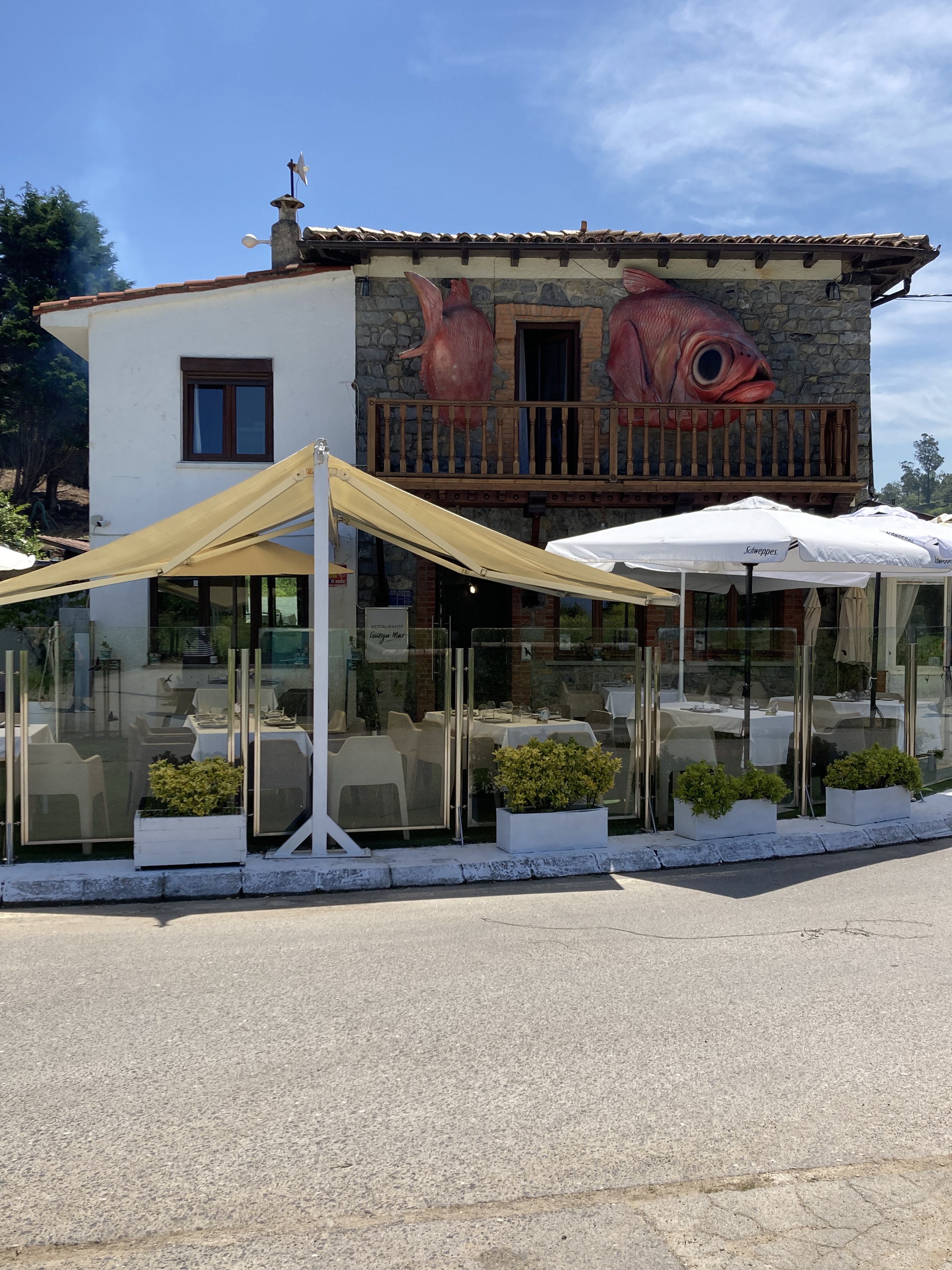
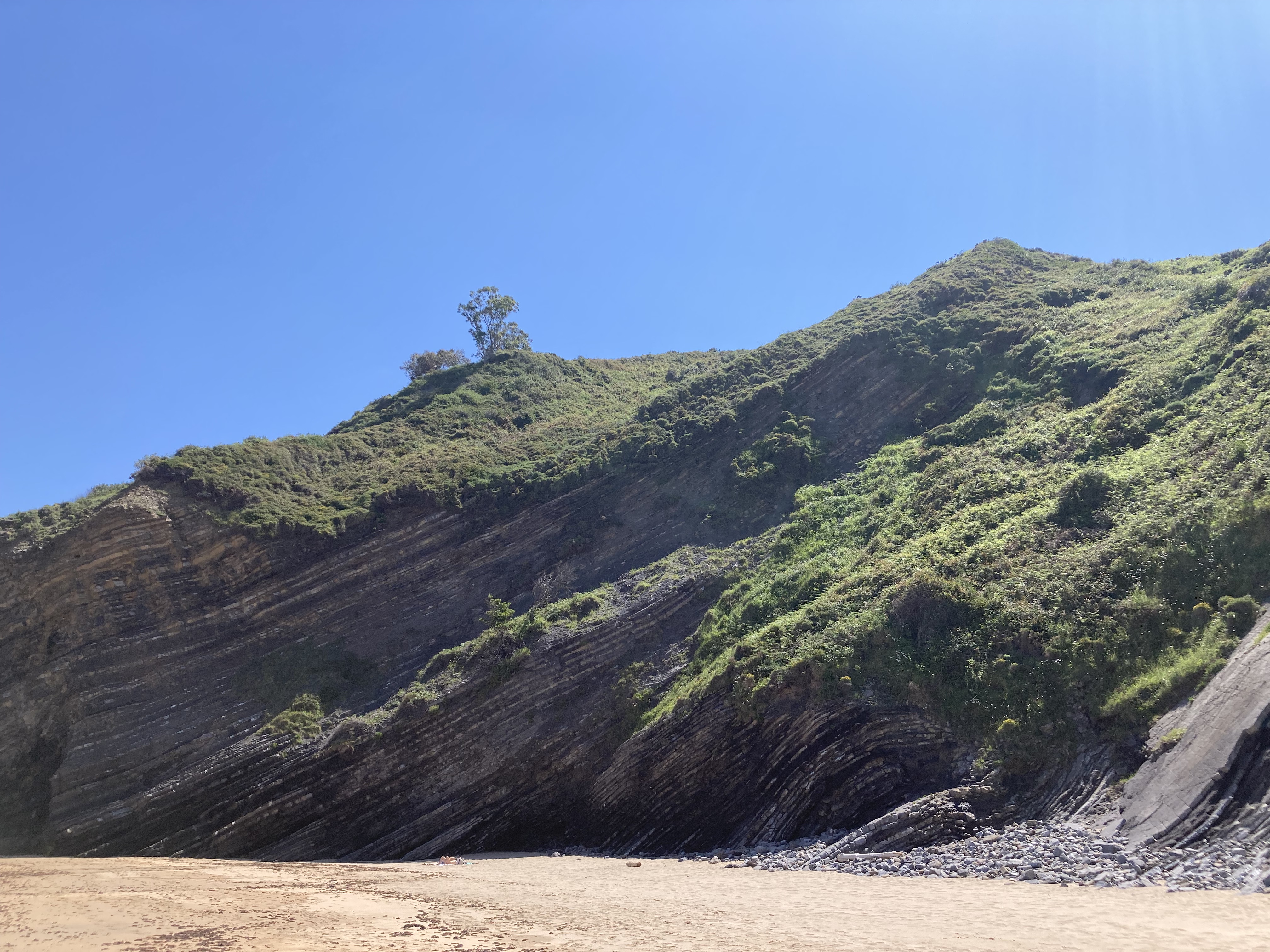
A walk on a ‘wild beach’ Playa de Vega, had been recommended by Monica and was only about 5 km away by road. Parked near a fancy-looking restaurant which was open but strangely empty on a sunny Sunday and walked down to the beach.

Wonder what it’s specialty is?

As we stepped from the smooth rocks onto the sand T slid off a smooth one and took a tumble, her left hip landing heavily on an underlying rock. Nothing broken, but shaken and a big bruise probably on the way. 

Walked along in one direction, then on the turn around came to a stream flowing into the sea, so opted to head inland to cross over a bridge. Needless to say we were ultra-cautious in getting back over the rocks!

No great views on the beach, putting aside the lady of a certain age passing us completely au natural, swinging in the breeze. There were a few blokes in that state later, but far enough away that our sensibilities weren’t offended. And it was cool, so quite likely that it would have been a small issue. A few hardy folk in wetsuits enjoyed the small waves on bodyboards (about our wave size too).

Returning to the foreshore track we said ‘ola’ to a couple walking towards us with packs and T asked if there were on the Camino: they were. We chatted for a while until they had to get moving to finish the 20 km target today, having had a late start to visit a cueva. They have been doing a 2500 km Camino for five years, in stages, this being the last. They can do up to 40 km per day, or adjust it to suit conditions, weariness, other activities etc – like today. They don’t book ahead: go to booking.com each morning to find somewhere for that night. They weren’t young – probably in their 60s (suppose that is young, relatively!) We have seen lots of Camino walkers, of all ages, at various times and as we talked a young man strode past with a very big pack: the walkers we were chatting with had quite modest ones. To farewell us, another cow contentedly chewed her cud, with her bell gently ringing. And the fancy restaurant was still almost empty.

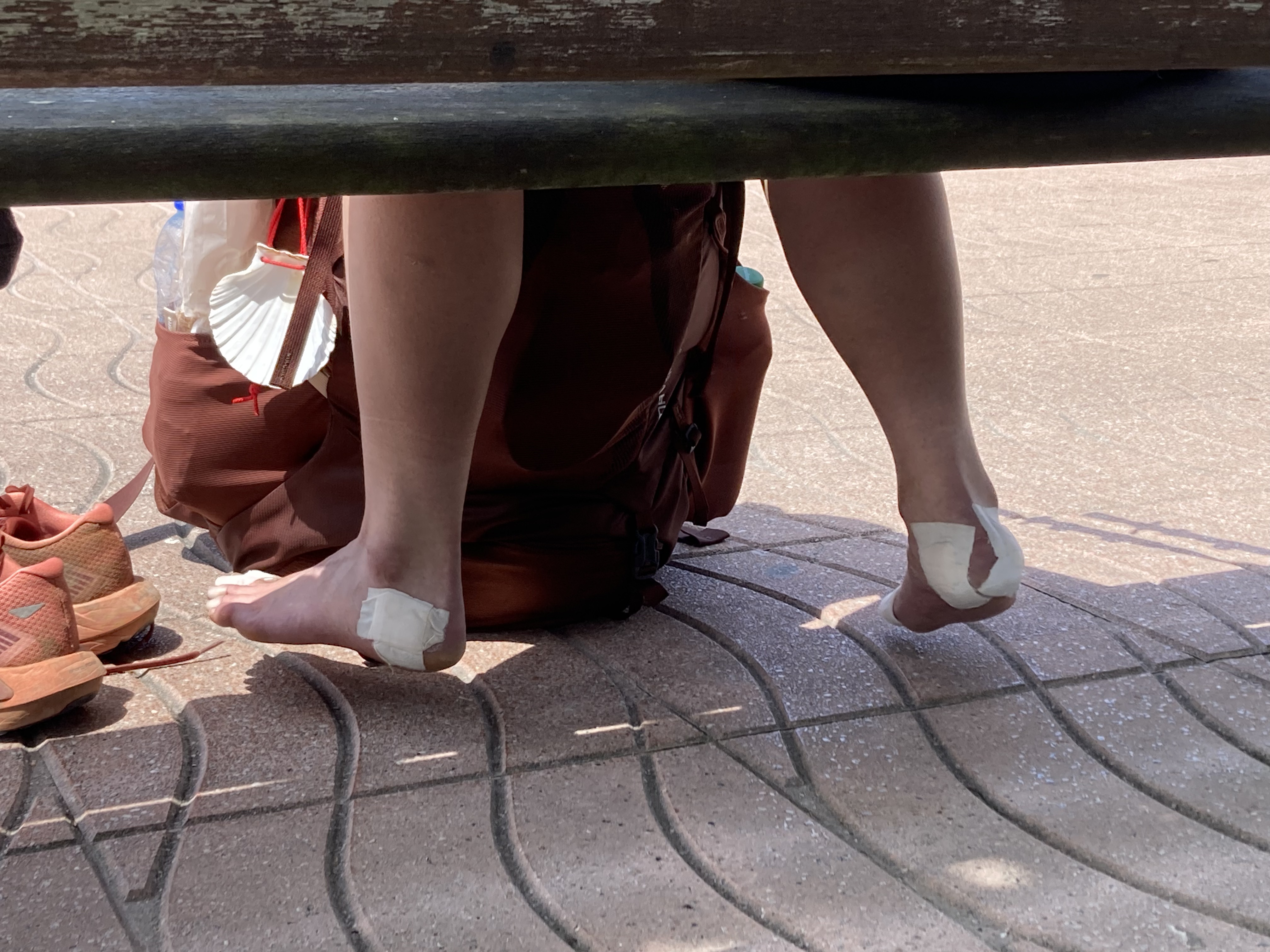
We dropped in to Ribadestrella hoping for some fish for dinner: no luck, but resupplied some other needs. As we were about to depart T noticed a young woman, with a big pack and a baguette,  sitting on a bench on the esplanade, shoes off resting her feet ; both were bandaged around the heels and toes. Ouch! T struck up a conversation and offered sympathy but she insisted things were improving; she’d had a few rest days and tonight’s bed was only 5 km away – she is Finnish, on the Camino by herself.

Dinner. Cork screw Pasta, with aubergine, zucchini, red capsicum, red onion, garlic, mussel sauce, and herbs & spices.

And as we head to bed, a thunderstorm is brewing and heading our way. Cow bells replaced by thunder claps!

Ribadesella #2

Day 71. Saturday 17 May.

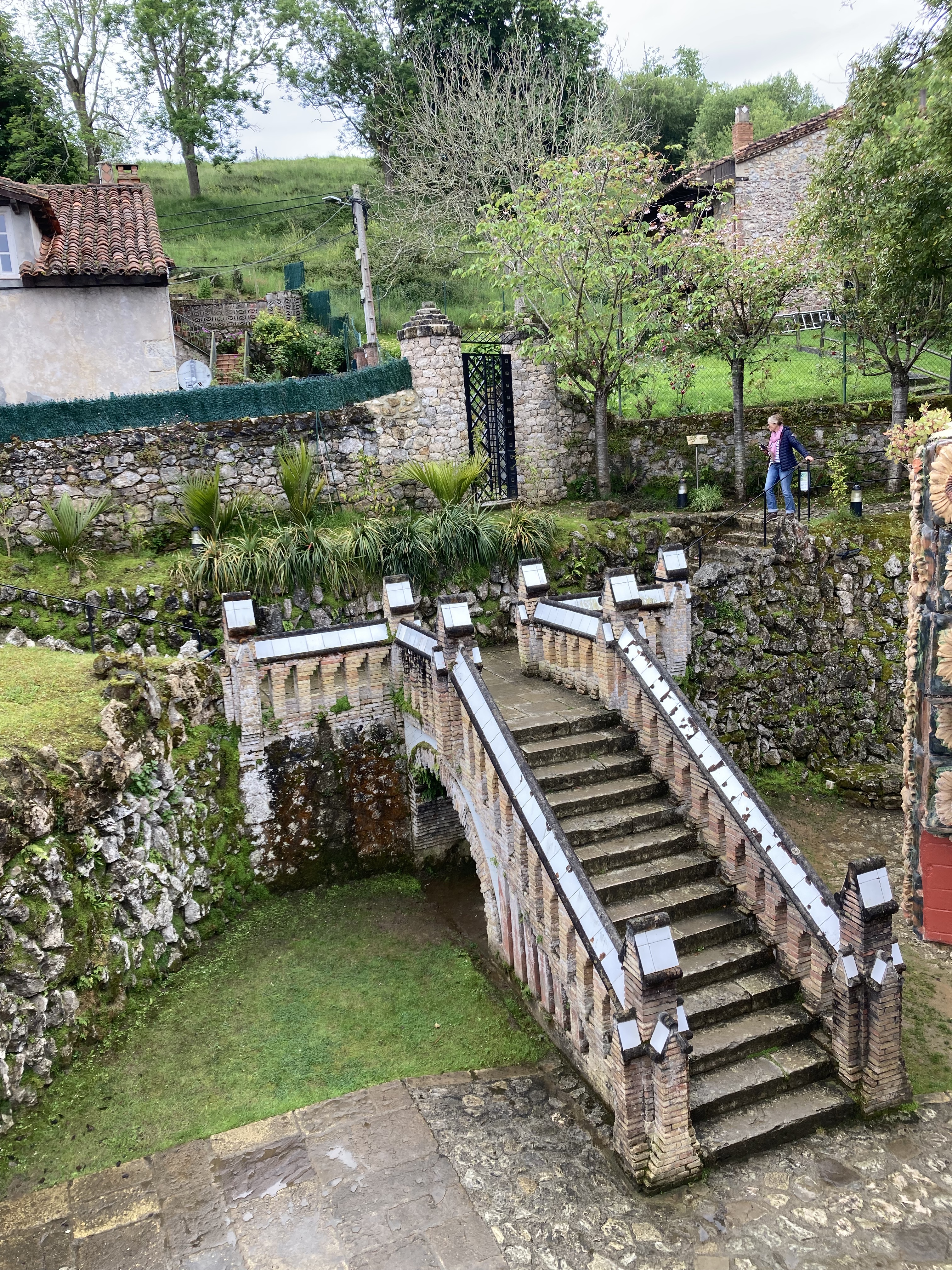
A modest day to recover from the long time in the car yesterday. After chores, a short walk into El Carmen, our local village, to check out both the other access route – we’d been advised that the one we came in on may well be closed off – and to find out what was going on. There had been loud explosions last night from that direction that D had thought were shotgun reports, or possibly scare guns. This morning there were more, much louder, and a piece of debris (a meter long piece of narrow doweling) fell into our backyard! Monica informed us, after D asked if WW3 had started, that it was noise to attract people. As we walked, more fireworks, and we could see smoke trails before the explosions. Turned out it was the annual fair, the Féria de S. Isidro, a fairly contained event, and our access was indeed blocked off to contain some cows.  The good news was that the alternate access was fine, albeit a little bit harder to navigate. Several backyard horreos caught our interest. They are traditional backyard raised storage huts for animal feed/grain/ vegetables, keeping moisture and rodents at bay. And one structure, clearly based on a horreo, was clearly being built as a residence with steps and planter boxes – T thought of a ‘granny flat’, but perhaps (probably) it’s going to be an ‘authentic’ tourist accommodation

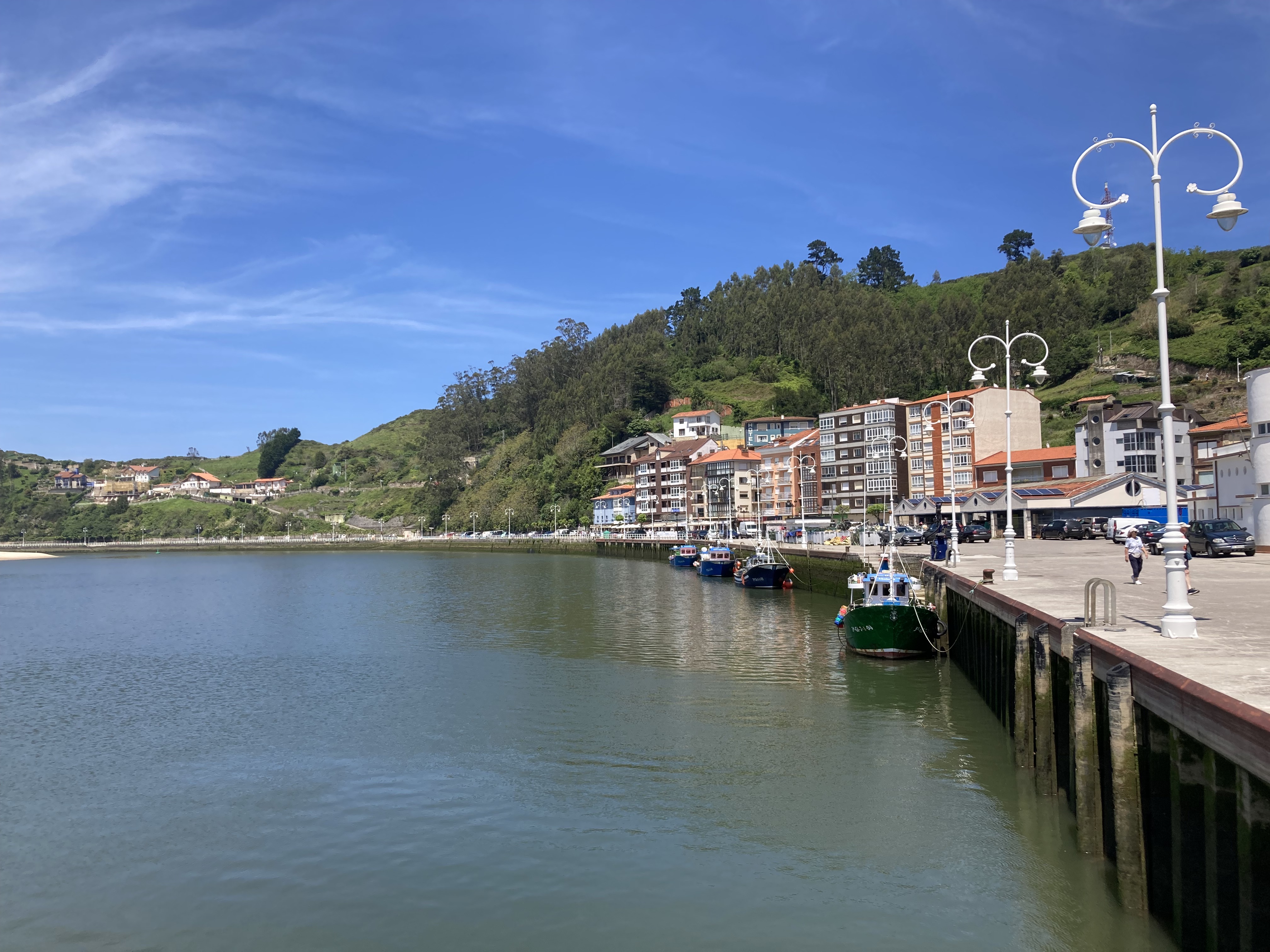
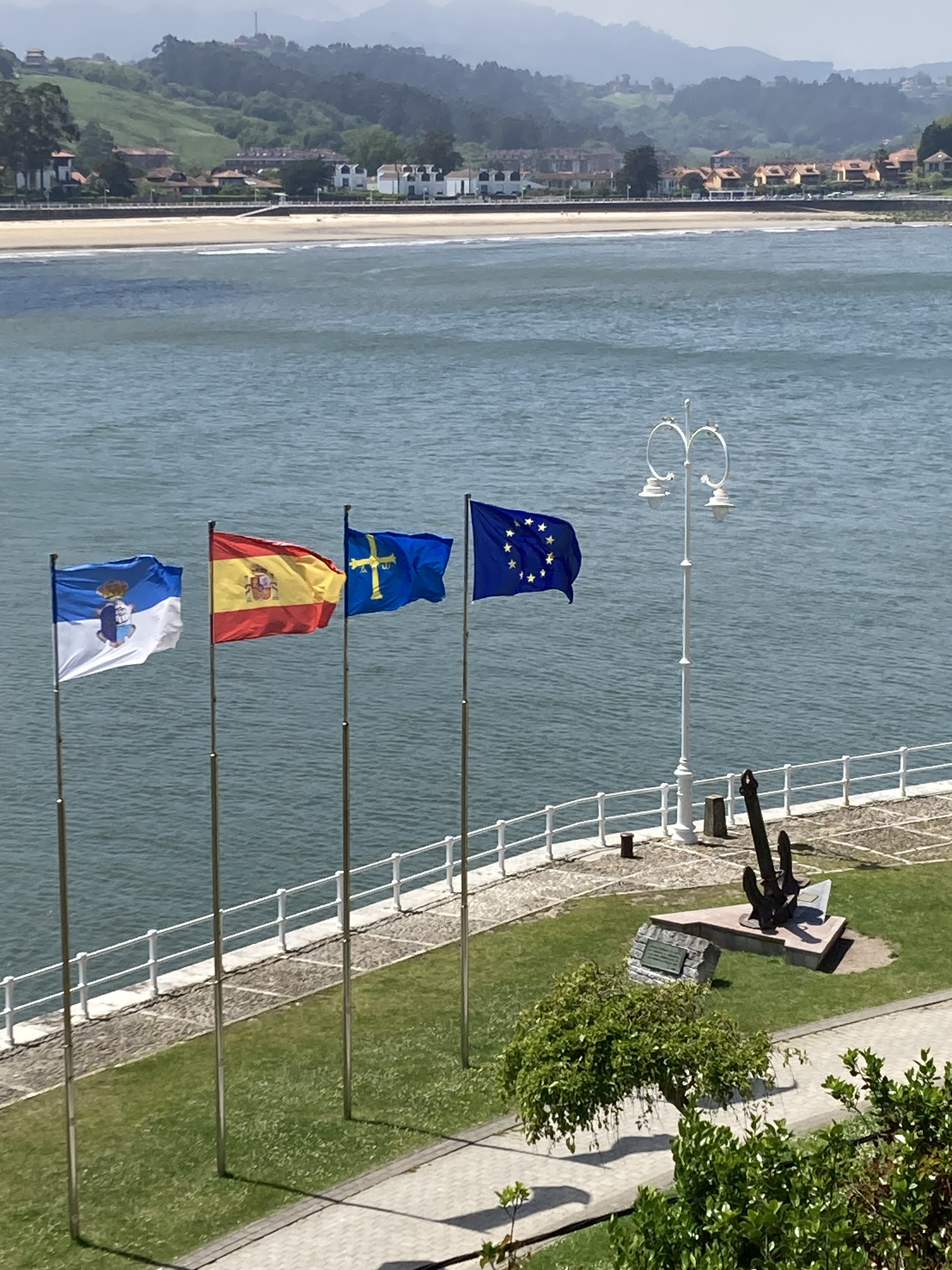
After coffee, a 4km drive into Ribadestella, a picturesque town on the mouth of the Rio Stella. Walked along the river side, with the cafes, restaurants and bars already humming and a few kayakers in the bay. A couple of SUP riders were later seen struggling to paddle their way back into the river: both eventually got safely onto the river sandbank. There were fishermen along the walkway, and across the river on the sand.

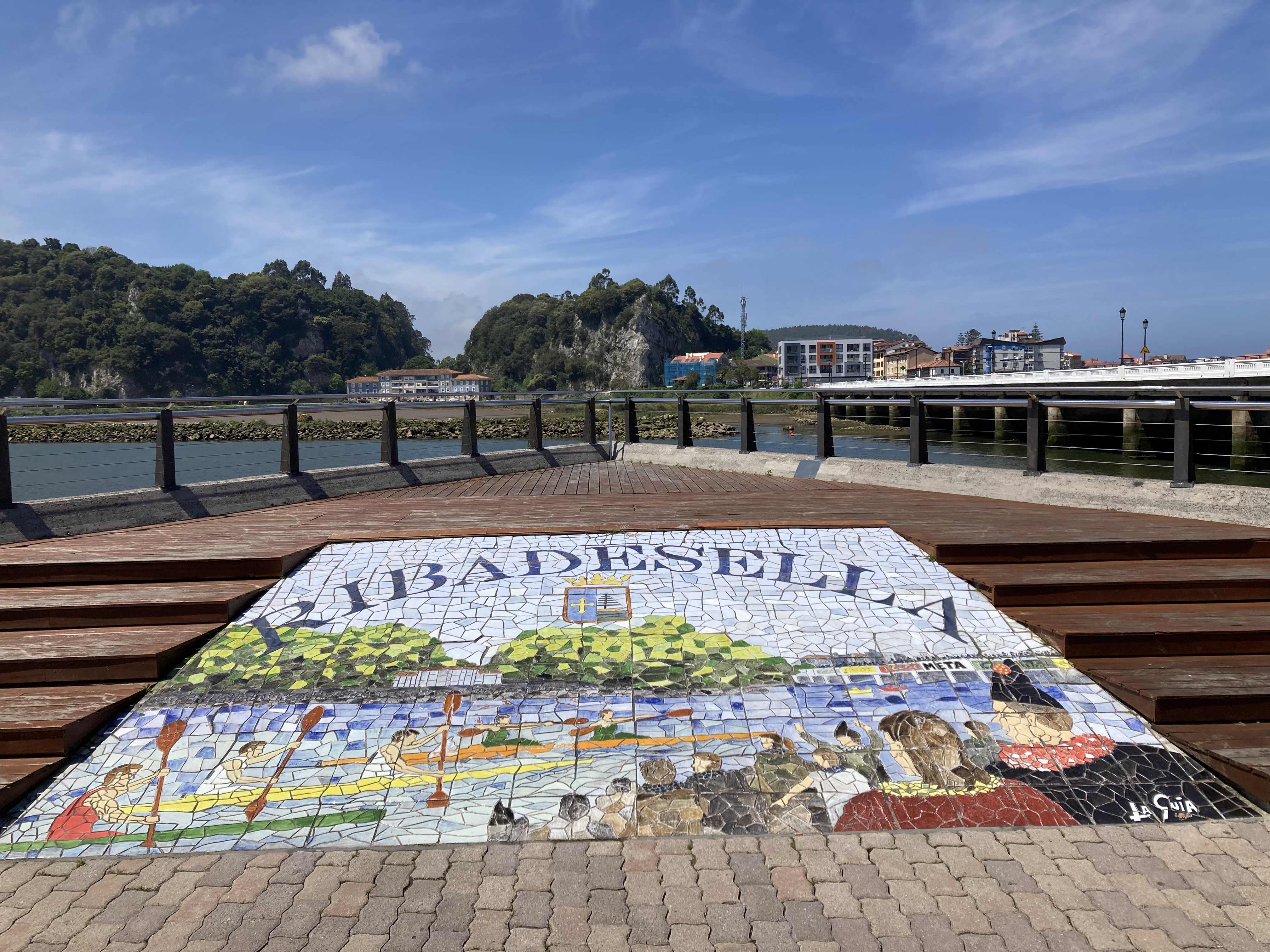
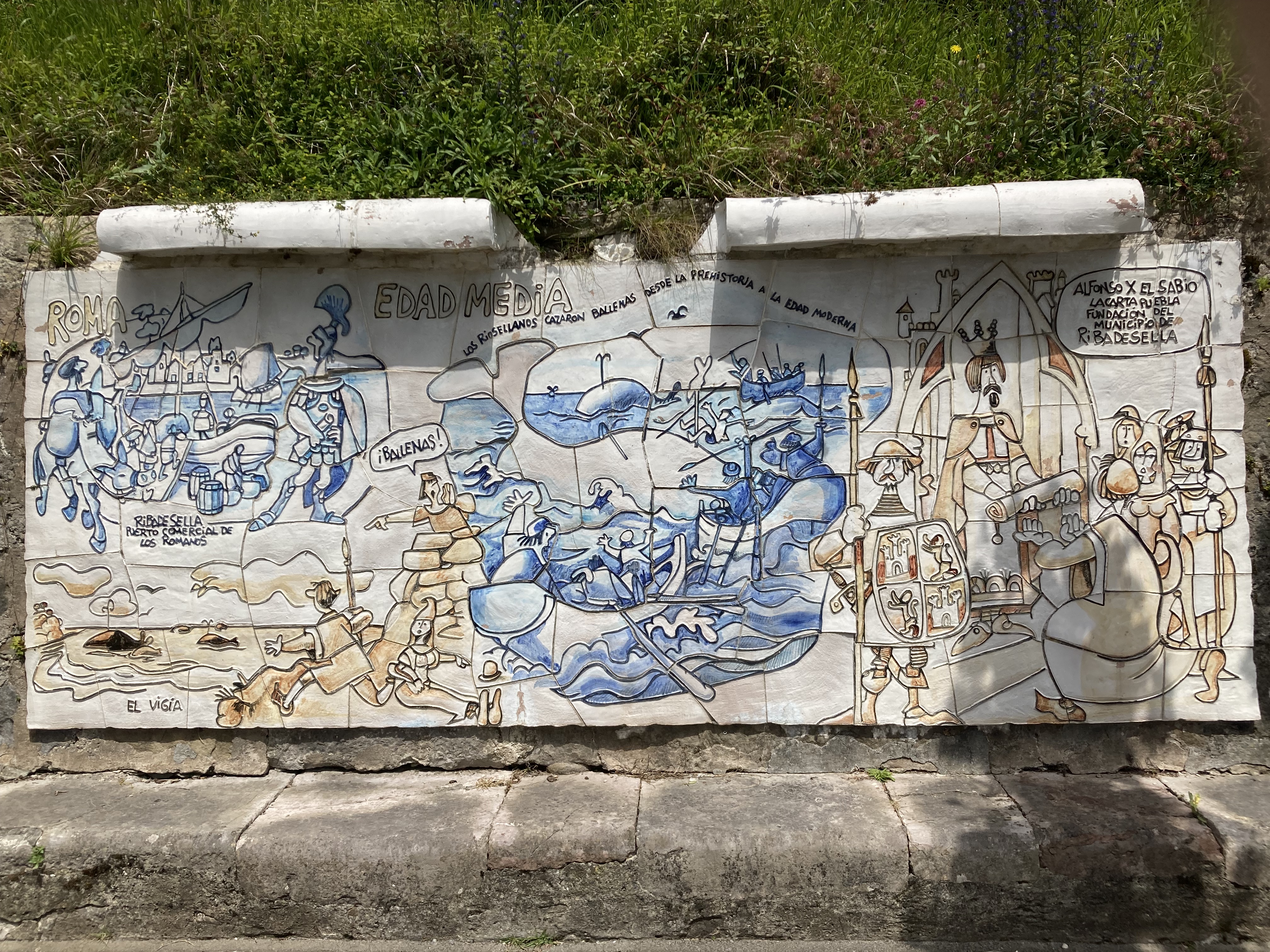
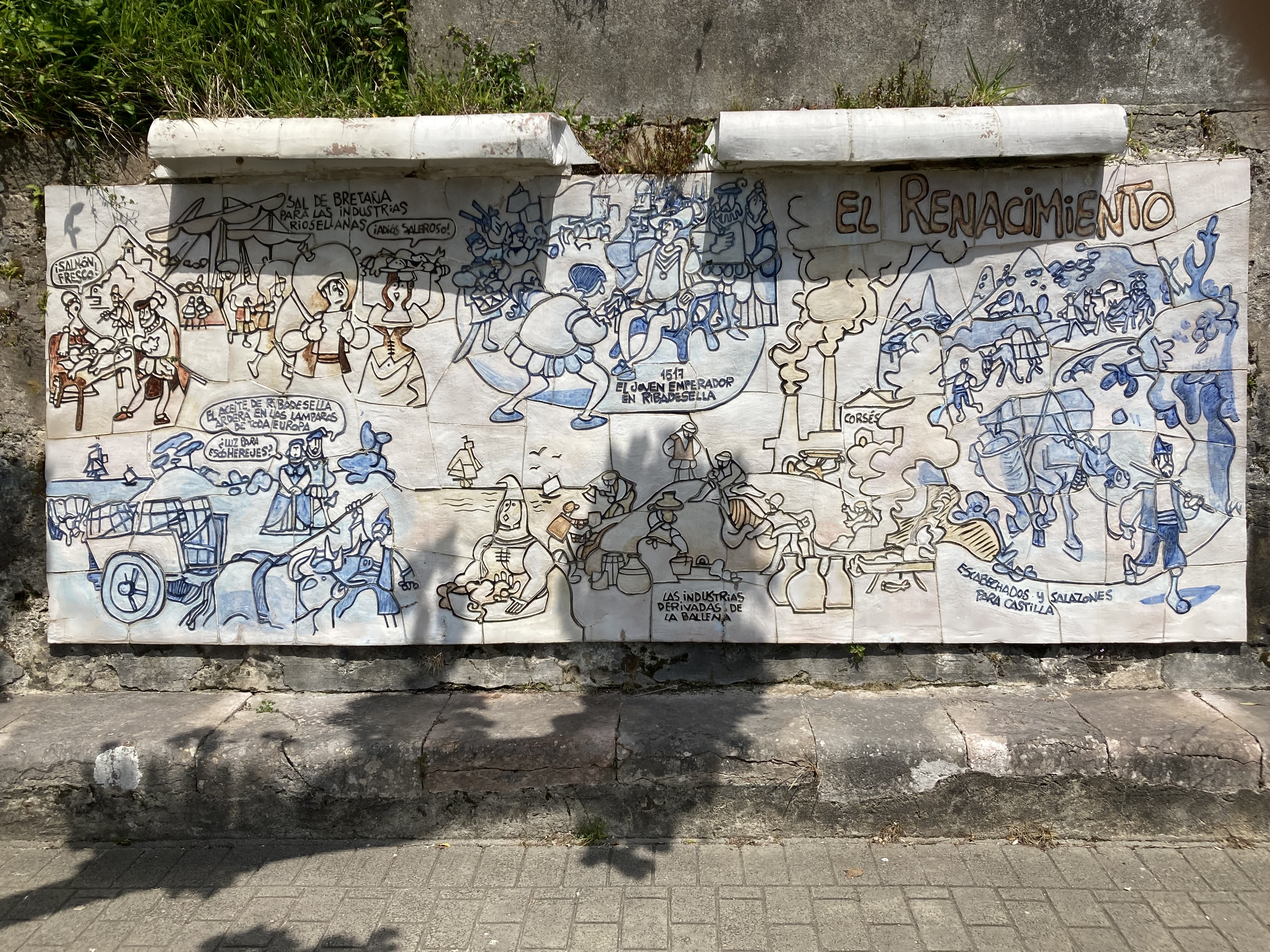
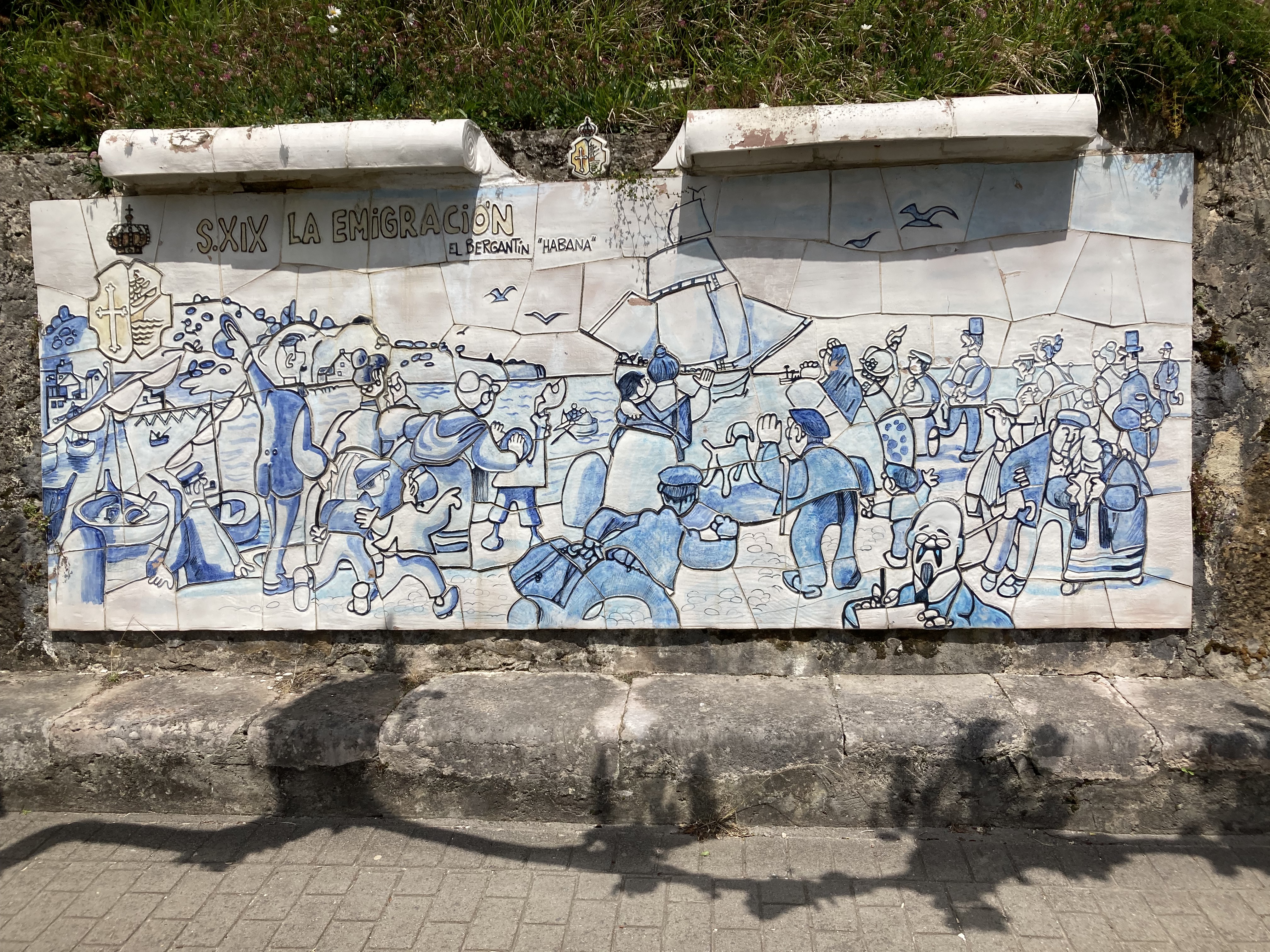
The walkway had a permanent display of tiled dioramas depicting the history of the town: they were sort of serious comic book, but a great history lesson. Pre-history, Romans, French…but interestingly, no Islamic period.

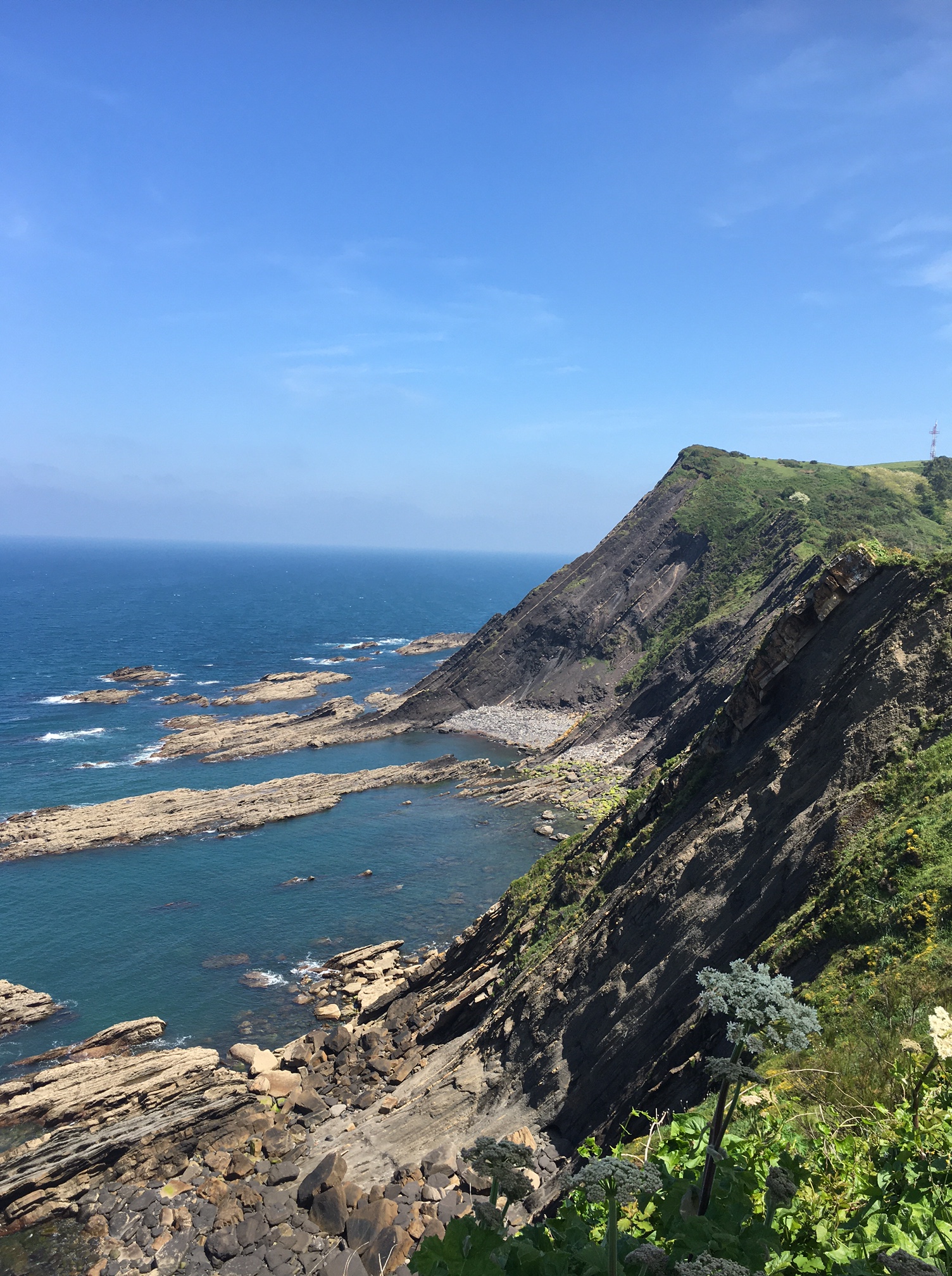
Decided to take the stairs to the Ermita de la Giua, a small capella on the headland overlooking the river mouth and out to the Cantabrian Sea, which gives way to the Bay of Biscay, which gives way to the endless North Atlantic Ocean, as far as we could determine from the untrustworthy Doris. The chapel is dedicated to the Virgin of Guía, patron saint of sailors. Tough gig. D obligingly took some photos of two couples, both of whom didn’t pay the two euros he demanded: perhaps they thought he was joking? One of the couple engaged us for a while. They are from Argentina, and the lady had good English, so translated back and forth to her man. Lovely exchange. The cliff faces demonstrated the geological impacts over millions of years, another reminder that nature will take its course.

And as we were leaving, we discovered a secret that is political dynamite: undeclared assets. The street sign is probably accurate.

But good luck to him, it was only 34% occupied.

Back to town, via Dia to pick up some essentials, then home, passing some horses being ridden back to their homes: traffic was suitably obliging. On the way, stopped in at the fair: D has become quite enculturated and now quite happy to put on the hazard lights to block the traffic (there wasn’t much, to be honest) while he bought a new corkscrew, which he’d spotted this morning but forgotten to take any cash. There are priorities, after all. And no one complained!

Now, which way does the traffic come……?

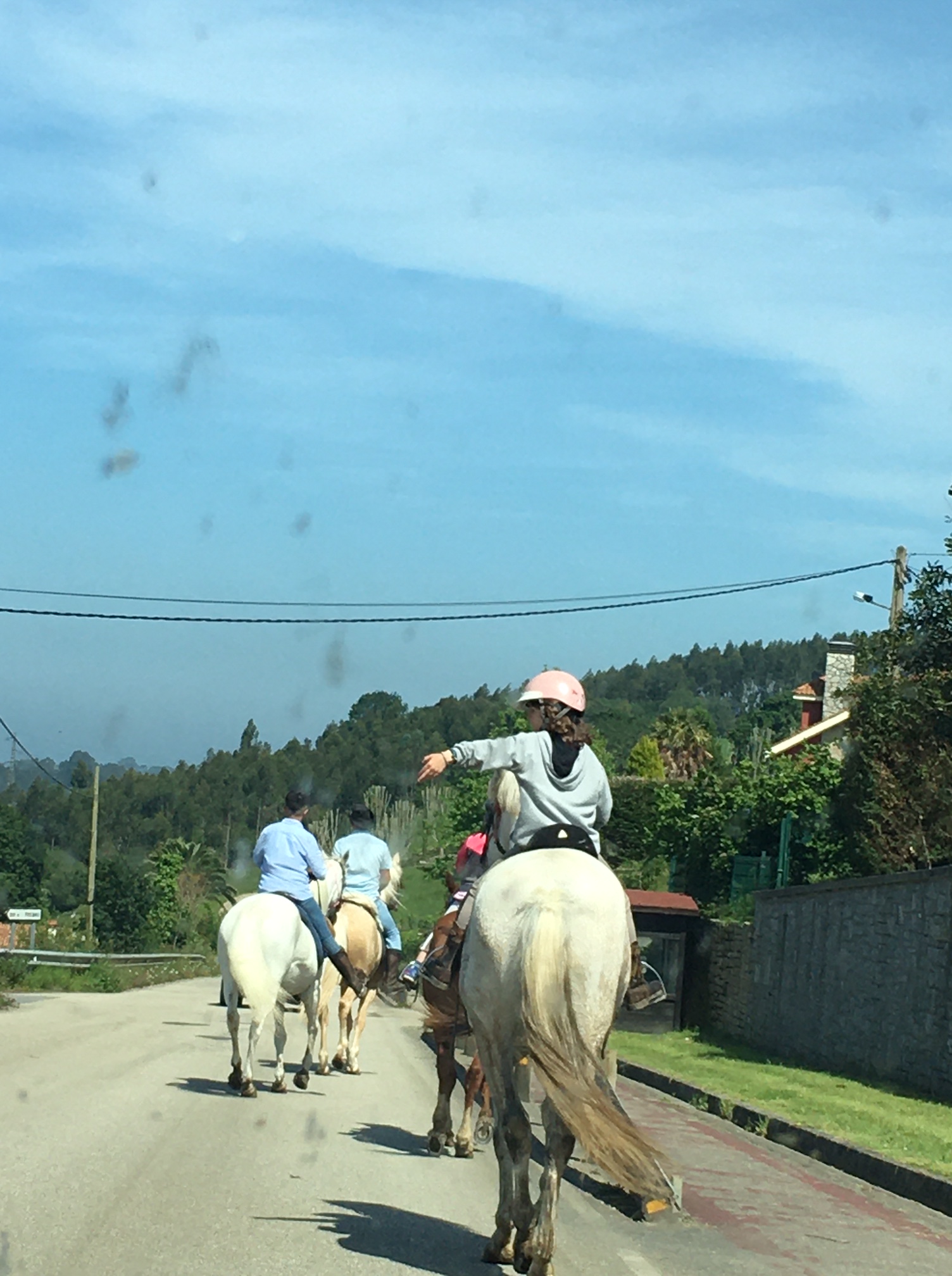
And as we headed toward our intersection, we came up behind some other horse riders going home from the fair. We were quite happy to dawdle along until our turnoff, although the young rider at the back of the group continued to wave us and other vehicles on.

That was in fact a polite gesture…

As we briefly sat outside enjoying the afternoon sun, enjoying some tapas of tempura vegies, the pub up the road was rocking (or whatever the Spanish is for loud music). And the missiles fired once again. Time to get the chicken-feed fired up.

Dinner. Mussels – just the standard white wine, onion, garlic, tomatoes…..

Ribadesella #1

Day 70. Friday 16 May.

A big day in the car: 615 km to Ribadesella in northern Spain. Not much we can say about the trip – eight hours all up. We took roads with no tolls, so it was a bit longer than it could have been, but probably a bit less stressful. 

The upper Douro hung with fabulous mist initially. Then the landscape moved from mountains/valleys to plains planted with wheat (could have been in WA, we thought) with fewer and fewer villages. After an hour or so and coffee at Miranda we crossed into Espanha.

This was the first of these sort of memorials we’d noticed, so common in Australian small (and not so small) towns. We may not have noticed before, of course: we’ll probably see one on every street corner from now on!

We stopped for a lunch break and refuel at a village just outside of Leon – Villaquilamb. In the restaurant – La Pineda de Leon Villaquilamb,  D asked for the menus and was taken into a dining room, table set up, and offered the menu. He struggled to make the waitress understand that we were just after some toasted sandwiches. A lady of about our age interrupted, explained to the waitress what we were after, and let us know we’d have to go into the bar area to eat. No problem. D asked if she was English (she had a refined accent). ‘Australian’ she replied. ‘Me too’ said D. ‘Where from?’ She asked. ‘Canberra’. ‘Me too – where?’ ‘Fisher’ ‘We lived in Stirling!’

She had arrived in Australia as a very young girl from Spain. Her husband came to Australia as a young adult to work for Air Services Australia, taking out citizenship. As their two kids are adult, and both living in Europe, they moved to this little village just outside Leon (we think it may be home territory for one of them because they mentioned looking after elderly mothers). Such a small (generous) world: they secretly bought the lunch (0% alcohol, for the record) beers.

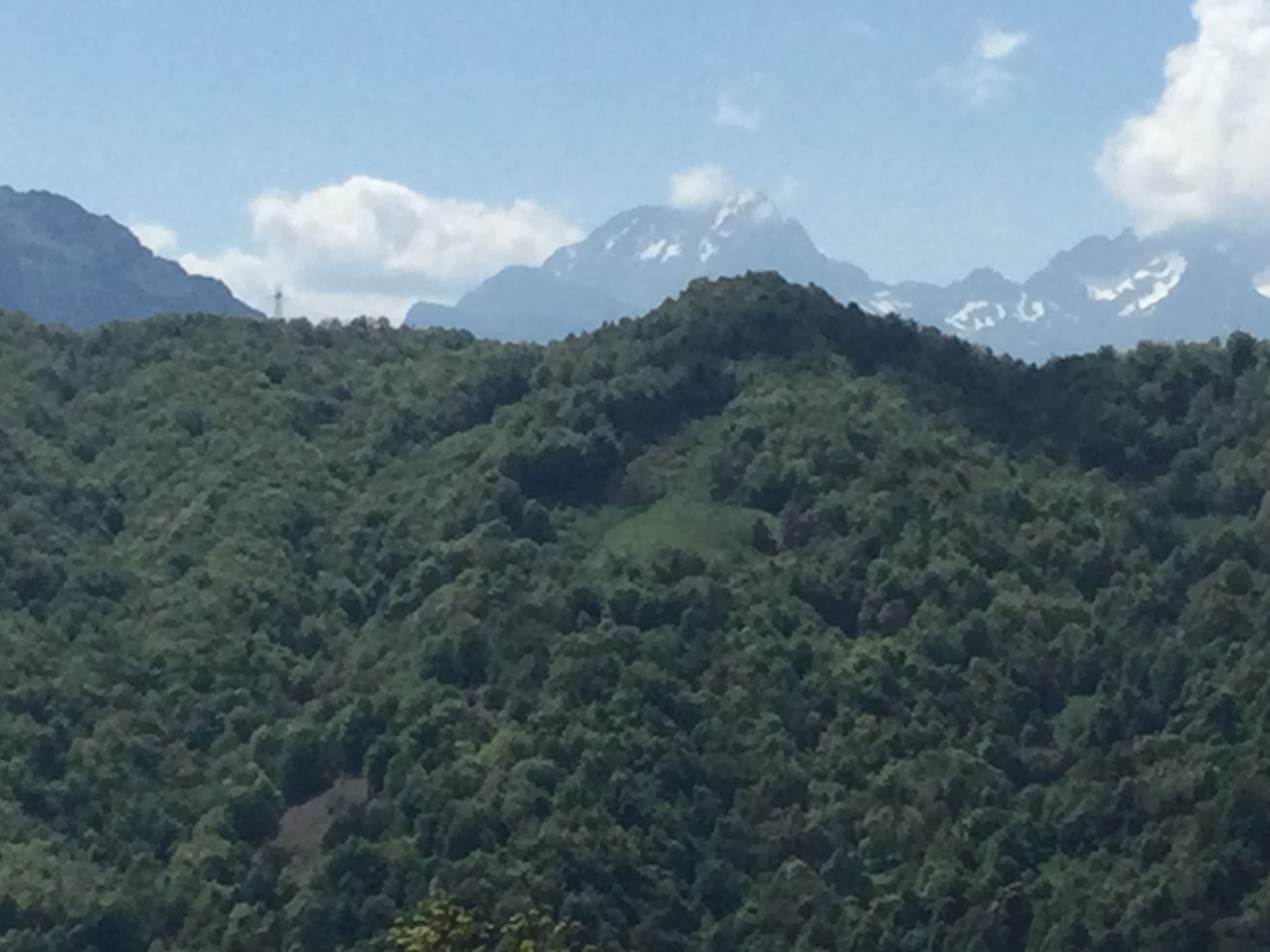
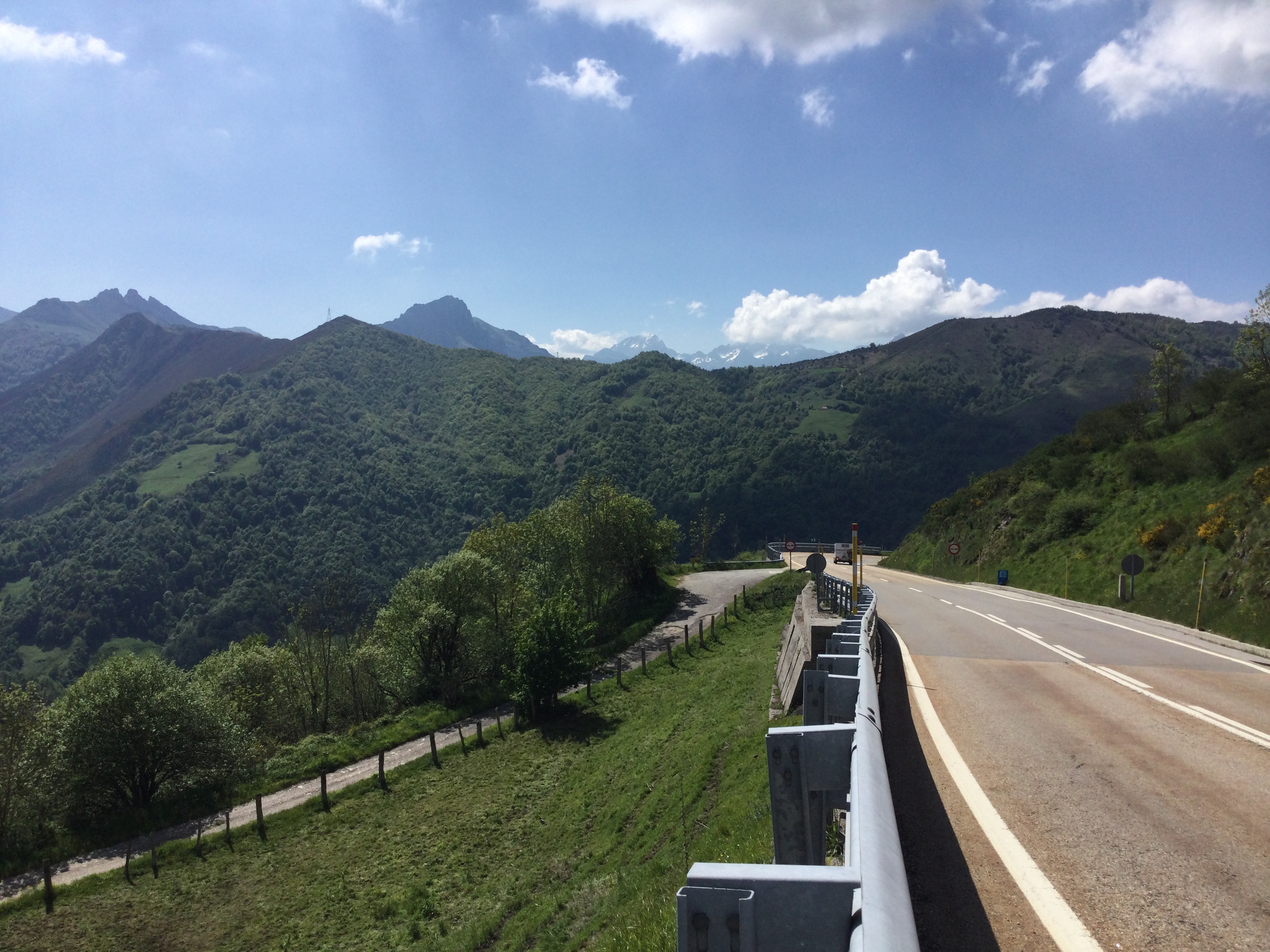
Soon after lunch we were in the Asturias and what a sight! Jagged grey mountains of rock, some still with snowy tips and then the road wound down and down. It’s now green all around, with the Coste Verde an arm’s length away. And once again, the cameras on our little devices can’t do the scenery justice.

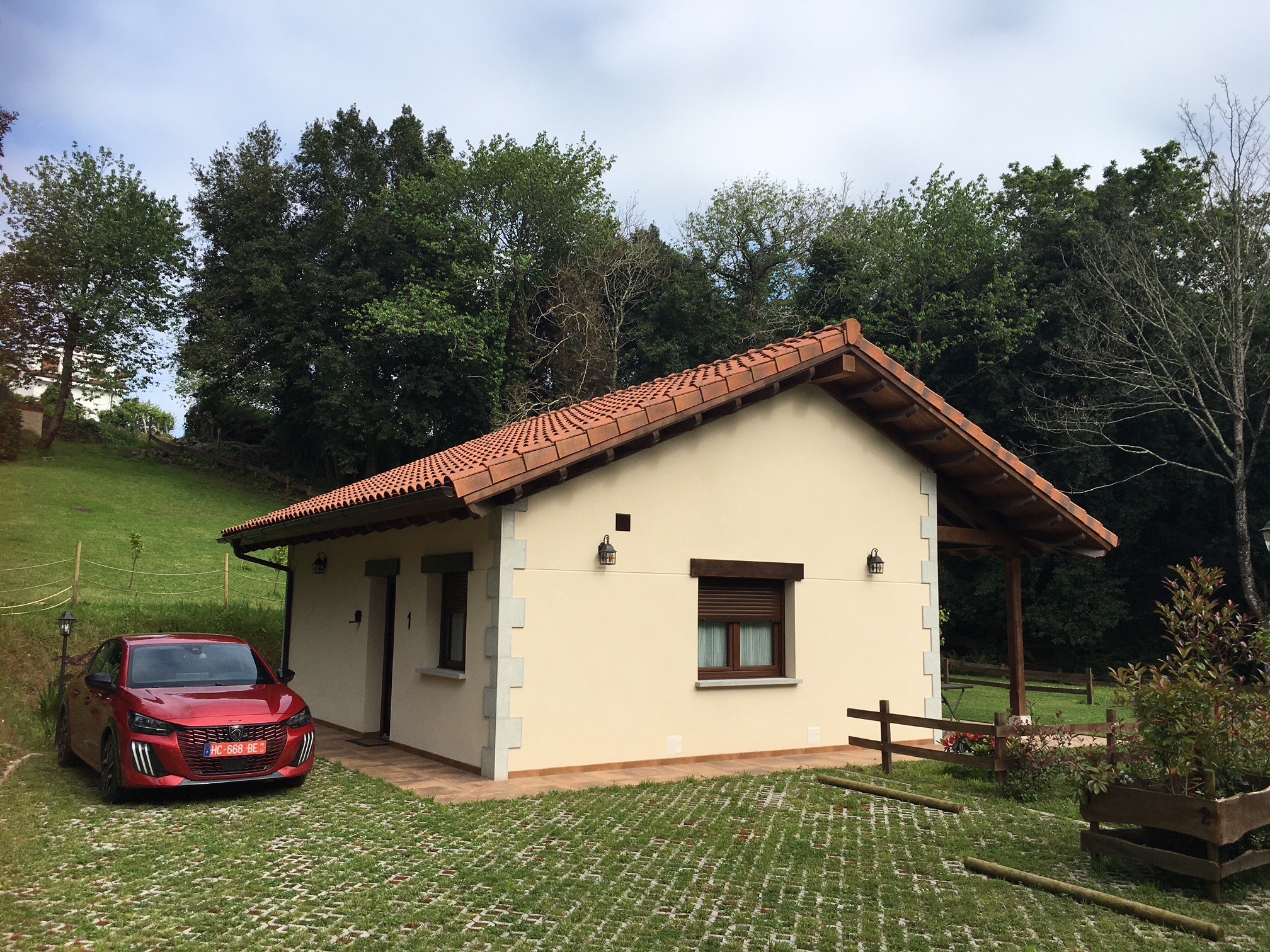
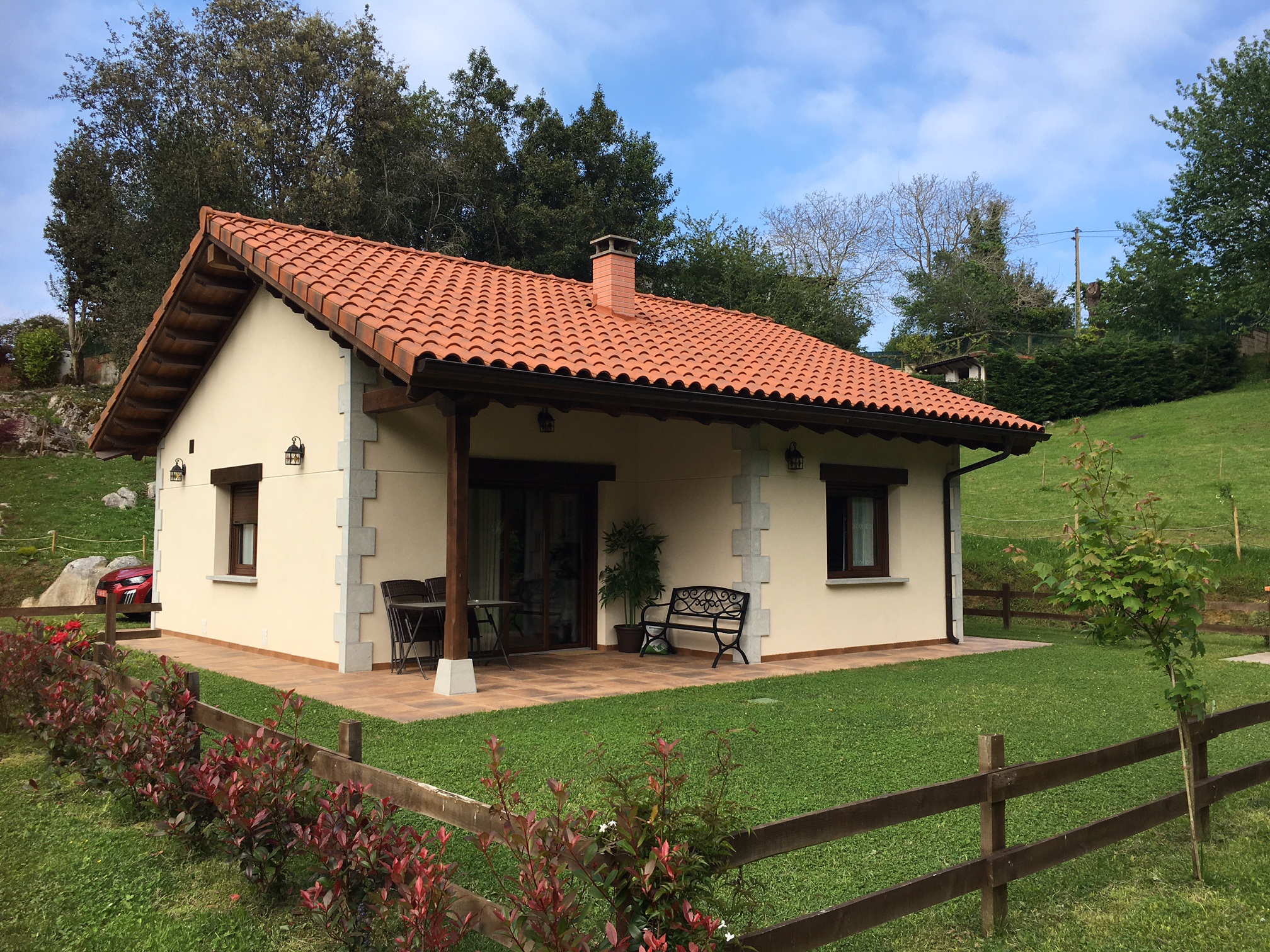
Doris was on her best behaviour today and took us straight to our new home, with its own squirrel. This place is up there with the best on this trip. Essentially it’s a stand alone cottage (one of two) with lots of space and lots of parking! Settled in, and the ‘chicken pellet’ fire started up by itself. ‘I didn’t touch it’, said D.

A bit later Monica came down the hill to welcome us, and have a chat. It was she who had started the fire to warm up the room for our arrival (weather has been unusually cool). She and her husband had built the two cottages themselves: they had contracted a builder to do it, but were ripped off in a scam. They apparently won their case in the courts but that didn’t result in any compensation, so they set to and did it by themselves. It has been operating for almost a year and is apparently doing well. Monica was delighted to hear that the squirrel had welcomed us; she’s been worried about it since it’s home tree was heavily pruned and ailing. She has put nuts out on a feeder for it, but since they weren’t touched (by the squirrel) she has eaten them. T suggested that she might climb the tree. Monica has suggested a ‘wild beach’ to walk on this weekend and several other spots to check out.

Dinner tonight has been a bit minimalist (hamburgers, potatoes (there is a God) and a greens, tomatoes, olives and sliced onion salad, since some of the other vegies don’t seem to have arrived in the cooler bag but we’ll hardly starve.

Alijo #2

Day 69. Thursday 15 May.

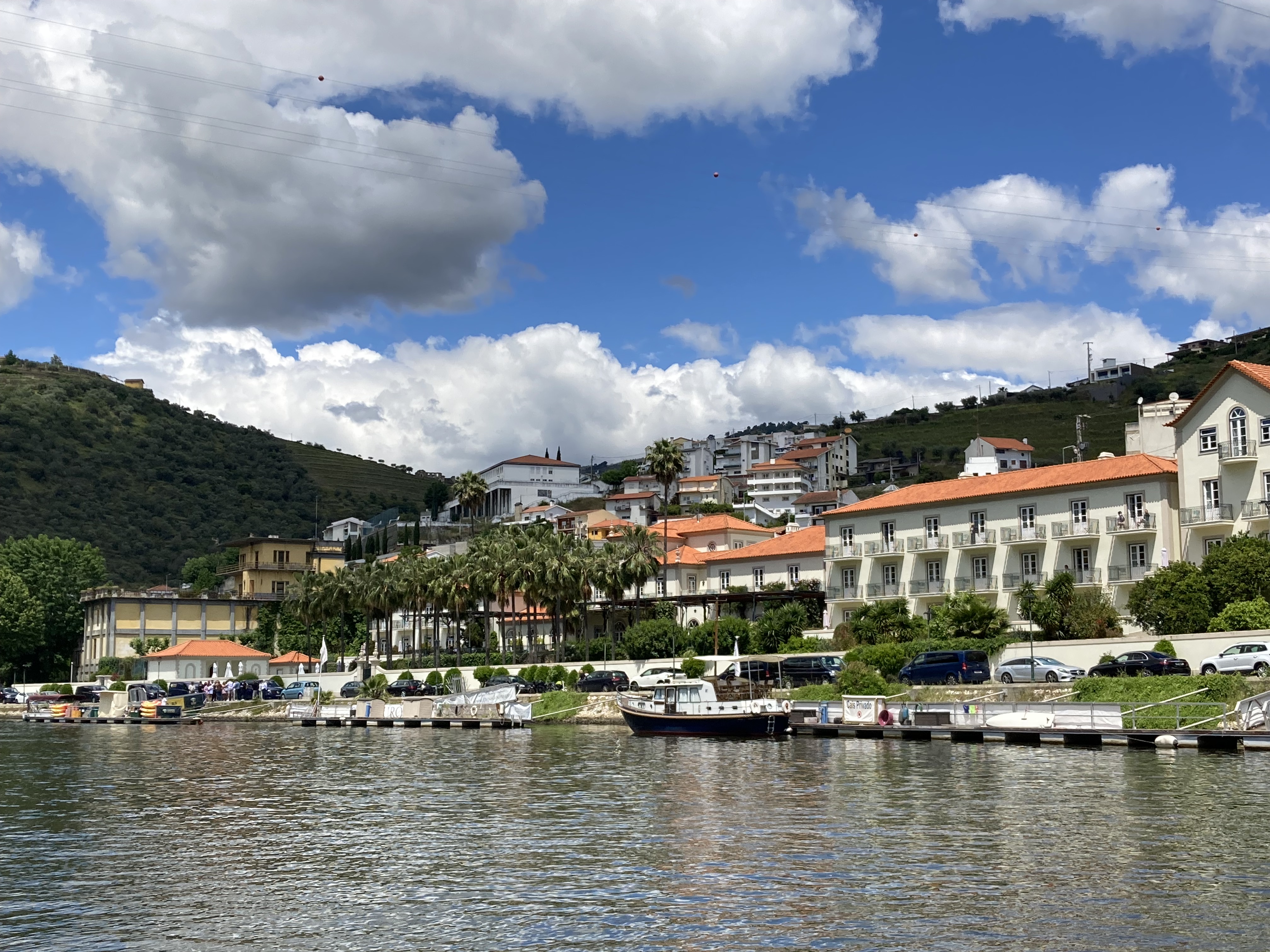
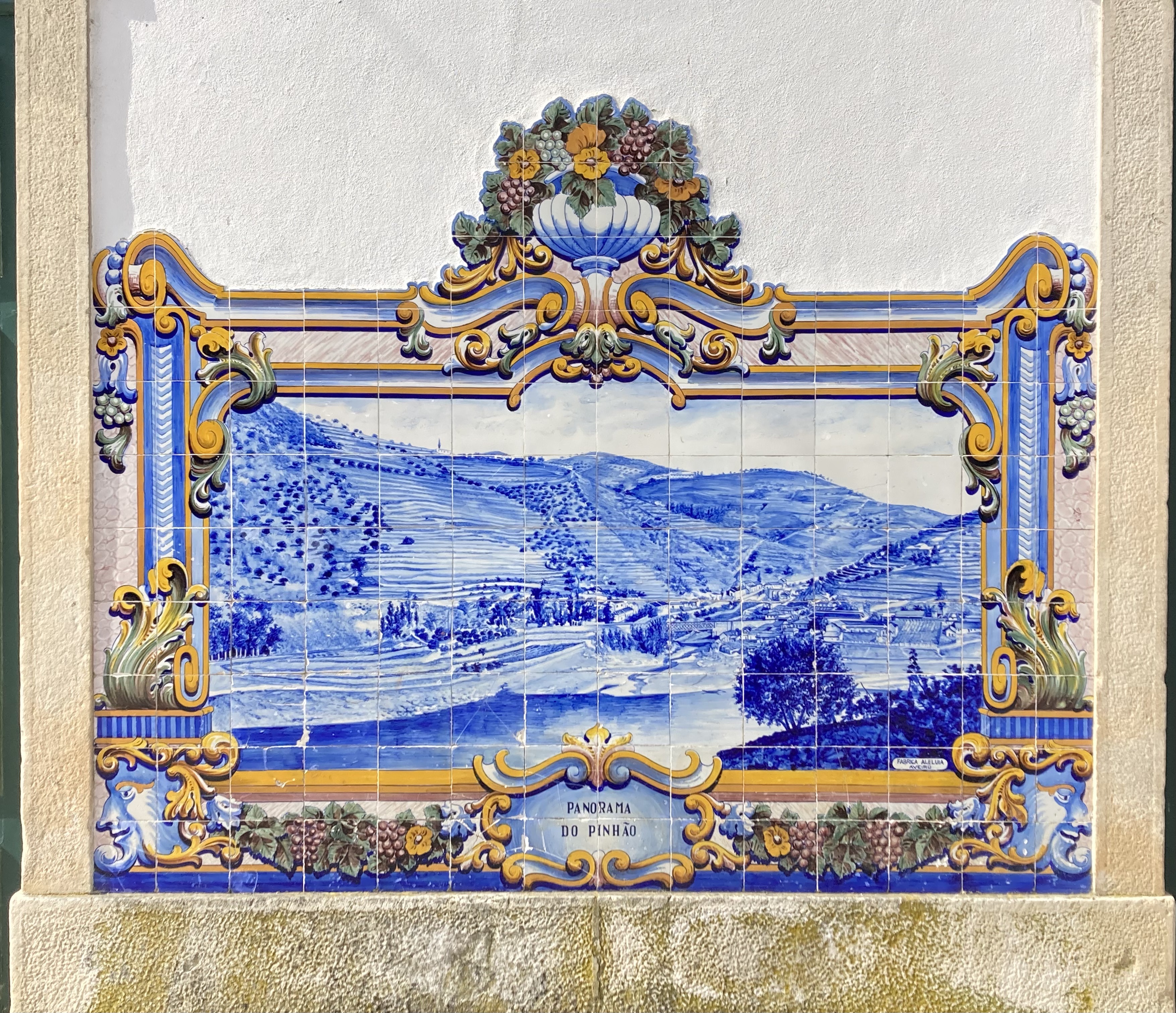
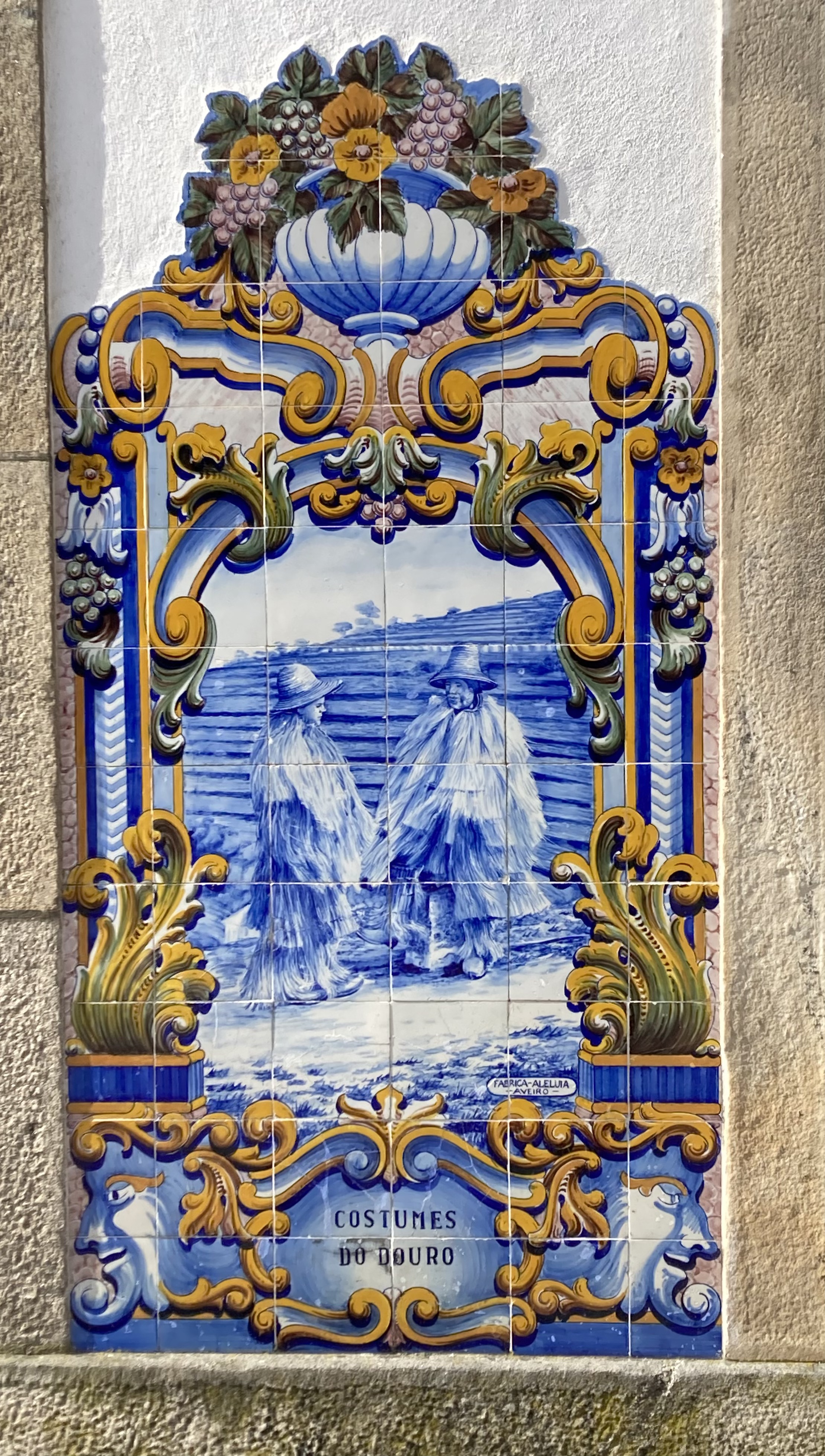
Departed early – no surprise there – to make sure we were at Pinhão in good time for our 1045, two hour rabelo trip. We were, so much so that there was ample parking: spoiled for choice! Took a short wander: like lots of places, there were tile dioramas, these were at the railway station (which was disgorging tourists).

Had a coffee, and for the first time the order was delivered as we’d thought we’d ordered it: two espressos and a side glass of hot water.

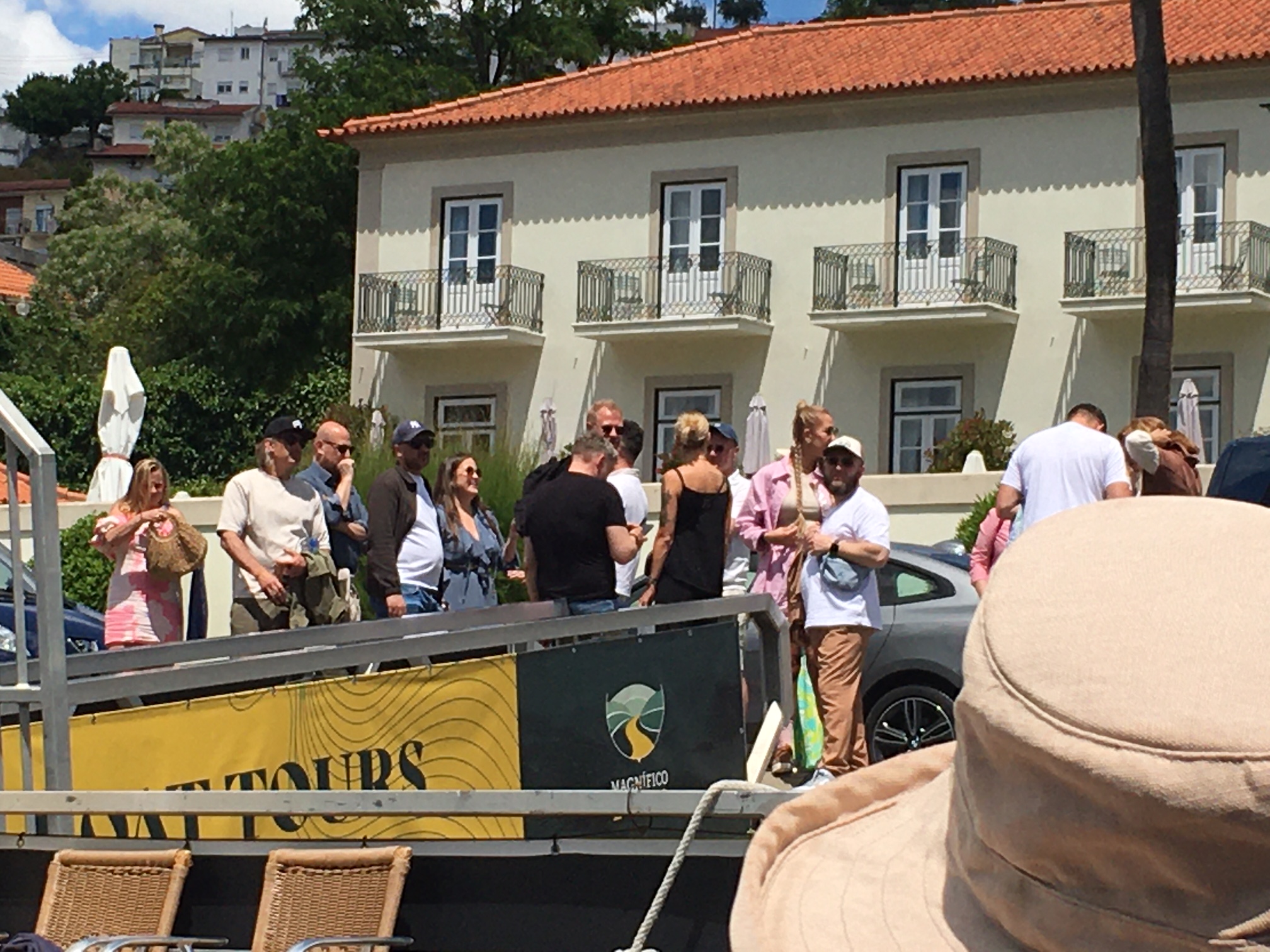
To the fairly short queue for the boat at Magnifico Douro, with everyone waiting in line patiently. A group of school kids got on a boat – huge sigh of relief from everyone else (they were not on our boat) – and we were told our turn would come. Not good enough for one couple who bypassed the queue and walked the gang plank. They were sent back to wait. They will reappear later in this tale.

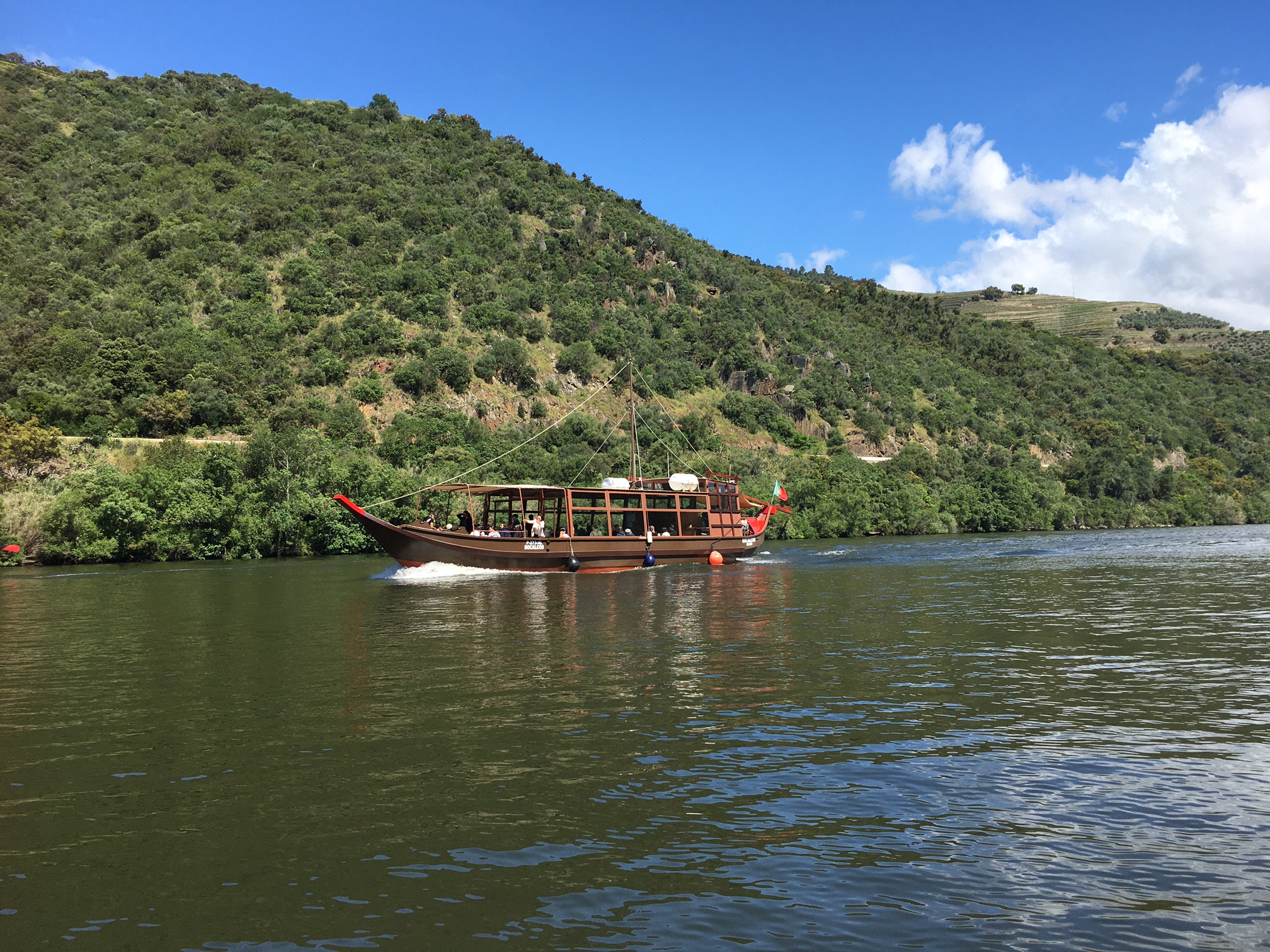
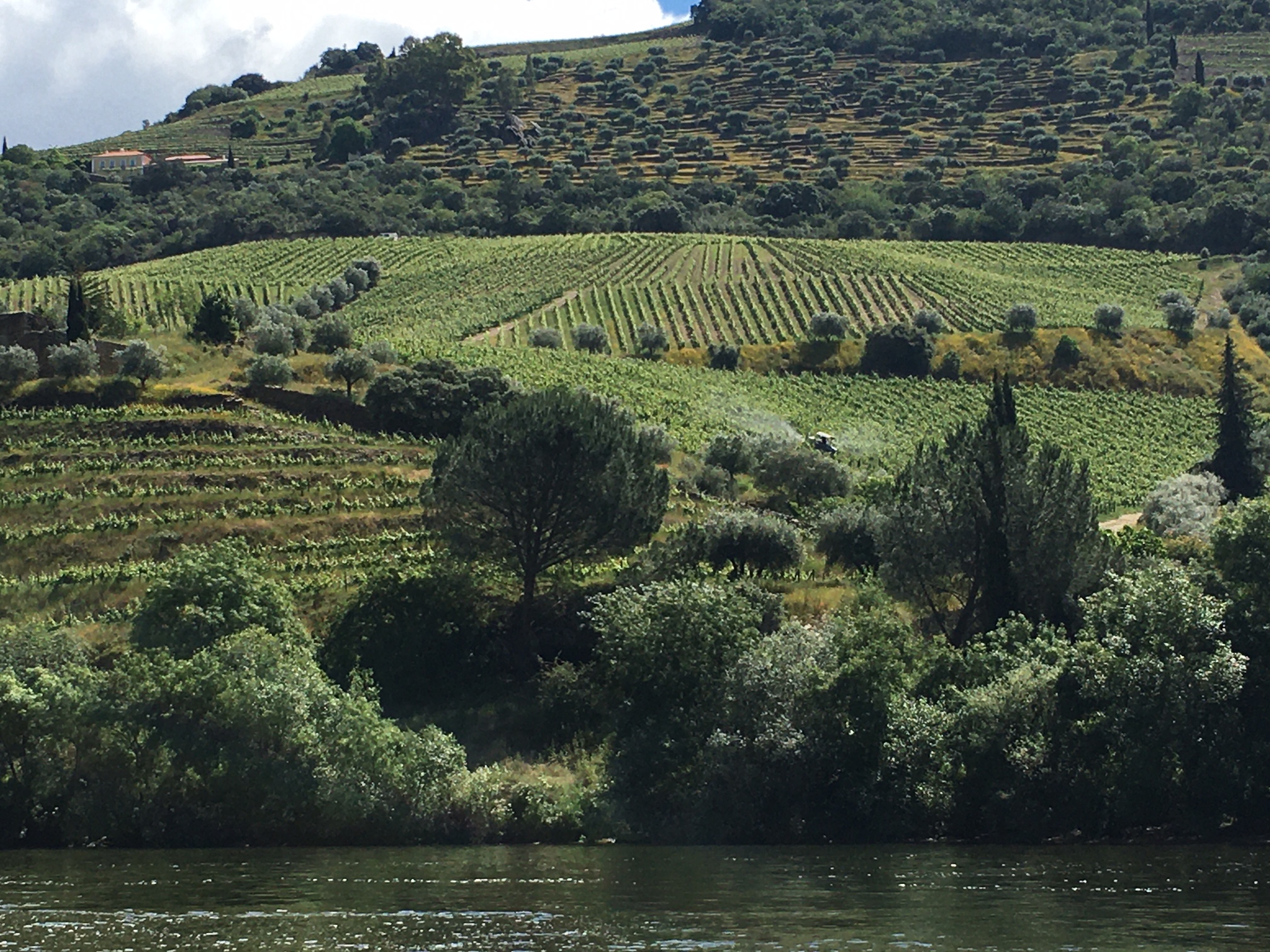
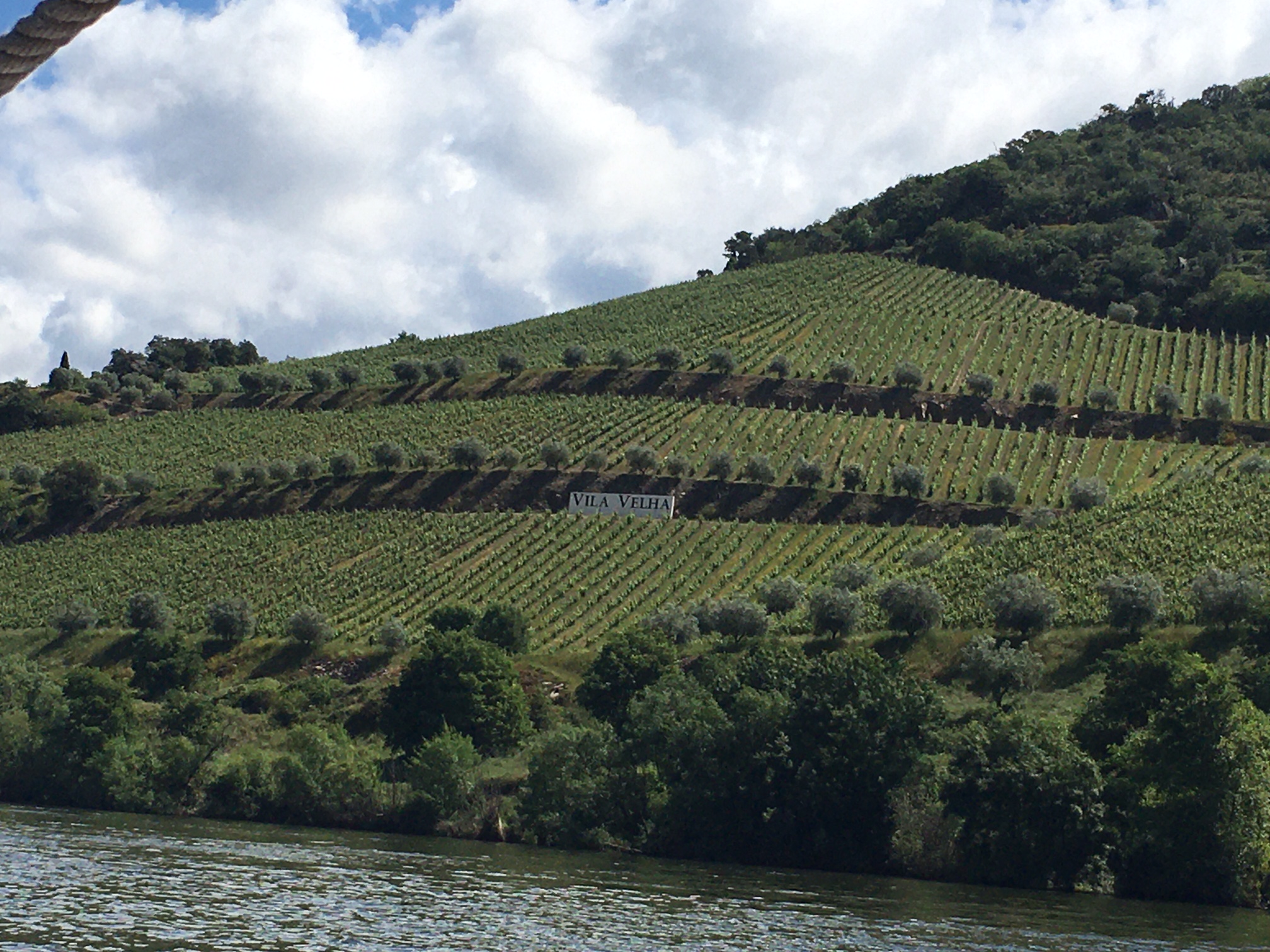
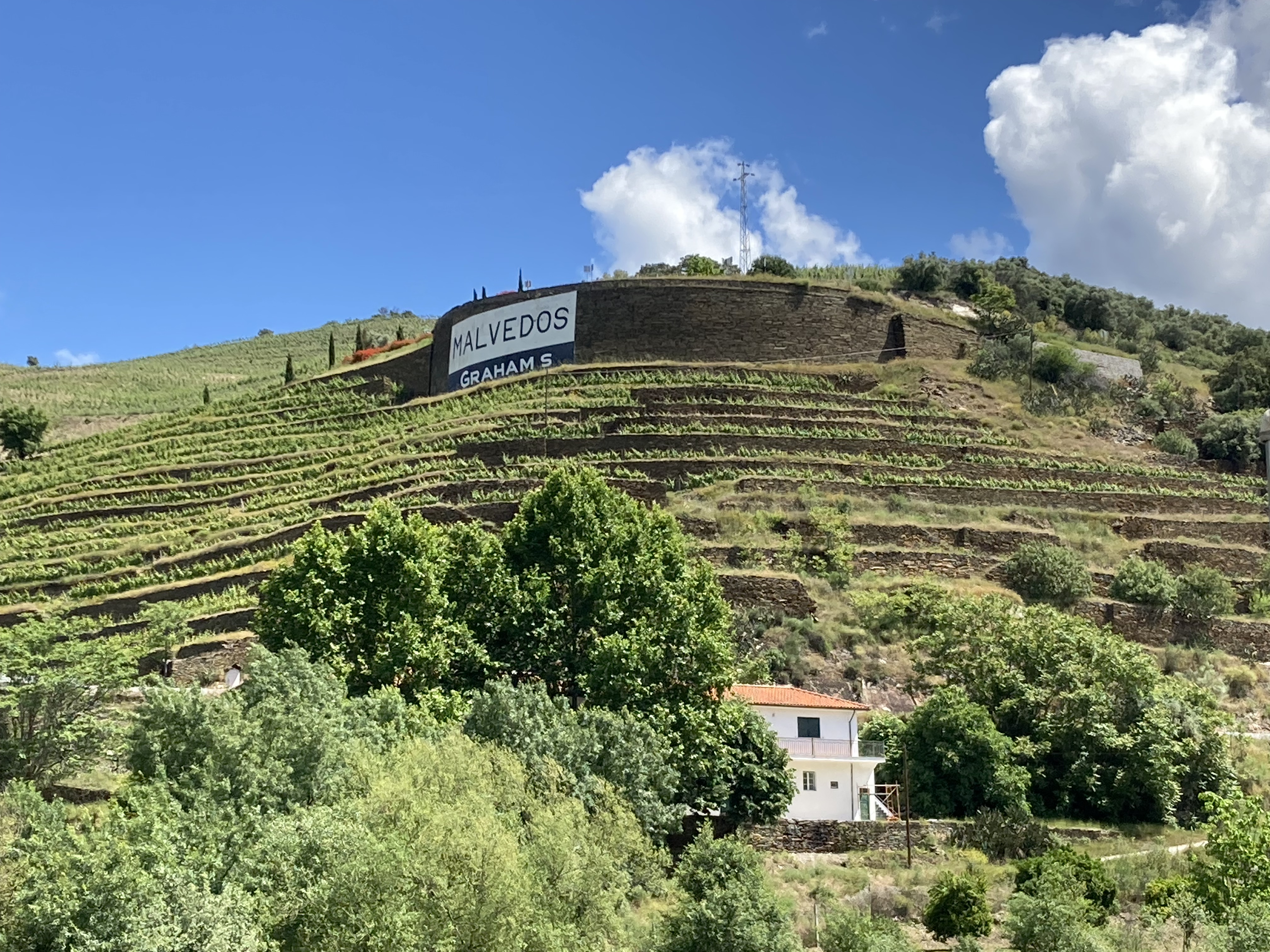
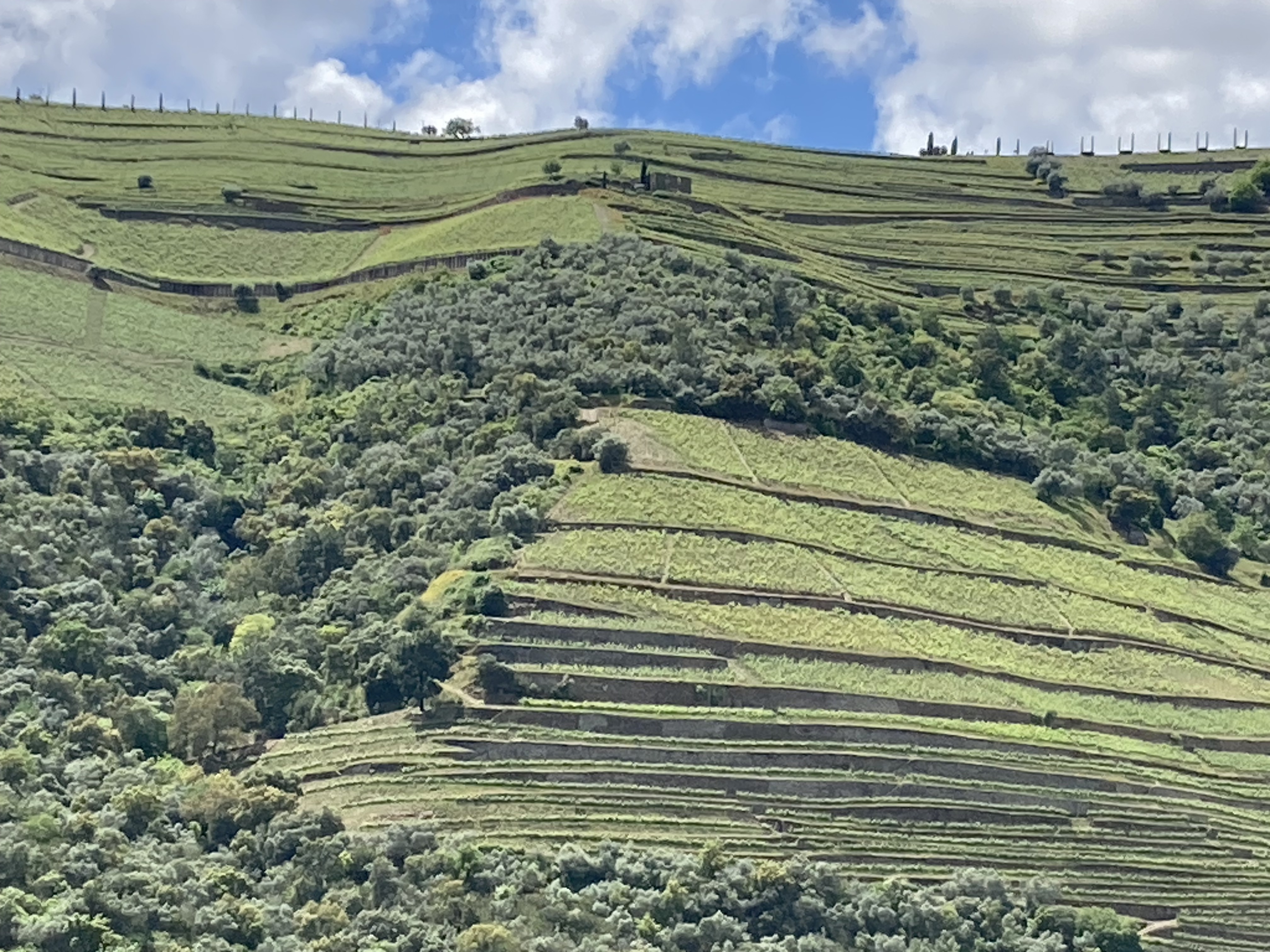
Boarded and the boat departed. The scenery really was magnifico. We had a commentary downloaded at home: a total of four items on the way up, none on the way back, which on reflection was probably enough. Several significant vineyards were described, with their acreages, history, annual turnover etc etc. Port was a big component: D recalled, although a bit hazy, that he and his Army colleagues had contributed to the success of the industry at various formal Dining-In Nights. T was pleased that one in particular was ‘ respectful to the grapes’ using only gravity to move the grape juice from high point to low. Machinery did not tarnish the natural  processes and the accompanying house design was on 5 levels also focusing on ‘eco’ practices. T& D commented that they too are respectful of wine and use appropriate gravity practice.

The boat was not full, so quite comfortable. We sat on the bow, along with half a dozen Americans who did not stop talking the whole time, but who were inclusive enough to talk sufficiently loudly, but not excessively so, to share their views, life histories, COVID, travel in Business Class (or not) and the upcoming wedding…..and some other topics.

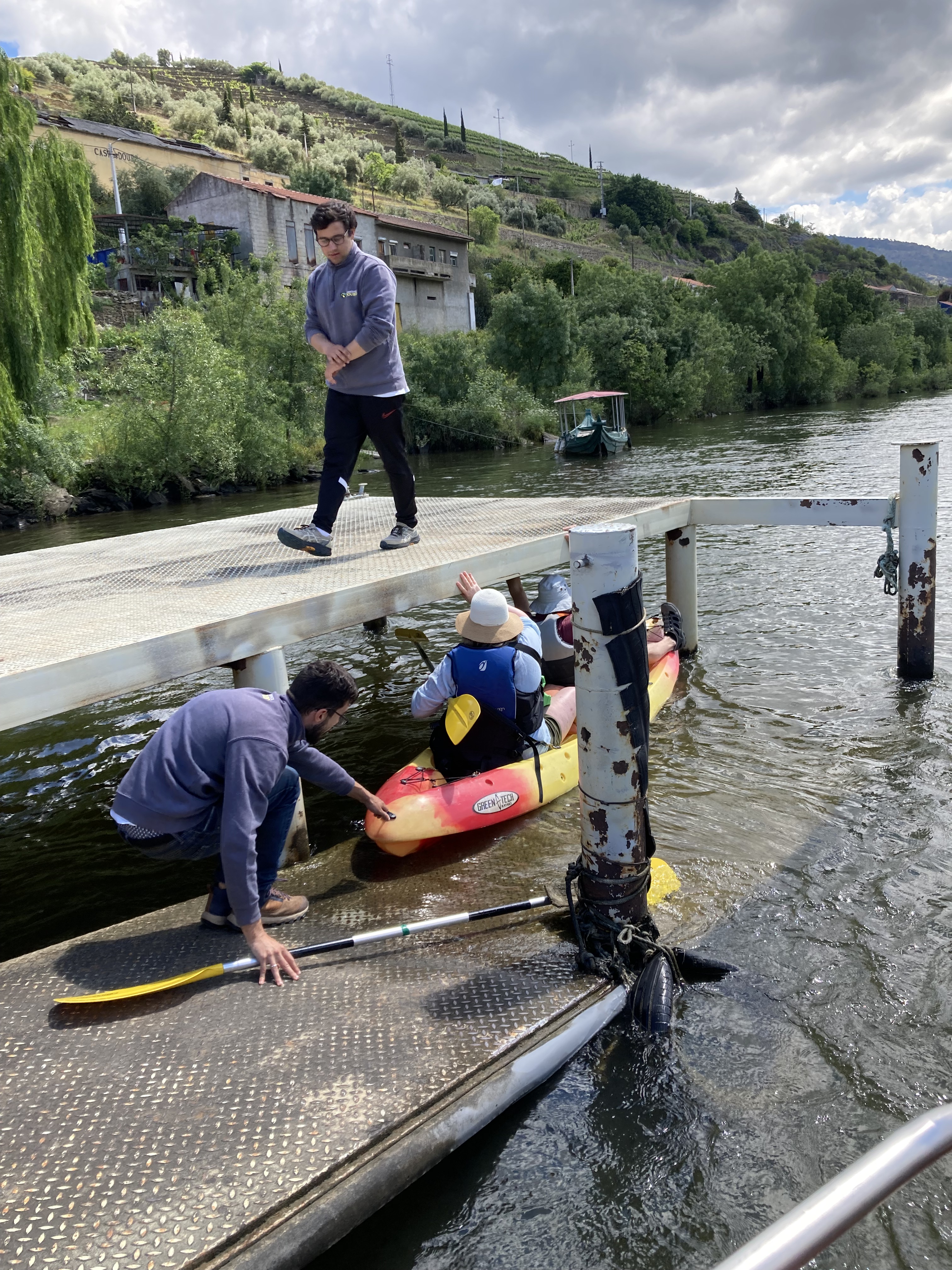
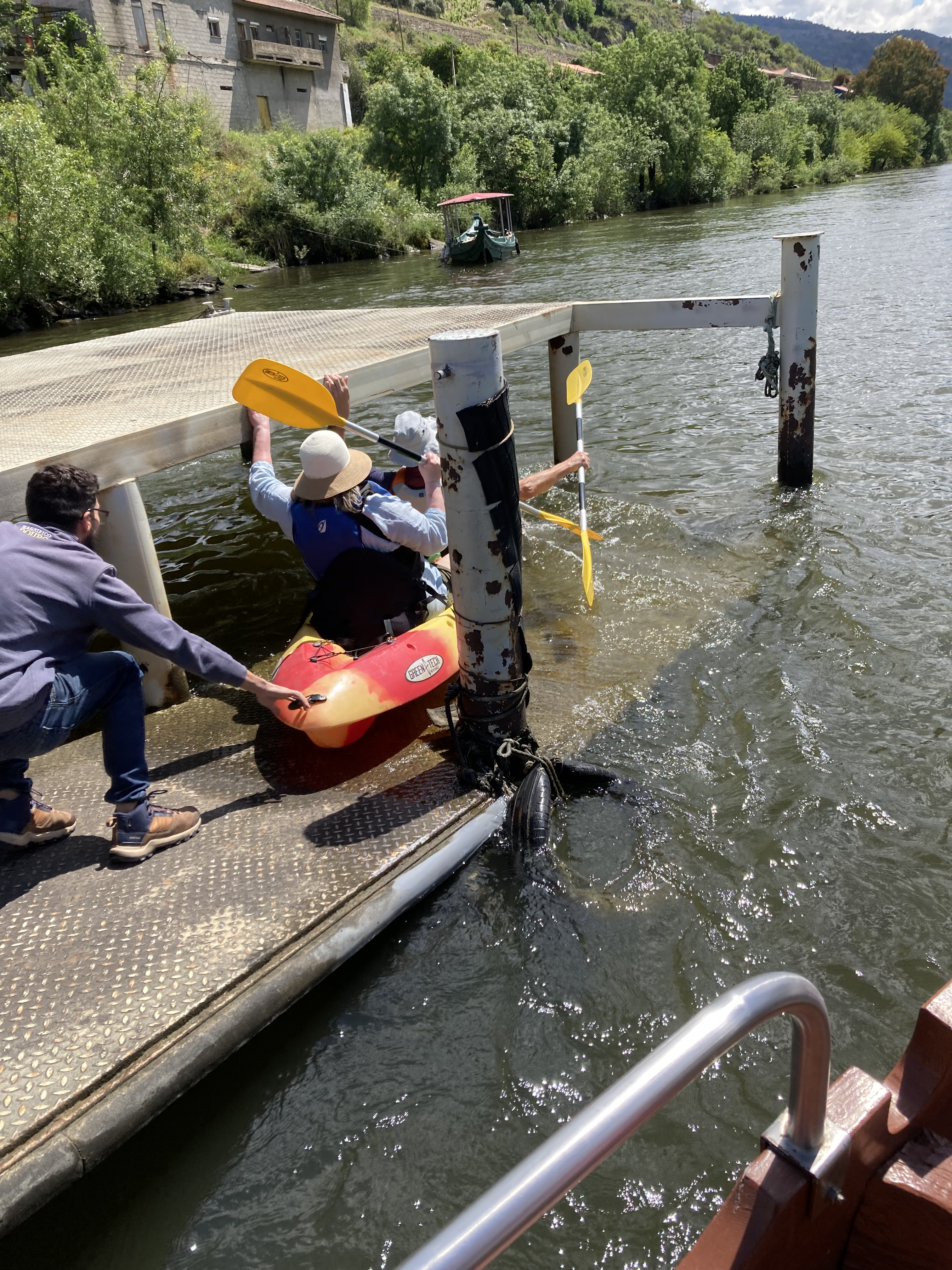
At the turn around point the aforementioned thrusters got off the boat and eventually into a plastic kayak that had been carried on the roof. It was obvious fairly quickly that they were not experienced: they were seated in the kayak on a ramp, then the boat crew pushed them into the fast flowing river.

They ducked the wharf to keep their heads on, then the current got them, swinging them around. Things were not right; ‘It’s taking in water’ the woman cried.  The rabelo crew were non-plussed; the kayakers gained some semblance of control despite the kayak sitting very low in the water and got the kayak touching the ramp – the crew pulled them in and they struggled out.

‘The kayak leaks – I’m not spending three hours sopping wet in a leaking kayak’ the woman wailed. She was dripping and there was serious water in the kayak’s bottom and on hers. The design is with holes to let water in for stability, explained the crew. But the woman remained firm. So that was the end of that.

They rebounded and the rabelo set off at speed for the homeward journey, obviously needing to make up time. The crew privately confirmed as we left that the kayak was the sort that does in fact let water in through structural holes and the amount depends on the weight of the passengers. T recalled the delightful children’s story from 1982 Who Sank the Boat? In today’s case it was not the mouse.

Getting off was a bit rushed as we returned late (due to the kayak incident) and hampered in getting off by the next lot (very glammed) trying to get on, using the same narrow gangway.

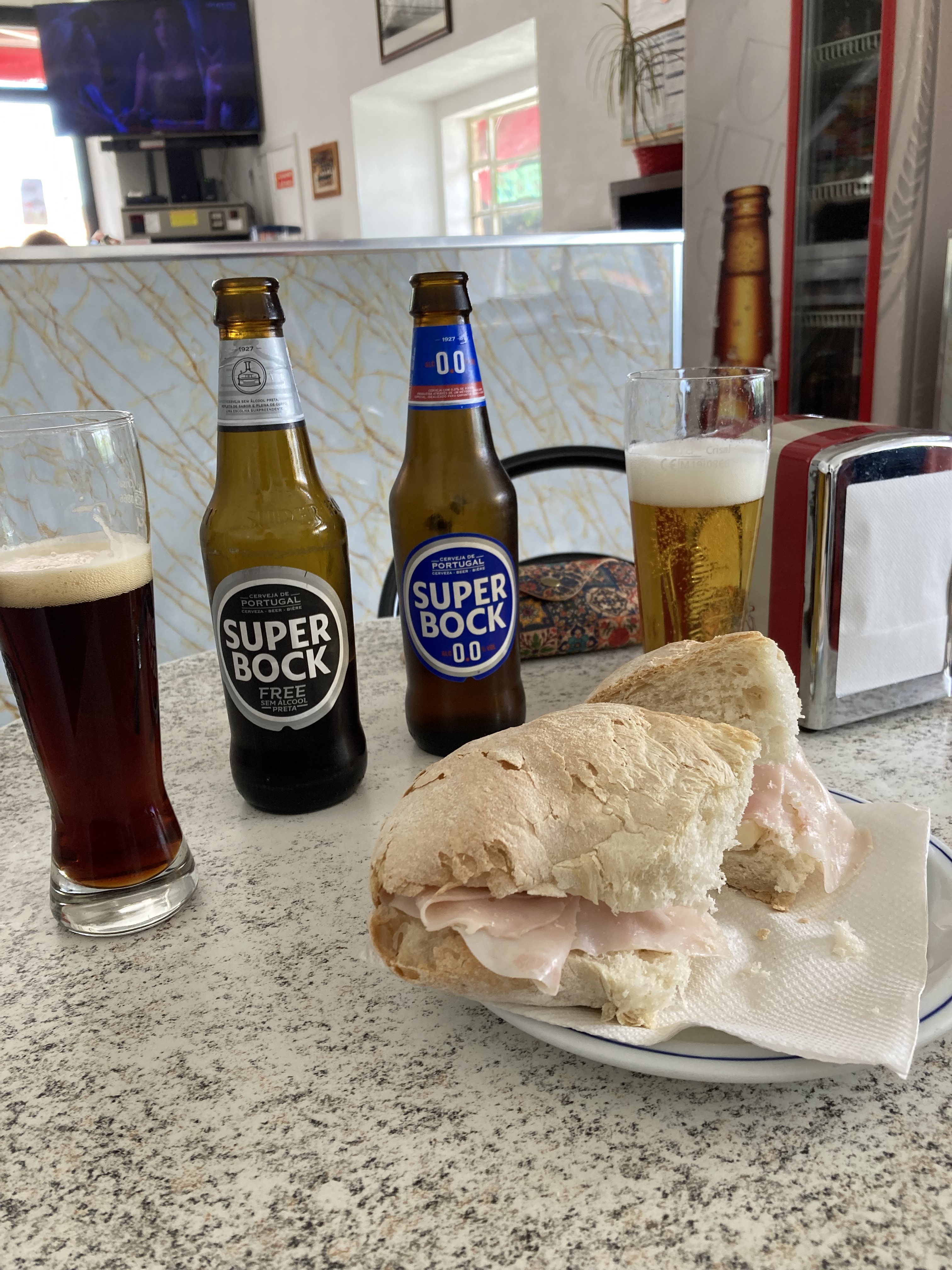
We decided to escape Pinhao for lunch and randomly chose Sanfins do Douro,  a little town that had been signposted on our way in. A short trip, easy park, and the only option was a restaurant hosting a few old men and one woman. Asked for a menu and the lady behind the counter ran off. We then tried to communicate using Google translate but no response. A young man came out and asked ‘English?’ We didn’t clarify our superior status, just nodded and ordered a ham and cheese toasted sandwich to share plus a couple of zero alcohol beers. The order was sort of right, but palatable nonetheless.

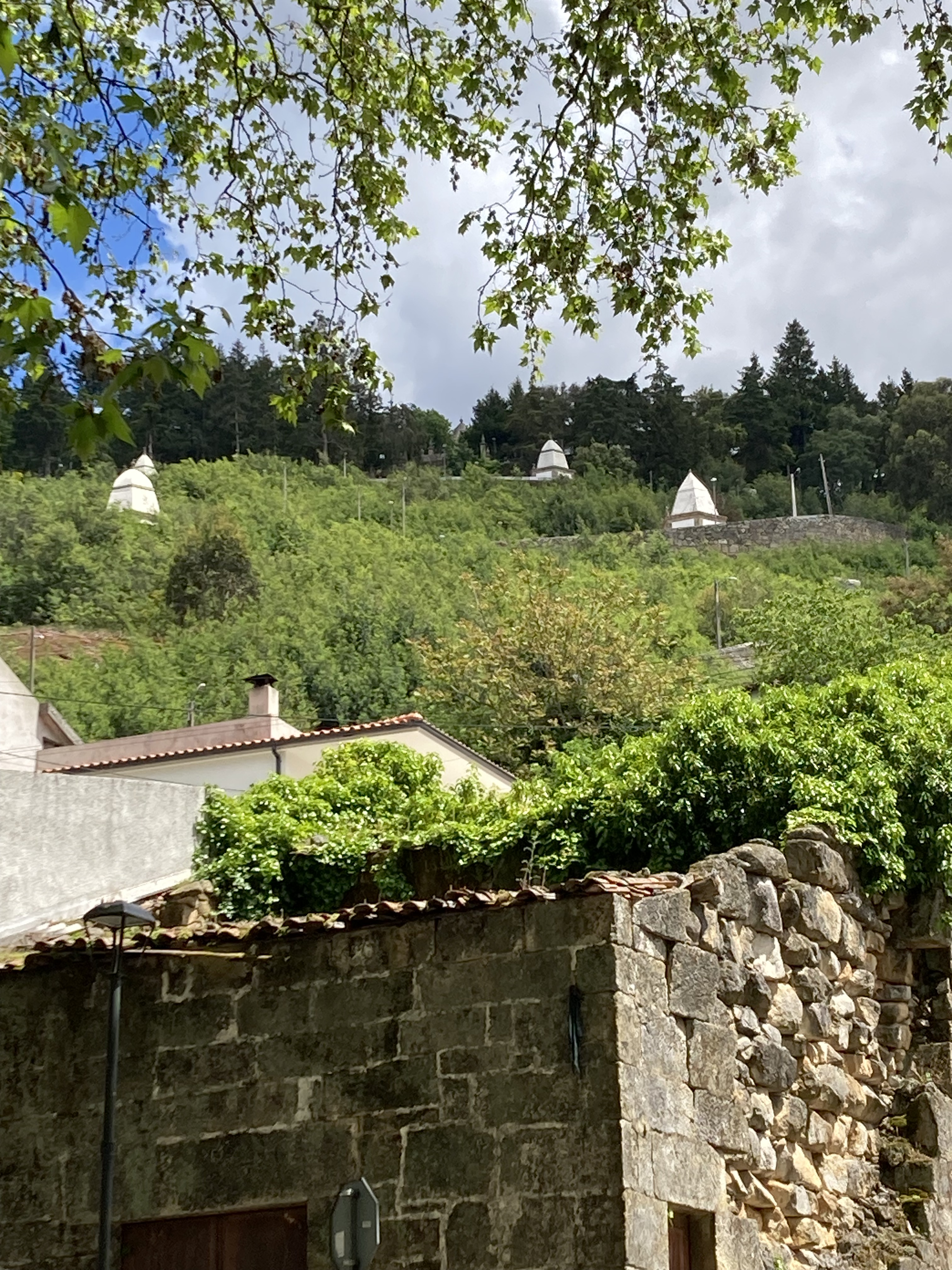
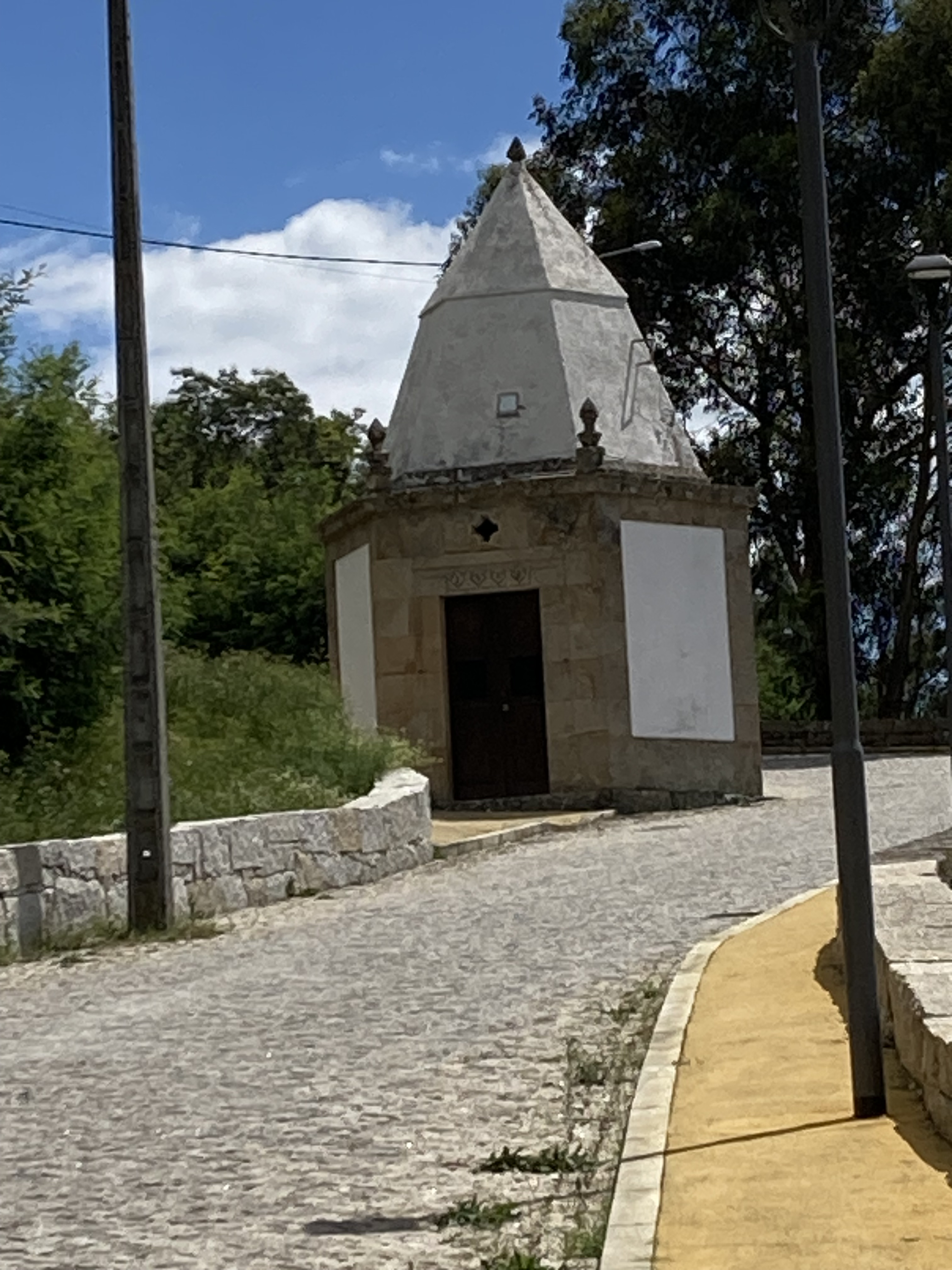
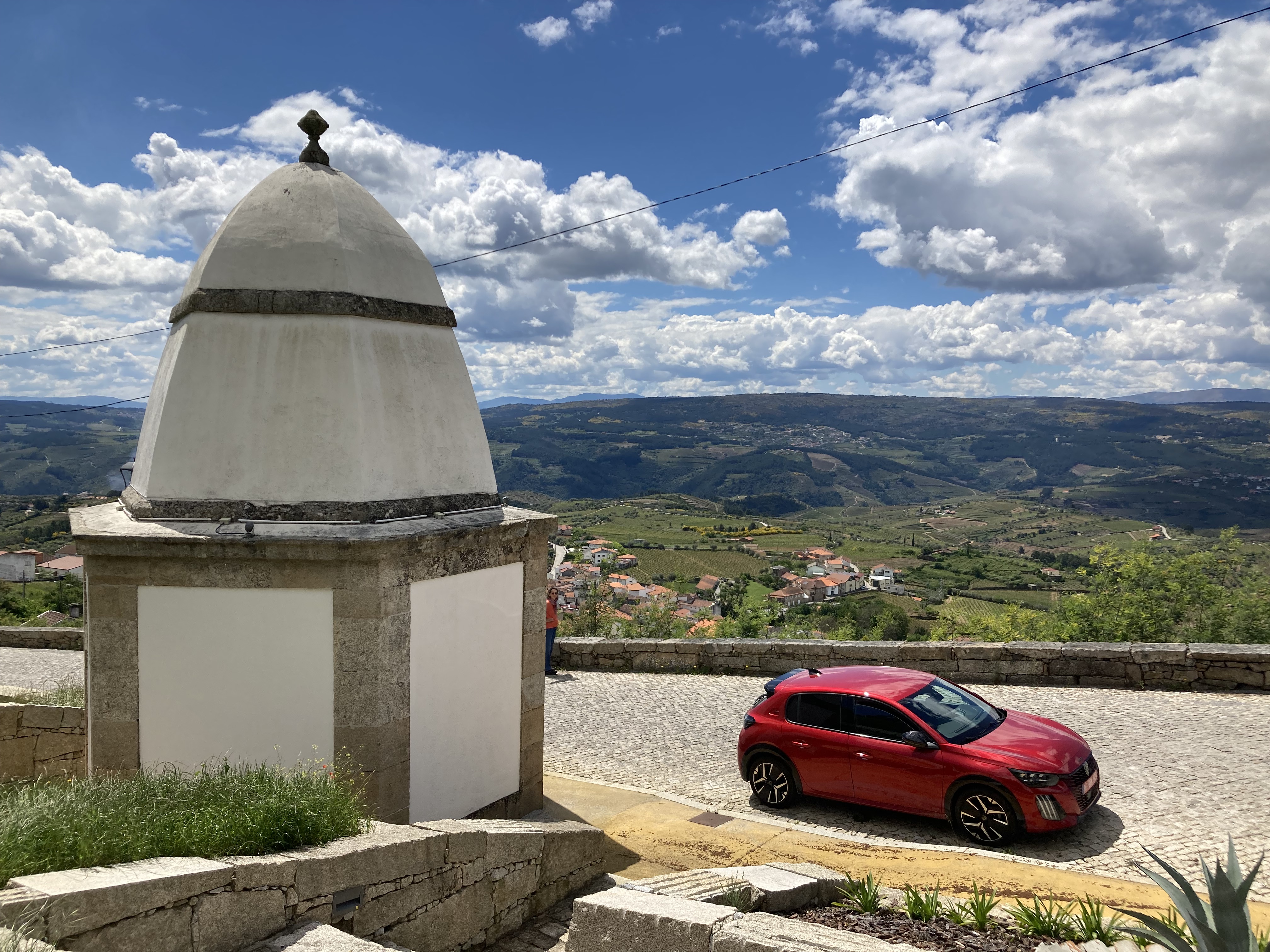
Took a walk after lunch, visited, of course, the church, and noticed some unusual white cones on the hill but couldn’t work out what they were.

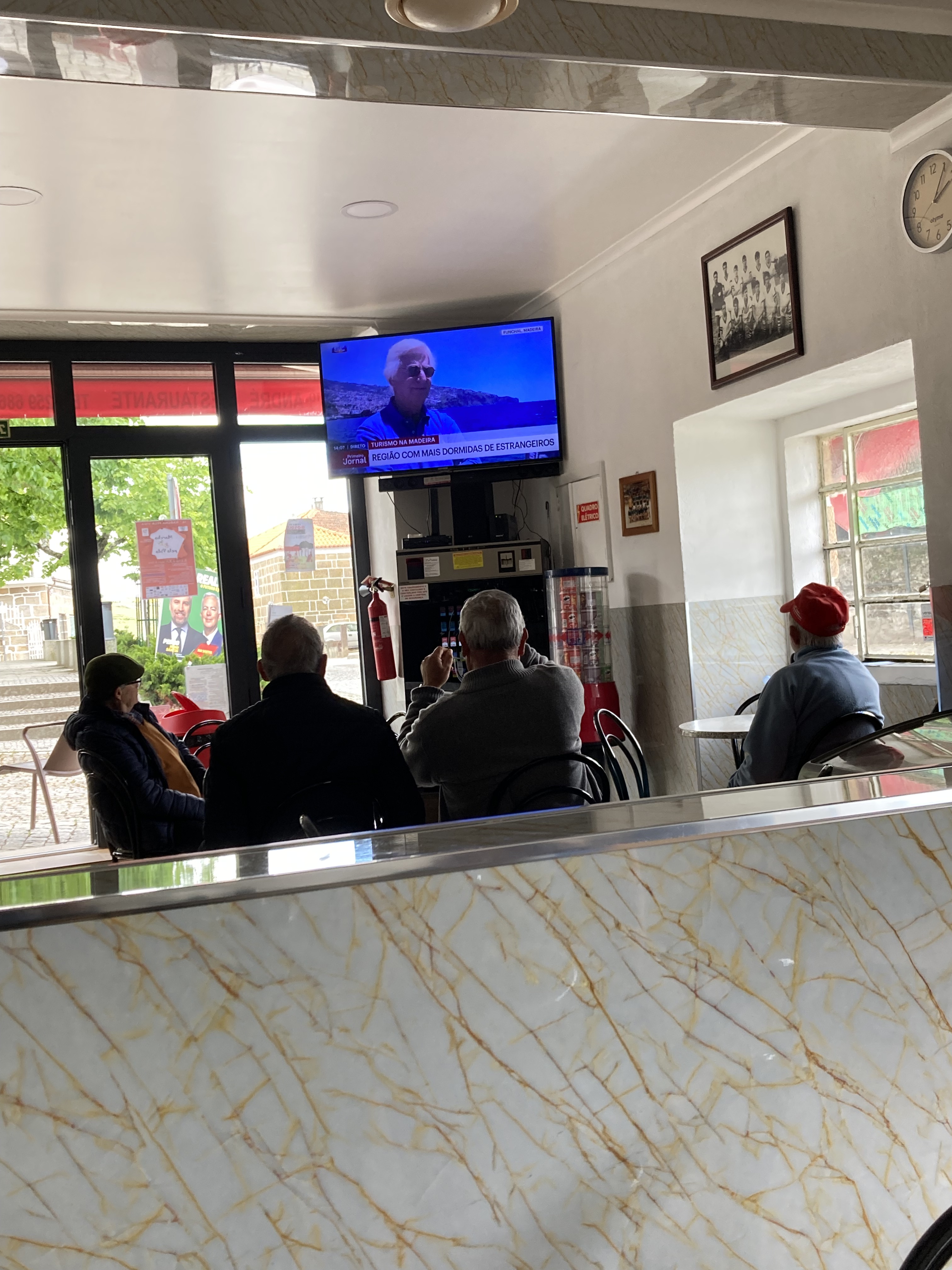
As we were about to head back to the car to return home a couple of old men beckoned us over. Every village seems to have groups of older men in caps sitting around in the middle of the day. Luisa had said yesterday that the villages are full of old men with nothing to do. We sat, said ‘Ola’ and ‘Bom Dia’ and using Google Translate asked what the cones were. They were mystified. D took off to take a photo: by the time he got back they’d worked out what T was talking about, having initially shaken their heads (something of a record) – they were capellas, and were accessible by road. One of the elderly gentlemen hurried off to find his phone and returned to display an image showing the route.

Choose your own caption:I don’t dare post any of my suggestions!

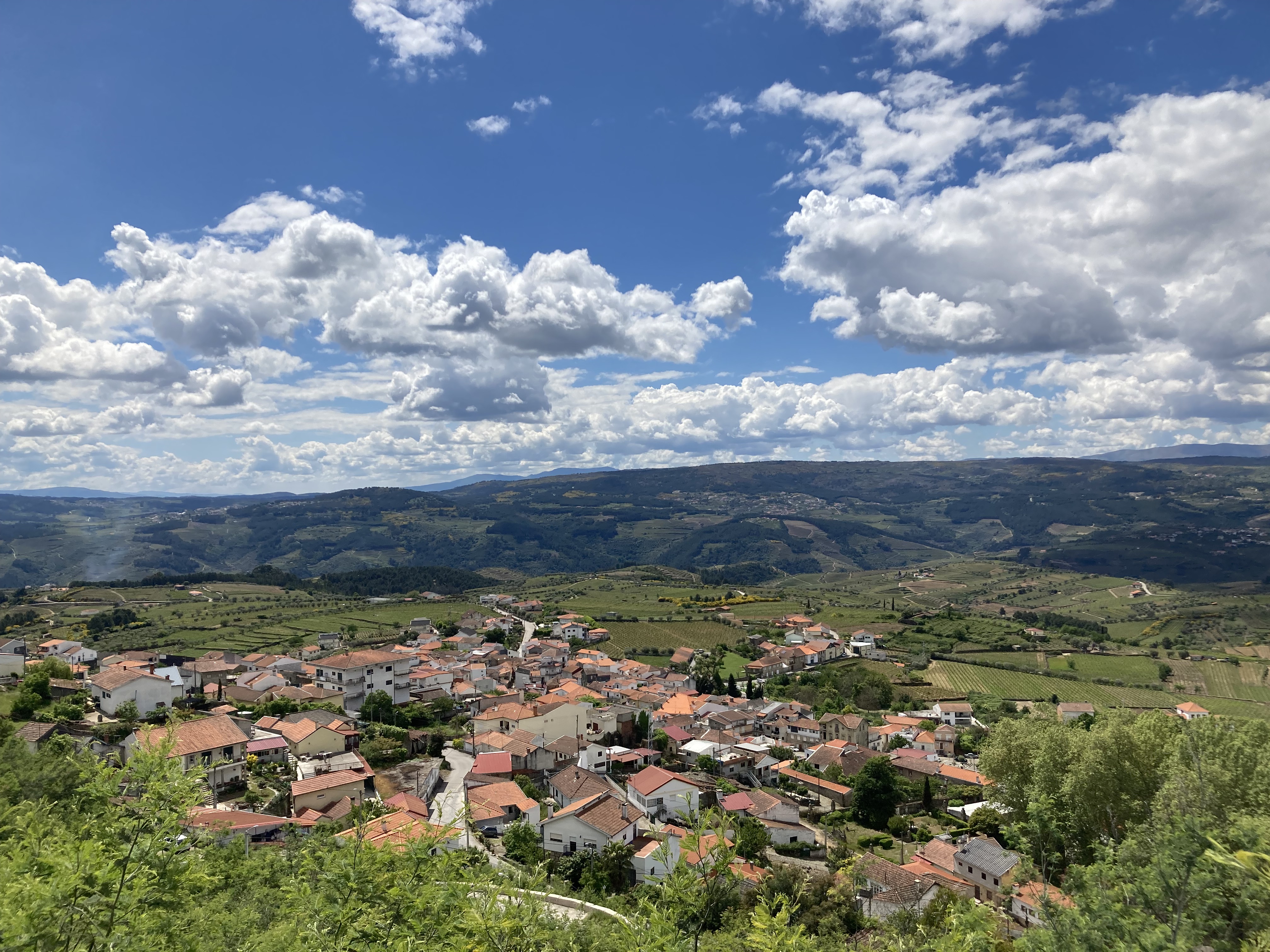
Off we went to check out the capellas. They were locked, but seem to be part of a route recognizing the twelve stations of the cross, which were signposted every couple of hundred metres along the road. It was cobblestone, and steep and winding, not much fun to carry the monstrance (probably the one we saw in the church, which was actually lighter than some we’d seen). But the view across the valleys from up there was terrific: our little cameras can’t do it justice.

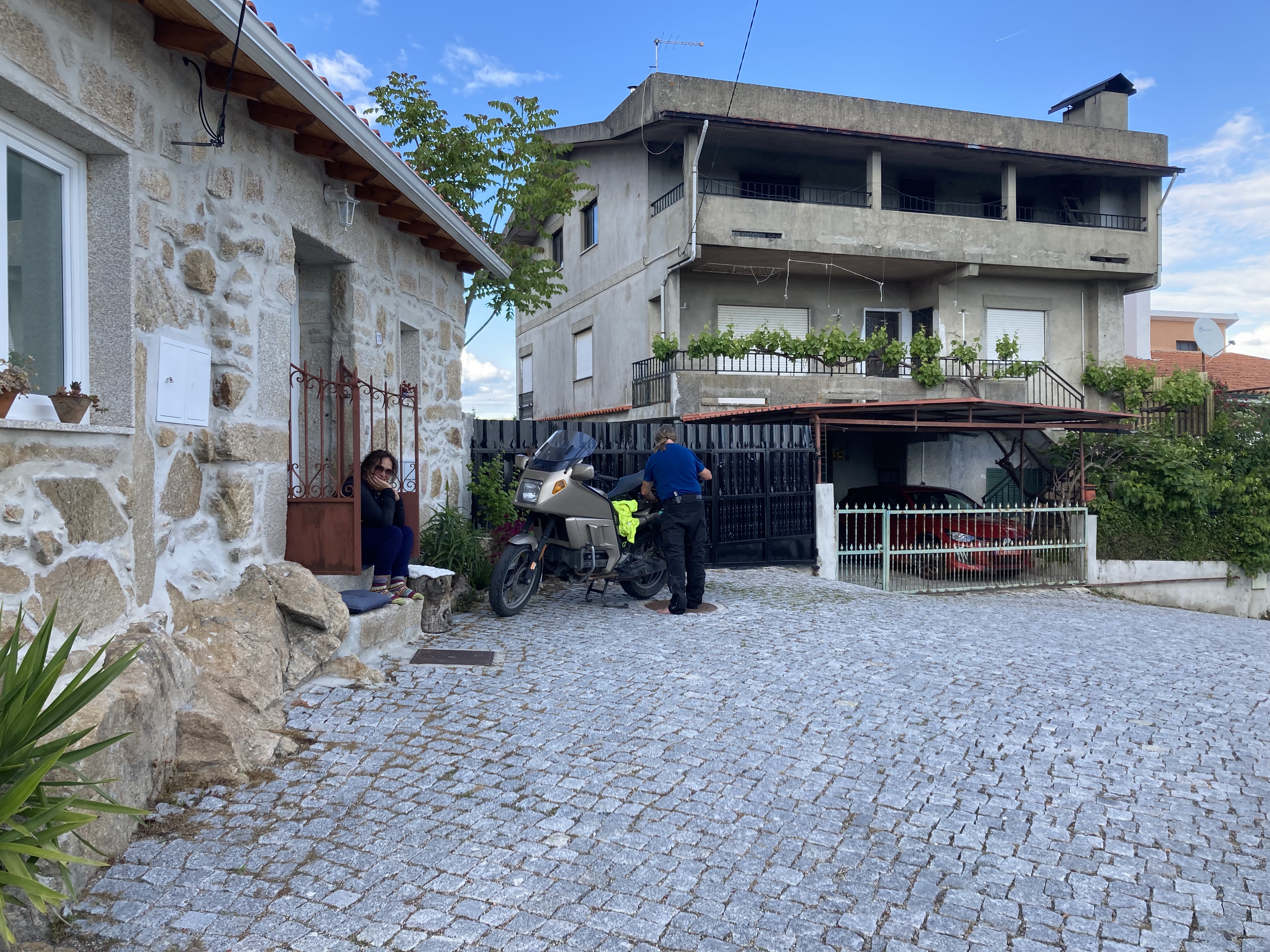
Home via Intermarche to find that the detached flat under us was now occupied by an Austrian couple on a motorcycle. D parked in our designated spot, quite put out by the unexpected company, and hauled in some of the shopping. T followed, and told D that we have been asked to move the car as it was blocking their light  and they had nowhere to sit outside – we think they meant no view (which, to be fair, it was). T said she would speak with her husband. The guy then turned up at our door and abruptly repeated the request, but just walked away when D tried to explain. D walked around, politely explained that this was, we thought, our designated onsite parking, but we understood their concern; meanwhile T had sent a WhatsApp to our hosts, asking for advice. D and the bikers agreeably worked out a solution that satisfied us both. Luisa and Mario then  arrived as they started to do so with yet another very acceptable solution, so now everyone was happy and it was almost wine o’clock. Actually, the bikers were already into the red!

What we hadn’t understood was that the building actually houses two separate but interconnecting accommodations that can be rented separately or as one. So we now have neighbours (first time since the Madrid apartment) for tonight. 

Dinner. Trish Fish Curry: white fish (of some sort), red curry paste, ginger, tomato, potato, carrot, coconut cream, secret ingredients.

Alijo #1

Day 68. Wednesday 14 May.

Out of the old Watermillhouse Cottage just after 0900. A short trip today – 85 km making it two hours by taking the longest route with no tolls, and taking it easy. Keeping to the speed limit is very frustrating for the Portuguese drivers behind us, sitting on our tail (but T doesn’t mind).

Even with a slow drive and a stop for coffee we arrived early at a bit after 1230. We would have been even earlier except for Doris sending us up a narrow, rock wall sides, cobblestone path that became progressively narrower and twisted until we wouldn’t fit through at all! That took a lot of reversing…forwarding..reversing until we extracted ourselves – Josie now has some minor matching scratches down the other side front wheel arch protector. We left the car in a safe place and walked to the house – at least Doris got the location right.

Seems that check out is usually 1100 in Portugal and Spain, which is great, but it means check in is later, after 1500. We’d previously asked for an earlier check in and thought that was OK: the translation of the reply in  Portuguese was admittedly a little garbled. Our host Luisa was still in the house when we arrived, but that was fine. D walked back to the car and drove in (eventually) having found a far more reasonable pathway.

Luisa had invited us down for a coffee after we’d unpacked. The coffee turned out to be port: they are winemakers – the brand Casa d’Arca, with a range of reds and whites as well. We chatted with a port at Luisa’s dining table, drawing on Google Translator to exchange family information and social and political commentaries about our countries. ‘Rocky’ the family dog seemed to enjoy D’s teasing with ‘his’ blanket…D certainly had a bit of fun. Luisa’s husband, son and brother are in the  business. We think that a port at lunch time or thereabouts  means that we are becoming enculturated, although rather than returning for a siesta we took a walk to the supermarket. Alijo is a neat modern, well maintained ‘wine town’ and Casa d’Arca is a serious accommodation business, with several properties linked to wine production.

Tomorrow is our Rabelo boat trip on the upper reaches of the Rio Douro.

Campo #11

Day 67. Tuesday 13 May.

Last day in Campo, and it looks wet again. Tossing up whether to go to Aveiro, stay at home and have a sauna and fire, a walk in the (wet) woods….or take one of Aida’s recommendations and eat at a local, authentic restaurant. The last option won.

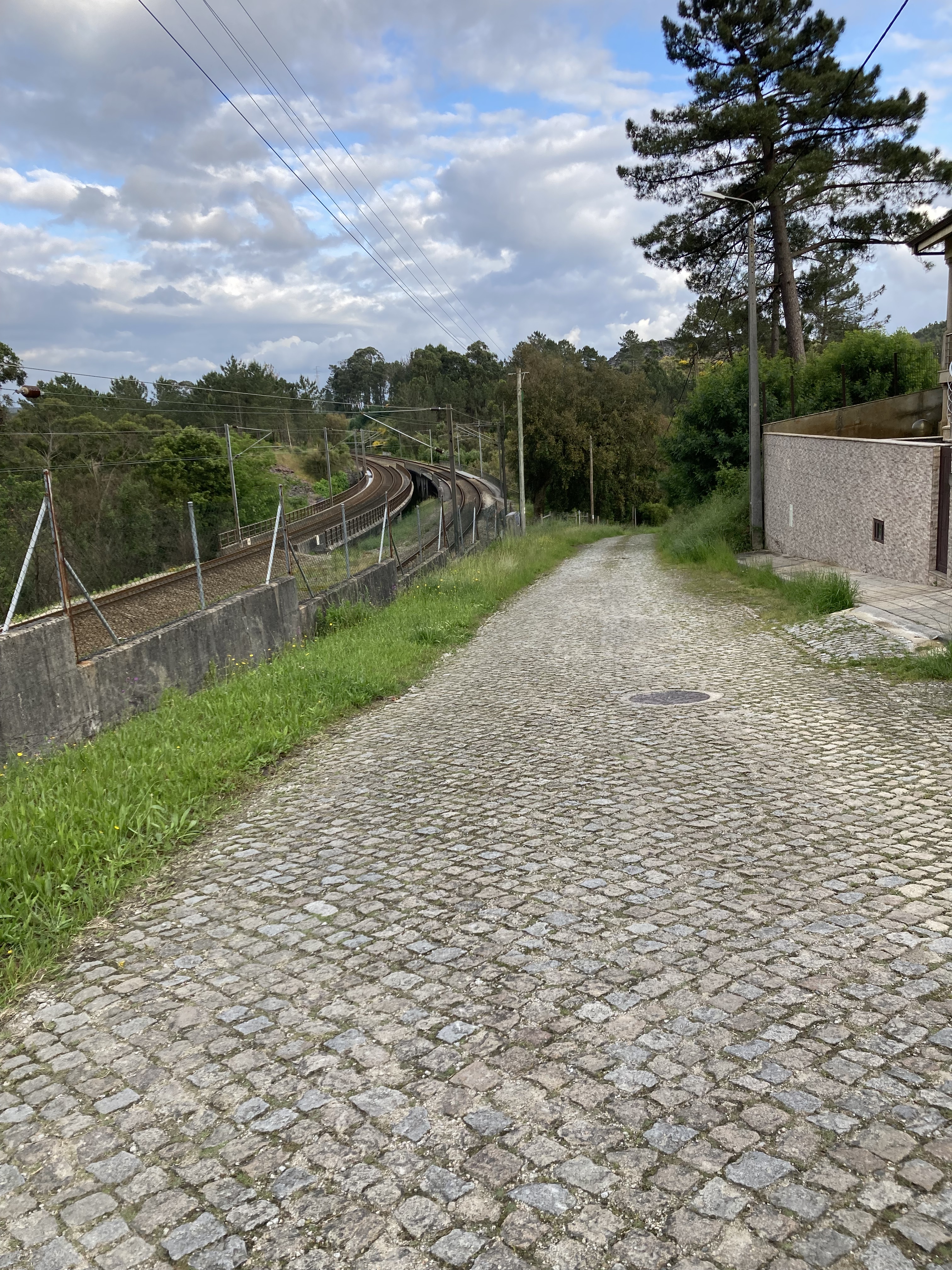
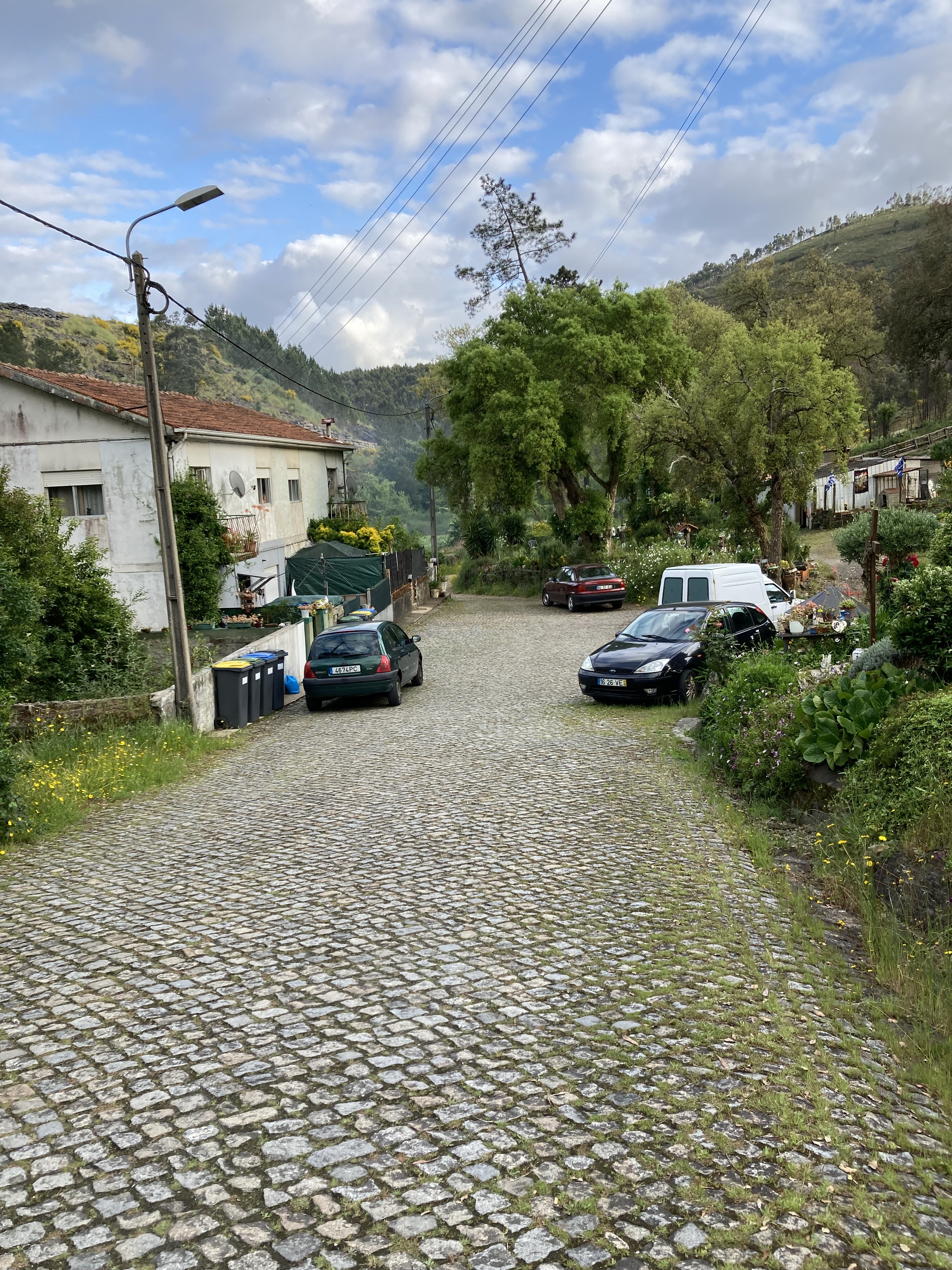
After a very light and late breakfast and coffee, onto the road that Aida had suggested, and Doris was happy to guide us on. All good for a while: bitumen changing to cobblestones, then to a rough dirt track, with wide pools of water and uneven surface. The track borders the Ferreira River with stone dwellings and vineyard plots hugging the slope. Stuck with it for about 500 metres then opted to turn back and take a longer but smoother route.

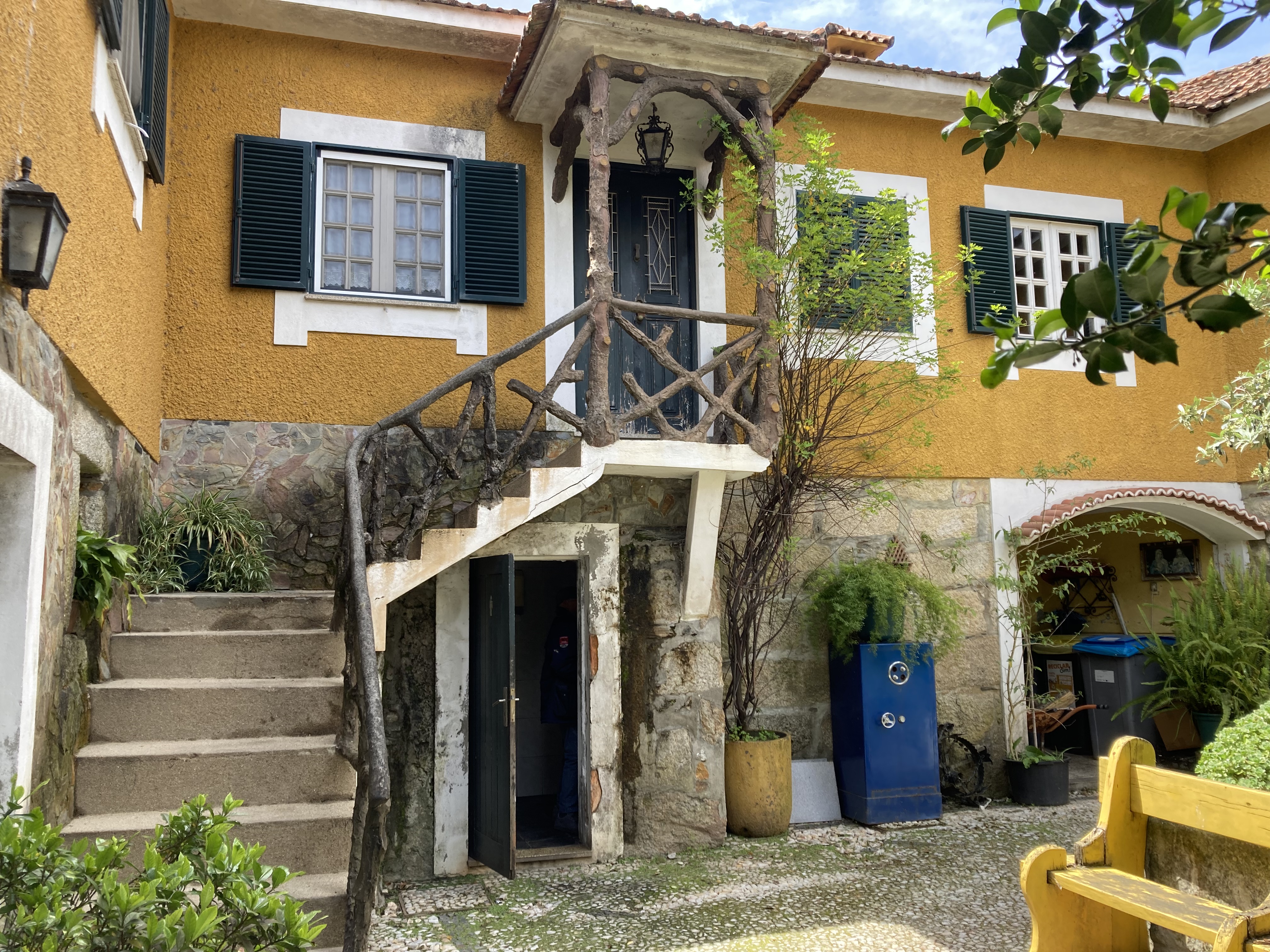
Arrived at Mateus da Ponte in good time. The restaurant has been in the family for 100 years, in the same house on the Ferreira River, built in 1683. Not really sure where to enter as there was no signage of any sort. Went through a side gate and a gentleman sitting back having a beer indicated eating with his fingers to his mouth, and pointed.

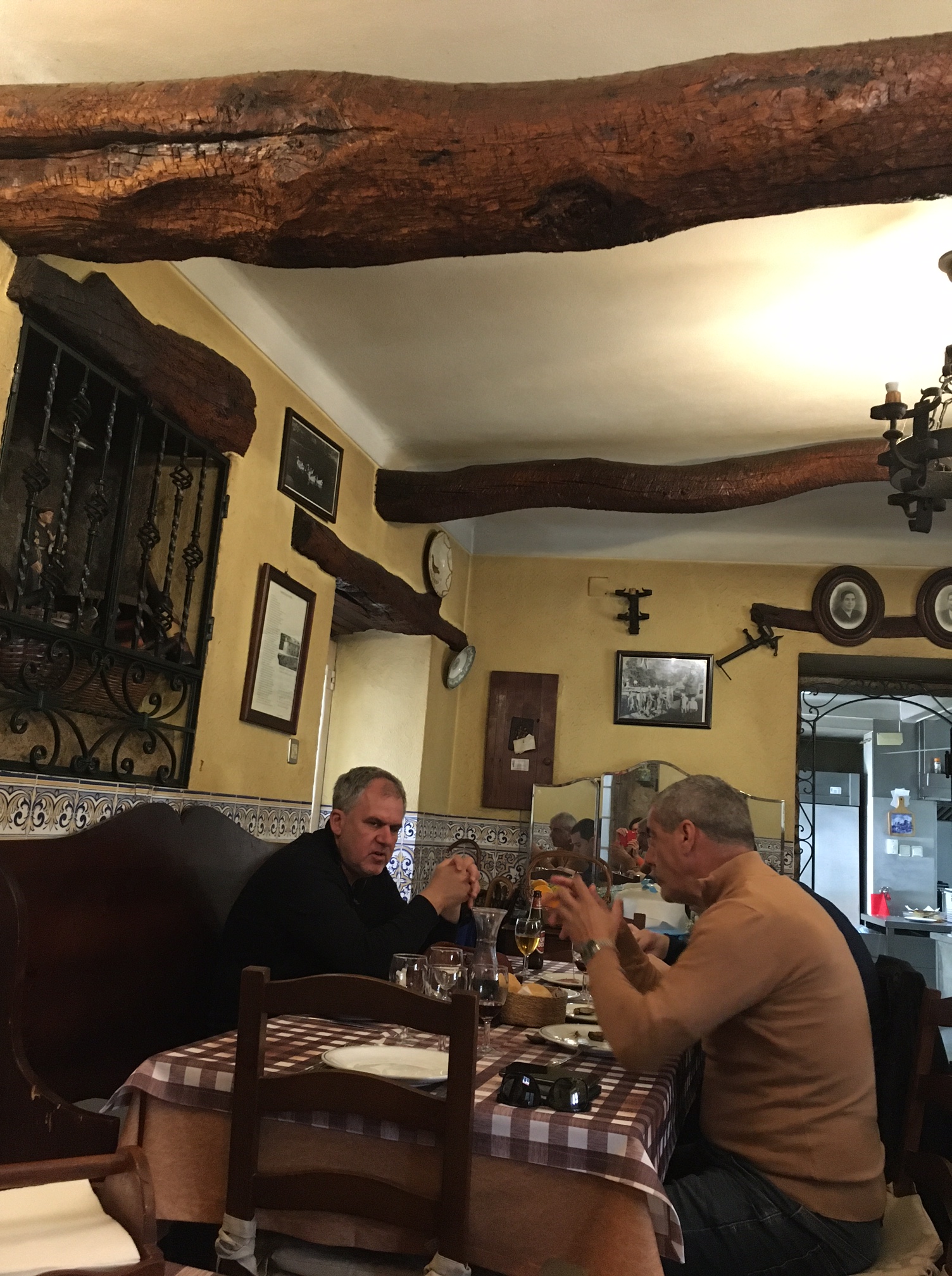
Entered and met by the host Fabio, who indicated a table. At this stage the only five other guests were on a table together – talking loudly. As they continued to do (it was good humored, and not intrusive).

Fabio brought out starters unasked: bread basket, a plate of two sorts of jamon, and a plate with two fritters. He then took our order: chicken and pasta (a traditional dish) and pork. The pork was deep fried, almost like a schnitzel, and came with a big helping of chips. The chicken was quite dark and had a full flavour: T asked about it later and was told it was homegrown, not from a supermarket, hence its appearance and taste. The meal was accompanied by a carafe of Vinho Tinto – not finished, as D had one glass only – and a simple salad.

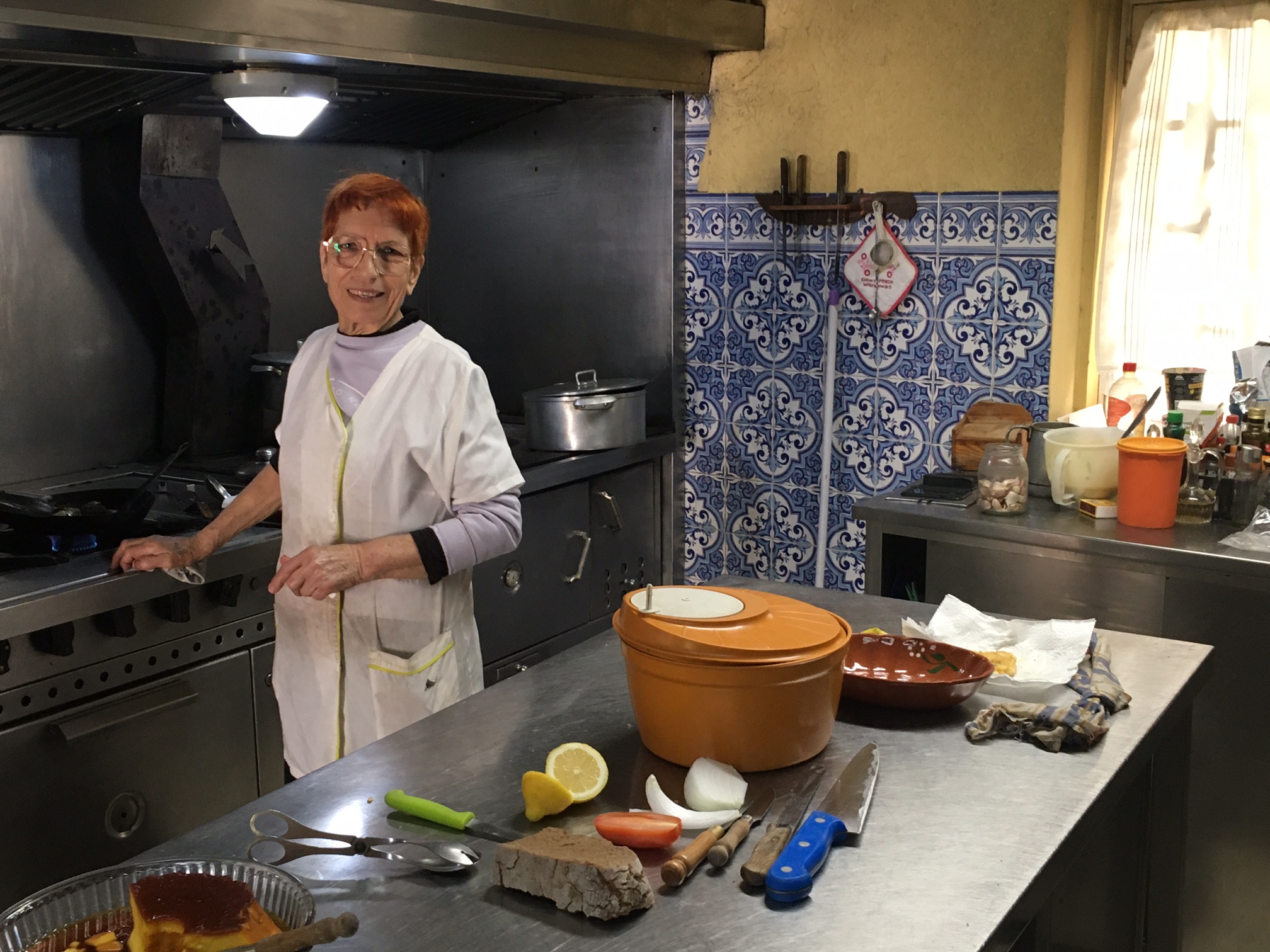
As we ate, a single man came in to eat then a table of four men. So including D, the odds were 11:1 versus T. Not a problem. As we left and paid we were invited into the kitchen to say hello to the cook – Fabio’s mum, and to the helper, from Ukraine. They run this kitchen 6 lunches a week and in the evenings they rest. It was a ‘home kitchen’ restaurant (perhaps there are only ever 2 options) and T thought she could do that.

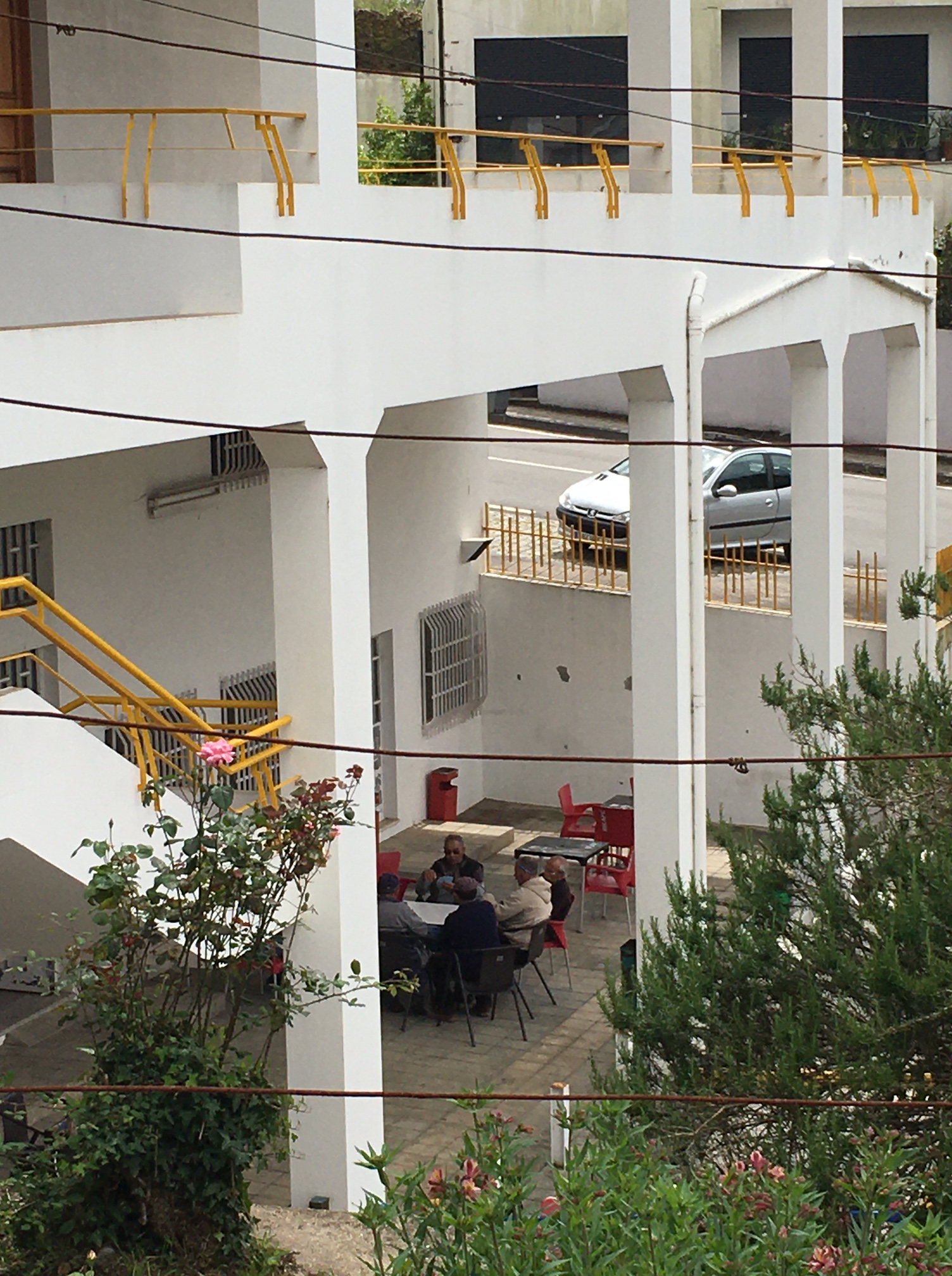
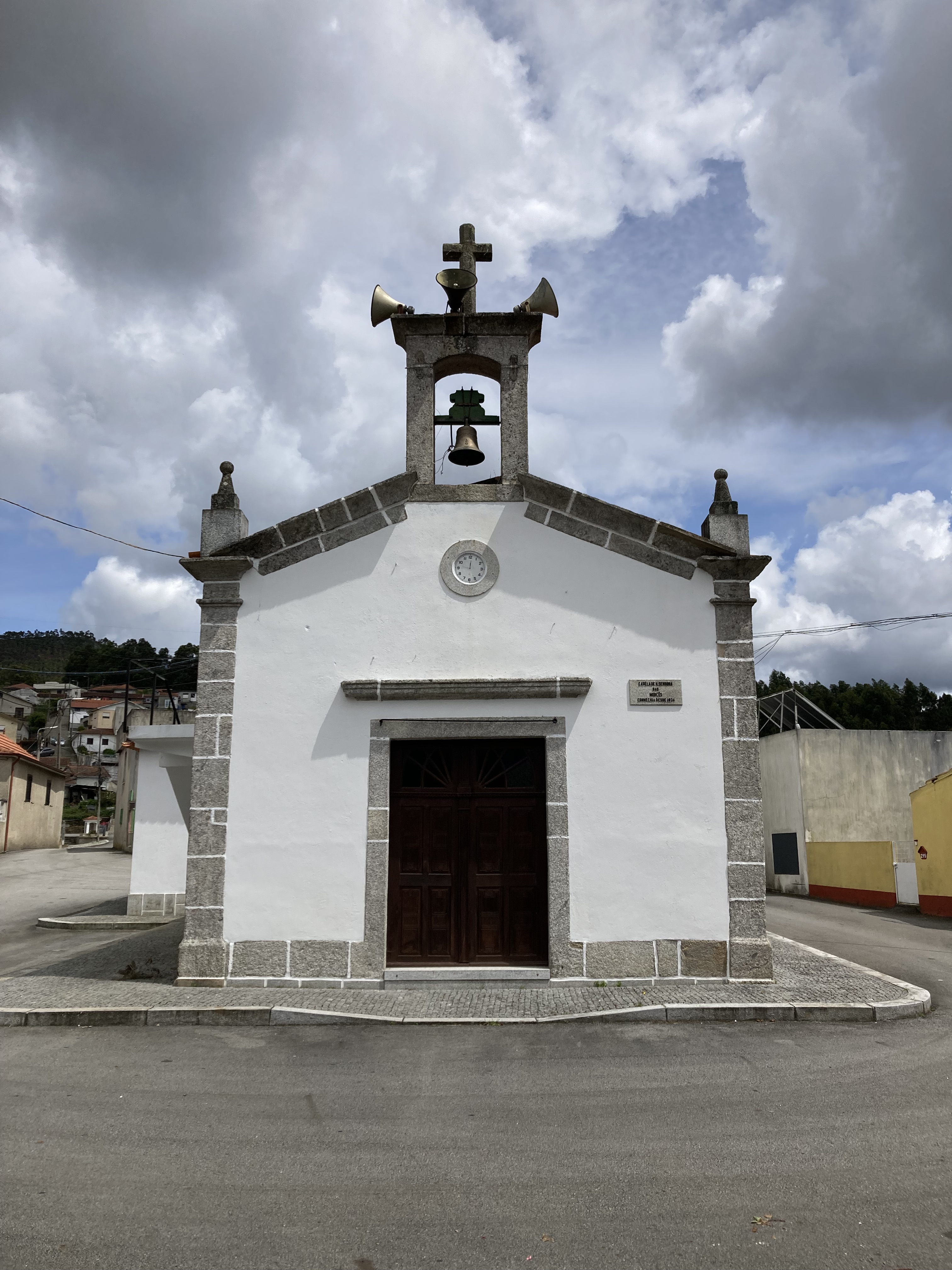
A bit of a wander in the river area afterwards to settle lunch. A church, of course, the Igreja de Nossa Senhora das Merces,  where a group of older men were playing cards, and it’s sort of  predecessor a chapel, Capela Nossa Senhora das Merces which is still used.

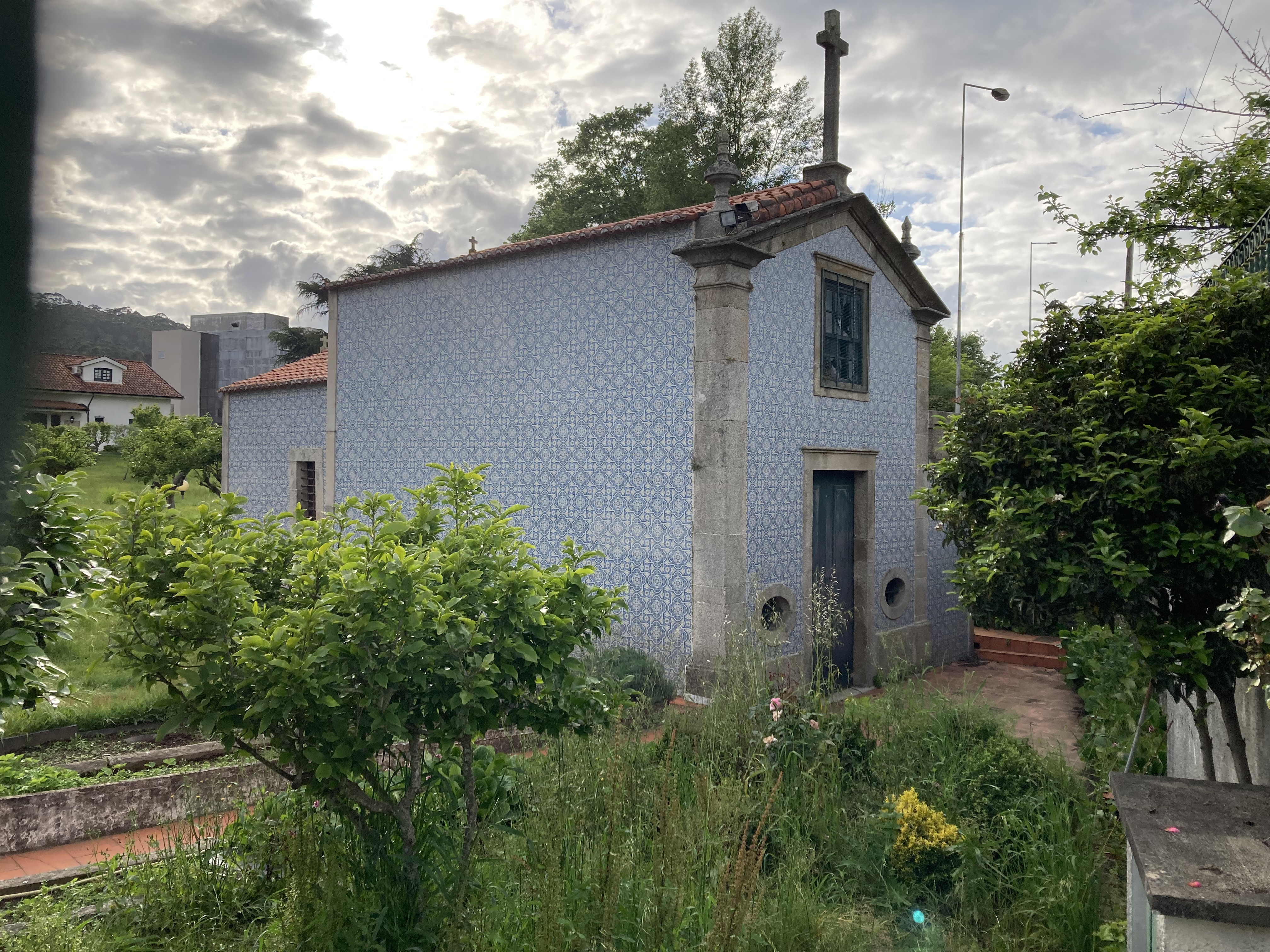
On the move tomorrow, for a two night stay at Alijo. We took  an evening stroll in the neighborhood to check out a Capela we’d noticed on our journeys to and from. It appears to be derelict, and quite likely part of a large private property, whose boundary fence is a wall of tiled scenes (guarded by big aggressive dogs and a security alarm system). It’s interesting  that as we pass by there is rarely an acknowledgement initiated by the local folk; we say ‘ola’ and make eye contact. There is, however, usually a muted reply.

Hopefully no rain tonight and the track will hold together for our exit!