Deltebre #1

Day 86. Sunday 1 June.

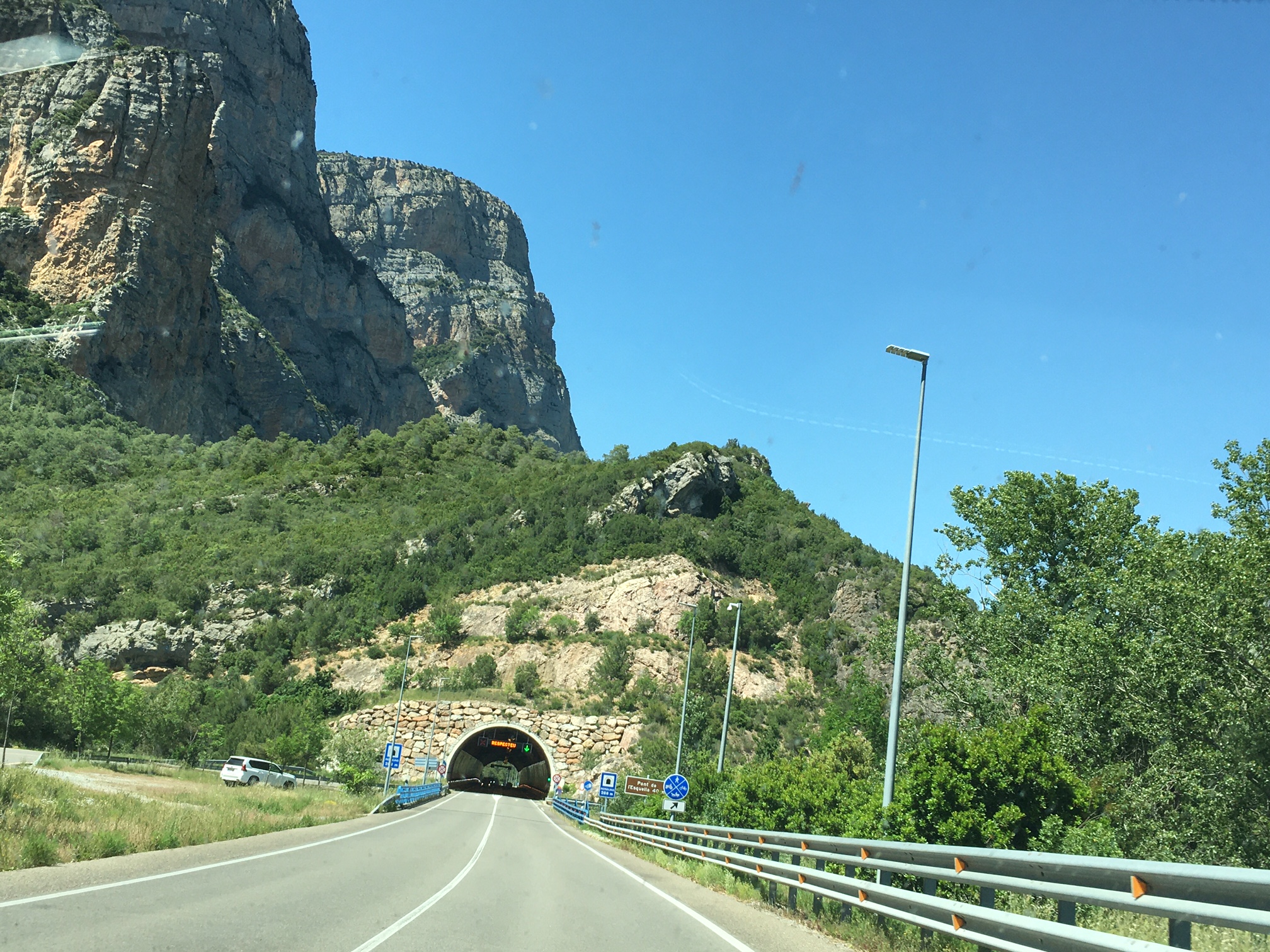
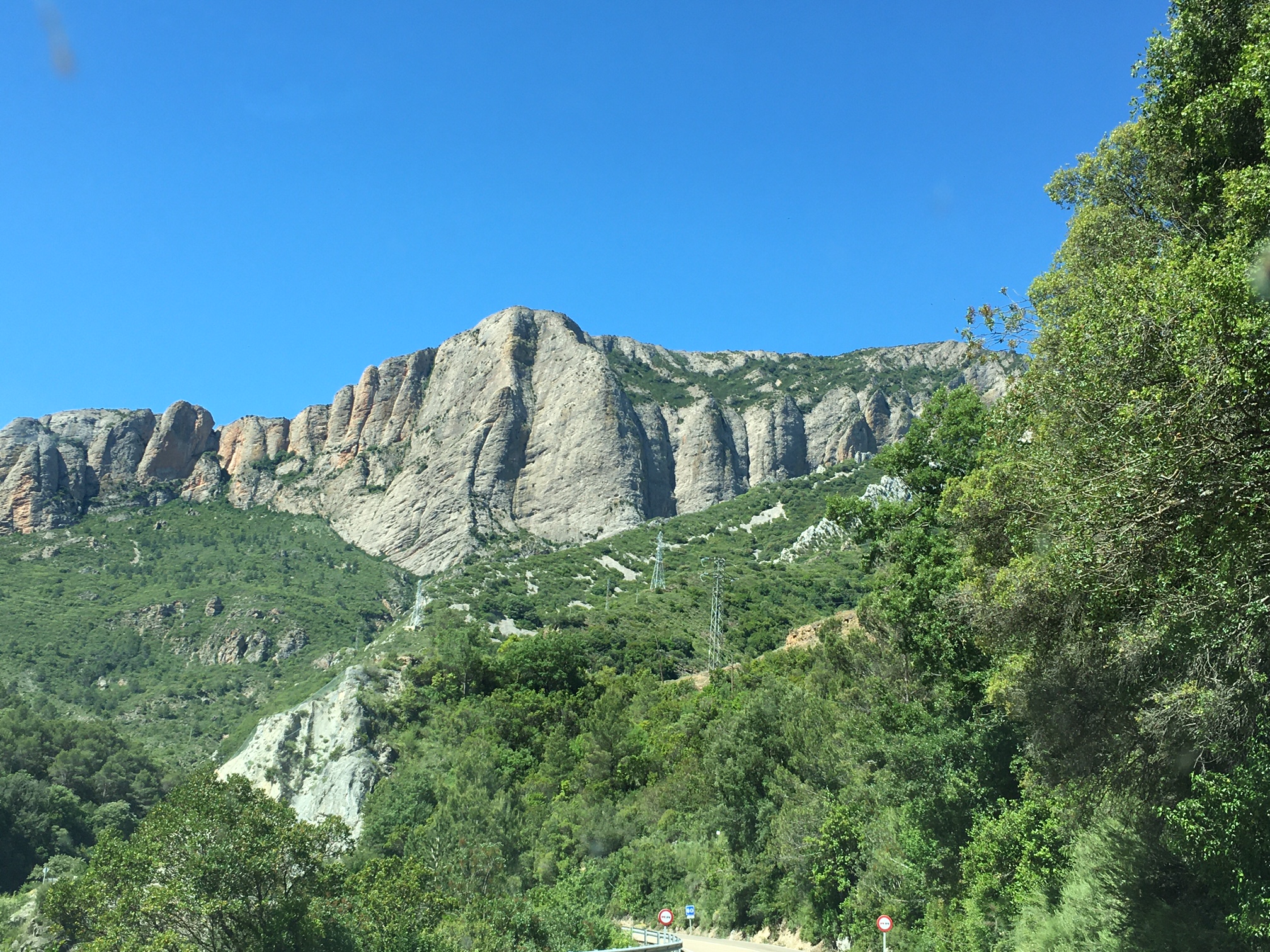
Moving today from Olopte to Deltebre, about 210 kms, almost due south.The road down from the mountains was absolute joy…speed of 70-ish, few tailgaters, with mountains, gorges and ‘impossible’ stone villages, many perched high or on cliffs all the way (and lots of cyclists in Lycra and mostly white socks). Followed the Segre River, a fast-flowing stream from the snow. T wondered about the old days in the region…tiny farming communities (with a church and maybe a fort/castle) and then as industry, and later, technology and leisure took hold, ski resorts and hotels??And hills with hundreds of wind turbines…T commented, ‘There’s not much breeze happening here’…only to see at the next turn, they were all spinning! To which D said, ‘They’ve turned some off to save crashing the grid!’ We do remember Lisbon.

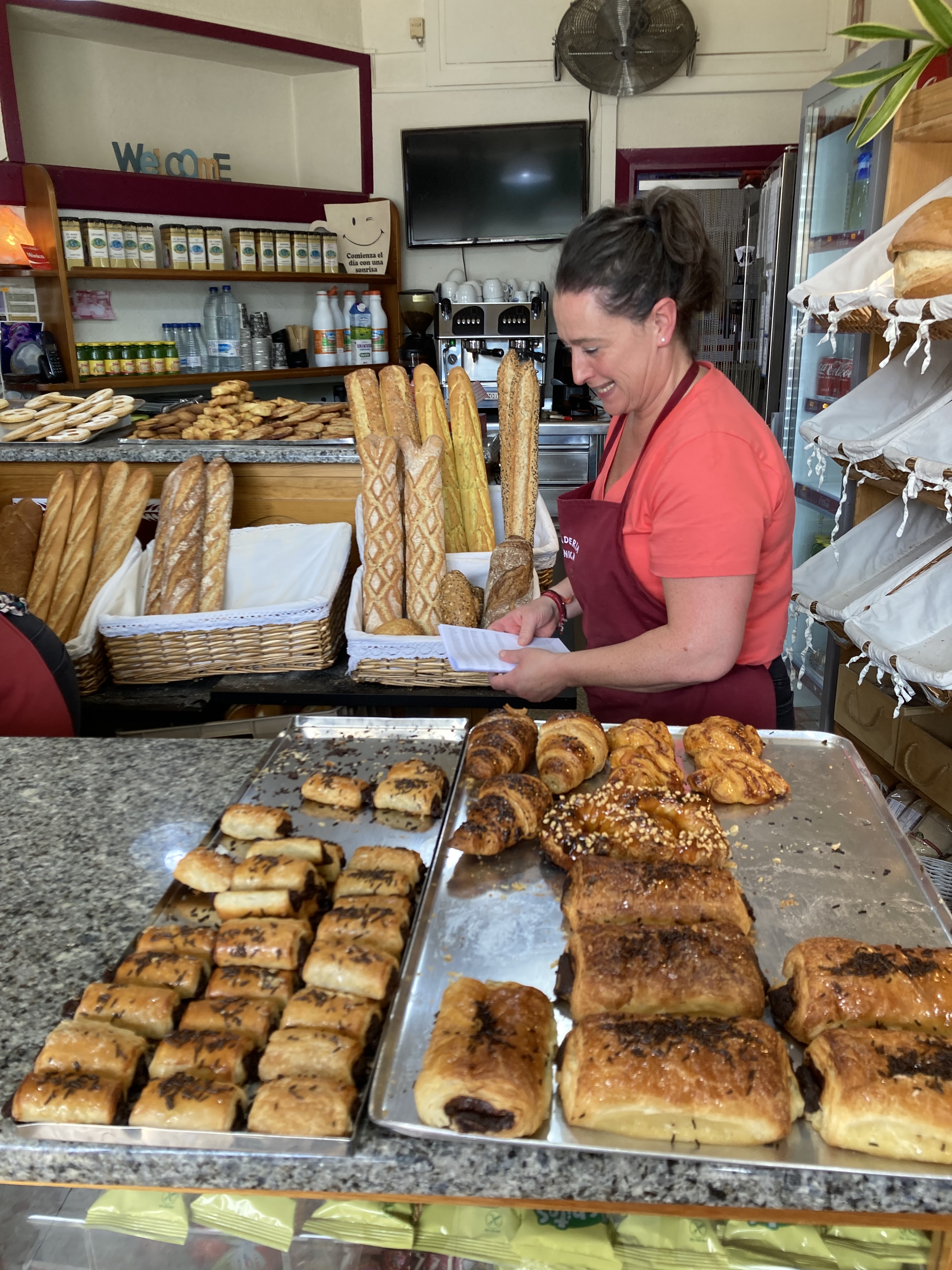
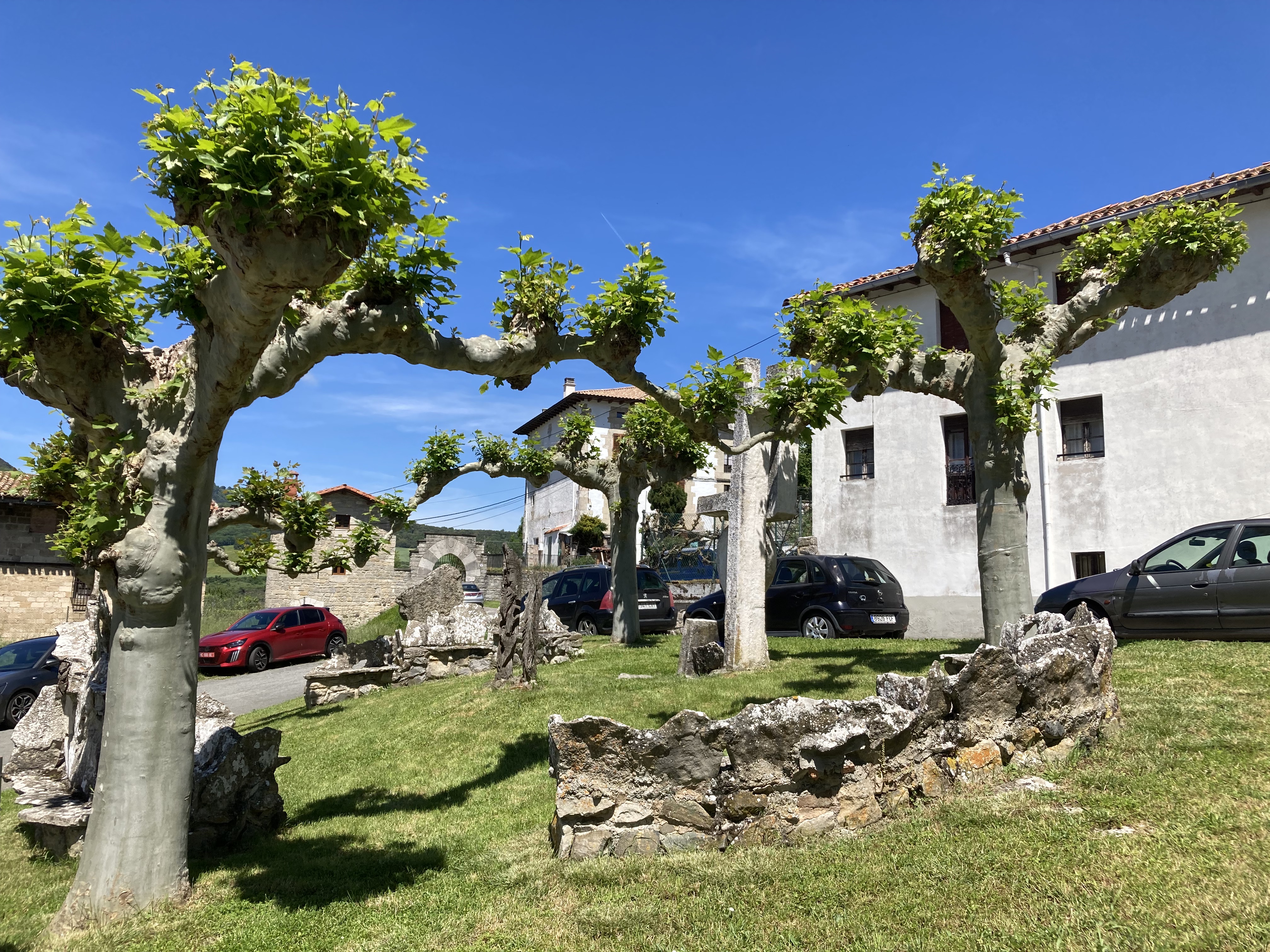
The day warmed quickly and passing through Ponts (again) the mountains gave way to plains of wheat, olives and grapes. The wheat was golden and partially cropped. There was some irrigation. Stopped for coffee and a sweet treat in an air-conditioned patisserie in Tarrega, with temperature hovering around the high 30s, so no incentive to stay and wander, even though the town square with pollarded plane trees was the place to be (as usual, older men, just sitting).

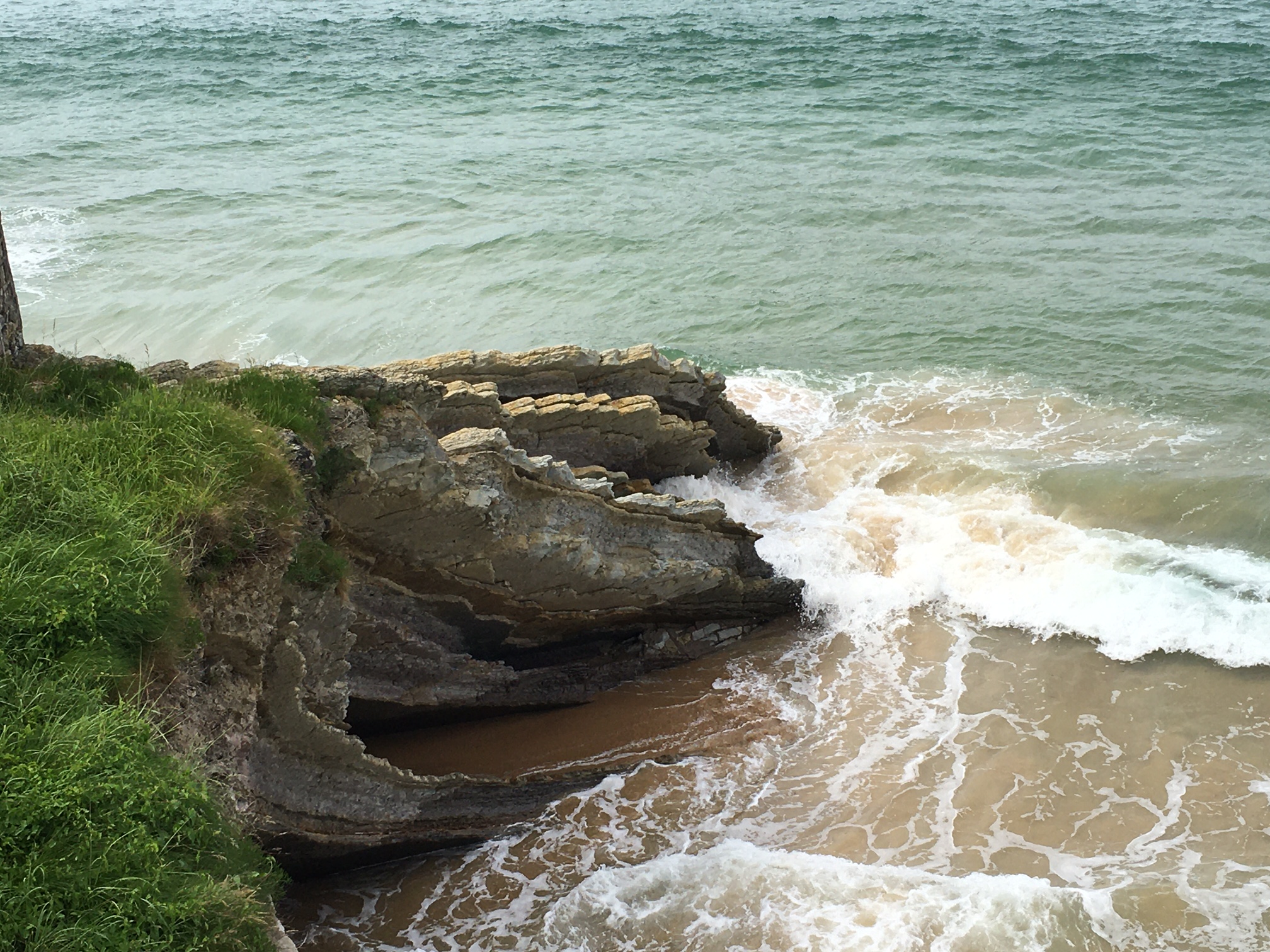
Continued until a lunch stop beckoned; we’d made good time and would be too early to meet our host. Decided to try our luck on the coast at Salou, expecting it to be busy: sure enough it was, so we left the main part and followed a road beyond the souvenir booths by the esplanade until we found a parking spot right above a nice cove. The water below looked so good…shallow, clear aquamarine water, sandy shore, gentle waves. 

Lunch finished,  the obvious question was “might we swim?” Of course – we still had 90 minutes up our sleeve. We could do a quick change in/at the car…yes! Our water gear was in a bag in the boot, only once-used, many weeks ago.

The water was absolutely perfect and not the ice cold of our last dip in the Mediterranean. It was easy to understand the appeal of ‘taking an apartment’ above. Steps and a walled esplanade led to sandy coves.

Back on the road to Deltebre and almost on time until Doris decided to play some tricks (and additionally the address given on booking.com was in the middle of nowhere). Fortunately,  D remembered our host had sent a message that contained an address (D: I know, should have checked that at the start!) so we arrived about 45 minutes late with effusive apologies and Google translate-written excuses. The hosts are a couple and their young teenage son: no English, so they promptly called for a cousin, who soon arrived. He had very good English, which is a good thing as he’s studying to be an English teacher.

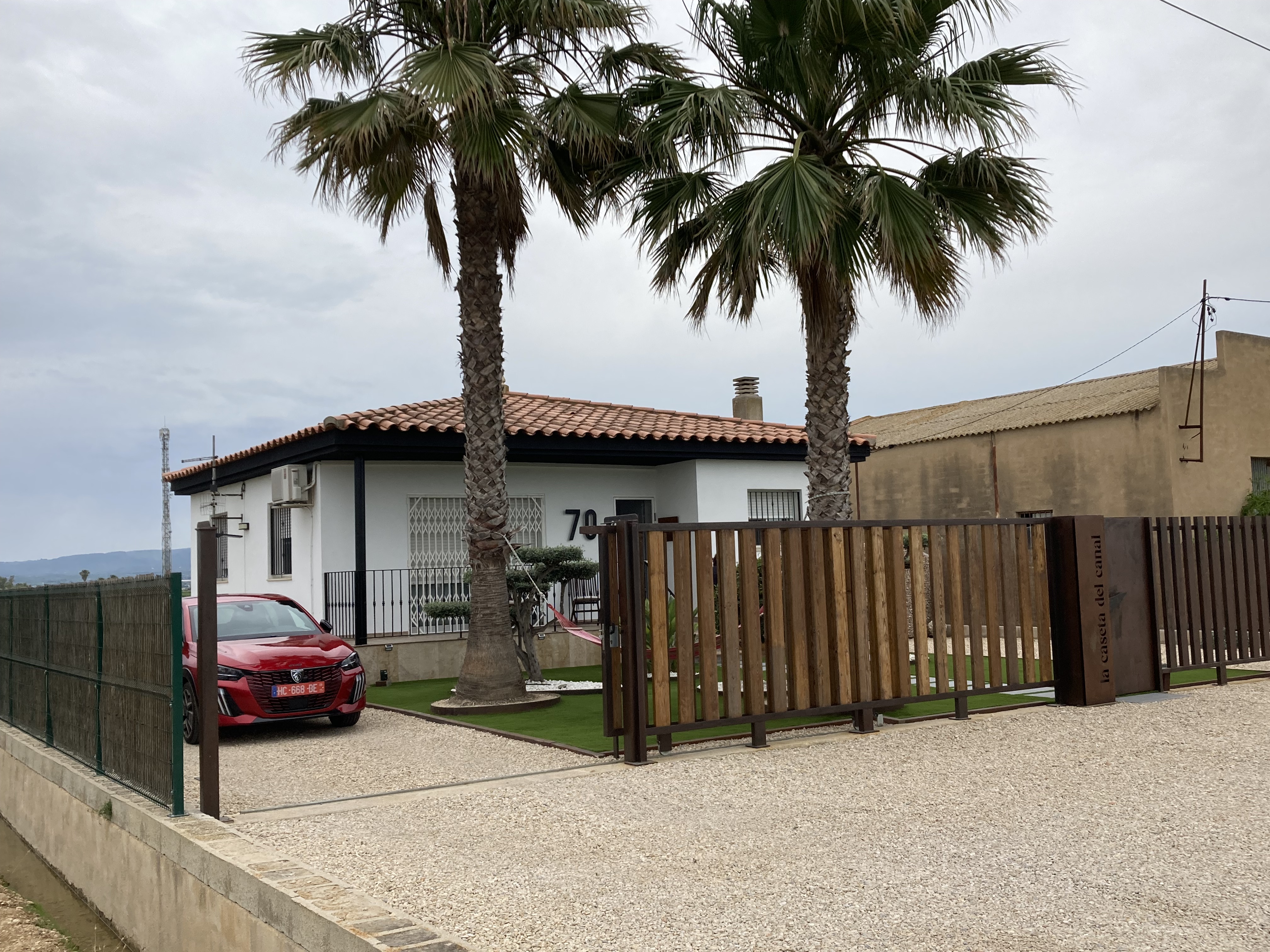
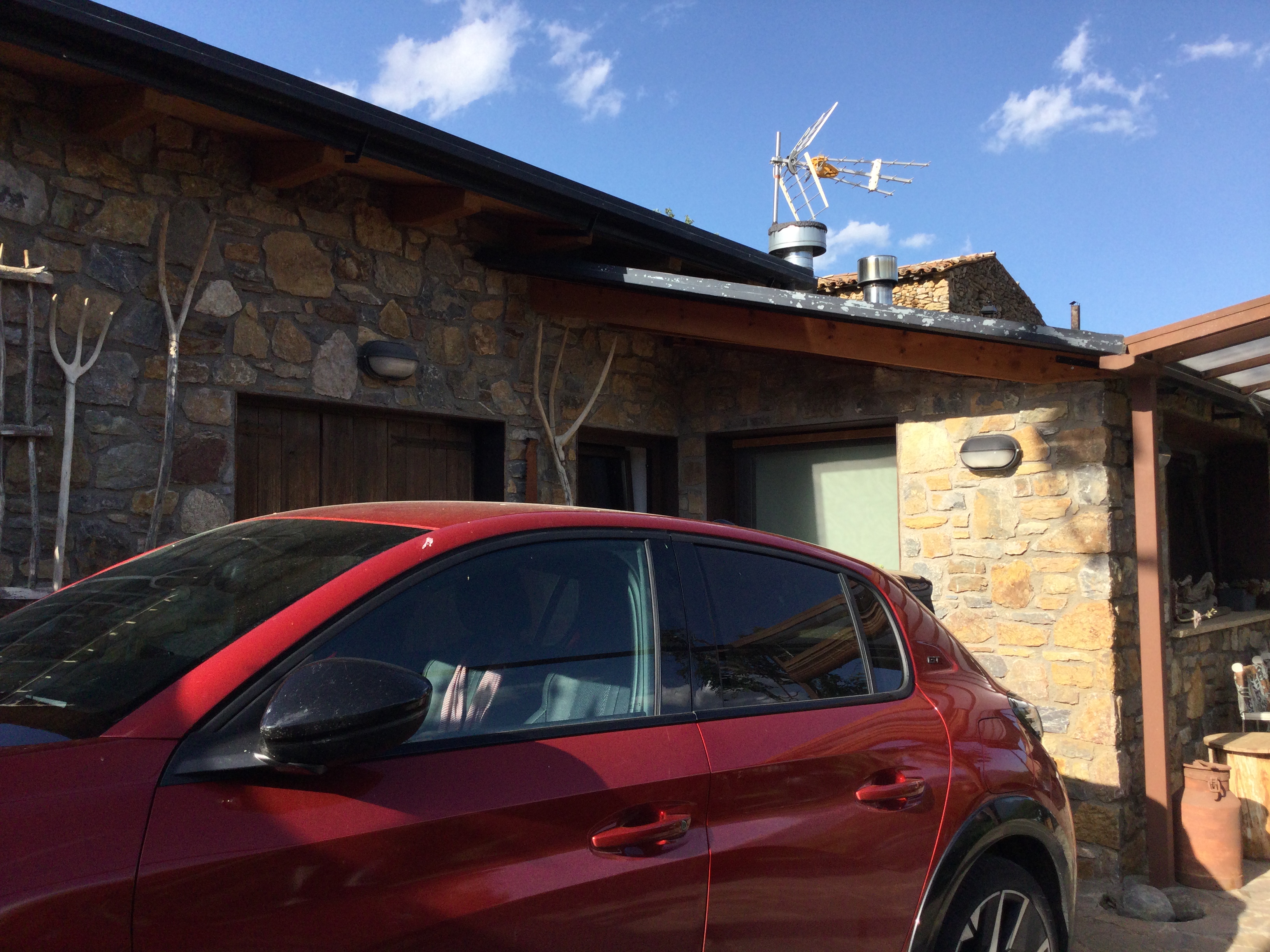
We received a very comprehensive guided tour: they are obviously proud of the place and although we suspected we may be amongst the first visitors, the Visitor’s Book goes back at least until April last year. The cottage was apparently part of the parcel when they bought the surrounding rice fields.The delta at the mouth of the Ebre River is a rice-growing place…(T had wondered about mosquitos). Yes, mozzies are part of the deal, hence window screens and repellant. We are still trying to work out if the cottage was originally a rice worker/manager/owner cottage, a granny flat or purpose built. But we’ll walk/cycle along the river (bicycles and helmets provided), do some bird-watching and find those flamingos.

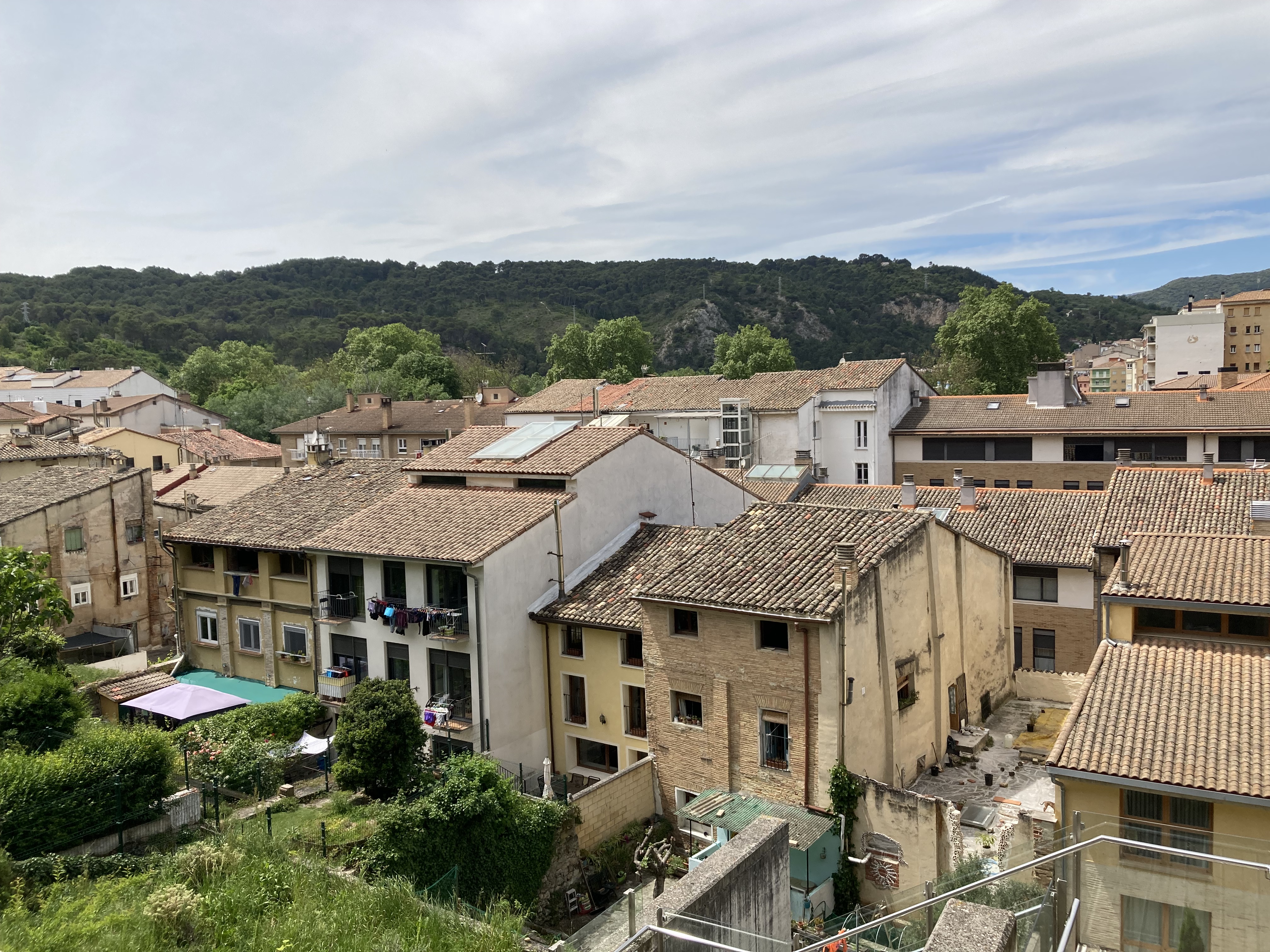
And there rice ‘paddies’ all around.

And there is a rooster and church bells! Time to go home.

Dinner. Baked traditional sausage (recommended by previous host) and vegetables: potatoes, carrots, cauliflower, onions, tomatoes, flat beans. Current hosts have greeted us with cherries and peaches!

Olopte #3

Day 85. Saturday 31 May.

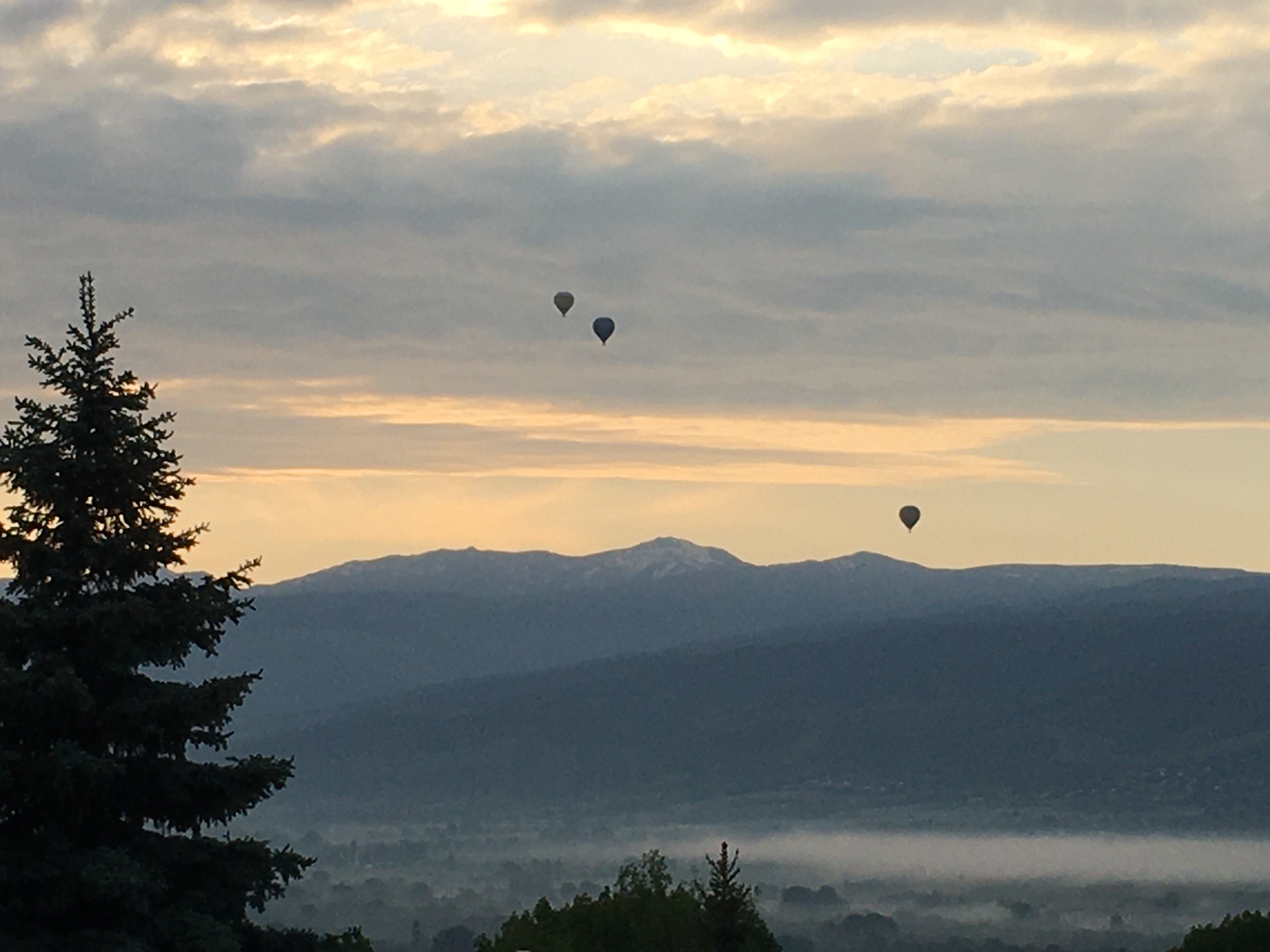
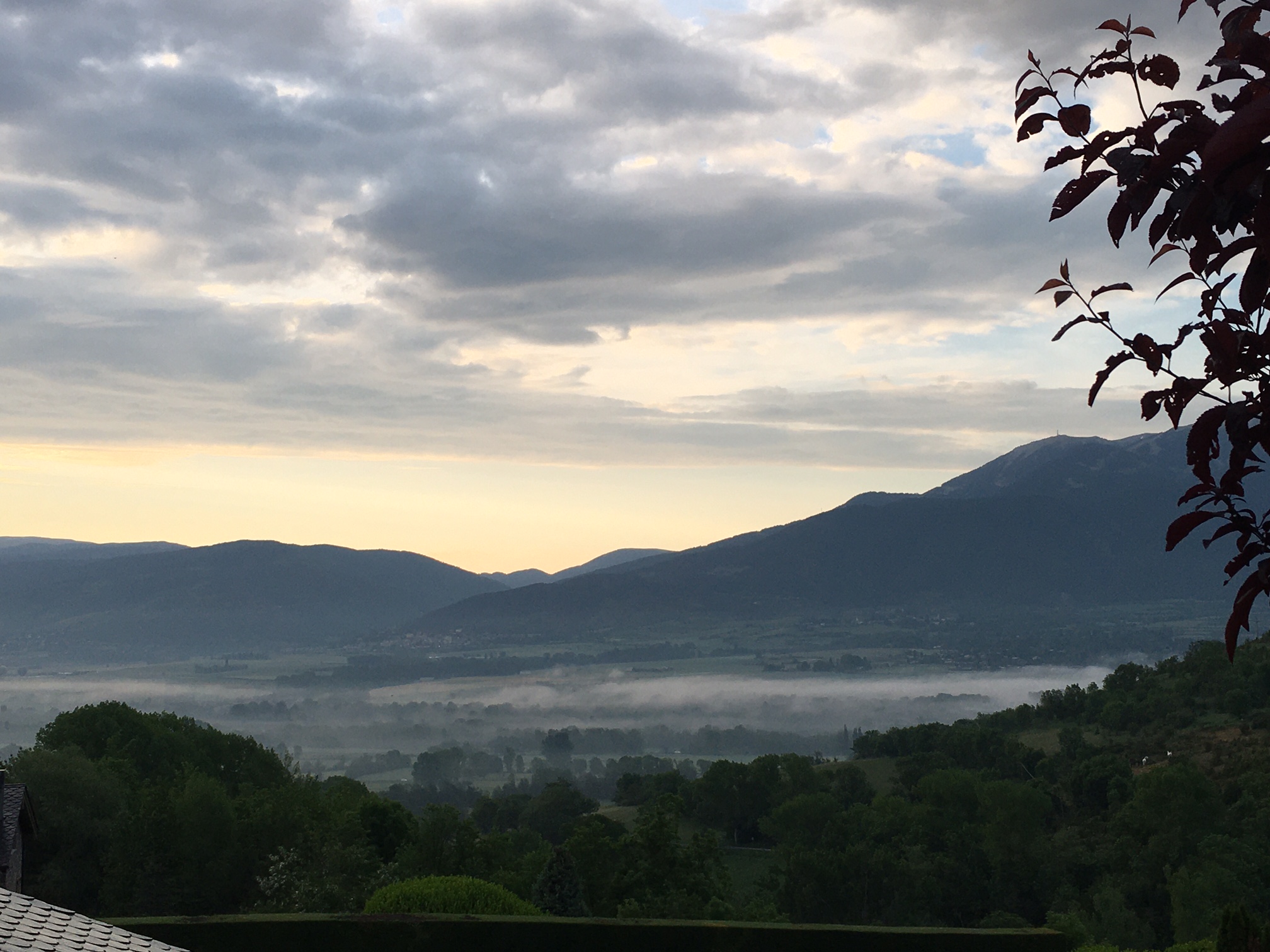
After a good night’s sleep, T took an early morning walk through the village. Only cats were about and then through the mist the balloons rose. It was a perfect pink morning after a night with firmly embedded earplugs and the rooster was in fine form.

Today was a little driving circuit,  stopping at those places in bold: Olopte to Bellver de Cerdanya (8 kms) to Isovol (5 kms) to Bolvir (8.5 kms) to Puigchedra (5 kms) to  Llivia (7 kms) to Egat (20 kms) to  Font-Romeu-Odeillo-Vi a (3.5 kms) to Mont-Louis (10 kms) to Saillagouse (13 kms) to  Bourg Madame (9 kms) to Olopte (15 kms).

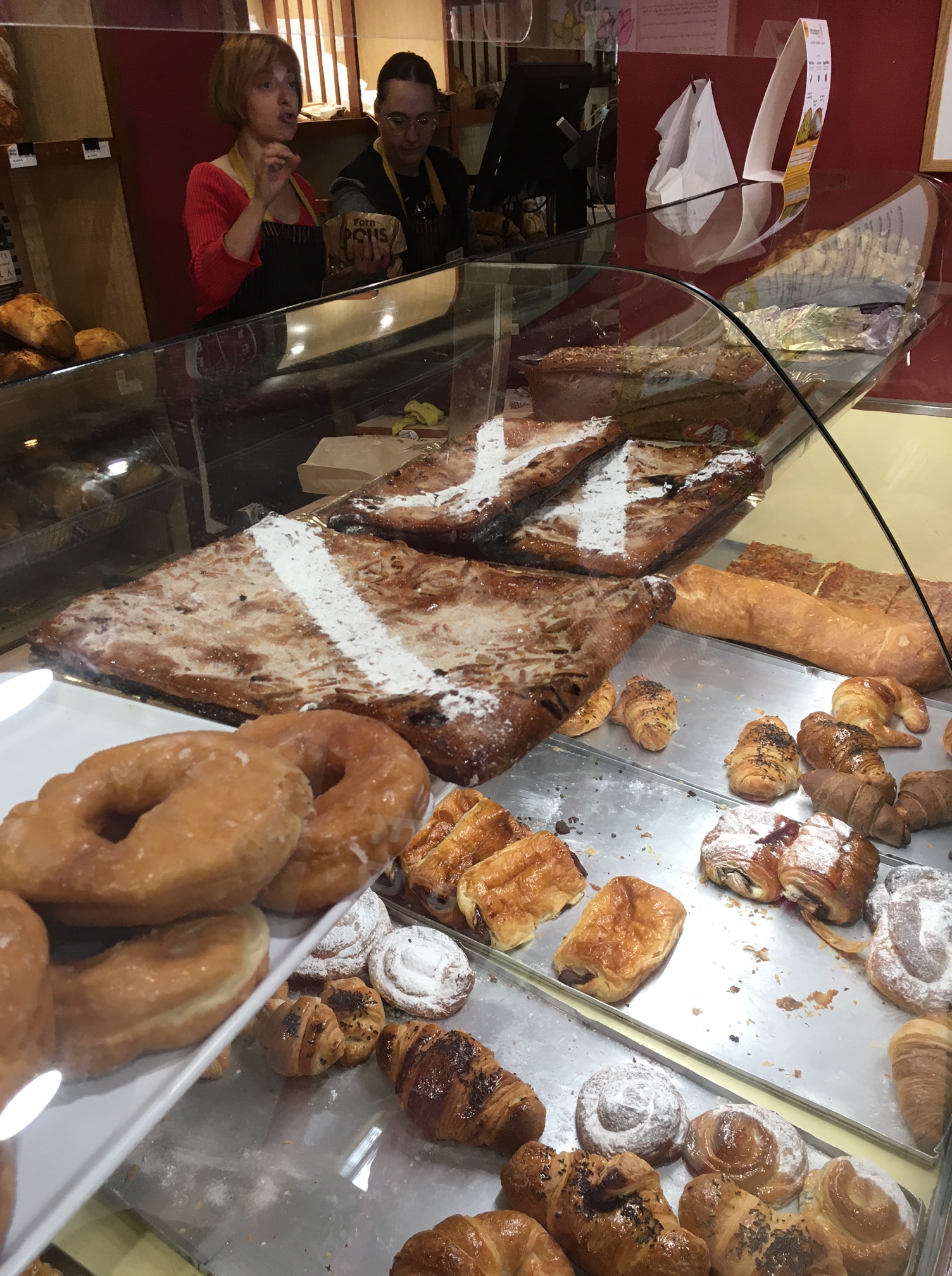
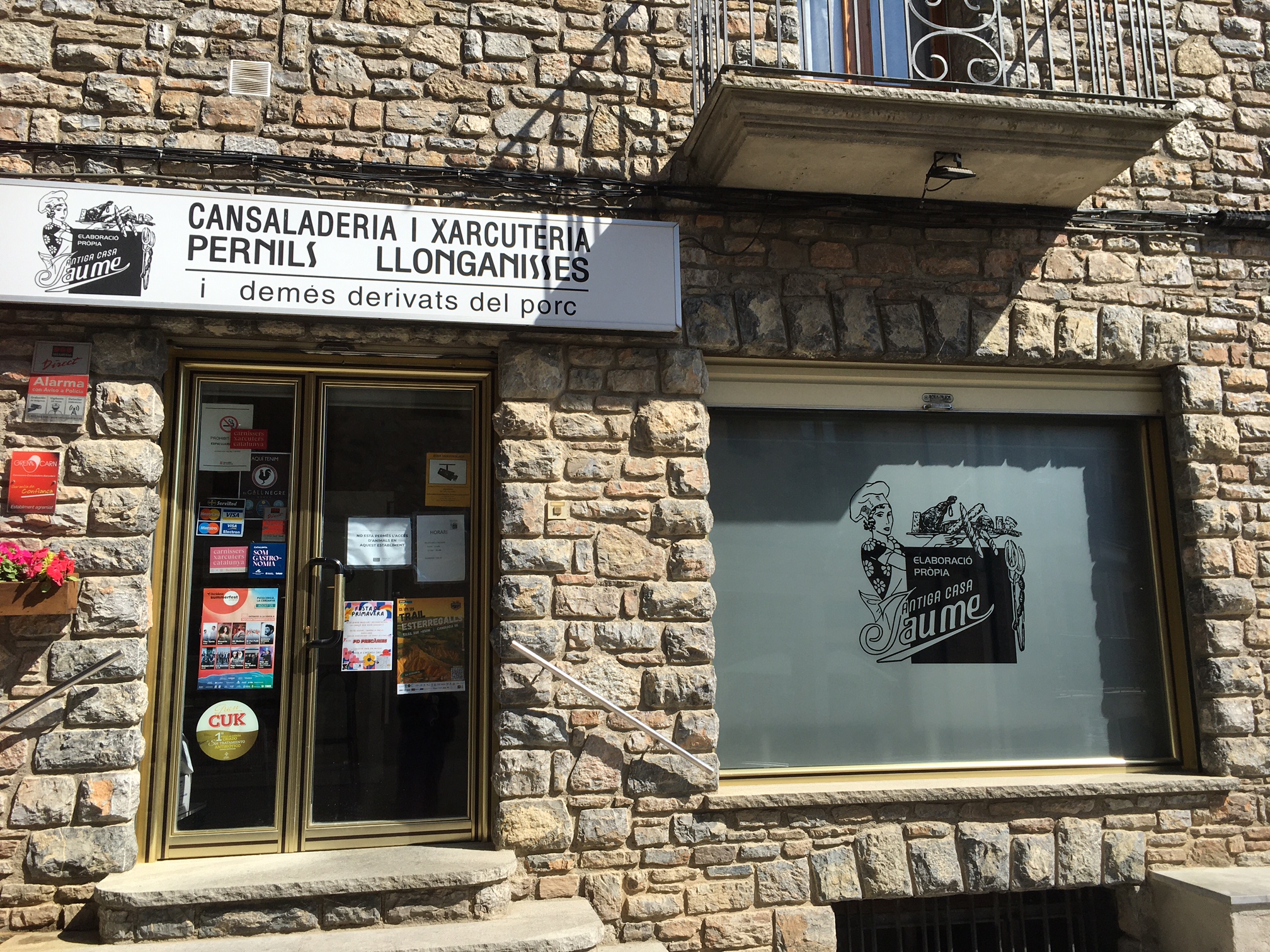
First destination was Bellver de Cerdanya, just down the road, to chase up two recommendations from our host Maria Angel: stone-baked bread from Forn Pous and traditional sausage from Cansaladeria I Xarcuteria Pernils LLonganisses (we think known as Cal Jaume). At the bakery, the answer to “English?” was “No”, so Google translate asked “stone baked bread?” Enthusiastic nod and smiles and pointed out.

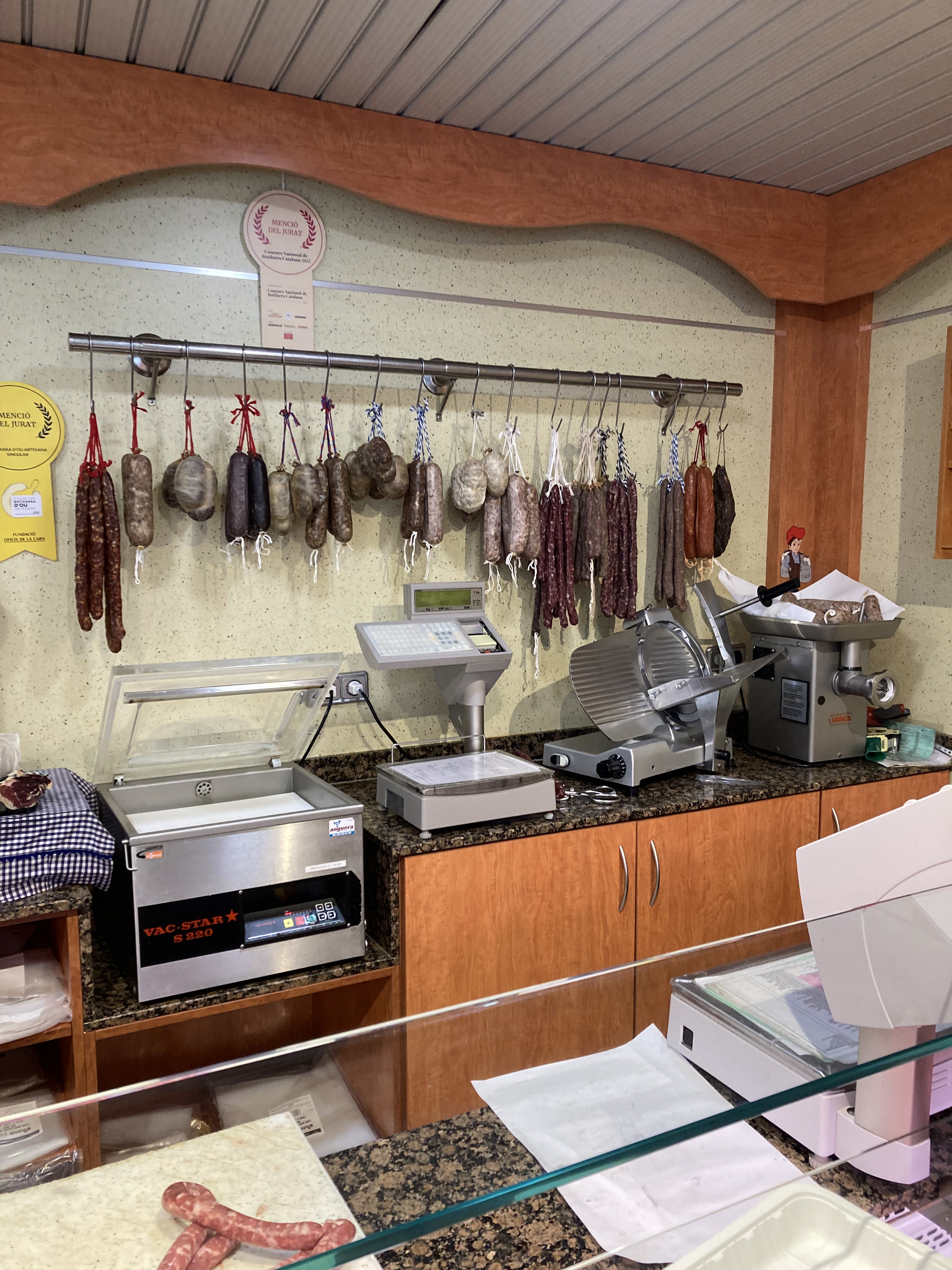
At Cal Jaume we waited in line as the two ladies attended to other customers: they would cut/pick up the selections, wrap them and when the order was complete walk over to another counter to complete the transaction, all the while talking, sometimes including us, although all we could do was smile and nod. Our turn, same response to the question, request typed in: “traditional sausage please’ then again nods and smiles as she disappeared into a back room to reappear with a couple of metres of thin sausage. We agreed to the amount she suggested for 2. Smiles and nods all round, but as we left D heard one say “English” so he turned back to correct that mistake: “Ah, Australien!’ – more huge smiles, laughs and enthusiastic waves. It was, unbelievably, still too early for coffee!

We continued on our drive, crossing into France via an international road, then  pausing at Llívia. The town of Llívia is a Spanish enclave surrounded by the French department of Pyrenees-Orientales. Because of a technicality in the Treaty of the Pyrenees signed in 1659, that transferred only “villages” in the Pyrenees to France, Llívia, which was designated a “town”, remains under Spanish control. Llívia is separated from the rest of Spain by a corridor approximately 1.6 km (1.0 mile) wide, which includes two French communes, and is traversed by a road owned by both France and Spain. Since 1995, there are no formal borders. Speech was in both French and Spanish. At a fruit stall we bought ‘gold-plated’ veggies and some fresh basil (first time we’ve seen a variety of fresh herbs, but they were suffering in the heat).

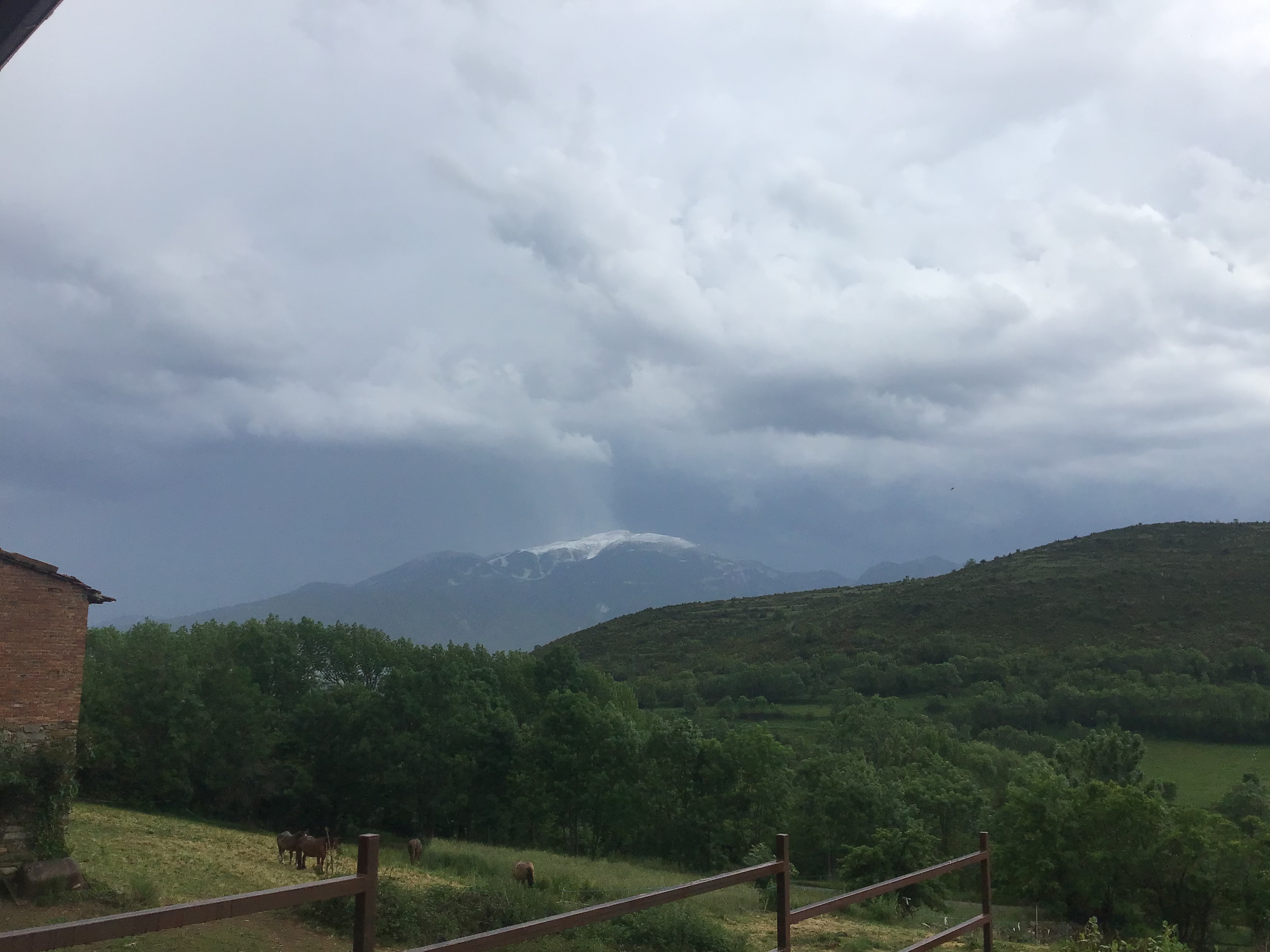
By now it was hot and humid, and threatening clouds were gathering.

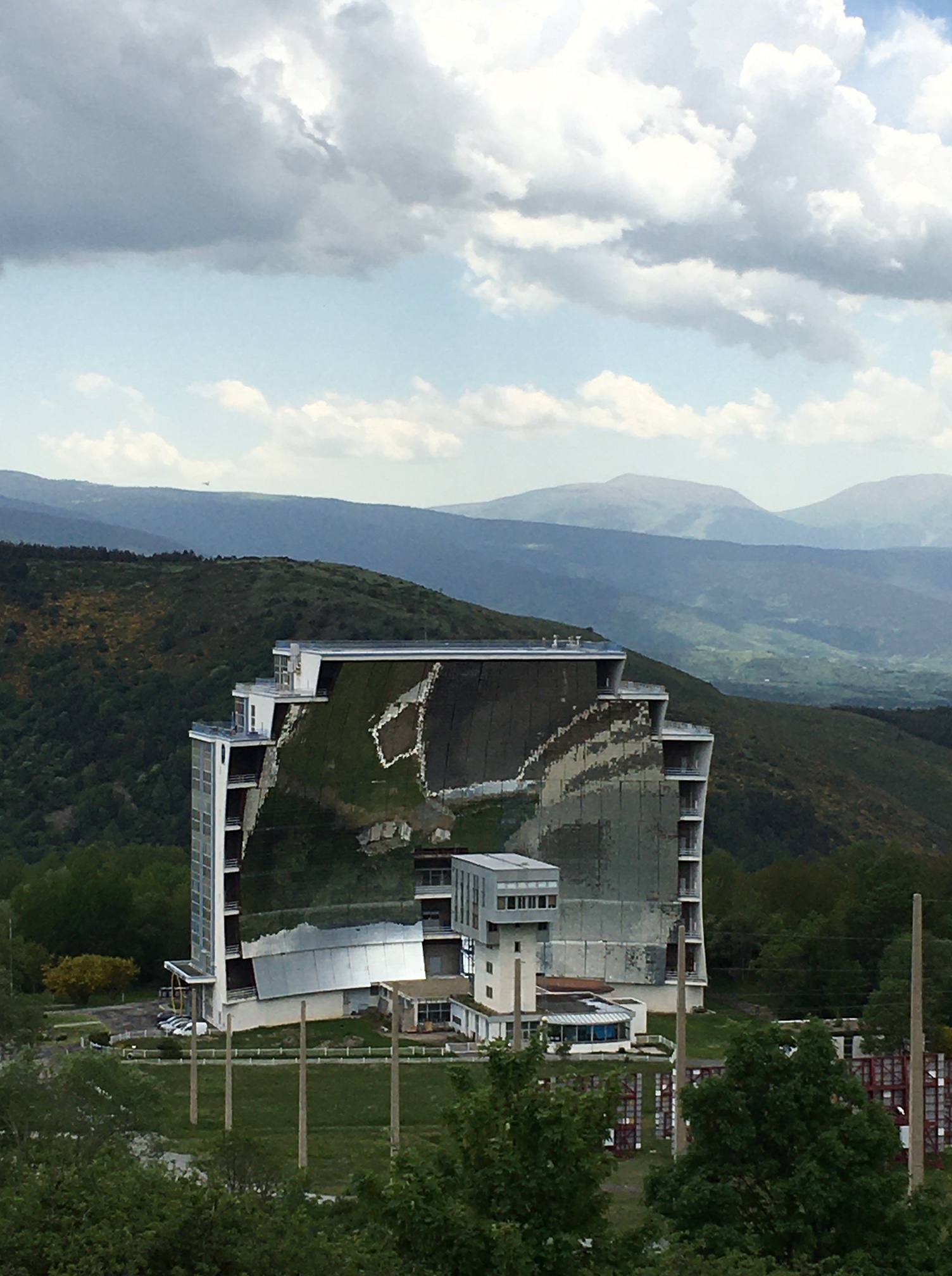
We drove into Font-Romeu-Odeillo-Via along a steep and very winding road, much loved by the many cyclists zooming downhill. There wasn’t much to stop for, although the views en route were breathtaking – the scale being beyond our little iPhone cameras. At this point Doris played another trick and sent us down the wrong road, for which she was loudly and harshly admonished. Back on track again, we saw a most unusual structure, which turned out to be the Odeillo solar furnace, the world’s largest, serving as a science research site studying materials at very high temperatures.

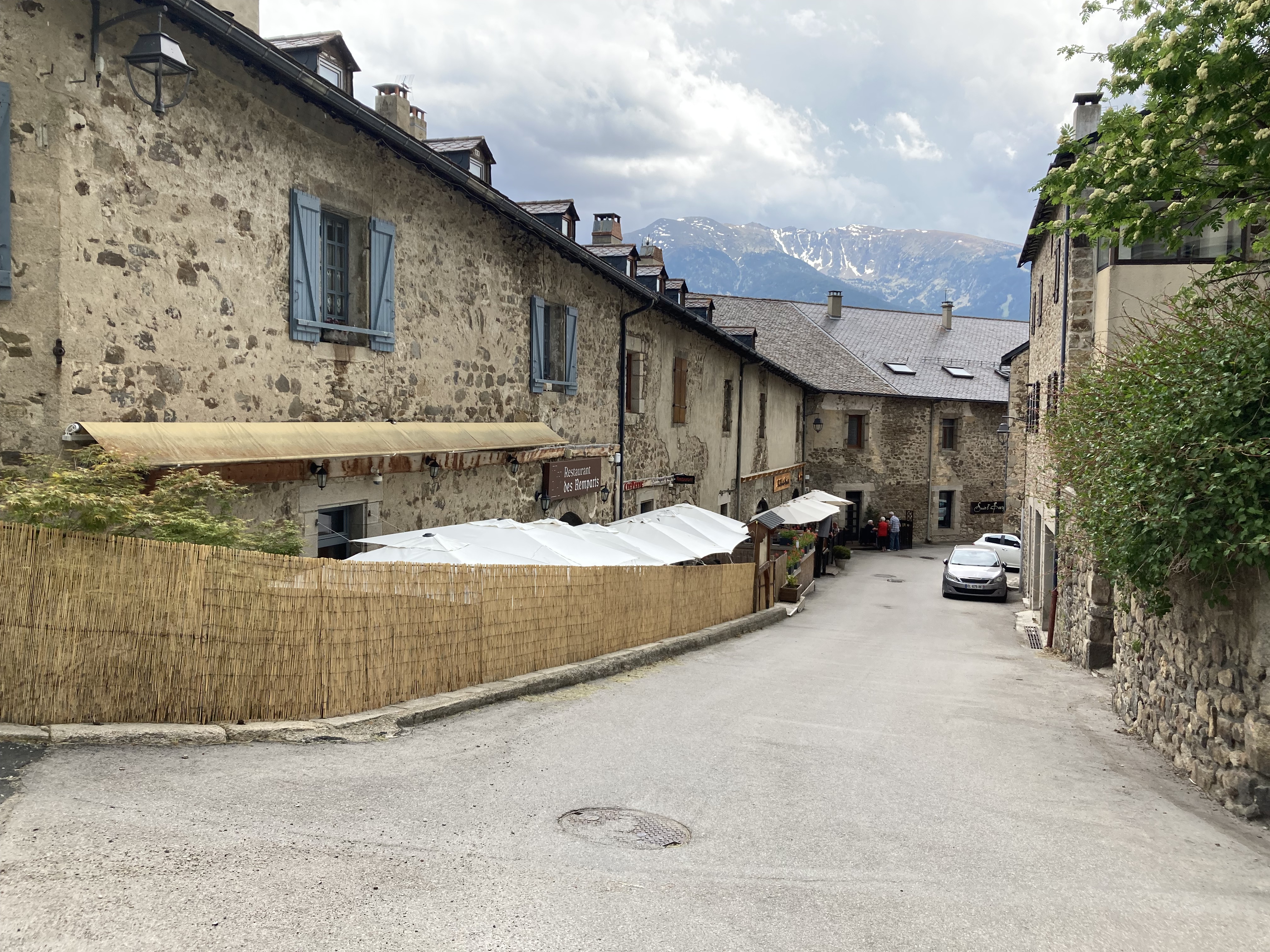
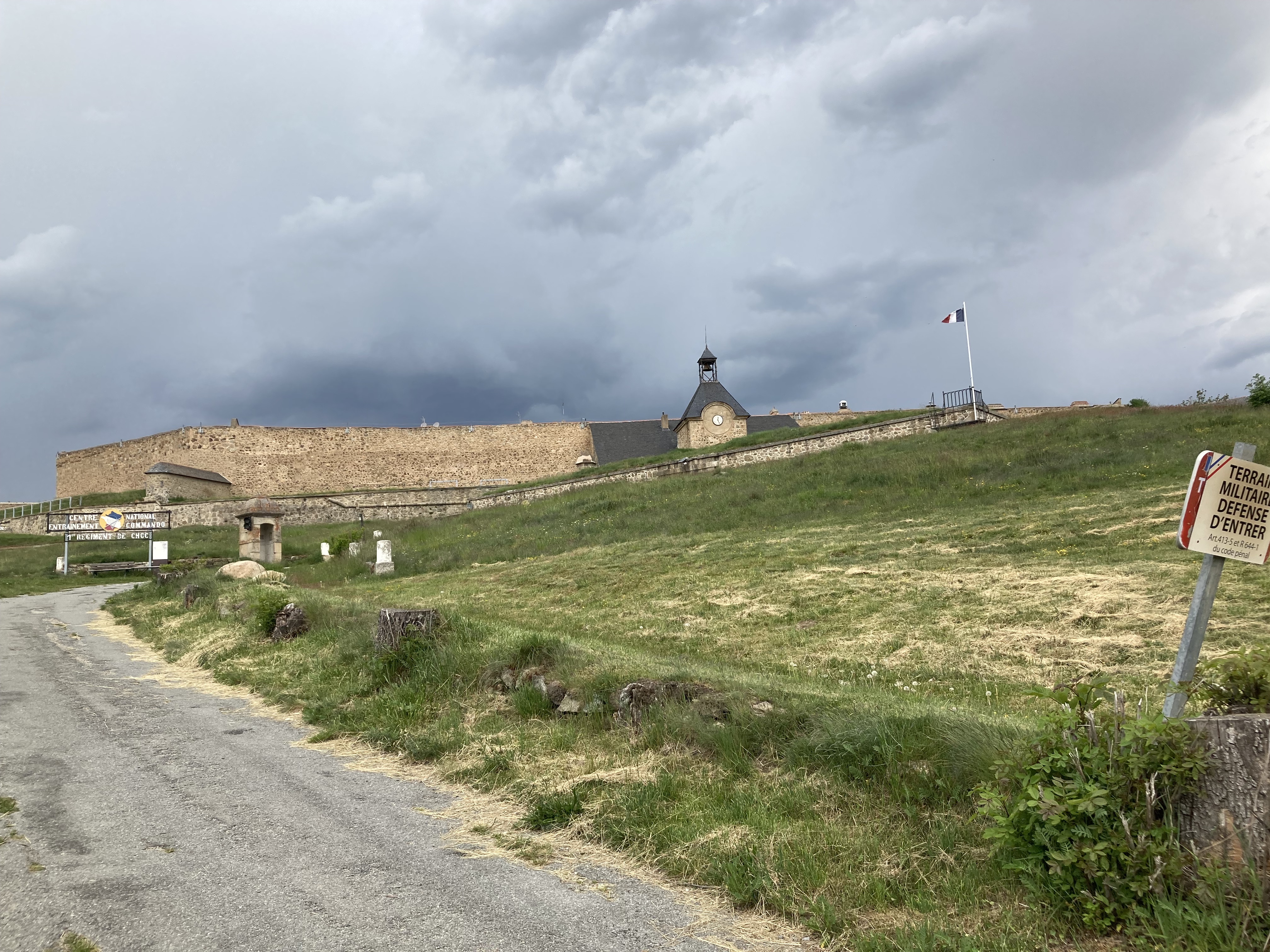
On to Mont-Louis, a walled commune on a hill, also home to the Commando Training centre. We were well and truly in France.

Entry was through two narrow stone gateways, across a moat bridge. We chose a cafe/snack bar for lunch bypassing the restaurants that do a brisk trade with 3-course menus of the day. After nearly three months in this lifestyle, we haven’t taken on the dinner & wine scene in the middle of the day, preferring to return to home base ( by car) for this. The waitress had excellent English and when we ordered the quiche to share she advised that it was not home-made, recommending the bruschetta (for two): we selected the cheese and chorizo option. When it arrived it was huge, and about 80% garlic. This was, however, a single serve!

Spotty rain turned into showers as we drove away, becoming heavy enough to have a brief pull-over to wait it out. D stopped the car for T to take a photo of the boom gates he said were the border: actually, they were only a railway crossing!There are no marked borders.

Rain continued on and off…D took to the screen and T picked up needle and thread.

Dinner is a spicy soup using leftover chicken, red curry paste, veggies ( including Joan’s technique of breaking potato chunks).

Olopte #2

Day 84. Friday 30 May.

A peaceful night in an idyllic setting was the promise. The church bells continued to ring until 2300 – and for some reason rang twice each hour, two minutes apart. Then the rooster started in the early morning! Not hourly, but every 15 minutes or so. Promise not delivered – could have been made by a politician. T’s earplugs didn’t cut it; the rooster continued to crow. 

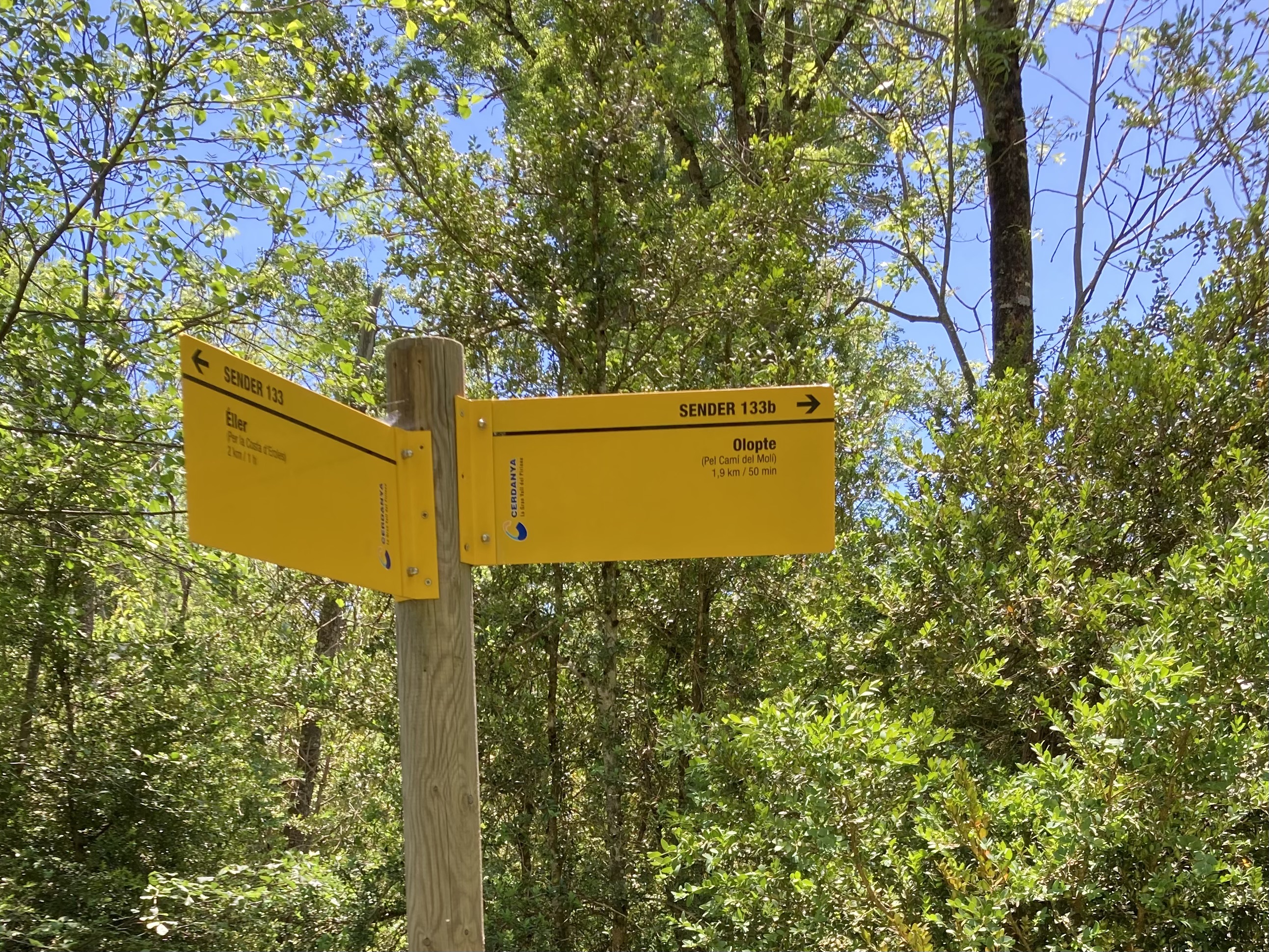
But the day is brilliant. After breakfast, checked out an information board and started on the 3.5 km round trip walk along the Riu Duran

We passed through the village, seemingly mostly deserted – it reminds of Thredbo, and we suspect the chalets are mostly for winter time skiers. The rough track meandered through bush and meadows, with the sound of the river, cow bells and small birds constant.

We were delighted to come across a swarm of white and blue butterflies on a short seepage of water. It reminded us of the Barbara Kingsolver novel Flight Behaviour and also cycling through swarms of Blue Tiger butterflies in Mackay.

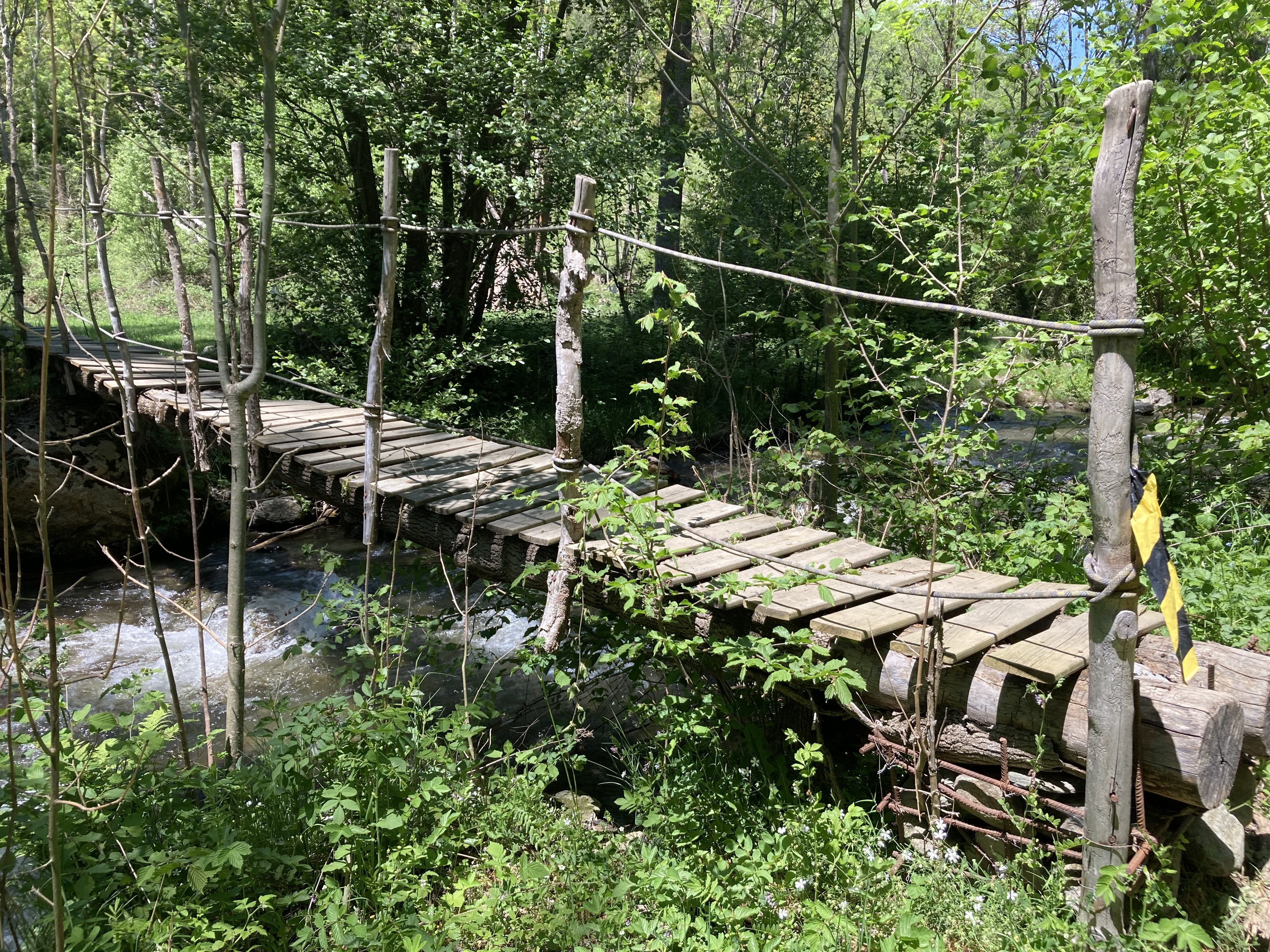
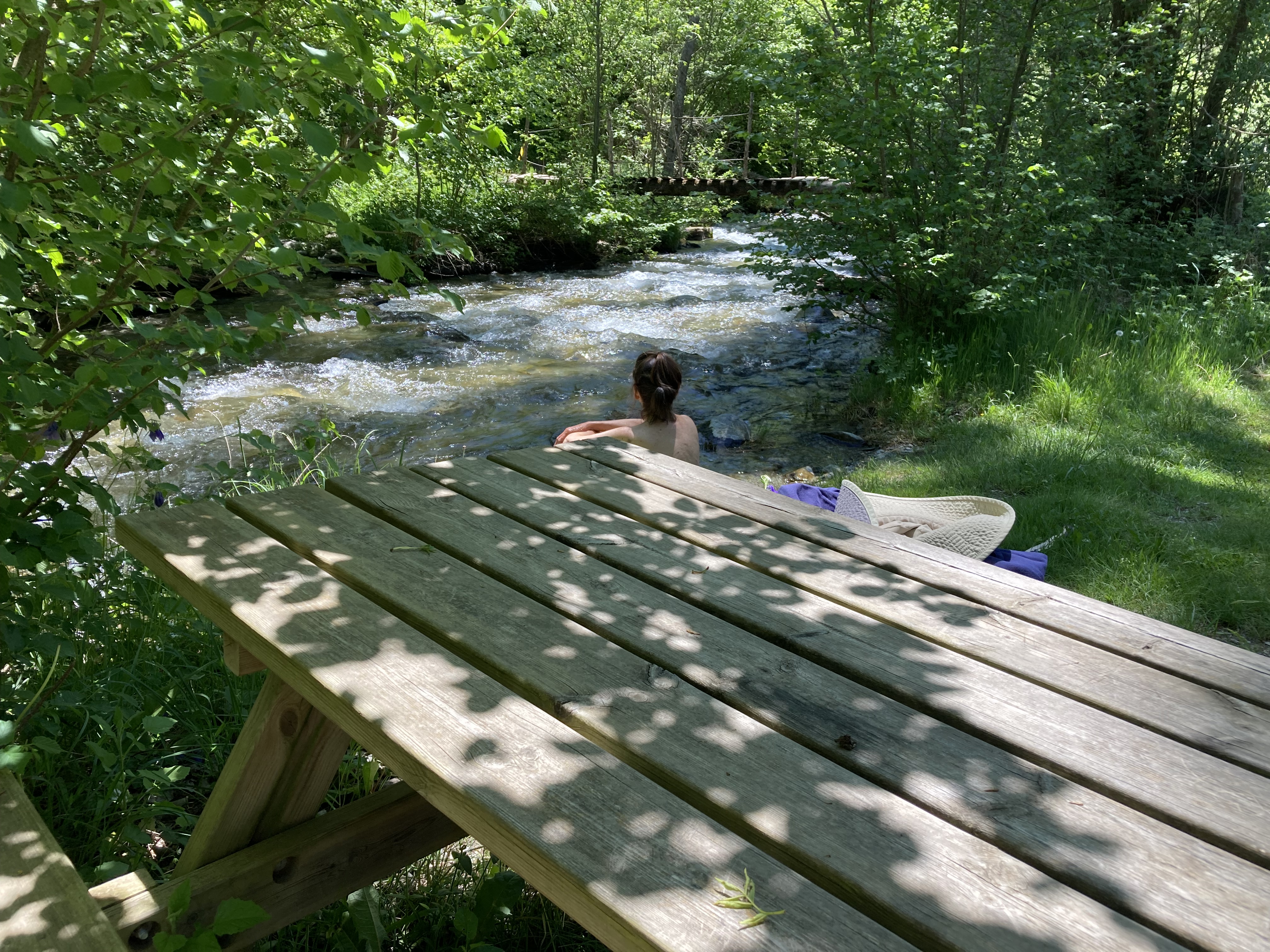
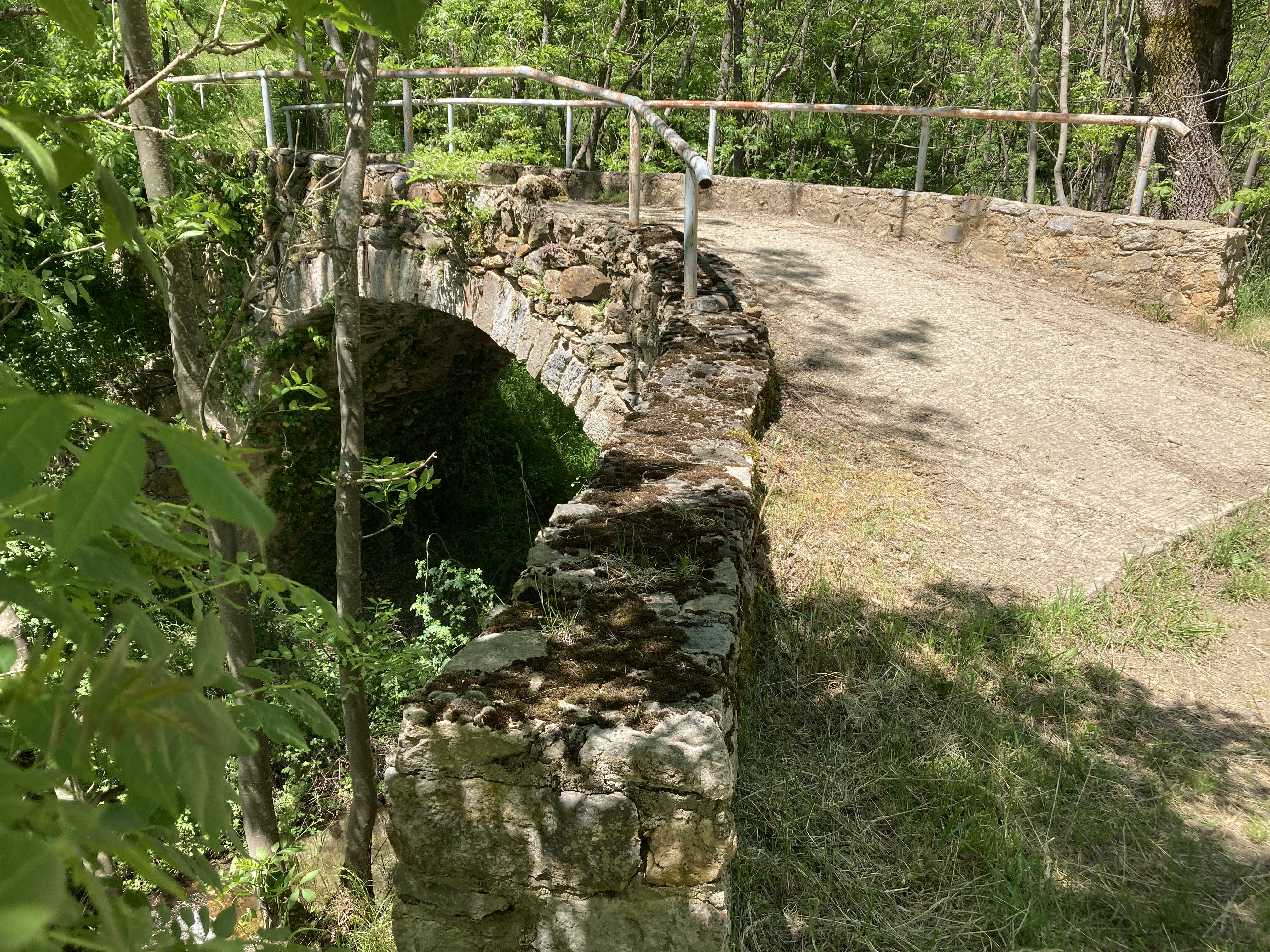
At the 1.5 km mark there was a rather doubtful looking bridge to cross, but we did so safely, if pretty cautiously. The stream was too enticing on what was now a very hot day, so T had a quick dip of the feet. (D edit note: and everything else), Water was freezing, of course.

The second leg, about 1.9 kms, was a bit harder, as it climbed up and over several ridges and had a couple of very boggy patches. The perfume of broome was ever-present amid ash trees and small flowers. Eventually arrived back at our start point, crossing a far more substantial bridge over the river.

A quiet afternoon, listening to the thunderstorm brewing. D has pre-washed the Peugeot in anticipation of a good rinsing. T played with some fabric, unsure of its final outcome but it includes a cotton beach towel from way back…perhaps that day in Nerja when we just had to drop into the sea.

Dinner: A ‘clean up’ of salad vegies and anchovies, with some (stodgy) crepes and salmon slices. A little rain cools the air…hopefully the rooster is in hiding.

Olopte #1

Day 83. Thursday 29 May.

Just as you’d expect on a Cran trip.

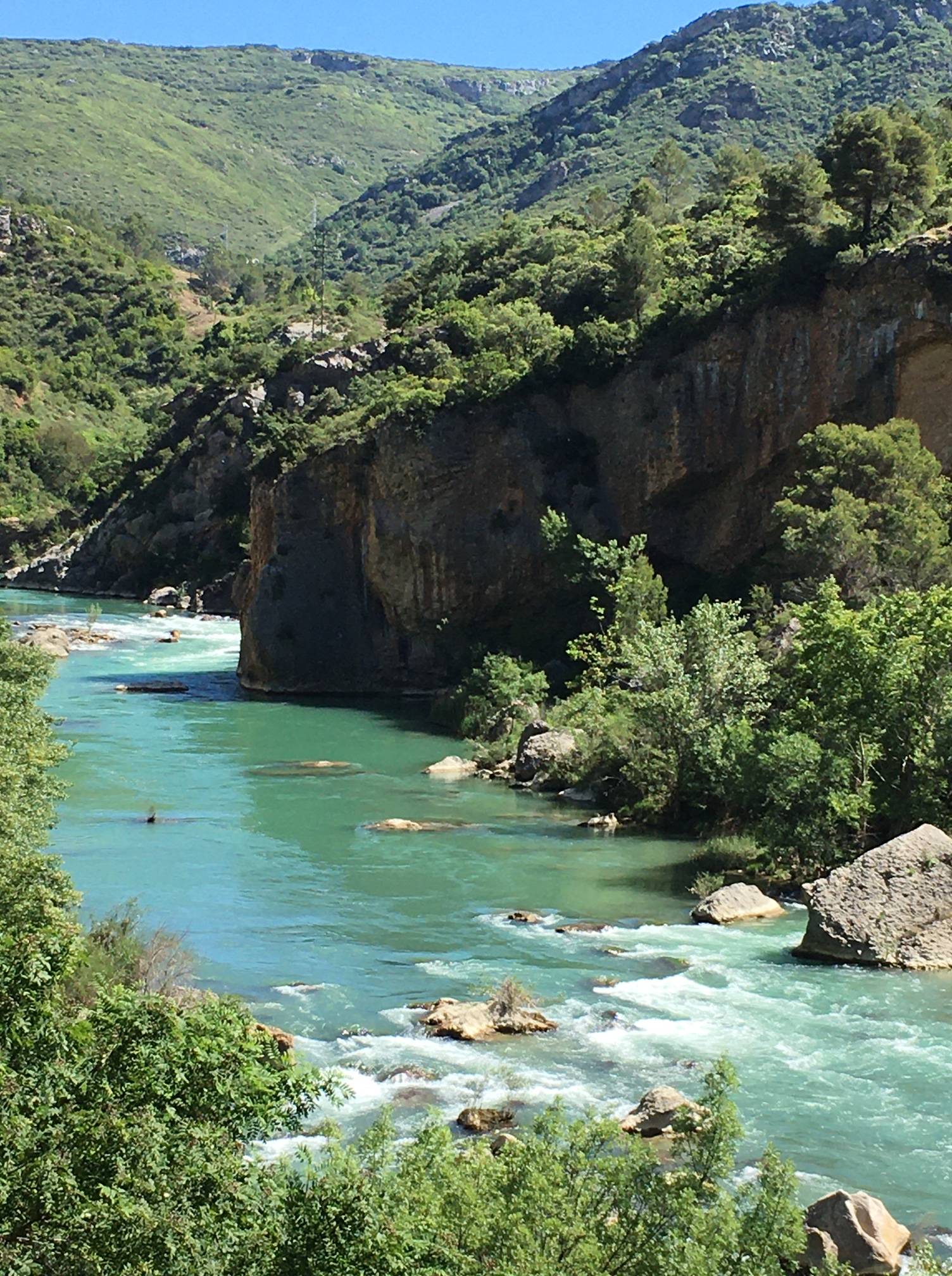
Time to swap one mountain village for another….today’s destination is Olopte, a speck of a spot in the Girona part of Spanish Pyrenees and a very long drive. T wanted to see snow and mountains (not necessarily be cold). Forecast is for thundery showers where we’re going and we don’t really want to be bogged-in in a village of 35 residents, so fingers crossed. Just after Pamplona  a view of snowy peaks were ahead…yes! And dramatic cliffs appeared soon after, with white-water rafters in the river below.
The day heated up and quickly got into mid-thirties as the mountains disappeared! Doris took us south, south, south and it was flat land, golden wheat and 35 degrees of hazy heat as we moved through Aragon and into Catalunya. Surely, she’s got it wrong!
Coffee at Ayerbe and replacing the sweet treat it was potato omelette and a sardine. Next stop was Monts (T was really doubting Doris) for a cool drink (beer sin alcohol because that gets entry to a bathroom). A ‘backseat-sandwich’ of cheese and jam, made in the the town park. Then onward. Roads were very smooth and traffic light (T didn’t grip the seat).

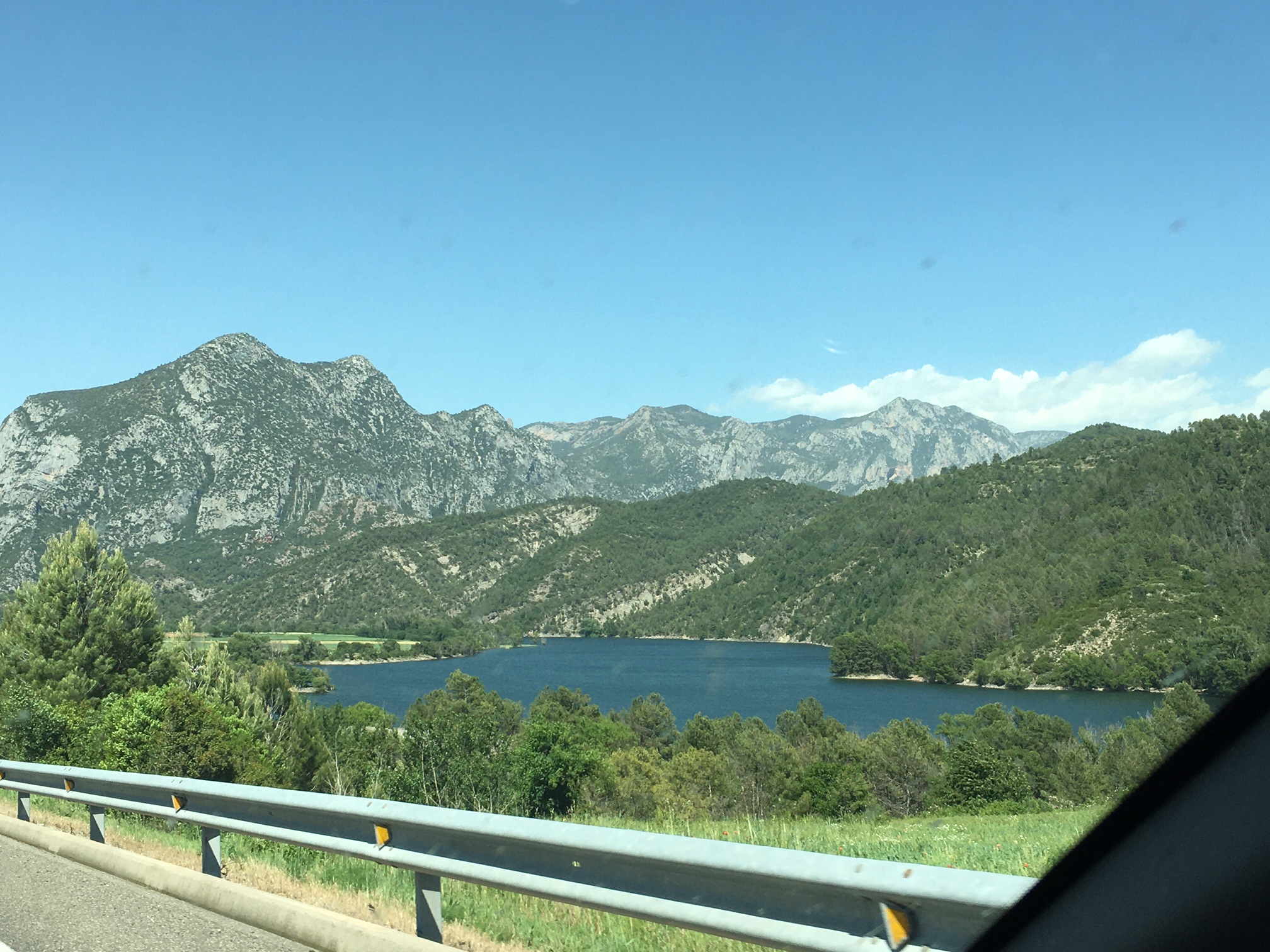
Signage referred constantly to Andorra, (seemed just over the hills) so T tried to keep faith re snow. And just out of Monts the landscape changed to dramatic rock faces (onya Doris!) Temperature rose to 37…snow??? We were in the Pyrenees now but at 37 Celsius? Villages have ski chalets, everything is stone and in the distance, peaks have a slight snow dusting. 

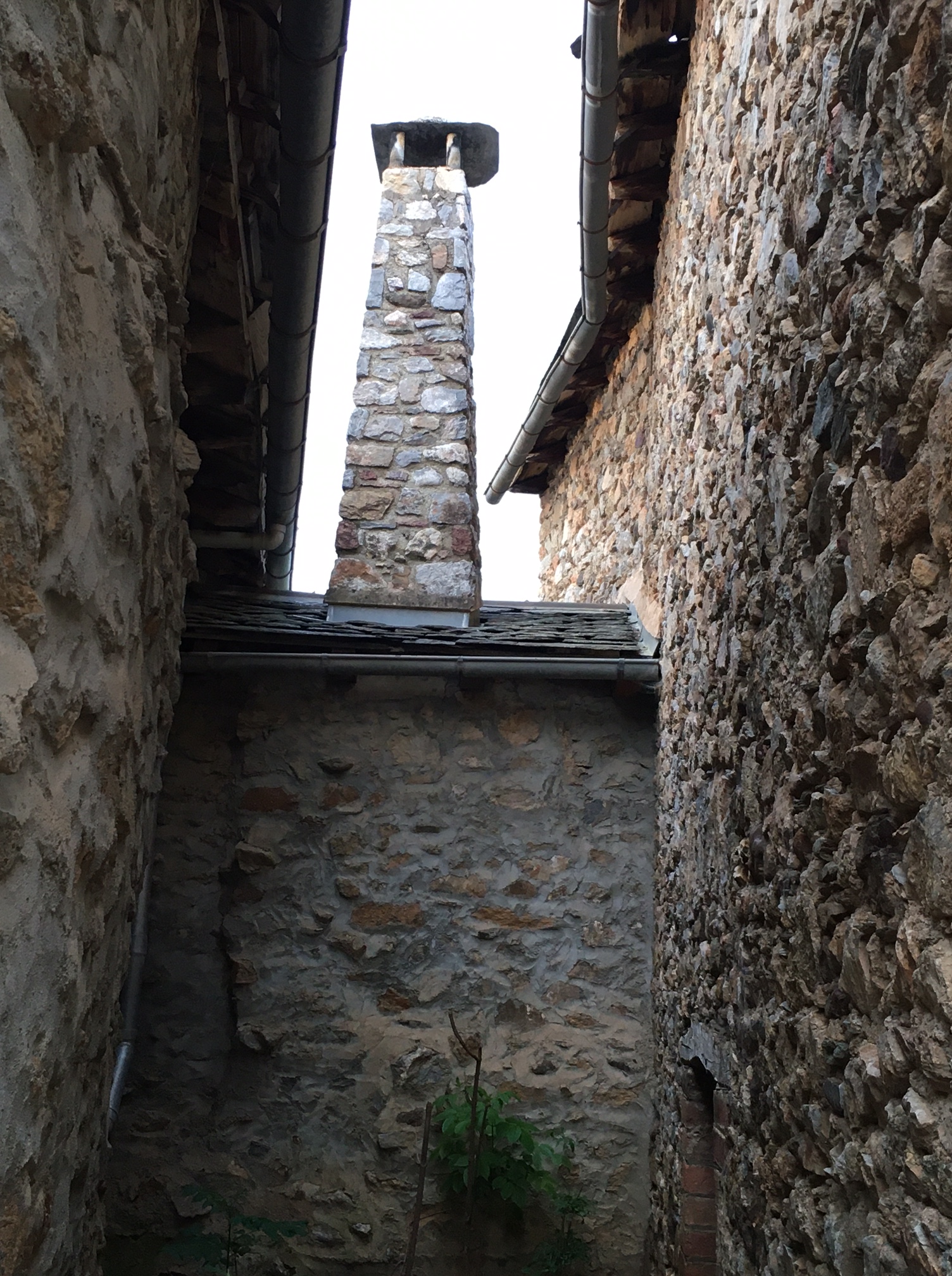
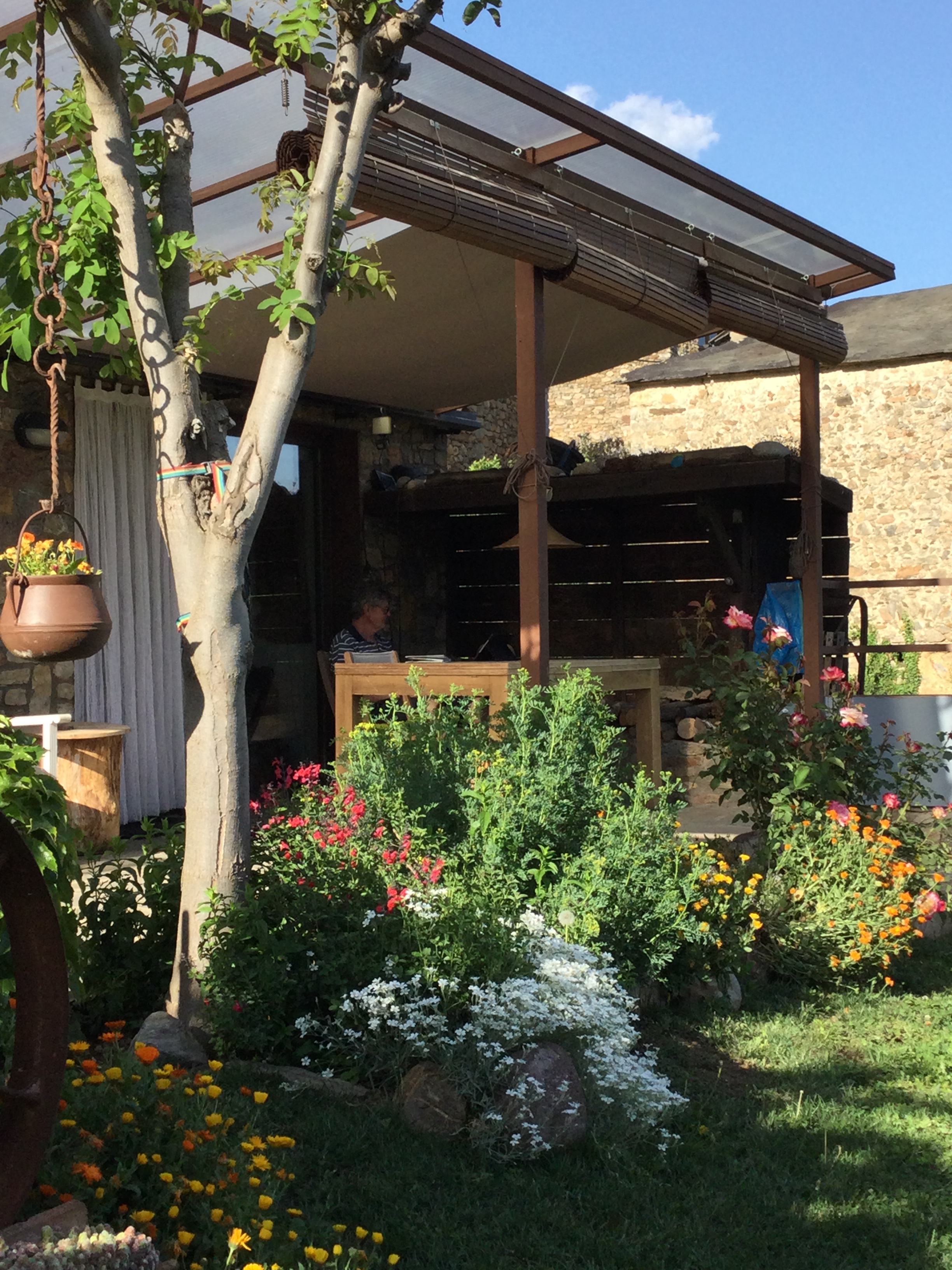
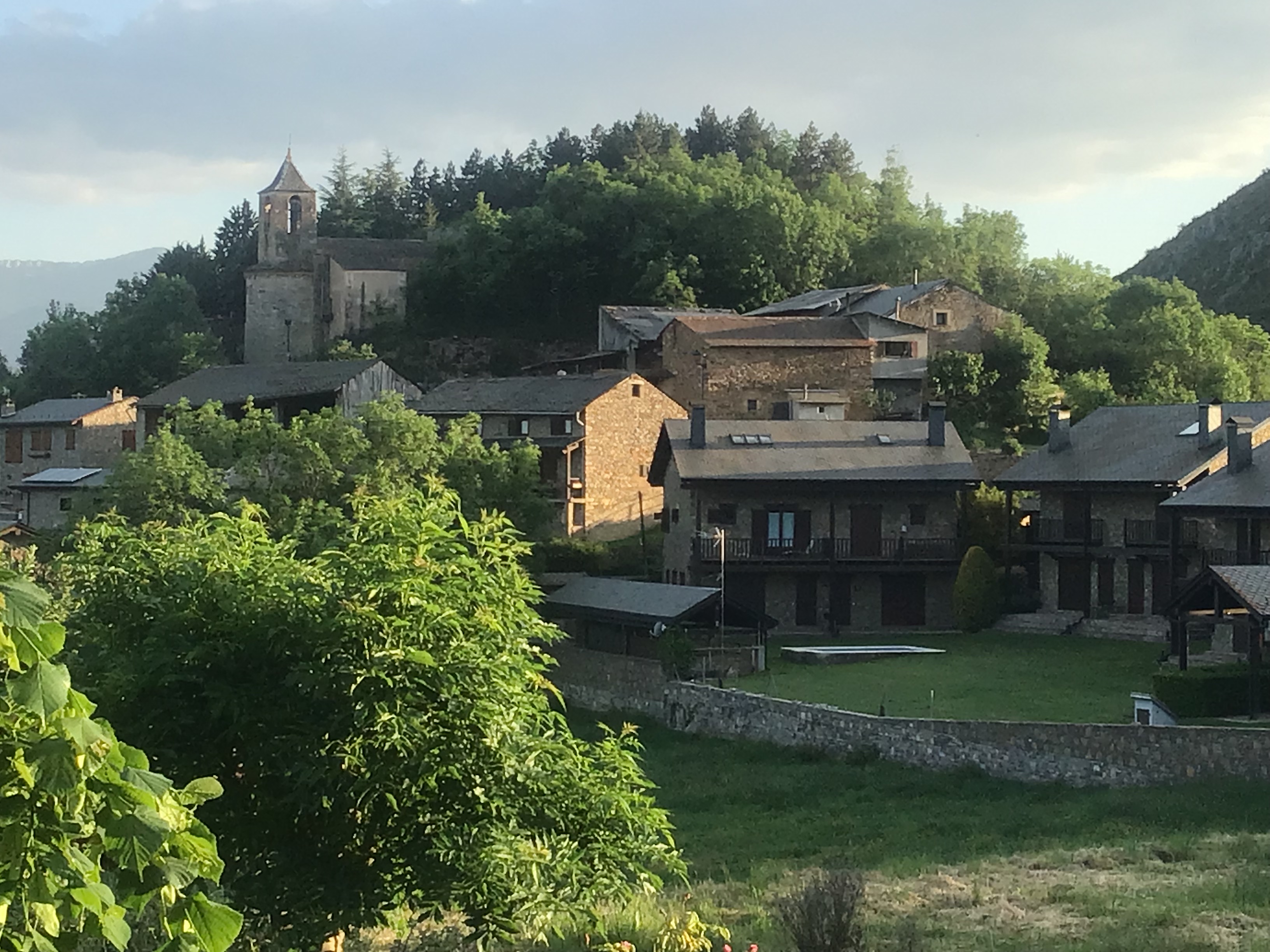
Doris announced that we had ‘Arrived’; Olopte at 32 degrees was unexpected and we were greeted by a very narrow walled laneway…No way! Josep and Maria Angel appeared and guided us to the cottage and then over-filled our melted brains with local information. Our cottage is a converted barn with rooster on one side and four horses (for meat) in the paddock next door. Church bells will stop at 8pm (yes, please). Olopte was once a farming village we presume, but now has only 35 residents, with folk coming up from Barcelona for winter skiing and summer hiking. It is picture postcard stuff. There’s no way we’ll need the fire for our 3-night stay.

A cool glass and tapas (olives, white anchovies, pickles, crackers) on the back porch as the sun dips. 

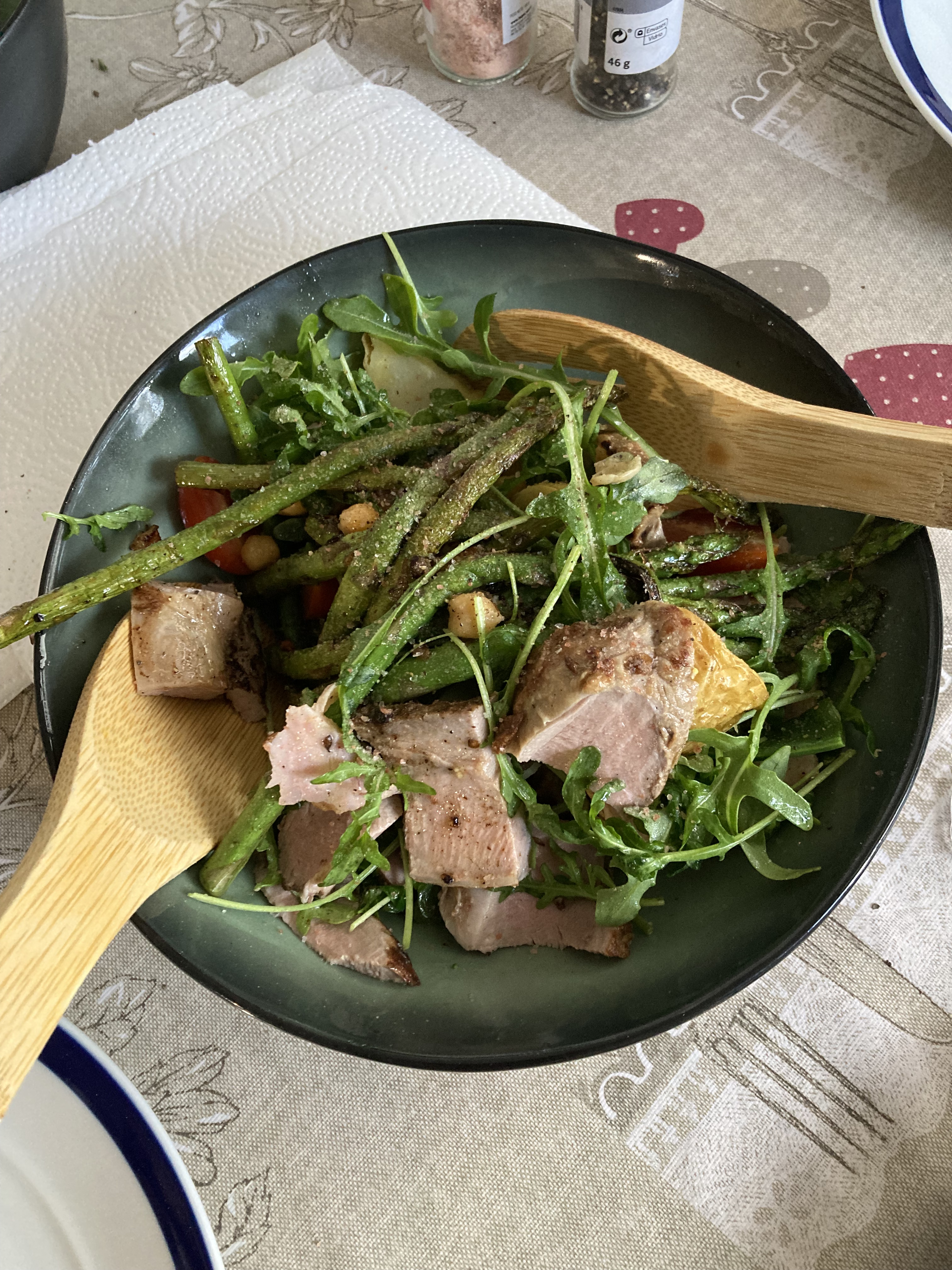
Dinner. Chicken salad.

Azanza #8

Day 82. Wednesday 28 May.

An earlier start to the day, as J packs up, but we don’t get out of the house before 1230! T chats to the electricity meter reader: ‘How many meters do you read here?’ ‘Hmm… about twenty’ was the reply, so we guess the population of 17 is about right.

Back to Pamplona for the last meanderings, photo moments, the usual refreshments, a few souvenirs, a stroll through the beautiful shaded gardens and then (right on D’s schedule) to the train an hour before departure to get THAT ticket.

Coffee…….
Beer and tapas (again)…..
Going, going…..almost gone.

T and D will have dinner well before 10 tonight in preparation for leaving Azanza tomorrow fairly early (ie. before midday) for a long drive (500kms) to Olopte.

Dinner. Mercadona Chicken and vegies (includes potato).

Azanza #7

Day 81. Tuesday 27 May.

We all slept a bit longer after a very late previous evening and J’s coughing needs some more drugs. The plan is to do the washing then head for a bit of an explore of Pamplona. Yes, it was past midday before heading out and we were greeted by ponies (mums and bubs) on the road down the mountain.

By the time we got to Pamplona, shops had closed for lunch; our routines are so set.

Took the elevator from the free car park and couldn’t understand why the paper map didn’t match with D’s digital map. So, a bit more walking than necessary to find a coffee spot. We were up for coffee but a couple of other customers (older ladies, one with breathing tubes) were onto glasses of red. As J pointed out, it is 2pm!

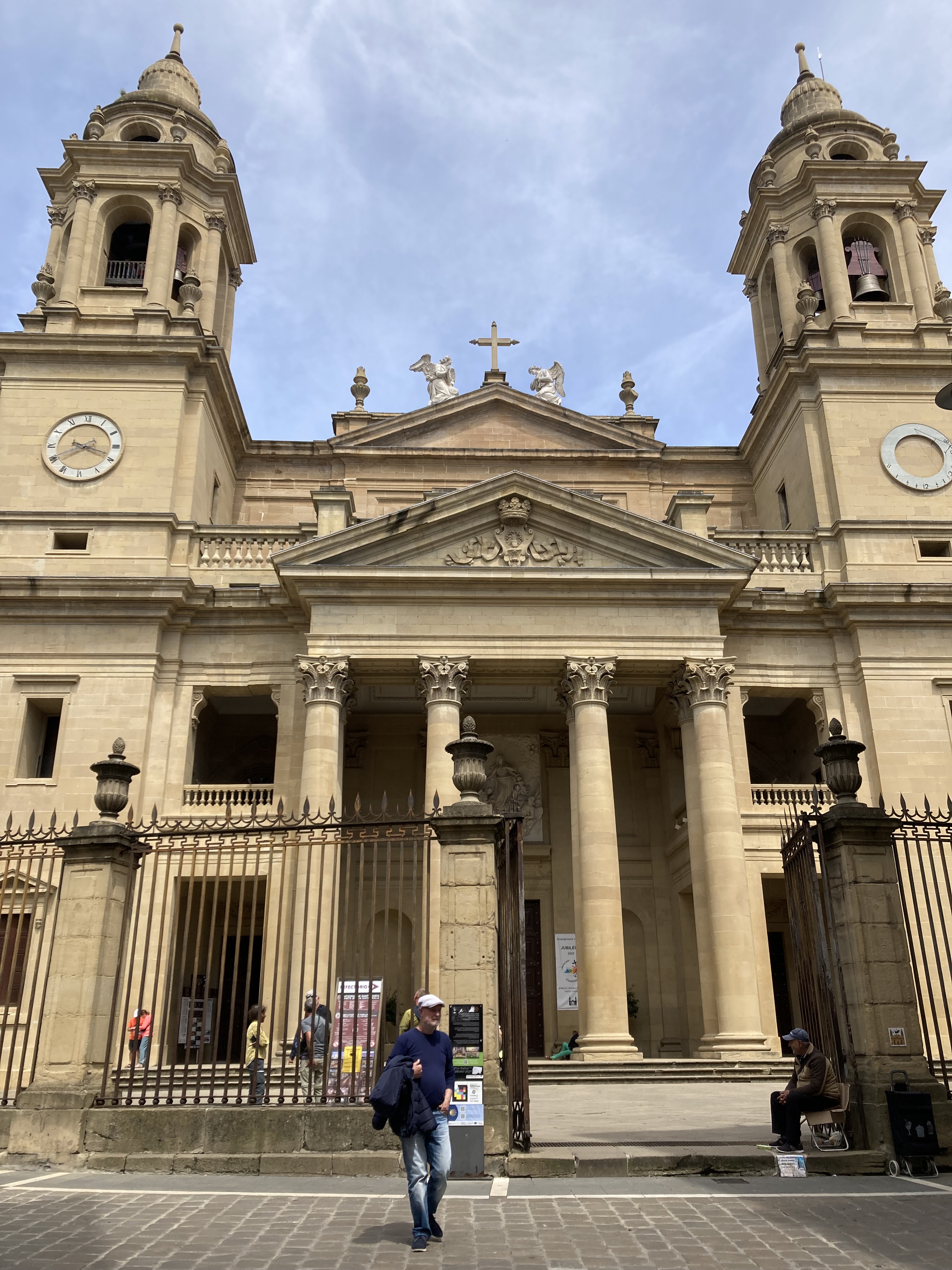
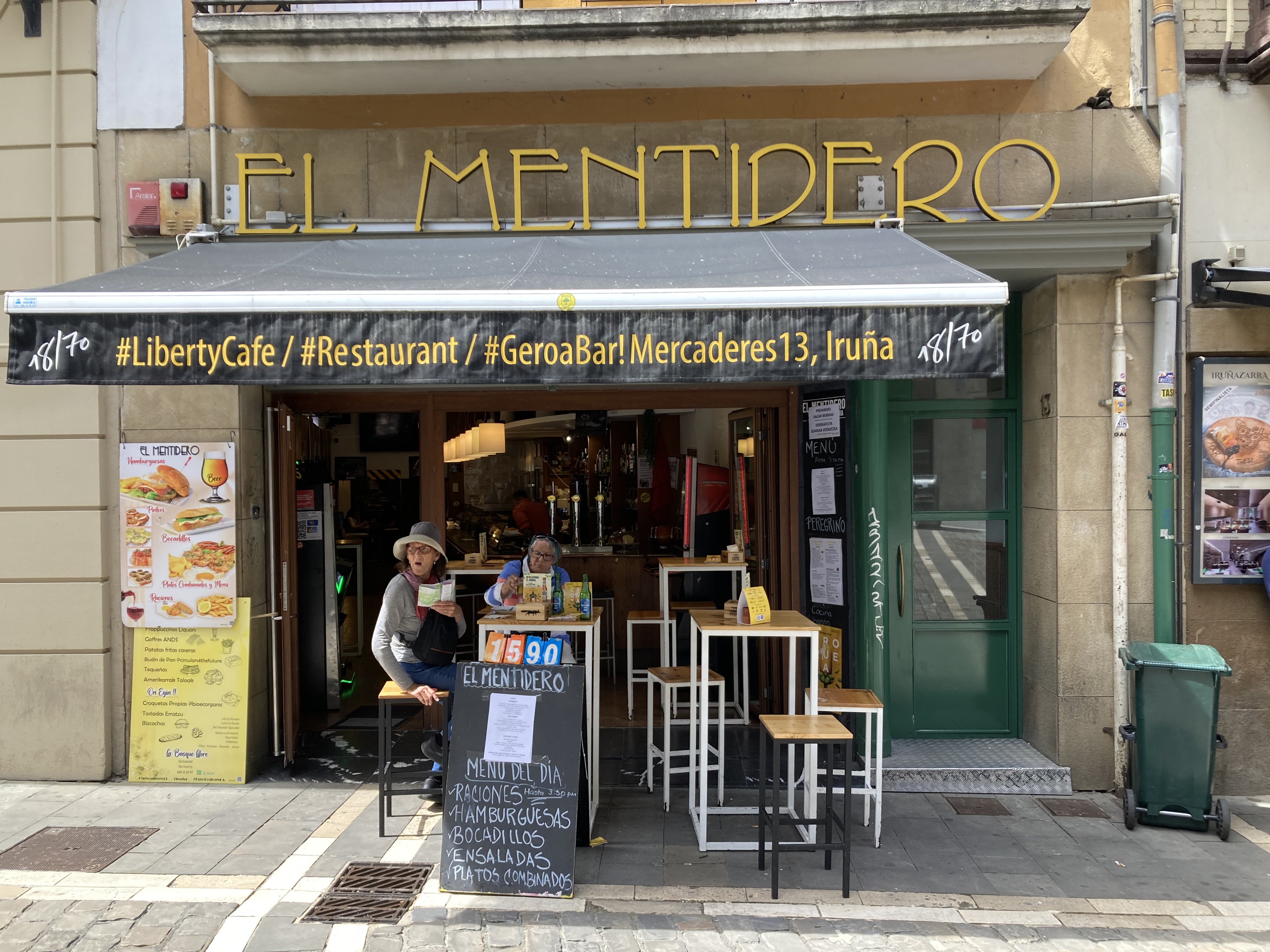
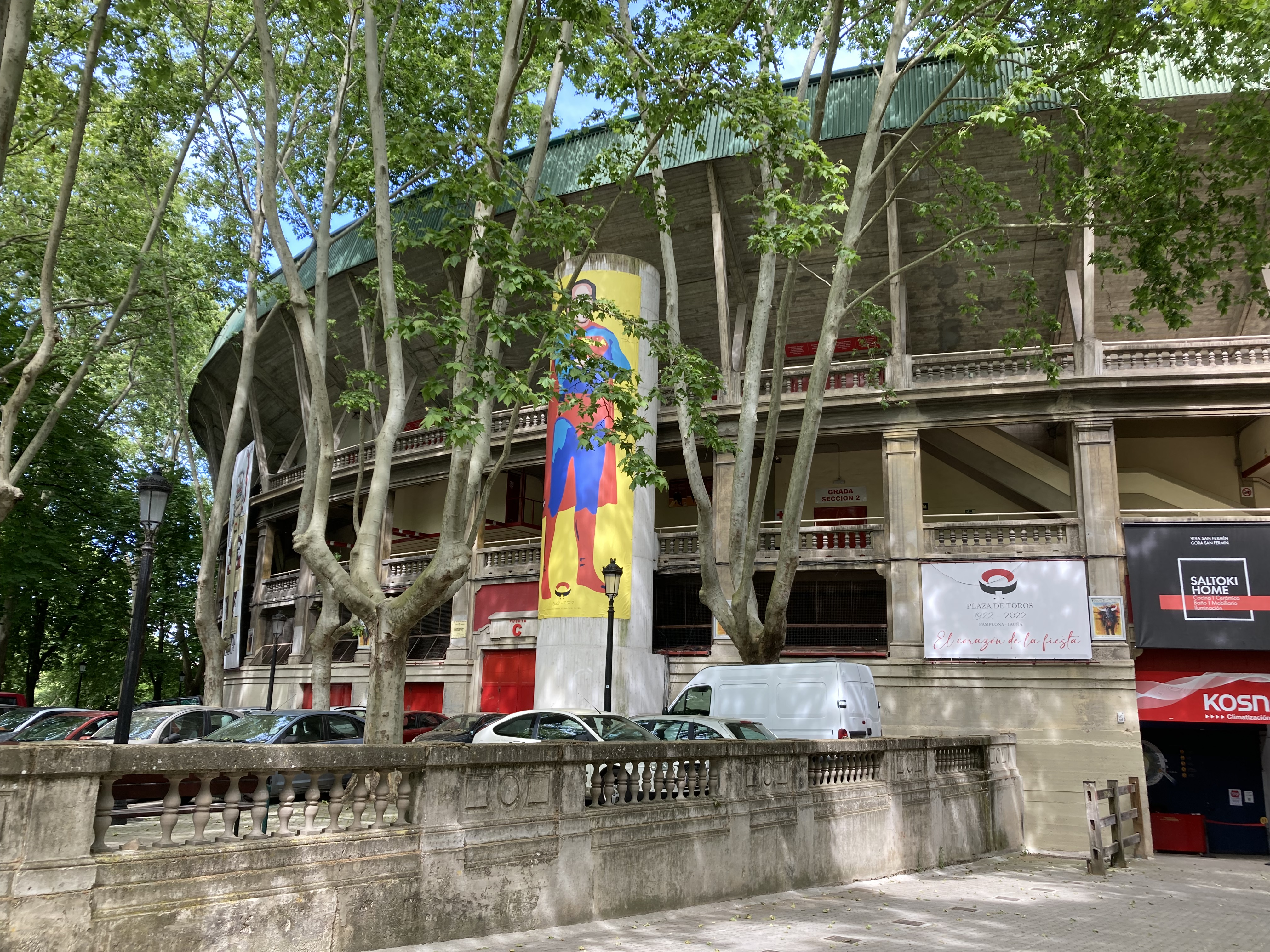
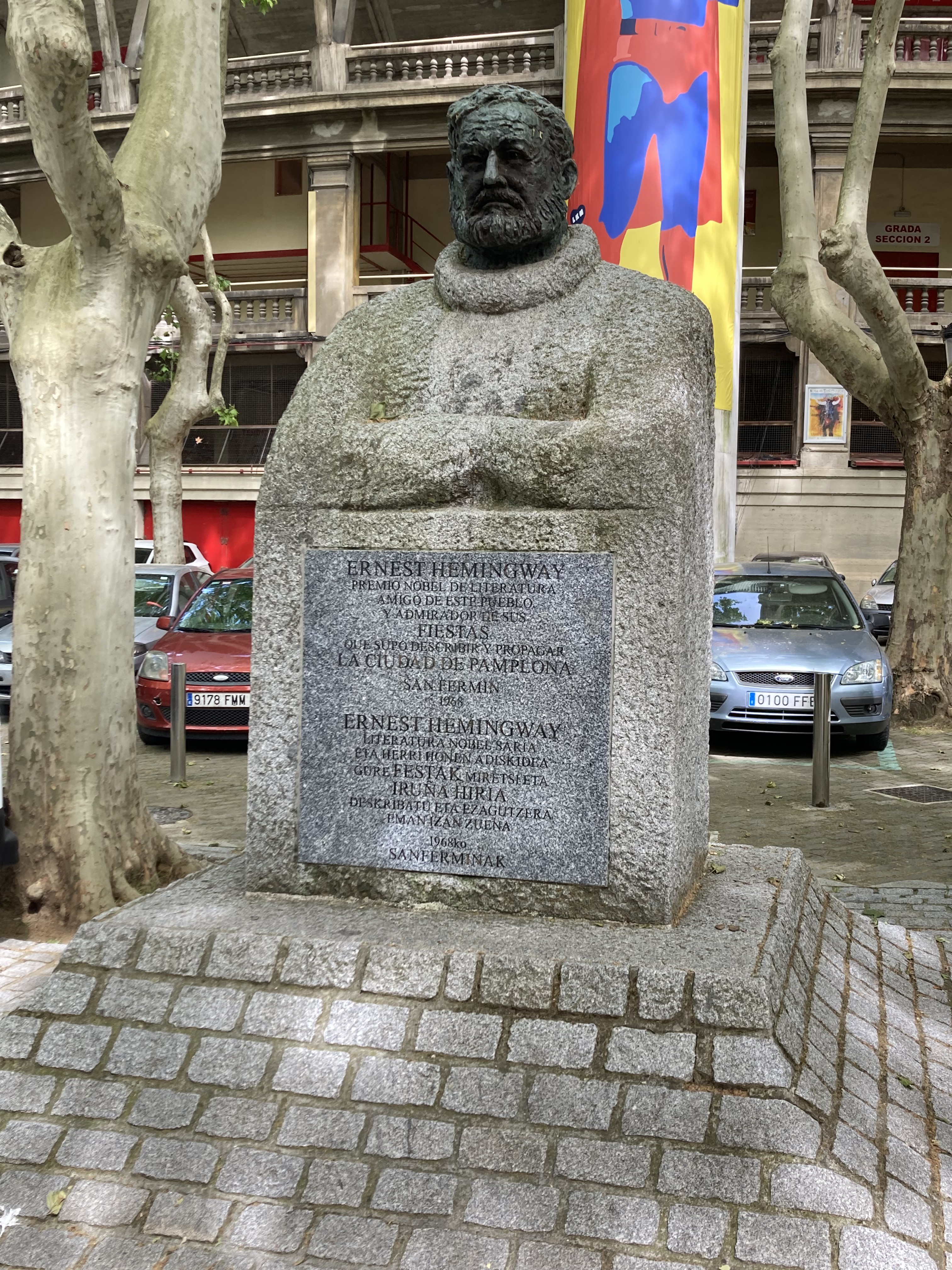
Made our way to the Catedral de Pamplona, strolled, rather than ran, the bull route, ending up at the Plaza del Toros de Pamplona (not going in, as deciding that 6 euros per person was a bit too much) then lunched with beers and tasty bites and a joker (Dad jokes, so that was alright) owner.

Then went to the railway station, but failed to get J’s train ticket, although she’d paid for it: ‘You collect it tomorrow’, the counter staff said. So much for trying to get ahead of the game.

On our way to the car, worked out why paper and Apple didn’t match: the lift we were looking at on paper was the wrong one (there are two). For once, Doris was on the money!

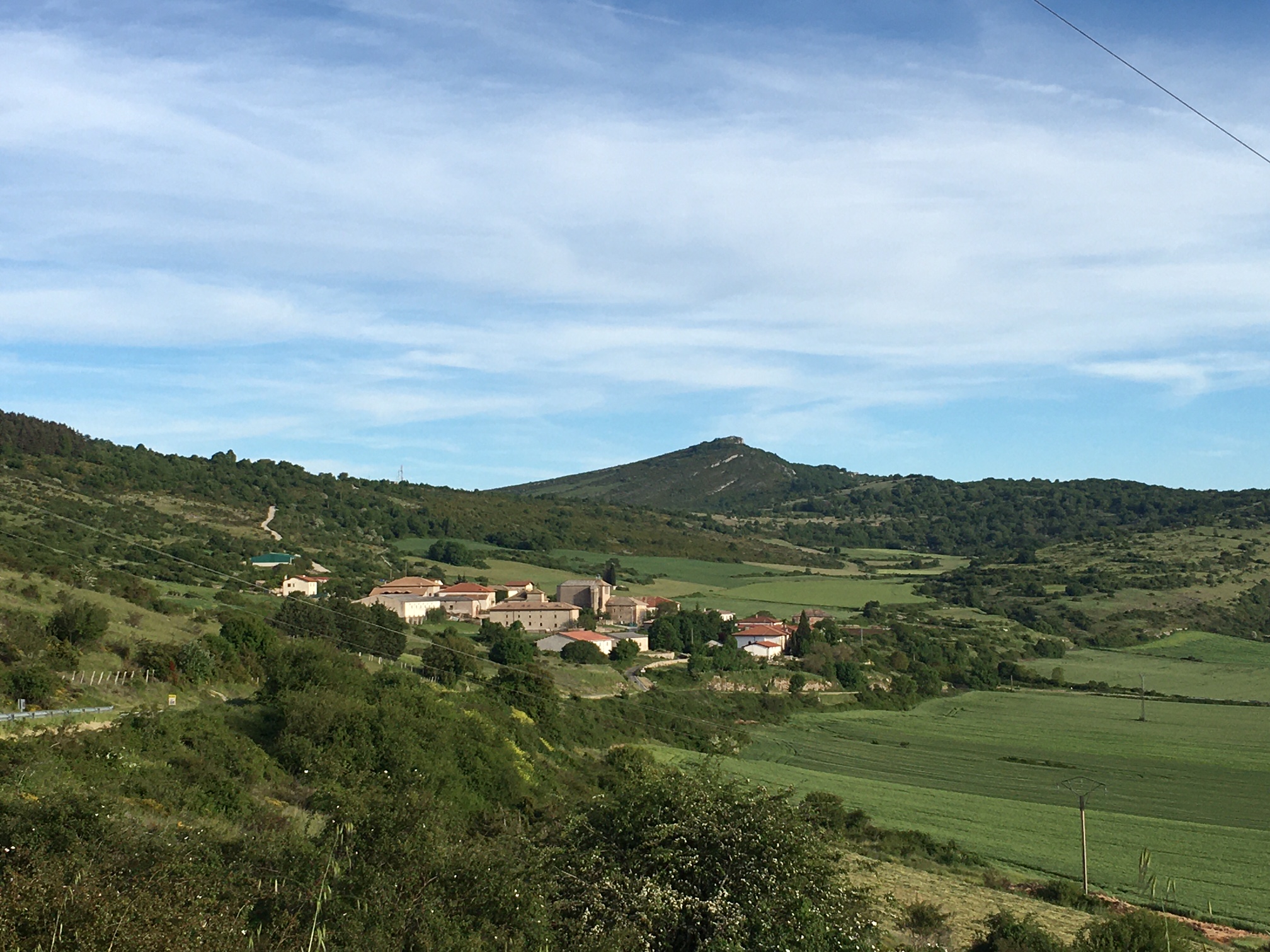
Returning in the evening presented a lovely photo shot of our village of 17 residents.

J triumphed in the kitchen with a fish, potato, leek, carrot, parsley etc soup…we’ve been avoiding the bacalhau for nearly three months…J delivered the ultimate comfort dish, adding the fish pieces for just a few minutes at the end of cooking. It was delicious. We’ll do it again at home. And it’s bound to be the cough-killer.

Azanza #6

Day 80. Monday 26 May.

Although probably obvious, some of the photos are now credited to J (at least for a few days).

Got out before midday, and a few kms down the road  D remembered that he’d forgotten his ‘waist bag’, containing passport, international driver’s permit, credit card and cash! Back to Azanza, which meant that our departure was after midday. Good to be consistent.

Our destination was San Sebastián, about 80 km/90 mins. The road was scenic, curved, mostly fast but easy enough. Needless to say, on arriving we were immersed in traffic, so opted for an underground car park near the old part of the city.

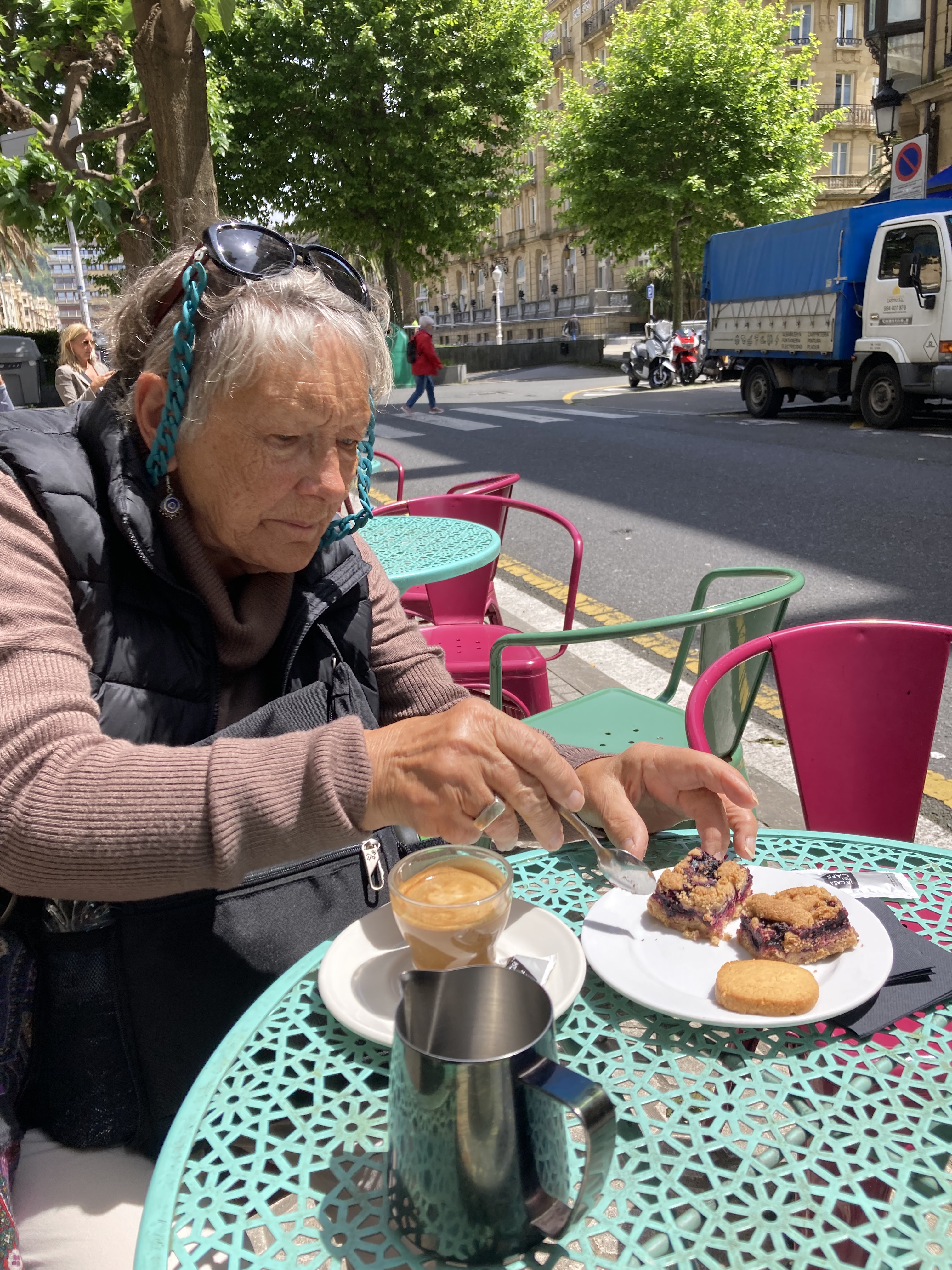
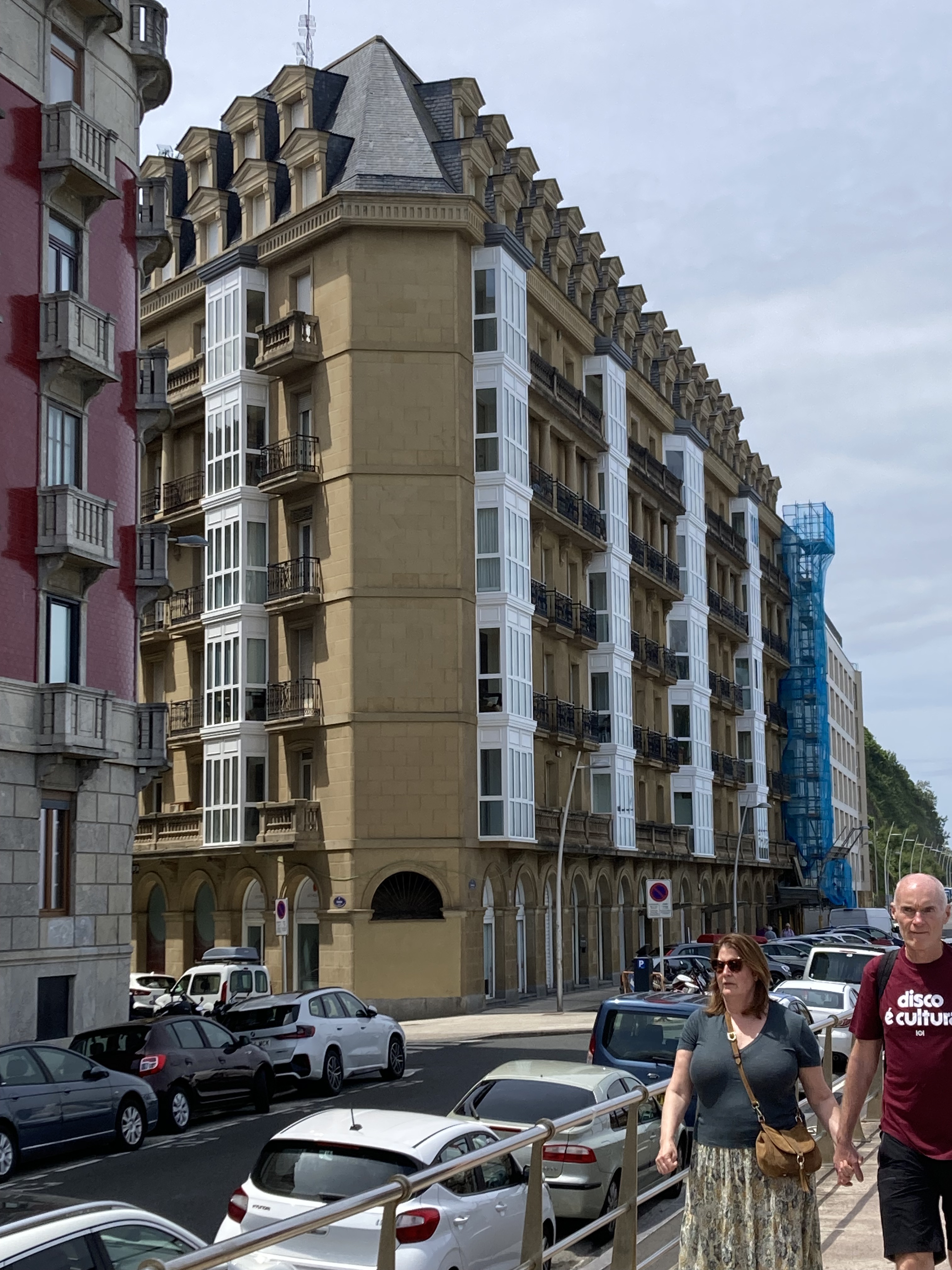
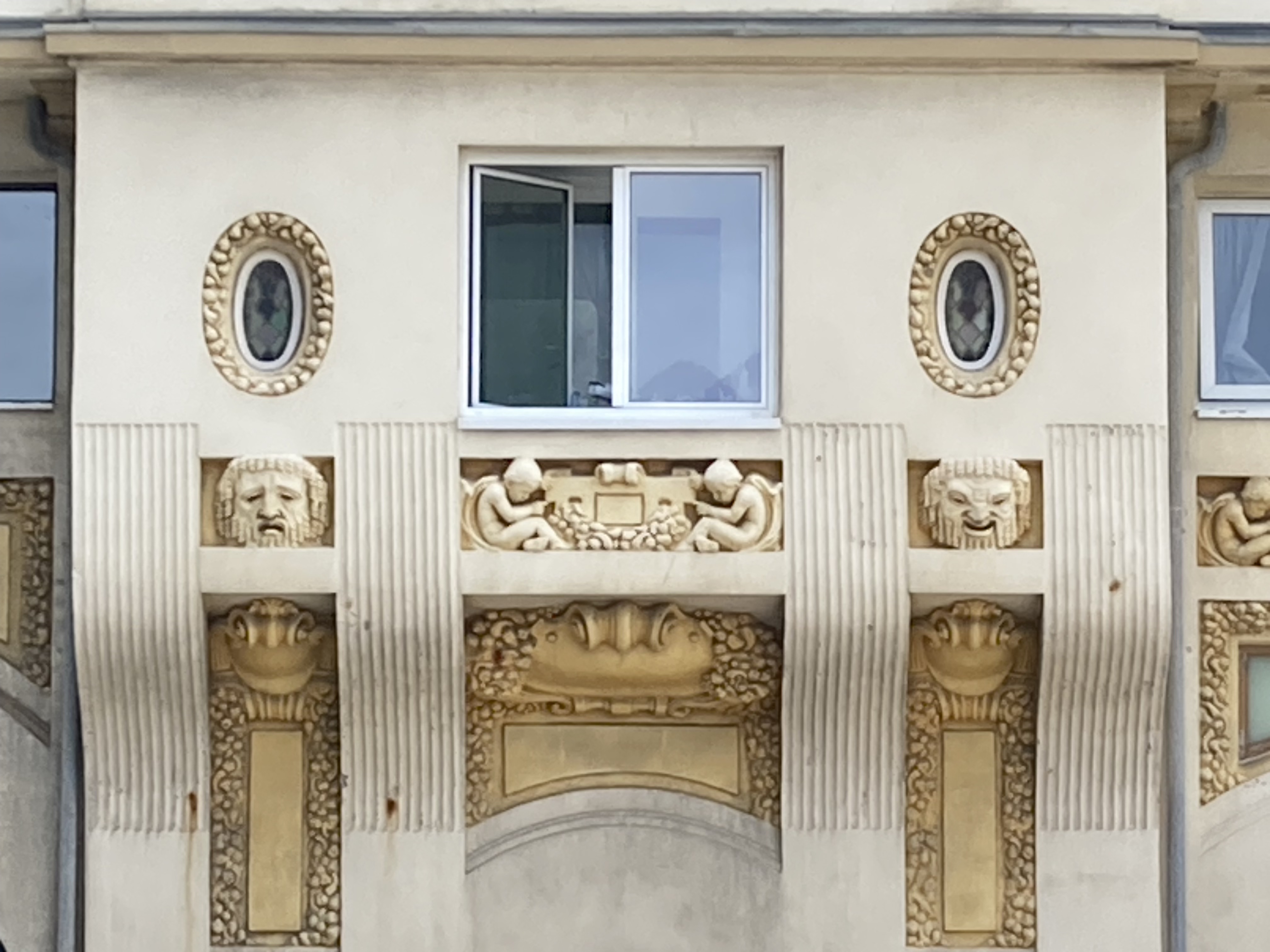
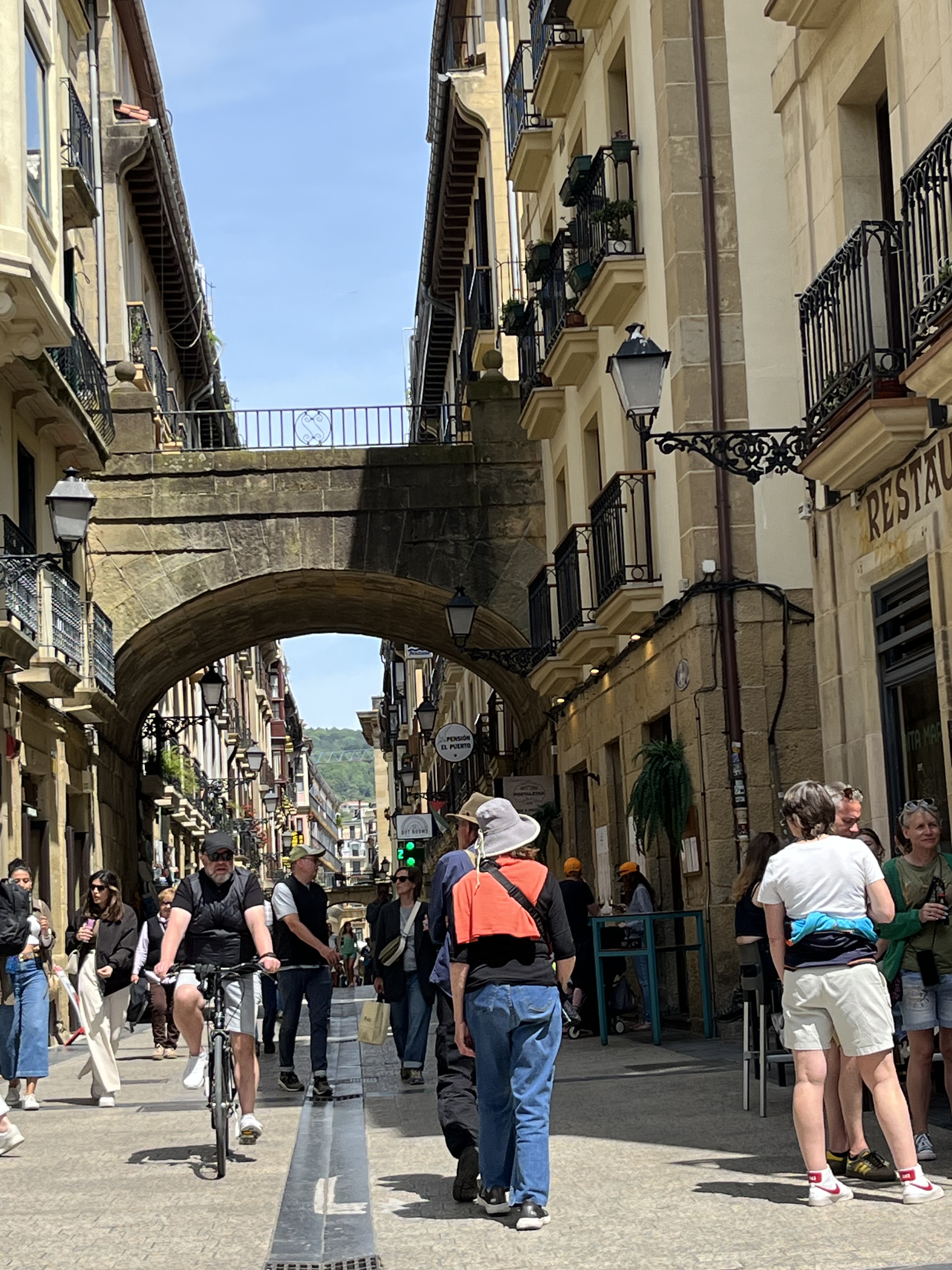
Coffee was first priority, and we quickly found a very adequate spot, for both coffee and sweet treats.San Sebastian or Donostia struck as a very classy European city with gorgeous apartments, fine buildings and sumptuous (clothes) shops

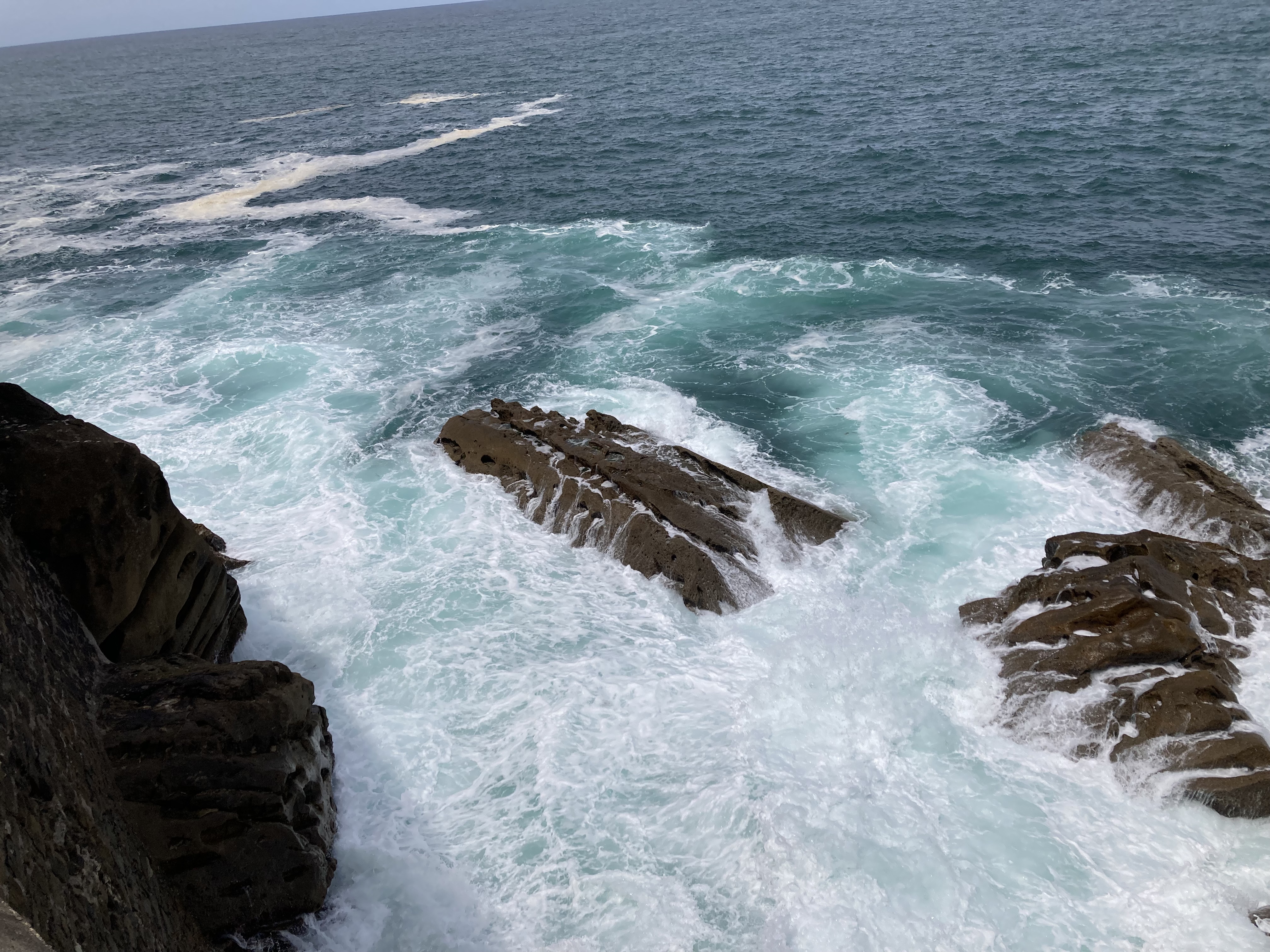
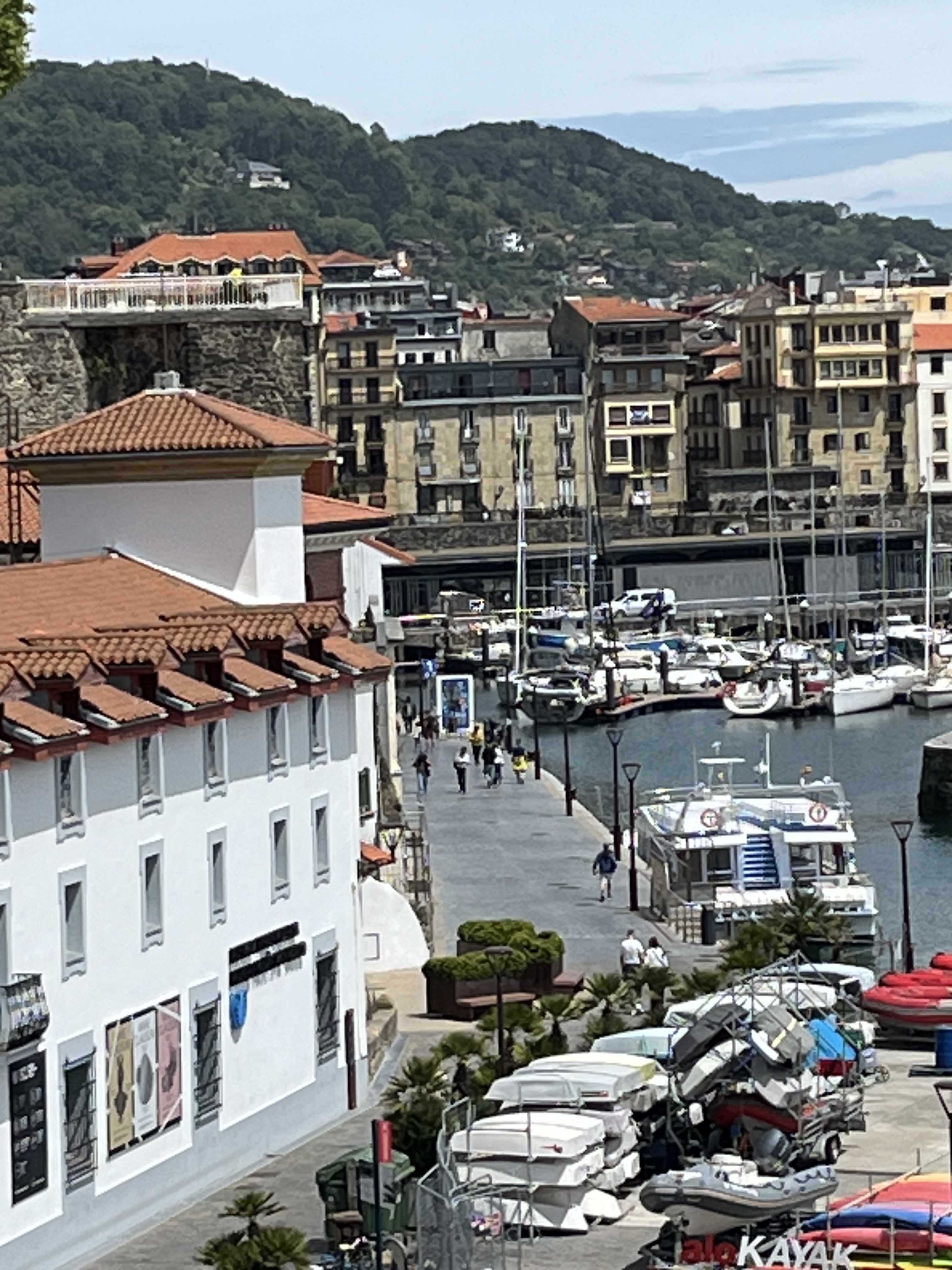
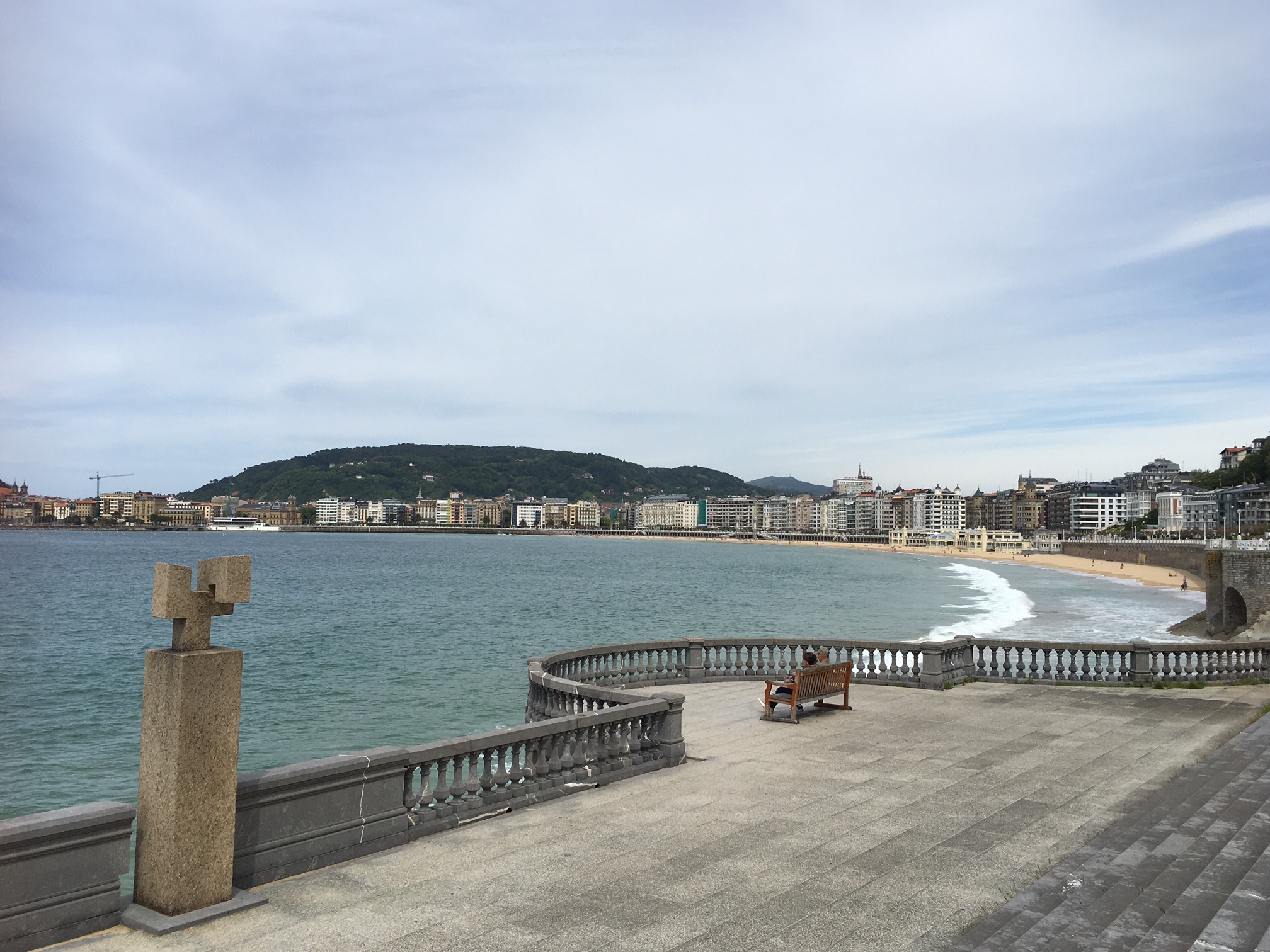
At the Tourist Office, we got maps, a small Basque dictionary (good luck with that) and walking route advice, then set off beside the river mouth, by the old town, around the bluff, and there was the sea, surging onto massive grey blocks of granite (?)

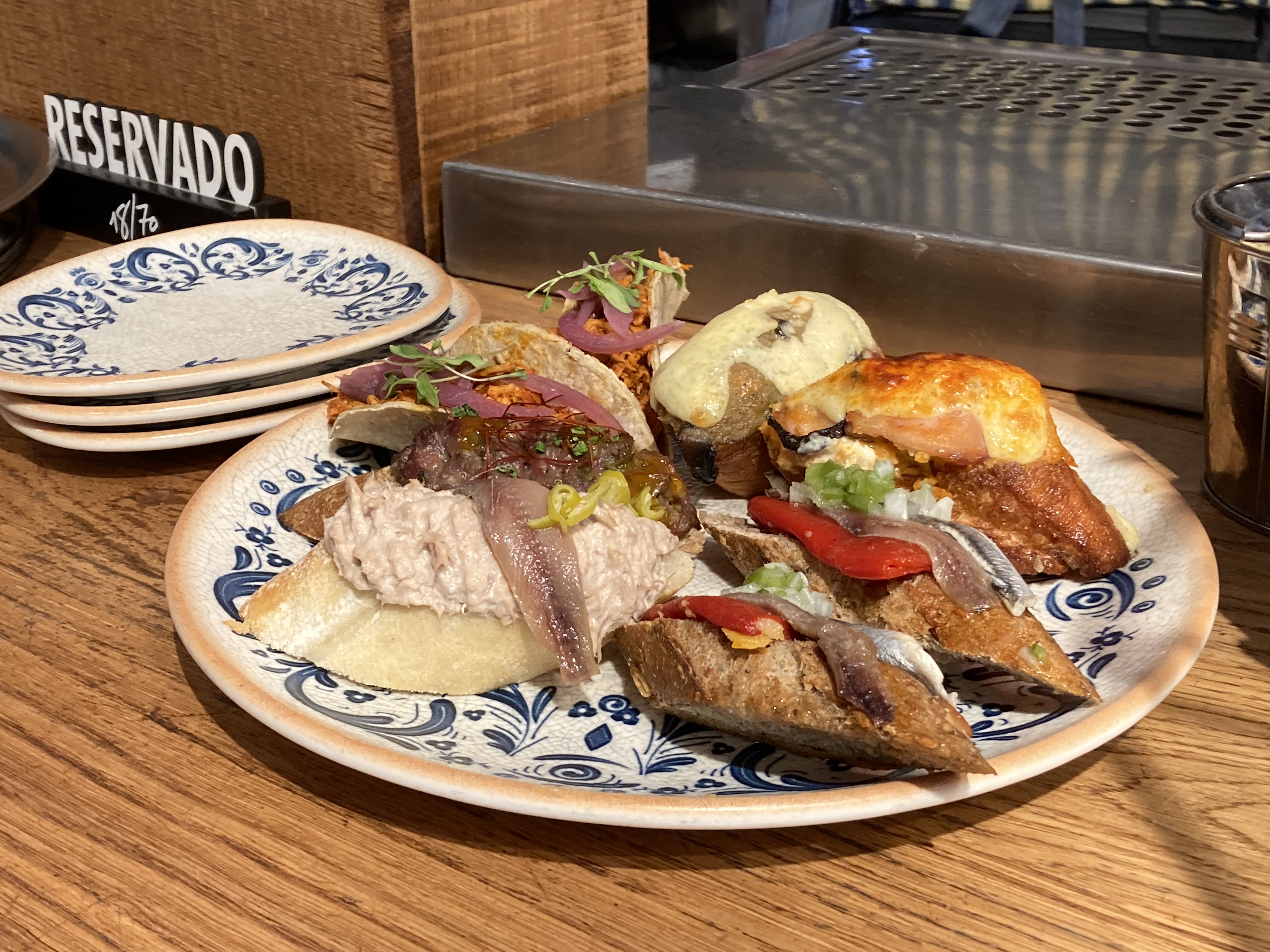
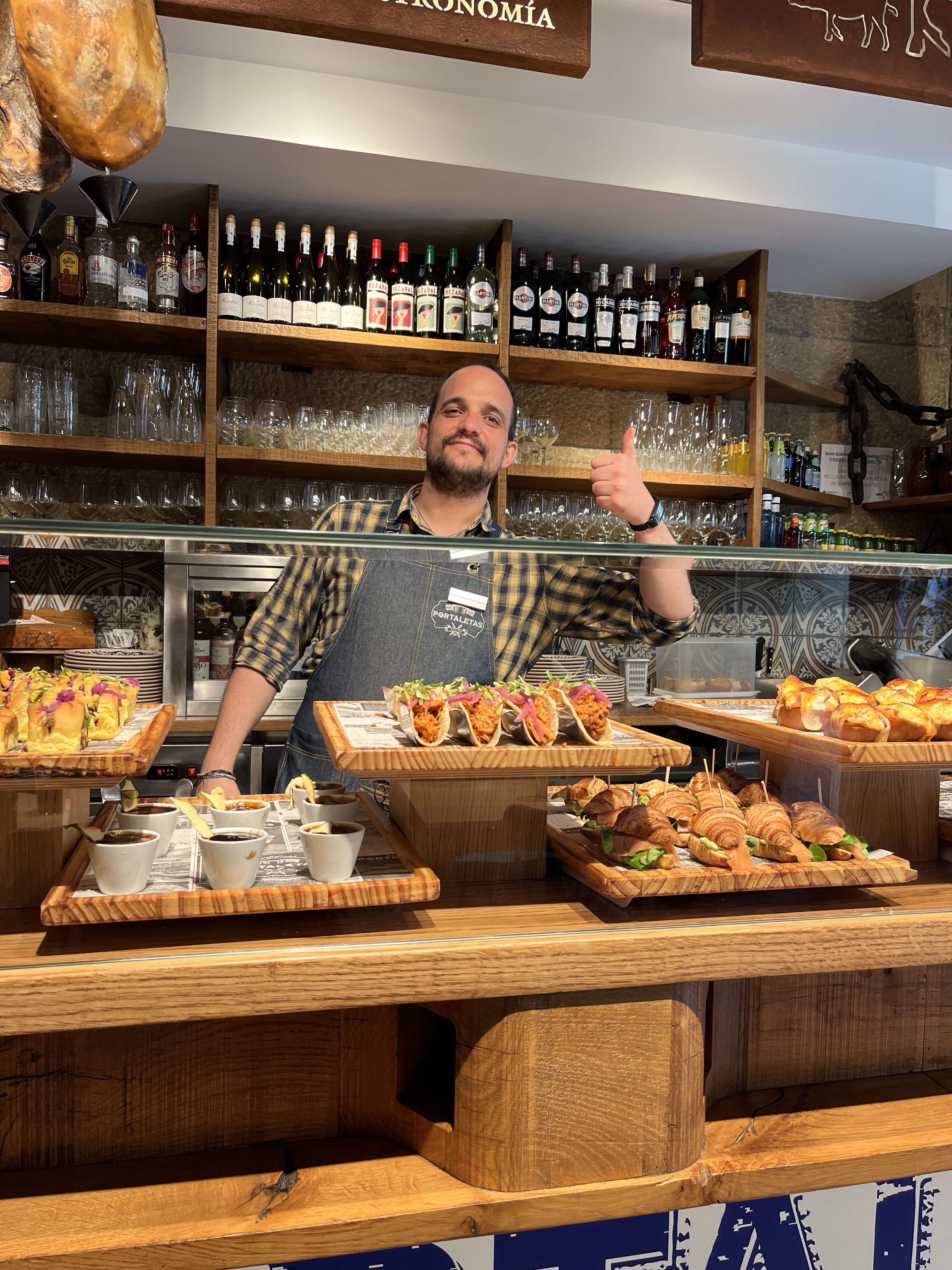
The first walking section was longer than expected, and J suggested that it was now time for a beer. We were in the ‘tourist’ lunch scene by then and tavern prices reflected that, usually a 3 course menu of the day, but we eventually found something more suitable: beers, of course, and a shared selection of tapas.

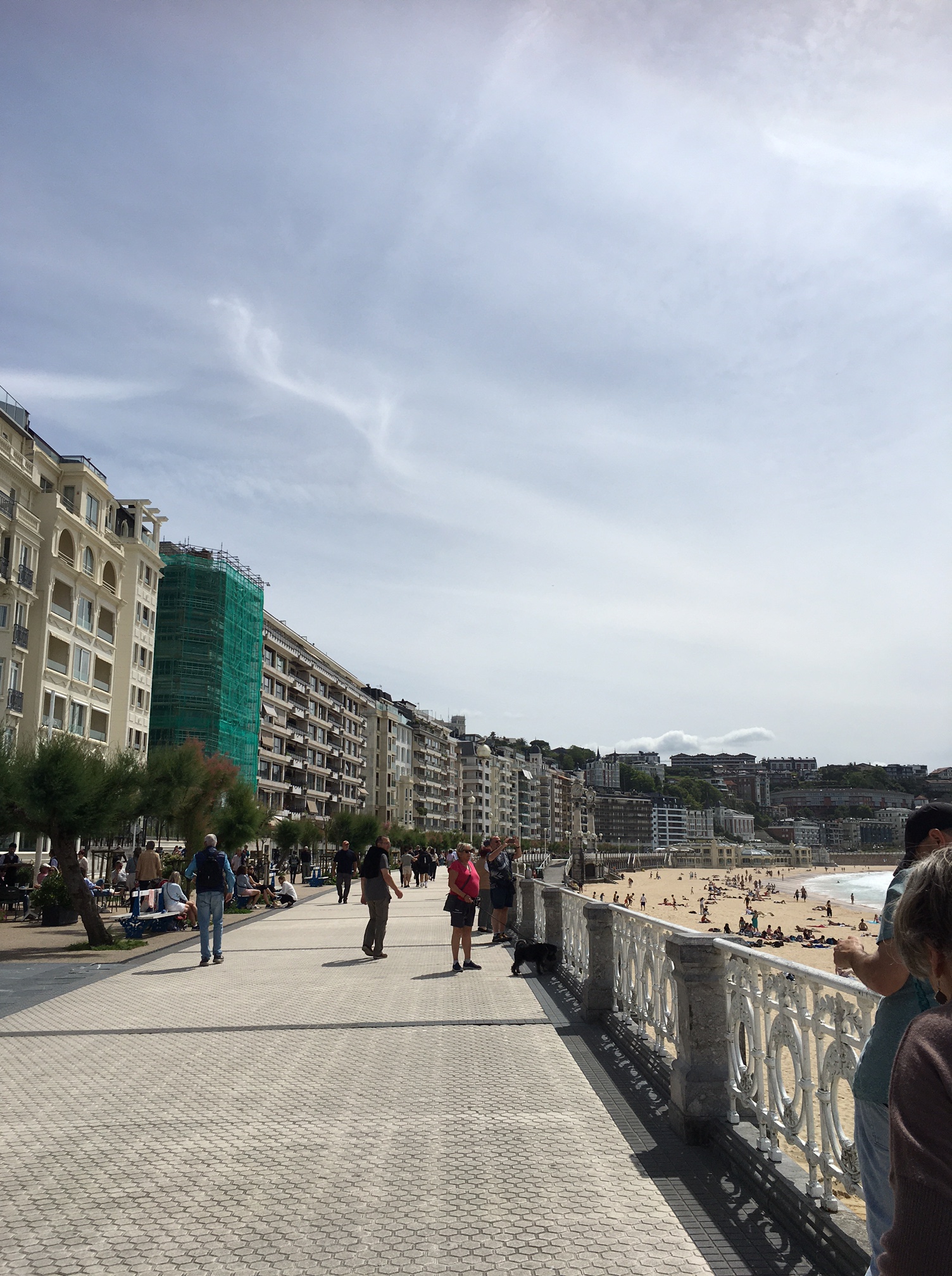
Wavered a bit over the next walk: an esplanade around a beautiful curved beach of  three kms to the funicular. The surf looked fabulous and heaps of swimmers were in and absorbing big doses of UV. Weather was perfect, and the walk pleasant.

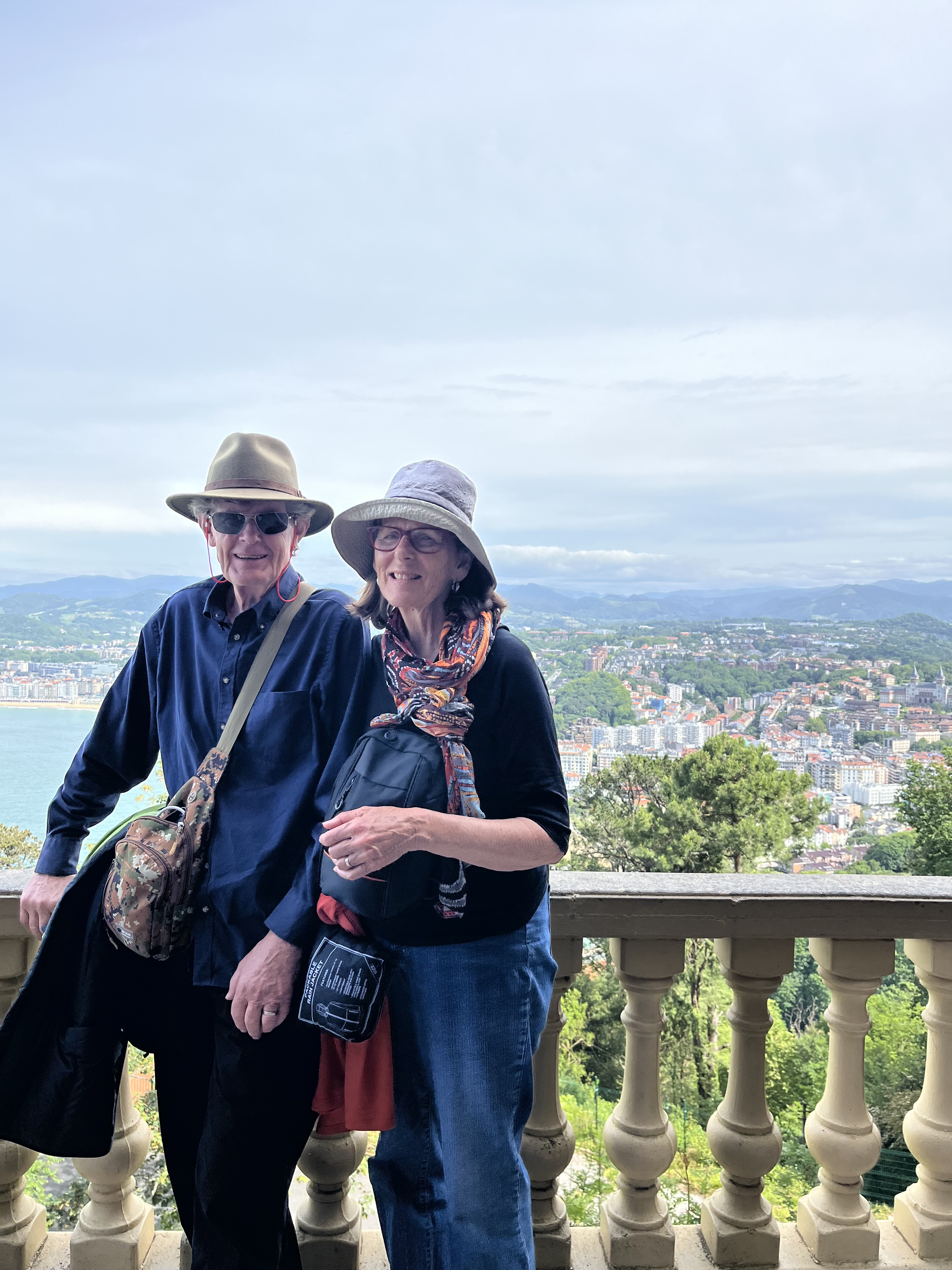
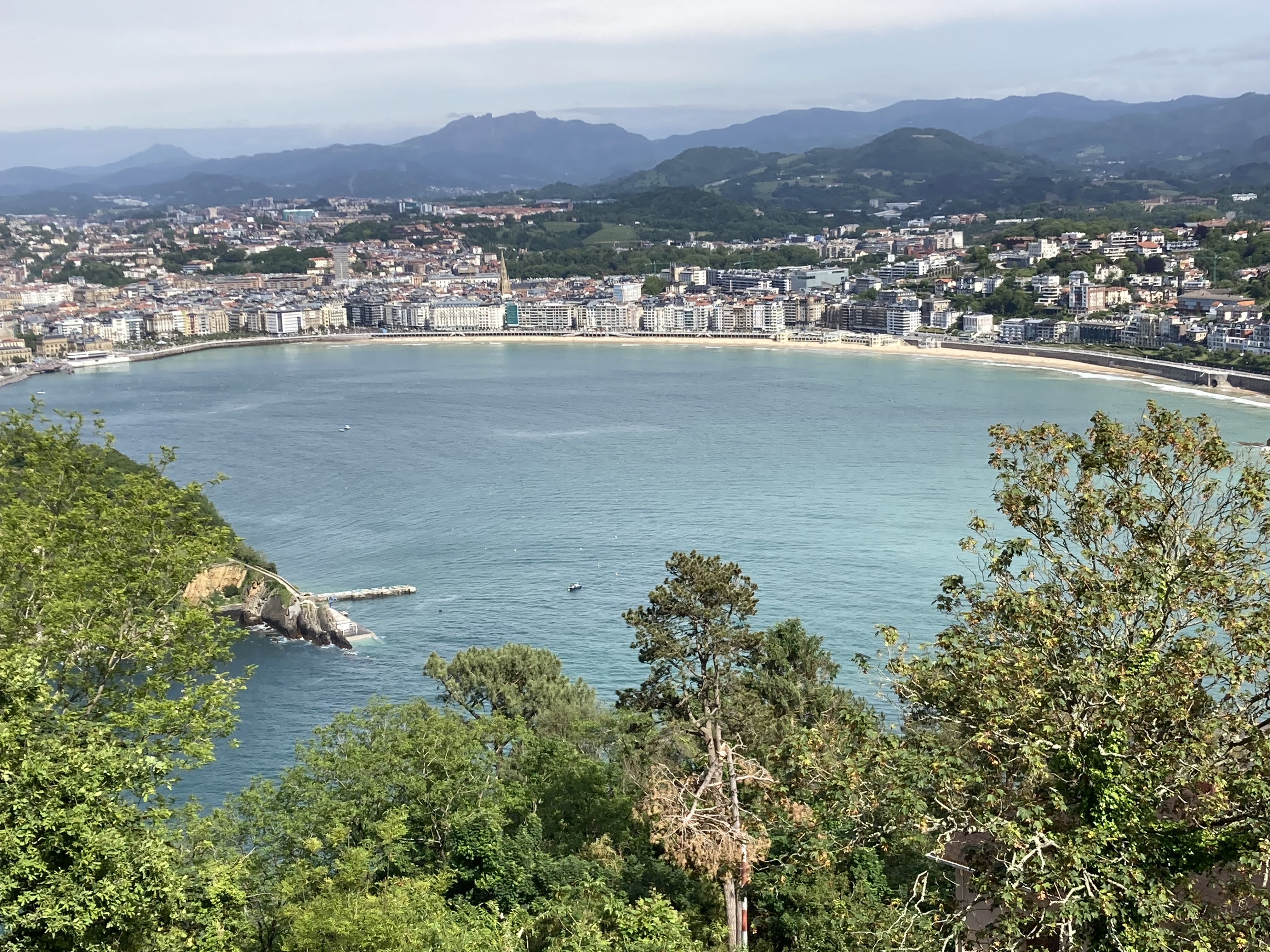
A ride on the vintage Funicular (and found a very vintage theme park thing at the top) for astounding views back over the city, and possibly France somewhere over the mountains behind.

Caught the local bus back to the car park, and some quick Lidl shopping before the run home. Quite easy – traffic was light, well behaved and it was still light as we arrived back at about 9 PM, greeted with nonchalance and bell-ringing by the local cows.

As it was late (10pm) and we had had a late lunch, dinner was  a mishmash of leftovers, some new gazpacho for T and J, chicken soup for D, and tapas.

Azanza #5

Day 79. Sunday 25 May.

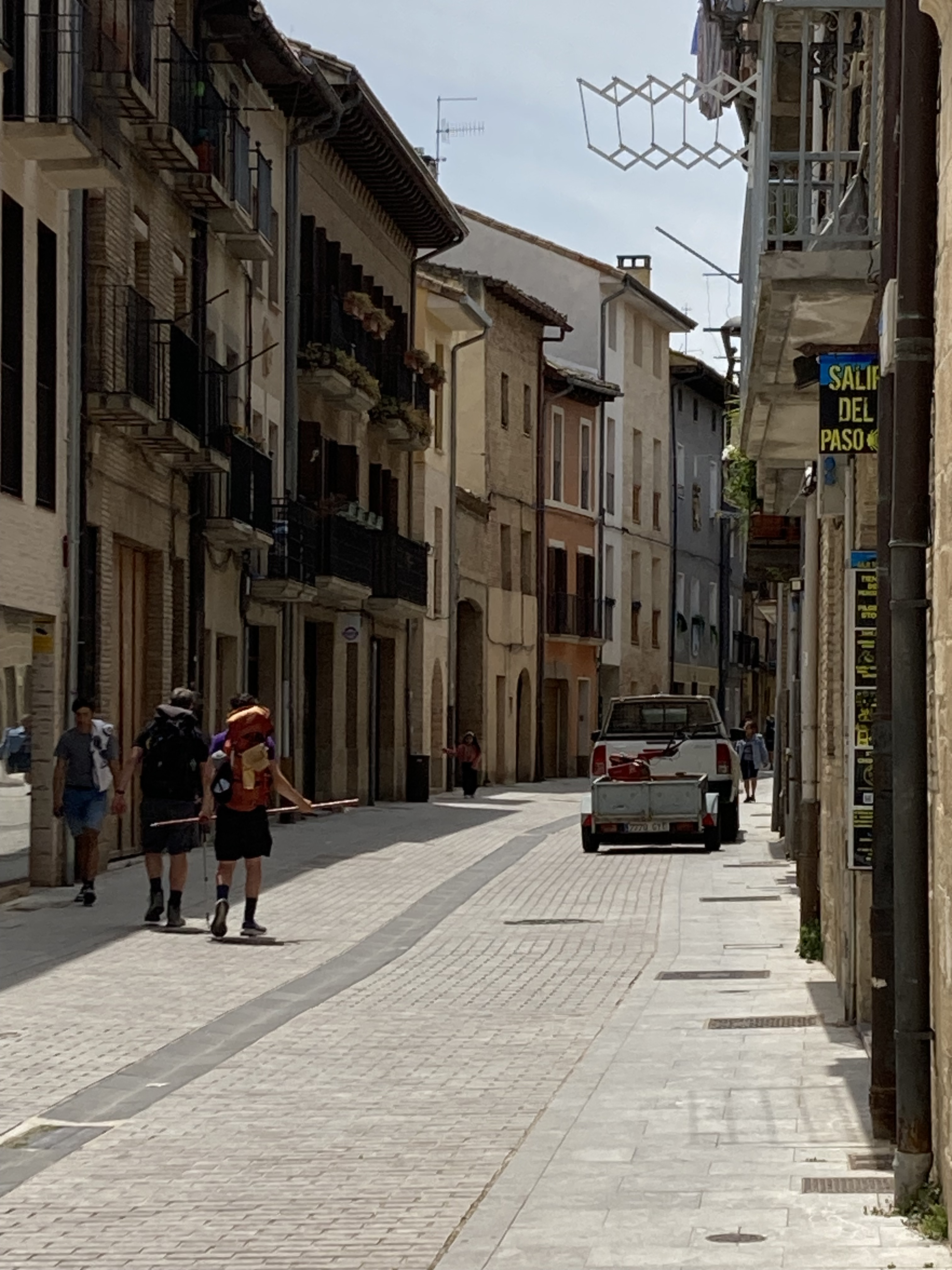
Something of a record: got out quite early, just after midday. Headed for Estella, an historic town about 22 km/45 mins from Azanza, along winding and in parts very narrow roads (has that been written before?)

Where are we, again?

We can certainly pick our moments: Estella was buzzing as festivities in honor of la Virgen del Puy, running from Friday to Sunday, was still underway, meaning that parking was tight. And for context: Our Lady of Puy, Saint Mary of Puy or simply Virgin of Le Puy is a Gothic carving and an invocation of the Virgin Mary, and the patron saint of Estella.  She was canonically crowned on May 25, 1958. Since the date of her coronation, the patron saint of the town is celebrated annually on May 25, although it is a festival celebrated from earlier dates as well.

It was a big deal: the program, we discovered later, included bull runs, street food, children’s activities, dancing, tradition, gastronomy and music. Followed some P signs to a local school, with parking solo torismos – that’s us, we thought! D was concerned that the gates might be shut early and luckily found a spot right next door. A later search on Google translate advised that in fact it means ‘only bullfighting’. If it meant ‘only bullsh***ing’ we would have been fine.

Fluffed around trying to work out where the old part of town was, and where to find a coffee. A gentleman stopped us and we think offered to help, but we advised, via Google translate, that we were fine (even if that wasn’t quite true).

Took a punt, wandered towards the fair and came across a simple pasteleria where we did get some good coffees and sweet treats from a couple of smiling ladies.

T accosted a young woman outside the shop for advice about the old town, who pointed us in the right direction – we were actually on the right track.

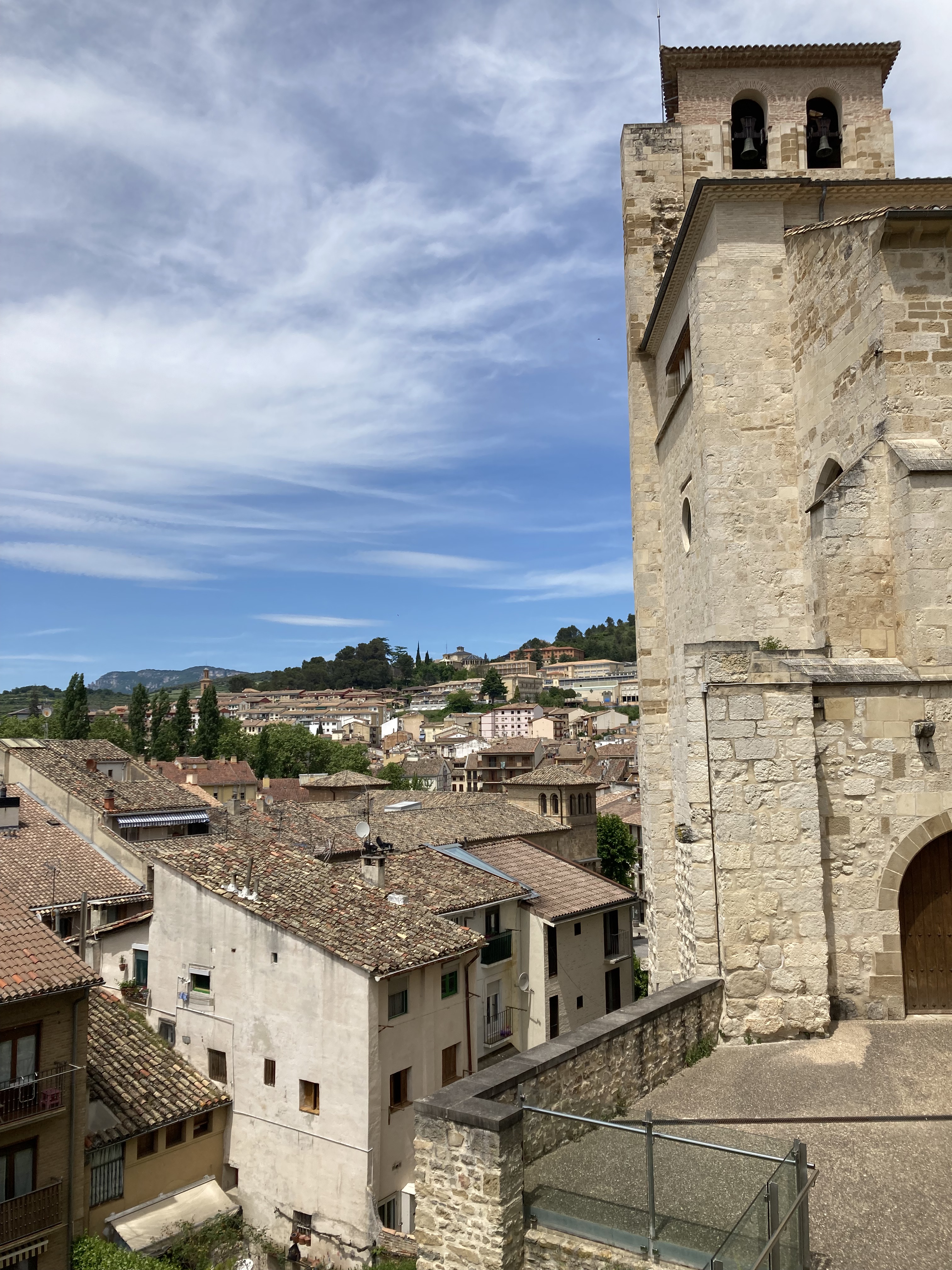
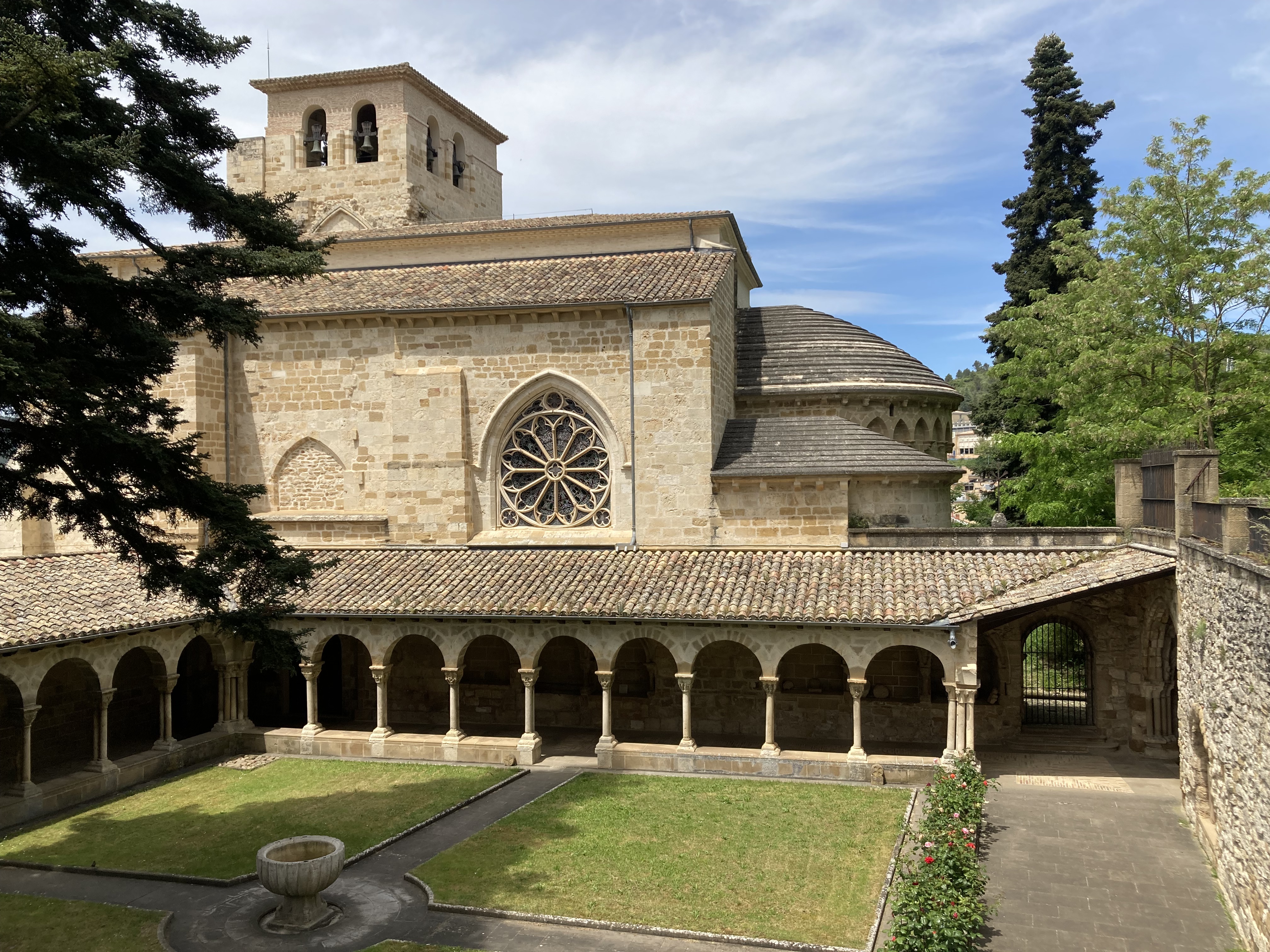
Down the road, over the bridge, and we were there and were on part of the Camino. The Church of San Pedro de la Rua and the Palacio de los Reyes de Navarra were, of course, closed.

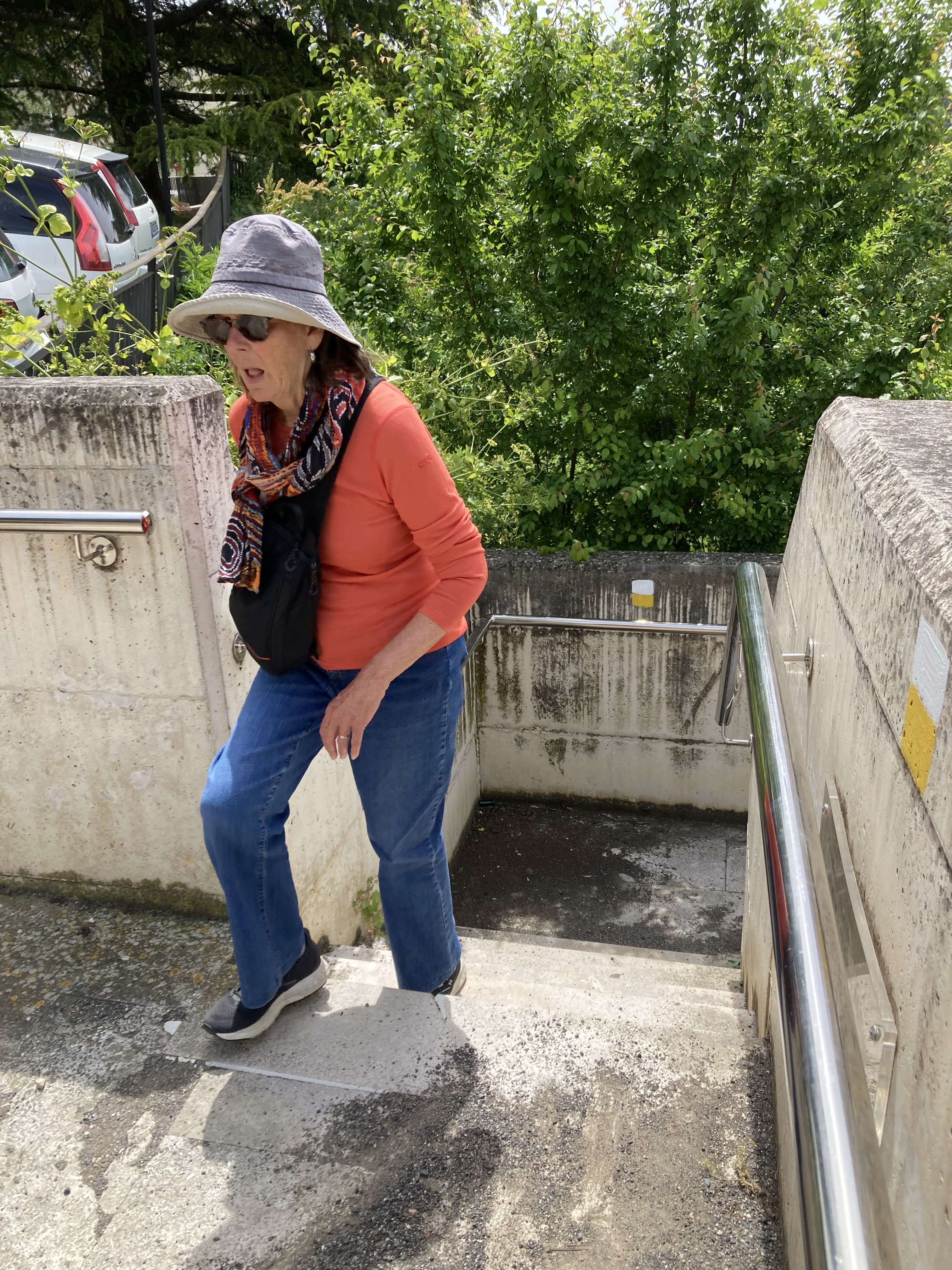
Took the lift to the entrance of the church anyway: well, D and J did, but T tramped the stairs to put the other two to shame (point made: she came down in the lift).

Wandered through the streets of the old town, then down to the river. 

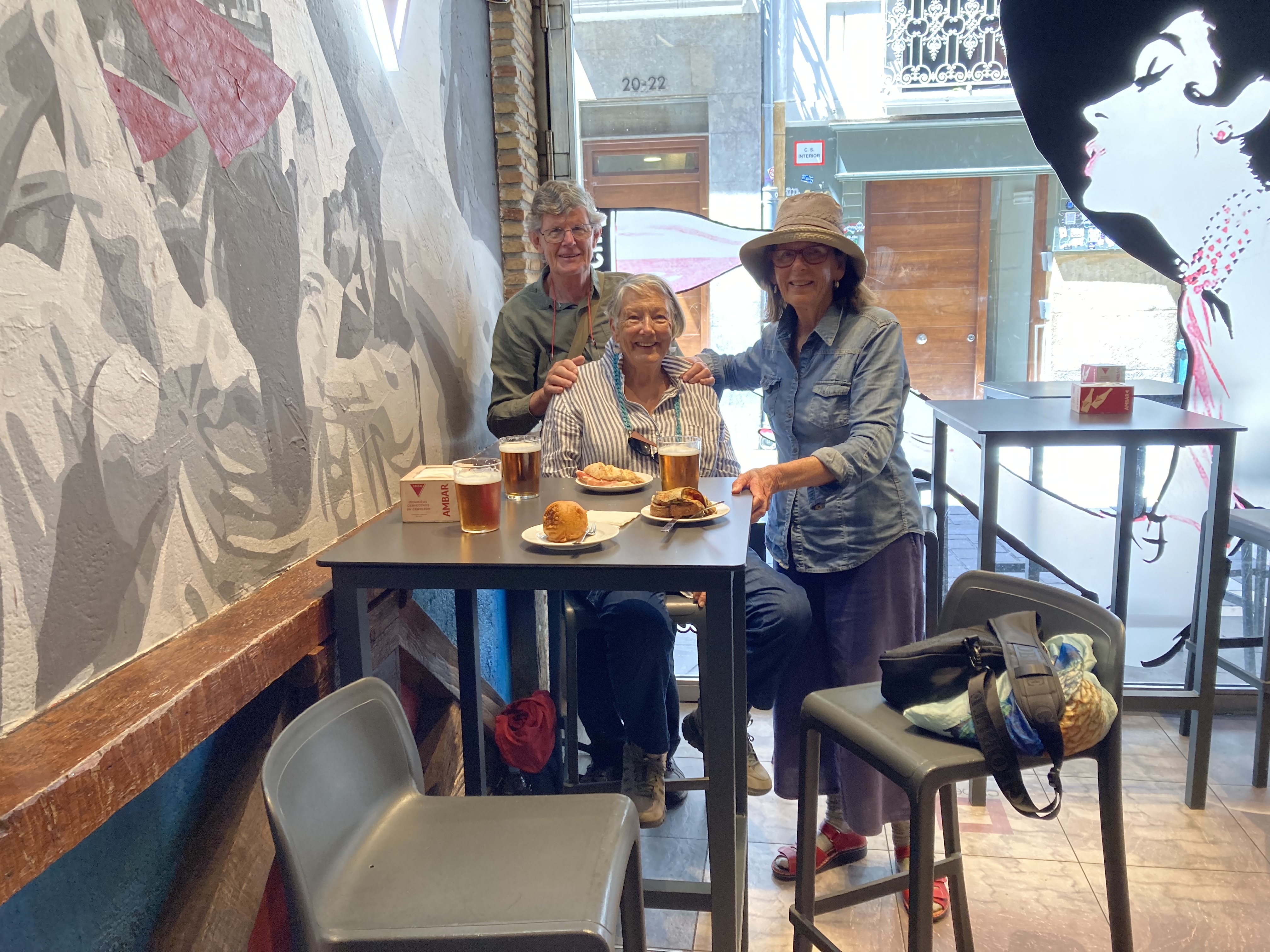
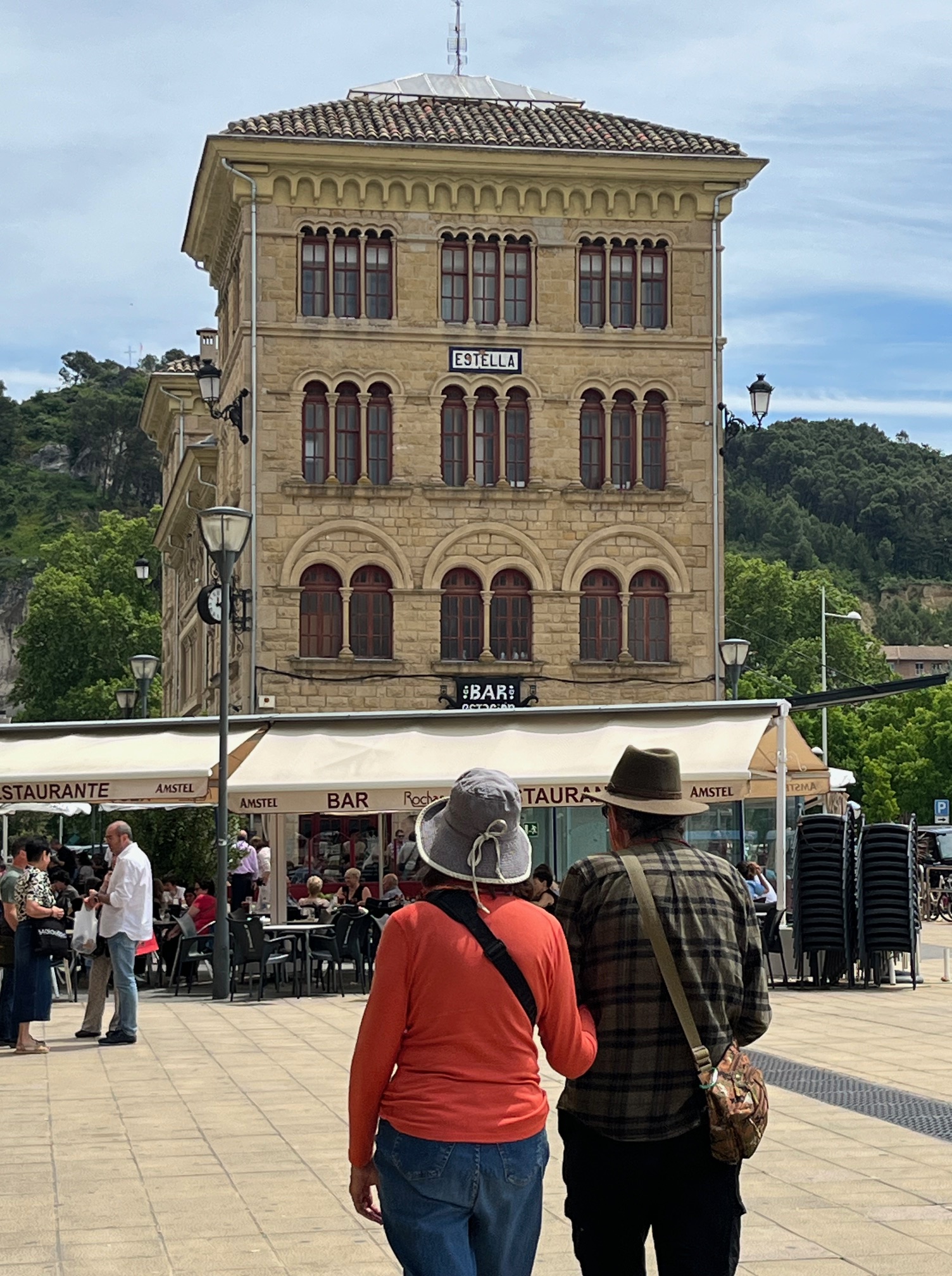
By now a beer was calling, so stopped off at Bar Amaya in the Plaza Coronacion for some beers and tapas: white anchovies in oil, garlic and vinegar,  olive, pickle, anchovies and green chilis on a stick, and tempura sardines. Pretty delicious.

This evening has seen accommodation confirmed for the last ‘block’…in the Spanish Pyrenees/Girona. Whew!

And there’s a little tapas of tempura beans, broccoli and leftover potatoes. Worked very well and so eager, forgot the photo. Dinner will be a compilation of pork, chicken and various veg as a salad mix. Tomorrow we’ll start the menu afresh.

Azanza #4

Day 78. Saturday 24 May.

The day dawned with promise, and J, for the moment, had sprung back – not all the way, mind you, but a little skip. T not so good after a sleepless night with a head too full of everything…

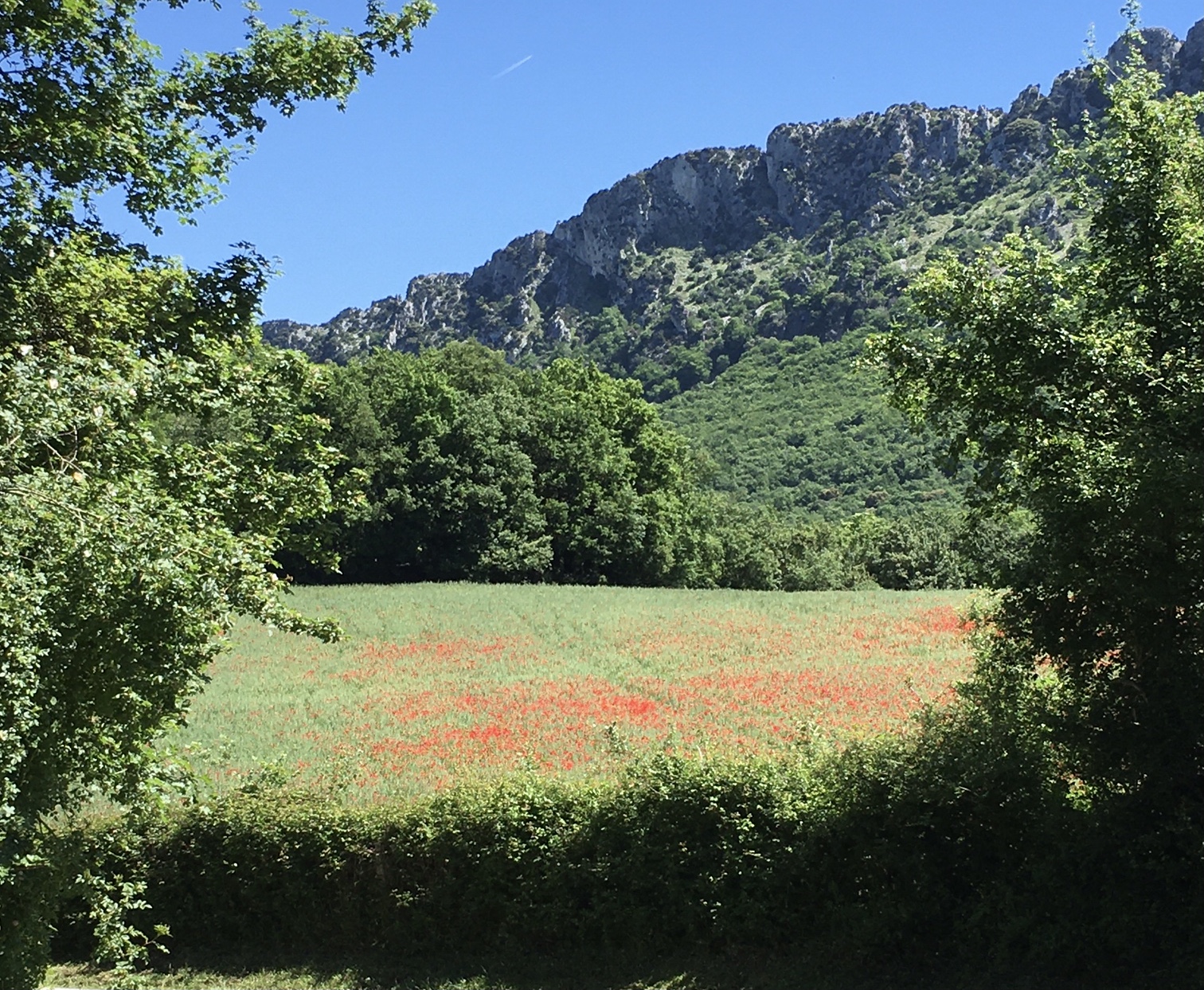
After a beautifully cooked/prepared leisurely breakfast, we decided to take the short trip to the Museo Etnografico del Reina de Pamplona. The road passes through fields of wheat and poppies, with the occasional cow, with her bell ringing, queen of the road.

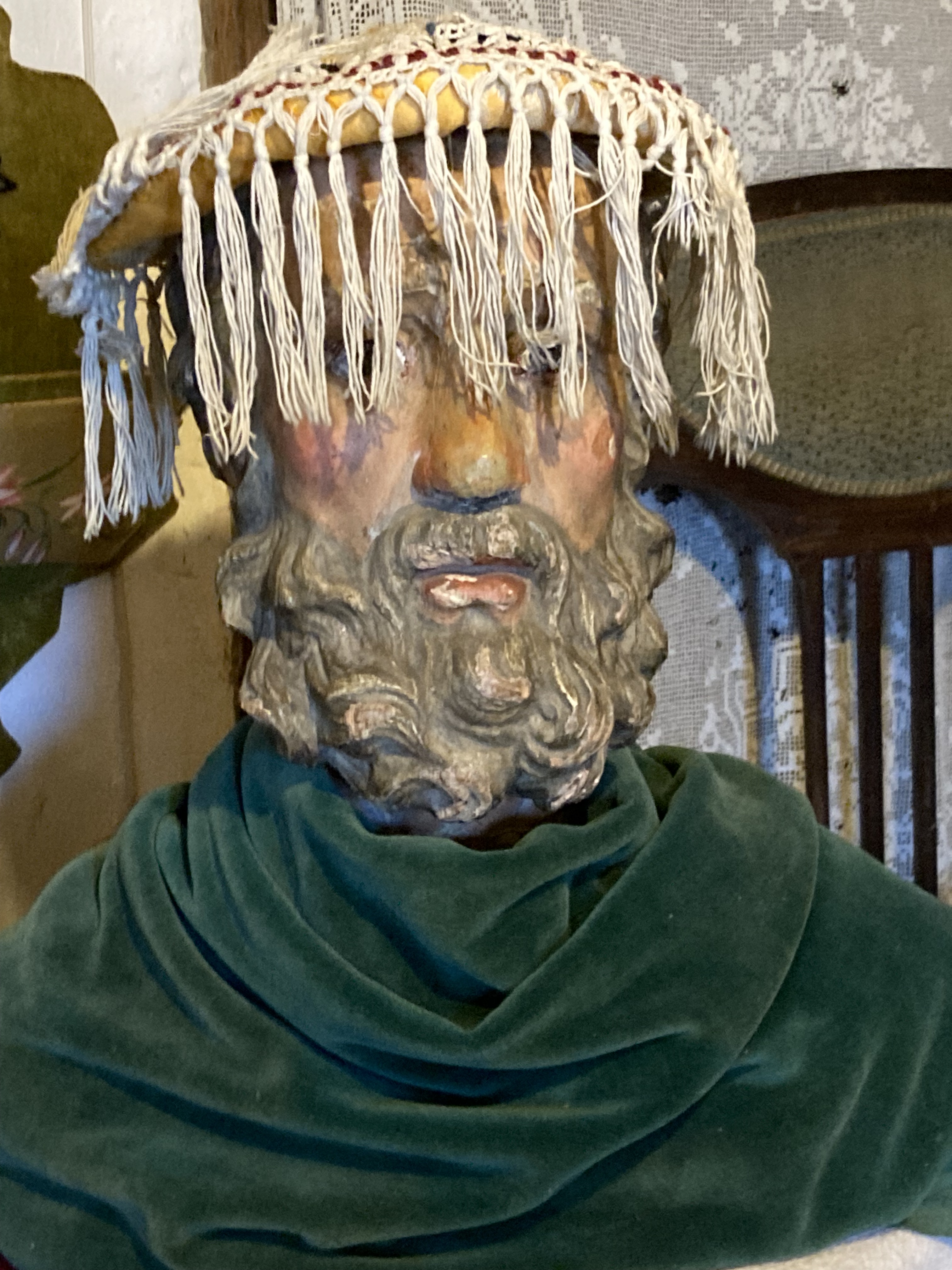
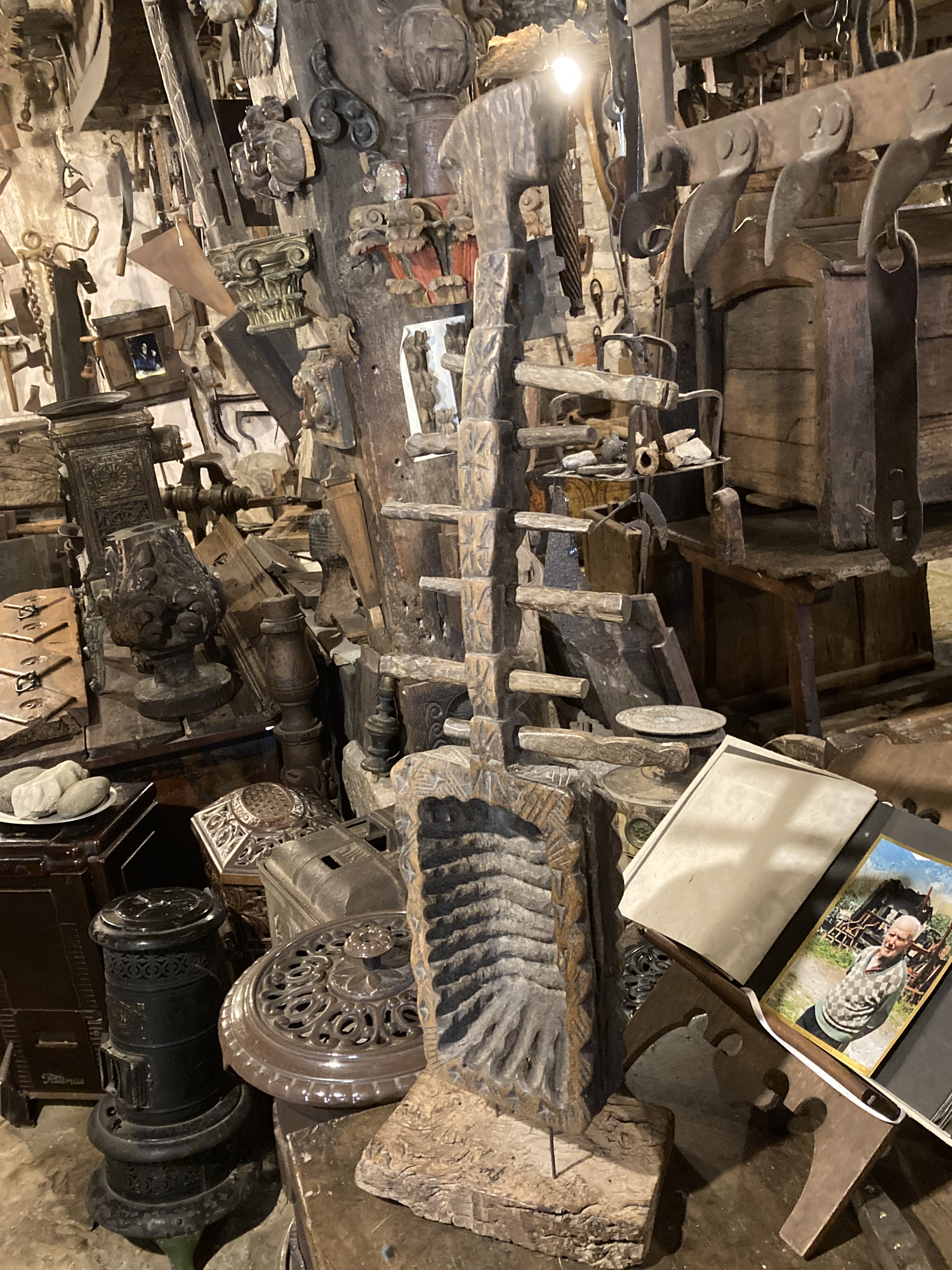
Thanks to Google, we know that the museum is located in Casa Fantikorena, built in 1641. It consists of a ground floor and two upper floors and features 17th-century folk architecture.

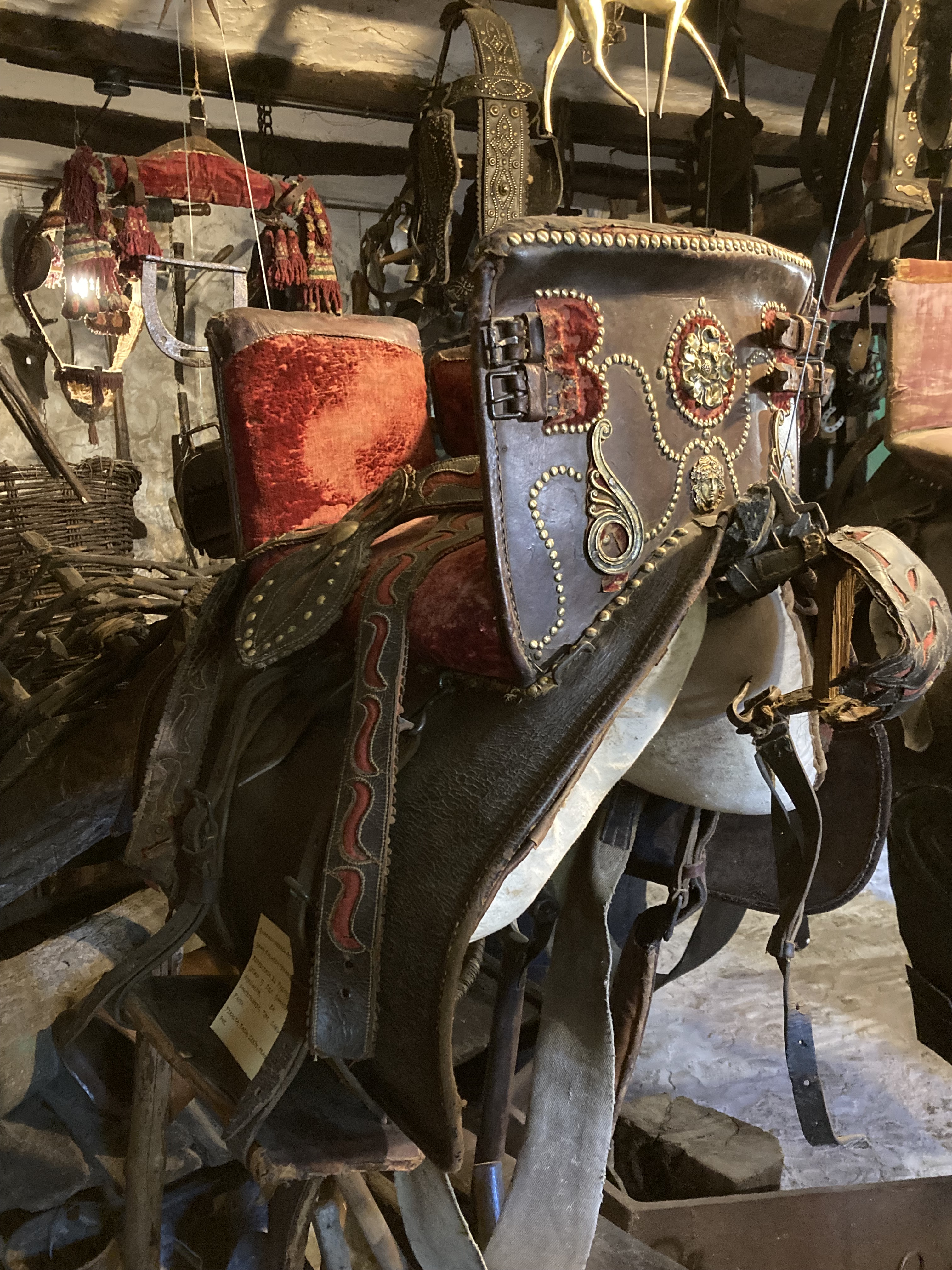
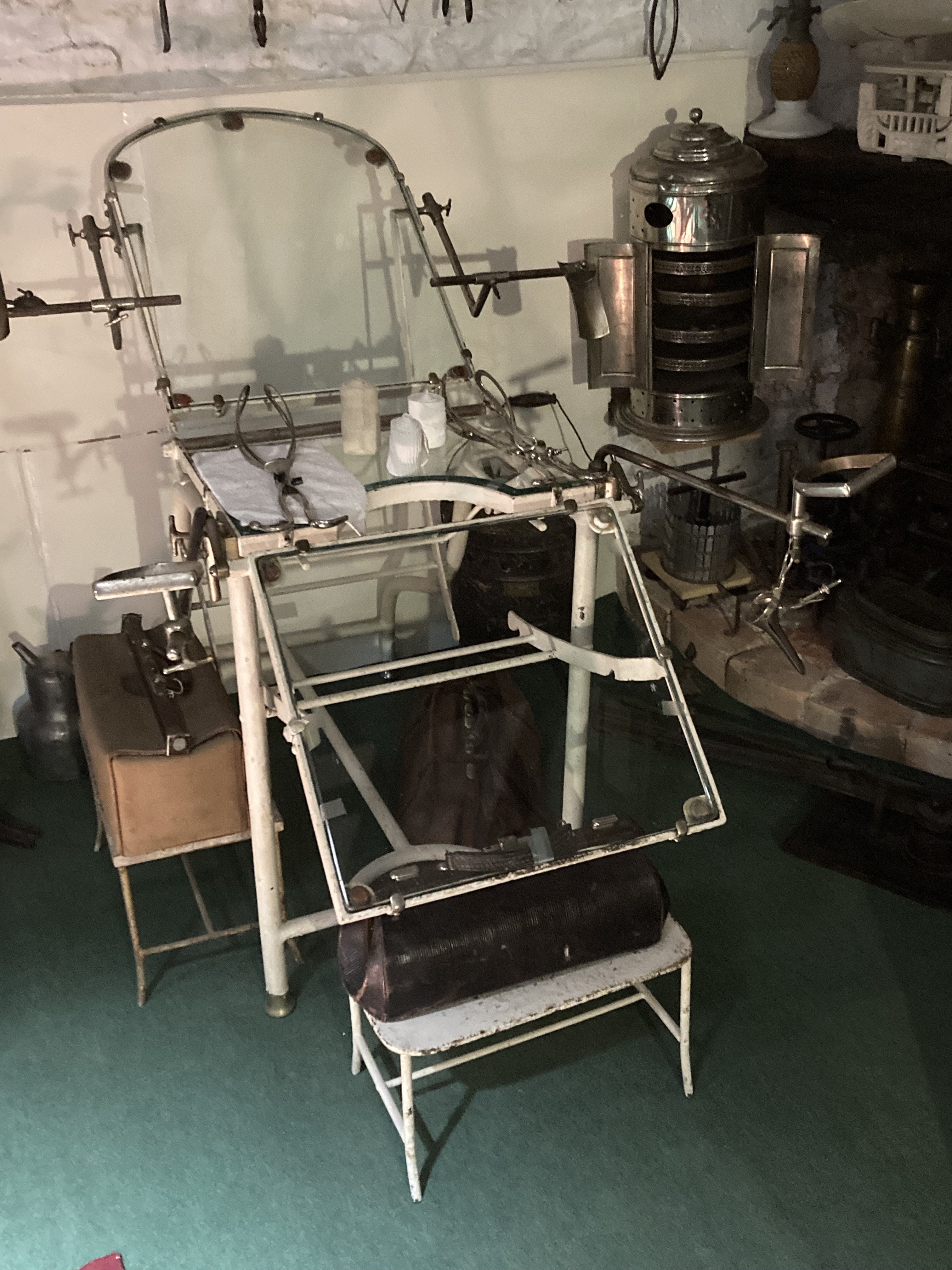
There are nearly 8,000 artifacts from pre-industrial rural society, from the Ancient Kingdom of Navarre, grouped by trade. It was, of course, somewhat amusing and/or confronting that many of the items were not only familiar to us, but we also had used!

It was terrific, and we eventually started a conversation with the guide for the day. She was a delight, as we managed, with only a small reference to Google translate, to communicate. We did feel a bit underdone: she speaks Spanish, Basque, French, and a bit of English. A former school teacher of 24 years – her gestures told the back story – she retired but now travels around with a suitcase containing artifacts to tell the history of this region.

Our museum host advised of a coffee spot just up the road at Ultzurran. Turned out to be quite popular, tables of younger and older folk, kids and a dog, and we all had a beer and a little snack: chorizo roll, mushroom patty and tortilla.

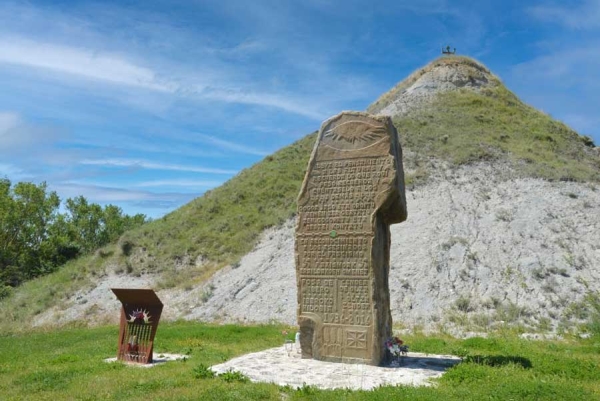
Next idea was to try to find a memorial T and D had passed yesterday, so headed towards Ororbia. As we neared, we gave up, not recognizing any landmarks. Arriving at Ororbia, for some reason D turned right at a T-intersection, then sought somewhere to do a U turn. You guessed it – there was the site we were looking for, on the ‘wrong’ road we took yesterday.

It was a memorial connected to the Spanish Civil War. This grave is the one with the highest number of victims in this region, where several areas were chosen as the scene of shootings and murders due to their proximity to the detention centers established in Pamplona after the military coup of July 1936. Nine graves have been located to date, in which at least 73 people were murdered. The remains of 39 murdered people have been recovered thanks to exhumations carried out during the Franco regime.

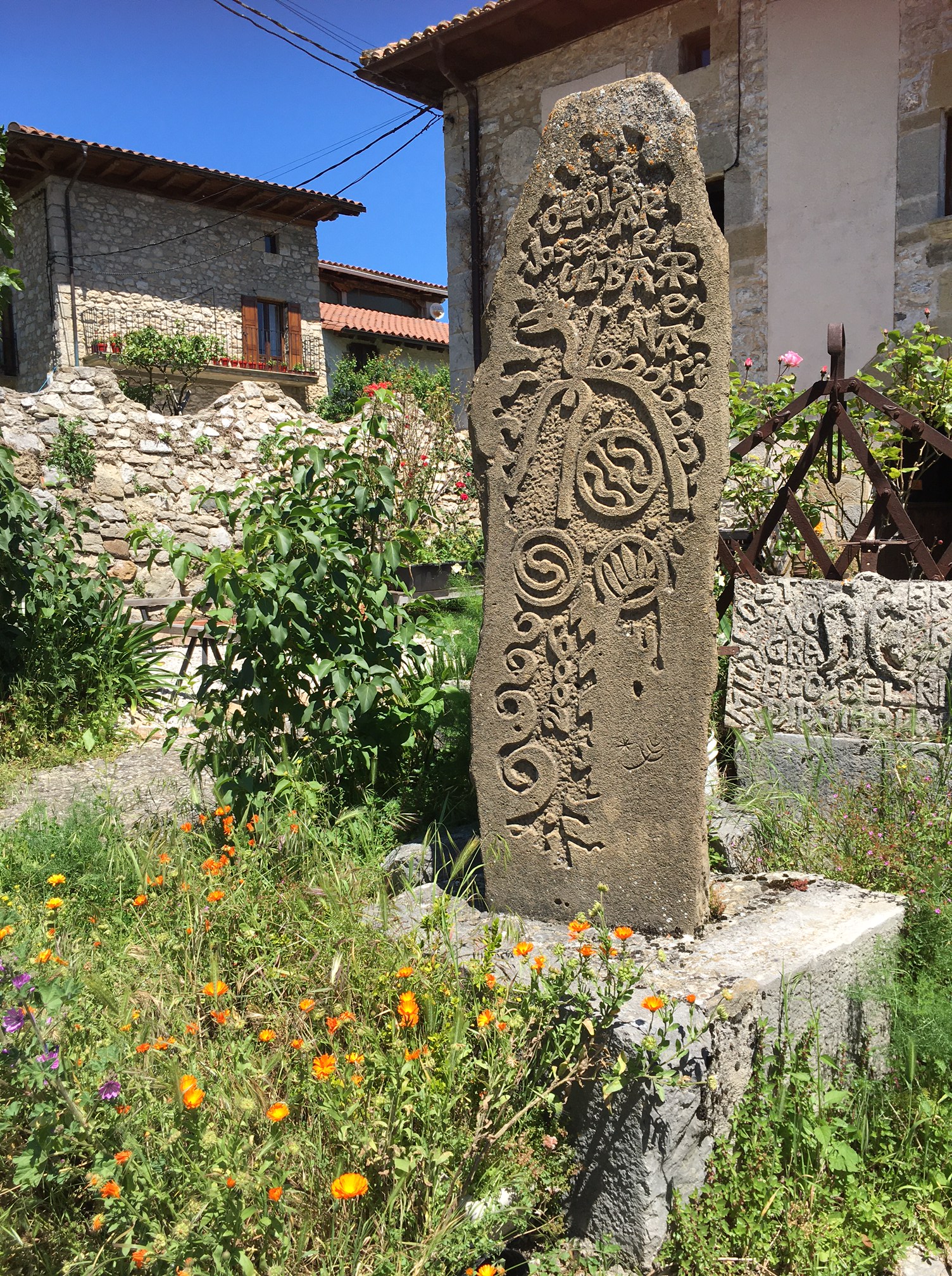
The local Town Council, in collaboration with the memorial group Zurbau, has launched several initiatives to raise awareness of this horror. Each of the graves has been marked with a metal monolith, a plaque, and a QR code to provide information about the people murdered there.

In 2019, it was declared a Site of Historical Memory in Navarre. The memorial recognizes the horror Navarre experienced after the 1936 coup d’état and the political cleansing carried out against hundreds of people simply for thinking differently. One hopes that we learn from history.

That was enough for one day, so home we went, some to rest, some to continue to search for our next accommodation, some to read the news.

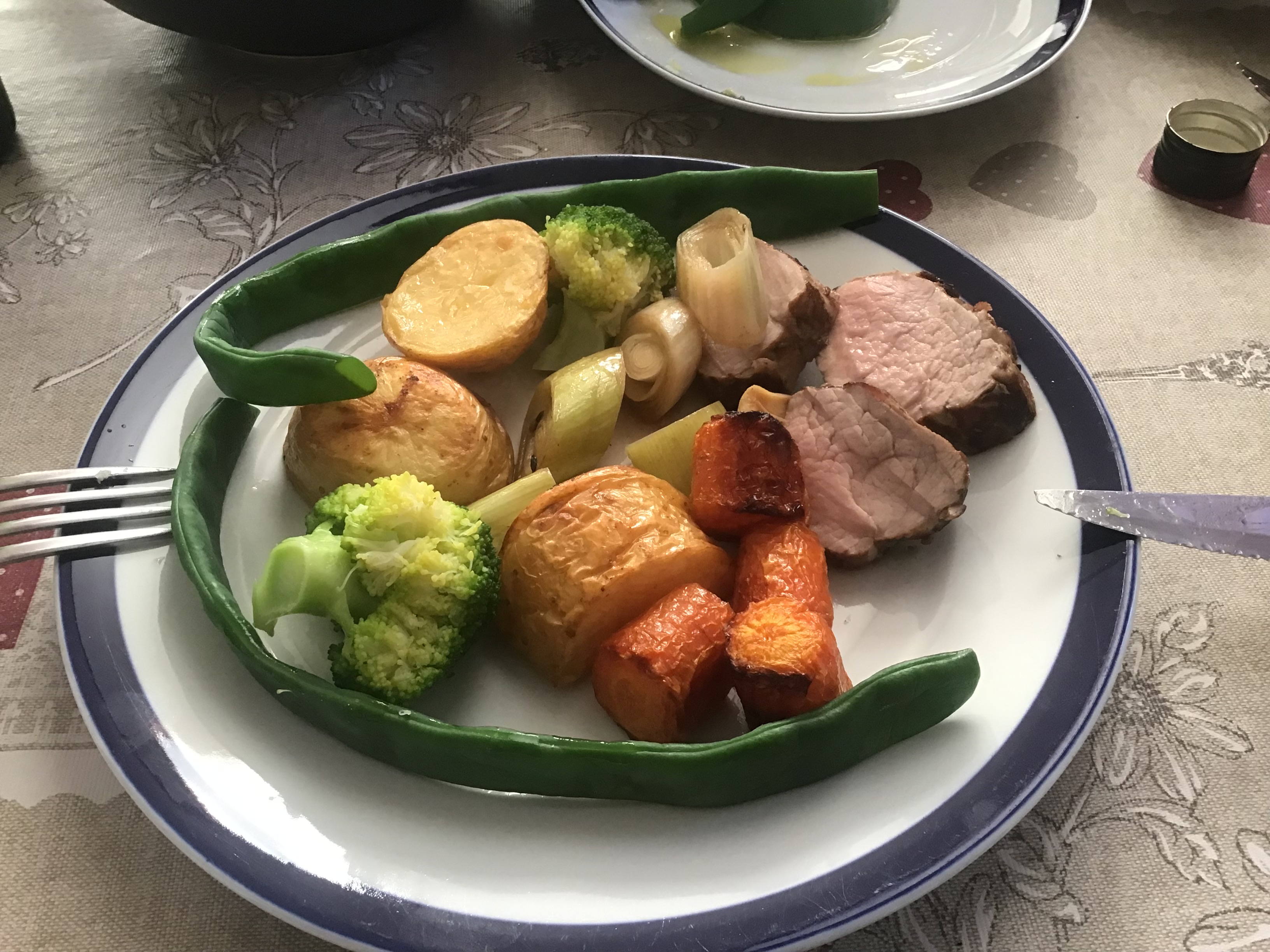
Dinner. Roast pork with roast vegetables, and steamed long flat green beans and broccoli.

And solely for medicinal purposes

Azanza #3

Day 77. Friday 23 May.

A bit of a rest day – not only are D &T travel weary, but J has a cold. First task was a trip into the outskirts of Pamplona to pick up some more supplies and some stuff from a Farmacia to keep the symptoms at bay.

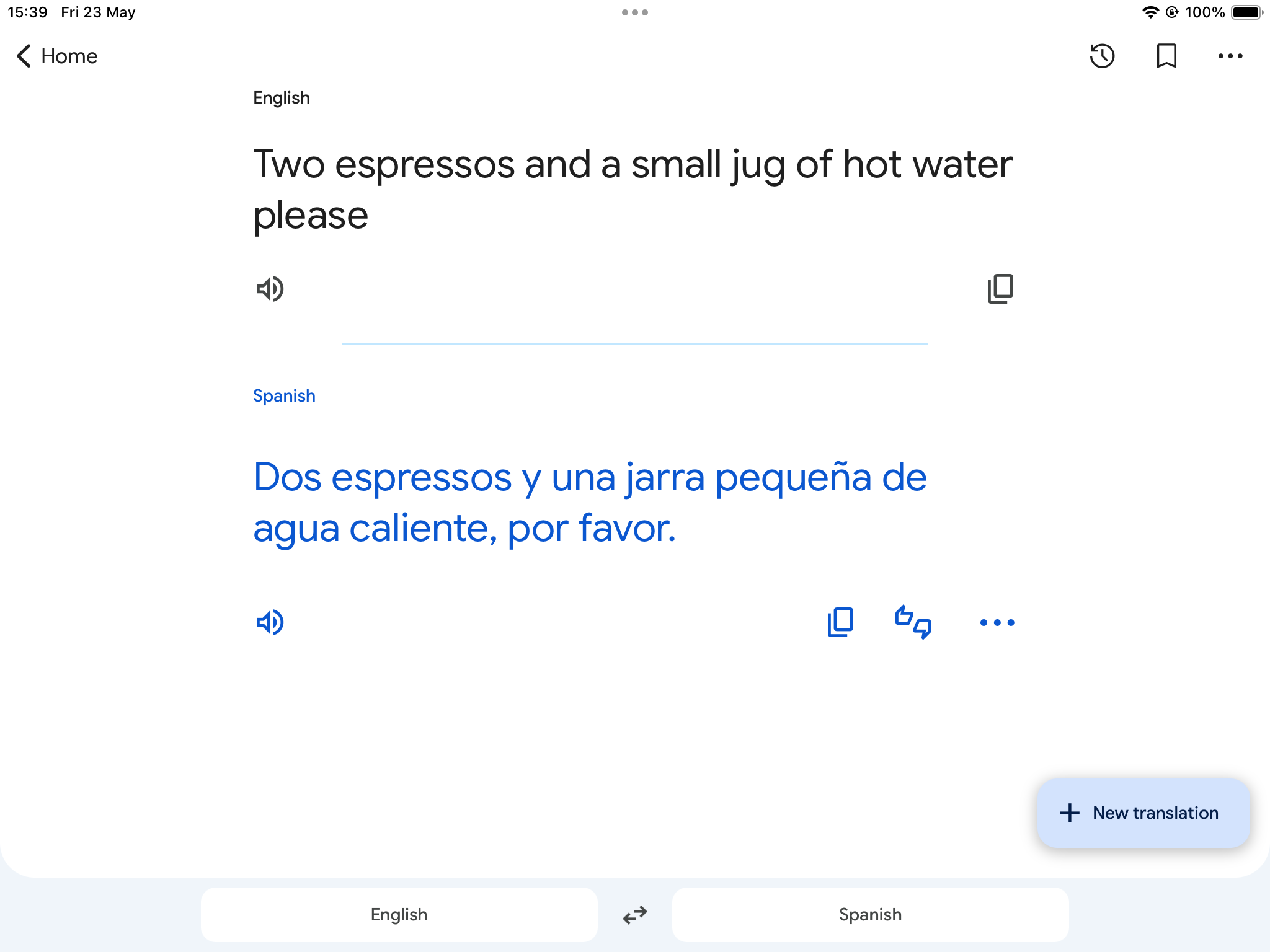
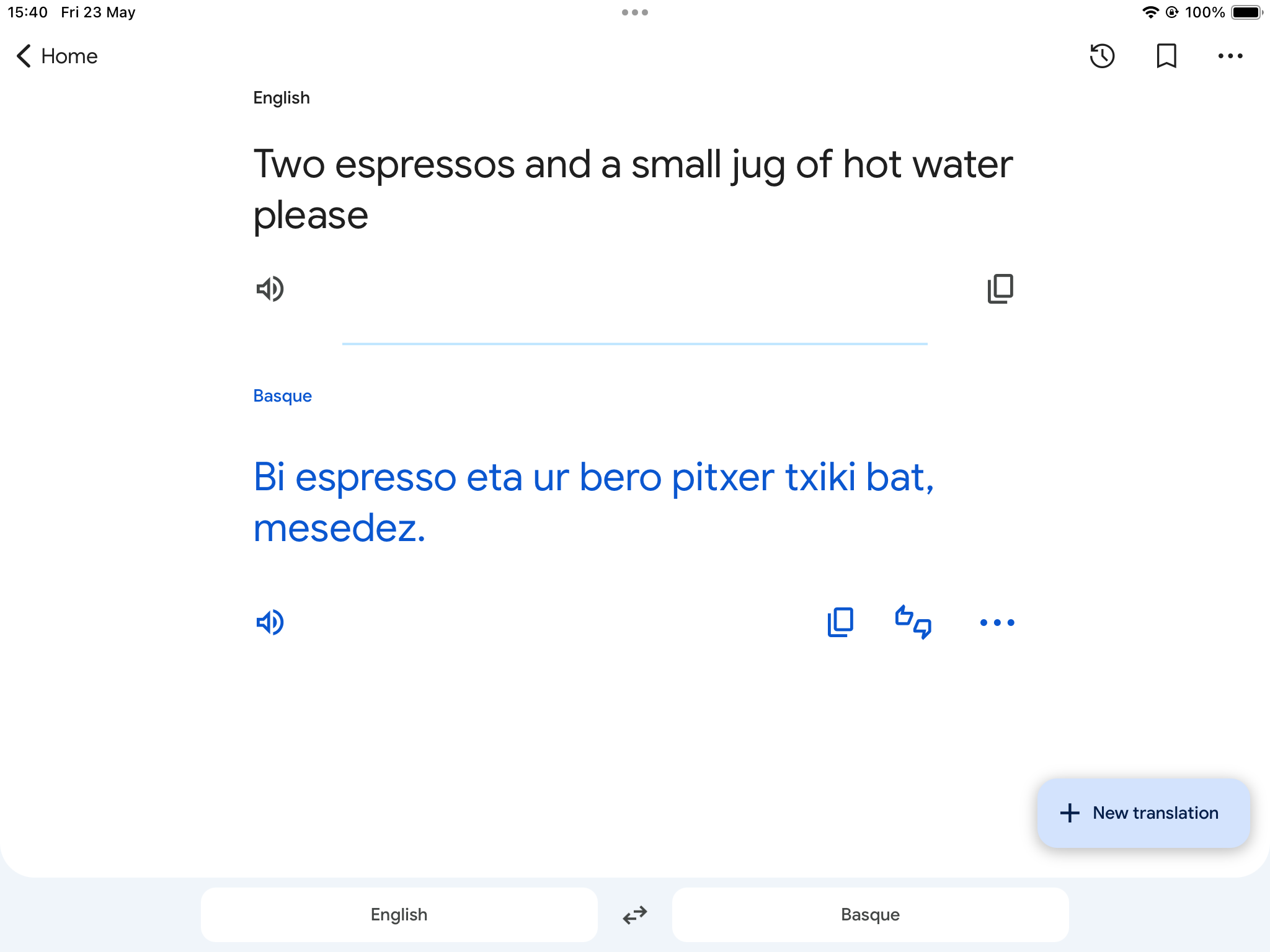
We stopped for a coffee on the return trip at Ororbia, a smallish village of 758 inhabitants. We started using some of our new found Spanish words, then English, then Google translate, then sign language. It was only the latter that worked! We were perplexed, but T had a lightbulb moment and out of interest (after the event) we selected Basque. Very different and presume that was the problem, but we haven’t tested the theory as yet.

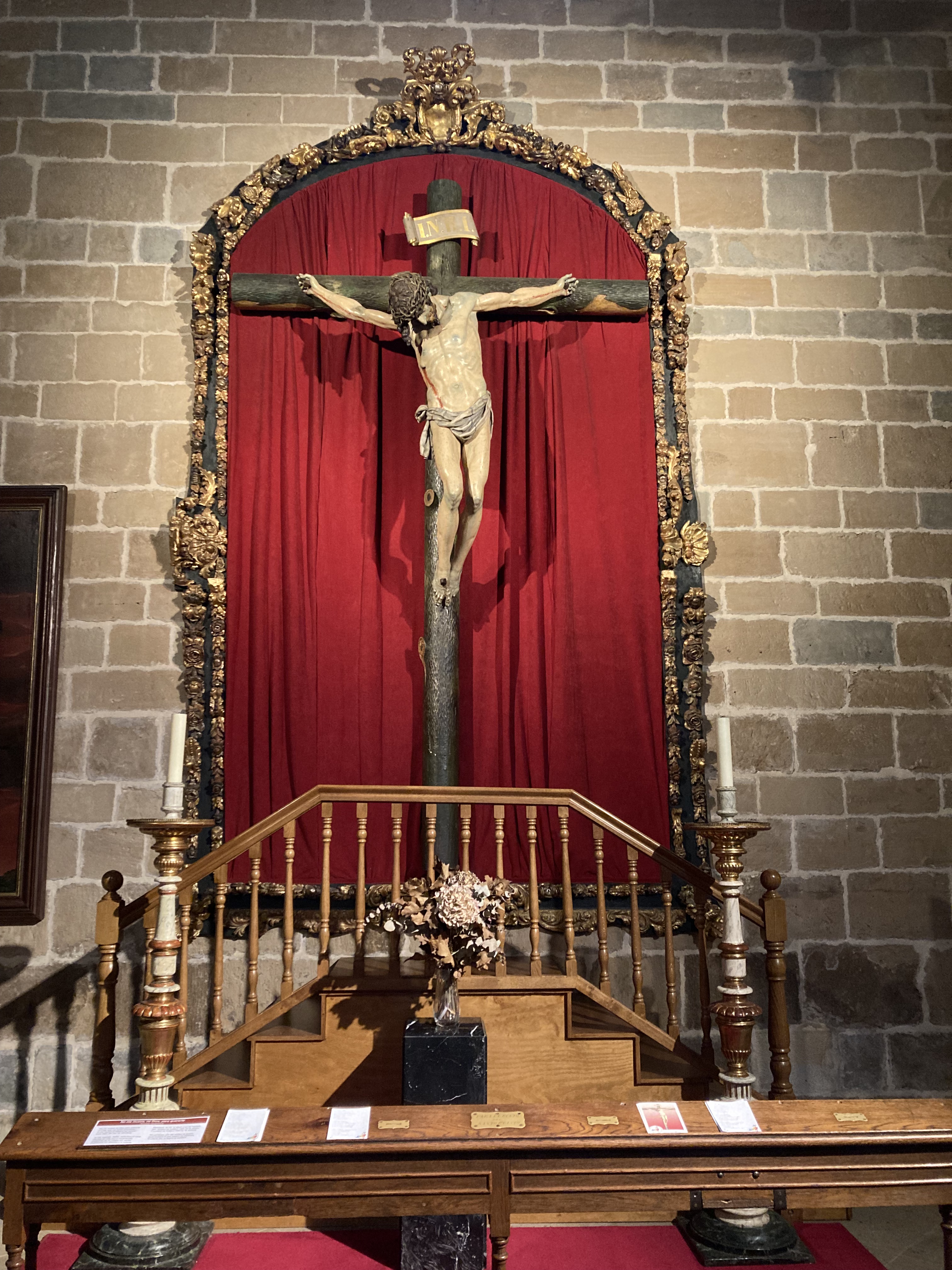
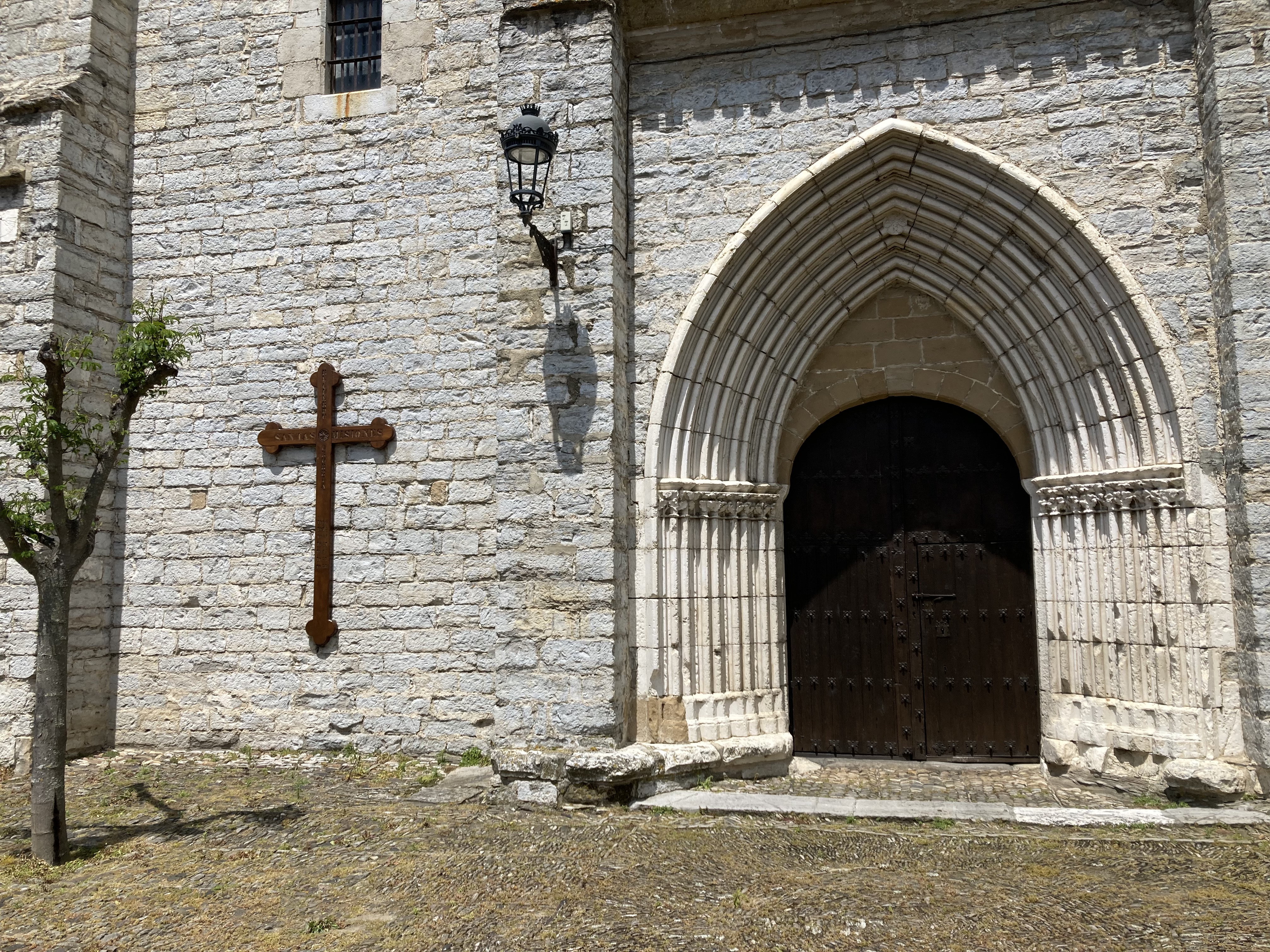
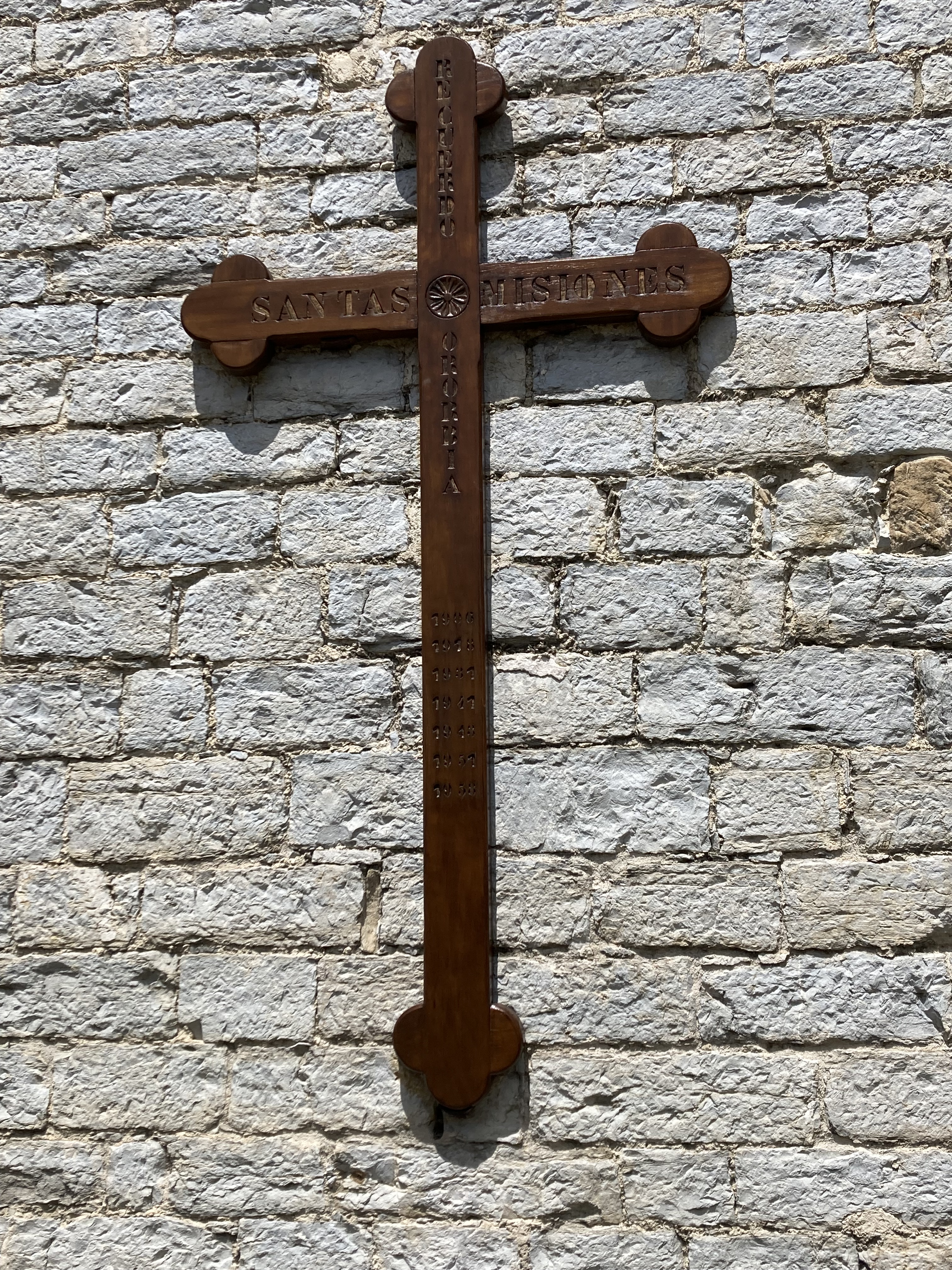
A quick stroll around a very neat and probably well-to-do village, which we speculated might be close enough to the city to make commuting easy and far enough away for a rural lifestyle. Iglesia de San Julián de Ororbia was all closed up, but we were intrigued by the cross, but have been unable to discover what the Santas Missiones – Recuerdo Ororbia represent.

Google tells us that the church is a Gothic style temple, built in the first half of the 14th century. Not sure of the connection to Julián of Cuenca (c. 1127 – 28 January 1208), also known as Saint Julián, who was a Spanish Roman Catholic prelate who served as the bishop of Cuenca from 1196 until his death. He also served as a professor and preacher, in addition to being a simple hermit. He became a bishop after the Moors were driven from Cuenca and he made pastoral visits to the people in his diocese where he fed prisoners and provided grain for the poor farmers. But he never forgot his desire to live in solitude and made annual trips where he could best find silence before re-emerging to resume his episcopal duties. Ororbia has for some reason claimed him.

Reset Doris for the rest of the journey – she ‘Route Ended’ at Itza/Iza, nowhere near our home. 

Reset again and off we went, ignoring her until we were on a road we thought we recognised (wrong) but were still taken on a mostly new route to home, coming in from the other direction. All good – the roads were in very good condition, albeit one vehicle wide, but thankfully no oncoming traffic.An interesting afternoon drive through very lush wheat fields (?) and then sheer rock faces to be greeted by the welcome sign of our current home.

The rest of the afternoon was quiet: in the evening T and J took a walk into the village, meeting a few locals and some other visitors. The latter included a bunch of men (about 10 and none with any English, but Francaise?… ‘Non’) of a certain age and here for a weekend catchup. The girls were invited to join them for a drink: struggled for a while but declined. The former was a mother (aged 91 and glamorous as… and her daughter). Mum has lived her whole life in Azanza and she has seen a small farming community stripped of services and residents. Her daughter explained with Google translate that everyone has moved to Pamplona, the wheat fields are small holdings that can’t support a family so people work in Pamplona factories… (but someone plants and crops the wheat, T thought).

Dinner. Chicken soup. Delicious. And dinner table stories. And some red. Maybe J will be looking up tomorrow. 🤞🙏