
Day 61. Thursday 8 May.
Train strike continues, so best option to get into Porto is the 700 bus. After struggling for ages with timetables on a couple of sites, we thought we’d understood what to do, so headed to Valongo Estacao to board. Asked a young man with virtually no English, but good manners, for advice: he used Google Translate to help, including the cost of the trip (2.50 euro each). D had already downloaded the app, so its now in use! And it proved very useful at the end of the day.
Bus arrived and the one hour (45 bus stops) into Porto was a different perspective. Being mid-morning the bus filled with ‘oldies’ not a single child or pram. And then a very helpful bus driver was able to tell us that this same stop was the pick up for the return trip.
Coffee at Tiny Kitchen (yes, it was).
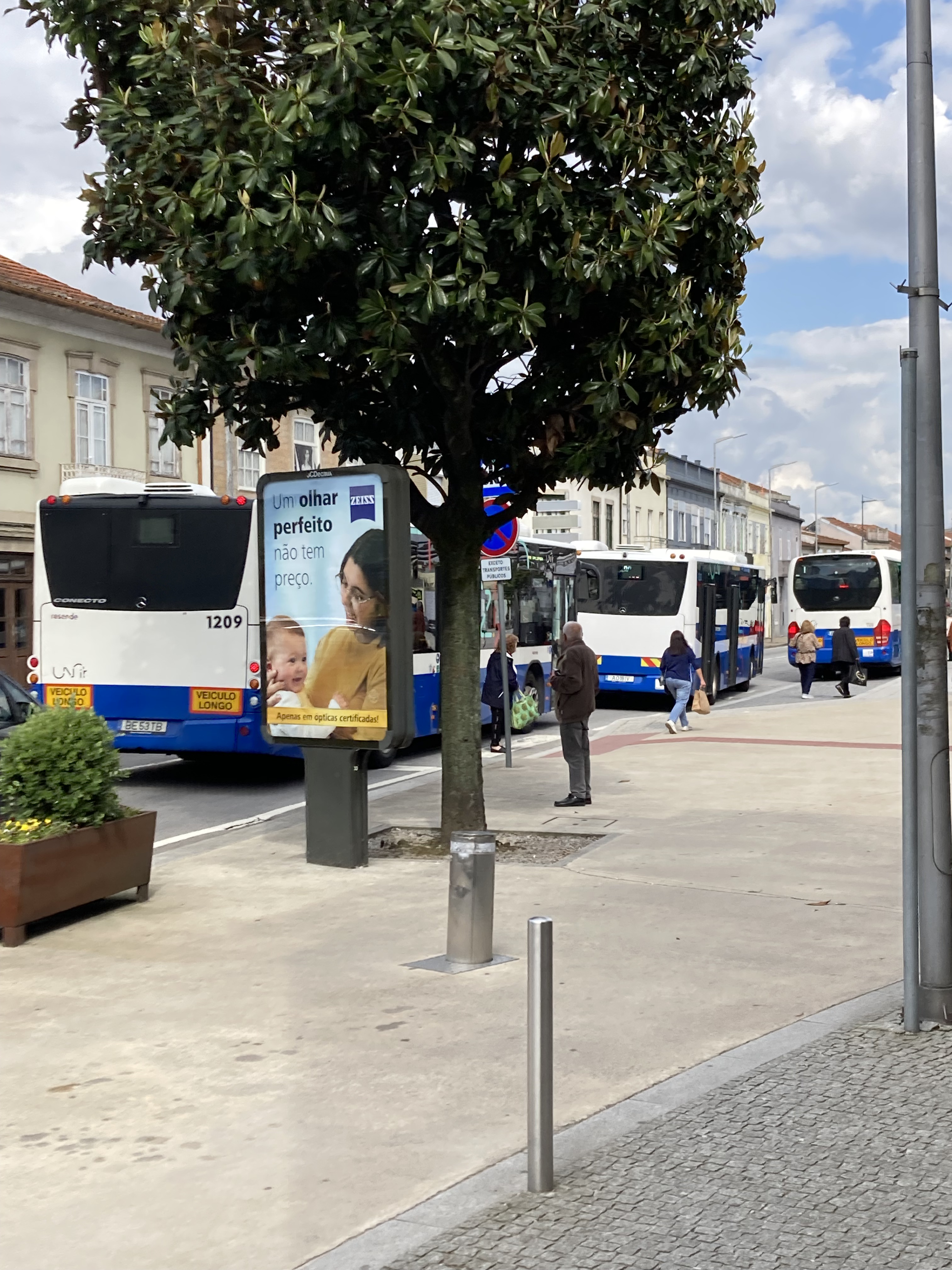

T had noticed that we were theoretically near a charity shop, bookmarked a few days ago… plugged it into Apple Maps and walked in circles until finally arriving at the address: nothing there! Our form is holding.
Plan was to take a 207 bus to a contemporary art gallery (T thought it was a short ride toward the mouth of the Douro, but well away from tourists/souvenirs/ boutiques). Dithered about lunch, then T noticed people with bowls of soup…ramen? So it was time for a ‘non-bread’ lunch. At Ramen e Outros – our noodle choice didn’t quite work; plates arrived, no liquid in sight, followed by chopsticks: it was something with pork, seafood, cabbage, a sort of aoili, and a sweet fruity sauce. Whatever it was called it was tasty.

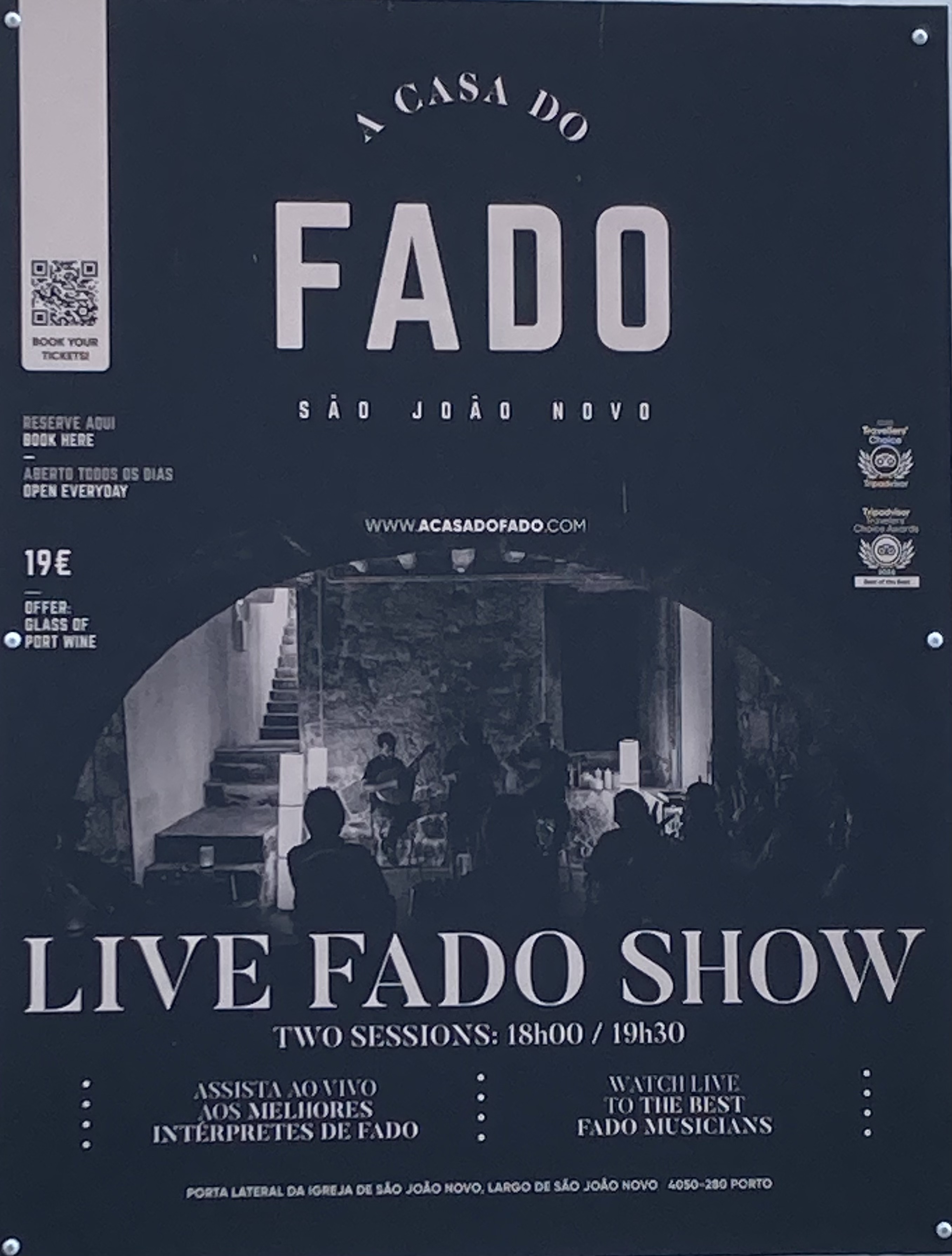
More wandering in circles with D’s phone map and finally found the 207 bus stop to take us to Fundacao de Sarralves, one of the most important cultural institutions in Portugal, which includes a Contemporary Art Museum, a Park and a Villa, each one an example of contemporary architecture, Modernism, and Art Deco architecture. But when we read that the ‘short ride’ was 35 stops, that plan was abandoned. Checked that the Museu de Vitral was open, yes, so walked there, up and down and in more circles. Passing a Tourist Information office, dropped in to get advice on an upper Rio Douro boat tour, and a Fado show. The boat trip still poses some issues to be resolved (due to ongoing train strike). T had (only) two questions. The guy on the counter started spruiking available tours, but T quickly said ‘Please, we don’t want an all-day river trip with lunch, winery visit, Porto to Porto (10 hours). We are staying an hour out of Porto, so that would add more bus time.’ The young man shook his head: there was no way to make a shorter river trip and we would be ‘missing the full experience’ if we didn’t do the whole day. Indeed: that is our aim! ‘Thanks, I’ll do some more thinking’, said T. Second question was about a Fado show today…’yes, 1800 at the best venue: a small church setting, max 30 people…close by…’ (but T had seen an online price of 19 euro rather than the 25 that Tourism was offering). So we politely exited. D’s phone map is one thing but fortunately online bookings seem to work without too many circles. Booked the Fado show on line (19 euro rather than then 25 the tourist office was charging).
Up the hill we trudged.

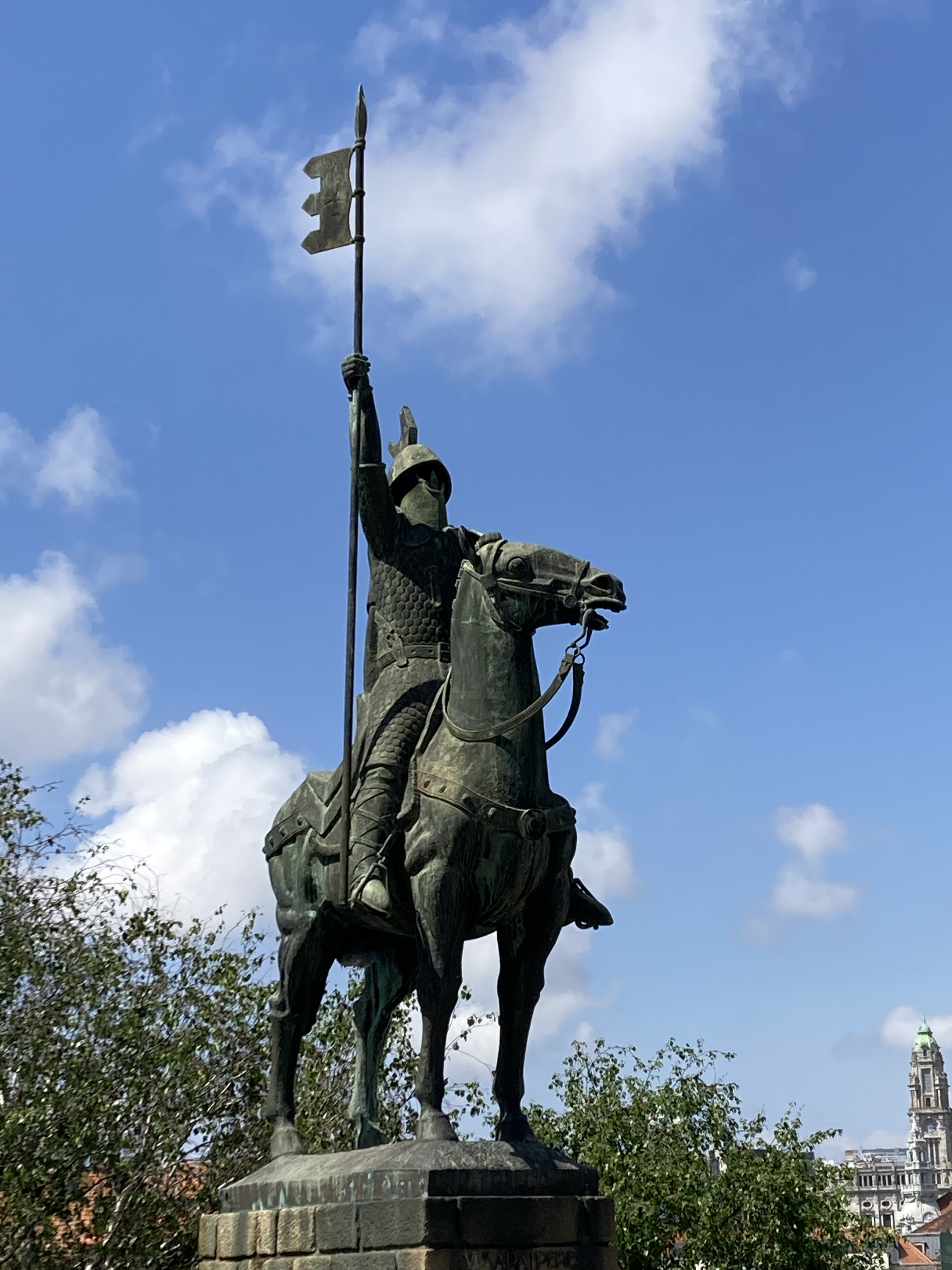
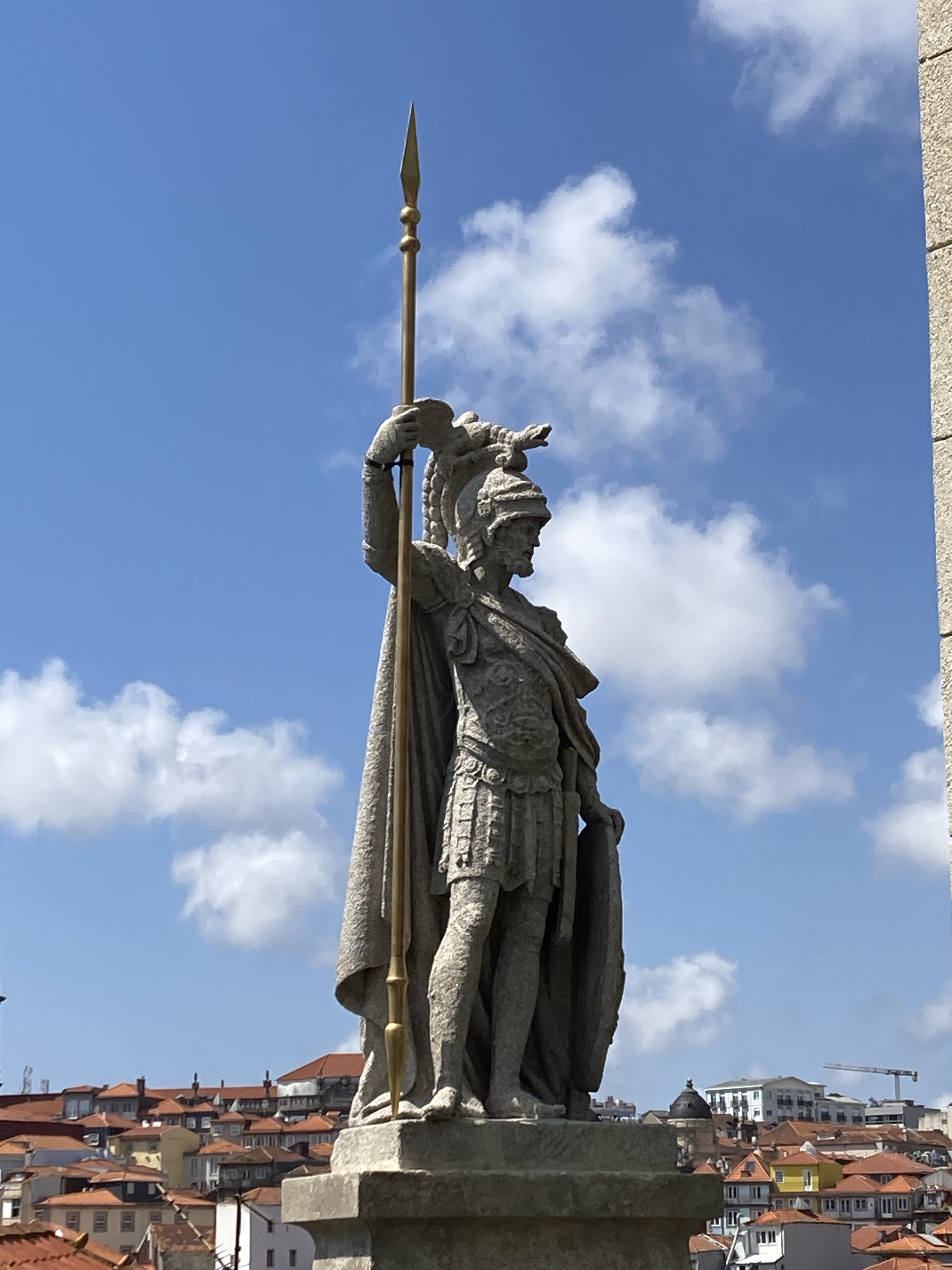

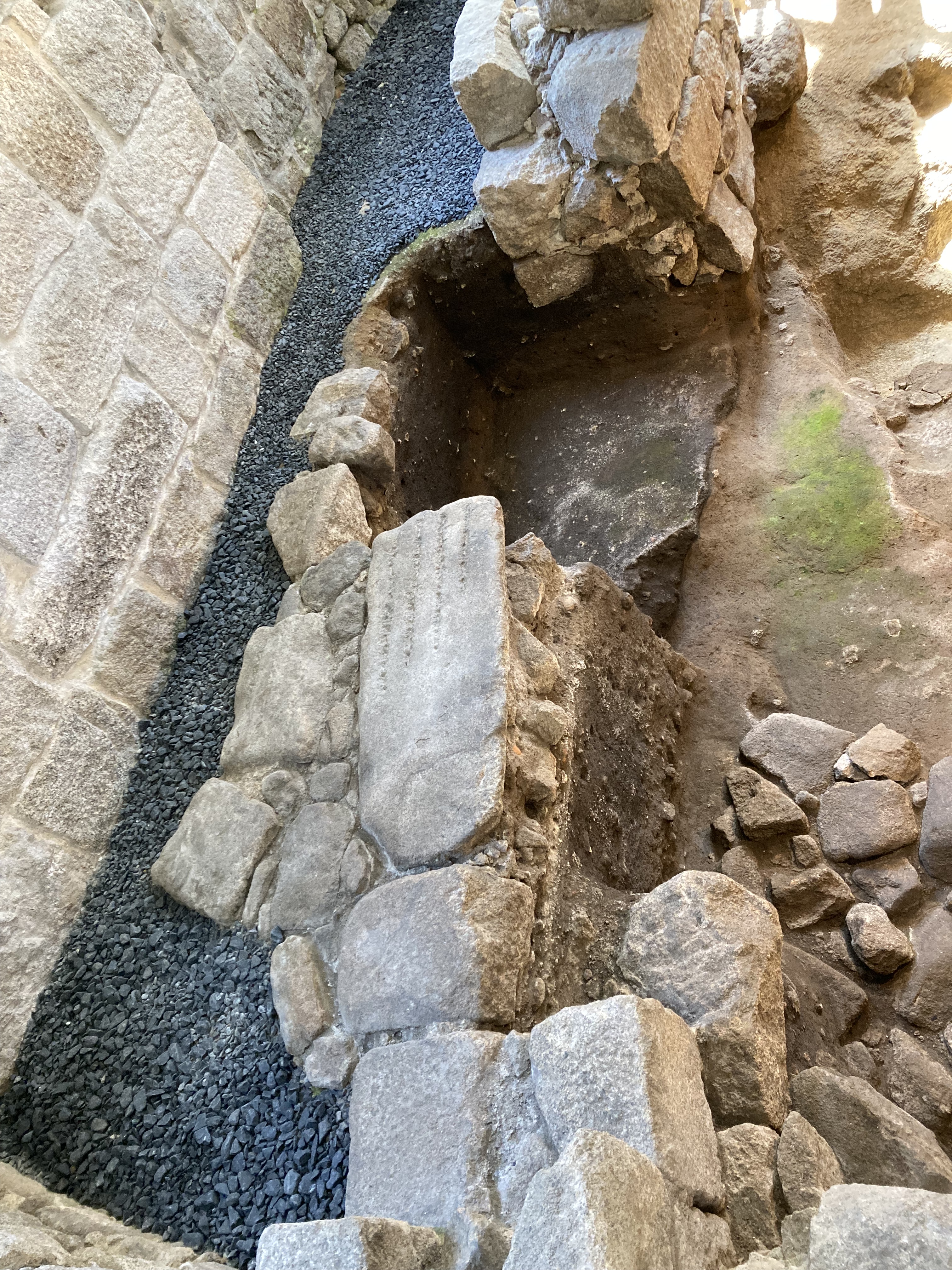
The Museu Vitral (stained glass museum) was in fact closed (permanently it seems), of course. There was, however, a very interesting (and free) archaeological museum/ongoing dig right next door, the Museu do Porto – Arqueossitio showcasing the origins of the medieval town of Porto. The lowest level is the remains of a house with a characteristic circular plan, dating from the 2nd-1st centuries BC, with a section of the Romanesque wall of Porto also visible. Archaeological excavations have shown that the wall still exists, albeit hidden, as a structural element. In the 14th century, the interior of the building was an alley connecting the old Rua do Redemoinho and the Romanesque enclosure. Part of the north wall was the façade of a house that extended onto the current square. On the opposite side, are the foundations of another house built in the 12th and 13th centuries. In later centuries, the old alley was converted into a coach house, with a stable area for the animals and another for storing vehicles. And later a tall chimney was added, (a sugar mill, perhaps?). Layer upon layer was visible beneath us (we stood on a glass balcony).


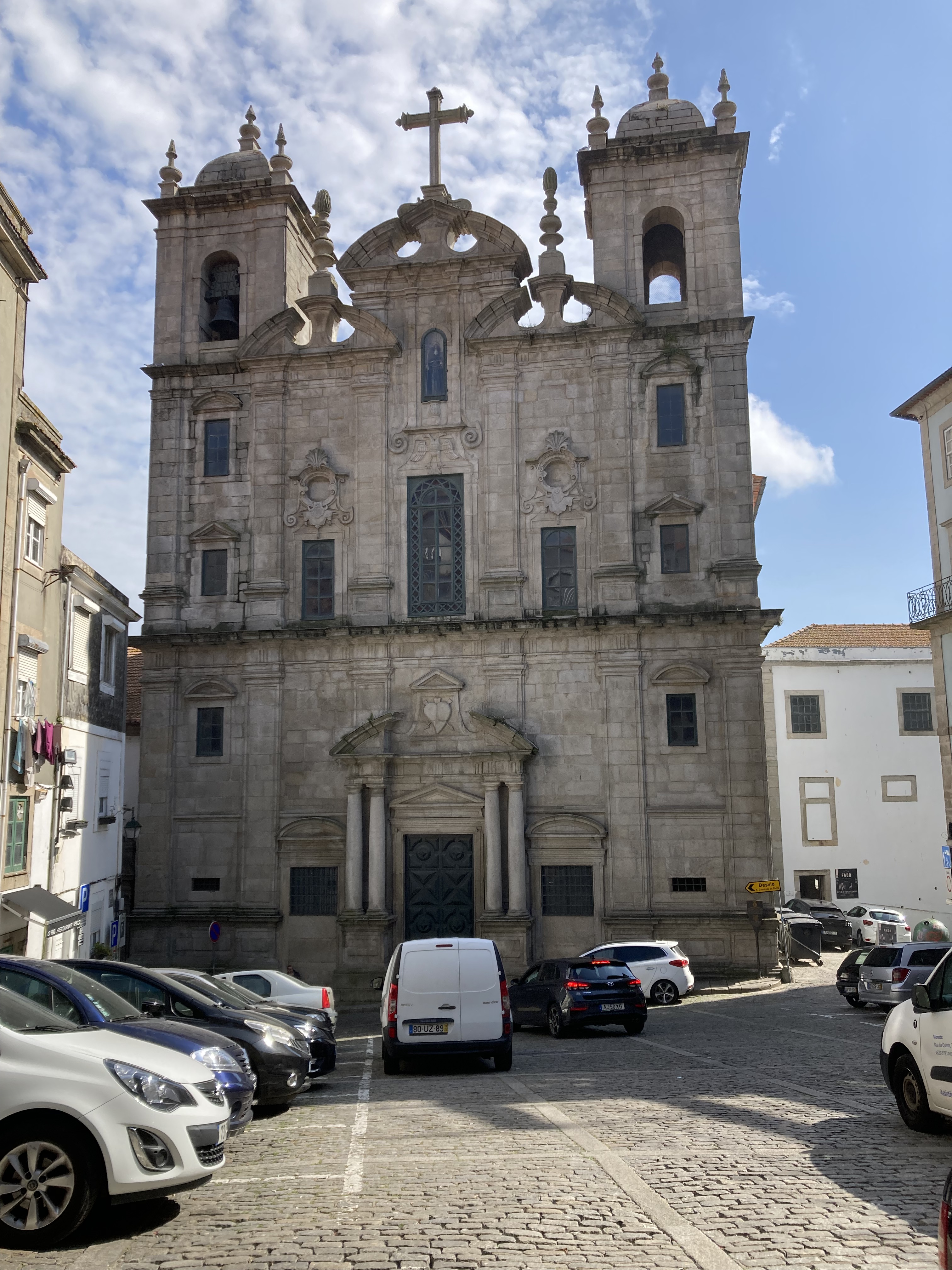
It was a long (short walk) to the Egreja de Sao João Novo where the Fado performance is to be held, heading there early to make sure we were on time. Again, Doris is blamed and D regularly exclaims that ‘she has no…(expletive) idea’ where we are since destinations are right/left/ forward/ back, all simultaneously.
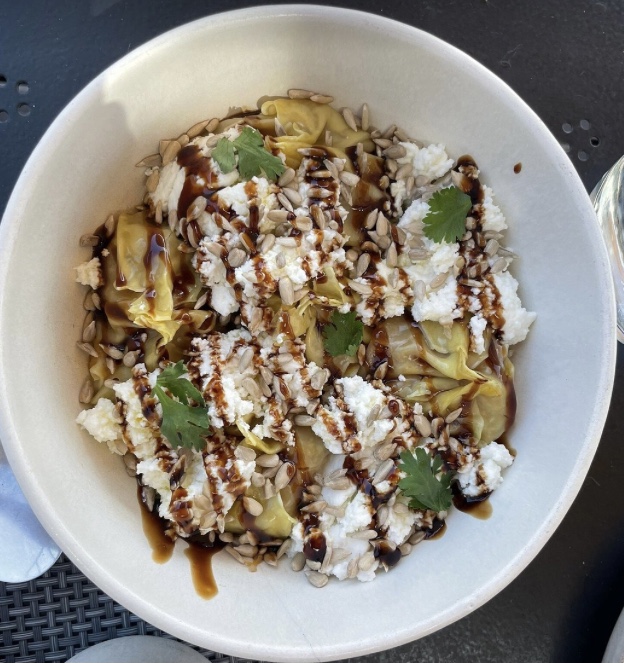
Near the church (and down several flights of stairs) we found Intrigo, a small balcony restaurant overlooking the river for some (0%) beers, rest and a ‘snack’. Steamed wantons with pumpkin, fig, nuts, and goats cheese looked just the ticket but when the waiter delivered a plate with four croquettes, T was confused. D then explained that he had ordered croquettes as well, in case the wantons weren’t sufficient! The béchamel croquettes with sausage in a mustard sauce were tasty, the wantons were very bland (T had thoughts about how to do a bigger flavour).

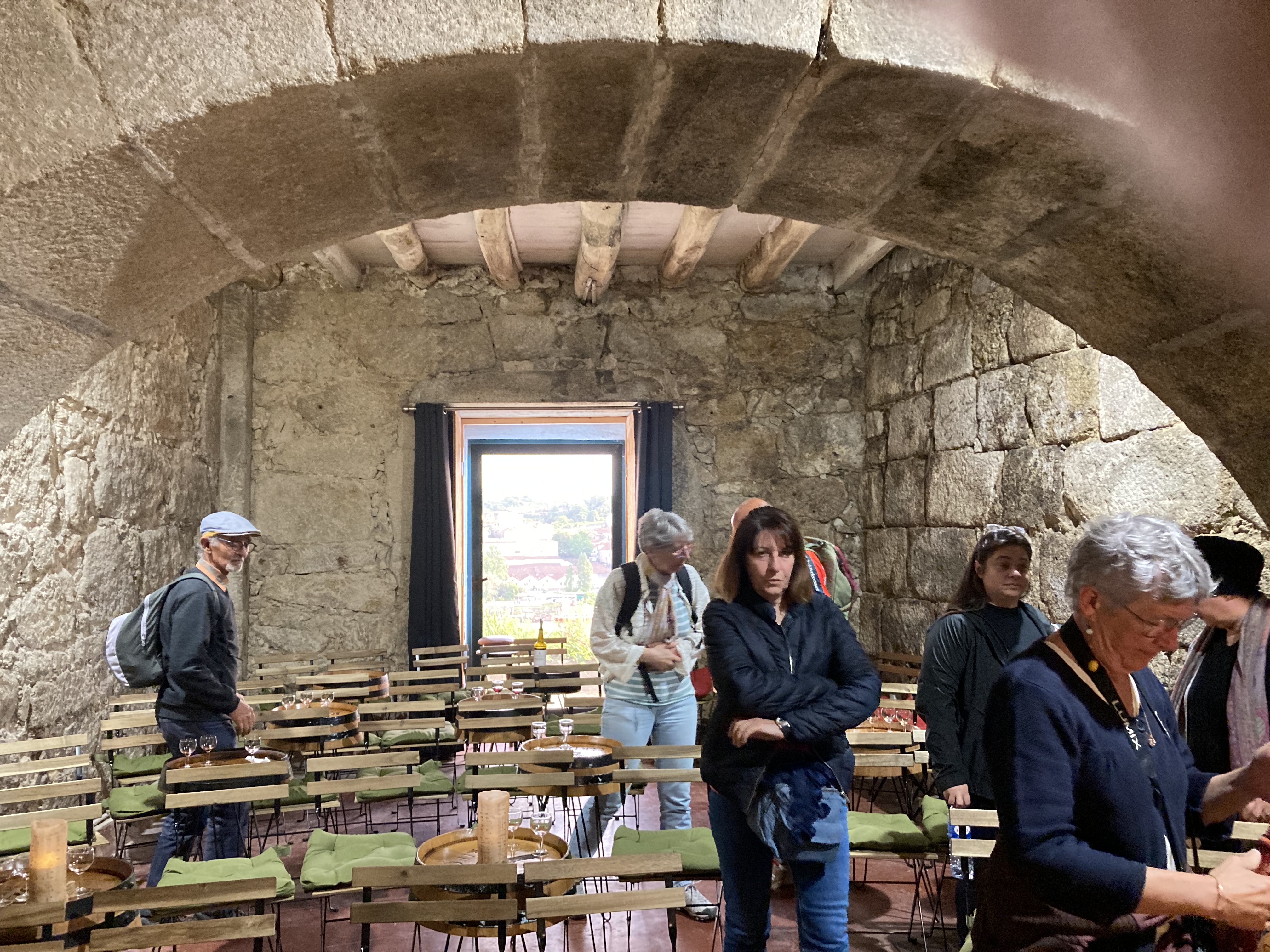
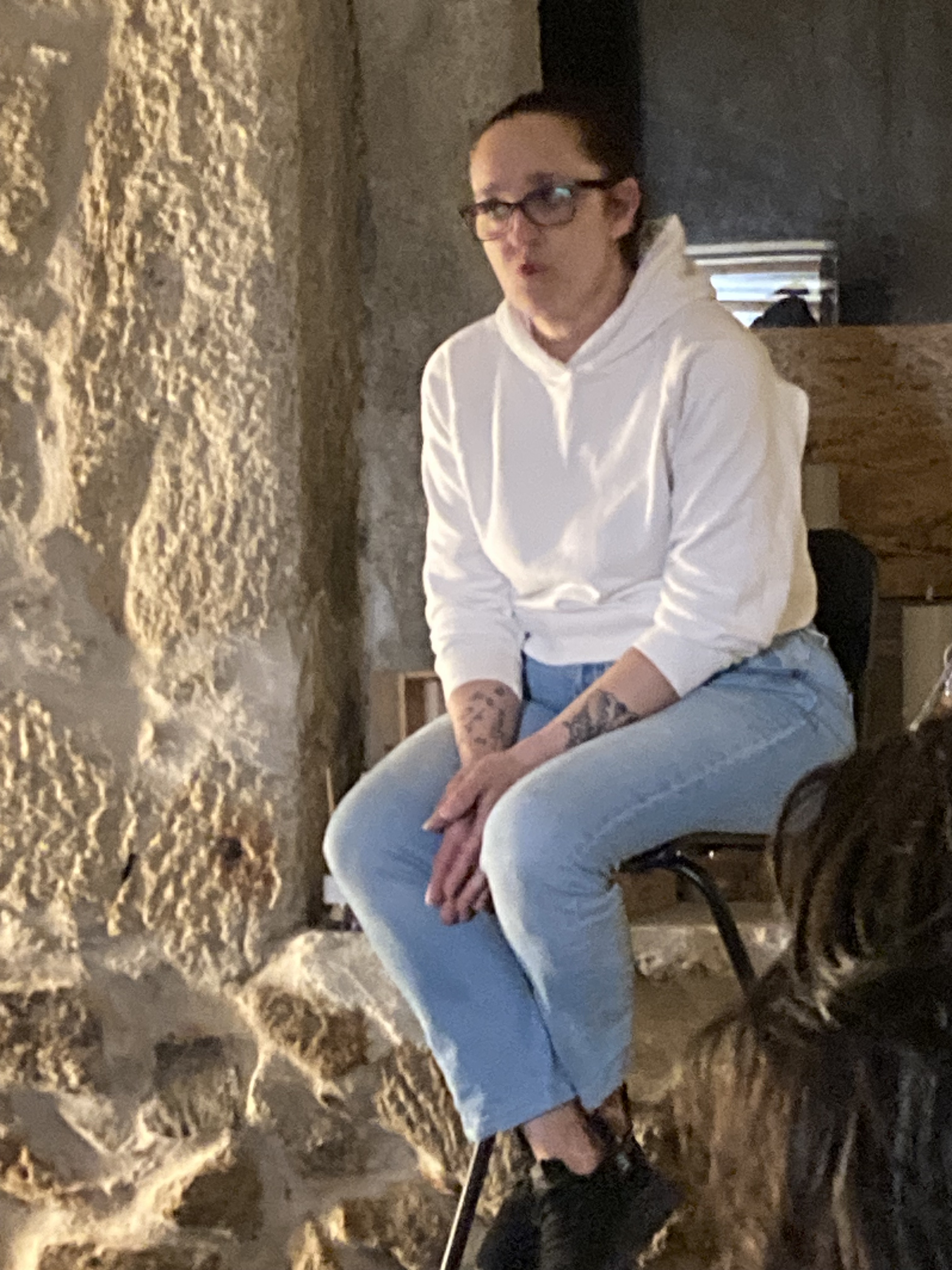
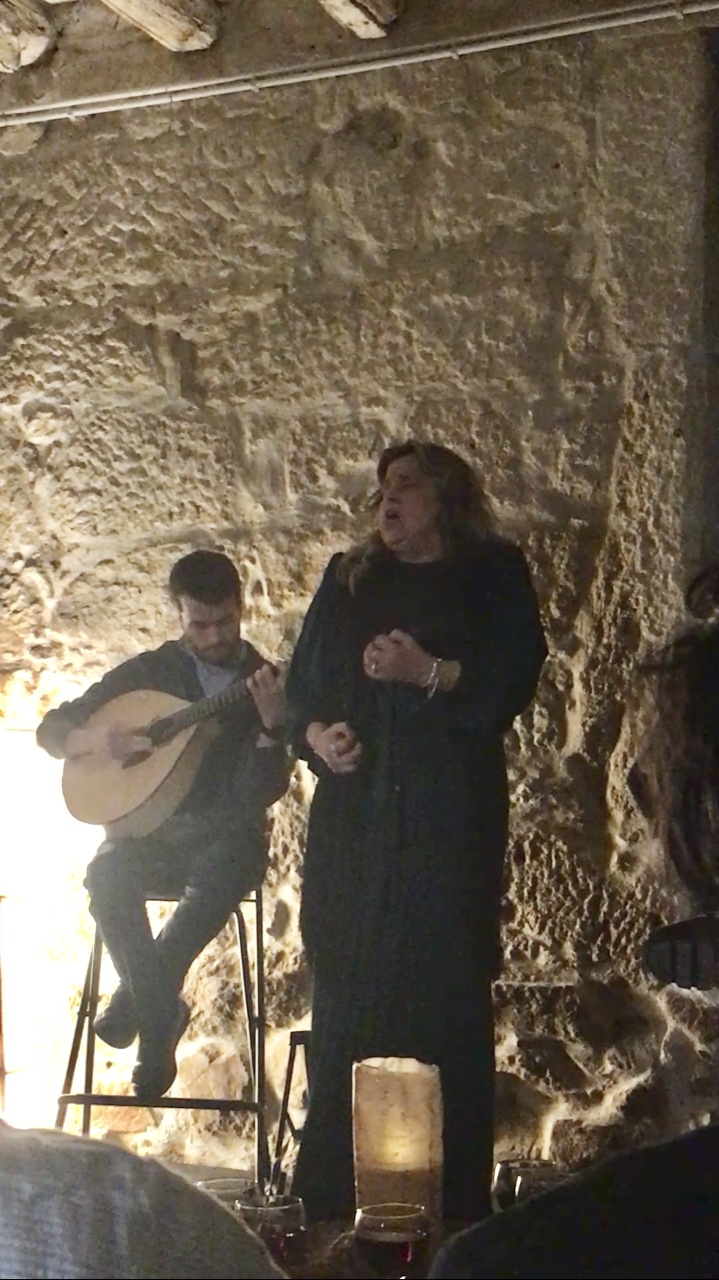
Fado time. An underground cave room, Anna welcoming and pouring port, (maybe the early arrivals were hoping for a second glass). At 1800 two guitarists took up their places: the classical and the Portuguese and then the singer (Sandra) joined and the soulful, passionate tunes were underway. There was a very short Q&A slot explaining the tradition and practice of Fado and then more music. Having visited the Fado Museum in Lisbon, we were somewhat familiar with the genre. It was great to be in a ‘live’ music setting, albeit a ‘tourist show’. And there was no second glass of port.


Walked (dragged ourselves, really) the 1.2 kms to the 700 bus stop, arriving just as the bus pulled up – and joined a long queue. We didn’t think we’d get on, but they were packed in, pretty obviously exceeding the stated carrying capacity of 76 passengers. An observation: there was seemingly no requirement for seats to be offered up for older or infirm folk. One young girl sat her whole trip while there were those who should have been given the seat who stood. And there were other similar situations, including on our trip into Porto.
We were sardines: T managed to snag part of a seat beside a large man, then his wife, who was sitting on a whole seat opposite, indicated that she would sit beside her man (she could hold onto him) and offered the whole seat to T. Smiles and ‘obrigado’ all round. D was offered the seat beside T (no idea why he was deemed senior). The young woman did not move.
Several stops along the route, more people got on, including a trio of older women (how many more than the max of 76?) Then followed a loud exchange between one of the women and the bus driver. There was pushing and shoving and the verbals continued. Eventually the small woman muscled her way, muttering, toward us. D then offered her his seat, which she gratefully accepted. The very young girl remained seated.
We presume that the driver had asked the woman to ‘move down the back’ or some such. Folk seemed bemused. D then passed his phone to T: she could use the translate app. The woman was now calm. T typed in some text: ‘what was the problem?’ To which the reply was ‘Problem? No problem’. Clearly, there had been a problem, so T persisted with, ‘what did you say to the driver’? To which the woman said into T’s ear, ‘I told him Fuck off’. Her little English caused an appropriate reaction: she and T (and a few others) roared laughing. Then there were exchanges: South African, Australian, ‘si’, shared smiles and ‘ Adios’ and waves at the window as, a bit later, the little loud woman of limited English alighted (with no further words to the driver).
Arrived at the Valongo Estacao stop, which was not at the Railway Station as we had expected. As we passed Lidl, one of our landmarks, we realised we’d gone too far. A 500 metres trek back to the car: just what we needed! But home safely before dark.
 Travels with and without Gloria